/pre-wedding-photoshoot
Hoi An or Da Lat for pre-wedding photos: which suits you?
Hoi An suits couples who want layered history, lanterns and rice fields in one location; best February to April (dry, mild, 20–28°C). Da Lat works for misty, romantic pine-forest shots and cool weather year-round; ideal September to November and December to January (14–22°C). Both require sunrise shoots (5:30–6:30 a.m. in summer, 6:00–7:00 a.m. in winter) to dodge crowds and midday heat. Hoi An's Ancient Town needs an entrance ticket and floods catastrophically October to November—avoid those months. Da Lat stays walkable but gets busy at coffee shops and flower gardens from 10 a.m. onward. Cáo Studio – Makeup & Photoshoot runs pre-wedding shoots in Hoi An by appointment (the team travels); Hanoi and Ho Chi Minh City are home bases. Choose Hoi An for ao dai drama and cultural immersion; pick Da Lat for moody, intimate couple moments in cooler air. 📸 Book on WhatsApp — pre-wedding photoshoot | 🌸 See the lookbook | 💄 Makeup & hair at your hotel
What makes Hoi An's light and crowds different from Da Lat's?
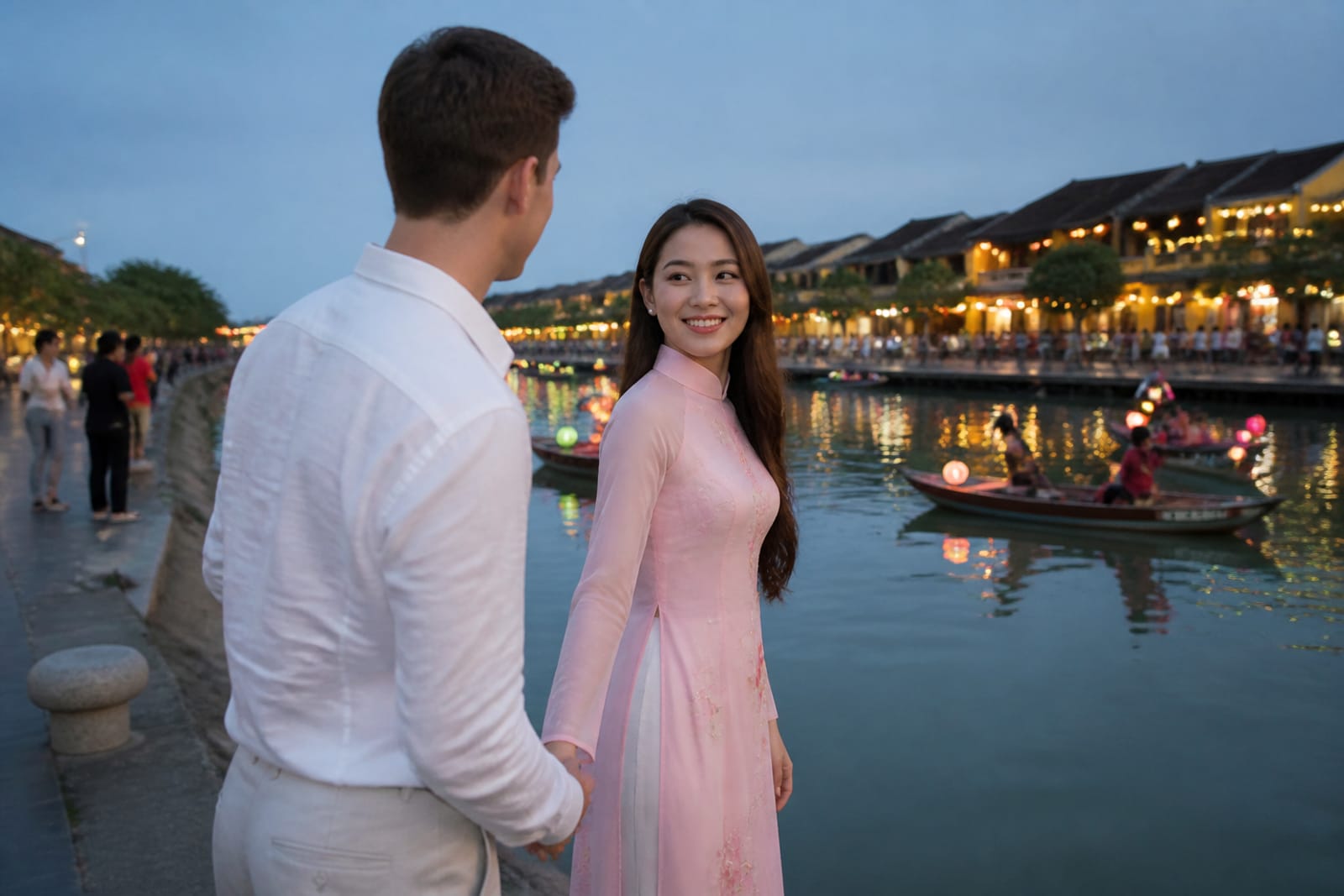
Hoi An's Ancient Town sits at sea level; sunlight is warm, golden and low-angled before 7 a.m., then harsh and overhead by 10 a.m. The town fills noticeably after 8 a.m. as tour groups arrive. Da Lat sits 1,500 meters high in cool hills; light stays soft and diffuse even mid-morning because mist lingers longer and cloud cover is frequent. Crowds cluster around Central Market and Dalat Flower Gardens from 9 a.m., but residential streets and pine groves stay quiet all day. Hoi An rewards early risers with empty lantern rows and glowing reflections on the Thu Bon River; Da Lat lets you shoot later and still find intimate spots, so flexibility matters more than discipline here.
Which season avoids rain and suits your ao dai fit?
| Destination | Dry season | Temperature | Clothing feel | Avoid |
|---|---|---|---|---|
| Hoi An | Feb–Apr | 20–28°C | Ao dai breathes; light layers | May–Aug (heat 32°C+); Oct–Nov (flooding) |
| Da Lat | Sep–Nov, Dec–Jan | 14–22°C | Ao dai needs shawl or cardigan | Jul–Aug (occasional rain); rare flooding |
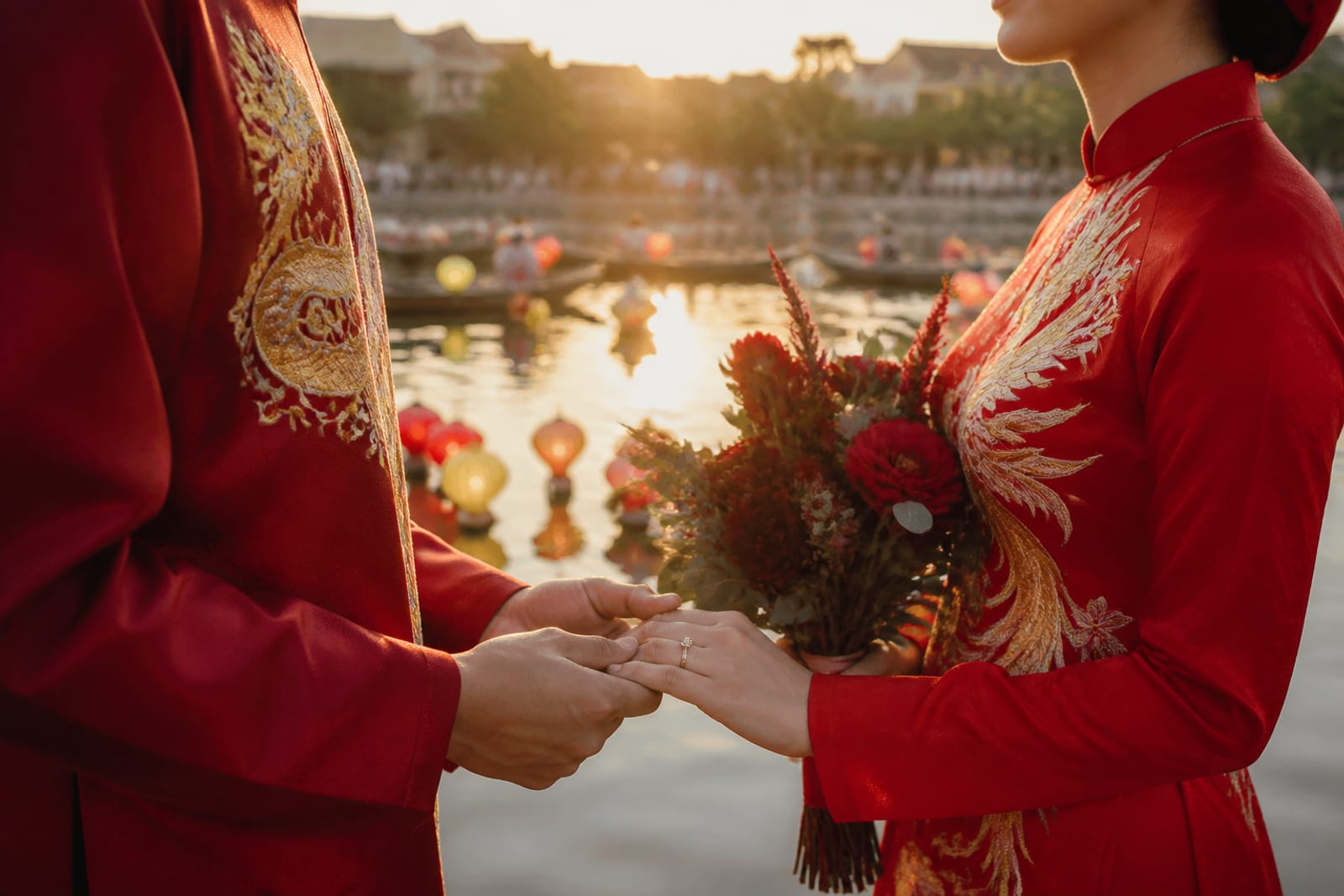
Hoi An's dry season (February to April) is short. March–April temperatures climb toward 30°C, making midday ao dai shoots uncomfortable without a fast-paced 5 a.m. start. May onward, heat and humidity spike; many couples book dawn-only sessions. October and November bring typhoon-season flooding to the Ancient Town itself—walkways submerge, vendors move, and the romantic lantern reflection is lost. Da Lat stays cool year-round, so ao dai layering (shawl, light cardigan) stays flattering in photos without looking bulky. September to November is driest and misty (ideal for mood); December to February is cool and clear. July to August sees afternoon downpours, but morning light is often usable if your photographer is ready to pivot indoors or to sheltered temple courtyards.
💄 Makeup & hair at your hotel | 🌸 See the lookbook
How do you compare walking distance, permits and logistics?
Hoi An's Ancient Town is compact—most iconic spots (lantern street, riverside, tube-house interiors) lie within a 10-minute walk. An entrance ticket is required; once inside, you move freely but crowds cluster predictably. No formal photography permit is needed for couple poses, but commercial fashion shoots may be flagged by town staff, so keep your session intimate and mobile. Sunrise access is key: arrive before 6 a.m. to avoid queuing and capture empty streets. Da Lat's standout locations scatter across town—Dalat Flower Gardens, Xuan Huong Lake, Thien Vien Truc Lam Monastery, pine-forest trails—so transportation between spots takes 15–30 minutes by taxi or hired vehicle. No single entrance fee covers all; each site charges separately (check locally for current fees). Sunrise temple shoots require respectful timing and modest dress; many couples book a guide to navigate narrow forest paths and find secluded backdrops. Hoi An suits couples who want concentrated, walkable romance; Da Lat demands a flexible itinerary and driver to maximize variety.
Can you wear a traditional ao dai equally well in both locations?
Hoi An's ancient architecture and lanterns are designed around ao dai visual tradition—the garment echoes the town's silk history and color palette, so any ao dai shade works, from bold reds to soft pastels. The town's narrow, low-ceilinged lanes and shop-fronts create natural framing; your ao dai stands out and photographs clearly. Tube-house interiors, however, have tight doorways and low beams—floor-length trains and long sleeves risk catching or bunching, so test movement during your pre-shoot consultation with your stylist. Da Lat's cool mountain air lets you layer an ao dai with a lightweight cardigan or silk shawl without looking overdressed; this adds depth and movement in photos. Pine forests and mist soften color saturation, so jewel tones and deep reds photograph best. The drawback: muddy ground and narrow forest paths mean hems and hems-up clips are essential to prevent dirt stains. If you're conflicted, ask Cáo Studio about outfit options and how styling changes between locations—the team has shot both and can advise on ao dai fit, layers and logistics during your WhatsApp consultation.
What if weather turns bad or crowds swamp your shoot time?
Hoi An's rainy season (September to December) brings sudden downpours and flood risk; if weather deteriorates, pivot to covered tube-house interiors, temple courtyards or overhanging shop arcades that keep you dry while maintaining mood. The town's labyrinth of alleys offers dozens of shelter spots. If flooding occurs (October–November risk), the entire Ancient Town may close—so insurance against date changes is critical. Da Lat's rain usually hits afternoon; if morning downpour occurs, mist-heavy shots often look romantic, and clearing skies open lake and forest views within an hour. If crowds overwhelm a spot (e.g., Flower Gardens fills by 9:30 a.m.), your photographer should know backup locations—residential neighborhoods with colonial villas, smaller pagodas like Hang Nga, or private garden cafés that allow shoots. Cáo Studio's pre-wedding team plans these contingencies during your initial WhatsApp chat, so confirm your backup locations and flexible timing before the shoot day. Always book a date with a rain-reschedule clause or a flexible time window (e.g., morning or afternoon, not a fixed hour).
📸 Book on WhatsApp — pre-wedding photoshoot | 🌸 See the lookbook
Which destination works if you're short on time or budget?
Time: Hoi An concentrates maximum visual variety in walking distance, so a 4–6 hour morning session captures riverfront, lanterns, gardens and street portraits without travel delays. Da Lat requires 8–10 hours minimum to explore 3–4 separate locations meaningfully, plus 30–60 minutes in a vehicle. If you have one morning only, Hoi An is efficient. Budget: Both locations charge site entrance fees (Hoi An: required for Ancient Town; Da Lat: per location—check current fees locally). Da Lat typically incurs vehicle rental or taxi costs between spots; Hoi An is walkable so no extra transport. Makeup and hair styling can happen at your hotel in both cities (Hoi An has fewer chain hotels but boutique options; Da Lac has more lodging variety). For makeup and hair services, book Cáo Studio in advance; the team either travels to Hoi An or meets you in Ho Chi Minh City if you're shooting near Saigon and traveling to Da Lat as a side trip. Neither location is inherently cheaper—the difference is logistics, not entry fees.
---
Decision checklist: which location is right for you?
- [ ] Season: Do you prefer warm and dry (Hoi An Feb–Apr) or cool year-round (Da Lat Sep–Jan)?
- [ ] Light tolerance: Can you commit to a 5 a.m. start (Hoi An essential) or prefer later flexibility (Da Lat)?
- [ ] Walking: Want everything within 1 km (Hoi An) or happy to travel 20+ minutes between spots (Da Lat)?
- [ ] Ao dai comfort: Prefer minimal layers in breathable fabric (Hoi An spring) or layered looks with cardigans (Da Lat)?
- [ ] Crowds: Accept tour-group buzz and early timing (Hoi An) or explore quieter forest and lake settings (Da Lat)?
- [ ] Backup plan: Can you reschedule if October–November flooding closes Hoi An, or prefer year-round stability (Da Lat)?
- [ ] Mood: Want layered history, lanterns and cultural immersion (Hoi An) or intimate, moody, forest-romantic atmosphere (Da Lat)?
If you tick more "Hoi An" boxes, book February to April with a 5 a.m. sunrise start. If "Da Lat" dominates, choose September to November or December to January for cool light and fewer downpours.
---
What to check before you commit to a location.
1. Confirm your dates 3–4 months ahead. Hoi An's February–April season books early; if your date falls October–November, contact Cáo Studio on WhatsApp to discuss flood risk and reschedule options.
2. Test outfit logistics in advance. If you're renting an ao dai, ask whether your choice works in Hoi An's narrow lanes and Da Lat's muddy forest paths. Long trains and loose sleeves are beautiful but impractical in tight spaces.
3. Agree on makeup timing and location. Hoi An has fewer hotel makeup services; Da Lat has more lodging diversity. Book makeup and hair at your hotel 2–3 weeks prior so the team confirms travel and prep timing.
4. Understand entrance fees and permits. Hoi An's Ancient Town ticket is mandatory; Da Lat's sites charge separately. Ask your photographer (or Cáo Studio on WhatsApp) for a cost breakdown so you budget accurately.
5. Build in a rain contingency. Confirm your shoot agreement includes a flexible reschedule date or a bad-weather backup (e.g., indoor temple, covered arcade) so you don't lose your booking if weather shifts.
---
Next steps: book your pre-wedding session.
Cáo Studio – Makeup & Photoshoot runs pre-wedding shoots in Hoi An (by appointment—the team travels), Hanoi, and Ho Chi Minh City. Reach out on WhatsApp to discuss your season choice, outfit ideas, and logistics. The team will confirm Hoi An dates, advise on ao dai fit and styling, and coordinate makeup and hair at your hotel. Check the lookbook to see recent Hoi An and Da Lat work, and review the FAQ for common pre-wedding questions.
📸 Book on WhatsApp — pre-wedding photoshoot | 💄 Makeup & hair at your hotel | 🌸 See the lookbook
---
FAQ
Is Hoi An or Da Lat cheaper for a pre-wedding shoot?
Neither is inherently cheaper. Both require entrance fees (Hoi An: Ancient Town ticket; Da Lat: per-location fees—check locally). Da Lat adds vehicle costs between spots; Hoi An is walkable. The main difference is logistics, not price. Ask Cáo Studio on WhatsApp for a quote tailored to your chosen location.
Can I shoot in Hoi An during the rainy season?
Yes, but avoid October–November when typhoon flooding submerges the Ancient Town and closes attractions. September and December–January see occasional rain but are usually walkable. If you book Sep–Nov, confirm a flexible reschedule clause with your photographer and be ready to pivot to covered locations (temples, arcades) if downpours hit.
Do I need a permit to shoot couple photos in Hoi An?
No formal permit is required for casual couple poses or ao dai sessions. However, commercial fashion or large-group shoots may attract staff attention. Keep your session intimate and mobile, and inform your photographer of your plans. Cáo Studio can advise during your WhatsApp consultation.
Which location is better for sunrise photos?
Hoi An's sunrise (5:30–6:30 a.m. in summer) is stunning but mandatory to avoid crowds; you must wake very early. Da Lat's sunrise is equally beautiful, but morning mist means light stays soft until 8–9 a.m., so you have more flexibility. If early mornings exhaust you, Da Lat's later usable light is a real advantage.
Can an ao dai with a long train work in Hoi An's narrow streets?
Yes, but with care. Hoi An's tube-house lanes are tight, and doorways are low. Test your ao dai's movement during a pre-shoot consultation with Cáo Studio; bring clips or have your stylist brief you on managing the hem and sleeves indoors. Da Lat's outdoors and forests are more forgiving for trains.
How far in advance should I book a pre-wedding shoot in Hoi An?
Book 3–4 months ahead for February–April dates (Hoi An's peak season). Off-season (May–August, December–January) allows 6–8 weeks' notice. Contact Cáo Studio on WhatsApp as soon as you've decided on your location and month; they'll confirm availability and coordinate travel to Hoi An.
FAQ
Is Hoi An or Da Lat cheaper for a pre-wedding shoot?
Neither is inherently cheaper. Both require entrance fees (Hoi An: Ancient Town ticket; Da Lat: per-location fees—check locally). Da Lat adds vehicle costs between spots; Hoi An is walkable. The main difference is logistics, not price. Ask Cáo Studio on WhatsApp for a quote tailored to your chosen location.
Can I shoot in Hoi An during the rainy season?
Yes, but avoid October–November when typhoon flooding submerges the Ancient Town and closes attractions. September and December–January see occasional rain but are usually walkable. If you book Sep–Nov, confirm a flexible reschedule clause with your photographer and be ready to pivot to covered locations (temples, arcades) if downpours hit.
Do I need a permit to shoot couple photos in Hoi An?
No formal permit is required for casual couple poses or ao dai sessions. However, commercial fashion or large-group shoots may attract staff attention. Keep your session intimate and mobile, and inform your photographer of your plans. Cáo Studio can advise during your WhatsApp consultation.
Which location is better for sunrise photos?
Hoi An's sunrise (5:30–6:30 a.m. in summer) is stunning but mandatory to avoid crowds; you must wake very early. Da Lat's sunrise is equally beautiful, but morning mist means light stays soft until 8–9 a.m., so you have more flexibility. If early mornings exhaust you, Da Lat's later usable light is a real advantage.
Can an ao dai with a long train work in Hoi An's narrow streets?
Yes, but with care. Hoi An's tube-house lanes are tight, and doorways are low. Test your ao dai's movement during a pre-shoot consultation with Cáo Studio; bring clips or have your stylist brief you on managing the hem and sleeves indoors. Da Lat's outdoors and forests are more forgiving for trains.
How far in advance should I book a pre-wedding shoot in Hoi An?
Book 3–4 months ahead for February–April dates (Hoi An's peak season). Off-season (May–August, December–January) allows 6–8 weeks' notice. Contact Cáo Studio on WhatsApp as soon as you've decided on your location and month; they'll confirm availability and coordinate travel to Hoi An.
Ao dai, makeup, hair and a local photographer in Hanoi or Saigon — one WhatsApp message.