/pre-wedding-photoshoot
Hoi An or Da Nang for pre-wedding photos: which location wins?
Both Hoi An and Da Nang work for pre-wedding shoots, but the choice depends on light, crowds and season. Hoi An's Ancient Town offers lantern-lit streets and the river at dawn (best Feb–Aug, avoid Sep–Dec typhoon season); Da Nang's My Khe beach and Ba Na Hills provide long golden-hour light and mountain backdrops (same season window). Hoi An draws more tourists year-round; Da Nang clears faster at sunrise. A single location works best — moving between them wastes golden light. Cáo Studio shoots both, though Hoi An requires travel on appointment; book based on the aesthetic you want (heritage walk vs coastal sweep) and the month you're visiting, then let your director frame the light you have. 📸 Book on WhatsApp — pre-wedding photoshoot ---
Which location has the better morning light for walking shots?
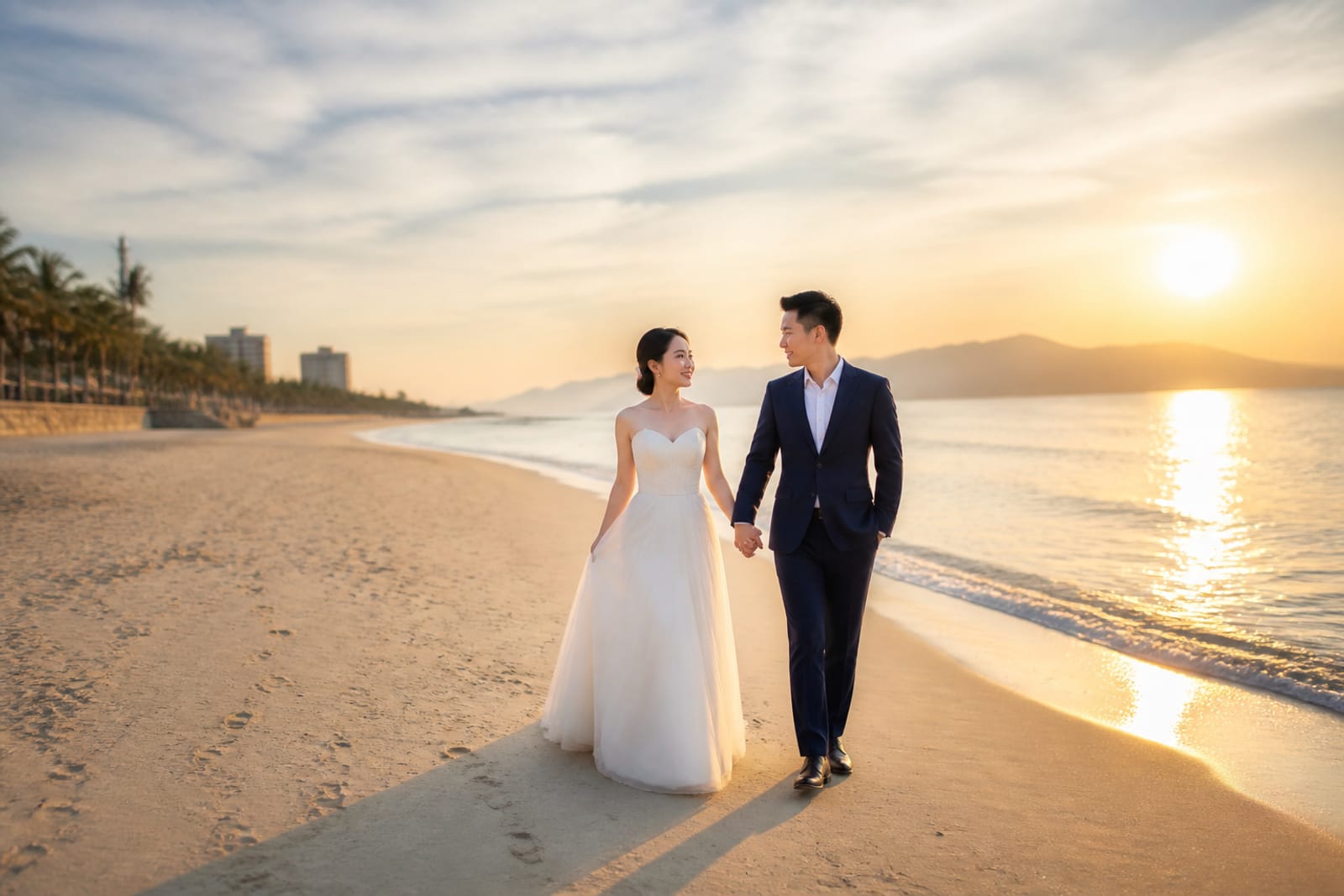
My Khe beach in Da Nang gives you 90 unobstructed minutes of soft side light at sunrise, with the sea on one side and headlands framing the horizon. Hoi An's Ancient Town and riverbank work earlier—5:30 am onwards—before tour groups arrive, but you're navigating narrow lanes and reflections off the water can be unpredictable. If your pre-wedding vision is a long walk toward camera with natural framing, Da Nang wins on consistency. If you want heritage texture and tight romantic framing, Hoi An's riverside at 6 am beats any beach shot. The deciding factor: do you want uncluttered space, or do you want the town to be part of the story?
Should you shoot Ba Na Hills or skip it for pre-wedding work?
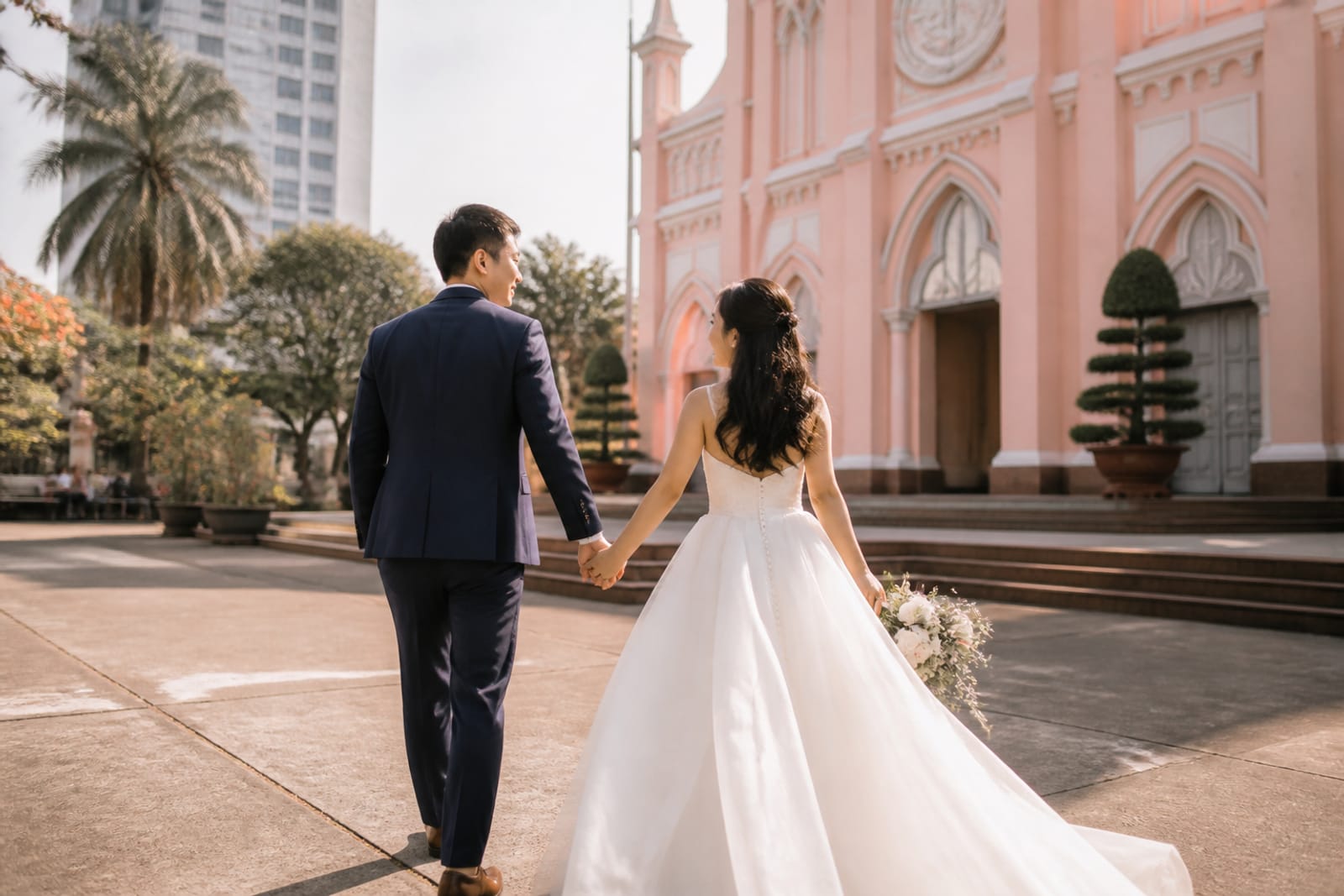
Ba Na Hills (about 1,400 m elevation, accessed by cable car) sounds romantic on paper—mountaintop views, the famous Golden Bridge—but it's often misty and crowded from mid-morning onward. You'd need a 6 am cable-car departure to shoot alone; by 7:30 am tour groups begin arriving steadily. The light changes fast in fog, making a director's framing difficult. For pre-wedding, the logistics cost (travel time, cable-car timing, outfit changes at altitude) rarely justify the outcome unless fog clears and you're booked with a team that moves fast. A beach sunrise or riverside walk in Hoi An delivers better light with half the complexity. Reserve Ba Na for a second-day lifestyle shot if you want the story layered, not as your main pre-wedding location.
Why is September–December a risk for both locations?
Vietnam's central coast (Hoi An and Da Nang) enters the rainy and typhoon season Sep–Dec, with October–November being the worst months. Short afternoon downpours are frequent; morning mist lingers longer. Light is often flat and grey rather than golden. Typhoon warnings can force beach closures or flood ancient streets in Hoi An. You can still shoot in Sep–Dec—many couples do—but you're relying on a director who reads weather hour-by-hour and is ready to pivot indoors or move to covered alleyways fast. February–August is the window where light, weather and crowds align predictably. If you're locked into Oct–Nov, be honest with your team about backup framing (covered temple interiors, hotel suites, restaurant settings) and budget extra time for weather holds.
How do crowds differ between Hoi An and Da Nang, and when?
Hoi An Ancient Town draws steady international tourist flow year-round; peak congestion is 9 am–5 pm daily and all of Tet (late Jan–mid Feb). A 5:30 am start clears the streets completely for the first 90 minutes. Da Nang beaches (My Khe, Non Nuoc) see fewer organized tour groups; most visitors are casual early risers or locals walking. The beach empties by 7 am. If you're shooting later in the day (10 am–2 pm), Hoi An requires working inside narrow alleys or private courtyards; Da Nang offers the open beach or Ba Na retreat. The trade-off: Hoi An's architecture photographs better when lit and solitary; Da Nang's beaches photograph best at sunrise, which is when crowds are lowest. Choose Hoi An if your team can move very early; Da Nang if you prefer flexible timing.
Comparison: which location fits which pre-wedding style?
| Style | Best Location | Why | Light Window | Walking Effort |
|---|---|---|---|---|
| Heritage romance (lanterns, old town) | Hoi An | Texture, river reflections, lantern detail | 5:30–7 am | Medium (narrow lanes, stairs) |
| Coastal and minimalist | Da Nang (My Khe) | Open horizon, soft beach light | 5:30–7 am | Low (flat sand) |
| Mountaintop drama | Da Nang (Ba Na) | Elevation, framing if fog clears | 6–7 am only | High (cable car, uneven paths) |
| Intimate couples' walk | Both equally | Depends on director and pace | 5:30–7 am (either) | Medium–high |
---
What outfit works best in each location?
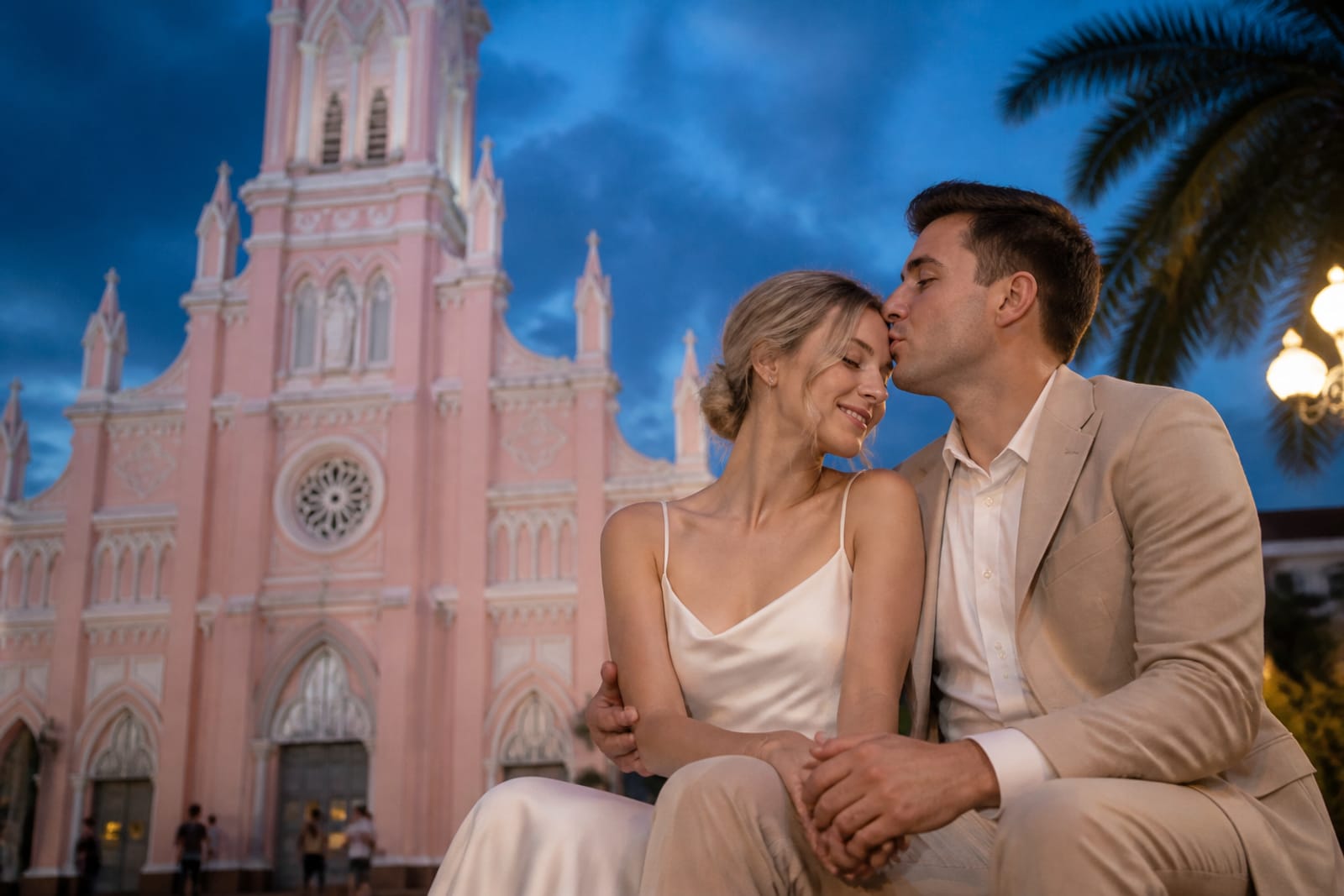
In Hoi An, an ao dai or flowing dress photographs beautifully against lantern-lit walls and the water; fabric moves naturally on narrow riverside paths. A groom's suit or traditional áo ghi catches detail light on stone. In Da Nang, a lighter wedding dress or beach-appropriate ao dai works better—wind is stronger, and sand requires shoes you don't mind getting wet. If you're doing both locations in one morning (not recommended, but couples sometimes do), choose one outfit and change location rather than changing clothes mid-session. A director who knows the light will frame differently at each spot with the same outfit, so you don't feel repetitive.
Should you book Hoi An and Da Nang in one day?
No. Moving between locations costs 45 minutes each way and interrupts golden-hour light momentum. A pre-wedding shoot lives in a two-hour window—sunrise plus 60 minutes of quality light. If you move locations mid-session, you lose either the beginning or the end of that window and spend time in a car instead of in front of the camera. Cáo Studio shoots Hoi An by appointment (the team travels from Da Nang or Hanoi); if you're torn between the two, pick one, shoot deeply, and consider a second day for the other location if your schedule allows. One location, one story, one light window—that's how frames that matter get made.
How do you decide based on the month you're traveling?
| Month | Hoi An Conditions | Da Nang Conditions | Recommendation |
|---|---|---|---|
| Feb–Apr | Dry, mild, some crowds | Dry, warm, fewer crowds | Either; Da Nang for clearer beach light |
| May–Aug | Dry, hot (30–35°C), moderate tourists | Hot, blue sky, reliable light | Da Nang; Hoi An gets hazy midday |
| Sep–Dec | Rainy, typhoon risk (worst Oct–Nov), slower tourists | Rainy, typhoon risk, flat grey light | Both risky; book with backup indoor framing |
Avoid booking pre-wedding shoots during Tet (late Jan–mid Feb); many services close, and crowds peak days before. If you're traveling Sep–Dec, confirm with your director that she has a covered backup location (a hotel suite, a restaurant interior, a temple if permission is secured). The location you choose matters less than the team you trust to light and direct you—neither Hoi An nor Da Nang guarantees a great shot without a director who knows how to move you through real light.
---
What to check before you book your pre-wedding location
- Confirm the exact month and dates. Check the weather pattern for that month on a local source (not generic "best time to visit" lists). Sep–Dec carry typhoon risk; be explicit with your director about this.
- Verify your director has shot there before. Ask to see frames from Hoi An or Da Nang pre-wedding work, not just travel shots. Light behavior is different when you're posing versus passing through.
- Pin down whether you want a single location or two. If two, clarify who handles the travel time and whether it's baked into the booking or separate.
- Check if you need an ao dai rental or are bringing your own dress. Hoi An outfits photograph better on film; confirm sizing and fittings in advance.
- Ask about backup framing if weather turns. Typhoon season and grey mornings happen. A good director has a list of covered, lit indoor spaces (temple interiors, hotel courtyards, restaurant private rooms) and will pivot without losing the aesthetic.
- Confirm editing and delivery timelines. Cáo Studio delivers edited photos and a short film within 48 hours; check that this aligns with your travel schedule if you need prints or albums before you leave Vietnam.
---
For a pre-wedding photoshoot in Hanoi, Ho Chi Minh City, or Hoi An, book on WhatsApp +84 338 762 340. Cáo Studio's director will frame the light and location that fits your vision—whether that's Hoi An's heritage or Da Nang's coast—and deliver frames you keep for life.
📸 Book on WhatsApp — pre-wedding photoshoot
FAQ
Can I do Hoi An and Da Nang in one morning?
Not without sacrificing light. Golden hour lasts two hours; moving between locations (45 min each way) wastes half of it. Choose one, or split across two days. Cáo Studio shoots Hoi An by appointment; ask on WhatsApp for dates if you need both.
What's the best month for pre-wedding photos in either location?
February–August is safest (dry, predictable light). May–August is hot; Feb–April is mild. Avoid Sep–Dec (rainy season, typhoon risk Oct–Nov) unless you have indoor backup framing confirmed.
Should I wear an ao dai or a wedding dress?
Hoi An suits an ao dai (texture, movement, cultural fit). Da Nang beaches work better with a lighter dress or beach-appropriate ao dai. Ask your director—she'll frame based on location light, not the other way around.
Do I need a permit to shoot in Hoi An Ancient Town?
Check locally or ask Cáo Studio on WhatsApp. Tourism rules change; your team should know current requirements when booking.
How much does a pre-wedding shoot in Hoi An or Da Nang cost?
Quotes vary by location, outfit changes, team size and delivery format. Message +84 338 762 340 on WhatsApp for a personalized quote. Travel to Hoi An (from Da Nang base) may adjust the rate.
How long is a typical pre-wedding session?
Exact duration is confirmed on WhatsApp. Most sessions run through one light window (sunrise + 60 min); you'll also receive edited photos and a short film delivered within 48 hours.
Can I see examples of pre-wedding work before I book?
Yes. Visit the lookbook or ask on WhatsApp for location-specific frames (Hoi An, Da Nang, Hanoi or Ho Chi Minh City pre-wedding galleries).
FAQ
Can I do Hoi An and Da Nang in one morning?
Not without sacrificing light. Golden hour lasts two hours; moving between locations (45 min each way) wastes half of it. Choose one, or split across two days. Cáo Studio shoots Hoi An by appointment; ask on WhatsApp for dates if you need both.
What's the best month for pre-wedding photos in either location?
February–August is safest (dry, predictable light). May–August is hot; Feb–April is mild. Avoid Sep–Dec (rainy season, typhoon risk Oct–Nov) unless you have indoor backup framing confirmed.
Should I wear an ao dai or a wedding dress?
Hoi An suits an ao dai (texture, movement, cultural fit). Da Nang beaches work better with a lighter dress or beach-appropriate ao dai. Ask your director—she'll frame based on location light, not the other way around.
Do I need a permit to shoot in Hoi An Ancient Town?
Check locally or ask Cáo Studio on WhatsApp. Tourism rules change; your team should know current requirements when booking.
How much does a pre-wedding shoot in Hoi An or Da Nang cost?
Quotes vary by location, outfit changes, team size and delivery format. Message +84 338 762 340 on WhatsApp for a personalized quote. Travel to Hoi An (from Da Nang base) may adjust the rate.
How long is a typical pre-wedding session?
Exact duration is confirmed on WhatsApp. Most sessions run through one light window (sunrise + 60 min); you'll also receive edited photos and a short film delivered within 48 hours.
Can I see examples of pre-wedding work before I book?
Yes. Visit the [lookbook](/lookbook) or ask on WhatsApp for location-specific frames (Hoi An, Da Nang, Hanoi or Ho Chi Minh City pre-wedding galleries).
Ao dai, makeup, hair and a local photographer in Hanoi or Saigon — one WhatsApp message.