/pre-wedding-photoshoot
Hoi An or Ninh Binh for pre-wedding photos: which location wins?
Hoi An and Ninh Binh each serve distinct pre-wedding aesthetics. Hoi An (central coast) shines Feb–Aug in its Ancient Town's lantern-lit streets and riverside temples, best shot at dawn or late afternoon when crowds thin and golden light wraps architecture; lightweight, breathable ao dai work here. Ninh Binh (red-river delta, 2 hours south of Hanoi) peaks Mar–May and Sep–Nov with rice-field backdrops, limestone karsts and rural boat temples; terrain requires sturdy footwear and layering for cooler mornings. Hoi An suits intimate, detail-driven couples; Ninh Binh attracts those wanting epic landscape drama. Cáo Studio – Makeup & Photoshoot books shoots in Hoi An by appointment (the team travels); Hanoi-based pre-wedding sessions also access Ninh Binh day trips. Choose Hoi An for controlled, atmospheric urban romance; choose Ninh Binh if you prize wilderness scale over monument fame. ---
Why does Hoi An's light make it so photogenic for couples?
Hoi An's low sun angles over the Thu Bon River create a natural diffuser effect between 6–7 a.m. and 4–6 p.m., wrapping faces and fabrics in warm, flattering tones without harsh shadows. The Ancient Town's canopy of old shophouses and leafy streets shields you from midday glare. Golden-hour light bounces off the water and lantern facades, adding depth that smartphone or basic camera work often captures well. Street reflections on wet pavement (common after rain) add a romantic film-still quality many couples seek. Winter (Feb–May) offers the most stable light and clearest skies; Jun–Aug brings afternoon humidity haze that softens edges further.
The trade-off: you must time shoots carefully. 10 a.m.–3 p.m. light is flat and harsh, forcing compromises on pose angles. Tourist crowds peak 8–11 a.m., so early starts matter. Outfit volume (heavy silk, layers) becomes uncomfortable in rising heat. Hoi An's compact layout means you're rarely more than 10 minutes' walk from a quieter alley or temple garden—logistically, this is far less demanding than Ninh Binh's spread-out villages and boat access.
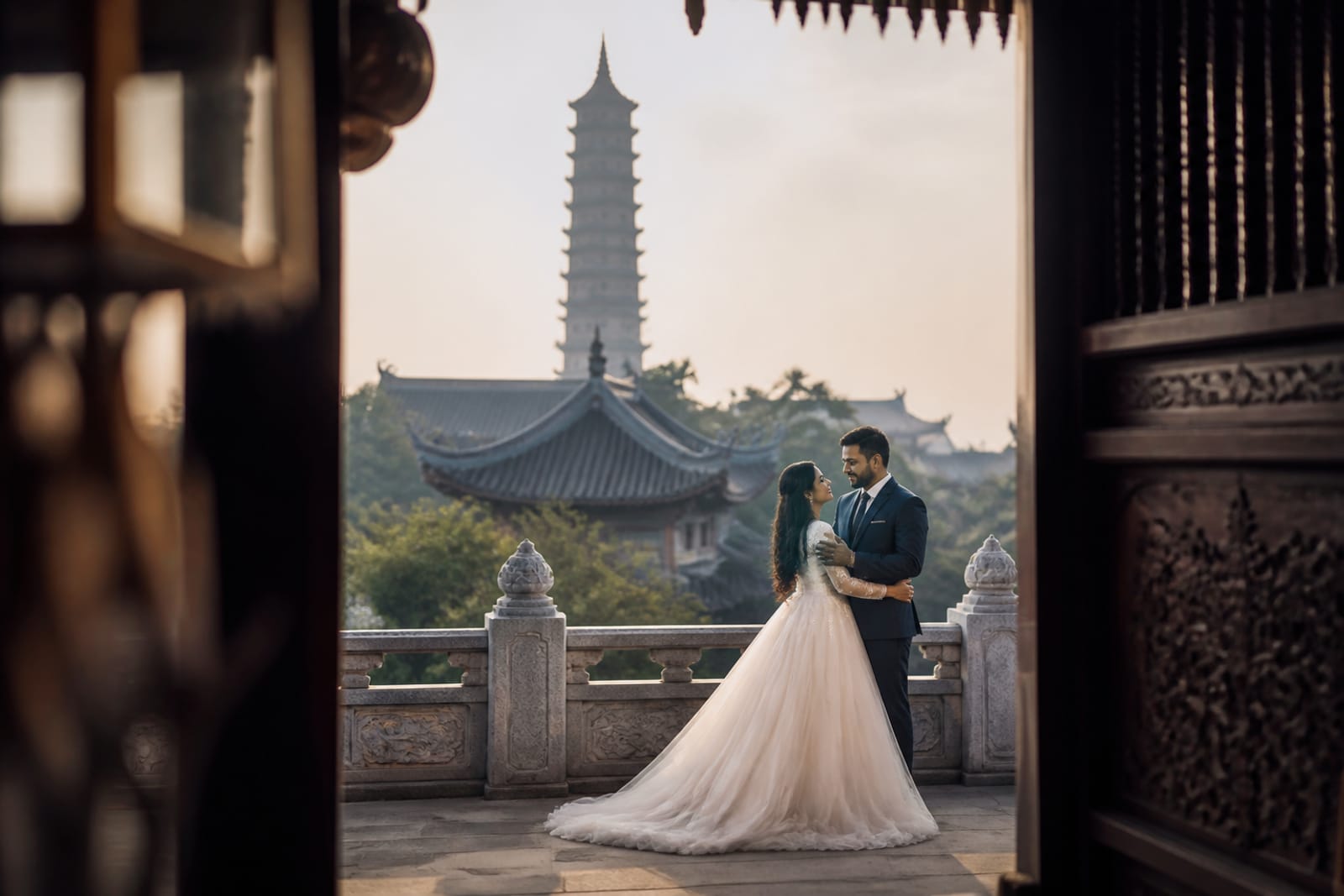
What makes Ninh Binh's landscape so different from Hoi An's townscape?
Ninh Binh offers verticality, vastness and rural authenticity Hoi An cannot match: limestone peaks rise abruptly from flooded rice fields, creating a landscape painters and filmmakers return to. The Hang Mua viewpoint (about 500 stone steps) and Trang An boating area both frame couples against unbroken horizons and karst drama. Fields shift color dramatically with season—golden (late May–early June, second crop Sep–Oct), emerald-green (mid-season), or winter brown (Dec–Feb). Light spreads evenly across open water and flatland, reducing harsh shadows but also demanding stronger composition to avoid a washed-out look.
Ninh Binh's drawback is logistical friction: shoots require a guide or shuttle to reach Hang Mua or boat docks, adding coordination time. Terrain is uneven (paths, wet fields, stone steps). Ao dai hems trail through mud or get tangled on uneven ground—couples often swap to trousers or shorter wraps halfway through. Weather swings faster; Mar–May mornings are cool (long sleeves needed), but by 11 a.m., heat rises sharply. Oct–Nov brings surprise rain and grey skies. Crowds at landmark viewpoints (especially Hang Mua) peak 7–9 a.m. and 4–5 p.m., so mid-morning or early afternoon offers solitude but weaker light quality.
How does season choice affect outfit comfort and shooting windows?
| Season | Best for | Light quality | Outfit comfort | Why it works | What to watch |
|---|---|---|---|---|---|
| Hoi An: Feb–May | Romantic, detail shots | Stable, warm, low angle | Excellent (cool mornings, dry air) | Clear skies, minimal rain, long gold hours | Crowds peak around Tet (late Jan–mid Feb) |
| Hoi An: Jun–Aug | Moody, atmospheric | Soft diffuse (humidity haze) | Poor (heat, sweat, humidity clings fabrics) | Natural softening, fewer tourists | Afternoon storms, heavy ao dai feels oppressive |
| Hoi An: Sep–Dec | Rare golden window | Warm, low angle (Sep–Oct) | Mixed (Sep–Oct warm; Nov–Dec cool) | Sep–Oct ideal; Nov–Dec clearer air | Typhoon risk Oct–Nov, crowded after tourism surge |
| Ninh Binh: Mar–May | Golden fields, karst drama | Even, bright, slightly harsh | Good (cool mornings, drying by midday) | Crops tall, wildflower blooms, clear air | Hiking to Hang Mua is steep; afternoon heat rises fast |
| Ninh Binh: Jun–Aug | Lush green (rare aesthetic) | Soft (afternoon showers) | Poor (heat, humidity, muddy paths) | Unique verdant look; fewer crowds | Afternoon downpours flood fields, unpredictable timing |
| Ninh Binh: Sep–Nov | Harvest, mature crops | Warm early Sep; grey Oct–Nov | Mixed (Sep warm, Oct–Nov cool mornings) | Sep's golden light iconic; Oct–Nov rare clarity if dry | Typhoon rain common Oct–Nov; paths waterlogged |
Key insight: Hoi An is most forgiving across seasons because streets and temples have shelter and fixed infrastructure. Ninh Binh's comfort depends entirely on weather; you cannot reschedule a landscape shoot indoors.
📸 Book on WhatsApp — pre-wedding photoshoot
Which location works better if you want both landscape and cultural storytelling?
Hoi An wins this hybrid. Its lantern-lit streets, silk tailors, tea houses, and river temples all tell a narrative arc: you can move from a quiet morning shot at an empty temple, through bustling market light, to a dusk lantern-glow moment, all within walking distance. Each location shift adds a new "chapter" to your couple story without requiring transportation. The Ancient Town's human scale—narrow alleys, intimate courtyards, water reflections—lets you weave personal moments (a stolen kiss in a doorway, hands on a wooden bridge) into larger architectural framing.
Ninh Binh prioritizes landscape grandeur over storytelling depth. Its villages (Tam Coc, Van Lam) are photogenic but less walkable as a narrative sequence; you photograph rice fields, then boat temples, then perhaps a farmer's home, with transit gaps between. The visual payoff is a polished portfolio of "big moments" rather than a flowing story. Couples seeking cinematic landscape mood (think a film opening) often prefer this. But if your couple's story involves cultural immersion—learning to wear an ao dai properly, visiting a temple ritual, sitting in a family tea house—Hoi An's embedded social fabric delivers that authenticity more naturally.
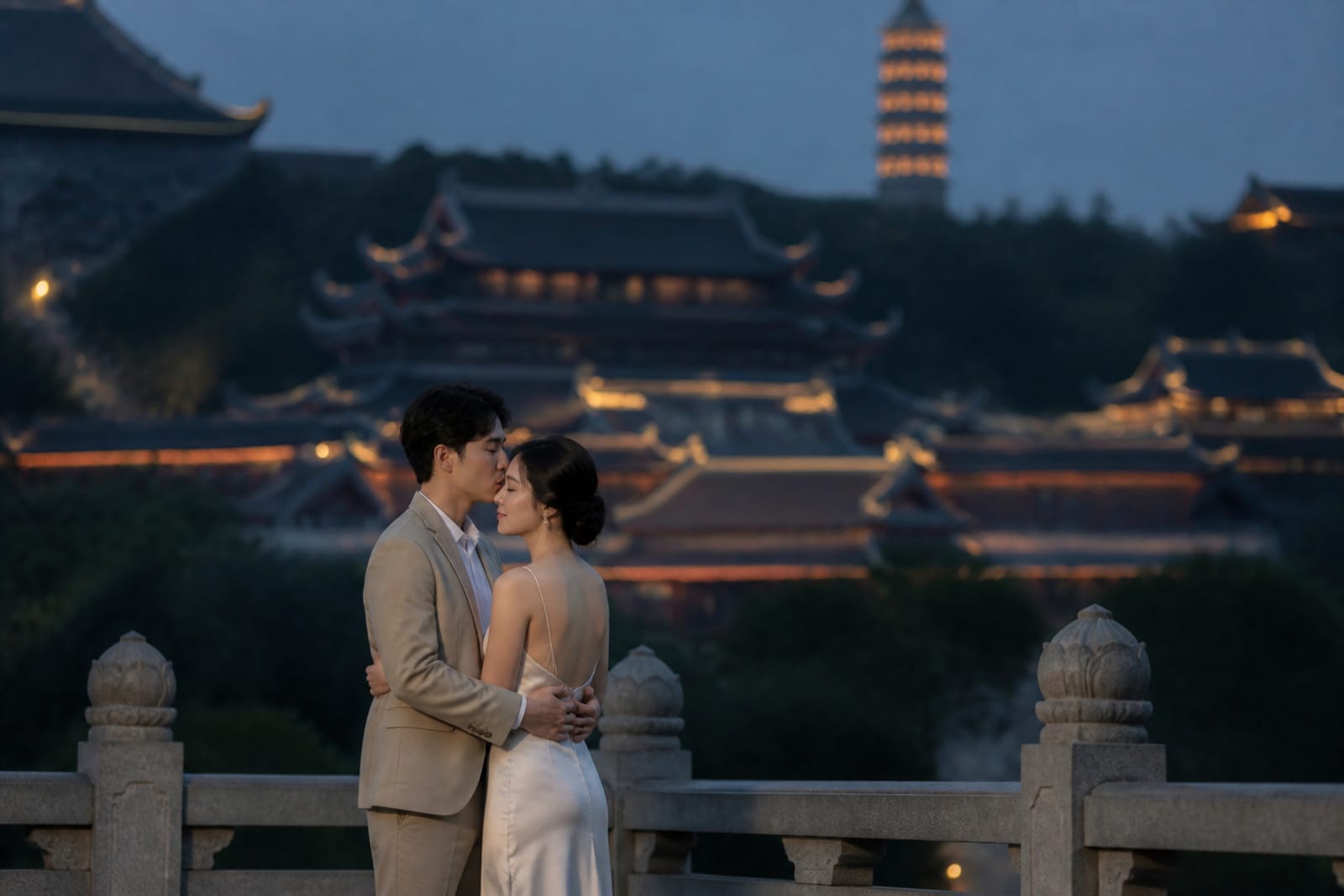
How do you actually plan and book a shoot in each location?
Hoi An approach: Contact Cáo Studio – Makeup & Photoshoot via WhatsApp to ask about Hoi An dates and availability. The team travels from Hanoi or Saigon to shoot in and around the Ancient Town; sessions typically include a location scout beforehand (often virtual) to lock in exact spots, timing and backup weather plans. You'll confirm an ao dai rental or choose your own outfit, and coordinate hotel pickup for makeup and hair if desired. Morning shoots (5:30–9 a.m.) guarantee empty streets and cool light; afternoon sessions (4–6 p.m.) capture lantern-glow and temple crowds thinning. Budget extra time if you want both—a full-day pre-wedding session spreads across sunrise, midday and golden hour.
Ninh Binh approach: A local guide is almost mandatory. If booking through Cáo Studio's Hanoi team, they can recommend trusted local photographers familiar with Ninh Binh's logistics (boat access, Hang Mua permits, farmer introductions). Alternatively, research Hanoi-based pre-wedding photographers who specialize in Ninh Binh day trips; ask for sample work from the exact season you're shooting, since light and greenery vary drastically. Confirm transportation, guide costs and backup weather plans upfront. Wear water-resistant footwear and bring a backup outfit (trousers or knee-length dress) for fieldwork; the ao dai photographs beautifully in edited stills but can hinder movement on uneven terrain.
💄 Makeup & hair at your hotel | 🌸 See the lookbook
What should you check before choosing your location and booking?
Confirm the photographer's portfolio for your season. Ask for at least five images shot in your target month and destination—not from peak season if you're going off-season. Light and color shift dramatically month to month.
Verify outfit practicality. If you're set on a heavy ao dai with long train, ask the photographer if it works for Ninh Binh's muddy fields and boat embarkation. For Hoi An, confirm the Ancient Town's narrow alleys fit your dress's width without needing a handler.
Check weather backup plans. Both locations close outdoor shoots in heavy rain or typhoon warnings. A professional agreement should specify rescheduling rights or partial refunds if weather cancels.
Ask about crowd timing. Request specific shoot windows (e.g., 6–8 a.m. for Hang Mua, 4–6 p.m. for Hoi An riverside) and confirm the photographer has logistical access (permits, boat bookings, temple permission). Landmarks sometimes close to visitors for ceremonies or maintenance.
Review the final deliverable scope. Check the FAQ or ask via WhatsApp what you receive—edited photos, album, prints, video teaser. Delivery timelines vary; professional couples expect 2–4 weeks minimum for edited proofs.
Understand the makeup and hair commitment. If shooting multiple locations in one day (Hoi An sunrise + afternoon), clarify whether makeup is refreshed between moves or left as-is. Cáo Studio offers on-site makeup and hair at some locations; others may require a local artist.
---
Which location do other couples choose?
There is no "better" choice—it depends on your couple identity. Romance-focused, photography-savvy pairs often choose Hoi An for its controllable, layered aesthetics and walkability. Adventurous, landscape-obsessed couples (especially those comfortable with rural environments and unpredictable weather) lean Ninh Binh. Some couples book both: a Hoi An day-shoot for intimate storytelling, then a Ninh Binh weekend for dramatic landscape drama. This maximizes your portfolio across two visual vocabularies and spreads risk if weather disrupts one location.
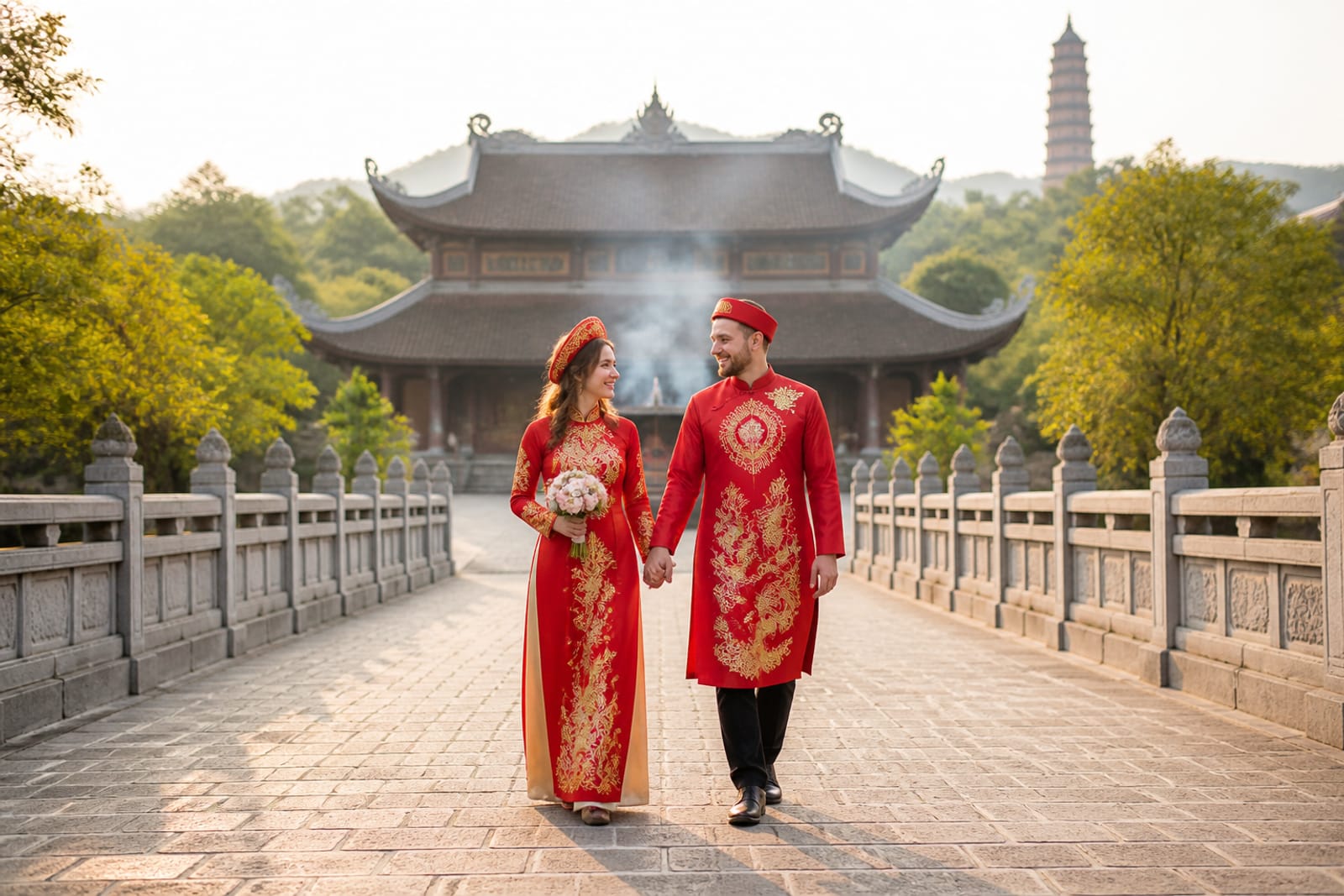
Consider also your ao dai choice. A traditional silk ao dai photographs spectacularly in Hoi An's framed temple and water settings; it shines equally in Ninh Binh's open landscapes but risks mud and tangles on fieldwork. A modern, shorter ao dai or fusion outfit suits active Ninh Binh roaming. If rental is your route, check Cáo Studio's ao dai stock and ask the team which pieces work best per location.
📸 Book on WhatsApp — ao dai photoshoot
---
FAQ
Can I shoot in Hoi An during monsoon season (Sep–Nov) and still get good photos?
Sep offers excellent warm light and lower crowds; Oct–Nov brings typhoon risk and grey skies. If booking Sep, expect reliable golden light. Oct–Nov is a gamble—ask the photographer for backup indoor/temple shots in case of rain. Confirm rescheduling terms before committing.
Do I need a guide to shoot Ninh Binh on my own?
Legally, yes. Hang Mua and Trang An are protected sites requiring a local guide or registered tour operator. Hiring an independent photographer without a guide connection can delay shoots while permits are arranged. Book through a photographer already networked with local operators to avoid friction.
Is Hoi An too crowded to get intimate couple shots?
Not if you shoot 5:30–7 a.m. or 4–6 p.m. during the dry season (Feb–May). Peak tourist hours are 8 a.m.–3 p.m. Early starts guarantee empty lantern streets and cool light. Afternoon sessions trade solitude for golden-hour magic when a few lingerers add romantic atmosphere.
What's the actual walking distance for Hang Mua shots in Ninh Binh?
About 500 stone steps uphill, then uneven paths along the karst ridge. Plan 45 minutes up, 30 down, plus shooting time. Wear non-slip shoes and bring water. Heavy ao dai skirts become a liability; consider lightweight wrap-pants or save the ao dai for flatter Trang An boat scenes.
If I book Cáo Studio for Hoi An, what's included in the shoot?
Ask on WhatsApp for a quote. Exact inclusions (hours, outfits, edited files, delivery timeline) are confirmed during the booking conversation. Check the pricing page and FAQ for general guidance, then contact the team directly for a custom pre-wedding package tailored to Hoi An or Ninh Binh.
Can I wear a wedding dress instead of an ao dai?
Yes. Both locations suit Western bridal wear, though light and heat management differ. Hoi An's shaded streets keep tulle and lace cool; Ninh Binh's open fields can make heavy fabrics uncomfortable. Confirm outfit comfort with your photographer before the shoot day.
FAQ
Can I shoot in Hoi An during monsoon season (Sep–Nov) and still get good photos?
Sep offers excellent warm light and lower crowds; Oct–Nov brings typhoon risk and grey skies. If booking Sep, expect reliable golden light. Oct–Nov is a gamble—ask the photographer for backup indoor/temple shots in case of rain. Confirm rescheduling terms before committing.
Do I need a guide to shoot Ninh Binh on my own?
Legally, yes. Hang Mua and Trang An are protected sites requiring a local guide or registered tour operator. Hiring an independent photographer without a guide connection can delay shoots while permits are arranged. Book through a photographer already networked with local operators to avoid friction.
Is Hoi An too crowded to get intimate couple shots?
Not if you shoot 5:30–7 a.m. or 4–6 p.m. during the dry season (Feb–May). Peak tourist hours are 8 a.m.–3 p.m. Early starts guarantee empty lantern streets and cool light. Afternoon sessions trade solitude for golden-hour magic when a few lingerers add romantic atmosphere.
What's the actual walking distance for Hang Mua shots in Ninh Binh?
About 500 stone steps uphill, then uneven paths along the karst ridge. Plan 45 minutes up, 30 down, plus shooting time. Wear non-slip shoes and bring water. Heavy ao dai skirts become a liability; consider lightweight wrap-pants or save the ao dai for flatter Trang An boat scenes.
If I book Cáo Studio for Hoi An, what's included in the shoot?
Ask on WhatsApp for a quote. Exact inclusions (hours, outfits, edited files, delivery timeline) are confirmed during the booking conversation. [Check the pricing page](/pricing) and [FAQ](/faq) for general guidance, then contact the team directly for a custom pre-wedding package tailored to Hoi An or Ninh Binh.
Can I wear a wedding dress instead of an ao dai?
Yes. Both locations suit Western bridal wear, though light and heat management differ. Hoi An's shaded streets keep tulle and lace cool; Ninh Binh's open fields can make heavy fabrics uncomfortable. Confirm outfit comfort with your photographer before the shoot day.
Ao dai, makeup, hair and a local photographer in Hanoi or Saigon — one WhatsApp message.