/pre-wedding-photoshoot
Hoi An or Sapa for Pre-Wedding Photos: Choose the Right Backdrop
Hoi An suits couples who want layered, golden-hour photography in a compact historic town—best February to April when dry and mild, crowds thin at dawn. Sapa appeals to adventure-focused pairs seeking misty mountains, terraced rice and golden light on elevated terrain—ideal September to October when fog rolls at sunrise and rice glows amber, though the 5-hour drive from Hanoi and steep paths demand fitness. Cáo Studio – Makeup & Photoshoot operates pre-wedding shoots in Hoi An by appointment with the team traveling from Hanoi, and also runs pre-wedding sessions in Hanoi where you can do valley and mountain day-trips. Hoi An requires an entrance ticket to the Ancient Town (crowds peak late morning); Sapa is free but unpredictable—clouds can erase views in minutes, and the rainy season (May–August) brings afternoon downpours. Both let you wear an ao dai, but Hoi An's flat terrain and narrow lanes suit traditional silk; Sapa's elevation, wind and steep rice-terrace steps need a fitted, shorter version and sturdy shoes underneath. --- Choosing between Hoi An and Sapa for pre-wedding photos is not a style question alone—it is a logistics and timing decision. Both are iconic, but they reward different preparation.
Which location has better light for pre-wedding photos?
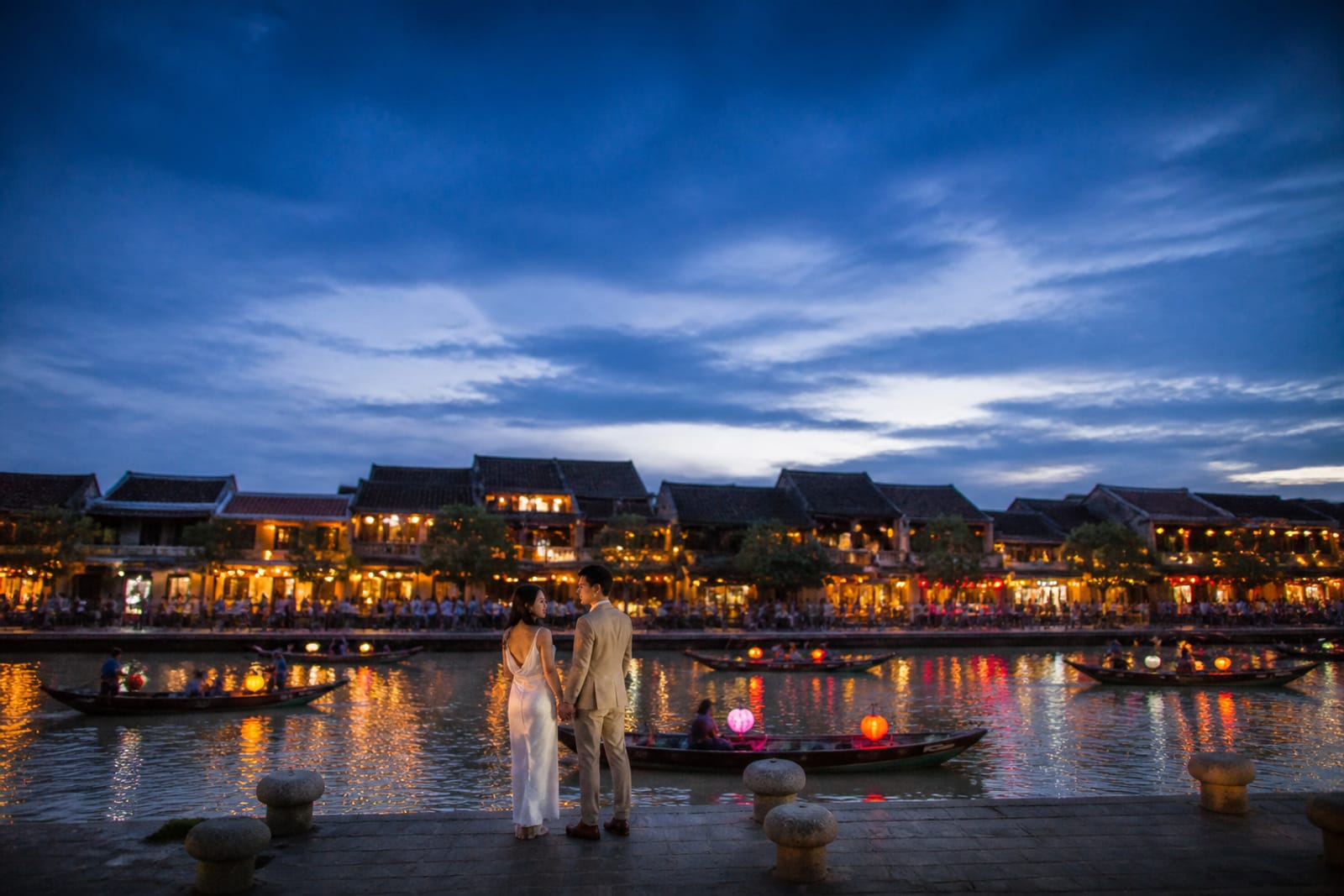
Hoi An's Ancient Town sits on flat terrain flanked by rice fields and a slow river. Golden hour (5:30–6:30 a.m. in summer, earlier in winter) floods the lantern-lit bridges, weathered walls and narrow lanes with warm, directional light. The town's compact layout—you can walk the whole photogenic perimeter in 2–3 hours—means your photographer captures multiple moods (lantern reflections, silk-draped storefronts, arch bridges, water views) without wasting time in transit. Clouds are less common February–April, so consistent light is predictable.
Sapa, at 1,600 metres elevation in the northern mountains, offers dramatic backlighting when dawn mist lifts over terraced rice fields. Sunrise light cuts through fog in clean beams, painting rice in amber and bronze. However, clouds move fast—what looks golden at 5:45 a.m. can disappear by 6:15 a.m. if weather shifts. Overcast days (common May–August) flatten detail; even in dry seasons (September–October), fog lingers unpredictably until mid-morning, limiting your shooting window to 1–2 hours maximum. Light here is visually richer but less reliable than Hoi An.
Winner for consistent, predictable light: Hoi An. Sapa rewards early starts and flexibility; Hoi An rewards patience within a narrower but steadier window.
What is the best season to shoot in each location?
| Aspect | Hoi An (Feb–Apr) | Sapa (Sep–Oct) | Why the difference |
|---|---|---|---|
| Rainfall & clouds | Dry, clear skies | Occasional drizzle, fog burns off | Hoi An's coastal plateau stays dry; Sapa is monsoon-adjacent |
| Ao dai fit & comfort | Cool (18–25°C), silk flows | Cool (10–15°C), wind catches fabric | Sapa's wind requires shorter hemlines, fitted cuts |
| Rice field color | Pale green (early growth) | Golden amber (harvest) | Timing of planting cycles differs by 500m elevation |
| Crowds & permits | Ancient Town busy by 8 a.m. | Few tourists early morning | Hoi An is UNESCO; Sapa draws mountain-trekkers |
| Walking difficulty | Flat, easy terrain | Steep rice terraces, muddy paths | Sapa demands proper footwear, fitness |
February–April: Hoi An is cool (18–25°C), dry and mild. Rice fields transition from pale green to deeper jade. Lanterns glow warmly against clear sky. Crowds arrive late (7–8 a.m.), so sunrise (5:30–6:00 a.m.) is peaceful. Expect mild mornings, warm afternoons. Ao dai silk hangs naturally without wind resistance.
May–August: Avoid both locations. Hoi An is 35°C+, humid and rainless but scorching—early sunrise shoots (4:30 a.m.) are necessary and exhausting. Sapa is the wettest period; afternoon downpours are nearly guaranteed, mist doesn't lift, and rice fields flood. Also, both locations host peak domestic tourism (Tet holiday extends through mid-February, then school holidays).
September–October: Sapa shines—the rainy season ends, rice approaches harvest (golden), fog burns by mid-morning, and temperatures cool to 10–15°C. Hanoi-based travelers can plan 2–3 day trips. Hoi An is transitional; it still has dry stretches and is less crowded than February–April, but the September–October rainy season (typhoons and localized floods) begins at month's end. Best Hoi An window: early September only.
November–January: Hoi An becomes cooler (12–20°C) and drizzly December–January. Sapa dips to 5–10°C and mist is heavier; frost is possible December–February. Both are quieter but require warm layers under ao dai and sturdy outerwear.
Key insight: Book Hoi An February–April for guaranteed light and comfort; book Sapa September–October for golden rice and mist drama. Both are compromised May–August.
How does travel time and logistics affect your shoot day?
Hoi An is 30 km south of Da Nang (a 45-minute drive) and 120 km from Hanoi (a 3–4 hour drive or short domestic flight). If you arrive in Da Nang or fly Hanoi–Da Nang, ground time is manageable. The Ancient Town entry ticket is required; arrive before 5:30 a.m. (or just after 5:00 a.m. before gates open to tourists) to shoot pre-dawn without crowds. Makeup and hair are best done at your hotel (Da Nang beachfront, Hoi An town hotels) or arranged on-location—Cáo Studio offers makeup & hair at your hotel by appointment in Hoi An.
Sapa is 340 km north of Hanoi via a winding mountain pass (5–6 hour drive each way). Most couples overnight in Sapa or do a 2-day trip. The 90-minute final ascent from Sa Pa town to the photo spots (Tram Ton Pass, terraced fields near Fansipan base) is steep and requires a driver familiar with mountain roads. You cannot shoot at dawn without staying overnight. Weather delays are real—clouds can force a 2–3 hour reschedule mid-trip. Makeup and hair logistics are tighter; plan on a Sapa town salon or bring a makeup artist with you.
Logistics winner: Hoi An. Day-trip friendly from Da Nang; Sapa demands overnight stay and 10+ hours of driving.
What ao dai style works best in each setting?
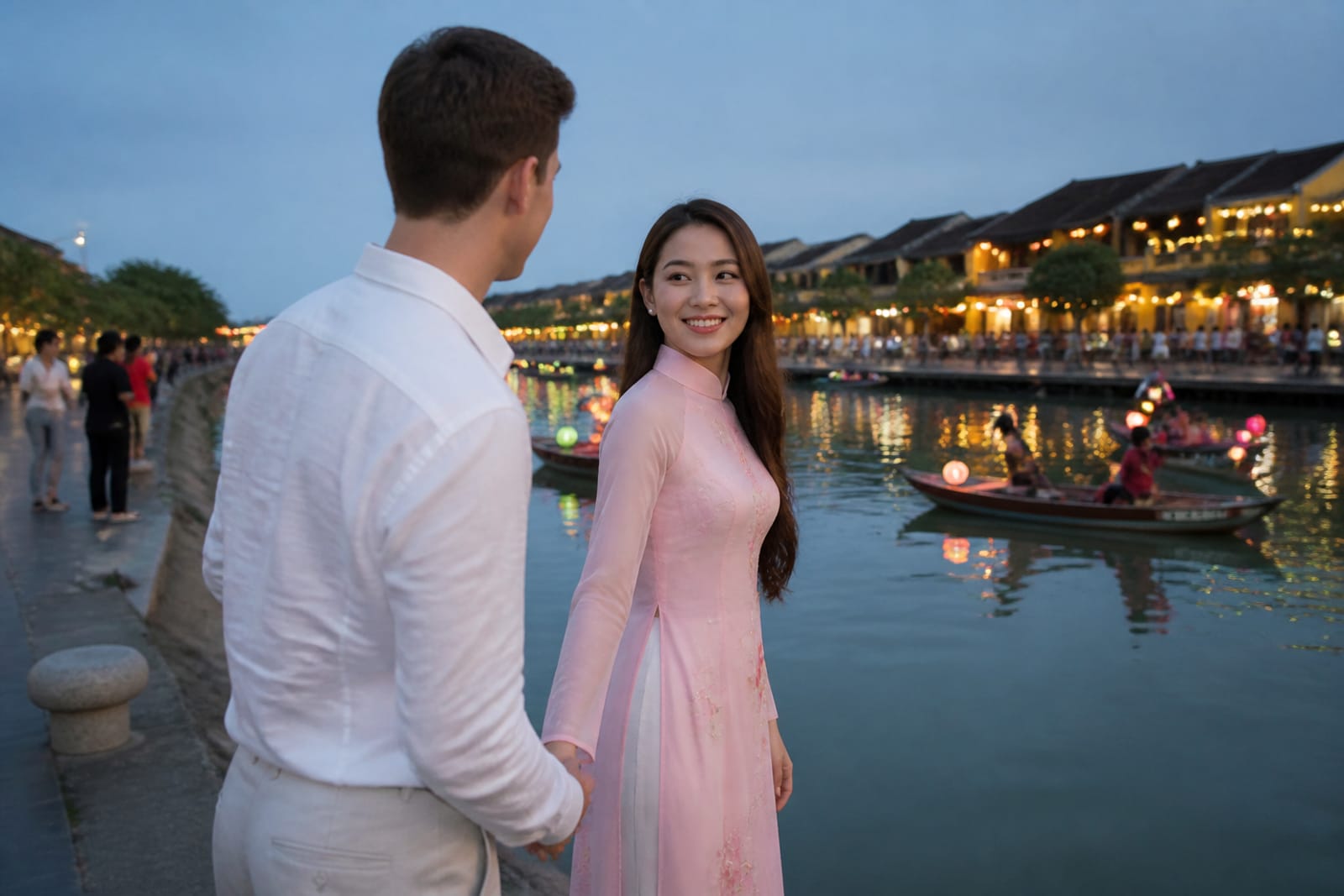
Hoi An: The Ancient Town is compact and walkable; traditional, flowing silk ao dai in jewel tones (deep red, emerald, sapphire, burgundy) photograph beautifully against lanterns and aged wood. Long sleeves and full-length hems suit the elegant, heritage vibe. Wear a thin slip or lightweight undergarment—Hoi An's cool mornings (February–April) mean silk will cling in light breezes, and you'll walk flat, paved lanes. Flat shoes or embroidered slippers work indoors; trainers for transitions.
Sapa: Mountains, mist and rice terraces call for a fitted, shorter ao dai (knee-length or mid-calf) that won't snag on terrace edges or drag through muddy paths. Choose lighter, less voluminous fabrics to resist wind gusts at elevation. Colors that pop against grey mist (coral, sunflower yellow, hot pink) photograph better than pastels. Wear warm layers underneath—a fitted long-sleeve shirt or thermal—and bring sturdy, waterproof hiking boots (change out of slippers before terrain walking). Wind will test your ao dai; shorter cuts stay in frame.
See the lookbook for ao dai inspiration and ask about ao dai rental options suited to mountain vs. town shoots.

How does a pre-wedding shoot typically run in each location?
Hoi An typical day: Arrive 5:00–5:30 a.m. at your hotel for makeup and hair (or book makeup & hair service at your hotel in advance). Photographer collects you by 6:00 a.m. Shoot the Ancient Town sunrise (6:00–7:30 a.m., quietest light, fewest tourists). Pause for a break or location change (7:30–8:30 a.m.). Resume 8:30–10:30 a.m. in rice fields or riverside spots outside town (light becomes harsh by 11 a.m.). End by 10:30 a.m. to avoid crowds and heat. Total on-location time: 4–5 hours. Edited gallery delivered within 2–4 weeks. Ask on WhatsApp about exact session lengths, outfit changes and delivery timings—these are confirmed per package.
Sapa typical day: Overnight in Sapa town (arrive day before). 4:30 a.m. wake-up, makeup at hotel. Driver picks you up 5:00 a.m., ascends to shoot location (5:30–6:00 a.m. first light). Shooting window is tight—45 minutes to 2 hours before mist burns off or clouds roll in. If light disappears, reschedule or pivot to a lower-elevation backup spot. Afternoon slot (2:00–4:00 p.m.) sometimes works if morning mist clears; usually the day wraps by 11:00 a.m. Logistics and weather mean flexibility is essential. Return to Hanoi day-of or overnight again.
Cáo Studio's approach: For pre-wedding shoots in Hoi An, the team travels from Hanoi by appointment—confirm dates on WhatsApp. Sessions are tailored to your timeline, outfit count and location preferences. For Hanoi-based couples considering a pre-wedding photoshoot, mountain and valley day-trips can be arranged. Exact timing, number of edited images and delivery dates are confirmed on WhatsApp when you book.
📸 Book on WhatsApp — pre-wedding photoshoot
Decision framework: Hoi An vs. Sapa
Use this checklist to narrow your choice:
- Do you have 1 day or 2+ days available? → Hoi An (day-trip from Da Nang); Sapa (overnight + drive).
- Do you prioritize easy logistics or dramatic scenery? → Hoi An (flat, walkable, predictable); Sapa (steep, misty, adventure).
- Is weather predictability important? → Hoi An (dry Feb–Apr, consistent light); Sapa (fog unpredictable even in good season).
- Do you want a traditional or adventurous ao dai vibe? → Hoi An (flowing silk, heritage); Sapa (fitted, short, wind-proof).
- Can you shoot at dawn? → Both yes, but Hoi An is easier (from hotel); Sapa requires overnight.
- Is golden rice or lanterns your dream backdrop? → Sapa (Sep–Oct harvest); Hoi An (lanterns year-round, rice Feb–Apr pale green).
Hybrid option: Fly Hanoi–Da Nang, shoot Hoi An February–April, then drive 2 hours north to Hue for a bonus culture session. Or base in Hanoi, do a Sapa 2-day trip, then return for ao dai photoshoot in Hanoi with water and mountain day-trips nearby.
What to check before you book
- Entrance tickets & permits: Hoi An Ancient Town requires an entrance ticket (check current price on the official site). Sapa has no entry fee but some private rice terraces may charge access. Ask your photographer.
- Weather patterns: Check historical weather for your chosen month (temperature, rainfall, fog). Sapa's mountain mist is dramatic but unreliable; allow a 1–2 day buffer if possible.
- Ao dai fit: Hoi An suits long, flowing silhouettes; Sapa demands shorter, fitted versions. Confirm with your makeup studio whether they provide rental or advice.
- Hotel location: In Hoi An, stay within walking distance of the Ancient Town or near the river; hotels outside town add 20–30 minutes to shoot start. In Sapa, stay in town center (Sapa town itself, not valley villages) to minimize pre-dawn travel.
- Photographer experience: Ask whether your photographer or Cáo Studio has shot in your chosen location in your chosen season. Mountain fog and river light require different skill sets.
- Backup plan: If weather delays you in Sapa, what is the rescheduled date? In Hoi An, if rain hits February–March (rare), can you shoot the next sunrise? Confirm cancellation and reschedule terms on WhatsApp.
Ask Cáo Studio – Makeup & Photoshoot about pre-wedding shoot packages, ao dai rental and makeup & hair at your hotel tailored to your location and season. Queries about timing, outfit swaps and delivery are answered on WhatsApp.
---
FAQ
Can I do a pre-wedding shoot in both Hoi An and Sapa on the same trip?
Yes, but it requires 4–5 days minimum. Fly Hanoi–Da Nang, shoot Hoi An days 1–2 (overnight), drive 2 hours north to Hue (optional), then return Hanoi and do a Sapa 2-day trip. Sapa's 5-hour drive from Hanoi means two separate trips are more common. Ask Cáo Studio on WhatsApp about multi-location packages and logistics.
What happens if weather ruins my Sapa shoot day?
Sapa's fog and clouds can clear within an hour or persist all day. Always book with a flexible reschedule window (2–3 days). Most photographers offer a backup date at no extra cost. In Hoi An, rain February–April is rare; drizzle December–January is common but still shootable (moody light). Discuss weather contingencies on WhatsApp before booking.
Do I need a guide or can the photographer handle Sapa terrain alone?
Photographers are experts in light and framing, not mountain safety. Sapa's terrace paths are steep, muddy and unfenced. Hire a local guide separately, or ask Cáo Studio whether they arrange guides as part of the Sapa package. Terrain difficulty is real—wear proper hiking boots, not ao dai slippers alone.
Is an ao dai mandatory for pre-wedding photos in Hoi An or Sapa?
No. Many couples wear Western wedding dress, casual outfits or a blend. Ao dai photographs beautifully in both settings and honors Vietnamese culture, but it is optional. Cáo Studio offers ao dai rental and can advise outfit combinations. Discuss dress code on WhatsApp when booking.
How long does it take to get edited photos back after the shoot?
Timelines vary per package. Exact delivery dates are confirmed on WhatsApp when you book. Most studios deliver within 2–4 weeks; rush options may carry different terms. Ask Cáo Studio for their specific turnaround when you request a quote.
What is the best time to book a Hoi An or Sapa pre-wedding shoot?
Book 2–3 months in advance, especially for February–April (Hoi An's peak) and September–October (Sapa's best season). Both are popular periods. For last-minute bookings (within 2 weeks), availability is limited. WhatsApp Cáo Studio to check dates and confirm logistics.
FAQ
Can I do a pre-wedding shoot in both Hoi An and Sapa on the same trip?
Yes, but it requires 4–5 days minimum. Fly Hanoi–Da Nang, shoot Hoi An days 1–2 (overnight), drive 2 hours north to Hue (optional), then return Hanoi and do a Sapa 2-day trip. Sapa's 5-hour drive from Hanoi means two separate trips are more common. Ask Cáo Studio on WhatsApp about multi-location packages and logistics.
What happens if weather ruins my Sapa shoot day?
Sapa's fog and clouds can clear within an hour or persist all day. Always book with a flexible reschedule window (2–3 days). Most photographers offer a backup date at no extra cost. In Hoi An, rain February–April is rare; drizzle December–January is common but still shootable (moody light). Discuss weather contingencies on WhatsApp before booking.
Do I need a guide or can the photographer handle Sapa terrain alone?
Photographers are experts in light and framing, not mountain safety. Sapa's terrace paths are steep, muddy and unfenced. Hire a local guide separately, or ask Cáo Studio whether they arrange guides as part of the Sapa package. Terrain difficulty is real—wear proper hiking boots, not ao dai slippers alone.
Is an ao dai mandatory for pre-wedding photos in Hoi An or Sapa?
No. Many couples wear Western wedding dress, casual outfits or a blend. Ao dai photographs beautifully in both settings and honors Vietnamese culture, but it is optional. Cáo Studio offers [ao dai rental](/ao-dai-rental) and can advise outfit combinations. Discuss dress code on WhatsApp when booking.
How long does it take to get edited photos back after the shoot?
Timelines vary per package. Exact delivery dates are confirmed on WhatsApp when you book. Most studios deliver within 2–4 weeks; rush options may carry different terms. Ask Cáo Studio for their specific turnaround when you request a quote.
What is the best time to book a Hoi An or Sapa pre-wedding shoot?
Book 2–3 months in advance, especially for February–April (Hoi An's peak) and September–October (Sapa's best season). Both are popular periods. For last-minute bookings (within 2 weeks), availability is limited. WhatsApp Cáo Studio to check dates and confirm logistics.
Ao dai, makeup, hair and a local photographer in Hanoi or Saigon — one WhatsApp message.