hoi-an
Hoi An Rice Fields by Bicycle Photoshoot Guide
Hoi An's rice fields are a photographer's gift: endless emerald geometry, reflective water, soft morning mist, and minimal crowds before 7 AM. Unlike studio backdrops or crowded temple grounds, the paddies demand logistics—terrain, weather, timing, and a photographer who knows safe routes. This guide walks you through scouting, booking, shooting, and turning raw files into keepsakes you'll actually display.
What Time of Day Gives the Best Light?
Early morning (6–7 AM) and late afternoon (4–5 PM) produce warm, directional light that wraps around you rather than flattening you. Between 10 AM and 3 PM, the sun sits high; shadows become harsh and skin looks washed out—avoid this window entirely. Morning light rewards you with mist rising off water; evening light gilds the flooded paddies copper. Plan 45 minutes on-location per time window to chase the sweet spot as it moves.
📸 Book on WhatsApp — ao dai photoshoot
How Do You Get a Bicycle & Navigate Rice Field Paths?
Rent a bicycle from your Hoi An hotel or a shop near the Old Town (roughly 100,000–150,000 VND per day; many hotels include one free). Rice field paths are wide dirt tracks, navigable in regular shoes, but uneven in rainy season (September–November). A local photographer knows which paddies permit entry, which are private, and where paths turn soft after rain. Never enter a field without permission or a guide—landowner relations matter. If you're hiring Cáo Studio for a Hoi An shoot, ask on WhatsApp about pre-scout reports and rain-day alternates.
What Should You Wear Under an Áo Dài in Rice Fields?
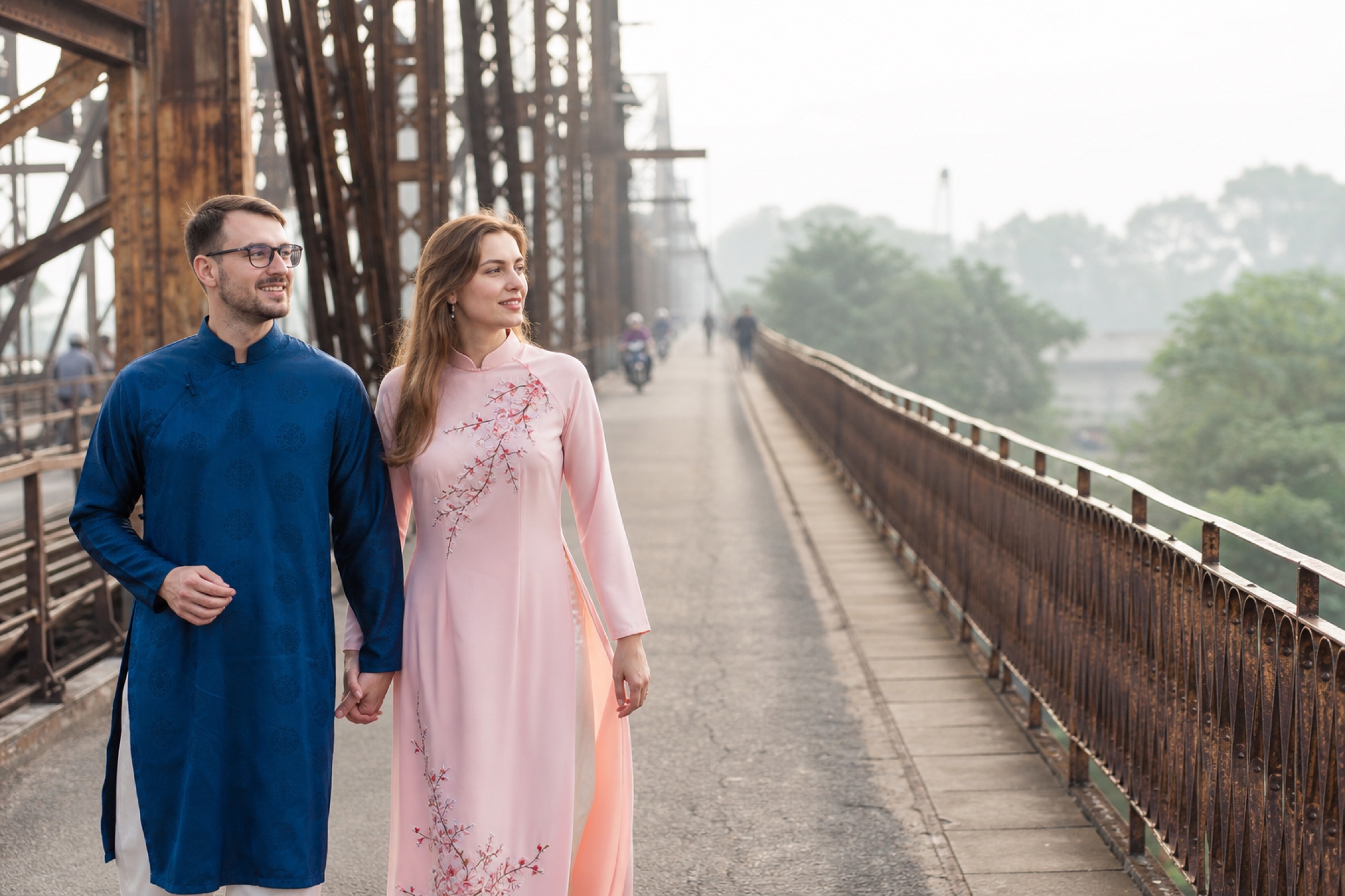
An áo dài is the gold standard here: flowing, photogenic, and culturally rooted. Wear a fitted slip (white or matching the áo dài color) underneath to avoid transparency and reduce wind flap. If cycling, wear shorts or leggings under the slip—paddling through mud exposes legs. For non-áo dài looks, choose loose linen or cotton that moves in wind; avoid tight jeans or synthetic fabrics that show sweat and restrict pose range. Bring a second outfit change: one for bike riding, one for standing portraits in water. Footwear: wear flip-flops or sandals to cycle; carry canvas shoes or bare feet for wading (water is cool, not cold).
| Look | Best For | Key Layer | Why It Works |
|---|---|---|---|
| Áo dài + slip + shorts | Couples, anniversaries, cultural narrative | White slip, fitted shorts under | Timeless, movement, authentic |
| Linen shirt/pants + canvas shoes | Solo travelers, casual aesthetic | Breathable cotton underneath | Practical, less formal, easier to move in |
| Dress + leggings | Solo female, romantic vibe | Slip prevents see-through | Flatters in water reflections |
| Swimwear cover-up | Groups, playful mood | Quick-dry shirt | Allows wading without soaking formal wear |
Bring a lightweight shawl: sun exposure is real, and a wrap doubles as a compositional element and skin protection.
How Do You Book a Photographer & What Should They Know?
If you're staying in Hoi An, contact Cáo Studio – Makeup & Photoshoot via WhatsApp to ask about Hoi An dates and availability. The studio travels to Hoi An by appointment; include your session date, group size (couples, families, solo), and mood (romantic, playful, cultural). A remote photographer needs:
- Exact location or hotel name (so they scout routes beforehand).
- Sunrise or sunset preference (and a rain backup plan).
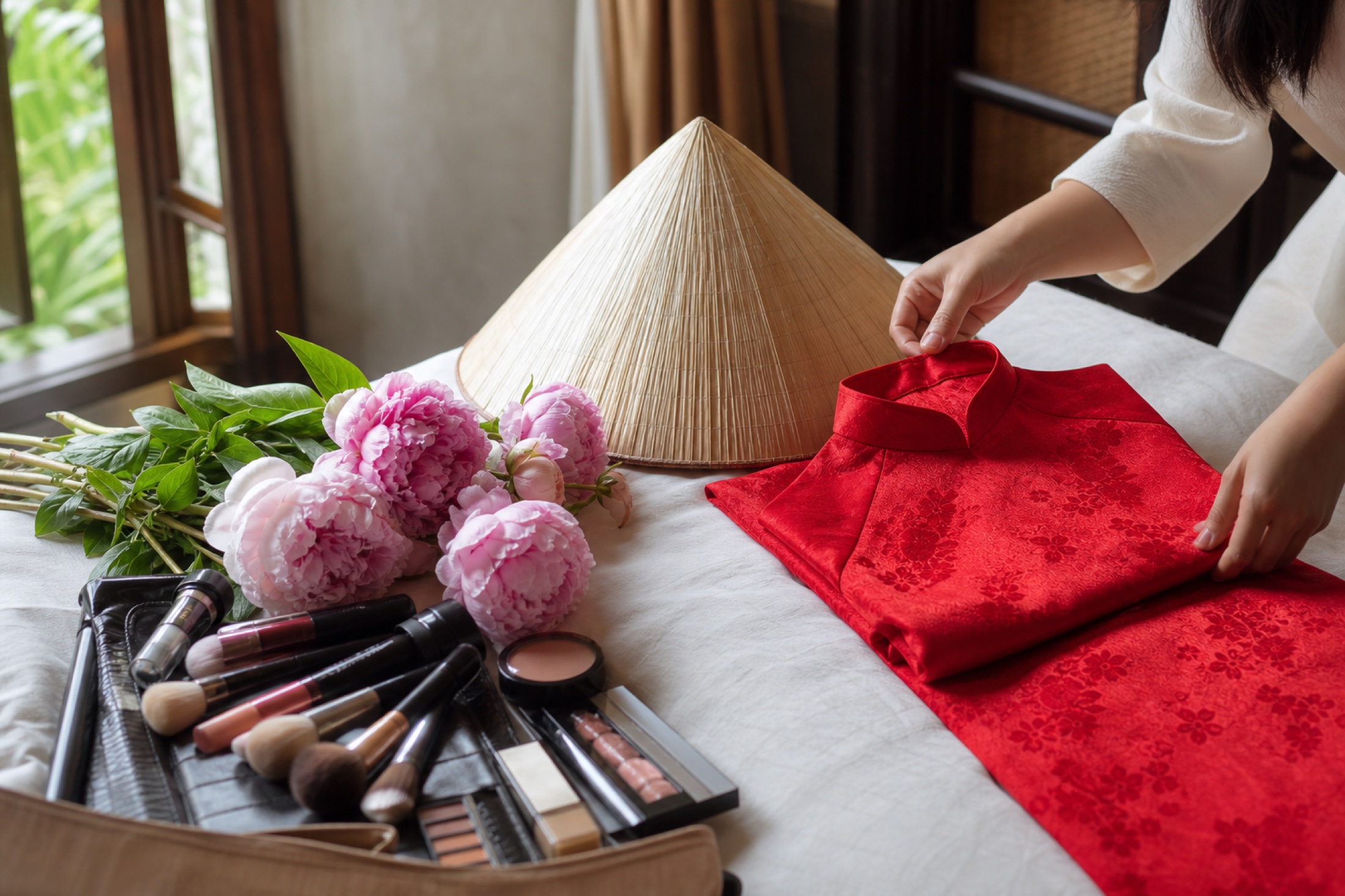
- Outfit specifics (áo dài requires steam-pressing; makeup artists can arrive at your hotel).
- Bike rental status (studio may coordinate, or you arrange it).
- Shot list (reflections in water, cyclist motion, group poses).
Expect a consultation call or WhatsApp thread before the shoot date. First-time hires often forget that rice field paths are muddy after rain—ask your photographer to confirm the forecast 48 hours prior and propose an alternative location (a temple courtyard, river walk) if conditions worsen.
How Do You Preserve & Share Rice Field Photos?
Raw files alone gather digital dust. After your shoot, you'll have 50–200 edited images. Choose keepsakes that anchor memories:
| Keepsake Type | Who It's For | Why Choose It |
|---|---|---|
| Framed metal print (8×10 or 12×16) | Couples, anniversaries | Water reflections pop on metal; lasts 20+ years |
| Engraved acrylic wall panel | Solo travelers, family trips | Lightweight, ship-friendly, personalized date or quote |
| Premium photo book (12-page) | Families, elopers | Tells a narrative; physically handled, not scrolled |
| Canvas wrap (20×30 or larger) | Living room focal point | Large-scale impact; rice field panoramas shine |
| Star map print (session date + location) | Anniversaries, proposals | Sentimental; layers the moment with the sky |
Pair a print with an engraved keepsake box to store negatives or smaller prints. Avoid cheap paper prints—tropical humidity degrades them in 2–3 years. Cáo Studio can advise on archival printing during your booking consultation.
What to Check Before You Book
Photographer experience: Ask for a portfolio of rice field or outdoor water shots. Flat, underexposed files indicate rushed editing or poor location scouting.
Weather backup: Confirm a rain-date policy or alternate location (old town street, riverside) in writing via WhatsApp.
Editing timeline: When do you receive photos? (Typical: 7–14 days for edited gallery, rush options available.)
Outfit steaming: If wearing áo dài, ask if the photographer or your hotel can steam it morning-of.
Bicycle coordination: Will the photographer or studio help you rent, or do you arrange it? Clarity prevents last-minute stress.
Print quality specs: Request sample files or ask about their printing partners before committing to large formats.
Use this checklist before hitting "confirm":
- [ ] Photographer has rice field portfolio.
- [ ] Rain date or alternate location is documented.
- [ ] Editing timeline aligns with your trip dates.
- [ ] Outfit plan includes layers and footwear.
- [ ] Bicycle rental is confirmed 48 hours prior.
- [ ] Keepsake choice is picked (print, book, acrylic, box).
- [ ] Makeup & hair pickup (hotel or studio) is booked if needed.
---
📸 Book on WhatsApp — ao dai photoshoot
Hoi An's rice fields reward early risers and deliberate planning. A photographer who knows the paddies, terrain, and light timing turns a bicycle ride into a heirloom session. Start by contacting Cáo Studio via WhatsApp, then lock in your date and keepsake choice—the memory lasts longer than the mud.
For more Hoi An photoshoot ideas, explore our full Hoi An guide and browse couple & family session options or pre-wedding packages that include travel coordination.
FAQ
What months are best for Hoi An rice field photography?
March–May (dry, clear light) and November–December (cool, low humidity) are ideal. September–November brings rain; flooded fields are dramatic but paths become slippery. December–February is cooler, requiring less makeup touch-ups. Avoid June–August (heavy heat, harsh midday light).
Can I shoot rice fields in an áo dài without a hired photographer?
Yes, use a tripod or ask a local cyclist to hold your phone. Unattended tripods risk theft; a photographer permits movement, poses, and safety checks on muddy terrain. Solo tripod shots work for candid wide-angle frames but lose posing flexibility.
How much mud is on rice field paths, and will it ruin shoes?
Paths are dry dirt most of the year; after rain (Sept–Nov), they turn soft and muddy 1–2 inches deep. Wear flip-flops or sandals for cycling; carry canvas shoes to walk in fields, or go barefoot if comfortable. Mud washes off easily in Hoi An hostels. Avoid expensive footwear.
Do I need to pay landowners for rice field photoshoots?
Technically, rice fields are private. A local photographer navigates permissions; tourists entering alone may be stopped. Cáo Studio's Hoi An appointments include location scouting, so you avoid confrontation. Always ask a guide before entering.
How do I frame reflections in flooded rice field water?
Shoot during early morning mist (6–7 AM) or late afternoon when the sun is low (4–5 PM). Wade knee-deep into water and position yourself so the flooded paddies mirror the sky or clouds behind you. Your photographer will coach you into the best reflection angles during the shoot.
FAQ
What months are best for Hoi An rice field photography?
March–May (dry, clear light) and November–December (cool, low humidity) are ideal. September–November brings rain; flooded fields are dramatic but paths become slippery. December–February is cooler, requiring less makeup touch-ups. Avoid June–August (heavy heat, harsh midday light).
Can I shoot rice fields in an áo dài without a hired photographer?
Yes, use a tripod or ask a local cyclist to hold your phone. Unattended tripods risk theft; a photographer permits movement, poses, and safety checks on muddy terrain. Solo tripod shots work for candid wide-angle frames but lose posing flexibility.
How much mud is on rice field paths, and will it ruin shoes?
Paths are dry dirt most of the year; after rain (Sept–Nov), they turn soft and muddy 1–2 inches deep. Wear flip-flops or sandals for cycling; carry canvas shoes to walk in fields, or go barefoot if comfortable. Mud washes off easily in Hoi An hostels. Avoid expensive footwear.
Do I need to pay landowners for rice field photoshoots?
Technically, rice fields are private. A local photographer navigates permissions; tourists entering alone may be stopped. Cáo Studio's Hoi An appointments include location scouting, so you avoid confrontation. Always ask a guide before entering.
How do I frame reflections in flooded rice field water?
Shoot during early morning mist (6–7 AM) or late afternoon when the sun is low (4–5 PM). Wade knee-deep into water and position yourself so the flooded paddies mirror the sky or clouds behind you. Your photographer will coach you into the best reflection angles during the shoot.
Ao dai, makeup, hair and a local photographer in Hanoi or Saigon — one WhatsApp message.