/pre-wedding-photoshoot
Hoi An rice paddies wedding photos: best time and light
Hoi An rice paddies photograph best during the dry season (February–April) and within two hours of sunrise or one hour before sunset, when the low angle of light turns green shoots or golden stubble into luminous texture. The paddies surrounding Hoi An sit 10–20 km from the Ancient Town; transport and scouting take 1–2 hours. Soft, directional light minimizes heat stress (paddies are fully exposed) and flatters both subject and landscape. Avoid the rainy season (September–December), when flooding and grey skies kill contrast. Cáo Studio – Makeup & Photoshoot organizes Hoi An sessions by appointment—the team travels from Hanoi or Saigon—so timing, location scouting, and local logistics are coordinated in advance via WhatsApp to ensure you're in the paddies at optimal light with the right outfit choice. --- Most couples dream of rice paddies but don't know when their light and accessibility peak. Here's how to choose the right time and approach for Hoi An paddies that deliver the images you'll treasure.
Which season gives you the best rice-paddy light?
February through April is Hoi An's golden window. The air is clearest, temperatures mild (20–28°C), and rice—depending on planting cycles—ranges from fresh green shoots to mature plants ready for harvest. This season attracts most pre-wedding bookings because cloud cover is rare and the landscape reads sharp in photographs.
May through August stays dry but swells to 35°C+. The paddies are vivid green, but midday heat creates shimmer and harsh shadows. Shooting demands an early start (5:30–6:00 a.m. sunrise) or a late-afternoon slot (5:00–6:30 p.m.). The effort pays off: morning light bathes new rice in an ethereal glow; evening light turns stubble into molten bronze.
September through December is the rainy, typhoon, and flood season. The Ancient Town itself floods during October–November peaks. Paddies become waterlogged, paths disappear, and grey skies flatten contrast. This season is not suitable for outdoor shoots—avoid it entirely for pre-wedding work.
Conclusion: February–April offers effortless timing and reliable light; May–August requires dawn or dusk commitment but rewards you with saturated color; September–December is off-limits.
What time of day should you shoot in the paddies?
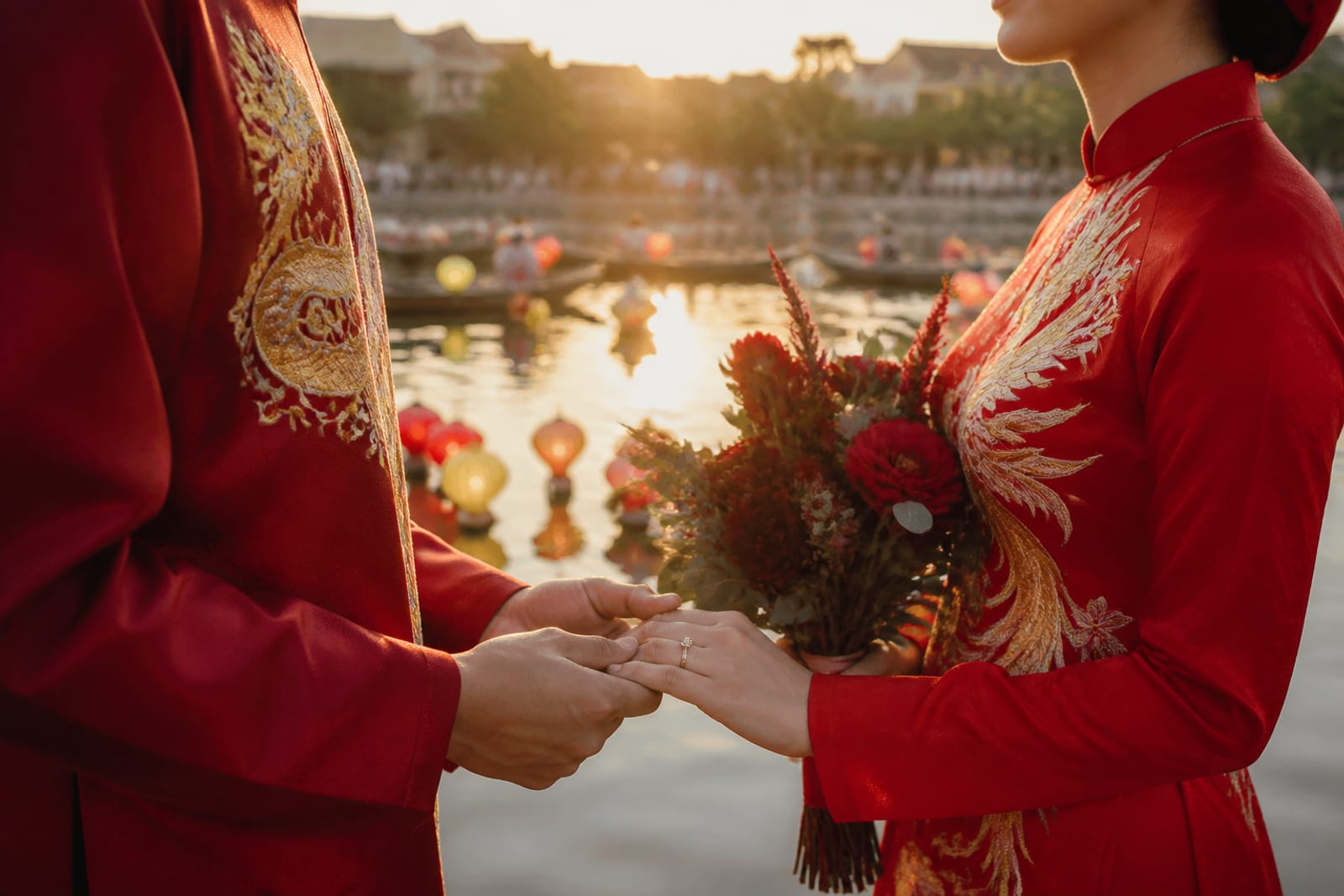
Sunrise (5:30–6:30 a.m.) delivers soft, directional light that skims across rice stalks, creating depth and texture. Colors are cool and refined; the air is still, and the paddies are empty of workers. Most couples find this timeslot both magical and practical because you're finished before the day heats up.
Mid-morning (7:00–9:30 a.m.) works only in cooler months (February–March). Light is still directional but higher; heat begins. Paddies may have workers, so scout location carefully.
Midday (10:00 a.m.–3:00 p.m.) is usually avoided. Sun is overhead, shadows are dark and unflattering, and heat exhaustion risks rise for both subjects and crew. If you're shooting in May–August, skip this window.
Golden hour (4:30–6:30 p.m.) rivals sunrise. Light turns warm and horizontal, sculpting rice plants and soil. The sun descends fast in the tropics, so a 90-minute window shrinks quickly. Evening sessions often feel more romantic but require precise timing—clouds or delays mean lost light.
Night shoots after dusk are possible if the paddy has a landmark (temple, tree) silhouetted against a dusky sky, but this is specialist work. Most couples prefer the certainty of dawn.
| Timeslot | Best season | Light quality | Why it works |
|---|---|---|---|
| Sunrise (5:30–6:30 a.m.) | Feb–Apr, May–Aug | Soft, directional, cool | Empty paddies, no heat stress, texture on plants |
| Mid-morning (7:00–9:30 a.m.) | Feb–Apr only | Directional, warming | Still manageable light; Feb–Apr cool enough |
| Golden hour (4:30–6:30 p.m.) | Feb–Apr, May–Aug | Warm, horizontal | Romantic color; fast-moving, tight timing |
| Midday (10 a.m.–3 p.m.) | None | Harsh, flat, overhead | Avoid entirely—unflattering shadows, heat risk |
Should you book a paddies-only shoot or combine it with other Hoi An locations?
A standalone paddies session (2–3 hours) works if you're committed to maximizing light and outfit changes within one spot. You'll travel before dawn, shoot sunrise or golden hour, and return by mid-morning or evening. This approach suits couples who want a single, deeply explored location with polished final images.
Combined shoots (paddies + Ancient Town + river or temple on the same day) spread energy across 6–8 hours. You chase light at each location but accept shorter windows per spot. The Ancient Town shoot typically happens mid-morning after paddies, when light is soft but less dramatic. River or temple shots work late afternoon into golden hour. Combined sessions suit couples who want narrative variety and a full-day story.
A third option is the pre-wedding elopement approach: paddies at sunrise, breakfast in a village café, then the Ancient Town by late afternoon. This paces the day naturally and lets you experience Hoi An beyond the photo shoot itself.
Ask the team on WhatsApp whether a combined session uses separate sunrise and golden-hour windows (meaning two early starts or two late finishes) or overlaps light windows (efficiency but visual repetition). Combined shoots cost more because they involve longer transport, more outfit changes, and extended crew time—factors worth discussing before you book.
Conclusion: Standalone paddies sessions maximize light and intimacy; combined shoots offer visual variety but demand more stamina.
📸 Book on WhatsApp — pre-wedding photoshoot | 🌸 See the lookbook
What should you wear to photograph well in paddy light?
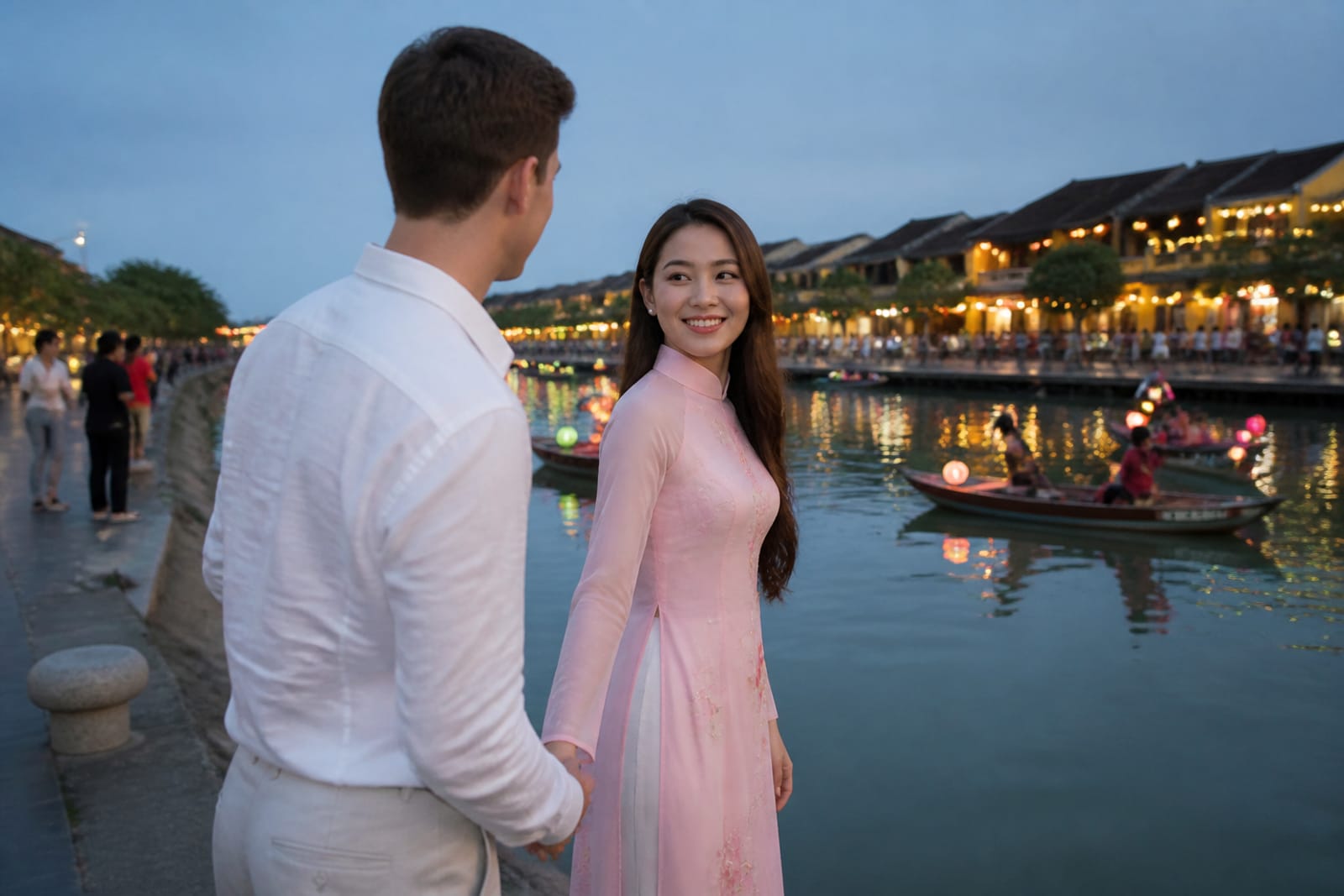
Ao dai (the traditional Vietnamese tunic and pants) photograph beautifully in paddies because the fabric catches light and flows in wind. The contrast between the ao dai's color and the green or golden landscape is natural; white or pastel ao dai reads luminous in warm light. Consider renting an ao dai—Cáo Studio offers ao dai rental to simplify logistics.
Western wedding dresses work but require care. Heavy fabrics absorb heat; long trains drag in mud and water. If you wear a dress, choose a shorter hem, light fabric, and flats or waterproof shoes. Bring the dress in a clean bag and change on-site to keep it dry before the shoot.
Groom outfit should coordinate. A simple shirt (white, cream, pale blue) layers well with a vest or light jacket. Suit and groom outfit rental is available and tailored to Hoi An's humidity. Avoid heavy fabrics and stick to neutral tones that don't fight the landscape.
Colors to favor: neutrals (white, cream, soft grey, beige), pastels, and jewel tones (emerald, sapphire, burgundy). Avoid neon or primary colors—they distract from the landscape. Jewelry should be minimal and non-reflective.
Shoes matter. Paddies have wet soil, water channels, and muddy paths. Wear flats, sandals, or shoes you don't mind getting dirty. The team will help you navigate, but expect to walk 500–1000 meters across uneven terrain.
Consider hair and makeup for the early hour. Dawn shoots mean a pre-dawn makeup call (4:30–5:00 a.m.) at your hotel or our studio's Hoi An coordination point. Makeup and hair at your hotel can come to you if you prefer not to travel before light. Waterproof makeup and a tight updo or braid survive paddies and heat better than loose styles.
Conclusion: Ao dai or light dresses in neutrals and pastels shine; bring proper footwear and arrange early-morning makeup logistics.
How do you book a paddies shoot without wasting money on wrong timing?
First, decide your dates and confirm the season. If you're visiting May–August, commit to a 5:30 a.m. start. If February–April, you have flexibility, but book at least 2 weeks ahead so the team can scout locations and arrange transport.
Second, ask on WhatsApp what the current rice cycle is. Farmers plant and harvest on staggered schedules; some paddies may be fallow or flooded during your dates. The team has local knowledge and will find paddies in the right growth stage for your dates.
Third, decide: paddies + ao dai photoshoot with traditional styling, couple/family session in modern dress, or a pre-wedding photoshoot combining paddies and other locations. Each has different logistics and outfit requirements.
Fourth, discuss transport and schedule. Will you be picked up from your hotel? Do you need accommodation in Hoi An (Cáo Studio coordinates shoots from Hanoi and Saigon, so a pre-dawn start may mean staying overnight in Hoi An). Clarify arrival time, shoot duration, number of outfit changes, and return time.
Fifth, confirm what's included: makeup and hair on-site or at your hotel, outfit rental, location scouting, number of edited images, delivery timeline, print or album options. The team sends exact details on WhatsApp after an initial inquiry.
Sixth, book a call or video preview. See the lookbook and past paddy shoots. Ask the team to walk you through logistics for your specific dates and season. This prevents surprises and ensures you're aligned on light, timing, and outcome.
What to check before you book:
- Dates and season: Confirm February–April is ideal; May–August needs dawn or dusk; September–December is unavailable.
- Visa and travel: Ensure you're arriving on time; pre-dawn logistics require punctuality.
- Outfit choice: Decide on ao dai, dress, or casual attire; discuss rental or bring options.
- Makeup and hair: Clarify whether services come to your hotel or happen on-site.
- Transport: Ask if pickup from your hotel is included or if you arrange your own.
- Weather backup: Confirm rescheduling policy if rain or flood occurs (rare in Feb–Apr, but possible).
- Cost factors: Number of outfits, shoot duration, location distance, and final deliverables affect scope and timeline, not a fixed price. Ask for a quote tailored to your dates and choices.
💄 Makeup & hair at your hotel | 🌸 See the lookbook
Can you shoot paddies outside Hoi An's peak season?
Yes, but with caveats. May–August paddies are still green and beautiful, but you must shoot at sunrise (5:30–6:00 a.m.) or golden hour (5:00–6:30 p.m.) to avoid heat and harsh midday light. A 5:30 a.m. start is non-negotiable; it adds complexity (early hotel pickup, makeup in low light, transport timing), but the reward is rich, directional light and solitude.
September–December: avoid entirely. Flooding, typhoons, and grey skies make paddies inaccessible and unphotogenic. The Ancient Town itself floods during October–November; outdoor shoots are unsafe and nearly impossible.
January is borderline. Temperatures are cool (15–20°C), but drizzle is common. If you're traveling then, paddies may work mid-morning once mist clears, but don't expect the clarity of February–April. Discuss weather predictions with the team before committing.
Late April through May is a transition: peak heat rises, but paddies can be freshly planted (vivid green, short plants that feel ethereal). Light quality remains excellent at sunrise.
Conclusion: February–April is optimal; May–August requires dawn or dusk discipline; all other months carry weather or access risks.
---
Why choose Cáo Studio for Hoi An paddies?
Hoi An paddies demand local knowledge—which paddies are accessible, who owns them, what the current crop cycle is, and how to time transport for dawn light or golden hour. Cáo Studio's Hoi An coordination handles scouting, logistics, and timing so you're in the right place with the right light and the right outfit, not wandering lost or shooting at the wrong hour.
The team also manages the cultural layer: paddies are working land. Farmers are often present. A professional shoot respects that presence—you're guests, not obstacles. Cáo Studio coordinates respectfully.
Makeup and hair can come to your Hoi An hotel to avoid an extra pre-dawn commute. Ao dai rental is tailored to your frame and the paddy light you want. The lookbook shows real Hoi An shoots in different seasons so you see what your dates will deliver.
Finally, you're not paying a "paddy shoot premium"—cost factors are the session scope (duration, outfits, locations), season, and logistics (transport distance, crew size), discussed honestly on WhatsApp. Seasonal rates and inclusions vary; a quote reflects your actual needs, not a generic package.
Contact the team on WhatsApp +84 338 762 340 with your dates, outfit vision, and questions. They'll respond with honest timing advice, current weather forecasts, and a tailored quote.
📸 Book on WhatsApp — pre-wedding photoshoot | 🌸 See the lookbook | 💄 Makeup & hair at your hotel
---
FAQ
What's the difference between sunrise and golden hour light in paddies?
Sunrise (5:30–6:30 a.m.) is cooler, softer, and ethereal; the paddies are empty and dewy. Golden hour (4:30–6:30 p.m.) is warmer and more romantic but fades fast—you have 90 minutes before darkness. Both are excellent; choose based on whether you prefer early mornings or late afternoons.
Can you shoot paddies if it rained the night before?
Yes. Morning puddles and damp soil can work visually, but paths may be muddy and water channels full. Wear shoes you don't mind getting dirty, and ask the team to confirm access. Avoid shooting within 24 hours of heavy rain during dry season; avoid entirely Sep–Dec.
How far are Hoi An's paddies from the Ancient Town?
Most scenic paddies are 10–20 km from the town center. Transport takes 30–45 minutes depending on traffic and exact location. The team scouts and arranges pickup; factor 2–3 hours total (travel + shoot + return) into your day.
Do you need a permit to photograph in Hoi An paddies?
No formal permit, but the paddies are private land. Cáo Studio coordinates with local landowners and ensures your shoot is welcome. Respect property boundaries and farmer schedules—don't trespass or disrupt planting/harvesting work.
What if the weather forecast predicts rain on my booked date?
Confirm the rescheduling policy with the team when you book. February–April rain is rare but possible. If a rainstorm occurs, you can reschedule to the next clear day (if your travel dates allow) or proceed with the shoot if light is still manageable. Discuss this before booking.
Is a paddies shoot suitable for couples who don't like early mornings?
A sunset golden-hour session (4:30–6:30 p.m.) avoids the 5:30 a.m. start. Light quality is equally stunning, though the window is tighter and you must finish by dusk. Discuss golden-hour sessions on WhatsApp if early mornings don't suit you.
Can families or groups photograph in the paddies, or is it couples only?
Families and groups are welcome. Family photoshoots in paddies work beautifully. Logistics are similar (timing, season, transport); confirm group size and composition when inquiring so the team adjusts the shoot duration and locations.
What happens if you want to combine paddies with an ao dai shoot?
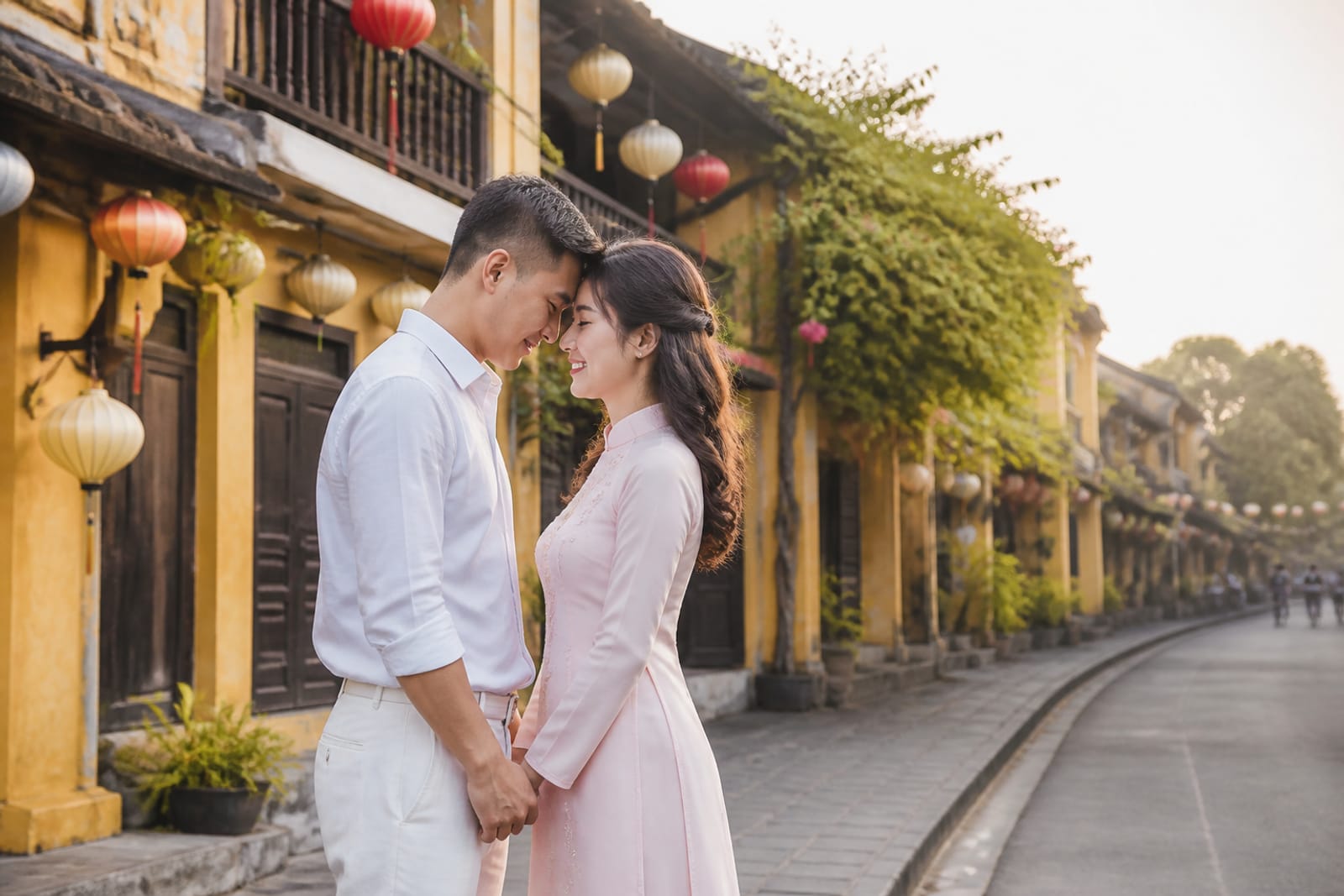
Ao dai photoshoots in paddies are stunning and commonly booked. The ao dai's flow and color complement the landscape. Discuss your ao dai color and style (traditional, modern, bold) with the team so they know what to look for in light and background. Rental options are available.
FAQ
What's the difference between sunrise and golden hour light in paddies?
Sunrise (5:30–6:30 a.m.) is cooler, softer, and ethereal; the paddies are empty and dewy. Golden hour (4:30–6:30 p.m.) is warmer and more romantic but fades fast—you have 90 minutes before darkness. Both are excellent; choose based on whether you prefer early mornings or late afternoons.
Can you shoot paddies if it rained the night before?
Yes. Morning puddles and damp soil can work visually, but paths may be muddy and water channels full. Wear shoes you don't mind getting dirty, and ask the team to confirm access. Avoid shooting within 24 hours of heavy rain during dry season; avoid entirely Sep–Dec.
How far are Hoi An's paddies from the Ancient Town?
Most scenic paddies are 10–20 km from the town center. Transport takes 30–45 minutes depending on traffic and exact location. The team scouts and arranges pickup; factor 2–3 hours total (travel + shoot + return) into your day.
Do you need a permit to photograph in Hoi An paddies?
No formal permit, but the paddies are private land. Cáo Studio coordinates with local landowners and ensures your shoot is welcome. Respect property boundaries and farmer schedules—don't trespass or disrupt planting/harvesting work.
What if the weather forecast predicts rain on my booked date?
Confirm the rescheduling policy with the team when you book. February–April rain is rare but possible. If a rainstorm occurs, you can reschedule to the next clear day (if your travel dates allow) or proceed with the shoot if light is still manageable. Discuss this before booking.
Is a paddies shoot suitable for couples who don't like early mornings?
A sunset golden-hour session (4:30–6:30 p.m.) avoids the 5:30 a.m. start. Light quality is equally stunning, though the window is tighter and you must finish by dusk. Discuss golden-hour sessions on WhatsApp if early mornings don't suit you.
Can families or groups photograph in the paddies, or is it couples only?
Families and groups are welcome. [Family photoshoots](/family-photoshoot) in paddies work beautifully. Logistics are similar (timing, season, transport); confirm group size and composition when inquiring so the team adjusts the shoot duration and locations.
What happens if you want to combine paddies with an ao dai shoot?
[Ao dai photoshoots](/ao-dai-photoshoot) in paddies are stunning and commonly booked. The ao dai's flow and color complement the landscape. Discuss your ao dai color and style (traditional, modern, bold) with the team so they know what to look for in light and background. Rental options are available.
Ao dai, makeup, hair and a local photographer in Hanoi or Saigon — one WhatsApp message.