hoi-an
Hoi An Yellow Walls Photoshoot: Locations, Light & How to Book
Hoi An's mustard-yellow walls are Vietnam's most recognizable backdrop—but they're also the most competitive. Every travel photographer, influencer, and family on holiday knows these streets. The difference between a flat, crowded midday snapshot and a glowing, intimate portrait comes down to three things: light, timing, and whether you arrive with a plan.
This guide walks you through real shooting conditions, the best micro-locations within Hoi An's Ancient Town, when to book, and how to decide between Cáo Studio's Hoi An sessions and working with a local photographer. Nothing here is generic; it's all built on what actually happens on those streets.
What's the best time of day to shoot yellow walls in Hoi An?
Golden hour is law. Sunrise (5:30–6:30 AM) delivers soft, warm side-light that makes yellow walls glow without washing out skin tones. Late afternoon (4:00–5:30 PM, depending on season) offers the same effect. Midday (11 AM–3 PM) produces hard shadows, blown-out skies, and that flat, tourist-brochure look. Early morning is quieter—fewer tour groups and selfie-stick crowds.
📸 Book on WhatsApp — ao dai photoshoot
Where are the most photogenic yellow walls in Hoi An Ancient Town?
Hoi An's 20-block pedestrian zone has several micro-hotspots, each with different character and foot traffic.
| Micro-location | Wall style | Crowd level | Best for | Light window |
|---|---|---|---|---|
| Nguyen Hue Street (near market) | Bright mustard, weathered texture | High (7–10 AM then 5 PM+) | Solo, couple close-ups | Sunrise warm side-light |
| Tran Phu Street (south end) | Deep yellow, lantern-draped | Medium (early morning best) | Ao dai full-length, solo fashion | 5:30–7:00 AM |
| Japanese Bridge approach | Muted ochre, vines, architectural | Low before 6:30 AM | Moody, contemplative, details | Dawn blue-hour + sunrise blend |
| Bach Dang waterfront (north edge) | Yellow + river reflection | Very low at sunrise | Couple sessions, water elements | 5:15–6:45 AM |
| Hoai River alley (east bank) | Soft butter yellow, intimate doorways | Medium (6–7 AM, then 5 PM) | Family, storytelling, lifestyle | Golden-hour both ends |
Pro tip: Tran Phu Street at 5:45 AM has walls and zero tourists. By 7 AM it fills. Bach Dang at dawn is almost never crowded—most photographers ignore the waterfront.
Should you book a pro photographer, DIY, or use Cáo Studio?
Three options, three different outcomes:
DIY (smartphone or personal camera, no pro): Free. You control timing and get candid shots. Downside: you're in every photo or out of them; composition is hit-or-miss; lighting knowledge matters. Best if you're comfortable with a tripod and self-timer, or have a travel friend who can frame you well.
Local Hoi An freelancer (found via Instagram, Google, ToursByLocals): $30–80 USD for 1–2 hours. Pros: knows the streets, speaks Vietnamese, can navigate crowds. Cons: quality varies wildly; communication can be unclear if language is a barrier; no backup if they cancel. Ask to see a recent portfolio of yellow-wall shots, not beach or group tourism work.
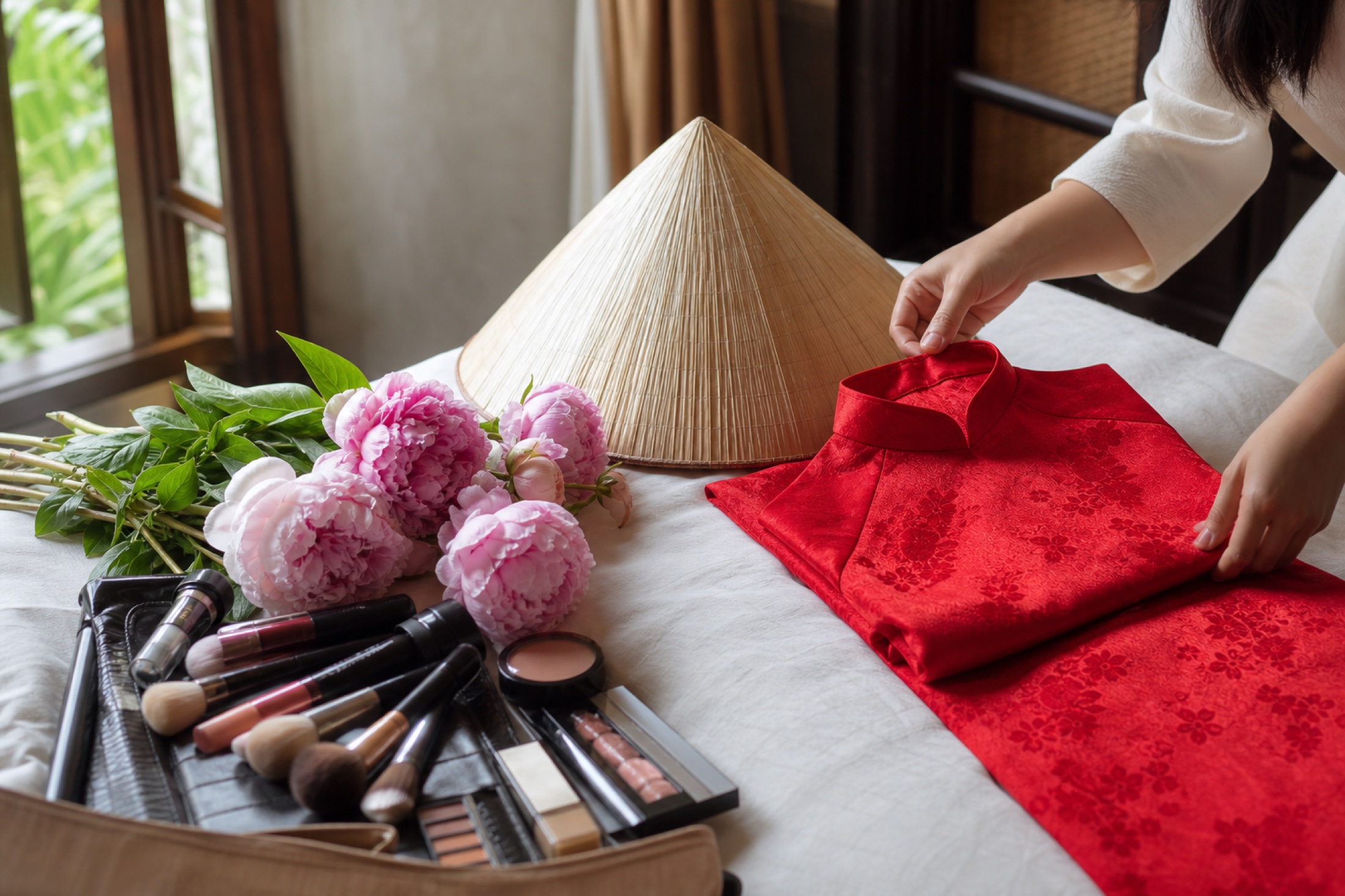
Cáo Studio – Makeup & Photoshoot Hoi An session: The team travels from Hanoi or Saigon by appointment. Includes professional makeup and hair, ao dai rental or styling for your own outfit, posing direction, and high-res files. Ask about current dates on WhatsApp—Hoi An is appointment-only. Higher investment, styled results, consistent quality. Best if you want polished portraits or pre-wedding / elopement shots.
| Option | Cost range | Includes makeup | Outfit styling | Best for |
|---|---|---|---|---|
| DIY | $0 | No | You choose | Budget-conscious travelers |
| Local freelancer | $30–80 | No | You choose | Casual couples, families |
| Cáo Studio | Ask on WhatsApp | Yes | Yes (ao dai + hair) | Styled portraits, ao dai heritage |
What should you wear under an ao dai during a Hoi An photoshoot?
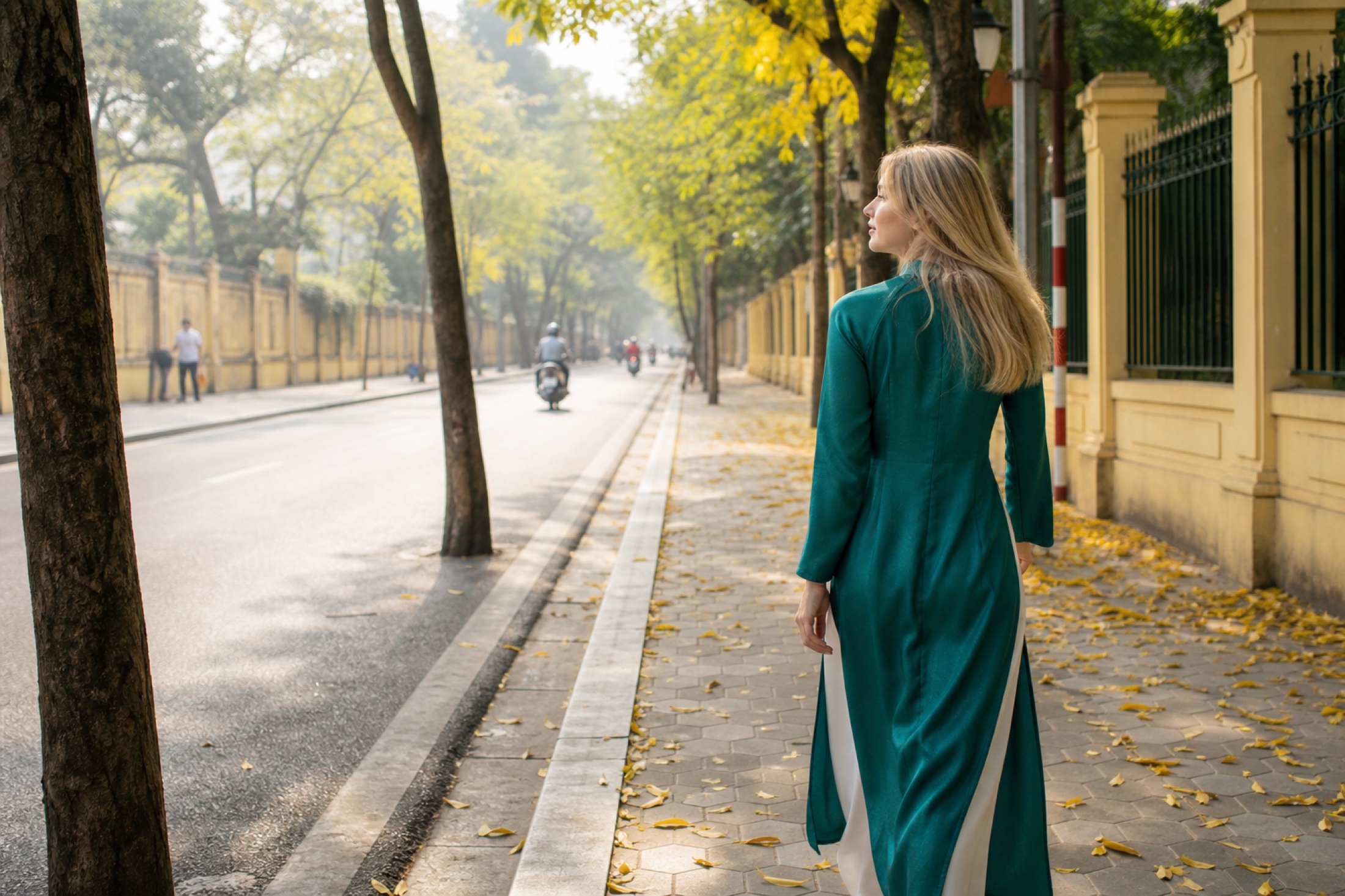
An ao dai (Vietnamese tunic dress) is floor-length and floats over fitted leggings. For a professional session:
- Undergarment: A smooth slip or nude bodysuit under the tunic prevents show-through and creates clean silhouette.
- Leggings: Wear thin, stretchy white or nude cycling shorts or leggings under the ao dai's outer legs. They're invisible in photos but prevent any accidental exposure when you move or sit.
- Shoes: Most photoshoots include barefoot shots indoors or on steps. Bring simple flip-flops or slides to wear between locations (you'll change on-site).
- Jewelry: Small earrings, delicate bracelets. Avoid chunky pieces—they distract from the ao dai itself.
- Hair: Loose waves or a soft bun. Hair pins in soft metals (rose gold, silver) photograph better than gold.
If you're not wearing an ao dai: wear summer dresses, linen shirts, or lightweight layers that won't wilt in Hoi An's humidity. Pastels and whites pop against yellow walls; dark colors recede.
How does weather affect Hoi An shoots month by month?
Hoi An's light and humidity shift dramatically. Plan accordingly:
- November–January: Dry season, 25–28°C, best light, blue skies. Prime time. Book 4–6 weeks ahead.
- February–April: Warm, occasional clouds, 28–32°C. Still good. Humidity rises late March.
- May–September: Hot, humid, afternoon storms common. Morning shoots only; plan 5:00–7:30 AM window. Rain can make walls slick and moody (dramatic but unpredictable).
- October: Transition, variable. Can be clear or overcast. Scout light the evening before.
Summer (June–August) is doable if you shoot sunrise only and accept sweat in makeup. Winter (December) is busiest and most crowded; book early.
What's the honest checklist before you book a Hoi An photoshoot?
Before you commit:
- [ ] Confirm the photographer's recent Hoi An portfolio (at least 3 yellow-wall samples).
- [ ] Verify timing: sunrise or afternoon? How many hours? What's included?
- [ ] Ask about backup plan if weather turns (rain, thick fog).
- [ ] Confirm file format and delivery timeline (how many weeks until you get photos?).
- [ ] Check cancellation policy. Hoi An is appointment-only travel for Cáo Studio—can you reschedule if you get sick?
- [ ] Know local etiquette: some homes behind yellow walls are private residences. Ask permission before photographing doorways where people live. Avoid photographing locals without consent.
- [ ] Bring water and sunscreen (even sunrise shoots expose you to 1+ hours of light).
- [ ] Wear comfortable shoes for the walk; Hoi An Ancient Town is entirely pedestrian, uneven stone streets.
If you're planning a larger session—couple or family photoshoot, proposal, or pre-wedding in Vietnam—Hoi An is one stop in a multi-location story. Cáo Studio's Hanoi and Saigon teams can coordinate travel sessions; ask on WhatsApp for current Hoi An dates and how to layer this into a bigger Vietnam shoot.
FAQ
Can you photograph inside temples and heritage houses in Hoi An Ancient Town?
Yes, but only with permission and respect. Most temples welcome photographers during visiting hours (early morning is quieter). Heritage house museums (like Tan Ky House) charge small entrance fees and have photography rules. Never photograph monks or worshippers without consent. Ask your guide or the receptionist before shooting.
Is sunrise crowded on popular days?
Not in the first hour (5:30–6:30 AM). By 7:00 AM tour groups arrive. Off-season (May–July, September–October) sunrise is almost empty. December–January sunrise still has fewer people than midday but expect 10–15 other photographers on Nguyen Hue Street by 6:45 AM.
What happens if it rains the morning of my shoot?
Wet yellow walls photograph beautifully—moody, reflective, intimate. Rain usually clears by 7 AM in dry season. Monsoon season (May–September) is riskier; afternoon storms are common. Always have a backup morning scheduled or ask your photographer's cancellation policy before booking.
Can I wear my own ao dai or should Cáo Studio provide one?
Both work. If you own or have rented an ao dai, bring it; Cáo Studio's makeup and styling team will fit it and coordinate hair and makeup to match. If you don't own one, ask about ao dai rental options when you book. Either way, plan 30 minutes for fitting and touch-ups on-site.
How do I get from my Hoi An hotel to Ancient Town for an early-morning shoot?
Most hotels offer 5:30–6:00 AM pickup for a small fee ($2–5 USD) or provide directions. Hoi An town center is compact—if you're staying within 1 km, a 15-minute walk is feasible. Ask your hotel to arrange a tuk-tuk or taxi the night before; drivers know the quiet arrival time and can drop you near Tran Phu Street without fighting traffic.
FAQ
Can you photograph inside temples and heritage houses in Hoi An Ancient Town?
Yes, but only with permission and respect. Most temples welcome photographers during visiting hours (early morning is quieter). Heritage house museums (like Tan Ky House) charge small entrance fees and have photography rules. Never photograph monks or worshippers without consent. Ask your guide or the receptionist before shooting.
Is sunrise crowded on popular days?
Not in the first hour (5:30–6:30 AM). By 7:00 AM tour groups arrive. Off-season (May–July, September–October) sunrise is almost empty. December–January sunrise still has fewer people than midday but expect 10–15 other photographers on Nguyen Hue Street by 6:45 AM.
What happens if it rains the morning of my shoot?
Wet yellow walls photograph beautifully—moody, reflective, intimate. Rain usually clears by 7 AM in dry season. Monsoon season (May–September) is riskier; afternoon storms are common. Always have a backup morning scheduled or ask your photographer's cancellation policy before booking.
Can I wear my own ao dai or should Cáo Studio provide one?
Both work. If you own or have rented an ao dai, bring it; Cáo Studio's makeup and styling team will fit it and coordinate hair and makeup to match. If you don't own one, ask about ao dai rental options when you book. Either way, plan 30 minutes for fitting and touch-ups on-site.
How do I get from my Hoi An hotel to Ancient Town for an early-morning shoot?
Most hotels offer 5:30–6:00 AM pickup for a small fee ($2–5 USD) or provide directions. Hoi An town center is compact—if you're staying within 1 km, a 15-minute walk is feasible. Ask your hotel to arrange a tuk-tuk or taxi the night before; drivers know the quiet arrival time and can drop you near Tran Phu Street without fighting traffic.
Ao dai, makeup, hair and a local photographer in Hanoi or Saigon — one WhatsApp message.