/pre-wedding-photoshoot
Hon Thom Cable Car Wedding Photos: Best Light & Time
Hon Thom's cable car works best for pre-wedding shoots between 4:30 pm and 5:30 pm (Nov–Apr), when the cable descends toward the island with soft side light on your faces and the sea backlit gold. The round-trip takes 25–35 minutes; plan the full session around this window—arrive early, shoot ground frames first, then ride up as light hits the west side of the cabin. Morning light (7–8 am) backlights passengers into silhouette; midday (11 am–3 pm) flattens skin tone and creates harsh shadows inside the glass cabin. You'll need a local photographer who knows the cable timing and can position themselves on the return cabin or platform—or book Cáo Studio's Saigon team, which scouts Phu Quoc shoots and coordinates with the ground crew, hair, makeup and your outfit in one session. Avoid typhoon season (Sep–Oct) and always confirm cable operating hours before booking.
Why does cable car light look so different at different times?
The Hon Thom cable car hangs 800+ metres above the island, exposing you to unfiltered sky light with no ground reflectors or shade. At sunrise (6:30–7:30 am), you face the east, backlit by the rising sun behind the island—your face falls into shadow unless the cabin moves to catch side light. By 11 am–3 pm, overhead sun bleaches the cabin interior and creates dark sockets under eyes and sharp jaw shadows. Sunset (4:30–5:30 pm, best Nov–Apr) brings soft, directional light from the west: the sun is low enough that it wraps around your faces, illuminates the cabin's interior gently, and casts warm gold on the sea below. The cabin glass also reflects golden light back into your eyes, creating a natural rim that flatters skin. Winter months (Dec–Feb) have lower sun angles and fewer clouds, so you get 20–30 minutes of clean golden light; summer (May–Oct) brings haze and afternoon cloud cover that cuts light too early.
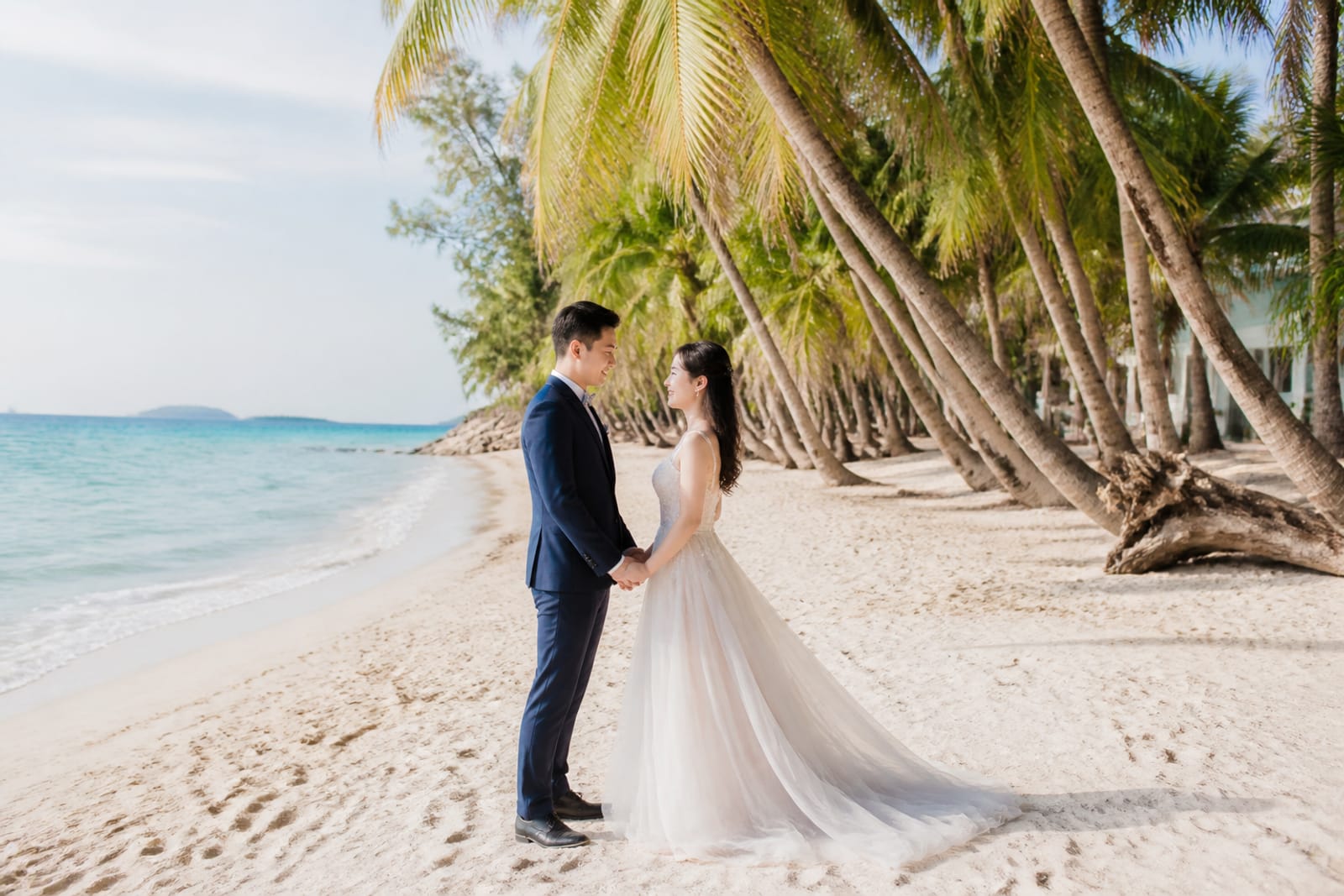
Should you shoot inside the cabin or on the platform below?
Inside the cabin, light is softer but the glass reflections compete with your faces, and the framing feels enclosed—good for intimate close-ups, risky for full-body shots if the cabin sways. Platform shots at the base station work better for full-length frames, natural poses while walking, and the island backdrop without glass glare. Most photographers split the session: intimate moments inside during the ride, then walk and gesture shots on the platform as light fades. Cáo Studio brings the whole team (photographer, hair, makeup, stylist) to the base station and times the cable ride itself as a cinematic moment in the shoot, not a photo studio—you two walk to the cabin, look at the view, the photographer captures the approach from the platform, then you ride back into the last of the golden light. This approach eliminates the "posed in a cable car" feeling and gives you frames that say we were there together, not we stood still and smiled.
What outfit and ao dai style work best on a cable car?
Lightweight, breathable fabrics are essential: the cabin can be warm or cool depending on wind, and sweat marks show in close-ups. A classic silk ao dai (not heavily beaded—weight tires you over 30 minutes) in jewel tones (deep emerald, sapphire, burgundy) photographs warmer under golden light than pastels. Avoid white or cream ao dai: they blow out (lose detail) in strong sun and show every dust mark in a small cabin. Layers work if you're shooting in winter: a fitted ao dai over a long-sleeve thermal keeps you comfortable and adds texture to the frame. Groom suits should be lightweight wool or linen-blend; dark charcoal or navy suits read better than black in cabin light. Accessories (earrings, rings, a small clutch) catch light beautifully in close-ups; heavy jewelry glints too much and distracts. Hair should be pinned or braided so it doesn't blow across your face in the wind on the platform—book hair and makeup at your hotel before the shoot, so you arrive camera-ready and don't lose 30 minutes to touch-ups.
📸 Book on WhatsApp — ao dai photoshoot
Phu Quoc weather: which months give you the light you need?
| Season | Best months | Why it works | What to watch |
|---|---|---|---|
| Dry (best light) | Nov–Apr | Lower sun angle, fewer clouds, predictable golden hour 4:30–5:30 pm, calm seas | Dec–Jan cooler (layers help); Apr heat builds |
| Transition | May, Oct | Sunrise clearer than Jun–Sep, but afternoon rain possible by 3 pm | Afternoon clouds eat evening light; book early slot |
| Rainy (avoid) | Jun–Sep | Afternoon downpours common; cloud cover flat; humidity frizzes hair | Typhoon risk (Sep–Oct worst); cable sometimes closes |
November to April is your window: the sun sets predictably, clouds are sparse, and the cable operates without weather delays. If you shoot in May or October, book a 6–8 am slot instead (before cloud builds) and accept that indoor cabin light will be cooler (bluer) than golden—your photographer will color-correct in post, but the in-the-moment glow is lost. June–September is possible but risky: afternoon downpours close the cable, and if light breaks through clouds, it's uneven and harsh.
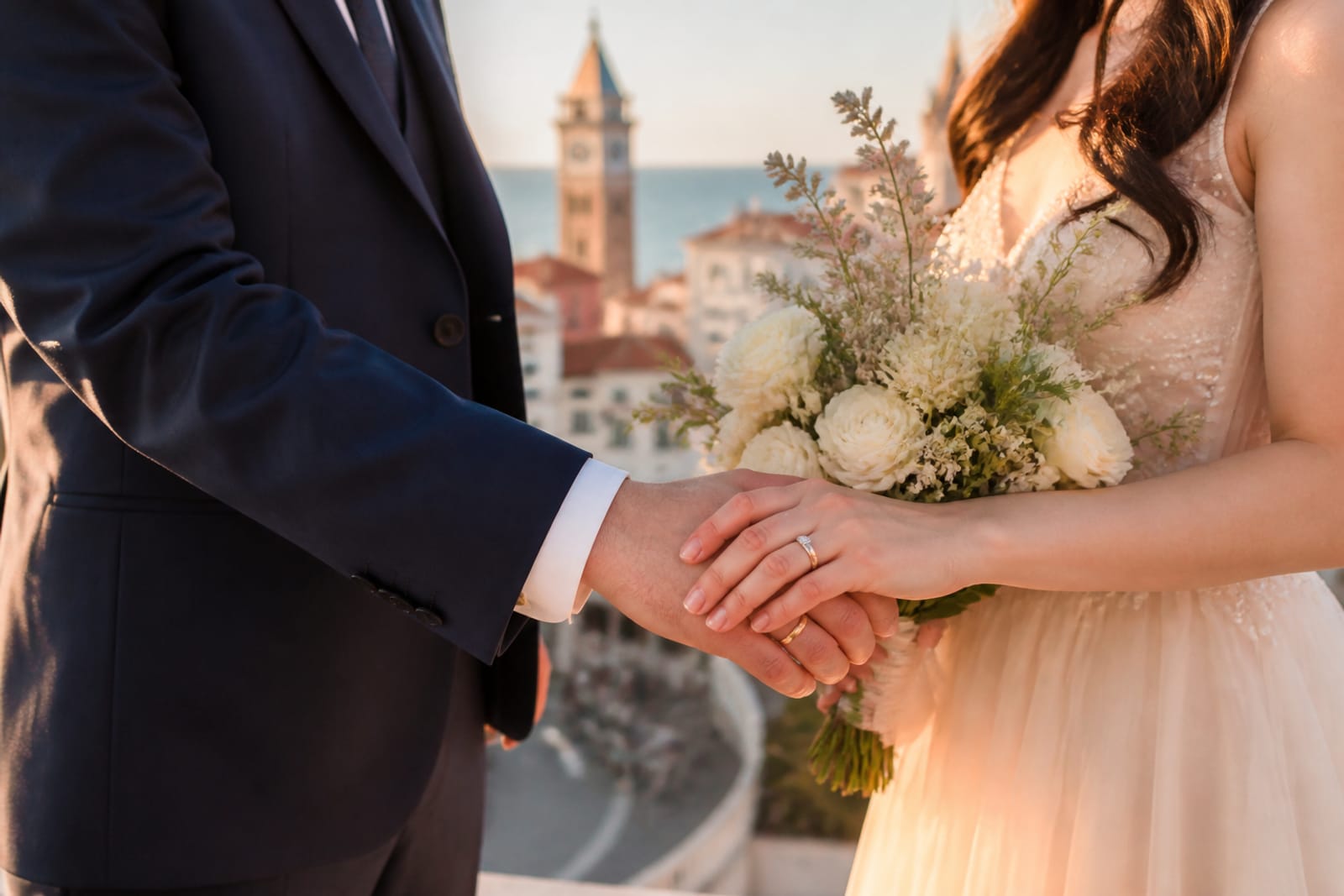
What does a professional cable car shoot actually involve?
A full pre-wedding photoshoot at Hon Thom runs 2–2.5 hours: arrive 30–45 minutes early so hair and makeup settle and you have ground frames before the golden hour window closes. Your photographer shoots you walking toward the cable station (natural, not posed), then you ride up while they capture the departure, the cabin ascent (using a zoom from the platform), and your expressions through the glass. During the descent, they either ride with you (best light, but tight space) or shoot from the platform as the cabin approaches. Ground frames continue until dusk (20–30 minutes total golden hour). Most shoots include one outfit change (dress + groom suit, or ao dai + western suit); if you want two complete looks, book a longer session and arrive with both outfits—hair/makeup team coordinates timing. Edited photos and a short vertical film are delivered within 48 hours. The cable operates 7:30 am–5:30 pm most days (check the official site for seasonal closures and typhoon updates). Confirm entry tickets are required and check the current price on the official site.
What to check before booking a cable car shoot
- Confirm cable operating hours & dates: Phu Quoc cable closures are rare but happen in typhoon warnings (Sep–Oct). Verify with the cable company or your photographer the week before.
- Book a photographer (or Cáo Studio) who has shot Hon Thom before: They know the light angles, platform access, and timing—a first-timer will waste your golden hour figuring out angles.
- Arrive makeup-ready: The cabin is small; last-minute touch-ups delay everything. Use Cáo Studio's makeup & hair service at your hotel so you step onto the cable already camera-ready.
- Bring a light scarf or wrap: Wind on the platform can fluster hair and clothing; a silk scarf doubles as a styling prop and wind shield.
- Plan for 2–3 outfit options, not just one: One outfit in golden light, one in slightly cooler dusk light—variety costs little but gives you choices in the edit.
- Ask your photographer how they'll deliver files: Raw digital files, edited JPEGs, or a printed album? Different formats serve different purposes; clarify before the session.
- Discuss weather backup: If rain or cloud cover makes light unusable, do you reschedule, reshoot free, or accept the frames as-is? Honest photographers offer alternatives; Cáo Studio reschedules within the same season if light is genuinely compromised.
---
When should you book—and why timing matters?
Book 6–8 weeks ahead if you're shooting Nov–Apr (peak season, cable runs smoothly, weather is stable). If you want May–Oct, book 4 weeks ahead and choose early morning (6:30–7:30 am) over evening. Tet (late Jan–mid Feb) draws crowds to Phu Quoc; book outside this window if possible, or reserve a very early slot before tourists arrive. Ask Cáo Studio on WhatsApp about current availability and Phu Quoc dates—the Saigon team coordinates shoots there but confirm timing and any local permitting needed.
---
How does Cáo Studio handle a cable car shoot differently?
One team handles everything: photographer, hair, makeup, styling. No juggling three vendors. The photographer is a director—they're not just taking pictures, they're composing frames that use the cable, the light, and your movement to tell a story. You don't pose; you walk, look at each other, and respond to light cues ("Turn so the sunset catches your profile," "Walk toward the cabin as if you're exploring"). The makeup and hair artist is on-site for quick touch-ups (no 15-minute bathroom breaks mid-shoot). Your outfit is fitted beforehand (ao dai length, suit drape) so movement feels natural, not stiff. Edited photos and a short vertical film land in your inbox within 48 hours. Compare this to booking a local cable car photographer separately, makeup artist via another app, and stylist on your own—you lose 2–3 hours to handoffs and waiting, and light waits for no one.
📸 Book on WhatsApp — ao dai photoshoot
---
FAQ
Can you shoot both inside and outside the cable car?
Yes. Professional shoots include cabin close-ups during the ride and platform full-length frames before/after. The cabin light is softer (better for intimate shots); the platform light is directional (better for full-body frames and backdrop). Most photographers split time equally between both.
What if it's cloudy at sunset?
Cloud cover kills golden-hour glow and flattens skin tone. If clouds roll in 30 minutes before sunset, light becomes cool and grey. Reschedule if possible (within the same season to avoid travel costs). Cáo Studio offers a free reshoot if light is compromised by weather.
Do you need a permit to shoot a cable car pre-wedding?
Check with the cable car operator. Most allow personal photography; commercial shoots (with a full crew) may need permission. If you book Cáo Studio, the team handles coordination with the cable company and any local requirements.
How long does a typical cable car session take?
2–2.5 hours total, including early arrival, ground frames, the cable ride itself, and platform shots. Golden-hour light itself is 20–30 minutes (roughly 4:30–5:00 pm in winter).
What's the difference between a cable car shoot and a beach wedding photoshoot?
Cable car offers elevation, dramatic framing, and unique light trapped in the cabin. Beach shoots are wider, lower-angle, and rely on sand reflectors and open sky. Cable car is more intimate and cinematic; beach is more expansive. Choose cable car if you want a distinctive backdrop; choose beach if you want soft, directional light over a longer time window.
Can you do two outfit changes on a cable car?
Yes, if you book a longer session (2.5+ hours). Start with one outfit on the platform, ride the cable, then change for the return descent. Hair and makeup artist handles touch-ups between outfits. Bring both outfits packed light so changing in the base station doesn't delay the golden-hour window.
FAQ
Can you shoot both inside and outside the cable car?
Yes. Professional shoots include cabin close-ups during the ride and platform full-length frames before/after. The cabin light is softer (better for intimate shots); the platform light is directional (better for full-body frames and backdrop). Most photographers split time equally between both.
What if it's cloudy at sunset?
Cloud cover kills golden-hour glow and flattens skin tone. If clouds roll in 30 minutes before sunset, light becomes cool and grey. Reschedule if possible (within the same season to avoid travel costs). Cáo Studio offers a free reshoot if light is compromised by weather.
Do you need a permit to shoot a cable car pre-wedding?
Check with the cable car operator. Most allow personal photography; commercial shoots (with a full crew) may need permission. If you book Cáo Studio, the team handles coordination with the cable company and any local requirements.
How long does a typical cable car session take?
2–2.5 hours total, including early arrival, ground frames, the cable ride itself, and platform shots. Golden-hour light itself is 20–30 minutes (roughly 4:30–5:00 pm in winter).
What's the difference between a cable car shoot and a beach wedding photoshoot?
Cable car offers elevation, dramatic framing, and unique light trapped in the cabin. Beach shoots are wider, lower-angle, and rely on sand reflectors and open sky. Cable car is more intimate and cinematic; beach is more expansive. Choose cable car if you want a distinctive backdrop; choose beach if you want soft, directional light over a longer time window.
Can you do two outfit changes on a cable car?
Yes, if you book a longer session (2.5+ hours). Start with one outfit on the platform, ride the cable, then change for the return descent. Hair and makeup artist handles touch-ups between outfits. Bring both outfits packed light so changing in the base station doesn't delay the golden-hour window.
Ao dai, makeup, hair and a local photographer in Hanoi or Saigon — one WhatsApp message.