/pre-wedding-photoshoot
How to avoid crowds at Bai Dinh Pagoda on your wedding photo day
Bai Dinh Pagoda in Ninh Binh draws steady crowds year-round, but arrivals concentrate between 8 a.m.–11 a.m. and 2 p.m.–4 p.m. To secure peaceful shots, book a shoot outside these windows—early sunrise (before 7 a.m.) or late afternoon (after 5 p.m.)—and scout secondary temple courtyards and the surrounding karst landscape. Ninh Binh's cooler, greyer months (March–May, September–November) offer the most forgiving light and fewer domestic tourists. A local Ninh Binh photographer will know access times and hidden angles; if you're flying internationally, Cáo Studio – Makeup & Photoshoot (based in Hanoi and Ho Chi Minh City) can coordinate with a trusted local partner for makeup, styling, and capture. Always confirm access rules with the pagoda ahead of time—some interior sanctuaries restrict photography or visitors during specific hours. Choose a lightweight ao dai or tailored wedding dress that won't drag on uneven temple stone; bring flat, closed shoes for climbing and walking.
Bai Dinh Pagoda—Vietnam's largest pagoda complex—sits in Ninh Binh province, about 100 kilometers south of Hanoi. Its sprawling courtyards, gilded statues, and karst backdrop make it a compelling pre-wedding location, but managing crowds requires strategy. Tourism peaks mid-morning and early afternoon, flooding central spaces with domestic tour groups. Off-peak windows and knowledge of the layout transform chaos into cinematic stillness.
Why Bai Dinh attracts photographers but tests patience
The pagoda's scale is both blessing and curse. Multiple temple levels, courtyards, staircases, and surrounding gardens offer diverse backdrops—but they also funnel visitors into bottlenecks. Peak-season weekends and Tet can draw several hundred visitors daily. Most arrive on organized tours between 9 a.m. and 3 p.m., clustering near the main Buddha statue and central prayer halls. Early risers and late-afternoon planners rarely encounter the crowds; midday couples often waste 30+ minutes staging the same shot repeatedly, waiting for strangers to clear the frame. Understanding visitor flow is the first step toward claiming solitude.
When should you schedule your shoot—and why timing matters more than season
📸 Book on WhatsApp — ao dai photoshoot
| Timing | Best for | Light & crowds | Why it works |
|---|---|---|---|
| Before 7 a.m. | Sunrise romance, ao dai drama | Golden, soft; nearly empty | Tour groups haven't arrived; pagoda staff know early shooters. |
| 7 a.m.–8 a.m. | Traditional bridal portraits | Warm, directional; very light foot traffic | Sweet spot—temples are open, few visitors, light still low-angle. |
| 11 a.m.–2 p.m. | Avoid entirely | Harsh overhead sun; packed courtyards | Peak tour-group window; shadows are dark and unflattering. |
| After 5 p.m. | Moody, contemplative frames | Golden-hour glow; sparse visitors | Many day-trippers leave; temple remains open; longer shadows suit formal wear. |
| Off-season weekdays (Mar–May, Sep–Nov) | Lower crowd baseline | Mild weather, softer clouds | Fewer tour operators run schedules; domestic holidays less likely. |
Sunrise shoots (5:30 a.m.–7 a.m.) deliver the quietest experience. Bai Dinh opens early for monks and morning prayers; arriving ahead of organized tours lets you shoot uncrowded interiors and courtyards. Light is directional and golden—ideal for ao dai detail work and couple portraits. Late afternoon (5 p.m. onwards) offers warm, textured light and thinning crowds, though you'll have 60–90 minutes before sunset if day-length permits. Winter (December–February) brings cooler air and lower humidity, but expect grey skies and haze—soft light suits temple stone and fabric, though drama is muted. The driest season (March–May, September–November) balances moderate crowds with pleasant weather and better skies.
Outfit strategy: what to wear under an ao dai at a crowded temple
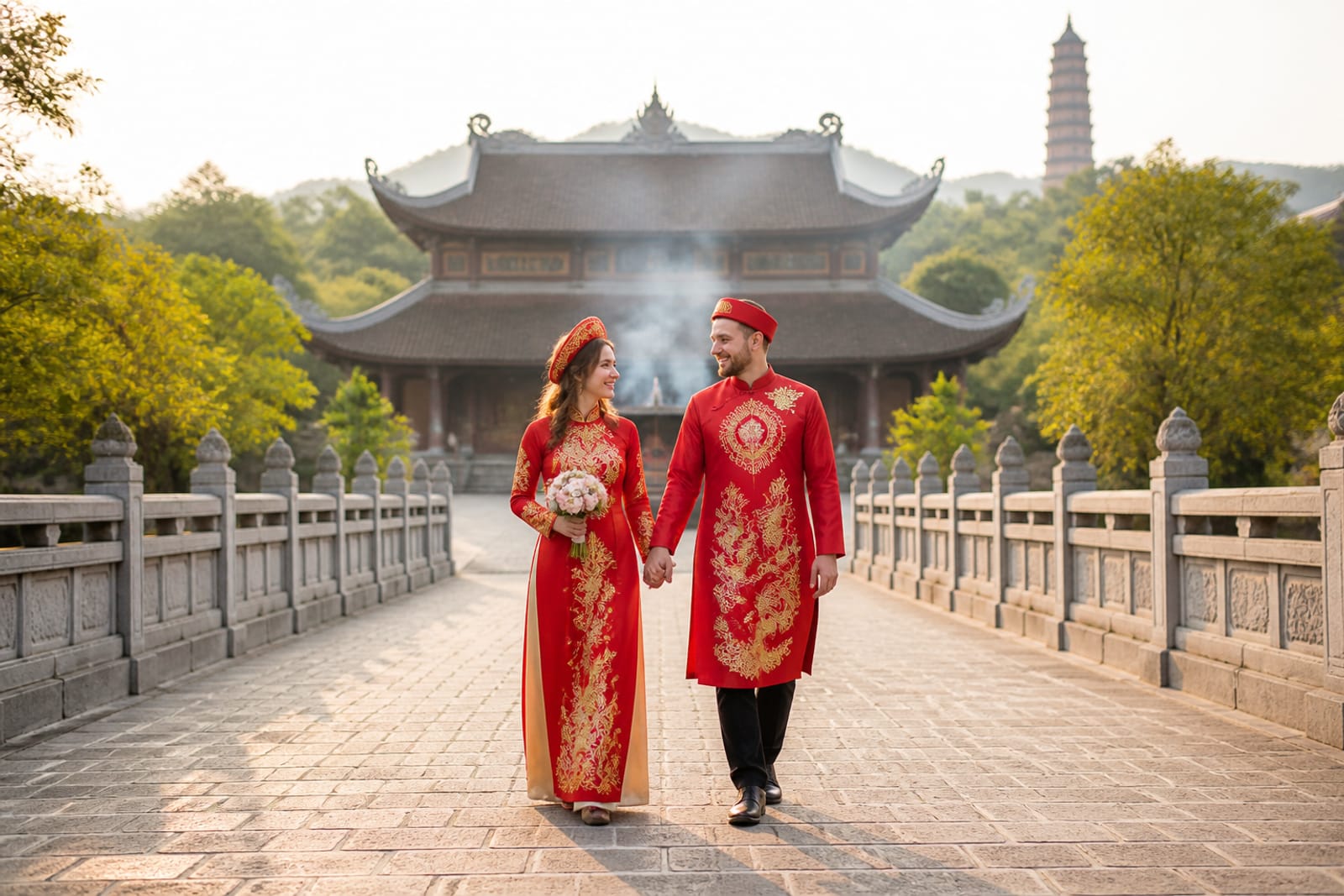
Wearing ao dai at Bai Dinh requires planning for movement, stone surfaces, and thermal comfort. The traditional gown flows beautifully but drags easily on worn temple steps and collects dust in courtyards. Choose a tailored ao dai fitted at the waist and hips, with a midi hemline that clears your ankles by 2–3 inches—this prevents tripping on uneven surfaces and snagging on prayer railings. Wear plain white silk pants (or matching tunic pants) underneath to allow free movement without self-consciousness; avoid tight leggings, which restrict climbing and create unflattering bunching under the gown. Shoes matter enormously: flat, closed leather slip-ons grip temple stone better than heels, which catch on steps and slow movement through crowds. Bring socks to remove shoes when entering sanctuaries (most temples require bare or sock-clad feet). If you're coordinating with a local photographer or makeup artist, confirm whether they've shot at Bai Dinh before—experienced practitioners will advise on seasonal fabric weights and advise tucking the ao dai's back panel to prevent dragging.
How to work with a photographer who knows Bai Dinh—or coordinate one remotely
Bai Dinh has no resident studio, so you'll work with either a Ninh Binh-based freelancer or coordinate through a Hanoi team. Local advantages: a Ninh Binh photographer has shot the location dozens of times, knows pagoda staff, understands access rules, and has backup locations nearby if crowds spike. They'll arrive with a shot list and contingency timing. Remote coordination: if you're booking a Hanoi or Ho Chi Minh City studio, ask whether they partner with Ninh Binh photographers or travel on-site. Cáo Studio – Makeup & Photoshoot can coordinate makeup and styling in Hanoi before you travel, or arrange a local partner for the actual shoot day. When vetting any photographer, ask:
- Have you shot Bai Dinh before? How do you manage crowds?
- Do you scout locations the day before or arrive 90 minutes early?
- What's your contingency if crowds don't clear by your planned window?
- Do you know pagoda access rules—which interior spaces allow photography, and when?
- Can you deliver edits in a timeline that matters to you?
Request a portfolio specific to temple shoots, not just generic couple portraits. Real experience shows in how light and composition handle sacred spaces without looking like tourist snapshots.
Crowd-avoidance checklist: what to confirm before you book
Access & permissions
- Confirm with Bai Dinh's management office whether your chosen shoot time (especially pre-dawn) requires advance notice. Some sections may close during morning prayers.
- Ask if your photographer holds any standing permission or relationship with pagoda staff that eases logistics.
Photographer logistics
- Verify your photographer will scout on-site at your scheduled time, or the day before, to identify crowd patterns and light angles.
- Confirm backup locations within the pagoda complex (side courtyards, upper terraces) if primary spots are unexpectedly crowded.
- Agree on a shot list with clear priorities—so if time is tight, your must-have frames are captured first.
Outfit & movement
- Have your ao dai fitted and tested for movement at least one week before the shoot; confirm shoe grip and comfort on stone.
- Bring a spare white undershirt in case of accidental stains during the shoot—easier than reshooting.
- Arrange hair and makeup at your hotel in Ninh Binh or Hanoi before arriving, so you're camera-ready and not spending time in cramped pagoda bathrooms.
Realistic expectations
- Book a makeup & hair service beforehand; temple shoots involve heat, incense, and humidity that can degrade in-situ touch-ups.
- Allow 2–3 hours for a full pre-wedding shoot (not just couples, but detail and solo frames), with buffer time if crowds surge.
- Plan a secondary day if your first window is unexpectedly packed—temple crowds are seasonal and unpredictable.
Comparing Bai Dinh to other Ninh Binh photo locations—when to choose alternatives
Bai Dinh isn't the only backdrop in Ninh Binh. If crowds persist or you want variety, scout these alternatives:
| Location | Vibe & light | Crowds | When to shoot | Best paired with |
|---|---|---|---|---|
| Bai Dinh Pagoda | Sacred, grand statuary, stone | Moderate–heavy, midday peaks | Pre-dawn or after 5 p.m. | Ao dai, formal wear. |
| Tam Coc boat landscapes | Golden rice, water, mist, karst | Light (boat access limited) | Feb–Aug dry season, 6 a.m.–8 a.m. | Romantic, intimate framing. |
| Hang Mua karst summit | Sweeping valley views, stone steps | Moderate, daytime busy | Early sunrise (5 a.m.) or sunset (5:30 p.m.) | Bold couple portraits, drama. |
| Rural rice-field roads | Pastoral, seasonal greenery, open | Minimal | Mar–May, Sep–Oct (crop cycles) | Casual, candid, boho aesthetic. |
| Trang An Grotto lagoon | Intimate, water reflections, caves | Light (guided-tour rhythm) | 7 a.m.–9 a.m., off-peak days | Soft, meditative couple work. |
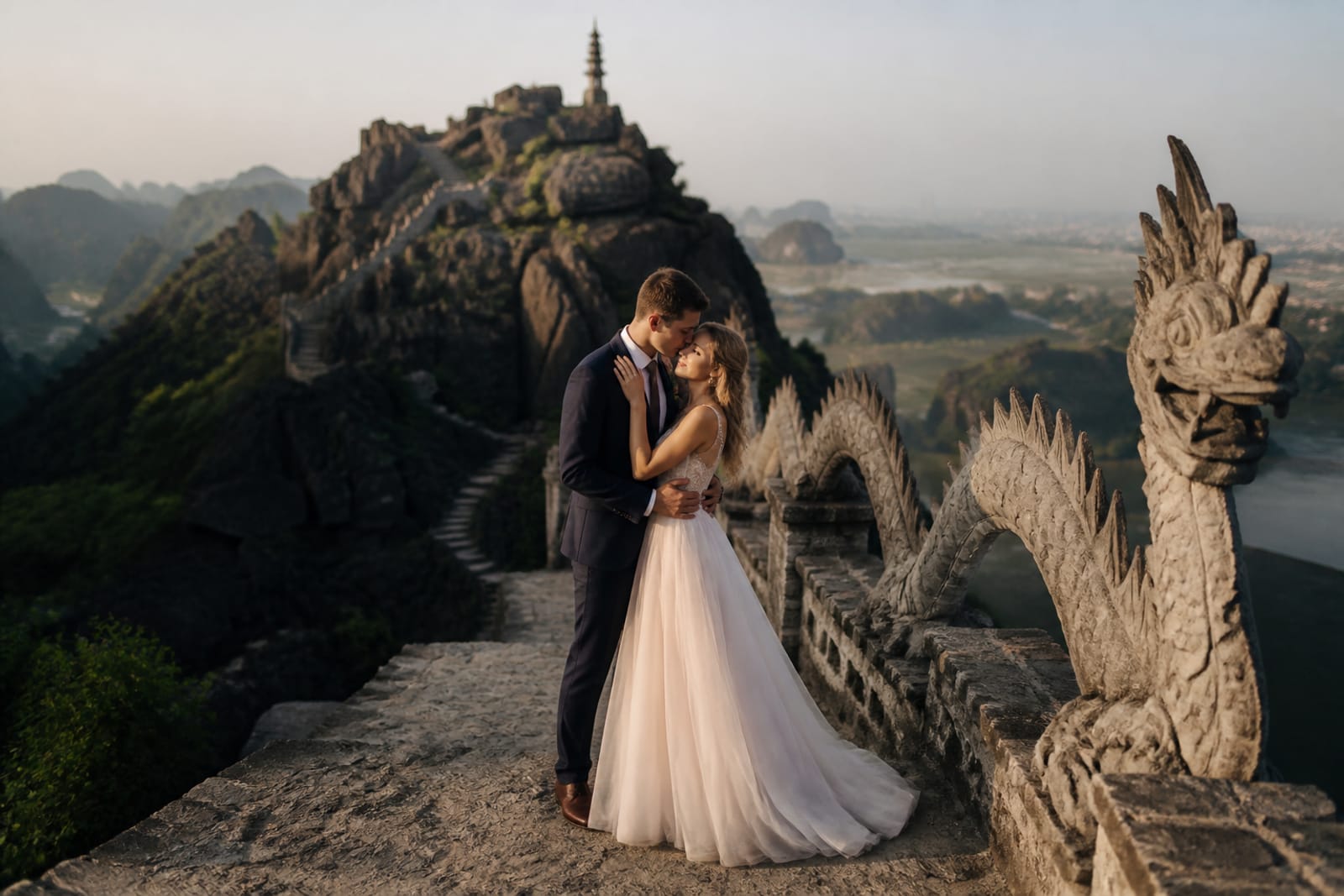
Bai Dinh wins for grandeur and spiritual symbolism; Tam Coc and rice fields suit intimate, rural aesthetics; Hang Mua rewards the willing to climb (about 500 stone steps). A multi-location day—combining Bai Dinh's early-morning temple frames with a rural rice-field session mid-morning—maximizes variety and spreads crowd exposure.
Season, weather, and light: planning your Ninh Binh pre-wedding timeline
Ninh Binh's climate shapes both crowd patterns and image quality. December–February brings cool, grey skies (ideal for soft, even light) but attracts fewer tourists and less predictable weather. March–May is dry, warm, and uncrowded—rice fields still hold green; golden-hour light is dramatic. June–August is hot and prone to afternoon storms; midday crowds thin slightly due to heat. September–November is the sweet spot: dry weather returns, temperatures drop, and fewer domestic holidays mean lighter foot traffic. Light quality is best in March–May and September–November, when morning mist clears and skies have subtle cloud texture. Avoid Tet (late January–mid February) entirely if crowd-avoidance is your priority; Tet closures and holiday tourism overwhelm most landmarks for 5–7 days.
Working with Cáo Studio for remote coordination and post-shoot support
If you're flying in from overseas and want professional continuity, Cáo Studio – Makeup & Photoshoot (with bases in Hanoi and Ho Chi Minh City) can coordinate makeup, styling, and liaison with your local Ninh Binh photographer. They'll handle:
- Pre-shoot consultation to lock your aesthetic, outfit choices, and hair direction.
- Makeup application in your Hanoi or Ninh Binh hotel the morning of the shoot—no scrambling at the temple.
- Stylist on-site coordination (if traveling with the team) or remote styling advice tailored to Bai Dinh's specific light and layout.
They do not operate a Ninh Binh branch, so the actual photography and on-site direction rests with your local partner—but alignment on vision, color grading, and delivery timeline is handled centrally. Ask on WhatsApp for partnership details and rates.
What to check before you book: honest questions to ask your photographer
On crowd management:
- "How often do you shoot at Bai Dinh, and what's your most reliable quiet window?"
- "If the pagoda is unexpectedly crowded, what's your backup plan—do you have a shot list you prioritize, or alternative locations nearby?"
On technical readiness:
- "Do you have backup lighting for pre-dawn or indoor temple work?"
- "How do you handle mixed light (outdoor sunlight, temple interior shadows, incense haze)?"
On delivery & communication:
- "When will I see the edits, and how many images are included?"
- "Do you offer a revision round if I want adjustments to color or composition?"
On logistics:
- "Can you recommend a makeup and hair stylist in Ninh Binh, or should I arrange that separately?"
- "Do you know the pagoda's photography policies—which areas are off-limits or require permission?"
Don't book a photographer who can't answer these clearly or who promises "zero crowds guaranteed"—crowds are unpredictable, but smart timing and contingency planning reduce them dramatically.
FAQ
What time should I arrive at Bai Dinh if I want to avoid crowds during my pre-wedding shoot?
Arrive before 7 a.m. for the quietest experience; most tour groups cluster between 8 a.m.–11 a.m. and 2 p.m.–4 p.m. After 5 p.m., crowds thin significantly but daylight decreases. Early sunrise (before 7 a.m.) is the photographer's sweet spot.
Can I wear heels at Bai Dinh Pagoda, or should I choose flat shoes?
Wear flat, closed leather shoes with good grip—heels catch on uneven temple stone and worn steps, slowing movement and risking injury. Slip-ons are ideal; bring socks for entering sanctuaries that require bare or sock-clad feet.
What season has the best light and fewest crowds for a pre-wedding shoot at Bai Dinh?
March–May and September–November offer mild weather, fewer tour groups, and directional golden-hour light. Avoid December–February (grey, cold) and June–August (heat, storms, crowds lighter but weather unpredictable).
Should I book a Ninh Binh photographer or travel with a Hanoi studio team?
Local Ninh Binh photographers have on-site experience and pagoda relationships; Hanoi studios can coordinate makeup, styling, and remote photographer partnerships. For all-in-one convenience, ask Cáo Studio – Makeup & Photoshoot about Ninh Binh coordination on WhatsApp.
How long does a typical pre-wedding shoot at Bai Dinh take?
Budget 2–3 hours for a full session (couple portraits, detail work, location variety). Add an extra 30–60 minutes if crowds spike or you want coverage in multiple time windows. Sunrise shoots are often shorter (60–90 minutes) due to limited daylight.
What happens if Bai Dinh is too crowded on my scheduled day—do I rebook?
Yes, or your photographer should scout backup locations (Tam Coc, rice fields, Hang Mua) within Ninh Binh. Always confirm your photographer has a contingency plan before the shoot date.
Can I book an early-morning shoot at Bai Dinh without advance permission from the pagoda?
Contact Bai Dinh's management office ahead of time to confirm pre-dawn access; some sections may restrict photography during morning prayers. Your photographer should handle this coordination.
Do I need to rent an ao dai for the shoot, or can I wear my wedding dress?
Either works—ao dai is traditional and photographs beautifully in temple settings; wedding dresses require lightweight fabrics and hems that clear stone (2–3 inches above ankle). Ask your photographer's advice based on the aesthetic you want.
FAQ
What time should I arrive at Bai Dinh if I want to avoid crowds during my pre-wedding shoot?
Arrive before 7 a.m. for the quietest experience; most tour groups cluster between 8 a.m.–11 a.m. and 2 p.m.–4 p.m. After 5 p.m., crowds thin significantly but daylight decreases. Early sunrise (before 7 a.m.) is the photographer's sweet spot.
Can I wear heels at Bai Dinh Pagoda, or should I choose flat shoes?
Wear flat, closed leather shoes with good grip—heels catch on uneven temple stone and worn steps, slowing movement and risking injury. Slip-ons are ideal; bring socks for entering sanctuaries that require bare or sock-clad feet.
What season has the best light and fewest crowds for a pre-wedding shoot at Bai Dinh?
March–May and September–November offer mild weather, fewer tour groups, and directional golden-hour light. Avoid December–February (grey, cold) and June–August (heat, storms, crowds lighter but weather unpredictable).
Should I book a Ninh Binh photographer or travel with a Hanoi studio team?
Local Ninh Binh photographers have on-site experience and pagoda relationships; Hanoi studios can coordinate makeup, styling, and remote photographer partnerships. For all-in-one convenience, ask Cáo Studio – Makeup & Photoshoot about Ninh Binh coordination on WhatsApp.
How long does a typical pre-wedding shoot at Bai Dinh take?
Budget 2–3 hours for a full session (couple portraits, detail work, location variety). Add an extra 30–60 minutes if crowds spike or you want coverage in multiple time windows. Sunrise shoots are often shorter (60–90 minutes) due to limited daylight.
What happens if Bai Dinh is too crowded on my scheduled day—do I rebook?
Yes, or your photographer should scout backup locations (Tam Coc, rice fields, Hang Mua) within Ninh Binh. Always confirm your photographer has a contingency plan before the shoot date.
Can I book an early-morning shoot at Bai Dinh without advance permission from the pagoda?
Contact Bai Dinh's management office ahead of time to confirm pre-dawn access; some sections may restrict photography during morning prayers. Your photographer should handle this coordination.
Do I need to rent an ao dai for the shoot, or can I wear my wedding dress?
Either works—ao dai is traditional and photographs beautifully in temple settings; wedding dresses require lightweight fabrics and hems that clear stone (2–3 inches above ankle). Ask your photographer's advice based on the aesthetic you want.
Ao dai, makeup, hair and a local photographer in Hanoi or Saigon — one WhatsApp message.