/pre-wedding-photoshoot
How to Avoid Crowds at Long Bien Bridge on Your Wedding Photo Day
Long Bien Bridge's 1902 steel lattice and Red River views are unmissable for Hanoi pre-wedding shoots, but tourist density matters to image quality and safety. Dawn shoots (6–7 a.m., before commuter traffic clears) deliver soft golden light and near-empty walkways; weekday mornings beat weekends by two to three hours of quiet. October–November is the driest, mildest window with clearest air and softest light, while May–September heat and humidity complicate styling and makeup longevity. Cáo Studio – Makeup & Photoshoot coordinates timing, manages local access, and books hair & makeup at your hotel before you travel to the bridge, so you arrive camera-ready and leave with authentic, crowd-free frames. If Long Bien feels congested on your planned date, quieter Hanoi alternatives (Red River Dike, Tran Phu Street, Truc Bach Lake) offer equally moody, vintage-film backdrops with zero permits and zero queues. ---
What time of day does Long Bien Bridge actually stay empty?
Long Bien Bridge empties briefly between 6 and 7 a.m., before most tour groups and commuters arrive. After 8 a.m., foot traffic builds steadily; by 10 a.m.–noon, vendors, tourists, and local walkers create a crowded backdrop that degrades shot composition and requires constant repositioning. Late afternoon (after 4 p.m.) clears again, but the light flattens and becomes golden-harsh; shadows lengthen and make makeup touch-ups visible. Early morning is non-negotiable for clean frames—but it demands an early hotel pickup, fully applied makeup (no rushing on-location), and a photographer experienced with dawn logistics. Cáo Studio's Hanoi team blocks out 5:30 a.m. starts for bridge shoots to catch the 30–40-minute window before crowds.
📸 Book on WhatsApp — pre-wedding photoshoot
Which months genuinely have fewer crowds—and better light?
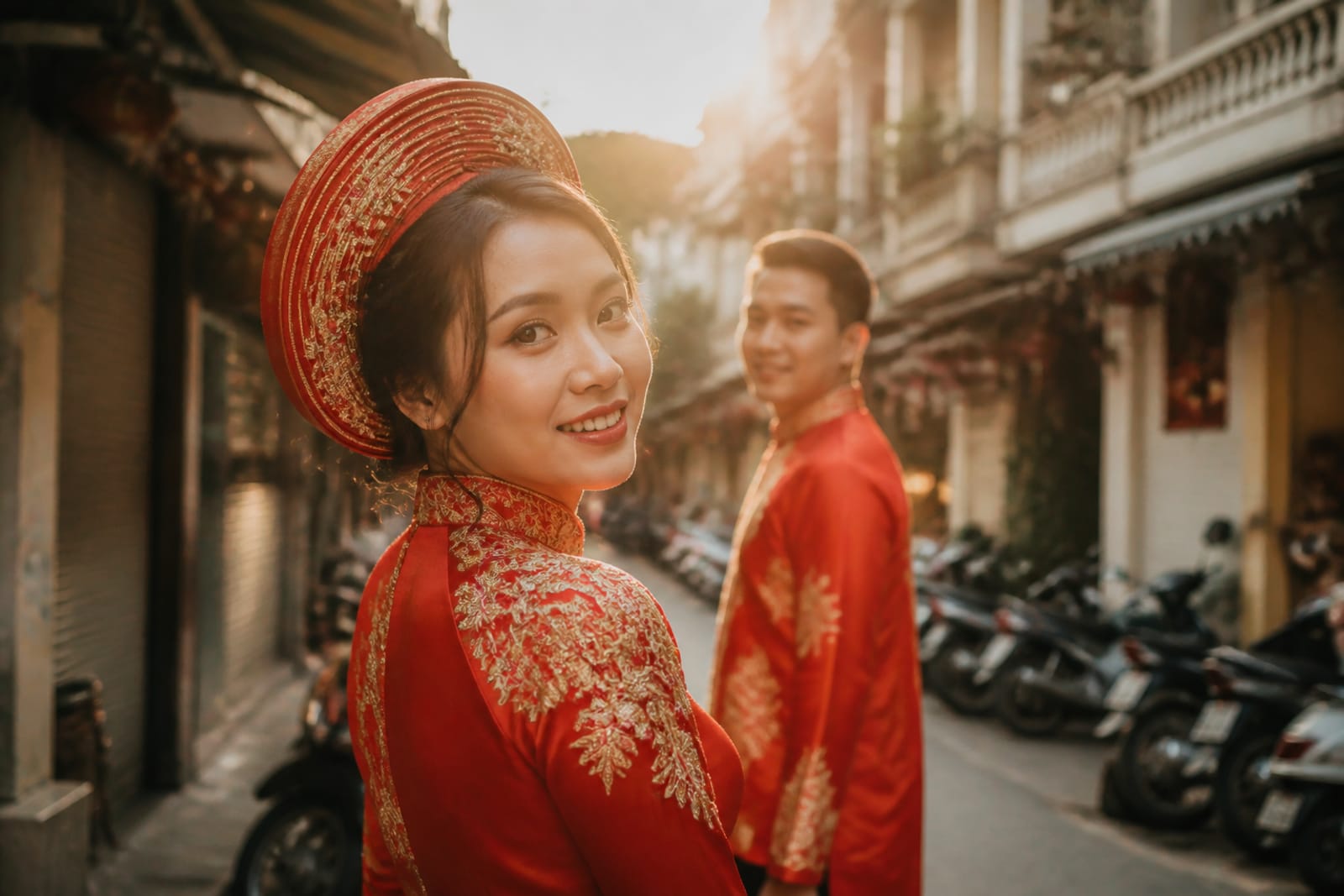
October and November are peak season for a reason: cool air (15–22°C), low humidity, and minimal rain make makeup and clothing stable for 2–3 hours outdoors. Crowds remain moderate because international travel peaks, but weekday mornings still clear by 7 a.m. December–February is cool and often overcast (10–20°C), which flattens and softens light beautifully—fewer tourists, but greyness requires either tungsten-tinted makeup (a specialized skill) or acceptance of moody, desaturated tones. March–April brings mild warmth but frequent drizzle and haze; humidity rises, making touch-ups frequent. May–September is hot (often 35°C+), intensely humid, and monsoon-prone; crowds thin only because tourists avoid the discomfort, but your makeup and clothing will wilt. Avoid Tet (late January–mid-February): most services close, landmarks close or restrict access, and crowds are heaviest of the year.
| Season | Crowd Level | Light Quality | Makeup Stability | Weather Risk | Best Day Type |
|---|---|---|---|---|---|
| Oct–Nov | Moderate–high | Soft, golden, clear | Excellent (cool, low humidity) | None | Weekday, dawn |
| Dec–Feb | Low | Soft, grey, diffuse | Good (cool prevents sweat) | Drizzle, overcast | Any weekday |
| Mar–Apr | Moderate | Hazy, golden | Fair (humidity rising) | Haze, frequent drizzle | Weekday |
| May–Sep | Low | Harsh, humid | Poor (heat, sweat, melting) | Heavy rain, typhoon remnants | None recommended |
Is a sunrise shoot actually doable with hair and makeup?
Yes—hotel makeup is the practical answer. Cáo Studio sends the makeup & hair team to your Hanoi hotel at 5 a.m.; you're fully styled by 5:45 a.m., travel to the bridge by 6:15 a.m., and shoot during the clearest window. The alternative—doing makeup on-location—means a rushed, uneven result and wasted shoot time. A typical pre-wedding session books a photographer + assistant; the assistant manages wardrobe changes and touch-ups between shots while the photographer captures light-sensitive moments. If you're shipping an ao dai or dress from overseas, arrive 2–3 days early so the studio can steam and fit it; rush fittings at dawn risk awkward draping. Hard-shell makeup cases travel better than soft luggage; bring your own products if you have sensitive skin—the studio carries professional foundations and powders, but custom matching takes advance consultation via WhatsApp.
What permits or restrictions should you know before booking?
Long Bien Bridge is a national heritage site and active commuter crossing (buses, motorcycles, pedestrians share the walkway). Photography permits are not formally required for personal/commercial use, but local authorities occasionally restrict group shoots during peak hours or public events—always confirm access 48 hours before. The pedestrian walkway is narrow; moving vehicles mean your assistant must stay alert. Early morning is safest: fewer vehicles, better visibility, and police presence is minimal. Never block commuter flow; use the wider central section for outfit changes. If you book a Cáo Studio pre-wedding session, the photographer and assistant handle logistics—they know the bridge's rhythm, safe spots, and timing to avoid conflicts with bus schedules. Alternative Hanoi locations (Tran Phu Street, Truc Bach Lake, Red River Dike) need no permits and offer equally authentic, moody backdrops—check the couple photoshoot lookbook for seasonal mood examples.
When is Long Bien not the right choice—and what do you pick instead?
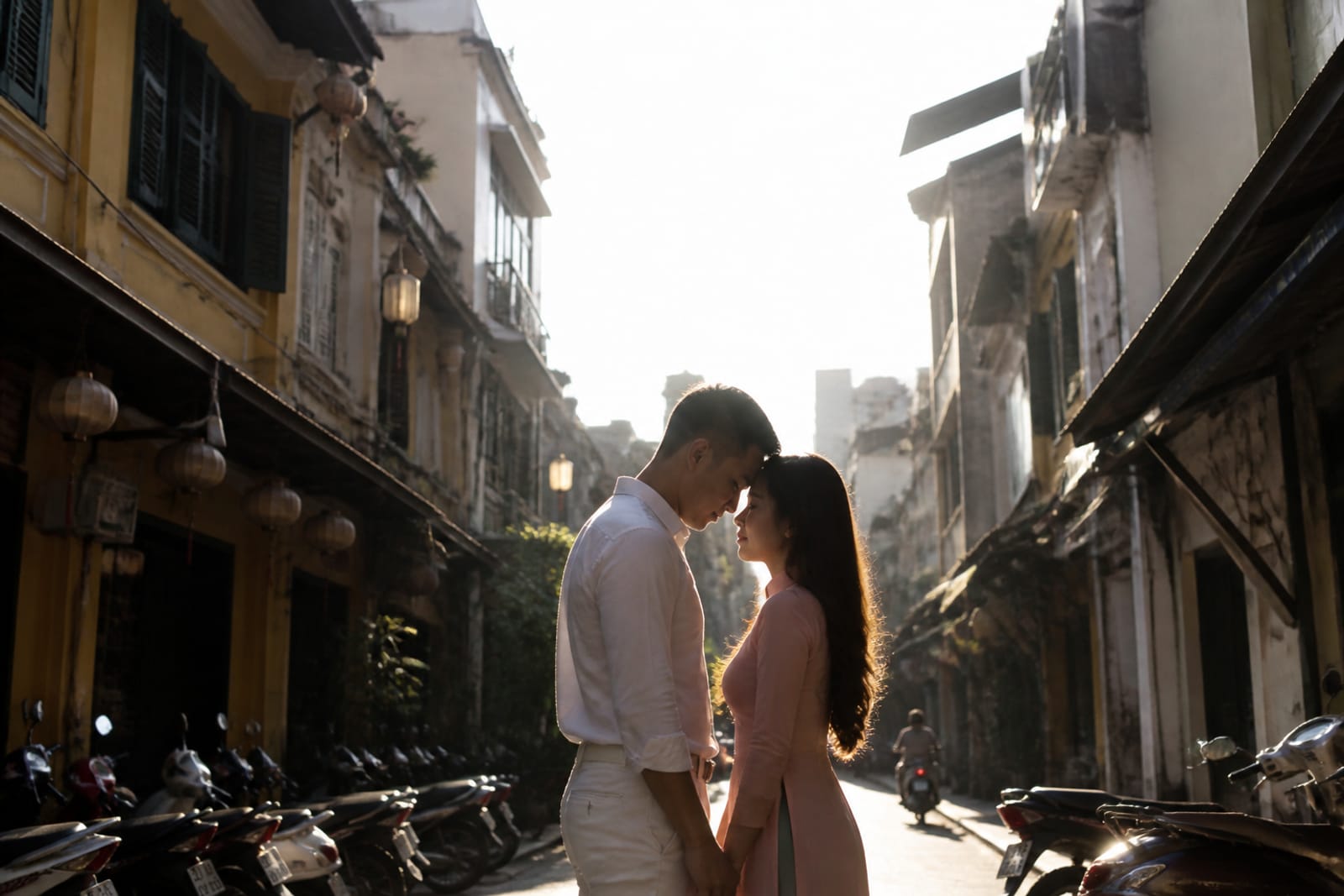
Long Bien is stunning but demanding: early starts, traffic risk, narrow walkway, and harsh light if you miss the dawn window. If you're traveling alone, jet-lagged, or prefer a relaxed pace, quieter alternatives deliver equally powerful frames. Tran Phu Street (Ba Dinh District, near the Lenin Statue) has tree-lined, traffic-free sections ideal for 8–10 a.m. shoots; autumn gold light lingers here longer than at the bridge. Truc Bach Lake (Tay Ho District) offers water reflections and a slower vibe; crowds don't peak until mid-morning, and the light is consistently soft. Red River Dike (Ngoi Tam Cot area) gives raw, wind-swept frames with zero tourist presence—best for couples seeking gritty, journalistic mood over iconic landmarks. Cáo Studio's Hanoi lookbook shows seasonal comparisons of each spot; your photographer can recommend the best fit during the WhatsApp consultation based on your outfit, timeline, and mood.
How do you actually plan a dawn shoot logistically?
Book at least 10 days in advance so the studio can coordinate hotel pickup, makeup timing, and weather contingency. Here's the checklist:
- Confirm your Hanoi hotel and check-in date with Cáo Studio; they arrange a 5 a.m. pickup.
- Decide on outfit count (typically 1–2 changes at Long Bien; fewer to manage in early morning light). If renting an ao dai or wedding dress, book fitting 2–3 days before the shoot.
- Discuss light and mood via WhatsApp: do you want golden, soft, or moody-grey tones? October–November brings golden; winter brings grey.
- Request makeup timing: full application at the hotel, or partial touch-up on-location? (On-location is risky; full application at hotel is standard.)
- Confirm the backup date: if weather turns wet or forecast shows heavy rain, reschedule for the next day—Hanoi's dry-season window is brief, and a rainy shoot feels rushed and unsafe.
- Arrange transport to and from the bridge; your Cáo Studio assistant will wait on-location during wardrobe changes.
- Check weather 48 hours before via a local source (not your home-country app; Hanoi's microclimates shift fast).
- Plan post-shoot timeline: when do you need final edited files? Cáo Studio confirms turnaround on WhatsApp based on volume and editing complexity.
---
Should you rent or bring your own ao dai?
Renting on-location (Hanoi has dozens of boutiques) is risky for dawn shoots: you lose fitting time, can't style it in advance, and rush causes wrinkles. Cáo Studio's ao dai rental partners keep inventory ready; advance booking (7+ days) guarantees size, color, and steam-pressing before your session. Shipping your own ao dai from overseas? Arrive 3 days early, have it steamed at the studio, and confirm with the photographer that the fit works in the chosen light. For a pre-wedding photoshoot, one outfit change at Long Bien is enough; two is ambitious in an hour. Compare logistically: renting saves luggage space and laundry; bringing your own dress ensures fit and sentimental value.
Why do some couples choose not to shoot at Long Bien?
Sunrise logistics exclude travelers who are jet-lagged, arriving late, or prefer flexible scheduling. The narrow pedestrian walkway and active commute create stress if you're anxious about crowds. Some couples feel the bridge's fame overshadows their personal story—quieter Hanoi alternatives feel more intimate. If you're on a tight timeline (one day in Hanoi), a hotel-local-spot combo (e.g., makeup at your hotel, 2-hour shoot at Tran Phu Street) reduces logistical risk and delivers equally moody frames. Cáo Studio's family photoshoot and couple photoshoot pages show real sessions at varied locations; use the lookbook to see if Long Bien's aesthetic matches your vision before booking. A WhatsApp consultation clarifies your priorities—crowd tolerance, light preference, outfit plan—in 5 minutes.
---
What to check before you book
- Your Hanoi hotel's address: Cáo Studio's makeup team needs it for 5 a.m. arrival scheduling.
- Passport and arrival date: confirm you have 2+ full days for a dawn shoot + wardrobe fitting + weather buffer.
- Outfit choice: decide on ao dai, wedding dress, or modern attire—rental lead time is 7+ days.
- Makeup and hair: bring a photo of your preferred style; if you have sensitive skin or specific allergies, mention it in your WhatsApp booking message.
- Seasonal light expectations: October–November = golden; December–February = soft grey; avoid May–September unless you accept heat and humidity.
- Weather flexibility: agree on a 1-day rescheduling option if rain is forecast within 6 hours of your shoot.
- Final file timeline: confirm when you need edited photos (typically 2–3 weeks for a pre-wedding session).
---
FAQ
Do I really need to start at dawn to avoid crowds at Long Bien?
Yes. After 8 a.m., tour groups and commuters arrive steadily. A 6–7 a.m. window delivers near-empty frames and soft golden light. If you can't do dawn, Tran Phu Street or Truc Bach Lake stay quieter until mid-morning and don't require a 5 a.m. start.
What if I'm traveling solo or jet-lagged—can I reschedule to a later time?
Absolutely. Cáo Studio offers flexible booking; late-morning or afternoon shoots work at less-iconic but equally beautiful Hanoi spots (Red River Dike, Tran Phu Street). Discuss timing during your WhatsApp booking—the photographer will recommend the best fit.
Can I do my makeup on-location to save time?
Not recommended for Long Bien. Dawn light is time-sensitive; rushing makeup on a narrow bridge wastes 20–30 minutes. Hotel makeup (5 a.m. application) keeps you camera-ready and lets the photographer capture the golden window fully. Cáo Studio's makeup & hair at your hotel service is designed exactly for this.
Which months have the fewest crowds and best light?
October–November is peak season (cool, clear, golden light) but still moderate-crowd at dawn. December–February is cool and grey (fewer tourists, soft light, good for moody tones). Avoid May–September (heat, humidity, monsoon risk) and Tet (late Jan–mid-Feb, closures and heaviest crowds).
What if I'm flying in from overseas—how do I plan a dawn shoot?
Arrive 2–3 days early. Day 1: rest and outfit fitting. Day 2 or 3: dawn shoot at Long Bien or quieter alternative. This buffer prevents jet lag, allows wardrobe adjustments, and gives a backup date if weather turns wet. Cáo Studio coordinates the full timeline via WhatsApp.
Is Long Bien the only option for an iconic Hanoi pre-wedding shot?
No. Tran Phu Street (tree-lined, traffic-free), Truc Bach Lake (water reflections), and Red River Dike (raw, wind-swept) deliver equally strong frames with fewer crowds and logistical demands. Check the lookbook to see which mood and location suit your vision.
Can I rent an ao dai the morning of the shoot?
Possible but risky; no time for fitting adjustments or steam-pressing. Cáo Studio's ao dai rental requires 7+ days' notice to guarantee size, color, and perfect condition. Advance booking is a one-cost, zero-stress option.
What's included in a pre-wedding shoot at Cáo Studio?
Specifics (hours, photo count, outfit changes, makeup included, edited-file delivery) are confirmed via WhatsApp based on your session plan. Contact the team at +84 338 762 340 to discuss your exact needs and get a personalized quote.
FAQ
Do I really need to start at dawn to avoid crowds at Long Bien?
Yes. After 8 a.m., tour groups and commuters arrive steadily. A 6–7 a.m. window delivers near-empty frames and soft golden light. If you can't do dawn, Tran Phu Street or Truc Bach Lake stay quieter until mid-morning and don't require a 5 a.m. start.
What if I'm traveling solo or jet-lagged—can I reschedule to a later time?
Absolutely. Cáo Studio offers flexible booking; late-morning or afternoon shoots work at less-iconic but equally beautiful Hanoi spots (Red River Dike, Tran Phu Street). Discuss timing during your WhatsApp booking—the photographer will recommend the best fit.
Can I do my makeup on-location to save time?
Not recommended for Long Bien. Dawn light is time-sensitive; rushing makeup on a narrow bridge wastes 20–30 minutes. Hotel makeup (5 a.m. application) keeps you camera-ready and lets the photographer capture the golden window fully. Cáo Studio's [makeup & hair at your hotel](/makeup-and-hair) service is designed exactly for this.
Which months have the fewest crowds and best light?
October–November is peak season (cool, clear, golden light) but still moderate-crowd at dawn. December–February is cool and grey (fewer tourists, soft light, good for moody tones). Avoid May–September (heat, humidity, monsoon risk) and Tet (late Jan–mid-Feb, closures and heaviest crowds).
What if I'm flying in from overseas—how do I plan a dawn shoot?
Arrive 2–3 days early. Day 1: rest and outfit fitting. Day 2 or 3: dawn shoot at Long Bien or quieter alternative. This buffer prevents jet lag, allows wardrobe adjustments, and gives a backup date if weather turns wet. Cáo Studio coordinates the full timeline via WhatsApp.
Is Long Bien the only option for an iconic Hanoi pre-wedding shot?
No. Tran Phu Street (tree-lined, traffic-free), Truc Bach Lake (water reflections), and Red River Dike (raw, wind-swept) deliver equally strong frames with fewer crowds and logistical demands. Check the [lookbook](/lookbook) to see which mood and location suit your vision.
Can I rent an ao dai the morning of the shoot?
Possible but risky; no time for fitting adjustments or steam-pressing. Cáo Studio's [ao dai rental](/ao-dai-rental) requires 7+ days' notice to guarantee size, color, and perfect condition. Advance booking is a one-cost, zero-stress option.
What's included in a pre-wedding shoot at Cáo Studio?
Specifics (hours, photo count, outfit changes, makeup included, edited-file delivery) are confirmed via WhatsApp based on your session plan. Contact the team at +84 338 762 340 to discuss your exact needs and get a personalized quote.
Ao dai, makeup, hair and a local photographer in Hanoi or Saigon — one WhatsApp message.