lookbook
How to Brief a Photographer Mood Board: A Practical Guide
A mood board is a visual reference tool—images, color palettes, poses, and settings—that you share with your photographer before a shoot to align expectations. Create one by collecting 10–20 Pinterest pins or Instagram posts matching your vision, organizing by category (outfit, lighting, emotion, location), and noting specific details your photographer should know. Cáo Studio – Makeup & Photoshoot receives mood boards via WhatsApp and uses them to prepare outfits, hair styles, and shot lists in advance.
Why Do Photographers Actually Need a Mood Board?
Without a mood board, your photographer guesses. They guess lighting style, outfit vibe, pose energy, and color tone. A mood board eliminates guesswork and saves hours—your photographer knows exactly what "romantic" or "bold" means to you, not their interpretation. It cuts reshoots, speeds up editing direction, and produces images you'll love on the first session.
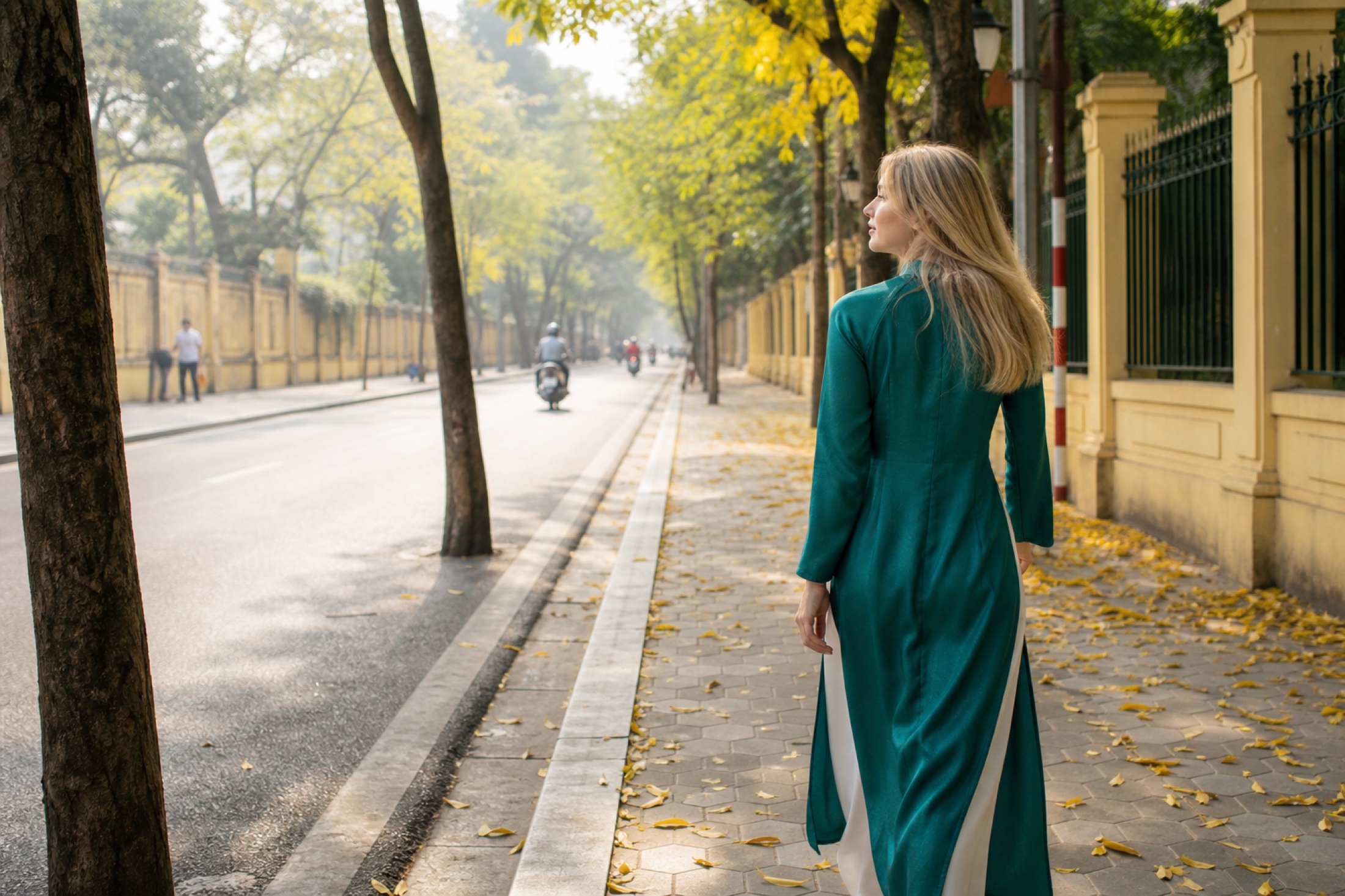
What Should You Actually Include in Your Mood Board?
Start with 10–20 images, not 50. More images dilute the signal. Organize into four categories:
- Outfits & styling: Ao dai color, fabric weight, jewelry, makeup intensity, hair texture
- Lighting & mood: Golden hour, studio soft-box, moody shadows, bright and airy, contrasty
- Poses & body language: Candid movement, static elegance, playful interaction, introspective
- Settings & backgrounds: Urban texture, natural garden, indoor intimate, minimalist studio
Then add text notes. Write "I want soft, warm light hitting my face from the left—like image #3" or "This ao dai color matches my skin tone better." Photographers are visual, but specific words prevent misreading.
How to Organize Your Mood Board for Your Photographer
Send your mood board on WhatsApp as a PDF or a folder link (Google Drive, Dropbox). Label each image with one-word tags:
| Image | Category | Reason to include |
|---|---|---|
| Sunset ao dai couple | Lighting | Golden hour direction I want |
| Close-up makeup detail | Styling | Eyeshadow intensity, lip color depth |
| Laughing pose indoors | Pose | Candid energy, not stiff |
| Hoi An lantern street | Location | Mood I'm drawn to (even if not exact venue) |
| Studio backdrop texture | Setting | Simple, neutral, lets outfit pop |
For 📸 ao dai photoshoots, mention if you're bringing your own ao dai or want styling help. For 💄 makeup & hair at your hotel before your shoot, note makeup coverage (full glam vs. natural) and hair texture you want (waves, sleek, braids).
📸 Book on WhatsApp — ao dai photoshoot
What Not to Include in a Mood Board (Common Mistakes)
Don't mix competing aesthetics. If you add five "minimalist studio" shots and five "bohemian outdoor" shots, your photographer won't know which direction to prioritize. Pick one primary mood; add a secondary one only if it genuinely complements it.
Don't pull images from filters or heavily edited work. Filtered Instagram posts hide lighting reality. Screenshot the unedited or lightly edited version if possible. Ask your photographer if you're unsure—they read light, not follower counts.
Don't reference celebrity photos without context. "I want to look like [influencer] in this photo" often fails because that image was shot with a different body type, lighting rig, and post-production. Instead: "I want warm backlighting like in this shot, with side profile and movement."
Don't overload with text. Three sentences per image maximum. Photographers read briefs quickly before shoots; walls of text get skimmed.
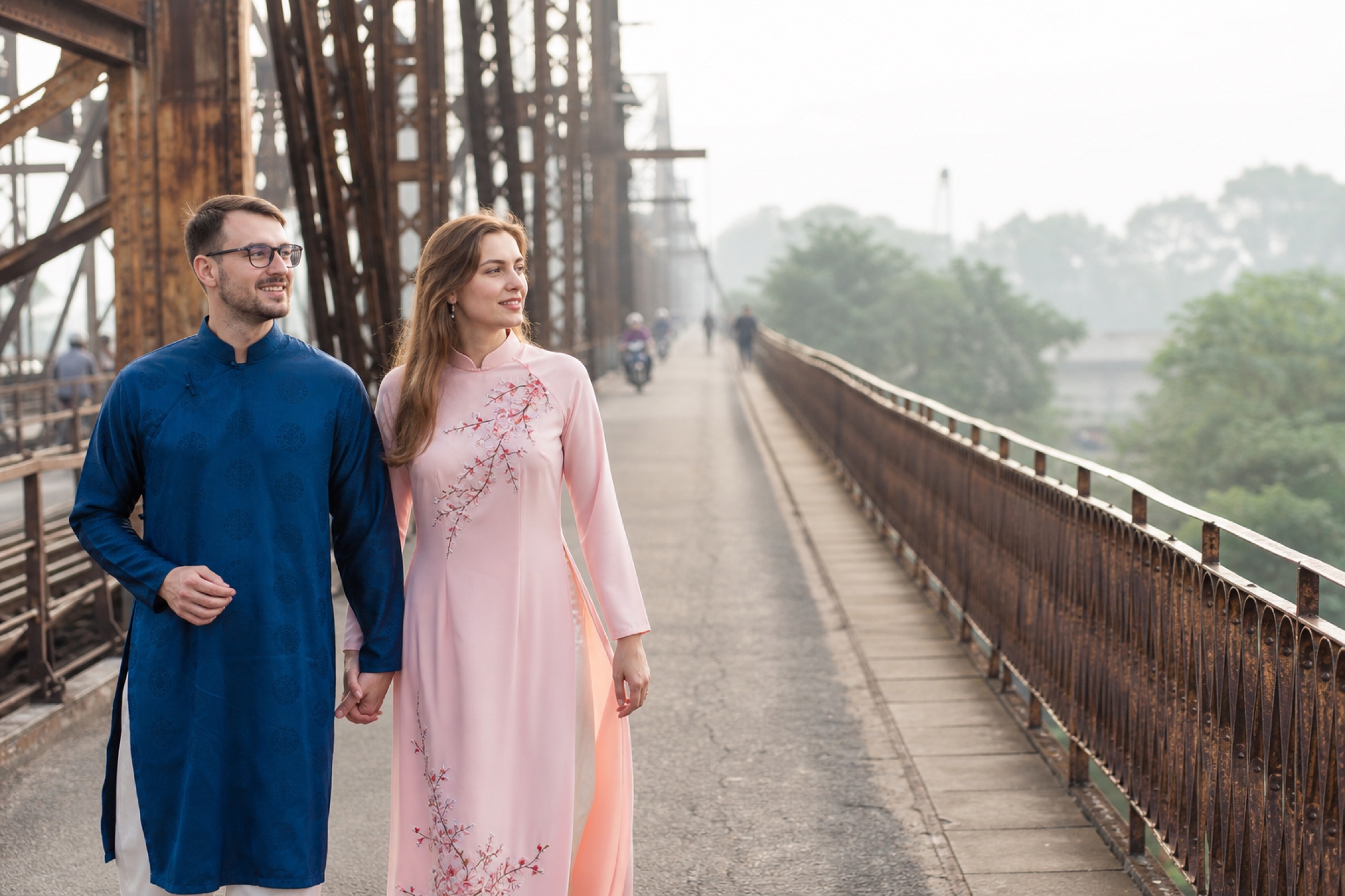
When to Send Your Mood Board: Timing & Revision
Send your mood board at booking, not the day before. This gives your photographer time to:
- Scout locations (especially for 🌸 Hoi An photoshoots or outdoor venue sessions)
- Communicate with the styling team at Cáo Studio Hanoi or Cáo Studio Saigon
- Prepare lighting equipment
- Block out shot sequences
If you want to revise your mood board more than two weeks after booking, send updates early. After that, changes become tight and may limit what's possible on the day. For 💍 proposal or anniversary sessions, send your mood board as soon as you book—these shoots require detailed location scouting and emotional tone alignment.
For 👰 pre-wedding or elopement shoots, pair your mood board with a separate brief on must-have moments (first look, ring detail, parent dances). Mood boards handle feeling; shot lists handle logistics.
Mood Board Comparison: Print, Digital, Pinboard—What Works Best?
| Format | Who it's for | Pros | Cons |
|---|---|---|---|
| Pinterest board link | Remote clients, multiple revisions | Easy to add/remove, shareable, organized by pins | Photographers may not see private boards |
| Google Drive folder (images + notes) | Detailed briefs, couples | Searchable, comments on each image, watermark-free | Requires link sharing permission |
| WhatsApp image dump | Last-minute or casual | Fastest to send, no login needed | Hard to organize, easily buried in chat |
| Physical printed board | Local clients, in-studio | Tactile, photographer can mark notes | Takes time, not easy to update |
| Notion page or Figma | Design-forward briefs | Beautiful presentation, embeds video/music | Overkill for most photographers |
Best practice for Cáo Studio: Use Google Drive (images labeled) + WhatsApp (short brief) or just WhatsApp PDF. Send 48 hours before your session.
What to Check Before You Send Your Mood Board to Your Photographer
Before hitting send, ask yourself:
- ✓ Are all images in focus? Blurry reference photos waste time.
- ✓ Do I have 10–20 images, not 3 or 50?
- ✓ Have I labeled each with a one-word tag (lighting, pose, outfit)?
- ✓ Is my written brief under 100 words total?
- ✓ Do I mention any gear or location constraints (no flash, outdoor only, indoor only)?
- ✓ Have I said what mood board I'm NOT going for (avoid "don't do X" unless critical)?
- ✓ Did I ask my photographer if they prefer video, PDF, or link format?
Contact Cáo Studio via WhatsApp before booking to ask about mood board format preferences for your specific shoot type. Browse the lookbook to see how past clients have briefed their sessions—it's a fast way to understand what works.
Original Framework: The Mood Board Decision Checklist
Use this before and after briefing to stay aligned:
- Emotion: Write one word (romantic, bold, candid, elegant, playful).
- Lighting type: Golden hour? Studio soft? Dramatic shadows? Pick one.
- Color palette: Warm (gold, blush, burgundy) or cool (silver, blue, emerald)? Neutral (black, white, beige)?
- Outfit category: Ao dai, Western dress, mix? Formal or casual?
- Body positioning: Mostly standing, sitting, movement, or mix?
- Background style: Outdoor nature, urban texture, studio neutral, or venue-specific?
If your answers conflict (e.g., "romantic + bold + playful"), your mood board probably does too. Photographers can blend moods, but contradictions create confusion.
---
What to check before you buy or commit to a mood board format:
- Does your photographer accept WhatsApp mood boards, or do they prefer email PDFs?
- Are you shooting indoors or outdoors? (Affects lighting references you should include.)
- Is this an ao dai photoshoot, couple session, or pre-wedding shoot? (Each needs different mood board depth.)
- Can you edit your mood board after booking, or is it locked in?
- Does your photographer offer mood board consultation calls, or is written brief enough?
For detailed pricing and session options, check Cáo Studio's pricing page. Browse the FAQ for session length, outfit changes, and retouching details.
FAQ
Can I send my photographer more than 20 images in my mood board?
Yes, but expect lower signal-to-noise. Photographers spend 5–10 minutes reviewing briefs before shoots. More than 20 images mean they'll skim, not absorb each one. Stick to 10–20 core images and add a second file with "bonus inspiration" if you want more depth.
What if my photographer says they don't want a mood board?
Some photographers prefer creative freedom. That's valid. If you work with them, ask for a brief questionnaire instead (aesthetic, color, mood). But mood boards are industry standard at studios like Cáo Studio because they save time and improve client satisfaction—ask why they're not used.
Should my mood board images all be from the same photographer's style?
No. Pull from 5–10 different photographers. Mood boards capture feeling, not one person's signature look. Pulling from one photographer can lock you into their editing style, which may not match yours.
How do I know if my mood board is too specific or too vague?
Too specific: You've chosen exact poses and exact locations that your photographer can't replicate on the day. Too vague: You have 20 different moods with no connecting thread. A good mood board has a clear primary direction (e.g., "romantic outdoor ao dai") and 3–4 supporting details (lighting angle, pose energy, color tone, fabric texture).
Can I share mood boards with makeup and hair too, or just the photographer?
Share with both. Hair and makeup teams at Cáo Studio use your mood board to match eyeshadow intensity, lip color, and hair texture to your shoot vibe. Send the same board to your photographer and your makeup artist—they collaborate on the day.
What if I want to change my mood board after I've sent it?
If you're more than two weeks out, send an updated version. Within two weeks, ask your photographer if revisions are possible—they may have already locked in styling or location plans. Major changes (e.g., "actually I want indoor, not outdoor") late in booking can't always be accommodated.
FAQ
Can I send my photographer more than 20 images in my mood board?
Yes, but expect lower signal-to-noise. Photographers spend 5–10 minutes reviewing briefs before shoots. More than 20 images mean they'll skim, not absorb each one. Stick to 10–20 core images and add a second file with "bonus inspiration" if you want more depth.
What if my photographer says they don't want a mood board?
Some photographers prefer creative freedom. That's valid. If you work with them, ask for a brief questionnaire instead (aesthetic, color, mood). But mood boards are industry standard at studios like Cáo Studio because they save time and improve client satisfaction—ask why they're not used.
Should my mood board images all be from the same photographer's style?
No. Pull from 5–10 different photographers. Mood boards capture *feeling*, not one person's signature look. Pulling from one photographer can lock you into their editing style, which may not match yours.
How do I know if my mood board is too specific or too vague?
Too specific: You've chosen exact poses and exact locations that your photographer can't replicate on the day. Too vague: You have 20 different moods with no connecting thread. A good mood board has a clear primary direction (e.g., "romantic outdoor ao dai") and 3–4 supporting details (lighting angle, pose energy, color tone, fabric texture).
Can I share mood boards with makeup and hair too, or just the photographer?
Share with both. Hair and makeup teams at [Cáo Studio](/hanoi) use your mood board to match eyeshadow intensity, lip color, and hair texture to your shoot vibe. Send the same board to your photographer and your makeup artist—they collaborate on the day.
What if I want to change my mood board after I've sent it?
If you're more than two weeks out, send an updated version. Within two weeks, ask your photographer if revisions are possible—they may have already locked in styling or location plans. Major changes (e.g., "actually I want indoor, not outdoor") late in booking can't always be accommodated.
Ao dai, makeup, hair and a local photographer in Hanoi or Saigon — one WhatsApp message.