/pre-wedding-photoshoot
How to Hire a Pre-Wedding Photographer in Mu Cang Chai
Mu Cang Chai is a mountain district in Yen Bai province, about 140 km from Hanoi, known for tiered rice fields that shift from flooded mirror surfaces (May–June) to golden harvest (mid-September to early October). Hiring a pre-wedding photographer there means finding someone with mountain-road experience, knowledge of when terraces photograph best, and the ability to manage multi-hour sessions at altitude. The two main options are a local Yen Bai or Hanoi-based photographer who travels to Mu Cang Chai, or booking through a Hanoi studio like Cáo Studio that coordinates the logistics and sends a team. Sessions typically run 4–6 hours (including drive time from Hanoi), require an early start to catch soft morning light or golden-hour glow, and work best in May–June (wet terraces) or mid-September to early October (golden harvest). Before booking, confirm the photographer has shot at Mu Cang Chai before, understands the mountain roads, and can deliver edits within your timeline. 📸 Book on WhatsApp — ao dai photoshoot
Mu Cang Chai pre-wedding photography is growing in popularity among couples seeking landscape-driven sessions that blend personal narrative with Vietnam's most photogenic rice terraces. The challenge is not finding a photographer—it is finding one who understands the mountain logistics, seasonal light windows, and how to work in a remote location 3+ hours from Hanoi. This guide walks you through hiring options, what to check, and how to avoid common mistakes.
Why Mu Cang Chai Works for Pre-Wedding Shoots
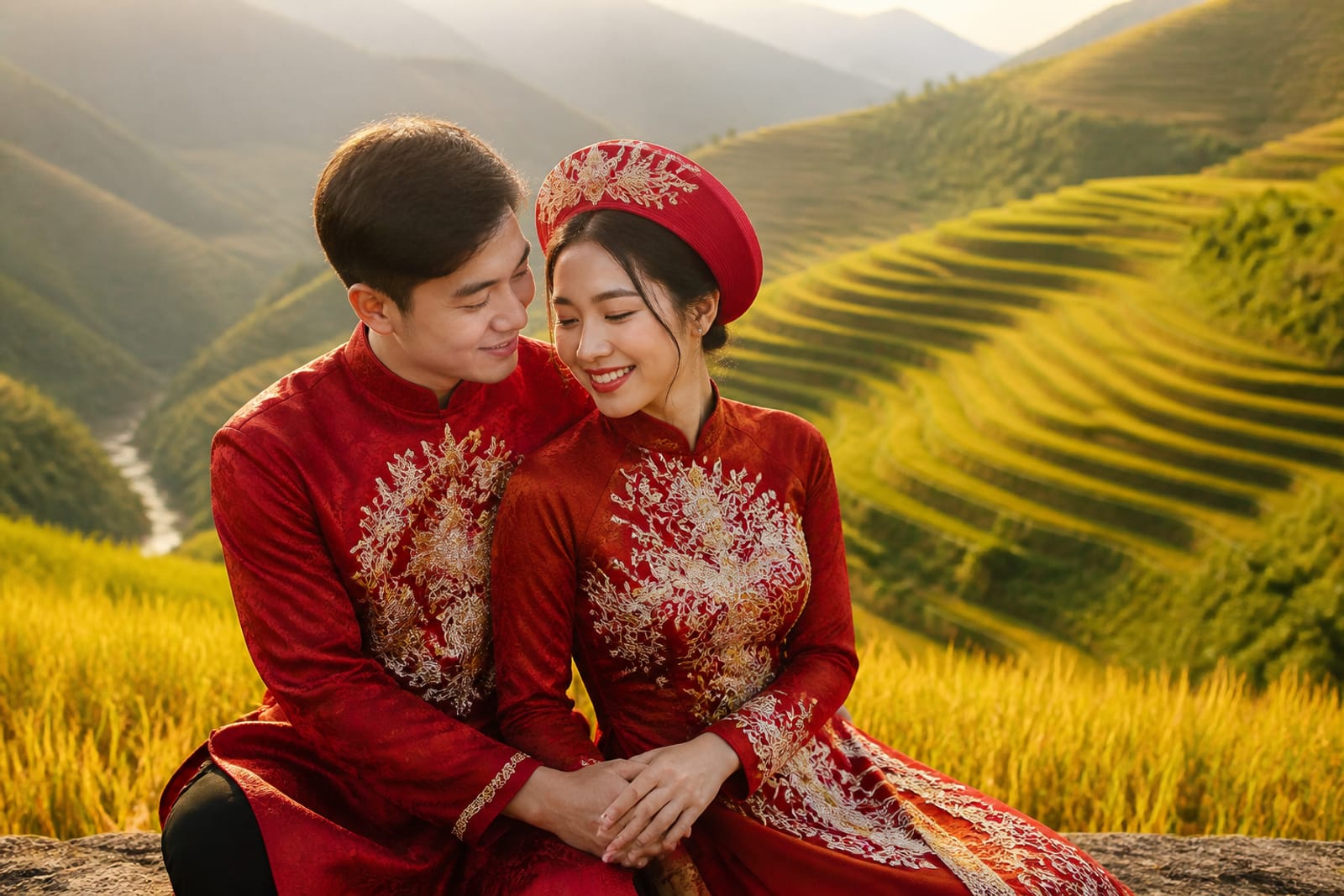
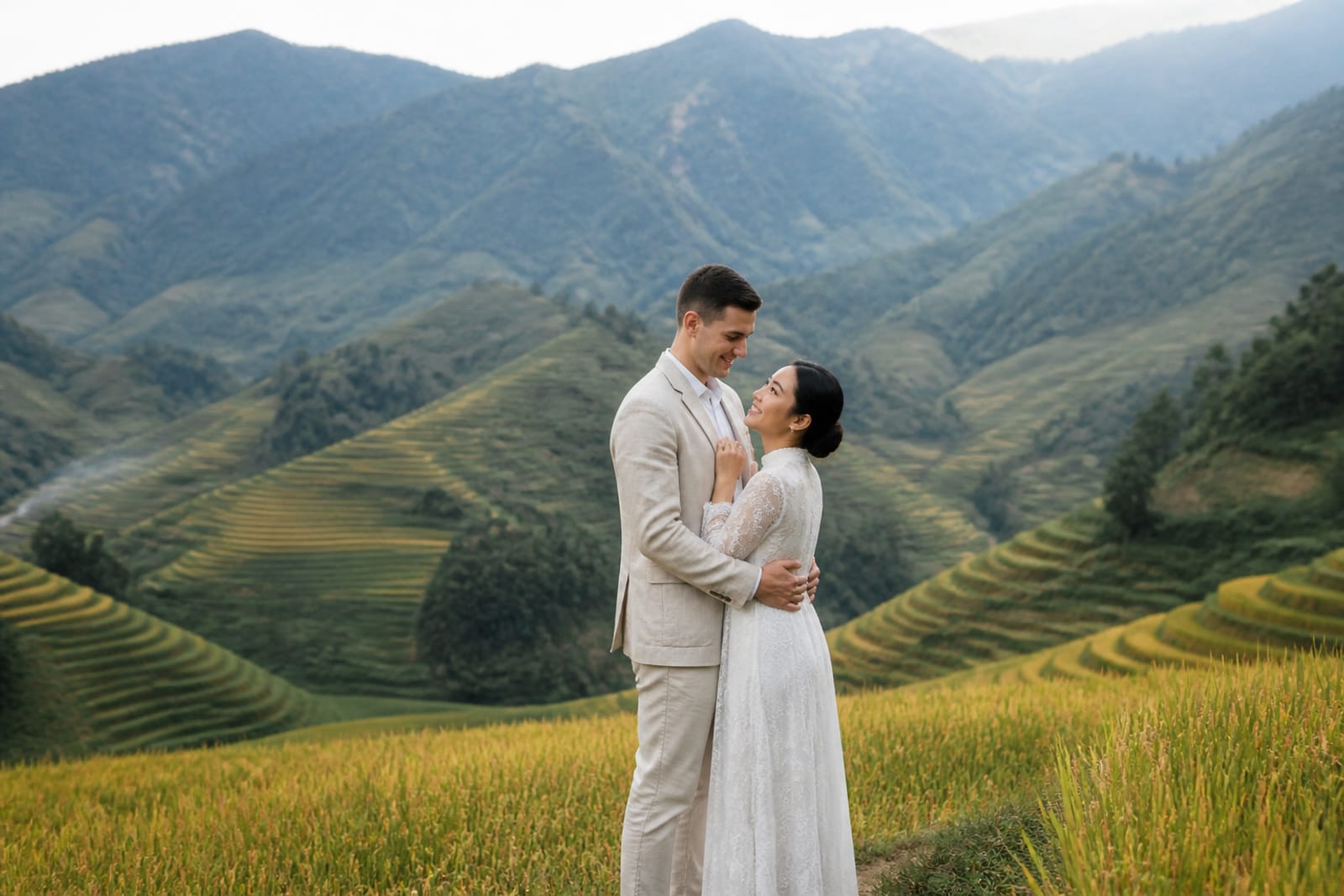
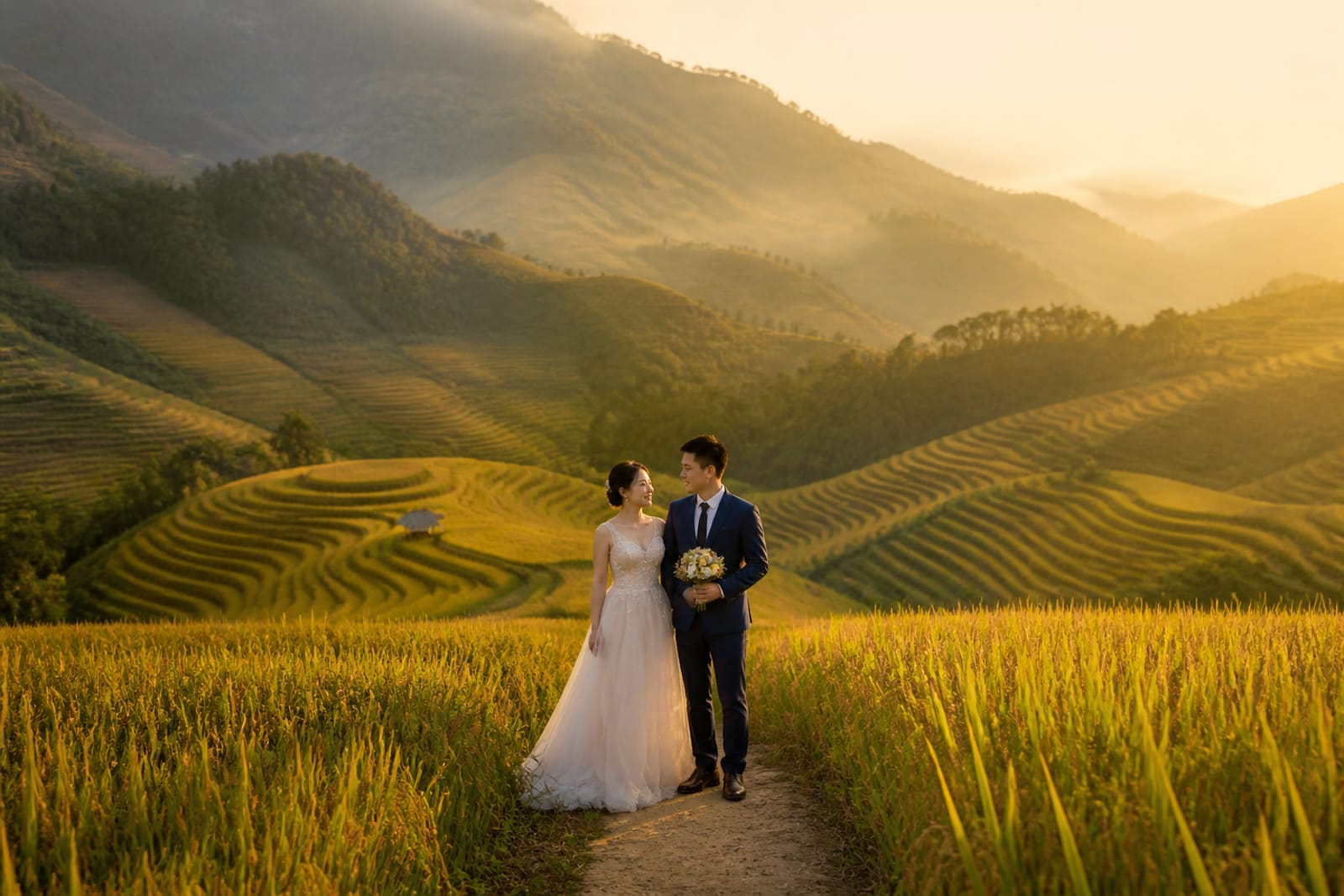
Mu Cang Chai's terraces create a natural frame that no studio backdrop can replicate. The landform changes dramatically by season: in May–June, irrigation fills the paddies into mirror surfaces that reflect sky and light; by mid-September through early October, harvest turns the fields golden and geometric. The terrain itself enforces a visual rhythm—wide shots of you walking through the terraces, medium frames of interaction with the landscape, detail shots of hands or feet on the narrow pathways. The challenge is not composition but logistics: the roads are winding, the altitude is 800–1000 metres above sea level, and the light window for soft, directional photography is tight. A photographer familiar with mountain terrain will plan the shoot around sunrise or the two hours before sunset, avoid the harsh midday glare that flattens the landscape, and know which terraces are accessible without trespassing on active farmland.
Local Photographer vs. Hanoi Studio: Which Suits Your Needs?
| Option | Best For | Season Timing | Logistics | Cost Factor |
|---|---|---|---|---|
| Local Yen Bai photographer | couples on a tight budget, short notice | May–Jun or Sep–Oct only | photographer knows roads; you arrange own transport | lower upfront, but fewer edit options |
| Hanoi-based photographer (travels) | couples wanting portfolio-name recognition | flexible dates (drives from Hanoi) | photographer's vehicle + driver, often includes other services | mid-range; depends on shoot length |
| Hanoi studio (e.g. Cáo Studio) | couples wanting one team for photos + outfit/hair/makeup | flexible dates, books well in advance | studio coordinates vehicle, makeup artist, assistant; all in one booking | higher baseline, but full creative control and faster edits |
A local Yen Bai photographer is cheapest but may have limited editing skills or portfolio breadth; you also shoulder the burden of coordinating transport and confirming they understand pre-wedding vision, not just landscape tourism. A Hanoi-based freelancer offers better editing and experience but requires you to hire them solo—no makeup or outfit coordination unless you book separately. A studio like Cáo Studio takes the complexity off your plate: one contact, one vehicle, hair/makeup/photographer/stylist arriving together, and edits delivered in 48 hours. The trade-off is that studios require advance booking (typically 2–4 weeks) and a higher upfront cost, but couples often save money by avoiding separate bookings for makeup, hair and photography.
For Mu Cang Chai specifically, Cáo Studio does not operate a branch there; the studio would send a team from Hanoi on appointment. Ask on WhatsApp if Mu Cang Chai dates are available and what travel logistics are involved.
Timing, Light and Season: The Real Constraints
Mu Cang Chai's light is its asset and its deadline. In May–June, the sun rises around 5:30 am, and soft side-light lasts until 7:30 am before the sky bleaches out; afternoon light returns with depth around 4:30 pm and peaks at 5:30–6:30 pm. The air tends to be hazier (farm smoke and humidity) in May–June, which can soften contrast but also reduce clarity. Mid-September to early October has crisper air, sharper light, and the same tight window: sunrise 6:00–7:30 am, golden hour 5:00–6:30 pm. Both seasons are within the dry months for the central highlands, meaning rain risk is low but not zero.
Winter (November–February) is cool and clear, terraces are not flooded, and the light is excellent—but the fields are fallow and brown, so the visual story shifts from "water and geometry" to "earth and space." If you are drawn to Mu Cang Chai for its water-mirror quality, don't book in winter. If you love the stark, tawny texture of pre-harvest fields, November–January offers less crowds than peak season and crystal-clear air.
Spring (March–April) and summer (July–August) are risky: spring is increasingly dusty and humid; summer is rainy and the roads can be slick. Avoid these months unless you have flexibility for rescheduling.
Your photographer must commit to an early call time (5:30 am start) and understand that you will spend 2–3 hours on location, then have a 1.5–2 hour drive back to Hanoi. Full-day pre-wedding shoots in Mu Cang Chai are tiring; a professional will pace the session, suggest water breaks, and know which terraces photograph best in each light window.
What to Check Before You Book
Before signing any contract or sending a deposit, ask a photographer these specific questions:
- Have you shot at Mu Cang Chai before? Ask to see 3–5 frames from that location. A photographer with Mu Cang Chai experience will show you variety (wide landscape, couple interaction, detail), multiple seasons (water or harvest), and consistent editing style.
- Do you drive to Mu Cang Chai, or do I arrange transport? If they drive, confirm they have a reliable vehicle for mountain roads and liability insurance. If you arrange transport, ask how many hours they expect on location and how many outfit changes are realistic.
- What is your turnaround time for edits? Hanoi studios often deliver edits in 48 hours; freelancers may take 1–2 weeks. Confirm the edit count (number of final photos you receive) and the format (digital files, prints, album, video).
- Do you include outfit, hair and makeup? If not, you'll need to book those separately. Cáo Studio includes coordination of these services; a pre-wedding package through a studio simplifies the process.
- What if weather ruins the shoot? Mu Cang Chai rain, though rare in dry season, does happen. Ask if they offer a free rescheduled date or a partial refund. Get this in writing.
- Are there additional fees for the mountain location? Some photographers charge extra for travel; some include it. Clarify whether the quoted cost is all-in or if you'll see additional charges for vehicle, fuel or road time.
A professional photographer will answer all of these clearly and provide a written agreement. If they are vague or defensive, keep looking.
📸 Book on WhatsApp — pre-wedding photoshoot
How to Prepare for a Strong Shoot
Once you've booked, preparation is half the result. Start by picking your outfit: traditional ao dai photographs beautifully in Mu Cang Chai—the drape moves with the terrain and the colours (jewel tones, pastels) pop against earth and water. If you're wearing Western dress, avoid busy patterns or pure white (blown highlights in high-altitude sunlight); jewel tones and deep earth colours work best. Avoid heels—the pathways are narrow and muddy even in dry season; wear comfortable shoes or go barefoot if the photographer approves.
Plan a makeup style that lasts 4–6 hours: waterproof foundation, long-lasting lip colour, and minimal loose powder (wind on the terraces will blow it away). If your photographer doesn't include hair/makeup, consider booking a stylist in Hanoi and asking them to arrive at your meeting point (or book a studio like Cáo Studio that includes makeup and hair at your hotel before the drive).
Arrive well-rested: altitude and an early wake-up take energy. Bring water, a light snack, and a small bag for the shoot—the photographer will carry their own gear. Let them lead the pacing and don't rush between locations. The best frames come when you've been on the terraces for 45+ minutes and have settled into the rhythm of walking, looking at each other, and simply existing in the landscape.
Finding and Vetting a Local Photographer (If Not Using a Studio)
If you decide to hire a local Yen Bai or Hanoi freelancer instead of a studio, use these channels to find them:
- Instagram hashtags: #MuCangChaiPhotographer, #VietnamWeddingPhotographer, #YenBaiPhotographer. Review each account: do they show full pre-wedding shoots, or mostly tourist/landscape work? Do their edits look consistent and intentional, or over-processed?
- Local wedding planners in Hanoi: ask if they have a trusted photographer network in Yen Bai. Planners often have reliable referrals.
- Facebook photography groups: search "Vietnam Pre-Wedding Photography" or "Hanoi Wedding Photographers"; ask the community for Mu Cang Chai specialists. Read reviews and ask for references.
- Ask your hotel or guesthouse: if you're staying in Yen Bai, the owner may know a local photographer or have a contact who does events.
When you contact a photographer, ask for a full portfolio (not just highlights), recent client testimonials, and a clear proposal in writing. If they can't provide these, move on. A professional photographer—local or from Hanoi—will have systems in place.
For a complete studio experience with coordinated outfit, hair, makeup and photographer, book a pre-wedding session with Cáo Studio (available from Hanoi base; ask on WhatsApp about Mu Cang Chai dates). For an ao dai photoshoot or couple & family session at Cáo Studio's main bases in Hanoi or Saigon, those are available year-round.
FAQ
What is the best month to shoot pre-wedding photos in Mu Cang Chai?
May–June (flooded mirror terraces, soft air) or mid-September to early October (golden harvest). Winter is crisp and clear but fields are brown. Avoid July–August (rain) and spring (dust, heat, humidity).
Do I need a permit to shoot pre-wedding photos in Mu Cang Chai?
No formal permit is required for personal pre-wedding photography on public terraces. Stay off active farmland, respect locals, and avoid blocking access roads. Your photographer should know local etiquette.
How long does a pre-wedding shoot in Mu Cang Chai take (including travel)?
Plan 8–10 hours total: 1.5–2 hours driving from Hanoi, 3–4 hours on location (with breaks), 1.5–2 hours return. Early start (5:30–6:00 am) is essential for best light.
Can I book a Mu Cang Chai shoot if I'm not based in Hanoi?
Yes. A Hanoi-based photographer can travel to Mu Cang Chai from anywhere, but you need to arrange your own arrival in Hanoi or Yen Bai first. If booking through a studio like Cáo Studio, they can coordinate the full day from Hanoi.
What should I wear for pre-wedding photos in Mu Cang Chai?
Ao dai or jewel-tone Western dress photograph best. Avoid white, busy patterns and heels. The terrain is steep and muddy—wear comfortable shoes or go barefoot. Coordinate your outfit with your photographer before the shoot.
How much does a pre-wedding photographer cost in Mu Cang Chai?
Pricing varies by photographer experience, location, edits included and travel fees. Discuss factors (season, shoot length, number of outfits, edit turnaround) with your photographer on WhatsApp and get a written quote before booking.
FAQ
What is the best month to shoot pre-wedding photos in Mu Cang Chai?
May–June (flooded mirror terraces, soft air) or mid-September to early October (golden harvest). Winter is crisp and clear but fields are brown. Avoid July–August (rain) and spring (dust, heat, humidity).
Do I need a permit to shoot pre-wedding photos in Mu Cang Chai?
No formal permit is required for personal pre-wedding photography on public terraces. Stay off active farmland, respect locals, and avoid blocking access roads. Your photographer should know local etiquette.
How long does a pre-wedding shoot in Mu Cang Chai take (including travel)?
Plan 8–10 hours total: 1.5–2 hours driving from Hanoi, 3–4 hours on location (with breaks), 1.5–2 hours return. Early start (5:30–6:00 am) is essential for best light.
Can I book a Mu Cang Chai shoot if I'm not based in Hanoi?
Yes. A Hanoi-based photographer can travel to Mu Cang Chai from anywhere, but you need to arrange your own arrival in Hanoi or Yen Bai first. If booking through a studio like Cáo Studio, they can coordinate the full day from Hanoi.
What should I wear for pre-wedding photos in Mu Cang Chai?
Ao dai or jewel-tone Western dress photograph best. Avoid white, busy patterns and heels. The terrain is steep and muddy—wear comfortable shoes or go barefoot. Coordinate your outfit with your photographer before the shoot.
How much does a pre-wedding photographer cost in Mu Cang Chai?
Pricing varies by photographer experience, location, edits included and travel fees. Discuss factors (season, shoot length, number of outfits, edit turnaround) with your photographer on WhatsApp and get a written quote before booking.
Ao dai, makeup, hair and a local photographer in Hanoi or Saigon — one WhatsApp message.