/pre-wedding-photoshoot
How to hire a pre-wedding photographer in Sapa
Pre-wedding photography in Sapa means booking a photographer or team to shoot your couple session in the Sapa region (far north Vietnam, cool highlands). Most couples hire a local Sapa-based photographer or arrange for a Hanoi team to travel (typically 1–1.5 hours from Hanoi). Sessions run 2–4 hours depending on location (terraces, villages, town streets) and outfit changes; golden light (early morning or late afternoon) and clear skies—rare in winter—shape booking windows. Avoid December–February unless you accept fog and cold. Cáo Studio – Makeup & Photoshoot (based in Hanoi and Ho Chi Minh City) does NOT operate a Sapa branch, but teams can travel there by appointment; ask on WhatsApp for Sapa dates and logistics. Local Sapa photographers offer lower travel cost but require vetting; traveling teams bring consistent style but add journey time and coordination overhead. Before committing, confirm the photographer's experience with terrain, weather contingency plans, and how many edited images you receive. ---
Why hire a pre-wedding photographer in Sapa?
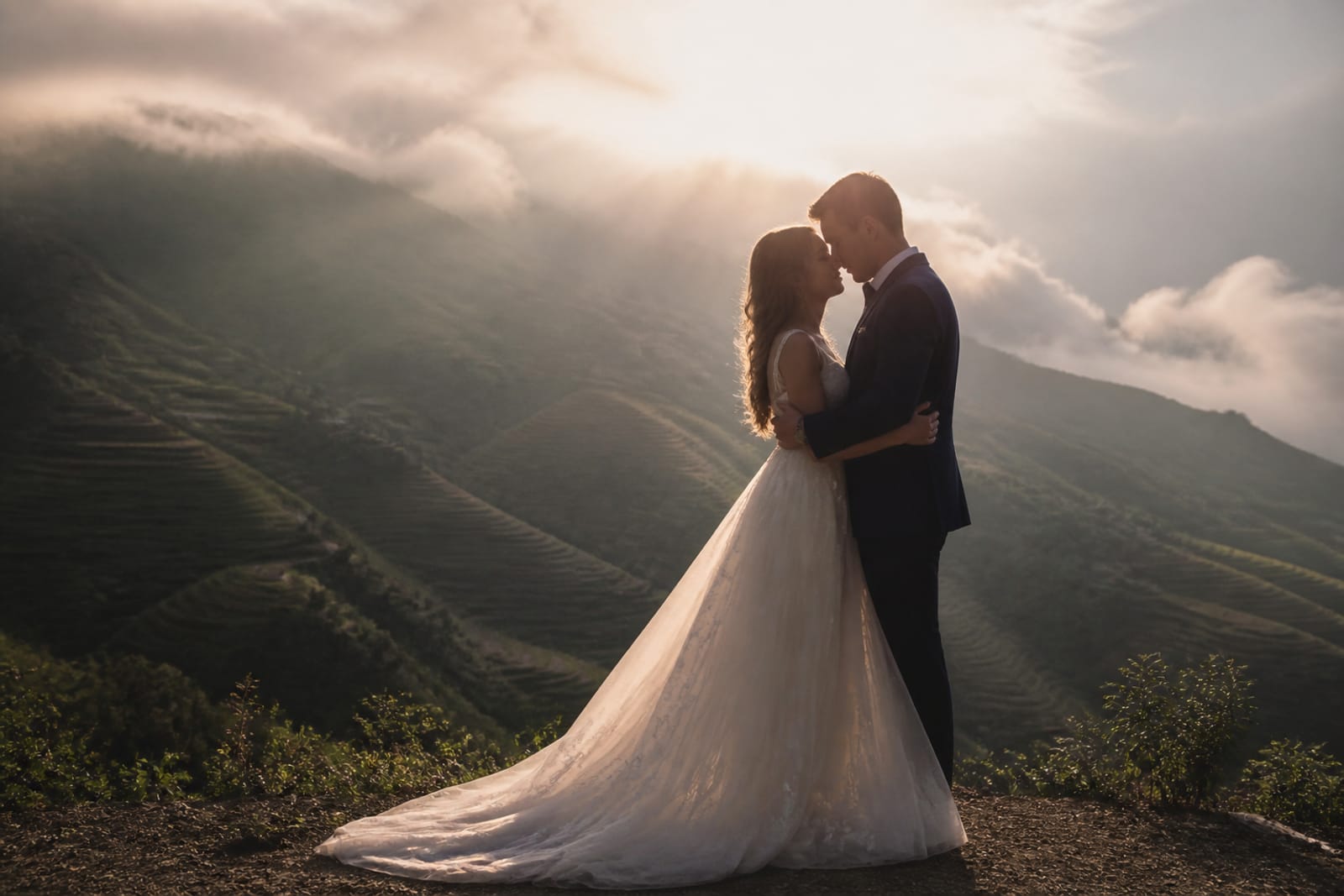
Sapa's landscape—cascading rice terraces, Fansipan mountain backdrop, ethnic villages, and misty valleys—creates cinematic pre-wedding backdrops. The region's cool, often hazy light differs from lowland Vietnam, suiting moody, romantic imagery. Couples seeking adventure beyond urban studios choose Sapa for authenticity and scale. The challenge: Sapa's isolation and unpredictable weather demand a photographer who knows the terrain and has contingency plans. Hiring locally keeps costs lower; hiring a traveling team ensures consistency with your preferred style.
Should you hire locally in Sapa or fly a team from Hanoi?
| Option | Best for | Season & light | Why it works |
|---|---|---|---|
| Local Sapa photographer | Budget-conscious couples, spontaneous bookings, cultural immersion | May–Oct (rainy, misty) or Mar–Nov (best weather windows); early morning/late afternoon avoids harsh midday glare | No travel time; photographer knows hidden spots; lower upfront cost; risk: portfolio review essential to match your style |
| Hanoi team traveling to Sapa | Couples wanting consistent editing style, professional makeup/hair support, structured timeline | Mar–May, Sep–Nov (clear skies, comfortable temps, low fog); avoid Dec–Feb (fog, cold) and peak Jul–Aug (afternoon storms) | Includes hair/makeup, same-day previews, familiar workflow; logistics add 3–5 hours travel; best booked 4–6 weeks ahead |
| Mixed approach | First-time couples, split budget, local + pro backup | May–Nov (weather varies); shoot with local, hire Hanoi team for touch-ups/retakes | Cheaper than full team travel; risk: coordination complexity; works if both photographers communicate |
Sapa's terrain (steep trails, muddy terraces during/after rain, altitude 1,500 m) suits a photographer experienced with hiking and unpredictable footing. Local photographers know safe terrace access and seasonal water levels; traveling teams may underestimate logistics.
📸 Book on WhatsApp — pre-wedding & elopement sessions
What are the best seasons and light windows in Sapa for a shoot?
Sapa has three distinct windows: March–May (cool, clear mornings; some mist midday; terraces transitioning green), September–early November (harvest season, terraces golden-brown, clearest skies, comfortable 15–18°C afternoons), and May (green terraces, full water, early morning light perfect—but afternoons often rain). Winter (December–February) brings fog, cold (near 0°C dawn, frost possible), and limited visibility; not recommended unless you embrace moody, low-light aesthetics. Summer (June–August) has high humidity, afternoon downpours, and afternoon storm risk. Golden hour (sunrise 6–7 a.m., sunset 5–6 p.m.) is tighter in Sapa than lowland Vietnam due to terrain shadows; early starts (4:30–5 a.m. departures) are standard for mountain light. Midday (10 a.m.–4 p.m.) creates harsh contrasts across terraces unless you shoot in mist or shade. A photographer familiar with Sapa timing will propose specific locations and hours; ask them which month they recommend and why. See seasonal breakdowns in our main pre-wedding guide.
What logistics should you confirm before booking?
Terrain & transport:
- How many hours of walking/hiking? (Terraces require 20–45 min hikes; pack water, sturdy shoes, a backup outfit.)
- Does the photographer scout locations or have a fixed itinerary?
- Who arranges transport to remote spots (local taxi, hotel driver, photographer's connection)?
- Is weather contingency built in (rain date, alternative indoor spots, refund policy)?
Deliverables & timeline:
- How many edited images, and in what format (digital files, prints, album)?
- Delivery time (2 weeks is typical; ask about rush options and any extra cost).
- Do you receive raw files or only edited finals?
Hair & makeup:
- Is a makeup artist included or hired separately? (Traveling Hanoi teams often include this; local photographers may not.)
- Who ensures makeup holds in cool, damp mountain air (powder, setting spray)?
Cost factors (not fixed amounts):
- Local photographer: upfront fee typically lower than travel teams; inquire about outfit changes, album design, or prints as add-ons.
- Traveling team: includes labor (photographer + assistant/makeup artist), fuel, time; higher base but fewer hidden costs.
- Outfit rentals: check if your ao dai rental or wedding dress rental site ships to Sapa or if you bring outfits yourself.
- Permits: some ethnic villages require guides; budget this separately or ask if photographer arranges it.
Contact photographers via WhatsApp with a mood board, specific location requests, and your season preference. Ask Cáo Studio on WhatsApp (+84 338 762 340) if Sapa travel dates align with your season.
How do you vet a Sapa photographer's portfolio and experience?
Ask for:
- Sapa-specific samples (not just studio work or lowland locations).
- Seasonal variety (how do they handle mist, rain, harsh midday light?).
- Couple dynamics (emotional, editorial, or documentary style?).
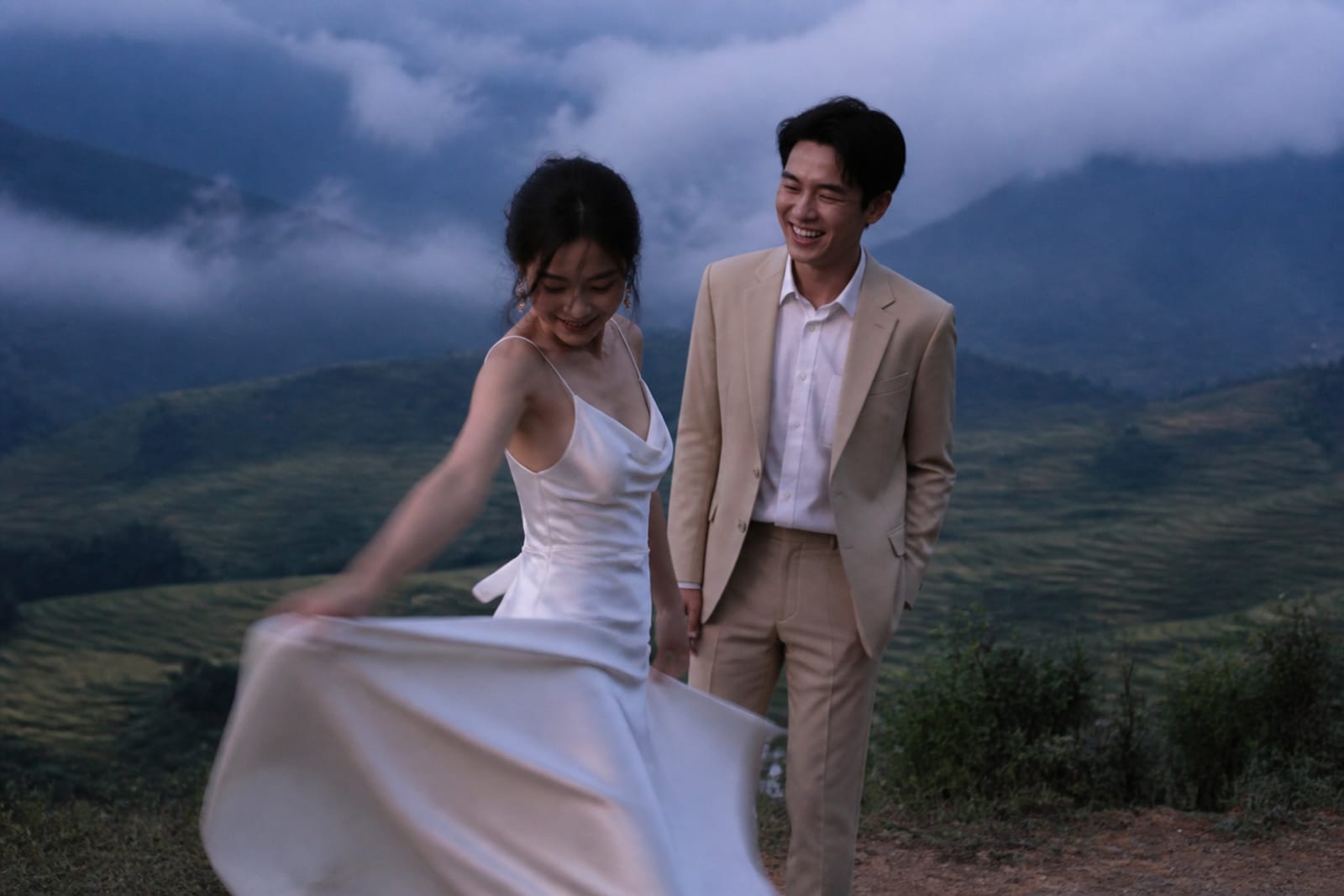
- Technical proof (image sharpness at high altitude, color accuracy in cool light, how they expose for both sky and terraces).
Request a video call to discuss your vision, timeline, and backup plan. A professional will propose:
- A shot list (e.g., "silhouette on terrace at sunrise, detail shots in village, sunset embrace at viewpoint").
- Weather contingencies (rain plan, alternative date or nearby location).
- Communication protocol (WhatsApp check-ins, real-time adjustments).
Red flags: no Sapa samples, vague deliverable promises, no weather policy, or pressure to pay upfront without a contract. If booking a traveling Hanoi team, review their main portfolio and ask specifically about mountain experience. Compare with our lookbook to see if their editorial style matches yours.
What should your outfit strategy be in Sapa?
Sapa's altitude (1,500 m) and cool, often damp air shape outfit choices:
- Fabric: avoid heavy silks (humidity + chill = uncomfortable); lightweight cotton or blended ao dai, or Western wedding dress with layers work well.
- Layers: a shawl, lightweight jacket, or overskirt handles morning cold (10–12°C) and wind on ridges; remove for midday shots.
- Footwear: wedding heels sink into wet terraces; pack flats or ankle boots for hiking shots, switch to heels for paved village/town frames.
- Undergarments: a slim shapewear set avoids visible seams under lightweight fabric; bring a backup in case of moisture/sweat.
- Practicality: two outfits are standard (one traditional, one modern/casual); a third is possible if you're comfortable with timing and weight.
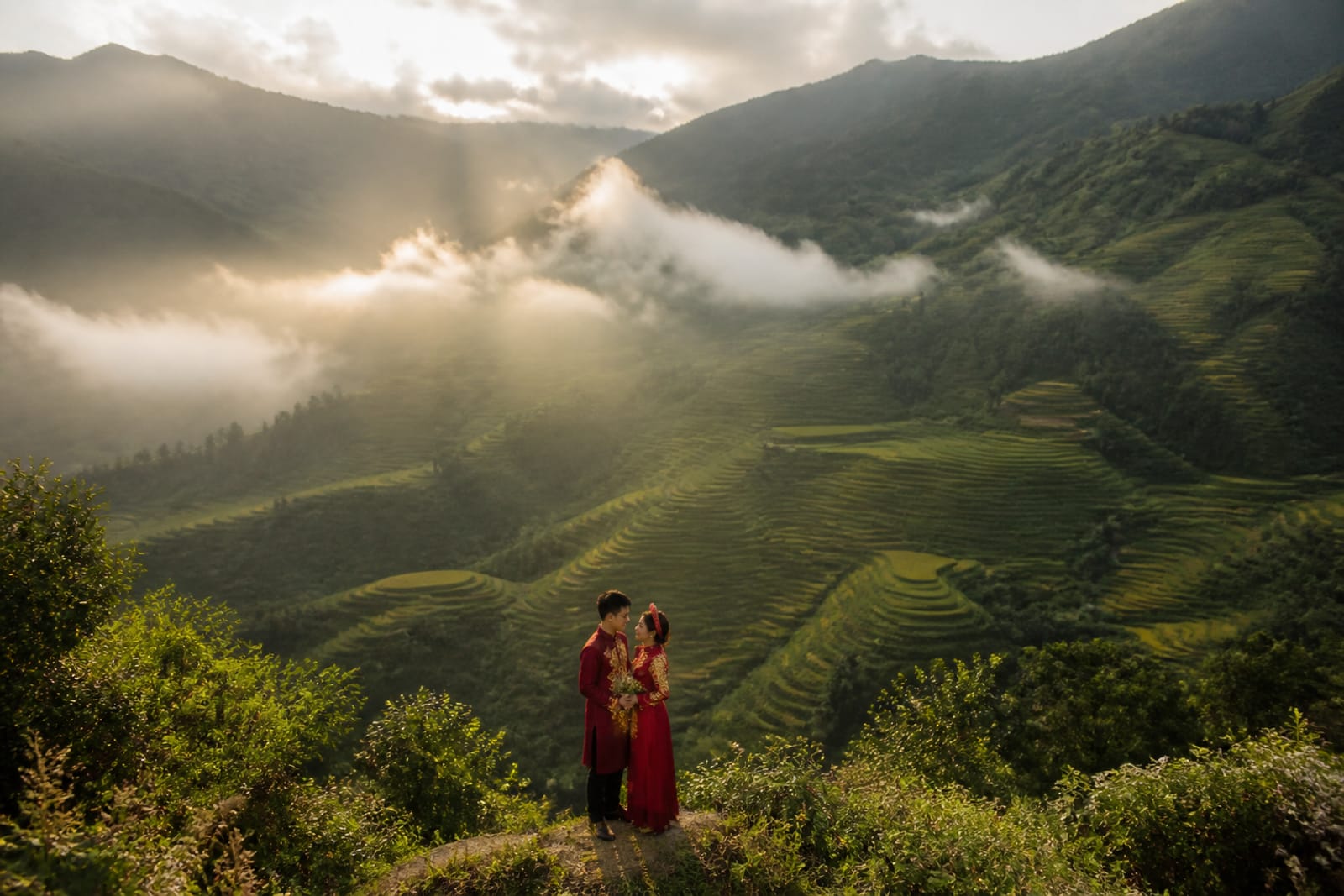
A photographer who knows Sapa terrain will suggest which outfit suits which location (e.g., ao dai for terraces, Western dress for town framing, casual set for village walk). Discuss outfit logistics with your makeup & hair team to plan touchup timing between changes. Bring a garment bag, plastic covers (for rain), and a steamer if you're staying overnight.
---
What to check before you book
- [ ] Photographer has Sapa-specific portfolio (images taken in your preferred season).
- [ ] Weather contingency policy in writing (rain date, alternative location, refund terms).
- [ ] Deliverables confirmed: number of edited images, file format, album/print options, timeline.
- [ ] Transport & logistics clear: who arranges access to remote locations, permits, guides, parking.
- [ ] Makeup & hair included or booked separately; confirm they're experienced with cool-weather touch-ups.
- [ ] Outfit plan finalized: how many changes, where stored, who manages transitions and garment care.
- [ ] Communication: response time, real-time adjustments during shoot, delivery format.
- [ ] Pricing & payment: total cost, any hidden add-ons (prints, albums, rush fees), payment schedule.
For a cohesive experience combining pre-wedding photography with logistics, contact Cáo Studio on WhatsApp (+84 338 762 340) to ask about Sapa travel dates. We coordinate makeup, styling, and shot direction for couples booking travel sessions; a team can meet you in Hanoi and travel together, or provide referrals to vetted local photographers.
---
FAQ
Can Cáo Studio shoot a pre-wedding session in Sapa?
Cáo Studio (Hanoi & Saigon studios) does not have a Sapa branch. Travel to Sapa by appointment is possible; ask on WhatsApp (+84 338 762 340) for dates, logistics, and whether a team can coordinate your shoot. Otherwise, we recommend vetting a local Sapa photographer or asking our Hanoi team for referrals.
What's the best month to book a pre-wedding shoot in Sapa?
September–early November (clear skies, comfortable 15–18°C, golden terraces) or March–May (cool, green terraces, early-morning clarity). Avoid December–February (fog, cold, limited light) unless you embrace moody aesthetics. May offers the greenest terraces but afternoon rain is common.
Do I need to hire a local guide for Sapa photoshoot locations?
Some ethnic villages or remote terrace spots require local guides (especially in ethnic areas). A Sapa-based photographer usually has connections and can arrange this; a traveling team may need to coordinate it via your hotel or WhatsApp. Confirm guide cost and logistics before booking.
How long does a typical pre-wedding shoot take in Sapa?
2–4 hours depending on outfit changes and location spread. Early-morning shoots (4:30–5 a.m. start) capture golden light but end by 10 a.m.; sunset shoots (3–5 p.m. start) require travel to a ridgeline or high viewpoint. Plan full-day logistics (transport, hair/makeup prep, outfit changes, meals) even if the shoot itself is 3 hours.
What should I wear under an ao dai for a Sapa shoot?
Wear slim shapewear (briefs or a short slip) to avoid visible seams under lightweight fabric. Sapa's cool air and moisture mean breathable, moisture-wicking layers prevent discomfort during long walks. Bring a backup shapewear set and a shawl or lightweight jacket for morning/evening cold (10–12°C).
How much does hiring a photographer in Sapa cost?
Costs vary by photographer experience, outfit changes, and whether they're local or traveling from Hanoi. Local Sapa photographers typically charge less than traveling teams; traveling teams add fuel and time but include makeup/hair coordination. Ask each photographer for a quote on WhatsApp, and confirm what's included (edited images, album, prints).
Can a traveling Hanoi team handle Sapa weather and terrain?
Yes, if they have mountain experience and clear communication. Ask their portfolio for Sapa or high-altitude shoots. A professional will propose weather backup plans (rain date, covered locations, moisture-resistant makeup). Discuss terrain comfort, footwear, and physical demands before booking.
Do I need permits or permissions to shoot in Sapa locations?
Some ethnic villages require guides or informal permissions; national-park areas may have rules. A local Sapa photographer knows these; a traveling team should ask upfront and adjust plans accordingly. Budget time and cost for guide fees if shooting in protected or culturally sensitive spots. Check with your hotel or photographer for current rules.
FAQ
Can Cáo Studio shoot a pre-wedding session in Sapa?
Cáo Studio (Hanoi & Saigon studios) does not have a Sapa branch. Travel to Sapa by appointment is possible; ask on WhatsApp (+84 338 762 340) for dates, logistics, and whether a team can coordinate your shoot. Otherwise, we recommend vetting a local Sapa photographer or asking our Hanoi team for referrals.
What's the best month to book a pre-wedding shoot in Sapa?
September–early November (clear skies, comfortable 15–18°C, golden terraces) or March–May (cool, green terraces, early-morning clarity). Avoid December–February (fog, cold, limited light) unless you embrace moody aesthetics. May offers the greenest terraces but afternoon rain is common.
Do I need to hire a local guide for Sapa photoshoot locations?
Some ethnic villages or remote terrace spots require local guides (especially in ethnic areas). A Sapa-based photographer usually has connections and can arrange this; a traveling team may need to coordinate it via your hotel or WhatsApp. Confirm guide cost and logistics before booking.
How long does a typical pre-wedding shoot take in Sapa?
2–4 hours depending on outfit changes and location spread. Early-morning shoots (4:30–5 a.m. start) capture golden light but end by 10 a.m.; sunset shoots (3–5 p.m. start) require travel to a ridgeline or high viewpoint. Plan full-day logistics (transport, hair/makeup prep, outfit changes, meals) even if the shoot itself is 3 hours.
What should I wear under an ao dai for a Sapa shoot?
Wear slim shapewear (briefs or a short slip) to avoid visible seams under lightweight fabric. Sapa's cool air and moisture mean breathable, moisture-wicking layers prevent discomfort during long walks. Bring a backup shapewear set and a shawl or lightweight jacket for morning/evening cold (10–12°C).
How much does hiring a photographer in Sapa cost?
Costs vary by photographer experience, outfit changes, and whether they're local or traveling from Hanoi. Local Sapa photographers typically charge less than traveling teams; traveling teams add fuel and time but include makeup/hair coordination. Ask each photographer for a quote on WhatsApp, and confirm what's included (edited images, album, prints).
Can a traveling Hanoi team handle Sapa weather and terrain?
Yes, if they have mountain experience and clear communication. Ask their portfolio for Sapa or high-altitude shoots. A professional will propose weather backup plans (rain date, covered locations, moisture-resistant makeup). Discuss terrain comfort, footwear, and physical demands before booking.
Do I need permits or permissions to shoot in Sapa locations?
Some ethnic villages require guides or informal permissions; national-park areas may have rules. A local Sapa photographer knows these; a traveling team should ask upfront and adjust plans accordingly. Budget time and cost for guide fees if shooting in protected or culturally sensitive spots. Check with your hotel or photographer for current rules.
Ao dai, makeup, hair and a local photographer in Hanoi or Saigon — one WhatsApp message.