/pre-wedding-photoshoot
Hue or Da Lat for pre-wedding photos: which location works better?
Hue suits couples who want classical Vietnamese architecture, soft riverlight and ao dai elegance year-round (though Dec–Feb is clearest). Da Lat works best Nov–Jan when wildflowers bloom and mist rises at dawn over pine forest—but weather is unpredictable May–Oct, and the town feels busier in peak season. Both need early morning shoots (6–7 am) to avoid crowds; Hue's light off the Perfume River is more forgiving, Da Lat's mist and altitude demand faster film stock. If you're renting an ao dai, Hue's temples and gardens frame it traditionally; Da Lat suits Western dress, candid walks and moody tones. Cáo Studio does not yet operate in Hue or Da Lat—we shoot in Hanoi, Ho Chi Minh City and Hoi An. For either destination, book a local Hue or Da Lat photographer 2–3 weeks ahead and scout light and outfit fit by video call first.
Hue and Da Lat are Vietnam's two strongest pre-wedding destinations outside Hanoi and Ho Chi Minh City. They feel opposite: Hue is warm, imperial, steeped in water and history; Da Lat is cool, forested, foggy and romantic in a European way. Choosing one depends less on how pretty it looks in photos and more on when you're traveling, what you want to wear, and how you like to move through a frame.
Both are reached by flight from Hanoi or Saigon in under 90 minutes. Both have local photographers, but finding one who understands pre-wedding direction—not just posing couples in front of landmarks—requires vetting. The decision matrix below cuts through the Instagram aesthetic and asks: where will the light, season and your outfit actually work together?
Which location matches your wedding vision better?
Hue answers couples drawn to Vietnamese heritage, temple gardens and water. The Perfume River (Sông Hương), Forbidden City walls and royal tombs all read beautifully in frames—especially with an ao dai or traditional áo vest. Light bounces off water early (6–7 am) and stays soft until 8:30 am. The town is 19th-century French colonial layered over imperial court; that blended mood suits slower, contemplative walks and close-ups.
Da Lat appeals to couples who want romance that doesn't depend on Vietnamese landmarks—misty pine forests, calm lakes, flower gardens and cool air that photographs well in any clothing. Da Lat feels less "tourist Vietnam" and more intimate. Light is cooler (higher altitude), mist adds texture, and the pace is slower. But it works hardest Nov–Jan; from May–Oct, afternoon rain and cloud cover are common, shortening your shooting window to the first two hours after sunrise.
Your choice: Hue if you're wearing ao dai, have Feb–Oct flexibility and want imperial architecture; Da Lat if you prefer contemporary or Western dress, can travel Nov–Jan, and want moodier natural light.
| Aspect | Hue | Da Lat | Choose Hue if … | Choose Da Lat if … |
|---|---|---|---|---|
| Best season | Dec–May (dry, cool; soft water light) | Nov–Jan (wildflowers, mist at dawn, clear mornings) | You're not locked into winter | You love misty, moody morning light |
| Ao dai fit | Excellent (temples, gardens, river backdrop frame it) | Good (less traditional context, more personal mood) | Ao dai is your main outfit | You're wearing modern or Western dress |
| Light character | Warm, reflected off water, forgiving | Cool, diffused by mist, fast-moving | You want classic, soft beauty | You want texture and atmospheric depth |
| Crowds | Moderate at dawn; busy by 9 am (mainly day-trippers) | Light 6–8 am; heavier mid-morning in peak season | You can shoot 6–7:30 am | You want solitude in first light |
| Weather risk | Low (dry Dec–May); June–Sep is hot/humid | Unpredictable May–Oct (afternoon rain likely); Dec–Apr clear | You're traveling outside summer | You can only travel May–Sep |
| Photo mood | Narrative (story unfolding across landmarks) | Cinematic (light and landscape do the work) | You want a location-driven story | You want mood and atmosphere to dominate |
| Walking time | High (temples, gardens, waterfront spread across the city) | Lower (closer together; misty mornings limit visibility) | You're fit and have a full day | You prefer shorter walks, early finish |
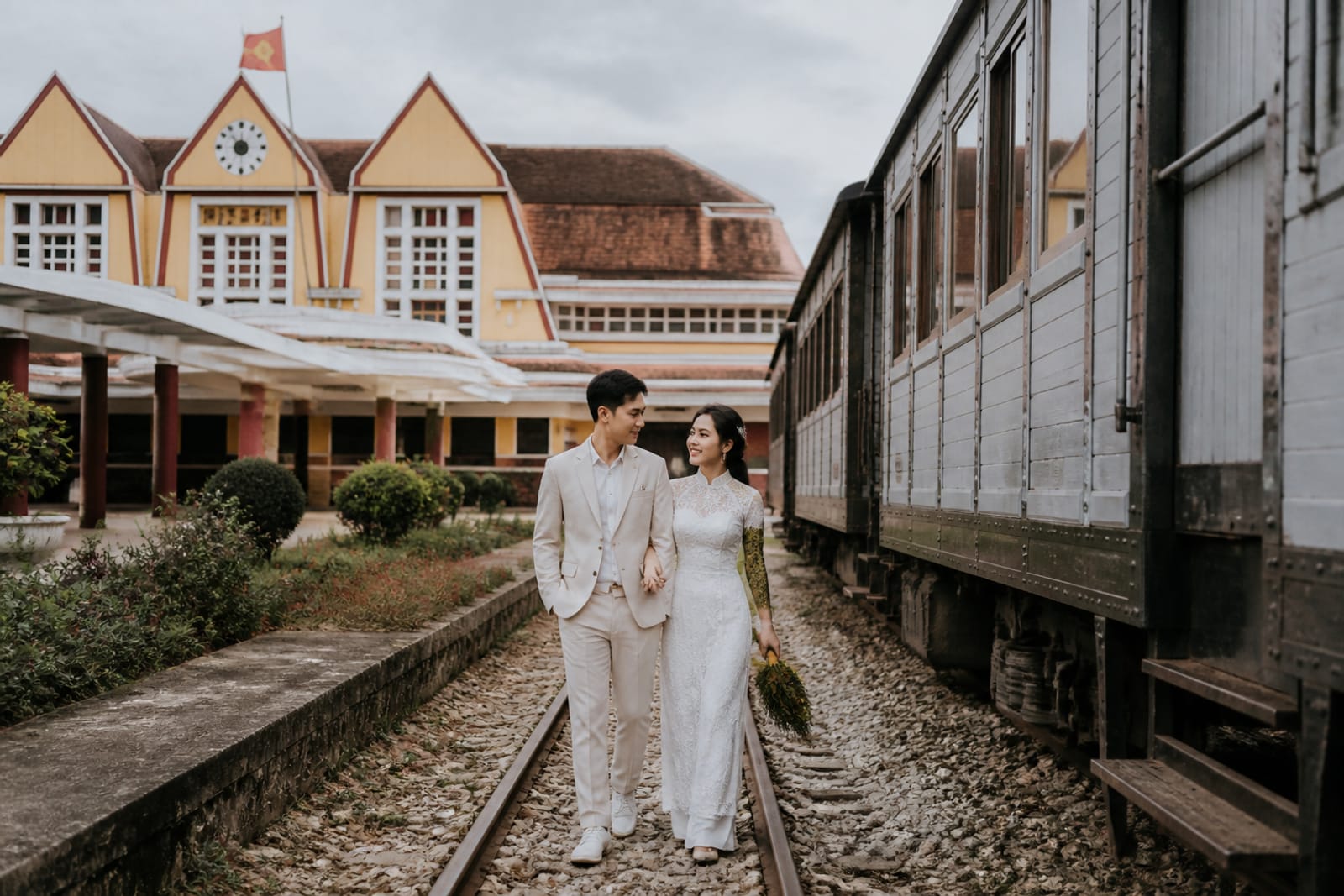
How does season actually change what you can shoot?
Hue's dry season (Dec–May) delivers consistent morning light. The river at 6 am is calm, mist rises gently, and the light quality stays workable until 8:30 am. Jun–Sep is hot and humid; light gets harsh by 7 am, and afternoon downpours close off second-session options. If you're traveling Jun–Sep, plan for one early shoot only and a backup indoor location (hotel, covered garden).
Da Lat's best season is Nov–Jan. Wildflowers (da quy, wild sunflowers) bloom around late Nov–Dec; mornings have thick pine mist that lifts by 8 am, creating a one-hour window of extraordinary texture. Sunrise is around 6:15 am. Feb–Apr is clear and cool but mist fades. May–Oct: mornings are usually fine, but cloud cover is heavy and rain arrives by late morning or early afternoon—plan to finish by 8 am and have indoor backup (like a gallery or flower garden with roofed sections).
For either destination, book your shoot for the earliest possible session. Sunrise is non-negotiable; it's when you own the space and light is at its most directional.
What outfit works best in each location?
An ao dai frames Hue's temple gates and riverside walkways as its natural backdrop—it reads as "belonging" in that landscape. Wear it with the traditional áo vest if visiting a pagoda early; temples request covered shoulders (and Hue has three important ones on shooting routes: Tu Duc, Minh Mang, Khai Dinh).
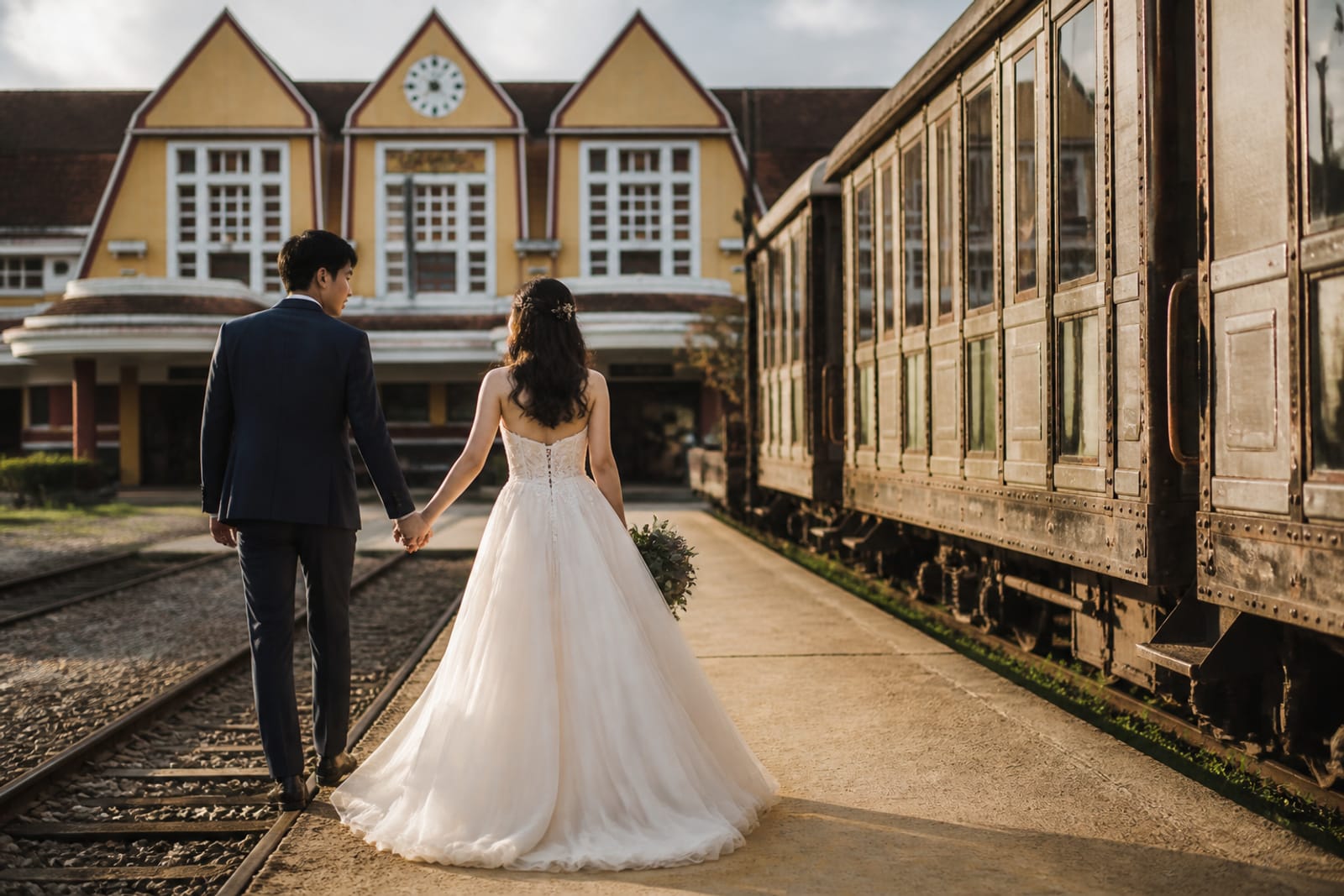
Da Lat suits modern Western dress, elopement-style informality, or a simple ao dai worn without the vest (the cool climate and mountain backdrop read differently). Couples often wear a tea-length dress or linen suit in Da Lat; the forest-and-mist mood doesn't require traditional dress to feel "Vietnamese." Layers are essential in Da Lat—even at 8 am, it's cool; bring a cardigan or light jacket you can peel off as light warms.
For both: wear what makes you feel grounded, not what looks "prettiest" on Instagram. Pre-wedding photography works best when you move, look at each other, and walk—not when you hold a pose. Pick fabrics that move (silk, linen) and shoes you can actually walk in (not heels on wet stone).
How to find and vet a local photographer in either city?
Start 3 weeks before your travel date. Search local Instagram hashtags: #HuePhotographer #DaLatPhotographer or ask your hotel for referrals. When you find a shortlist, ask for:
- Portfolio (look for couples in motion, not static monument shots)
- Turnaround time (how long until you see edited images)
- Location knowledge (Do they know light at 6 am at Huc Bridge? Can they navigate temple etiquette?)
- Communication (WhatsApp, video call to discuss your day)
Before booking, do a video call. Show them your outfit, discuss the route (morning walk, one location, specific light hour), and ask how they'd handle if rain arrives. Red flags: photographers who promise "Instagram-perfect" editing, push you toward tourist hotspots, or can't explain their framing choices. Green flags: they ask about your pace, what you like to wear, and what mood you're chasing—not how many couples they've shot.
Cáo Studio operates in Hanoi, Ho Chi Minh City and Hoi An, not yet in Hue or Da Lat. Our method—one team (photographer, makeup, hair) arriving together, shooting directed (not posed), and delivering edits in 48 hours—works best when we know every location intimately. For Hue or Da Lat, a local photographer with strong reviews is your best option.
📸 Book on WhatsApp — ao dai photoshoot
How much time do you actually need in each place?
Hue: plan for a full day. A directed pre-wedding session takes 2–3 hours; add walking time between the Forbidden City, Thien Mu Pagoda and Perfume River walkway (you won't visit all three, but scouting options takes time). If your photographer is new to Hue, give them an extra hour to check light. Arrive the day before to acclimatize and let your photographer scout early morning light.
Da Lat: 4–5 hours is enough. Most couples shoot Tuyen Lam Lake (mist, reflections, pine trees), Valley of Love or a flower garden (if in bloom) and a single secondary location. The town is compact; walking between spots is 10–20 minutes. Finish by 8:30 am when mist burns off and the town wakes.
Both: fly in the day before, shoot the next morning, and fly out that evening or the next day. Don't try to squeeze a pre-wedding shoot into a 12-hour layover—you'll rush, light will be unfavorable, and you won't have time for hair, makeup or a wardrobe change.
What to check before you book a local photographer
- Communication clarity. Do they reply within 24 hours? Can they explain what "directed, not posed" means?
- Light knowledge. Ask: "What time is light best at [your main location] in [your month]?" If they don't give specifics, move on.
- Flexibility. Pre-wedding sessions depend on weather and mood. Does the photographer have a backup plan if rain arrives? Can they pivot to an indoor or sheltered location?
- Etiquette. If visiting temples, does the photographer know the rules (no shoes, covered shoulders, respectful distance from altars)? Many don't—confirm this in advance.
- Delivery timeline. When will you receive edited photos? 48 hours is standard at Cáo Studio; check what local photographers offer (many take 2–3 weeks).
- Editing style. Look at their portfolio. Do they over-saturate, over-smooth skin, or edit too much? Do their colors match your mood (warm and classic vs. cool and moody)?
For a seamless pre-wedding experience, consider booking Cáo Studio in Hanoi, Ho Chi Minh City or Hoi An—we handle photography, makeup and hair in one team, and deliver edits in 48 hours. Check our pricing page for options, or read the FAQ for details on what a pre-wedding shoot includes.
FAQ
Can I shoot a pre-wedding session in both Hue and Da Lat on the same trip?
Physically, yes—they're 5–6 hours apart by road or two domestic flights. Practically, no. Each location needs 4–6 hours of good light (early morning); you'd waste time traveling. Pick one, shoot it properly, and return another year.
Is Hoi An better than Hue or Da Lat for pre-wedding photos?
Hoi An offers lantern-lit river walks and lantern-maker engagement sessions that Hue and Da Lat can't match. Hoi An's light is warm (coastal, less reflection than Hue's river). Cáo Studio shoots in Hoi An; ask us on WhatsApp for a quote if you'd like to compare.
What happens if it rains on my Hue or Da Lat shoot day?
Rain is rare in Hue Dec–May; rare in Da Lat Nov–Jan. May–Oct: rain is common. Reschedule if possible, or work with your photographer on covered locations (hotel gardens, gallery interiors, temple courtyards with roofs). Confirm the rain plan before you book.
Do I need a permit to shoot in Hue temples or Da Lat parks?
Hue temples allow photography for personal/pre-wedding use without a formal permit; bring a scarf or áo vest to cover shoulders. Da Lat national parks and flower gardens may require entry tickets (check their current policy when you arrive). Ask your photographer to confirm; they'll know current rules.
Can I wear Western dress instead of an ao dai in Hue?
Yes. Ao dai frames temples beautifully, but Western dress works, especially if you change outfits mid-session (e.g., ao dai in the morning, tea-length dress by mid-morning). Confirm your outfit plan with your photographer so they can plan light and framing accordingly.
How soon after my pre-wedding shoot will I see photos?
Cáo Studio delivers 48 hours. Local Hue and Da Lat photographers typically take 10–21 days. Ask your photographer for their timeline when you book—it matters if you want prints or albums before the wedding.
FAQ
Can I shoot a pre-wedding session in both Hue and Da Lat on the same trip?
Physically, yes—they're 5–6 hours apart by road or two domestic flights. Practically, no. Each location needs 4–6 hours of good light (early morning); you'd waste time traveling. Pick one, shoot it properly, and return another year.
Is Hoi An better than Hue or Da Lat for pre-wedding photos?
Hoi An offers lantern-lit river walks and lantern-maker engagement sessions that Hue and Da Lat can't match. Hoi An's light is warm (coastal, less reflection than Hue's river). Cáo Studio shoots in [Hoi An](/hoi-an); ask us on WhatsApp for a quote if you'd like to compare.
What happens if it rains on my Hue or Da Lat shoot day?
Rain is rare in Hue Dec–May; rare in Da Lat Nov–Jan. May–Oct: rain is common. Reschedule if possible, or work with your photographer on covered locations (hotel gardens, gallery interiors, temple courtyards with roofs). Confirm the rain plan before you book.
Do I need a permit to shoot in Hue temples or Da Lat parks?
Hue temples allow photography for personal/pre-wedding use without a formal permit; bring a scarf or áo vest to cover shoulders. Da Lat national parks and flower gardens may require entry tickets (check their current policy when you arrive). Ask your photographer to confirm; they'll know current rules.
Can I wear Western dress instead of an ao dai in Hue?
Yes. Ao dai frames temples beautifully, but Western dress works, especially if you change outfits mid-session (e.g., ao dai in the morning, tea-length dress by mid-morning). Confirm your outfit plan with your photographer so they can plan light and framing accordingly.
How soon after my pre-wedding shoot will I see photos?
Cáo Studio delivers 48 hours. Local Hue and Da Lat photographers typically take 10–21 days. Ask your photographer for their timeline when you book—it matters if you want prints or albums before the wedding.
Ao dai, makeup, hair and a local photographer in Hanoi or Saigon — one WhatsApp message.