/pre-wedding-photoshoot
Hue or Sapa for pre-wedding photos: where to shoot
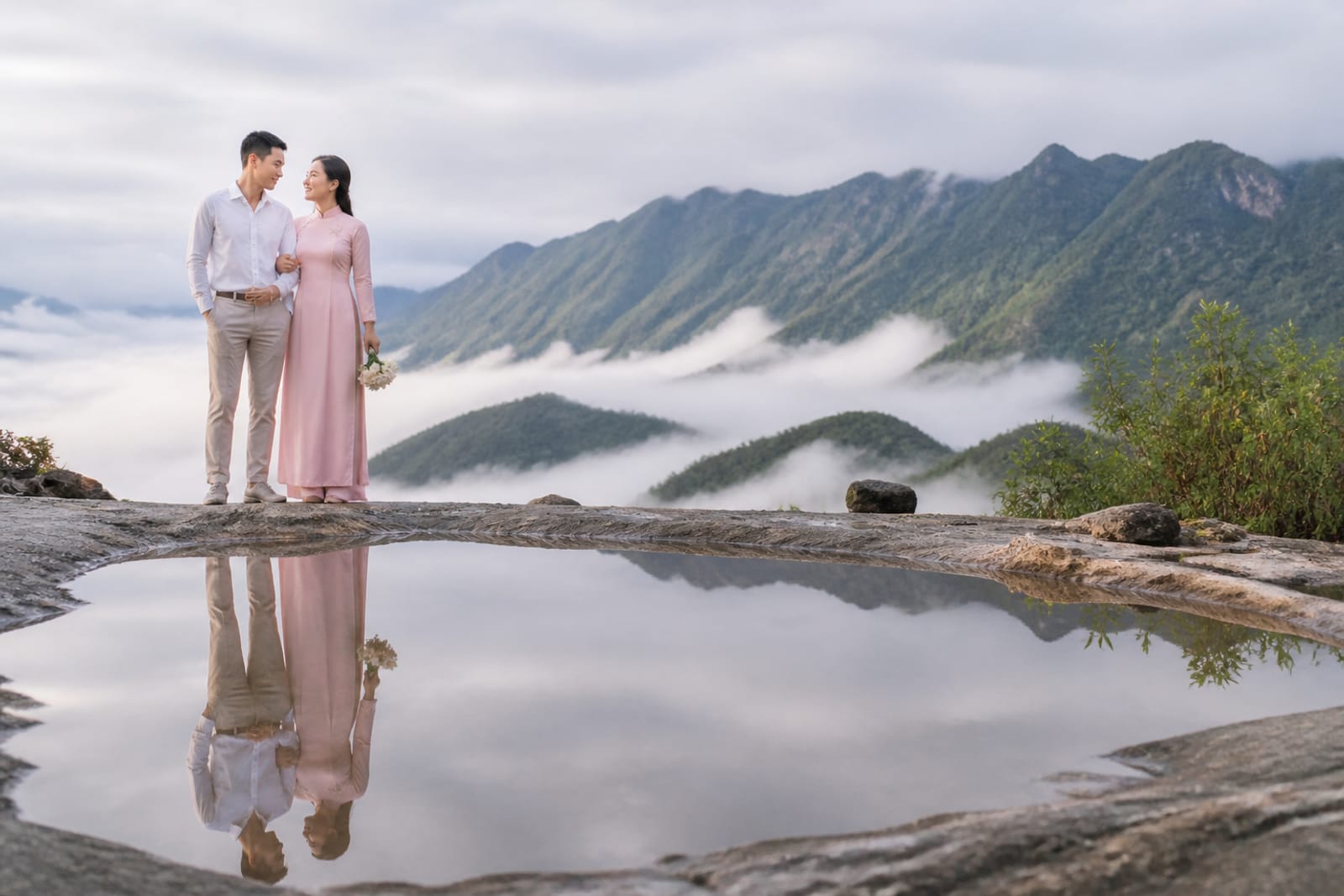
Hue and Sapa suit different seasons and aesthetics. Hue's central-coast climate is driest February–August with soft, warm light, imperial architecture and river backdrops; choose this for ao dai in heritage settings. Sapa's northern mountains deliver lush green landscapes (June–August) or golden rice terraces (mid-September to early October), but weather is unpredictable and cold (December–February near 0°C with fog). Hue works year-round except typhoon season (September–November); Sapa's photo window is March–May and September–November. Both require a local photographer—Cáo Studio – Makeup & Photoshoot operates in Hanoi, Ho Chi Minh City and Hoi An (by appointment). For either location, book 4–6 weeks ahead, scout light times (golden hour: dawn and dusk), wear layers in Sapa, and plan backup outfits for sudden rain. ---
Which location matches your season and vision?
Light, weather and outfit mood differ dramatically. Hue suits travelers who want imperial gardens, river walks and ao dai in warm, predictable conditions. Sapa appeals to couples seeking mountain drama, misty backdrops and rugged terrain. If you're traveling December–February, Hue is safer; if you're there May–August, both work, but Sapa will be greener and wetter. Sapa's golden-hour light in September–October is iconic, but weather can close in within hours. Choose Hue if you want comfort and consistency; choose Sapa if you accept weather risk for a distinct visual story.
| Aspect | Hue | Sapa |
|---|---|---|
| Best season | Feb–Aug (dry, warm) | Mar–May, Sep–Nov (clear days) |
| Light quality | Soft, warm, golden river-side light | Sharp mountain light, fast cloud changes |
| Outfit fit | Ao dai, light fabrics, heritage dress | Layers, jackets, boots, rugged textures |
| Terrain | Flat—citadel, gardens, riverside walks | Steep hills, rice terraces, muddy paths |
| Weather risk | Low (except Sep–Nov typhoon season) | High (fog, rain, cold wind) |
| Crowds | Moderate year-round | Higher in Sep–Oct (harvest season) |
| Photogenic mood | Romantic, imperial, timeless | Adventurous, wild, intimate |
📸 Book on WhatsApp — ao dai photoshoot
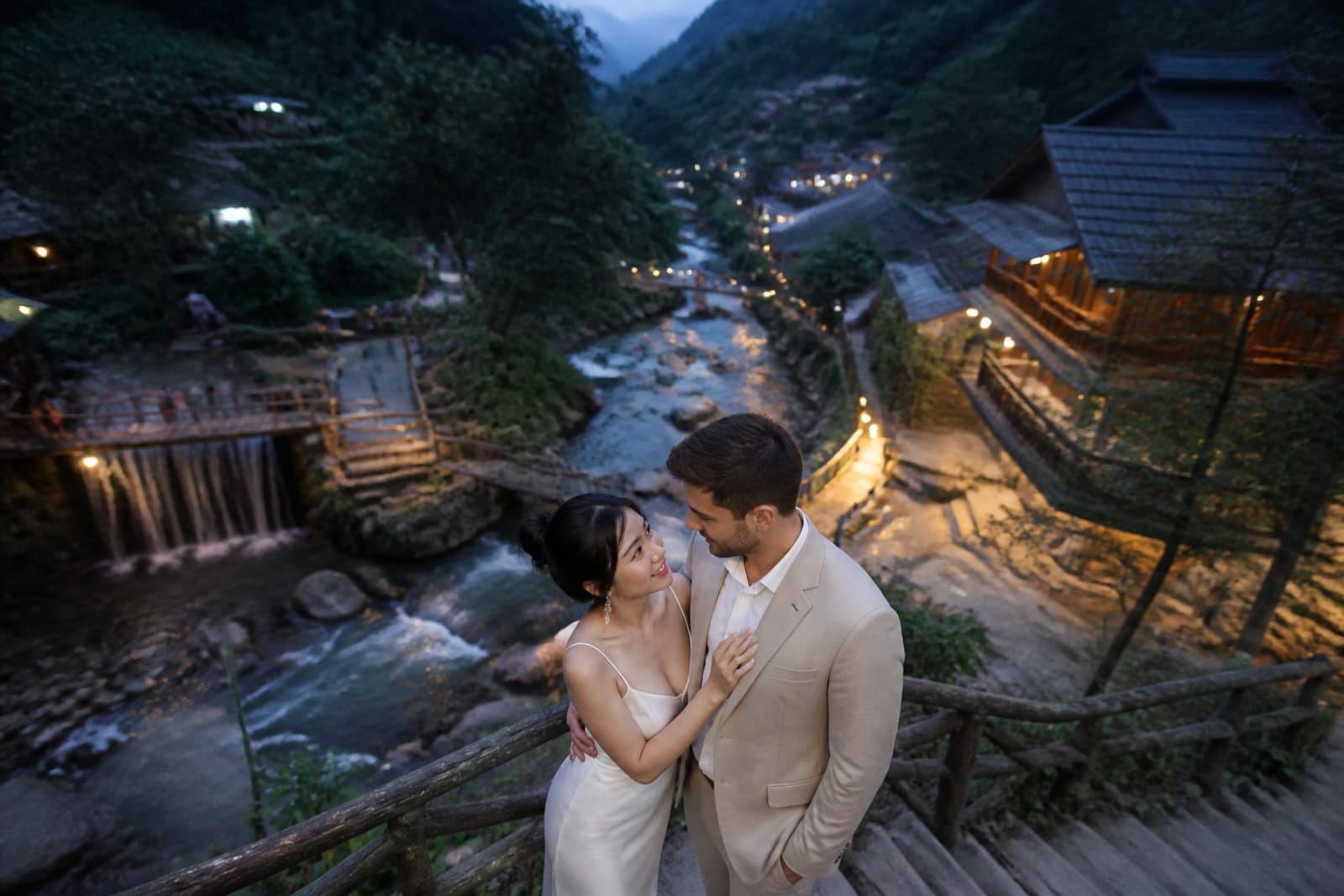
What happens to your ao dai in Sapa's rain and mud?
Sapa's terrain and weather test fabrics fast. Rice terraces and mountain paths are steep, muddy and wet—ao dai hems drag, fabrics tear on rocks, and wet silk loses its shape by hour two. Layers underneath stay damp. Light fabrics look limp when soaked; synthetic blends hold color better than raw silk in rain. If you're set on Sapa, choose a sturdy ao dai (consider rental to avoid damage to a keepsake piece), pack a waterproof change, and plan indoor backup shots (homestays, local markets). Hue's flat, paved walks let you wear delicate fabrics without risk—river light reflects beautifully on silk, and you can stay dry longer. For couples who value the ao dai as a keepsake, Hue is the safer choice.
How do golden hour and light windows differ between locations?
Sunrise and sunset timing shifts with season and latitude. Hue's dawn and dusk last longer (20–25 minutes each) because it sits further south and closer to the equator; soft light floods the Perfume River and citadel walls gradually, giving a wide window to shoot. Sapa's sunrise comes earlier and sunset earlier too; light is sharper and colder-toned due to altitude, so the golden window is narrower (12–15 minutes) and more intense. Mountain clouds can block the sun entirely—you might plan for dawn golden hour and find dense fog instead. Hue's light is forgiving and warm; Sapa rewards early starts and weather luck. If you're a first-time couple, Hue's predictable light is easier to work with.
What's the travel logistics from Hanoi and Ho Chi Minh City?
Both locations require transit planning. From Hanoi: Sapa is 4–5 hours by car or bus (mountain road, curving); Hue is 13–16 hours by train or flight. From Ho Chi Minh City: Hue is 2 hours by flight or 20+ hours overland; Sapa is 28+ hours (not practical for a quick trip). If you're based in northern Vietnam, Sapa is closer; if you're in the central coast or south, Hue is easier. Travel time on shoot day matters—arriving exhausted affects energy and skin tone in photos. Book a local photographer in each city to avoid moving a team; Cáo Studio operates in Hanoi and can advise on local referrals for Sapa and Hue. Factor in one rest day before the shoot if traveling long distances.
Should you hire a local photographer or bring someone from your home country?
Local photographers know light, seasons, terrain, permits and backup spots—crucial for unpredictable locations like Sapa. Sapa's permit system (trekking guides required at certain sites) and fast-changing weather mean experience matters. Hue's colonial architecture and river routes are well-documented, but a local still navigates crowds, sacred temple etiquette and best light times better. If you're hiring from abroad, expect long coordination across time zones and no scout visit. Hiring locally (through referrals, travel forums or studio networks) costs less, ensures weather contingency planning and includes cultural knowledge—invaluable for respectful ao dai shoots at heritage sites. If you want makeup and hair included, Cáo Studio – Makeup & Photoshoot is based in Hanoi and can coordinate advice for both locations.
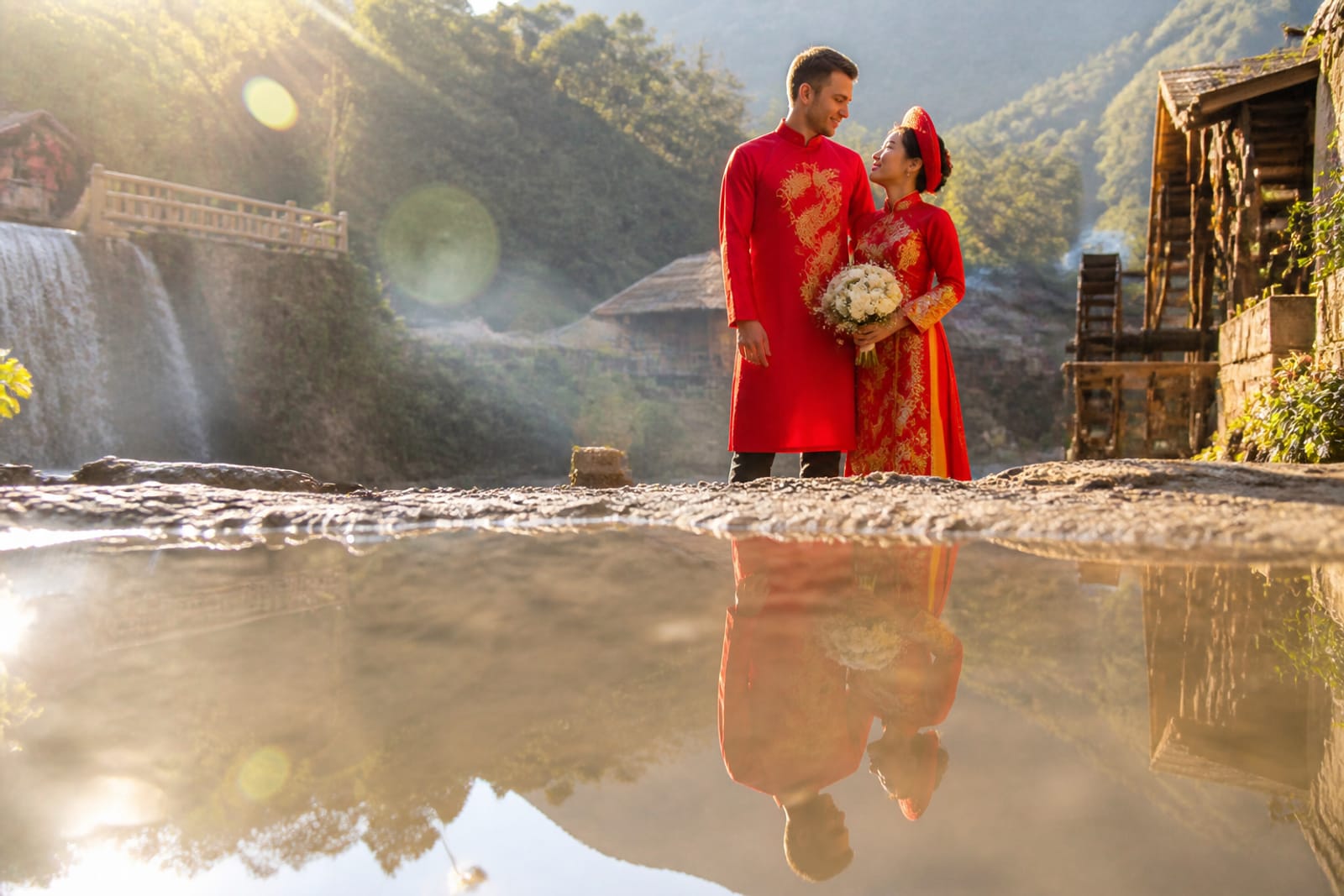
What outfit and keepsake strategy works for each location?
Hue's stable conditions let you wear multiple delicate ao dai outfits; you can change sets between sunrise citadel shots, midday river walks and sunset garden sessions without weather damage. Plan three ao dai looks if the session spans a full day. Sapa's rain and mud mean one outfit maximum—usually a sturdy, darker-toned ao dai or mixed Western-heritage wear to blend adventure with tradition. After Sapa shoots, fabrics need immediate care (drying, stain treatment). For keepsakes, wedding photo albums and prints & frames preserve light and color—Hue's warm, golden shots print beautifully on matte stock; Sapa's moody, contrast-rich images suit fine-art paper. If the ao dai is borrowed, book rental for Sapa to protect a personal heirloom from damage.
What's the real cost of weather delays and rescheduling?
Neither Hue nor Sapa guarantees clear skies. Typhoon season in Hue (September–November) brings sudden rain; Sapa's monsoon and cloud cover mean 30–40% of days are fog-heavy. Reschedule costs include new travel, re-booking accommodations and photographer availability. Hue: postponement is easier because it's a larger city with more backup dates. Sapa: rescheduling is harder—rural guesthouses and guides have limited flexibility. Before committing, ask your photographer about weather clauses (do they offer free reshoots? how many days can you wait?). Choose your travel dates conservatively (avoid September–November in Hue, December–February in Sapa). Some couples book flexible hotel rates or travel insurance to offset this risk. Cáo Studio's FAQ covers cancellation and rescheduling policies—ask on WhatsApp for location-specific guidance.
Hue or Sapa: a quick decision framework
- When are you traveling? Dec–Feb → Hue. Mar–May → either. Jun–Aug → Hue (Sapa is wet but green). Sep–Nov → Sapa (harvest is golden, but Hue has typhoon risk).
- How important is the ao dai? Keepsake investment → Hue (safer for fabrics). Adventure-friendly → Sapa (accept wear).
- How much weather risk can you accept? Zero tolerance → Hue. Flexible, love unpredictability → Sapa.
- What mood do you want? Romantic, timeless, imperial → Hue. Wild, intimate, mountain drama → Sapa.
- How far are you traveling? From Hanoi → Sapa is closer. From elsewhere in Vietnam → Hue is more central.
Most couples choose Hue for first pre-wedding shoots (predictable light, fewer logistics, ao dai safety) and Sapa for elopements or adventure-themed sessions. If you're unsure, start with Cáo Studio's pre-wedding packages in Hanoi or Ho Chi Minh City, then plan a second destination shoot once you know your style.
---
What to check before you book a location shoot
- Season check: Visit the destination's climate data for your exact dates (avoid typhoon and monsoon peaks).
- Photographer vetting: ask for location-specific portfolios (Sapa or Hue shots), weather contingency plans and rescheduling terms.
- Outfit and packing: confirm layer and waterproof needs with your photographer; arrange ao dai rental if protecting an heirloom.
- Travel timing: allow one rest day after transit before the shoot (skin, energy and light sensitivity matter).
- Permit and access: temples, some trekking areas and heritage sites may require permits or guides—ask locally.
- Backup sessions: plan indoor or alternate-spot shots in case weather closes your primary location.
---
FAQ
Is Sapa really too risky for a pre-wedding shoot?
Sapa's weather is unpredictable, but not impossible. Risk is highest December–February (cold, fog). Best windows are March–May and September–November. A skilled local photographer plans weather contingencies—indoor homestead shots, market scenes, covered pavilion portraits. Couples who accept flexibility find Sapa rewarding; those needing guarantees choose Hue.
Can I wear an ao dai in Sapa without damaging it?
Yes, if the ao dai is sturdy (synthetic-silk blend) and the shoot is planned for dry hours. Avoid muddy terraces in rainfall; stick to homestays, markets and paved village lanes. If the ao dai is a family keepsake, rent instead of risking stains and tears. Hue's flat terrain and dry season make ao dai wear safer and simpler.
How long is the travel day from Hanoi to each location?
Hanoi to Sapa is 4–5 hours by car or bus (mountain curves, tiring). Hanoi to Hue is 13–16 hours (train overnight or 2-hour flight). Plan to arrive a day before the shoot to rest; fatigue shows in photos. If traveling from Hanoi, Sapa is a day trip; Hue requires at least a 2-day visit.
What's the best month to shoot in Sapa for golden rice terraces?
Mid-September to early October captures golden-harvest color and clearer mountain light. However, this period attracts crowds and occasional rain from the tail end of monsoon season. March–May offers green terraces, fewer tourists and stable weather—a quieter, equally photogenic alternative.
Should I hire a makeup artist in Hue or Sapa, or bring one from abroad?
Local makeup artists know heat, humidity and ao dai styling best—invaluable in Sapa's cold, wet conditions or Hue's warm, bright light. If you want makeup included in your session, ask your photographer for trusted referrals or book makeup & hair services through Cáo Studio's Hanoi team for remote coordination and advice.
Can I do a multi-location pre-wedding shoot (Hue and Sapa together)?
Yes, but only if you have 5+ days and flexible weather plans. Combine Sapa (2–3 days, adventure/mountain mood) with Hue (2–3 days, imperial/romantic mood) to show contrasting aesthetics. Budget extra travel time and hire a local photographer in each city—Cáo Studio's pre-wedding team can guide coordination for a split-location approach via WhatsApp.
FAQ
Is Sapa really too risky for a pre-wedding shoot?
Sapa's weather is unpredictable, but not impossible. Risk is highest December–February (cold, fog). Best windows are March–May and September–November. A skilled local photographer plans weather contingencies—indoor homestead shots, market scenes, covered pavilion portraits. Couples who accept flexibility find Sapa rewarding; those needing guarantees choose Hue.
Can I wear an ao dai in Sapa without damaging it?
Yes, if the ao dai is sturdy (synthetic-silk blend) and the shoot is planned for dry hours. Avoid muddy terraces in rainfall; stick to homestays, markets and paved village lanes. If the ao dai is a family keepsake, rent instead of risking stains and tears. Hue's flat terrain and dry season make ao dai wear safer and simpler.
How long is the travel day from Hanoi to each location?
Hanoi to Sapa is 4–5 hours by car or bus (mountain curves, tiring). Hanoi to Hue is 13–16 hours (train overnight or 2-hour flight). Plan to arrive a day before the shoot to rest; fatigue shows in photos. If traveling from Hanoi, Sapa is a day trip; Hue requires at least a 2-day visit.
What's the best month to shoot in Sapa for golden rice terraces?
Mid-September to early October captures golden-harvest color and clearer mountain light. However, this period attracts crowds and occasional rain from the tail end of monsoon season. March–May offers green terraces, fewer tourists and stable weather—a quieter, equally photogenic alternative.
Should I hire a makeup artist in Hue or Sapa, or bring one from abroad?
Local makeup artists know heat, humidity and ao dai styling best—invaluable in Sapa's cold, wet conditions or Hue's warm, bright light. If you want makeup included in your session, ask your photographer for trusted referrals or book [makeup & hair services](/makeup-and-hair) through Cáo Studio's Hanoi team for remote coordination and advice.
Can I do a multi-location pre-wedding shoot (Hue and Sapa together)?
Yes, but only if you have 5+ days and flexible weather plans. Combine Sapa (2–3 days, adventure/mountain mood) with Hue (2–3 days, imperial/romantic mood) to show contrasting aesthetics. Budget extra travel time and hire a local photographer in each city—Cáo Studio's [pre-wedding team](/pre-wedding-photoshoot) can guide coordination for a split-location approach via WhatsApp.
Ao dai, makeup, hair and a local photographer in Hanoi or Saigon — one WhatsApp message.