/pre-wedding-photoshoot
Is Cua Dai Beach good for pre-wedding photos? Pros, cons, and alternat
Cua Dai Beach, a 5km stretch south of Hoi An's Ancient Town, works best for sunrise or late-afternoon shoots during the dry season (February–August), when the sand is firm and the light is golden. Tidal flats dominate midday and early morning; the rainy season (September–December) brings typhoons, floods and grey skies that leave the beach waterlogged. You'll share the beach with walkers, fishermen and tourists from late morning onwards. The Cáo Studio – Makeup & Photoshoot team (based in Hanoi and Saigon, travelling to Hoi An by appointment) can scout the beach, time your session around tides and crowds, and use wet sand and palm trees as framing; however, the location demands flexibility, backup outfits and a photographer experienced with coastal glare and salt spray. Quieter, more controllable alternatives—rice paddies, village paths, riverside temples—often deliver more intimate, weather-proof results without the tide-watching stress. ---
What makes Cua Dai Beach appealing for pre-wedding shoots?
Cua Dai Beach is famous for its expanse of pale sand, coconut palms and the Cua Dai estuary's natural lines. At dawn, the beach is almost empty; light rakes across the wet flats, creating mirror reflections and a romantic, isolated mood. At dusk, the sky turns amber and pink. The backdrop feels distinctly coastal Vietnam—informal, cinematic, and very different from studio or temple shoots. Couples drawn to barefoot, salt-air aesthetics often see the beach as a signature Hoi An moment. The appeal is real, but timing and season are everything.
📸 Book on WhatsApp — pre-wedding photoshoot
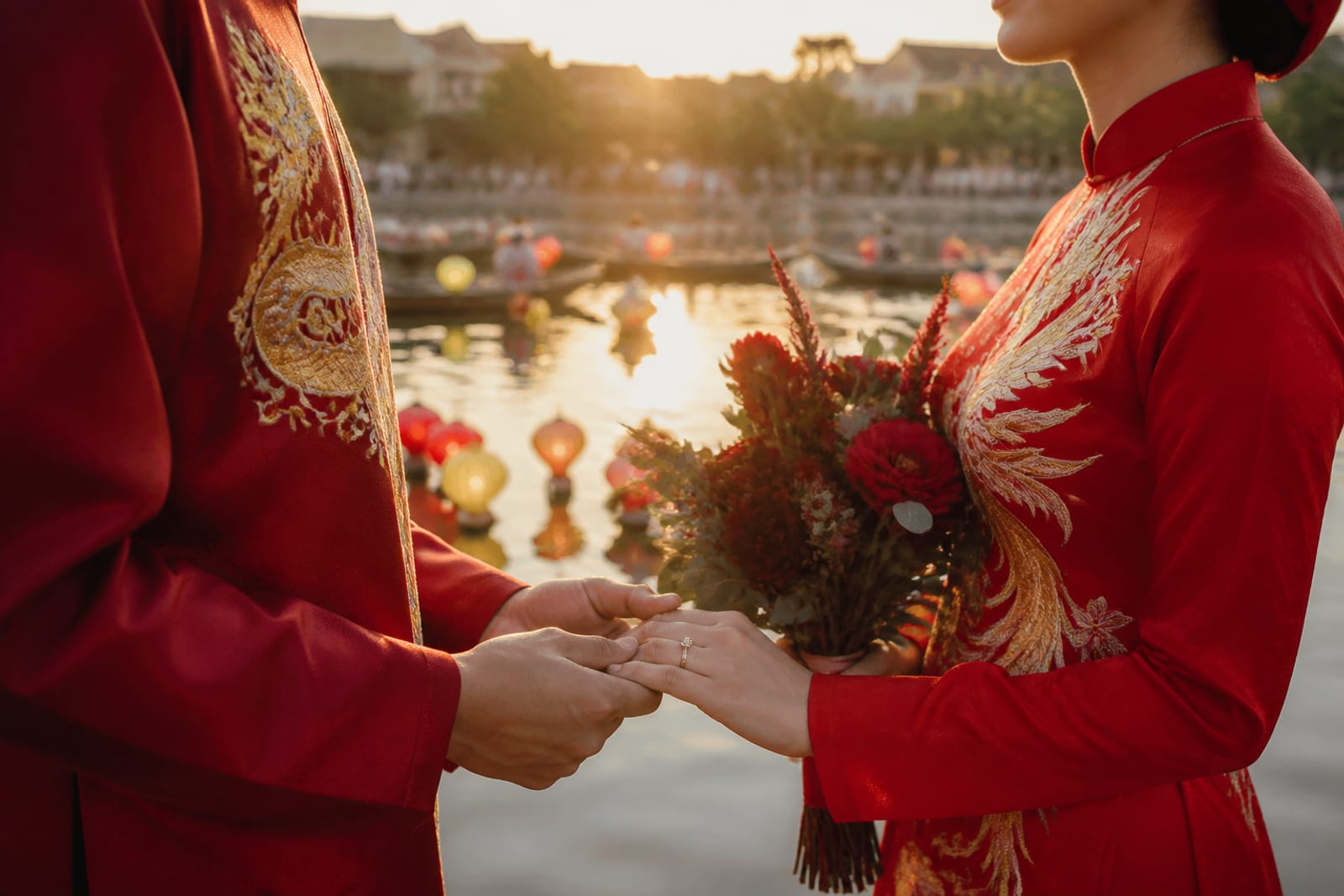
When is Cua Dai Beach actually usable for a shoot?
The best window is February through April—dry, mild, and green rice nearby. May through August is dry but scorching (often 35°C+); bring umbrellas and schedule sunrise-only sessions. September through December is the rainy season; October–November brings typhoons and flooding that turns the beach muddy and the Ancient Town impassable. December–January is cool and drizzly, with unstable light. Tides vary twice daily; low tide exposes smooth flats perfect for clean shots, while high tide pushes the waterline close to the palm tree line, reducing usable space. A photographer familiar with Hoi An's tidal charts will time your session to catch the golden hour and the right tide stage. Rushing into a midday shoot because "the weather looks fine" often results in harsh shadows, glare and crowds.
Cua Dai Beach vs. quieter Hoi An photoshoot locations—which suits you?
| Location | Best for | Light & Season | Why it works | Why it doesn't always work |
|---|---|---|---|---|
| Cua Dai Beach | Barefoot, salt-air, sunset romance | Sunrise/dusk Feb–Aug; avoid Oct–Nov | Open expanse, golden hour reflections, cinematic isolation at dawn | Tides, midday crowds, glare, seasonal floods; no backup shelter |
| Rice paddies (nearby villages) | Intimate, green, timeless | Early morning or overcast; Feb–May when fields flood for planting | Soft diffused light, minimal crowds, year-round access, quick backup locations | Narrow paths, muddy after rain, farmers' hours; less dramatic than beach |
| Ancient Town (early morning) | Lantern heritage, architecture, cultural depth | Sunrise 5:30–6:30; Feb–Apr driest | Quiet streets before 7 a.m., cobblestone romance, iconic lanterns, indoor/covered fallback | Entry ticket required, crowds from 8 a.m., claustrophobic if you want sweeping vistas, rainy-season dampness |
| Riverside temples & gardens (Tam Thanh, Phap Bao) | Spiritual, serene, garden elegance | Morning/late afternoon year-round | Shallow water, manicured grounds, architectural framing, respectful quiet | Less scenic drama, strict etiquette rules, limited outfit freedom |
| Hoi An pier & fishing boats | Authenticity, working-life narrative | Sunrise when boats depart; Feb–Aug | Documentary feel, genuine human activity, water reflections, fewer tourists | Unpredictable boat schedules, fishermen's privacy, wet/slippery decks |
The table shows that no single location dominates; your choice hinges on your aesthetic, season and comfort with tide-watching logistics.
What goes wrong at Cua Dai Beach—and how to avoid it?
Underestimating tides. You arrive thinking the expanse is yours; the tide is high, the water is knee-deep, and your train dress is soaked. Solution: confirm the tidal chart with your photographer before the shoot date; plan a 30-minute cushion.
Glare and exposure blowout. White sand reflects harsh midday light; your couple's faces are in shadow, the sky is washed out. Solution: shoot within 1–2 hours of sunrise or 2–3 hours before sunset; bring a reflector or light-diffusing assistant.
Crowds appear fast. At 7 a.m. the beach seems empty. By 8 a.m., walkers, fishermen and tour groups fill the frame. Solution: lock your sunrise slot with the photographer in advance; bring a beach scarf or backdrop to minimize photobombers.
Salt spray and sand on gear. Your photographer's lenses fog; sand gets into every seam. Solution: use lens hoods and UV filters; bring microfiber cloths and a waterproof camera bag; plan a thorough cleaning session after the shoot.
Seasonal flooding. Between October and November, monsoon rains and high tides can leave the beach littered with debris and the nearby roads impassable. Solution: check the latest weather reports and local flooding alerts; have a backup indoor location (Ancient Town, riverside temple, or hotel) pre-scouted with your photographer.
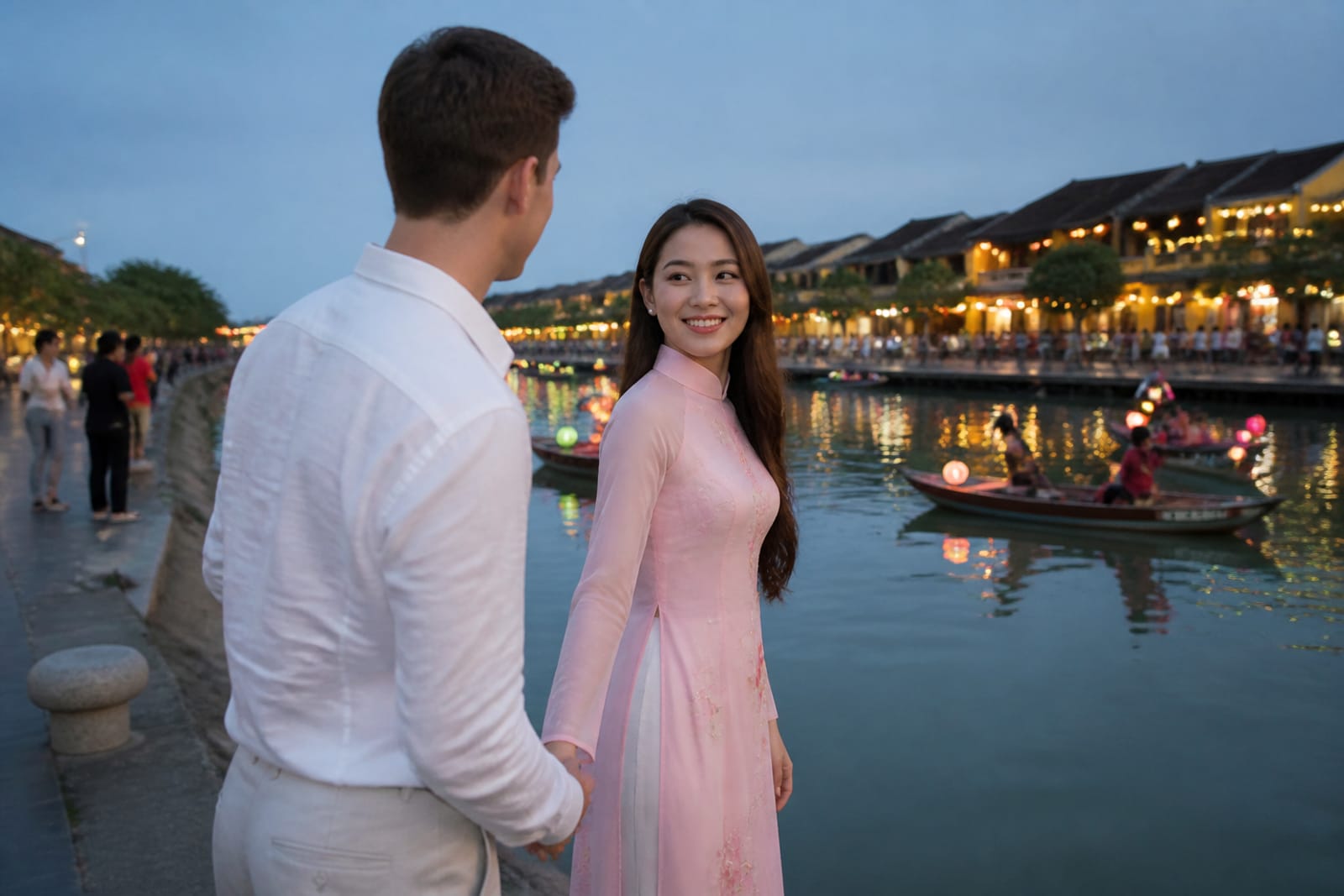
Should you choose the beach or book a hybrid shoot?
Many couples split the difference: a sunrise beach session (45–90 minutes for clean, tide-free light) followed by a location change to rice fields, the Ancient Town or a riverside garden for the second outfit and softer, more forgiving light. This approach captures the beach's romance without betting everything on tidal timing and crowds. Hybrid shoots also let you wear multiple outfits—an ao dai in the rice paddies, a Western dress on the beach—with built-in backup locations if weather shifts.
Cáo Studio – Makeup & Photoshoot scouts and time-manages such sessions; the team travels to Hoi An by appointment and brings experience reading the beach's moods. Alternatively, if you're staying in Hanoi or Ho Chi Minh City, a pre-wedding shoot in either city (with ao dai, couple sessions, or proposal themes) may be simpler and less weather-dependent—ask on WhatsApp about your preferences.
💄 Makeup & hair at your hotel — we travel to Hoi An.
What to check before you book a Cua Dai Beach pre-wedding shoot
- Photographer's Hoi An experience. Ask how many beach shoots they've done; do they know the tidal chart and crowd patterns?
- Your dress code. Will you wear an ao dai, a Western gown, casual wear or a mix? Each needs different planning (hem length, sand tolerance, salt spray risk).
- Season. If you're set on a date between October–November, the beach is risky; confirm with the photographer that a backup venue is scouted.
- Shoot length. A 2-hour session may include travel time, location changes and setup; confirm what's included and how many outfits are realistic.
- Backup plan. Where will you shoot if the tide is wrong or weather turns? Make sure the photographer has alternative spots pre-selected.
- Timing. Lock in a sunrise or late-afternoon slot; avoid midday compromises.
See our FAQ for more session details or browse the lookbook for Hoi An and coastal examples.
---
For Hanoi and Saigon couples
If you're based elsewhere and want to visit Hoi An specifically for a pre-wedding shoot, the beach is one option—but the Ancient Town, rice paddies and temple gardens are equally compelling and less tide-dependent. Alternatively, Cáo Studio in Hanoi and Cáo Studio in Saigon offer pre-wedding shoots, ao dai sessions and couple photoshoots in both cities with fewer logistical variables and often more control over lighting and crowds. For full details on location scouting, backup plans and booking terms, reach out on WhatsApp.
---
FAQ
Can we shoot at Cua Dai Beach year-round?
Technically yes, but October–November is risky due to typhoons and flooding. February–August is safest; December–January is cool and drizzly. Sunrise and late afternoon work in all months; midday is difficult year-round due to glare and heat.
Do we need a permit to shoot on Cua Dai Beach?
No formal permit is required for personal photos. Commercial shoots may need local notification; your photographer will advise. Always respect fishermen and other beach users.
How early do we need to arrive for a sunrise shoot?
Arrive 30–45 minutes before sunrise to set up. In summer, sunrise is around 5:30 a.m.; in winter, around 6:30 a.m. Check the exact time with your photographer the day before.
Can we wear an ao dai at Cua Dai Beach?
Yes, and it photographs beautifully in wind and salt light. Plan for sand in the hem, salt spray on fabric, and drying time after damp sand contact. Bring a beach cover-up and consider a second outfit for rice fields or the Ancient Town afterward.
What's the difference between a beach-only shoot and a hybrid Hoi An shoot?
A beach-only session captures one location and mood; a hybrid splits time between the beach (for golden-hour drama) and quieter backdrops like rice fields or temples (for softer light and backup coverage). Hybrids cost more in time and travel but reduce weather risk and offer outfit variety.
How much do session bookings cost?
Pricing depends on location, duration, outfit count and edits. Contact us on WhatsApp for a custom quote tailored to your beach and Hoi An plans.
FAQ
Can we shoot at Cua Dai Beach year-round?
Technically yes, but October–November is risky due to typhoons and flooding. February–August is safest; December–January is cool and drizzly. Sunrise and late afternoon work in all months; midday is difficult year-round due to glare and heat.
Do we need a permit to shoot on Cua Dai Beach?
No formal permit is required for personal photos. Commercial shoots may need local notification; your photographer will advise. Always respect fishermen and other beach users.
How early do we need to arrive for a sunrise shoot?
Arrive 30–45 minutes before sunrise to set up. In summer, sunrise is around 5:30 a.m.; in winter, around 6:30 a.m. Check the exact time with your photographer the day before.
Can we wear an ao dai at Cua Dai Beach?
Yes, and it photographs beautifully in wind and salt light. Plan for sand in the hem, salt spray on fabric, and drying time after damp sand contact. Bring a beach cover-up and consider a second outfit for rice fields or the Ancient Town afterward.
What's the difference between a beach-only shoot and a hybrid Hoi An shoot?
A beach-only session captures one location and mood; a hybrid splits time between the beach (for golden-hour drama) and quieter backdrops like rice fields or temples (for softer light and backup coverage). Hybrids cost more in time and travel but reduce weather risk and offer outfit variety.
How much do session bookings cost?
Pricing depends on location, duration, outfit count and edits. Contact us on WhatsApp for a custom quote tailored to your beach and Hoi An plans.
Ao dai, makeup, hair and a local photographer in Hanoi or Saigon — one WhatsApp message.