/pre-wedding-photoshoot
Is Fansipan summit good for pre-wedding photos? Pros, cons, alternativ
Fansipan summit works for pre-wedding photos only in a narrow window: March–May and September–November, clear mornings (6–8 am) with good acclimatization and a local guide. The 15-minute cable car gets you there, but clouds roll in by 9 am, altitude sickness affects 30% of visitors in our experience, and permit delays happen. Hoi An, Hanoi's Old Quarter, and Ha Long Bay deliver comparable drama without the logistics burden—Cáo Studio shoots all three in one day with makeup, styling and editing included. If you're set on Fansipan, hire a northern Vietnam photographer who knows the sunrise slot and weather patterns; Cáo Studio coordinates shoots in Hanoi and can advise on Sapa logistics, but doesn't operate a Sapa team.
What makes Fansipan appeal for pre-wedding photos?
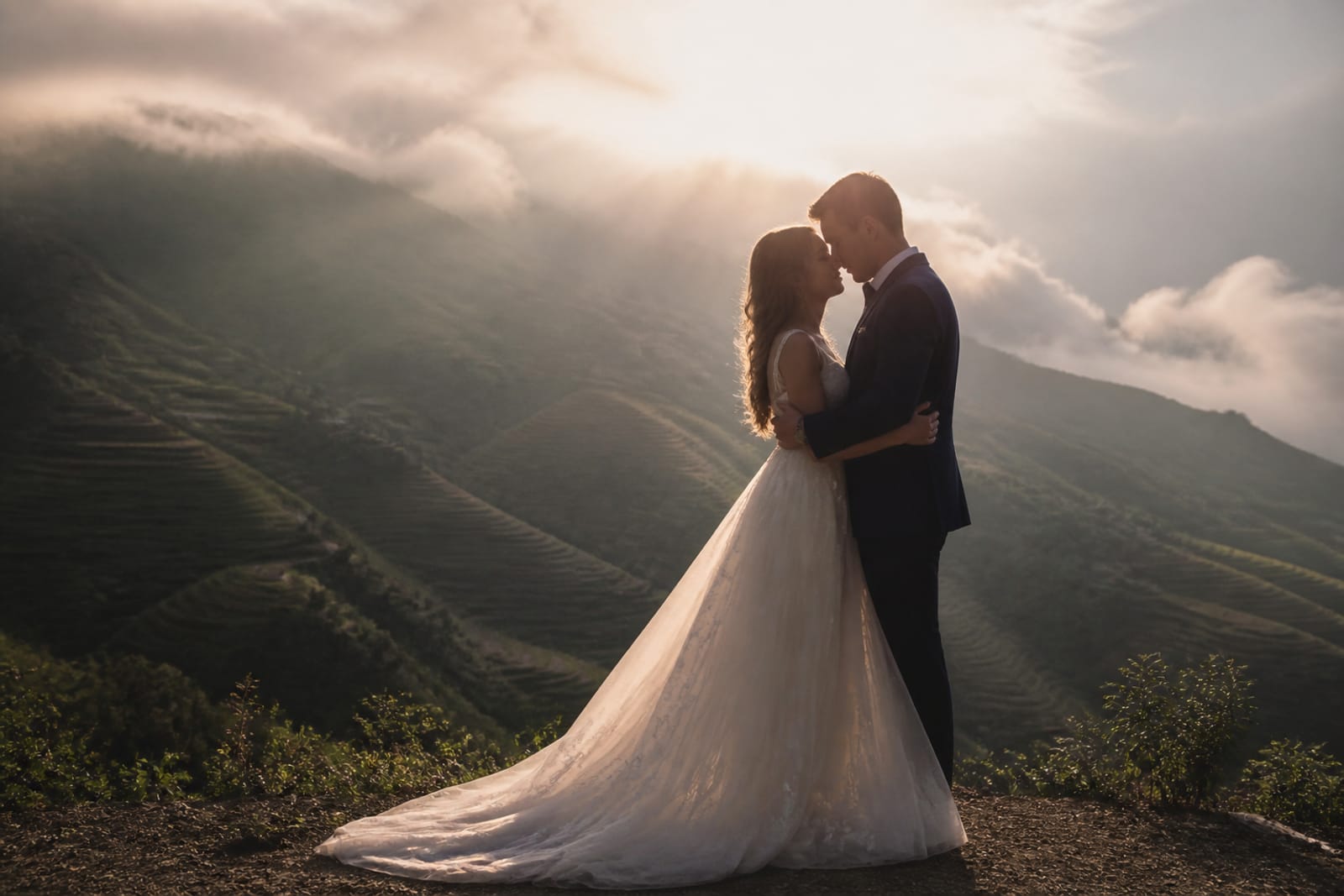
Fansipan draws couples because of its scale and isolation. At 3,143 meters, you're above the clouds—literally. Early-morning light wraps around you in golds and soft greys. The landscape is barren, which means your couple stands alone against sky. No crowds, no tourists squinting in the frame behind you. For cinematic pre-wedding work, that solitude is gold.
The cable car opened in 2016, making the summit accessible in 15 minutes instead of a six-hour hike. Couples who've seen the footage from Fansipan know it feels like a film set. But that appeal masks a hard truth: the conditions that make it beautiful are the same ones that kill shoots.
Why does Fansipan fail more often than it succeeds?
Weather on Fansipan changes in minutes, not hours. We've coordinated shoots there through local partners; most arrive to whiteout fog by 8:30 am. The summit sits in a cloud corridor—even if Sapa town is clear, the peak is wrapped. You can't reshoot next week; you've traveled 10 hours from Hanoi, booked a crew, paid entry fees. The shoot either happens at sunrise or it doesn't.
Altitude sickness affects roughly one in three people on arrival, based on our conversations with Sapa guides. Your groom gets a headache and nausea at 7 am. The bride feels dizzy walking; makeup runs with sweat from the exertion. You've paid for a full day and shot for 20 minutes.
Permits are required. Fansipan is a national park—check current regulations locally before booking. Delays happen. Some photographers aren't licensed to shoot commercially there, meaning your images have legal risk.
The wind is relentless. Hair, fabric, your bride's composure—all tested. Light changes every 90 seconds as clouds pass. Consistency matters for pre-wedding; you want a coherent story across 200 frames. Fansipan's chaos is beautiful but rarely tells one.
Which Vietnamese locations deliver similar drama with lower risk?
| Location | Best for | Light / season | Why it works |
|---|---|---|---|
| Hoi An Ancient Town | Couples wanting cinematic heritage | Golden hour year-round; driest Feb–Aug | Lanterns, river reflections, weathered walls—pre-lit by 500 years of history |
| Ha Long Bay (boat-based) | Pre-wedding + isolation feel | Early morning mist, clearest Dec–Apr | Limestone drama, no crowds on private boats, emerald water frames you |
| Hanoi Old Quarter | Urban romance, layered backgrounds | Soft morning light before 9 am, best Nov–Feb | Architecture, street life, intimate alleys—no travel, one day, full styling included |
| Ninh Binh (Trang An) | Couples wanting landscape + culture | Golden hour Feb–Aug, misty Sep–Oct | Boat on karst water, caves, green valleys—2 hours from Hanoi, accessible |
| Fansipan summit | Adventurous couples who can wait for weather | Sunrise only, Mar–May & Sep–Nov | Unmatched scale and isolation—but requires 2–3 backup dates |
Each location trades one variable for another. Hoi An loses solitude but gains guaranteed light. Fansipan gains drama but loses predictability. Your choice depends on whether you can afford delays.
Cáo Studio shoots pre-wedding photoshoots in Hanoi, Ho Chi Minh City and Hoi An—all locations where light, access and styling align in one day. Hoi An is visited by appointment; ask on WhatsApp for current travel dates.
📸 Book on WhatsApp — pre-wedding photoshoot
What does a realistic Fansipan pre-wedding shoot require?
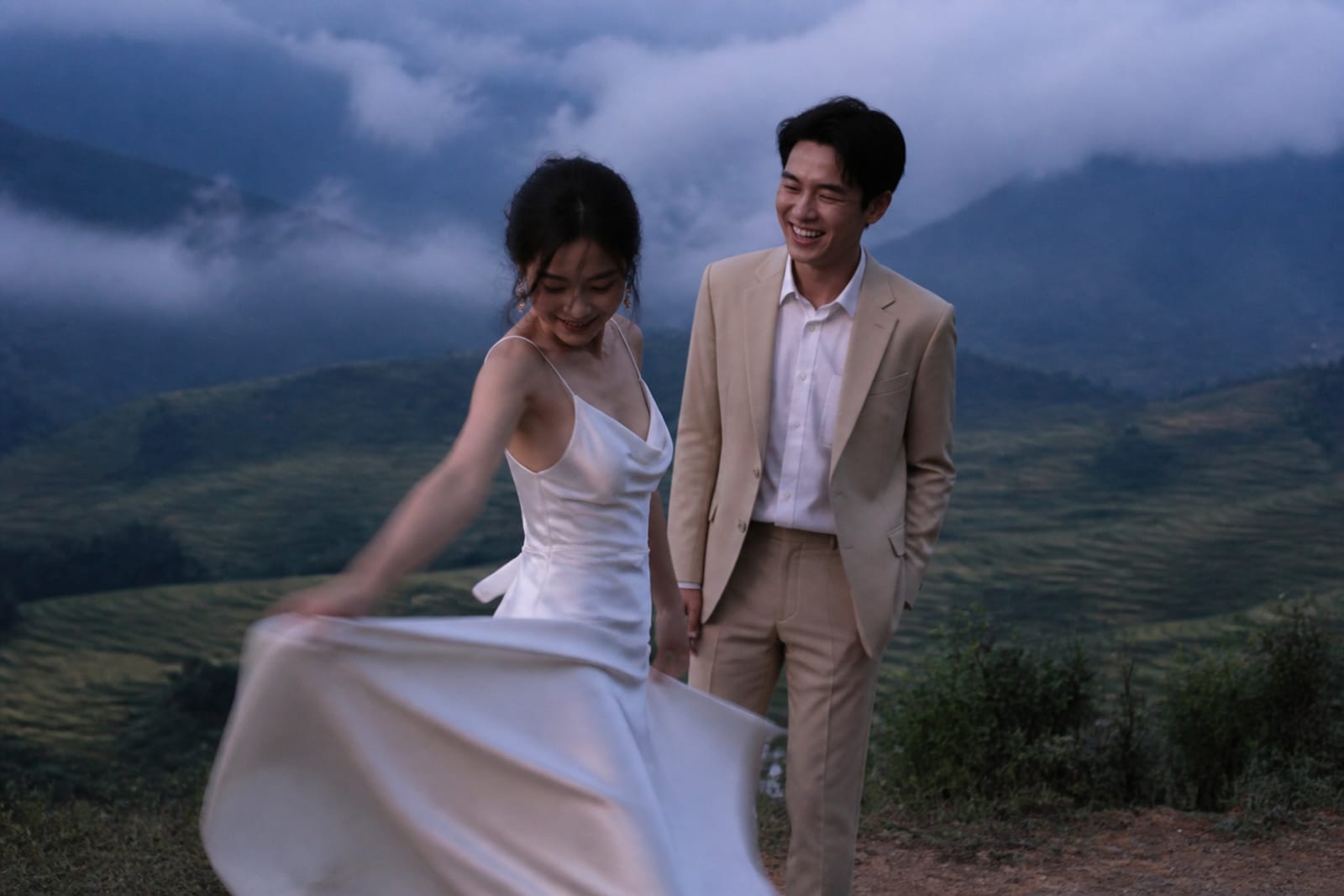
If you commit to Fansipan, plan for three things: acclimatization, a northern-based photographer, and weather buffer dates.
Arrive in Sapa the day before. Spend the evening at 1,600 meters to let your body adjust. Eat light, hydrate, sleep early. Skip the cable car test run; rest matters more. On shoot day, wake at 4:30 am, cable car at 5:15 am, be on the summit by 5:45 am. You have 90 minutes of usable light before clouds arrive.
Your photographer must be local or based in northern Vietnam. They know Fansipan's micro-seasons and have shot the sunrise slot before. They'll know which corner of the summit faces east, where wind blocks occur, which days are statistically clearer. Outsourced crews from Hanoi booking their first Fansipan shoot are a red flag.
Budget for two backup dates minimum. Weather closes the summit 40–50 days per year based on park closure announcements. If your first attempt hits fog, you need a second morning to try again. That means staying in Sapa 2–3 extra nights—cost compounds fast.
Bring: layers (it's 10°C colder at 3,143 m than Sapa town), a light robe or cover-up for between shots (wind kills exposed skin), and water. Your bride's dress should be sturdy—delicate fabrics catch wind badly and tear.
How do Cáo Studio shoots differ from climbing Fansipan?
Our pre-wedding shoots are built on the opposite logic: predictability, completion, and one team doing everything.
We handle outfit (including ao dai rental if you choose), makeup and hair, and photography in one booking. You don't coordinate three vendors; one director manages light, timing, and framing. We shoot in locations where we control the variables—Hanoi's Old Quarter at 6:30 am when it's empty, Hoi An lantern streets at golden hour, Ha Long Bay on a private boat before the tour groups arrive.
We deliver edited photos and a short vertical film within 48 hours. No weeks of waiting, no "the photographer is still editing." Coherence comes from one person's vision, one art direction, one color grade.
Fansipan is a gamble. Our shoots are a guarantee. Choose Fansipan if the physical challenge and summit isolation matter more than images. Choose Cáo Studio if you want pre-wedding frames you'll actually frame and film you'll actually watch.
For Hanoi pre-wedding shoots, see Cáo Studio Hanoi. For Ho Chi Minh City, see Cáo Studio Saigon. Hoi An shoots are booked on appointment—WhatsApp us for dates.
What to check before booking a Fansipan pre-wedding shoot
- Weather forecast window: Check 10-day forecasts for Sapa starting two weeks out. Look for "clear" or "partly cloudy" mornings; avoid "mist" or "rain."
- Park status: Confirm the cable car is operational and commercial photography permits are current (check the official Fansipan website or ask your photographer).
- Your fitness level: Can you walk quickly uphill for 5 minutes? Altitude affects everyone differently—be honest about your comfort.
- Backup date flexibility: Do your visas, time off and crew availability allow 2–3 extra mornings in Sapa? If not, reconsider.
- Photographer licensing: Ask whether your photographer has shot Fansipan commercially before and can show a portfolio with weather conditions similar to your shoot date.
- Makeup durability: Discuss wind and altitude with your makeup artist weeks ahead. Plan touch-up supplies and waterproof products.
- Outfit contingencies: Bring an extra outfit or robe layer. Wind can damage delicate fabric in minutes.
FAQ
Can we do a Fansipan pre-wedding shoot in December or January?
Not safely. December–February is cold (near 0°C at dawn), fog is constant, and the summit is often closed due to weather. March–May and September–November are the only viable windows; within those, check the 10-day forecast and book a photographer with Sapa experience.
What does it cost to hire a photographer for Fansipan?
Photographer fees vary by location and crew size. Ask a local Sapa photographer directly, or contact us on WhatsApp for a quote for Hanoi-based coordination. Entry tickets, permits, cable car and accommodation in Sapa are separate costs—check the Fansipan official site for current fees.
Is Fansipan better than Hoi An or Hanoi for pre-wedding photos?
"Better" depends on your priorities. Fansipan offers unmatched scale and solitude—but weather risk is high and execution is fragile. Hoi An and Hanoi guarantee light, access and cultural richness; you'll finish with 200+ edited frames in 48 hours. If you want certainty, choose Hanoi or Hoi An. If drama and adventure matter more than images, Fansipan is worth the gamble. See our pre-wedding photoshoot page for what we deliver in Hanoi and Hoi An.
Do we need acclimatization before shooting at Fansipan?
Yes. Arrive in Sapa the day before. Spend the evening resting at 1,600 meters. Altitude sickness is common and kills shoots—hydrate, eat light, and skip strenuous activity the night before. Start early (4:30 am wake-up); the first two hours on the summit are your only usable window before clouds roll in.
Can Cáo Studio shoot our pre-wedding on Fansipan?
Cáo Studio operates teams in Hanoi, Ho Chi Minh City and Hoi An. We don't have a Sapa base, but we can advise on logistics and coordinate with licensed local photographers there. For a shoot in one of our locations, book on WhatsApp or see our Hanoi and Saigon pages. If Hoi An interests you, ask about current travel dates.
What's the best time of day to shoot on Fansipan?
Sunrise only—5:45 to 7:15 am. Light is soft and gold, clouds haven't yet rolled in, and you're alone. By 8:30 am, mist usually wraps the summit. Late-afternoon shoots rarely work; clouds linger and light is flat. Commit to a 4:30 am wake-up or don't shoot Fansipan.
FAQ
Can we do a Fansipan pre-wedding shoot in December or January?
Not safely. December–February is cold (near 0°C at dawn), fog is constant, and the summit is often closed due to weather. March–May and September–November are the only viable windows; within those, check the 10-day forecast and book a photographer with Sapa experience.
What does it cost to hire a photographer for Fansipan?
Photographer fees vary by location and crew size. Ask a local Sapa photographer directly, or contact us on WhatsApp for a quote for Hanoi-based coordination. Entry tickets, permits, cable car and accommodation in Sapa are separate costs—check the Fansipan official site for current fees.
Is Fansipan better than Hoi An or Hanoi for pre-wedding photos?
"Better" depends on your priorities. Fansipan offers unmatched scale and solitude—but weather risk is high and execution is fragile. Hoi An and Hanoi guarantee light, access and cultural richness; you'll finish with 200+ edited frames in 48 hours. If you want certainty, choose Hanoi or Hoi An. If drama and adventure matter more than images, Fansipan is worth the gamble. See our [pre-wedding photoshoot](/pre-wedding-photoshoot) page for what we deliver in Hanoi and Hoi An.
Do we need acclimatization before shooting at Fansipan?
Yes. Arrive in Sapa the day before. Spend the evening resting at 1,600 meters. Altitude sickness is common and kills shoots—hydrate, eat light, and skip strenuous activity the night before. Start early (4:30 am wake-up); the first two hours on the summit are your only usable window before clouds roll in.
Can Cáo Studio shoot our pre-wedding on Fansipan?
Cáo Studio operates teams in Hanoi, Ho Chi Minh City and Hoi An. We don't have a Sapa base, but we can advise on logistics and coordinate with licensed local photographers there. For a shoot in one of our locations, book on WhatsApp or see [our Hanoi](/hanoi) and [Saigon pages](/saigon). If Hoi An interests you, ask about current travel dates.
What's the best time of day to shoot on Fansipan?
Sunrise only—5:45 to 7:15 am. Light is soft and gold, clouds haven't yet rolled in, and you're alone. By 8:30 am, mist usually wraps the summit. Late-afternoon shoots rarely work; clouds linger and light is flat. Commit to a 4:30 am wake-up or don't shoot Fansipan.
Ao dai, makeup, hair and a local photographer in Hanoi or Saigon — one WhatsApp message.