/pre-wedding-photoshoot
Is Hoi An Ancient Town Good for Pre-Wedding Photos?
Hoi An Ancient Town works best for pre-wedding photos between February and April—dry weather, mild temperatures, and fresh green rice fields nearby create soft, natural light. The cobbled streets, yellow-washed walls, and evening lantern glow are visually iconic; sunrise (around 5:30–6:30 a.m.) beats midday crowds. You'll need entrance tickets and a permit if booking a professional photographer. The main trade-off: May–August is scorching (often 35°C+); October–November brings typhoon flooding that closes streets and pools water on the town square, making shooting unpredictable. Cáo Studio – Makeup & Photoshoot runs pre-wedding sessions in Hoi An by appointment—ask on WhatsApp for team travel dates—and can guide you on outfit fit over the Ancient Town's uneven terrain and timing to avoid peak heat and weather risk. ---
When is Hoi An actually shootable for pre-wedding photos?
Hoi An's climate divides sharply. February to April is the sweet spot: dry, temperatures 18–25°C, rice paddies are lush and green, and the Ancient Town feels clearer at dawn. May to August is dry but brutal—direct overhead sun makes portraits flat and squinting; you'd shoot 5:30–7 a.m., before 8 a.m. heat peaks. September to December is the rainy, typhoon season; October–November sees the worst flooding, with water pooling in the Ancient Town itself and several access roads closed. December–January is cool and often drizzly, which can work if you love moody light but limits open-air outfit options. A shoot in Feb–Apr costs the same as any season but gives you natural light and weather backup; a summer session demands an early alarm; October–November is a genuine logistics gamble.
📸 Book on WhatsApp — ao dai photoshoot
What makes Hoi An Ancient Town look good in photos?
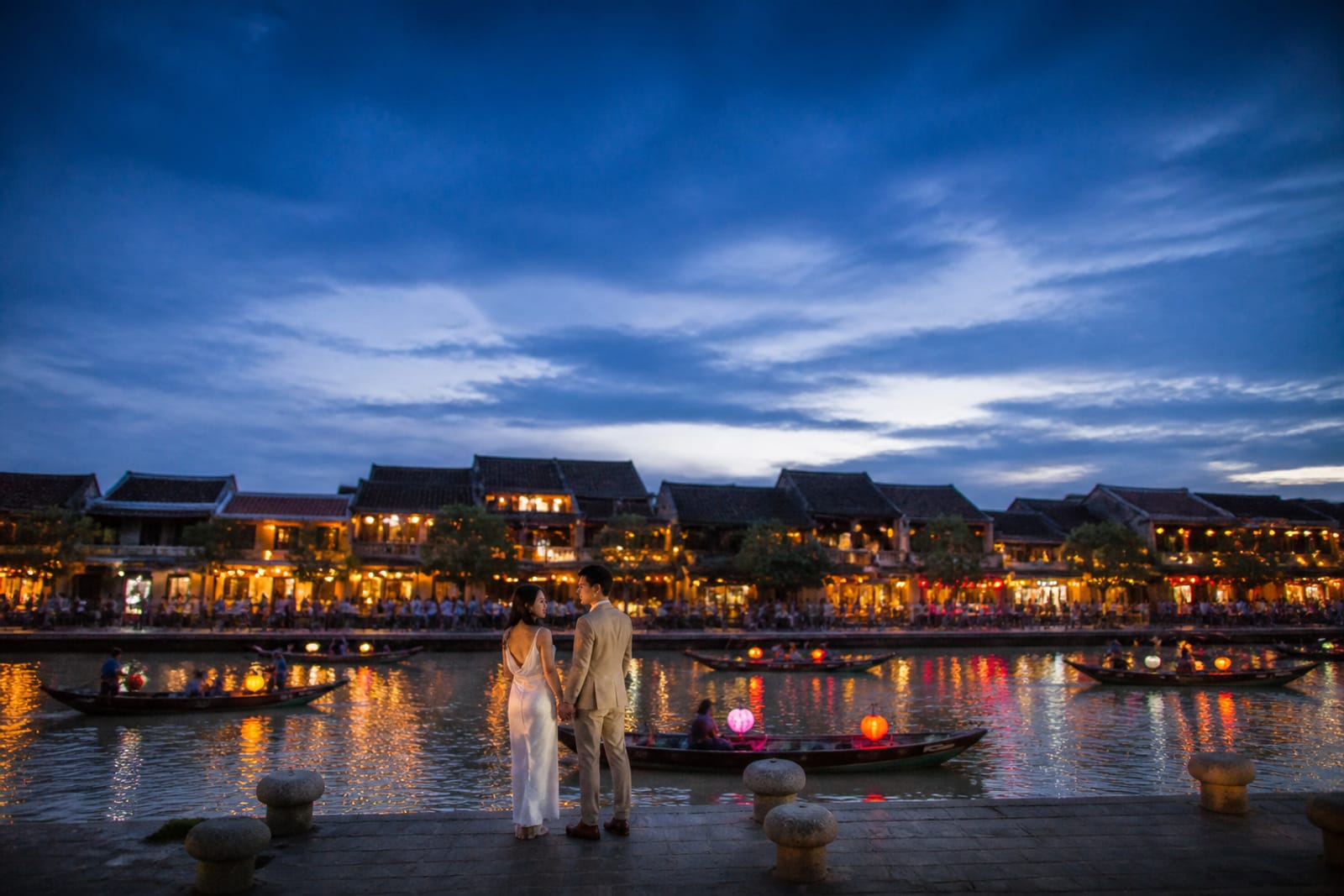
Three things work. Lanterns and golden hour: The town lights paper lanterns at dusk (nightly); combined with riverside reflection and vendor lights, this creates the Pinterest-ready glow people expect. Shooting dusk through 7:30 p.m. yields that aesthetic, though crowds swell then too. Yellow walls and decay: The 15th–19th-century tube houses have weathered mustard walls, shuttered windows, and narrow passageways—a backdrop no studio can replicate. Umbrellas, traditional garments, and movement between alleys add dimension. Quiet sunrise: Before 6:45 a.m., the town is nearly empty; soft, diffused light from the east bounces off water (Hoai River) and wet cobbles, flattering skin tones and making the scene feel intimate. The entrance fee applies even at sunrise, so budget accordingly and check current opening times locally. Once tourists arrive (around 8 a.m. in high season), you're working around crowds—not impossible, but slower and more staged.
Pre-wedding in Hoi An vs. other locations—what's the trade-off?
| Option | Best for | Light & Season | Logistics |
|---|---|---|---|
| Hoi An Ancient Town | Iconic, intimate, tradition-seeking couples | Feb–Apr dawn or Apr dusk; Sep–Dec risky | Entrance ticket + permit needed; crowds midday; uneven ground tests footwear |
| Hoi An countryside & rice fields | Soft, natural light; open-air movement; fewer people | Feb–Apr sunrise (green fields); May–Aug early only | 15–30 min travel from town; simpler logistics; less "famous" backdrop |
| Hanoi (Old Quarter, Red River, temples) | Urban symmetry, French colonial architecture, varied backdrops | Oct–Nov best (cool, clear); Dec–Feb grey but moody | Cáo Studio – Makeup & Photoshoot shoots here year-round; more schedule flexibility |
| Da Nang or Hue beaches/gardens | Seaside glamour, marble temples, golden hour over water | Mar–Aug dry; better light than Hoi An summer | Similar climate to Hoi An but more open space; less crowded pre-wedding scene |
| Studio or hotel venue | Full control, guaranteed light, outfit/prop variety, terrible weather backup | 100% predictable year-round | No outdoor risk; less "destination" feel; suits urban couples or rainy season |
The Hoi An advantage is the authentic, centuries-old setting. The risk is weather (especially Sep–Dec) and ground conditions—narrow alleys, slippery cobbles, and water pooling in rainy season damage ao dai hems and shoe heels. If you're set on Hoi An, book Feb–Apr and plan the session for 5:30–7:00 a.m. (sunrise) or 5:30–7:30 p.m. (dusk lanterns), not midday.
How does a Hoi An pre-wedding session actually work?
A professional shoot in Hoi An typically runs 2–4 hours and involves five to eight locations within or near the Ancient Town—the riverside walk, lantern vendor stalls, temple courtyards (request permission first), narrow alleys, and the Japanese Covered Bridge. You'll need to buy an entrance ticket; check the current price on the official Hoi An website. If you book Cáo Studio – Makeup & Photoshoot for a Hoi An session, the team travels from Hanoi or Saigon (ask on WhatsApp for available dates), and photographers bring reflectors, backdrops, and backup lighting gear to counter harsh midday sun. You typically choose two to four outfits (e.g., ao dai, Western formal wear, casual), and the photographer adjusts poses for cobble terrain and crowd flow. Sunrise sessions avoid crowds but demand a 5 a.m. start; dusk sessions let you light lanterns and use golden hour but compete with tourist foot traffic and fading light. Rain can halt shoots entirely in Sep–Dec, so any booking that season should include a weather rescheduling clause—confirm this before committing. Makeup and hair are typically done at your hotel before moving to the Ancient Town.
What should you check before booking a pre-wedding shoot in Hoi An?
Seasonal weather risk: Ask the photographer if October–November is your shoot month—if so, confirm they have a rescheduling option. Heavy rain isn't rare; flooding can close access roads. February–April is safest.
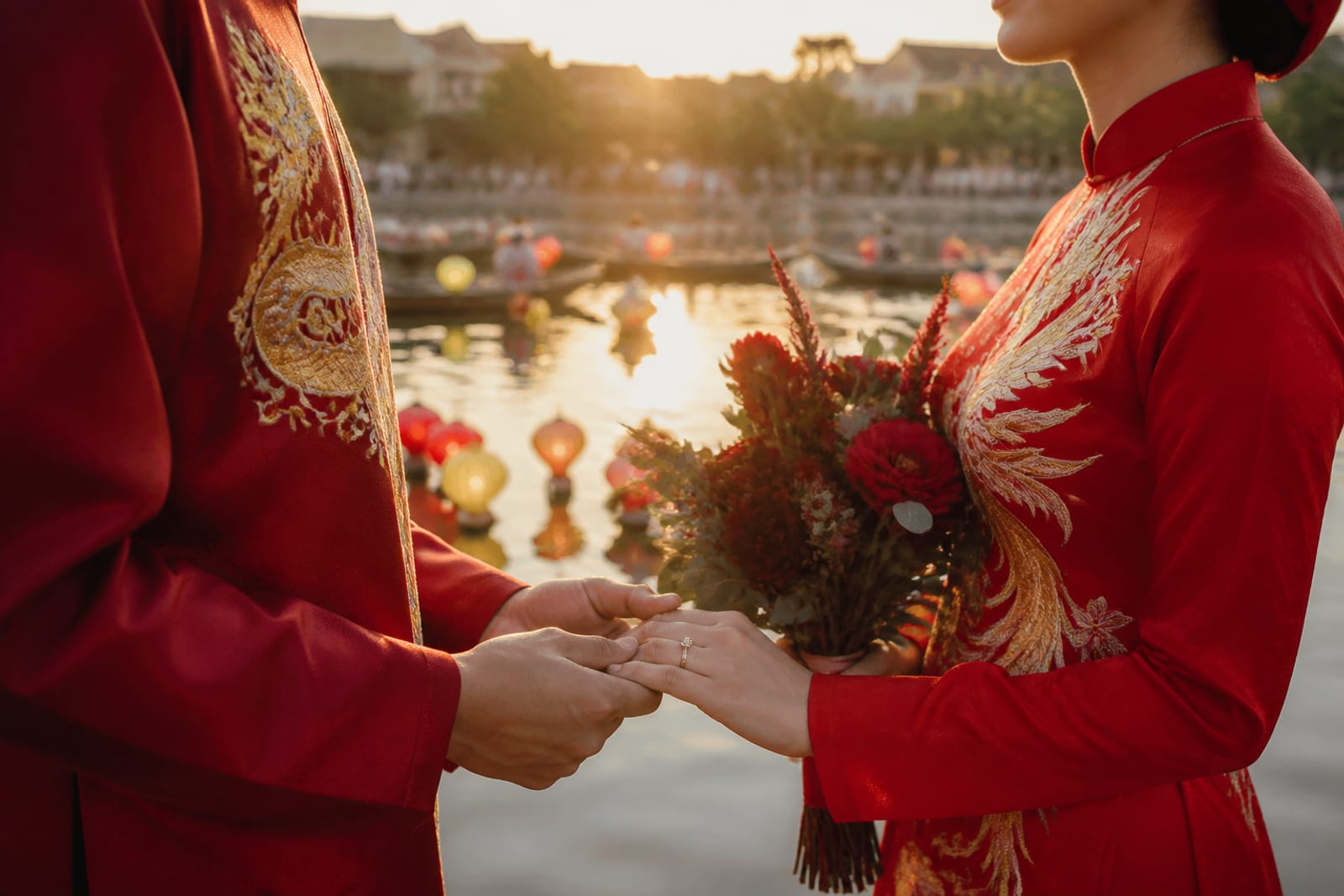
Outfit logistics: Ao dai is stunning but the long, flowing áo layer catches water and debris on wet cobbles. If you're wearing ao dai, ask about hem protection or choose trousers underneath (a traditional wear choice that photographers can style elegantly). Heel shoes slip on wet stone—consider flats or wedges, or schedule for a dry morning.
Entrance and permits: The Ancient Town requires entrance tickets. Check if the photographer's quote covers this or if you pay separately. Some photographers need a "commercial shoot permit"—ask directly.
Light backup plan: If shooting in shoulder months (April, August, September), confirm the photographer has reflectors and artificial lighting to deal with harsh sun or overcast skies.
Crowd timing: Sunrise (5:30–6:30 a.m.) is quietest; midday (10 a.m.–3 p.m.) is peak tourist season. Agree on a specific start time when you book.
Rescheduling terms: If weather cancels your shoot, can you rebook free or at a discount? This matters most in the rainy season.
---
Alternatives worth considering
🌸 See the lookbook to compare styles and settings—you may find that the Hanoi Old Quarter or a countryside location suits your vision and weather tolerance better. Cáo Studio – Makeup & Photoshoot also runs couple and pre-wedding sessions in Hanoi and Ho Chi Minh City, with more stable scheduling year-round. If Hoi An appeals but you're not sure about the logistics, start with the Hoi An photoshoot page to see how the team manages the location, then message on WhatsApp to discuss your dates and backup plans.
Many couples choose Hoi An for the romance and heritage, but a skilled photographer can create equally compelling pre-wedding images in Hanoi's French Quarter, Ho Chi Minh City's riverside, or a countryside rice field—often with less weather gamble and lower logistical cost. The "best" location is the one where you feel confident, comfortable, and protected from avoidable delays.
---
What to check before you book
- Dates: Confirm Feb–Apr is available; if you need Sep–Dec, ask about rescheduling terms.
- Permit & entry: Does the photographer cover the Ancient Town entrance fee and any commercial-use permit, or do you pay extra?
- Outfit advice: Ask if your chosen ao dai or dress suit the cobble terrain and whether the photographer has styling guidance.
- Weather clause: In writing, confirm what happens if rain cancels your session (rescheduling cost, refund, or insurance).
- Editing timeline: Request confirmation of how many edited images you'll receive and when, since Hoi An sessions may take longer to process (outdoor, multiple locations, backups for light).
- Contact: Message Cáo Studio – Makeup & Photoshoot on WhatsApp with your date, outfit ideas, and any concerns; the team will advise on feasibility and send a full quote.
---
FAQ
Is Hoi An safe to shoot pre-wedding photos in October or November?
Possible, but risky. October–November is typhoon season with heavy rainfall and occasional flooding in the Ancient Town itself. If those are your only dates, confirm the photographer has a weather rescheduling clause in writing and is willing to move the session if conditions worsen 24–48 hours before.
Do I have to wear ao dai for a Hoi An pre-wedding shoot?
No. Many couples wear Western formal wear, traditional áo dài, or a mix—the location works with any style. Ao dai is iconic for Hoi An's setting, but if fit or comfort concern you, wear what feels right. The photographer can style it beautifully either way.
What time of day gives the best light for Hoi An pre-wedding photos?
Sunrise (5:30–6:30 a.m.) offers soft, even light and zero crowds; dusk (5:30–7:30 p.m.) adds lantern glow and golden reflections but brings tourists. Midday (10 a.m.–3 p.m.) is harshest and busiest. Ask your photographer to prioritize sunrise or dusk for the strongest images.
Can I do a pre-wedding shoot in Hoi An if I'm traveling with a tight schedule?
Yes, if you're willing to start early. A focused 2–3 hour dawn session can yield 100+ edited images across 4–6 Hoi An locations. Longer sessions (4+ hours) let you cover more ground and rest between outfit changes, but aren't mandatory for strong results.
Does Cáo Studio – Makeup & Photoshoot shoot pre-wedding sessions in Hoi An year-round?
The team travels to Hoi An by appointment, not on a fixed schedule. Confirm your date and season on WhatsApp to check availability. February–April is easier to book; October–November may have limited dates due to weather unpredictability.
FAQ
Is Hoi An safe to shoot pre-wedding photos in October or November?
Possible, but risky. October–November is typhoon season with heavy rainfall and occasional flooding in the Ancient Town itself. If those are your only dates, confirm the photographer has a weather rescheduling clause in writing and is willing to move the session if conditions worsen 24–48 hours before.
Do I have to wear ao dai for a Hoi An pre-wedding shoot?
No. Many couples wear Western formal wear, traditional áo dài, or a mix—the location works with any style. Ao dai is iconic for Hoi An's setting, but if fit or comfort concern you, wear what feels right. The photographer can style it beautifully either way.
What time of day gives the best light for Hoi An pre-wedding photos?
Sunrise (5:30–6:30 a.m.) offers soft, even light and zero crowds; dusk (5:30–7:30 p.m.) adds lantern glow and golden reflections but brings tourists. Midday (10 a.m.–3 p.m.) is harshest and busiest. Ask your photographer to prioritize sunrise or dusk for the strongest images.
Can I do a pre-wedding shoot in Hoi An if I'm traveling with a tight schedule?
Yes, if you're willing to start early. A focused 2–3 hour dawn session can yield 100+ edited images across 4–6 Hoi An locations. Longer sessions (4+ hours) let you cover more ground and rest between outfit changes, but aren't mandatory for strong results.
Does Cáo Studio – Makeup & Photoshoot shoot pre-wedding sessions in Hoi An year-round?
The team travels to Hoi An by appointment, not on a fixed schedule. Confirm your date and season on WhatsApp to check availability. February–April is easier to book; October–November may have limited dates due to weather unpredictability.
Ao dai, makeup, hair and a local photographer in Hanoi or Saigon — one WhatsApp message.