/pre-wedding-photoshoot
Is Hoi An rice paddies good for pre-wedding photos? Pros, cons and alt
Hoi An rice paddies work best for pre-wedding photos between February and April, when fields are lush green and the light is soft. The main appeal is the open landscape and rural Vietnamese aesthetic; the catch is access. Fields are private farmland, so you need a guide or local connection—shooting solo or with an outside photographer is difficult and disrespectful to farmers. Early morning (5:30–6:30 am) offers the best light and fewest people. Mud, water and narrow paths mean standard wedding attire gets soiled quickly; many couples rent casual outfits separately or plan a second location in the Ancient Town. Sessions run longer because of travel time and changing logistics. Cáo Studio – Makeup & Photoshoot books rice-paddy pre-wedding shoots in Hoi An by appointment; the team travels from Hanoi or Saigon, handles local coordination, and can pair the session with makeup, changing facilities and a second backdrop (temple, street, lantern dock) for outfit changes. 📸 Book on WhatsApp — pre-wedding shoots | 💄 Makeup & hair at your hotel ---
Are Hoi An rice paddies actually accessible for photographers?
Access is the biggest practical hurdle. Fields belong to local farmers who work dawn to dusk during planting and harvest seasons. Walking in uninvited or letting strangers photograph damages crops and disrespects livelihoods. Most shoot-friendly locations are on the village edges or negotiated with local guides who have farmer relationships. Commercial photographers (including our team) arrange access beforehand; independent travelers and unfamiliar photographers often face refusal or awkward confrontations. If you hire a Hoi An-based guide or book through a studio like Cáo Studio that has local connections, access is smooth. Without that, you're either trespassing or limited to roadside views, which lack the immersive paddy-field look.
What's the best season and time of day for rice-paddy pre-wedding photos?
Season: February–April is ideal. Fields are flooded and reflective (best for mirror-like shots), young rice is vibrant green, and the weather is cool and dry. May onwards, heat builds; by June, the monsoon brings humidity and haze. September–December is the rainy season with typhoons and flooding in the Ancient Town (avoid October–November entirely for Hoi An). December–January is cool and drizzly, so fields may be wet and grey.
Time of day: Sunrise (5:30–6:30 am) is non-negotiable for three reasons: soft, golden light from the east; mist rising off water; and almost no farmers or tourists. By 8 am, the sun is harsh and fields get busier. Sunset can work but light is brief and mosquitoes are fierce; plan 30–45 minutes only.
Getting there early is exhausting. Most couples sleep in their hotel the night before and meet the photographer and makeup artist at 4:45 am. Bring coffee, a blanket and patience—nothing will be ready on time in the dark.
What outfit options work in rice paddies without getting ruined?
Traditional wedding dresses and formal suits are impractical. Mud, water spray, insect damage and sweat make them unusable within minutes. Three strategies work:
- Rent a second outfit locally. Vietnamese áo dài in cotton or silk, or casual bohemian dresses, photograph beautifully in paddies and can be cleaned. Hoi An has rental shops; ask your guide or photographer where.
- Wear your formal outfit only in the Ancient Town. Shoot paddies in casual clothes (linen, simple áo dài, light trousers) first; change in a hotel or rental studio for the second location. This adds 30–45 minutes to the session and requires a second makeup touch-up.
- Go fully casual. Couples who accept a rural, intimate vibe skip formal wear entirely. A linen shirt and flowing trousers, or a simple dress, are season-appropriate and photo-ready without fuss.
Plan outfit changes into your session timing. Don't assume you can shoot all locations in one outfit.
How do rice paddies compare to other Hoi An pre-wedding backdrops?
| Backdrop | Best for | Light & season | Why to choose | Why to skip |
|---|---|---|---|---|
| Rice paddies | Rural, open-sky, reflective shots | Sunrise Feb–Apr; green fields | Unique Vietnamese landscape; intimate scale | Logistics, access, mud, timing limits |
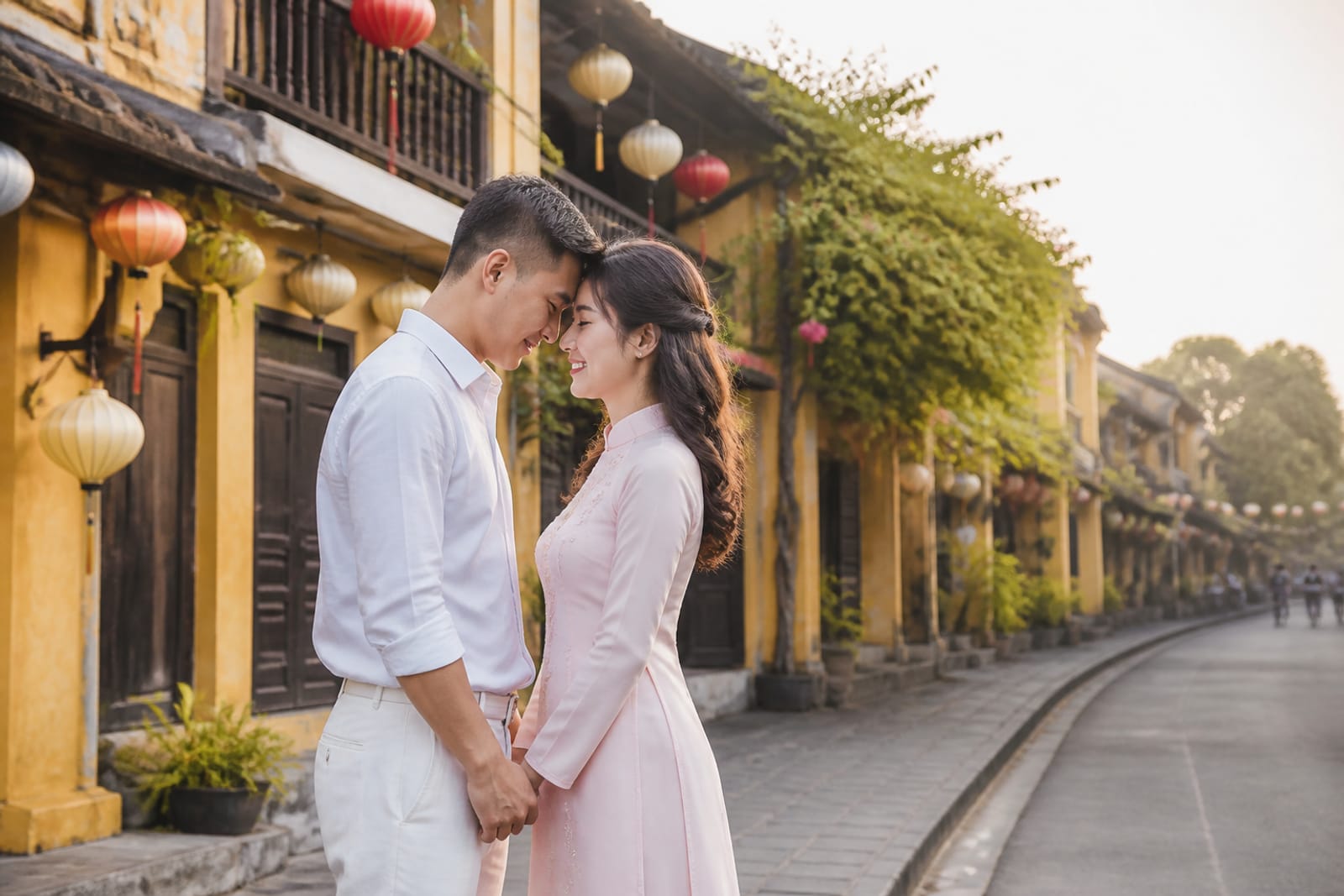
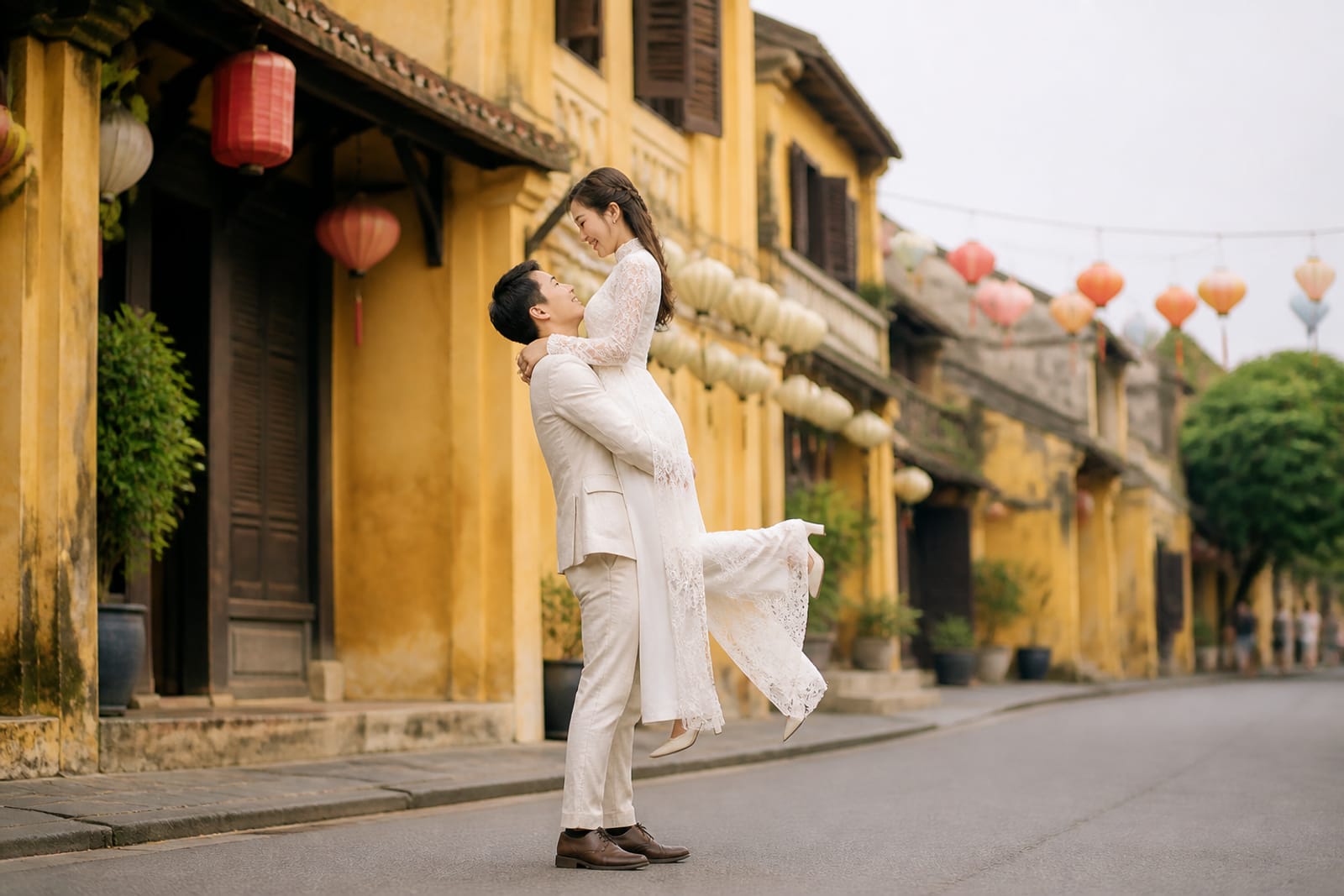
| Hoi An Ancient Town | Streets, lanterns, wooden houses, cultural richness | Sunrise (crowded by 8 am); driest Feb–Aug | No travel; all-in-one; iconic; easy outfit changes | Crowded; artificial lighting at dusk; entrance ticket required |
| Temple grounds (Cau Pagoda, Phap Bao) | Spiritual, golden-hour, architecture | Sunrise or late afternoon year-round | Serene, ornate backdrops; fewer crowds than town | Strict dress codes; limited movement; off-limits during ceremonies |
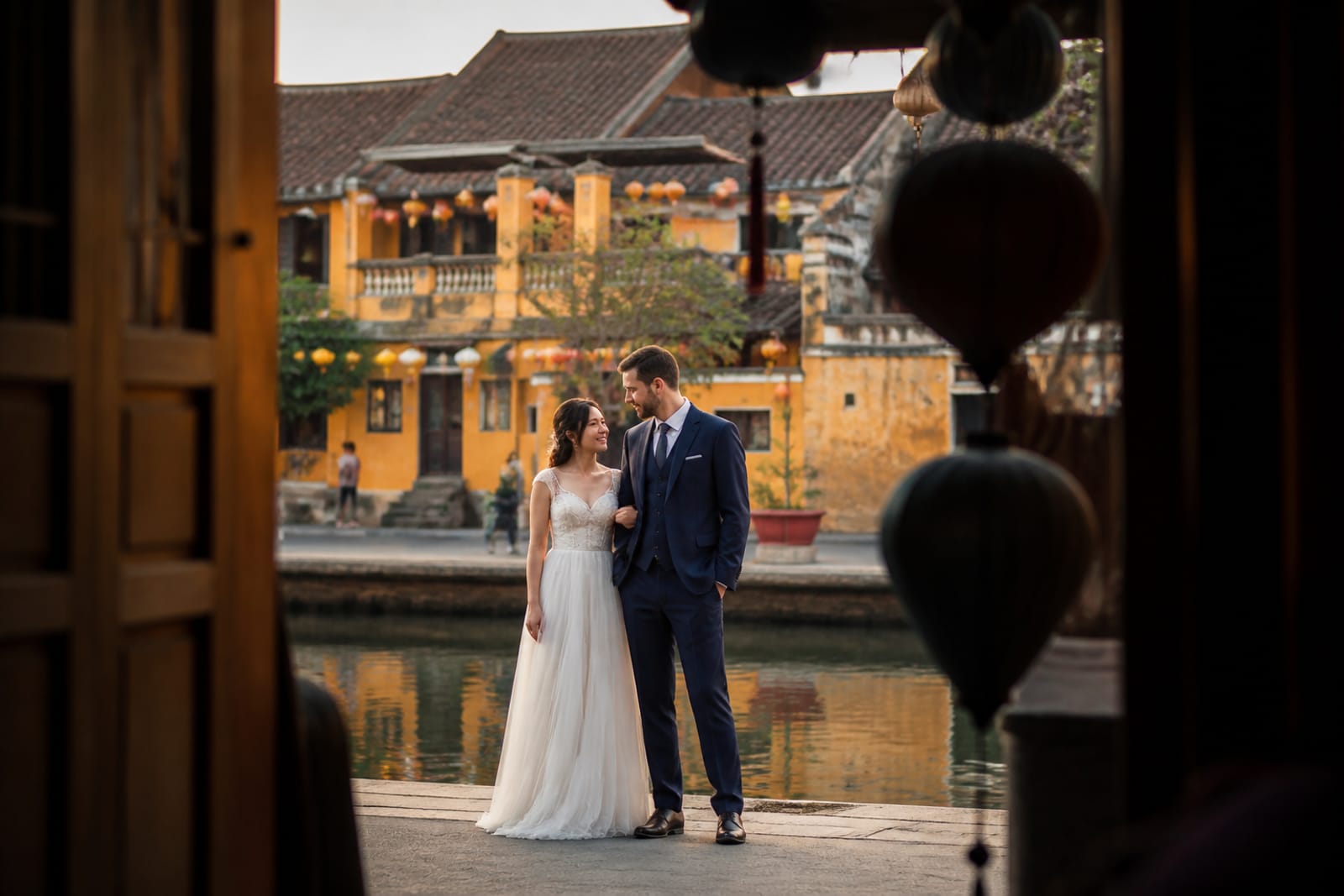
| Lantern dock at dusk | Romantic, water reflections, glowing lanterns | Dusk year-round; best dry season (Feb–Aug) | Iconic Hoi An mood; lit lanterns at night; short walk from town | Rainy season crowds; wet platform; short shooting window; timing tight with crowds |
| Rural villages (Cam Thanh, Thu Bon) | Boating, stilt houses, fishing nets | Early morning or late afternoon year-round | Quieter than paddy fields; boats add movement; less muddy | Longer drive from town; tide-dependent; small photo window |
Verdict: Choose rice paddies only if you love the rural, misty, landscape aesthetic and can manage a 4:30 am start. For couples who want ease, culture and speed, the Ancient Town or lantern dock work better.
Should you book a rice-paddy shoot with an outside photographer or a studio?
Outside photographers (solo Hoi An-based freelancers):
- Pros: Lower day rate; local knowledge.
- Cons: Limited backup if light fails; no makeup artist on-site; you arrange your own hotel, transport, outfit rentals; if they're late or don't understand your vision, you have no recourse.
- Best for: Budget-first couples comfortable with DIY logistics and willing to accept slower workflow.
Studio package (like Cáo Studio – Makeup & Photoshoot):
- Pros: Makeup & hair on-site (no extra trip); transportation arranged; backup lighting/equipment if needed; meal and rest space; stylist for outfit advice; session runs to time; conflicts resolved same-day.
- Cons: Higher session cost (travel from Hanoi or Saigon).
- Best for: Couples who want one point of contact, on-time execution, professional backup, and makeup included in the session flow.
Key comparison: A solo photographer might be cheaper per hour, but hidden costs (hotel makeup artist, guide tip, outfit rental delivery, transport to meet point, meal stops) can equal a studio package. Studios bundle these invisibly; solo work requires you to plan and pay separately.
What to check before you book a rice-paddy pre-wedding shoot
- Season confirmation: Verify the session date is in Feb–Apr (or Dec–Jan if you accept overcast light). Avoid Sep–Dec entirely.
- Access and logistics: Does the photographer have a local guide or farmer relationship? Ask how access is arranged and who handles refusals if a field is off-limits.
- Outfit plan: Confirm whether formal wear is expected in paddies or if outfit changes are included. Get a clear list of what to bring and what's rented/provided.
- Makeup & hair: Will a makeup artist travel with the team? Is touch-up scheduled after the paddy session (before the second location)? Or is makeup done at your hotel beforehand?
- Timing & rest: Does the schedule include a breakfast break after sunrise shooting? How long is the walk to/from the paddies? Will you be exhausted?
- Backup locations: If weather or access fails on the day, what's the fallback? Is a second location (Ancient Town, temple) automatically included or booked separately?
- Delivery & edits: How many edited images do you receive? When? Ask on WhatsApp for exact details; never assume package inclusions.
Ask all these on WhatsApp (+84 338 762 340) before committing. Studios should answer in writing.
📸 Book on WhatsApp — pre-wedding shoots | 💄 Makeup & hair at your hotel | 🌸 See the lookbook
---
Is a rice-paddy shoot worth the hassle over other Hoi An options?
Yes, if the rural, open-sky aesthetic is your vision and you're willing to wake early and manage logistics. The emotional payoff—mist, golden light, private landscape—is distinct and timeless. No if you want ease, speed, and cultural icon shots; the Ancient Town delivers all three without 4:30 am wake-ups. Couples who want both often split the session: paddies at sunrise, then change into formal wear for the Ancient Town lanterns at dusk.
Pre-wedding shoots with Cáo Studio include makeup, transport, and local coordination so you focus on the moment, not logistics.
---
Beyond Hoi An: other rice-paddy pre-wedding destinations in Vietnam
If you're open to other regions, consider:
- Ninh Binh (Tam Coc, Hang Mua surrounds): Dramatic limestone karst over rice fields; dry Sep–May; sunrise mist is ethereal; 2-hour drive from Hanoi. Access is easier (more tourist infrastructure) but less intimate.
- Sapa (northern hills): Terraced rice paddies on steep slopes; best May–Oct; cooler air; more strenuous walking. Longer session, more dramatic but exhausting.
- Mekong Delta (Can Tho, Ben Tre): Flat, sprawling paddies and waterways; dry Dec–Apr; travel by boat adds romance. Less iconic than Hoi An but less crowded.
For details on pre-wedding shoots outside Hoi An, contact Cáo Studio; for planning an independent shoot elsewhere, hire a local photographer and guide in that region—we can advise on logistics via WhatsApp.
---
How to plan your own rice-paddy shoot in Hoi An without a studio
If budget is tight and you're comfort with solo coordination:
- Book your hotel near Hoi An Ancient Town (walking distance to town, close to transport hubs).
- Find a local guide on Airbnb Experiences or ask your hotel for a photographer recommendation. Verify they have farmer connections and can negotiate paddy access.
- Hire a makeup artist separately (ask hotels for names; rates are modest). Schedule her at your hotel at 3:30 am for a 5:15 am paddy departure.
- Rent an outfit locally (Hoi An has dozens of áo dài rental shops; pick two days before to confirm fit and color).
- Arrange transport: Grab or hotel taxi, prepaid, confirmed the night before.
- Expect to coordinate five vendors (guide, photographer, makeup, taxi, outfit shop). Plan 48 hours of back-and-forth messaging and be ready for last-minute changes.
- Budget for photographer's day rate, guide tip, makeup fee, outfit rental, taxi, and a meal stop. Costs vary; ask vendors directly and expect to negotiate.
Honest reality: This saves money but eats time. If you're jet-lagged, unfamiliar with Hoi An, or speak no Vietnamese, a studio package is worth the premium because one team handles everything.
---
Should you add rice paddies to a longer pre-wedding trip in Vietnam?
Yes, if you have 3+ days in Hoi An. Day 1: arrive, explore the Ancient Town, do makeup trials. Day 2: rice-paddy sunrise shoot, afternoon rest and outfit change, evening lantern dock or temple shoot. Day 3: buffer day—revisit a favorite location, rest, or shoot bonus candid portraits around town.
No, if you're in Hoi An for only a day. Sunrise paddies + Ancient Town + evening dock is too compressed. Pick two locations and move slowly.
Cáo Studio – Makeup & Photoshoot schedules pre-wedding shoots in Hoi An by appointment, including multi-location days. Ask on WhatsApp about adding paddies to an existing package or booking a dedicated paddy-focused session.
---
The bottom line
Hoi An rice paddies deliver a romantic, uniquely Vietnamese pre-wedding backdrop—but only in the right season, with early mornings and outfit adjustments planned. The logistics are more complex than town or temple shoots, so weigh ease against aesthetic payoff. Couples who prioritize the rural, reflective, mist-over-water mood find them irreplaceable. Those who want cultural icons and minimal fuss should stick with the Ancient Town or propose alternatives like the couple & family photoshoot options available year-round with Cáo Studio.
Book a pre-wedding consultation on WhatsApp to discuss whether paddies, town, or a combination suits your vision and timeline.
FAQ
What month is best for Hoi An rice-paddy photos?
February–April. Fields are flooded and bright green, weather is cool and dry, and sunrise light is soft and golden. Avoid September–December (rainy season, typhoons, Ancient Town flooding worst in October–November). December–January can work but expect overcast skies and wet fields.
Can I shoot rice paddies in a wedding dress?
Not practically. Mud, water, and insect damage ruin formal wear. Rent a casual áo dài or linen outfit for paddies; save your formal dress for the Ancient Town. Plan a 30–45 minute outfit change between locations.
Do I need a local guide to shoot rice paddies?
Yes. Fields are private farmland. A guide with farmer relationships negotiates access and prevents trespassing. Shooting solo or with an unfamiliar photographer risks refusal or conflict. Book through a studio or hire a local guide in advance.
What time should we start a rice-paddy shoot?
5:30–6:30 am (sunrise). Light is soft, mist rises off water, and crowds are nonexistent. Expect 4:30 am hotel pickup, makeup at 3:30 am, and zero sleep the night before. By 8 am, light hardens and paddies get busier.
Are rice paddies better than the Hoi An Ancient Town for pre-wedding photos?
Depends on your vision. Paddies offer rural, open-sky, reflective shots; the Ancient Town offers culture, lanterns, and ease. Many couples shoot both—paddies at sunrise, town at dusk—and change outfits in between.
How long does a rice-paddy pre-wedding session take?
2–3 hours including travel, setup, posing, and outfit adjustments. If you add a second location (Ancient Town, temple, lantern dock), plan 5–6 hours total. Ask your photographer for a written timeline.
Can I book a rice-paddy shoot year-round?
No. February–April is ideal; December–January is workable but overcast. Avoid September–December (rainy season, typhoons, and flooding). Sessions outside these windows risk cancelled days and poor light.
What's the difference between booking a rice-paddy shoot with a studio vs. a solo photographer?
A studio includes makeup, transport, local coordination, and backup; a solo photographer is cheaper but requires you to arrange makeup, outfit rental, guide, and transport separately. Studios cost more per day but save hidden coordination costs.
FAQ
What month is best for Hoi An rice-paddy photos?
February–April. Fields are flooded and bright green, weather is cool and dry, and sunrise light is soft and golden. Avoid September–December (rainy season, typhoons, Ancient Town flooding worst in October–November). December–January can work but expect overcast skies and wet fields.
Can I shoot rice paddies in a wedding dress?
Not practically. Mud, water, and insect damage ruin formal wear. Rent a casual áo dài or linen outfit for paddies; save your formal dress for the Ancient Town. Plan a 30–45 minute outfit change between locations.
Do I need a local guide to shoot rice paddies?
Yes. Fields are private farmland. A guide with farmer relationships negotiates access and prevents trespassing. Shooting solo or with an unfamiliar photographer risks refusal or conflict. Book through a studio or hire a local guide in advance.
What time should we start a rice-paddy shoot?
5:30–6:30 am (sunrise). Light is soft, mist rises off water, and crowds are nonexistent. Expect 4:30 am hotel pickup, makeup at 3:30 am, and zero sleep the night before. By 8 am, light hardens and paddies get busier.
Are rice paddies better than the Hoi An Ancient Town for pre-wedding photos?
Depends on your vision. Paddies offer rural, open-sky, reflective shots; the Ancient Town offers culture, lanterns, and ease. Many couples shoot both—paddies at sunrise, town at dusk—and change outfits in between.
How long does a rice-paddy pre-wedding session take?
2–3 hours including travel, setup, posing, and outfit adjustments. If you add a second location (Ancient Town, temple, lantern dock), plan 5–6 hours total. Ask your photographer for a written timeline.
Can I book a rice-paddy shoot year-round?
No. February–April is ideal; December–January is workable but overcast. Avoid September–December (rainy season, typhoons, and flooding). Sessions outside these windows risk cancelled days and poor light.
What's the difference between booking a rice-paddy shoot with a studio vs. a solo photographer?
A studio includes makeup, transport, local coordination, and backup; a solo photographer is cheaper but requires you to arrange makeup, outfit rental, guide, and transport separately. Studios cost more per day but save hidden coordination costs.
Ao dai, makeup, hair and a local photographer in Hanoi or Saigon — one WhatsApp message.