/pre-wedding-photoshoot
Is Japanese Covered Bridge Good for Pre-Wedding Photos? Pros, Cons, Al
The Japanese Covered Bridge in Hoi An's Ancient Town is iconic but narrow, dark, and crowded by mid-morning—difficult for flowing ao dai or couple poses. At sunrise (5:30–6:30 a.m., earliest slot), you may find it quiet, but the wood interior absorbs light, requiring higher ISO and slower motion; the bridge's low railings suit seated shots better than standing ones. If you book a Cáo Studio pre-wedding session in Hoi An, we scout it as one option among quieter riverside and lantern-lit backstreet alternatives that showcase wedding attire without the logistical squeeze. Best months are February–April (dry, mild, green fields); avoid October–November (typhoon season, flooding risk). Check the Ancient Town entrance requirements and whether you need permits for couple photos before finalizing your date.
The Japanese Covered Bridge—officially the Chùa Cầu (Bridge Pagoda)—spans a narrow channel in Hoi An Ancient Town, connecting the Japanese merchant quarter to the market. Built in the 16th century, its arched red wood frame and lanterns make it a must-see landmark. For pre-wedding photographers, it looks like the perfect backdrop: intimate scale, romantic lantern glow at dusk, and cultural significance. In practice, it's a tight squeeze. The bridge is rarely empty, the ceiling is low, and the light inside is dim. Couples often choose it for one or two symbolic shots, then move to quieter, brighter alternatives nearby—which we'll explore below.
📸 Book on WhatsApp — pre-wedding photoshoot | 🌸 See the lookbook
Why the Bridge Feels Smaller Than Photos Suggest
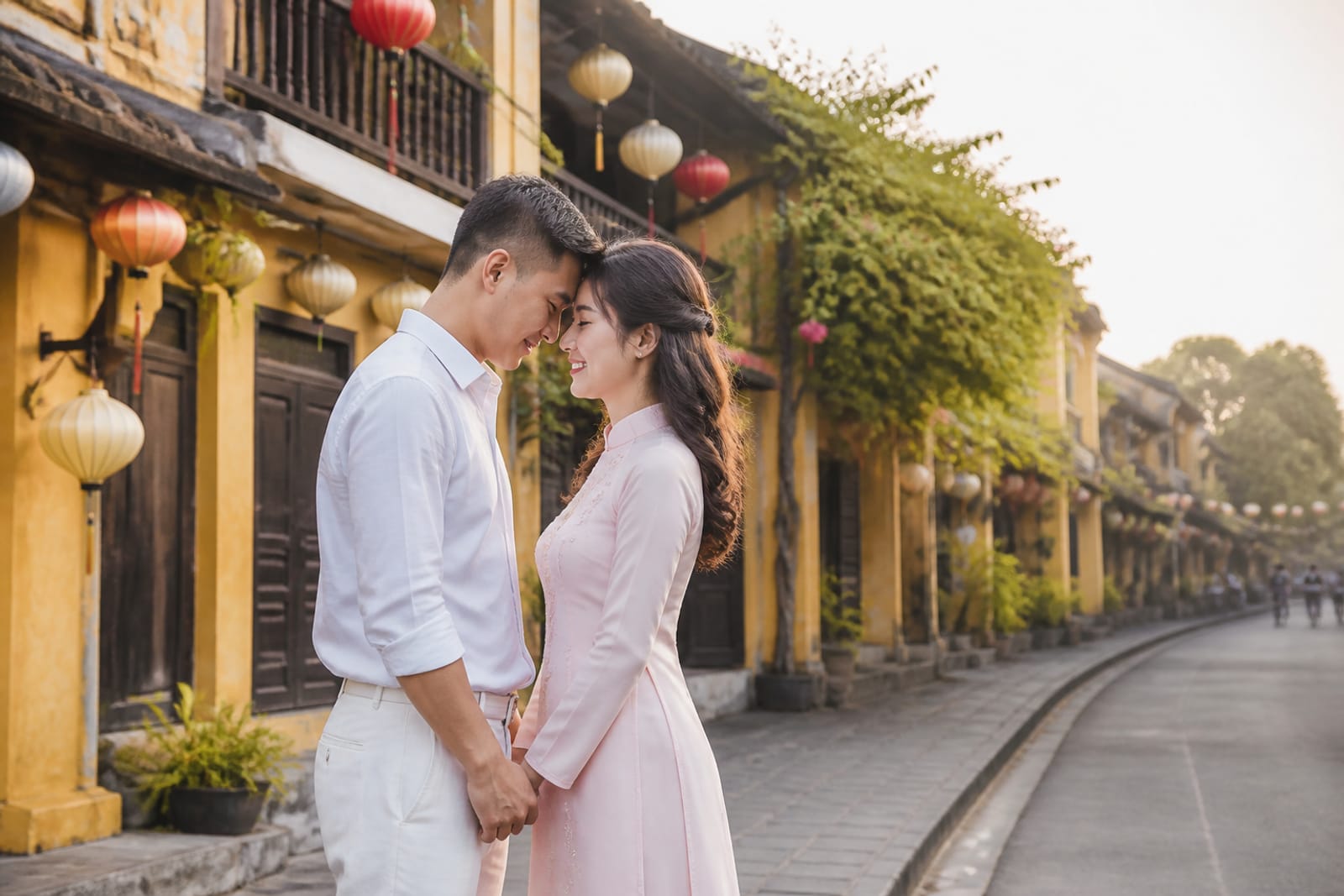
The interior is roughly 5 meters wide and 18 meters long. A bride in a flowing ao dai or Western wedding dress, plus a groom, photographer, and assistant, occupy most of the space. Tourists queue on both ends, especially after 8 a.m. The low timber ceiling means umbrellas (essential in Hoi An's rainy season) won't fit. If you're both wearing traditional ao dai, the fabric catches on the wooden beams. Movement is restricted to stepping, turning, and kneeling—no running, dancing, or wide-angle walking shots. The bridge's central pillar bisects couple poses; you're either in front of it or behind it, never fully framed together without the pillar intruding. Light inside is moody and amber-toned due to the red wood; white or pale fabrics pick up the wood color, and darker fabrics lose detail. A photographer must use manual settings, accept higher ISO, or wait for the brief window when sun angles through the open ends.
Light and Timing: When the Bridge Actually Works
Sunrise (5:30–6:30 a.m. in summer) is the only window when the bridge is empty and light is soft. The eastern entrance catches first light; the western end (toward the river) glows gold. After 7 a.m., it fills rapidly. Dusk (around 6:00–7:00 p.m. September–April; 6:30–7:30 p.m. May–August) is second-best: lanterns ignite, and the amber interior becomes a feature rather than a flaw. However, by 6:30 p.m., tourist groups clog both sides. Noon is worst—harsh shadows, crowded, harsh shadows bleed from the timber structure. Overcast days (common December–April) mute the interior color but reduce contrast, making details flat. Rainy season (September–December, worst October–November) brings actual flooding to the Ancient Town; the bridge stays open, but wet wood is slippery, and dramatic storm light is unpredictable.
How Outfit and Styling Constraints Affect the Shoot
| Outfit Type | Best Fit? | Light Challenge | Why It Matters |
|---|---|---|---|
| Ao dai (silk, flowing) | Risky | Fabric catches timber; pale colors pick up wood amber | Expensive rental or heirloom garment at risk of snags; gold/pink tones oversaturate |
| Western wedding dress (tulle, train) | No | Train catches railings; heavy fabrics restrict movement; pale fabrics look muddy inside | Dress rental cost wasted on 1–2 unusable frames; post-processing can't recover under-lit detail |
| Groom suit / áo ghi nhân | Moderate | Dark fabrics blend with wood; details lost without careful lighting | Suited for seated poses; standing shots need separation fill light |
| Casual couple (jeans, shirt) | Yes | Smaller scale helps; neutral tones read clearly | Works for 5–10 minute grab-shot; not worth a full session booking |
For brides renting ao dai or Western dresses (often costing resources and advance booking), the bridge's constraints mean only 10–20% of your session time yields gallery-worthy frames. Cáo Studio – Makeup & Photoshoot accounts for this: if a couple insists on bridge photos, we shoot it first (before fatigue or light degrades) and move to 3–4 alternative sites within the Ancient Town and nearby that better showcase the dress and allow free movement.
Alternatives Within Hoi An That Give You More
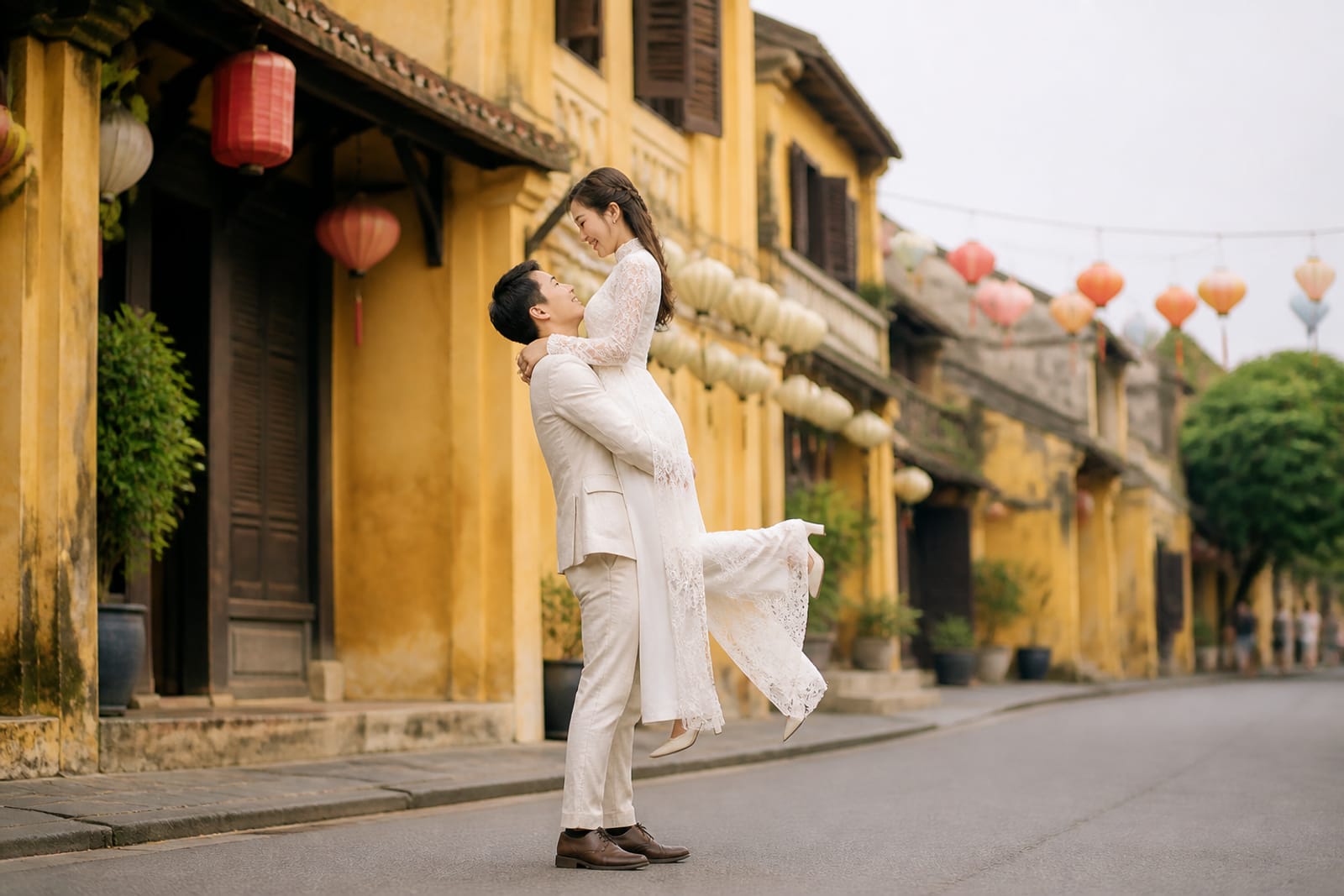
The Ancient Town offers quieter, equally atmospheric options if you're willing to scout beyond the postcard shot.
- Lantern-lit backstreets (7:00–9:00 p.m., September–April): Narrow alleys with hanging silk lanterns, fewer tourists, and soft overhead light that flatters skin and fabric. Ao dai glows; dresses appear less muddy. No vendor crowds. Risk: wet streets in rainy season; check with your guide for flooding on the day.
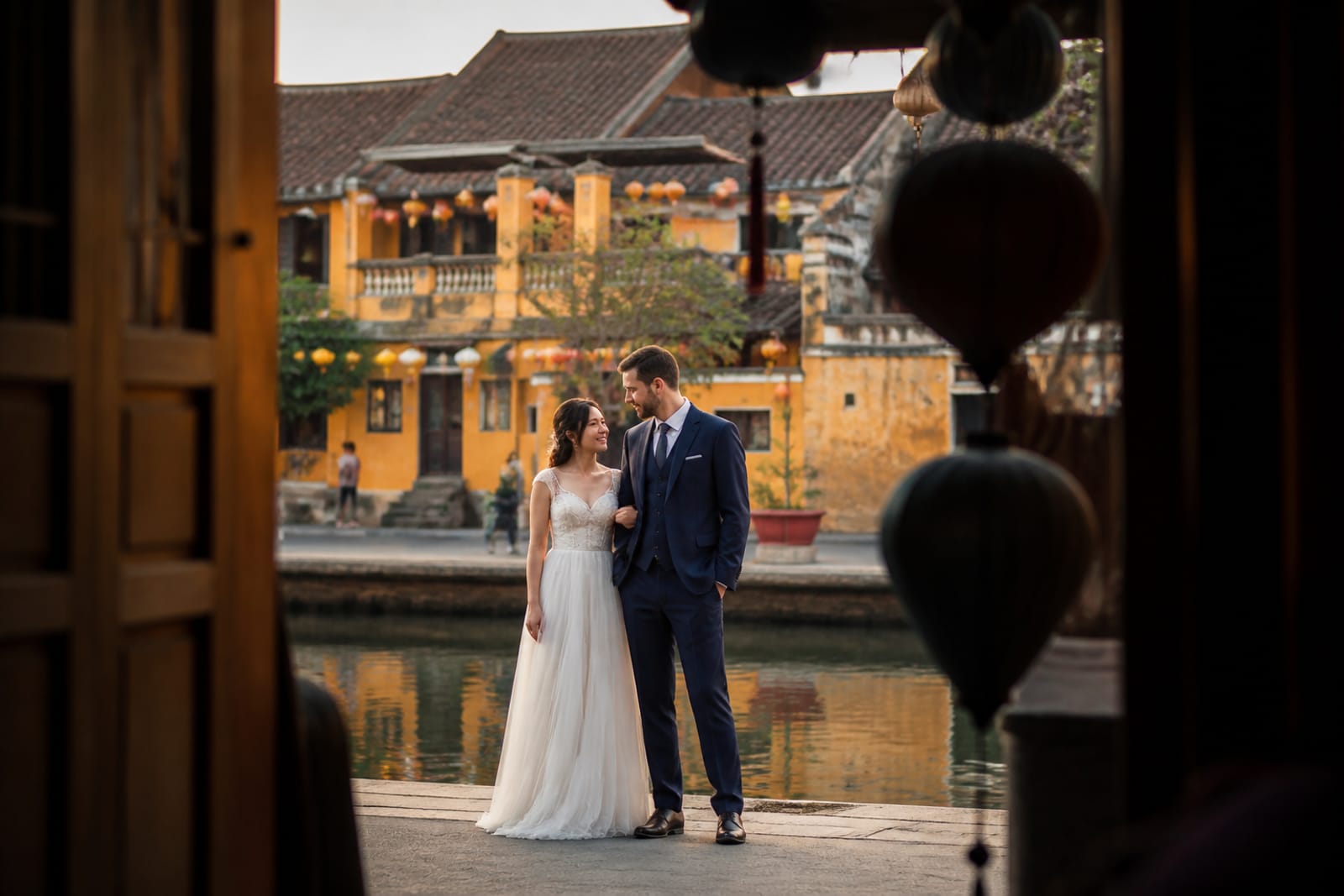
- Riverside (Assembly Hall side, 6:00–7:00 a.m. or 5:30–6:30 p.m.): Open light, green water backdrop, and space for posed walking and turning shots. No entrance ticket required. Rainy-season flooding possible on the embankment; confirm access with locals.
- Temple courtyards (Thu Bon temple, Ong Pagoda, 7:00–8:30 a.m. or 4:00–5:30 p.m.): Soft dappled light through wood lattice, cultural weight, fewer tourists early/late. Requires respectful attire and permission; confirm photo policies before arrival.
- Rice fields (Tra Que Vegetable Village, 6:00–7:00 a.m., February–April): Bright, open, and green during growing season. Best light and space. Muddy in rainy season; not negotiable October–November. Distance: ~4 km from town; factor in transport time.
- Market entrance at dawn (5:30–6:30 a.m., Tuesday–Sunday): Local life, warm lantern light, few tourists; chaotic by 7 a.m. No permits required. Can feel rushed.
Each alternative requires different planning (permits, transportation, dress-appropriate footwear, guide connection), but all allow fuller outfit display and natural movement—worth a second hour of shooting when the bride's dress or ao dai is a key investment.
Comparison: Bridge vs. Full Hoi An Pre-Wedding Session
| Choice | Suit You If | Time Per Site | Photo Yield | Cost Factor |
|---|---|---|---|---|
| Bridge only (DIY or hired local) | Solo couple, quick symbolic shot, casual attire | 20–30 min | 8–15 usable frames | Paid separately; low overall spend |
| Bridge + 1–2 alternatives (half-day package) | Couple with wedding dress/ao dai; want diversity | 3–4 hours | 80–150 frames (edited) | Session cost includes transportation and scout time |
| Bridge + backstreets + field/temple (full day) | couple with ao dai or dress; want a story arc (ceremony attire progression, light variation, culture) | 6–8 hours | 150–300 frames | Highest resource cost; makeup & hair at hotel often bundled |
| Backstreets, fields, temples only (skip bridge) | Couple confident in non-iconic backdrops; prioritize light and comfort | 4–6 hours | 100–200 frames | Mid-range cost; faster setup, less crowd stress |
A Cáo Studio pre-wedding photoshoot in Hoi An (team travels by appointment) starts with a conversation about your outfit, priorities, and comfort with crowds. If the bridge is your dream, we shoot it first and bright, then move. If you're open to alternatives, we often skip the bridge and use the hour saved for richer backstreet and field light—you leave with more keepsake frames and less regret about missed moments.
What to Check Before Booking Your Hoi An Pre-Wedding Session
Ancient Town logistics:
- Entrance tickets required; confirm current policy on the official site.
- Crowds peak 8 a.m.–5 p.m.; dawn and dusk are quietest.
- Rainy season (September–December, especially October–November) brings flooding to low-lying parts; the bridge stays open, but backstreet access may not. Check local flood alerts before finalizing your date.
- Lanterns light at dusk year-round; full-moon lantern nights draw extra crowds (usually mid-month on lunar calendar).
Outfit and styling:
- If wearing ao dai, confirm the length and sleeve fit with your rental; the bridge's low beams and railings catch long sleeves. Hems should be slightly short or silk-slippery (not stiff brocade).
- Wedding dresses with trains are difficult on the bridge; consider a detachable train or plan a dress-change at your hotel.
- Makeup should account for warm amber light inside (avoid cool-toned foundations; lean warm). Cáo Studio's makeup & hair team can prepare you specifically for Hoi An's light palette.
Photographer and logistics:
- If self-hiring a local Hoi An photographer, ask to see frames shot inside the bridge in low light—not just drone/exterior shots. Low-light capability matters.
- Confirm transportation to alternatives (Tra Que, temples, riverside). Cáo Studio includes transport coordination in pre-wedding packages; if booking independently, arrange taxis or bicycles in advance.
- Plan a backup date; weather and flooding can cancel morning-of sessions.
Booking with Cáo Studio:
- Contact us on WhatsApp +84 338 762 340 to discuss your Hoi An availability. We confirm team travel dates and tailor the itinerary to your outfit and light priorities.
- Request details on exactly what's included (hours, edits, album style, outfit changes allowed, makeup/hair add-ons). Quotations are sent via WhatsApp only.
- Share reference photos of backstreets or temples you love; we'll incorporate them if feasible.
FAQ
Is the Japanese Covered Bridge worth traveling to Hoi An for pre-wedding photos?
Only if you pair it with quieter alternatives. The bridge alone yields 10–20 usable frames due to crowds and low light. A full Hoi An pre-wedding session (4–8 hours, multiple sites) justifies the trip and delivers 100–300 keepsake images. Book with a photographer (like Cáo Studio) who knows the surrounding backstreet and field options.
Can I wear a wedding dress on the bridge?
Yes, but it's uncomfortable. The low ceiling, railings, and narrow space catch tulle trains and restrict movement. Pale dresses photograph muddy inside the dark wood interior. If a dress is essential, plan it as a 15-minute stop early in the session, then change into lighter-moving attire at your hotel for brighter shots nearby.
What's the best time of day to shoot on the bridge?
Sunrise (5:30–6:30 a.m.) is emptiest and best-lit from the east entrance. Dusk (6:00–7:00 p.m., September–April) is second-best when lanterns ignite. Avoid noon, overcast noon, and rainy-season storms. Coordinate with your photographer to secure permits for early/late hours if needed.
Should I skip the bridge and shoot elsewhere in Hoi An instead?
Many couples do. Backlit lantern alleys, rice fields, and riverside offer better light, outfit visibility, and movement freedom. If the bridge's cultural icon status matters to you, shoot it fast (15–20 minutes), then move to 2–3 alternatives. The bridge works best as one frame in a story, not the whole session.
What seasons are safe for a Hoi An pre-wedding shoot?
February–April (dry, mild, green fields, full-moon lantern nights) is ideal. May–August is dry but very hot (35°C+); shoot at sunrise. September–January is rainy; October–November brings typhoons and flooding—avoid booking critical sessions then. December–January is cool but often drizzly; expect grey light and wet streets, though crowds are lower.
Do I need permits to photograph on the bridge?
The bridge is part of the Ancient Town; entrance tickets are required (check current price on the official site). For commercial or wedding photography, check with the Hoi An tourism board or your photographer. Cáo Studio coordinates permits as part of the booking; clarify on WhatsApp when inquiring. === 📸 Book on WhatsApp — pre-wedding photoshoot | 🌸 See the lookbook | 💄 Makeup & hair at your hotel
FAQ
Is the Japanese Covered Bridge worth traveling to Hoi An for pre-wedding photos?
Only if you pair it with quieter alternatives. The bridge alone yields 10–20 usable frames due to crowds and low light. A full Hoi An pre-wedding session (4–8 hours, multiple sites) justifies the trip and delivers 100–300 keepsake images. Book with a photographer (like Cáo Studio) who knows the surrounding backstreet and field options.
Can I wear a wedding dress on the bridge?
Yes, but it's uncomfortable. The low ceiling, railings, and narrow space catch tulle trains and restrict movement. Pale dresses photograph muddy inside the dark wood interior. If a dress is essential, plan it as a 15-minute stop early in the session, then change into lighter-moving attire at your hotel for brighter shots nearby.
What's the best time of day to shoot on the bridge?
Sunrise (5:30–6:30 a.m.) is emptiest and best-lit from the east entrance. Dusk (6:00–7:00 p.m., September–April) is second-best when lanterns ignite. Avoid noon, overcast noon, and rainy-season storms. Coordinate with your photographer to secure permits for early/late hours if needed.
Should I skip the bridge and shoot elsewhere in Hoi An instead?
Many couples do. Backlit lantern alleys, rice fields, and riverside offer better light, outfit visibility, and movement freedom. If the bridge's cultural icon status matters to you, shoot it fast (15–20 minutes), then move to 2–3 alternatives. The bridge works best as *one frame in a story*, not the whole session.
What seasons are safe for a Hoi An pre-wedding shoot?
February–April (dry, mild, green fields, full-moon lantern nights) is ideal. May–August is dry but very hot (35°C+); shoot at sunrise. September–January is rainy; October–November brings typhoons and flooding—avoid booking critical sessions then. December–January is cool but often drizzly; expect grey light and wet streets, though crowds are lower.
Do I need permits to photograph on the bridge?
The bridge is part of the Ancient Town; entrance tickets are required (check current price on the official site). For commercial or wedding photography, check with the Hoi An tourism board or your photographer. Cáo Studio coordinates permits as part of the booking; clarify on WhatsApp when inquiring. === [📸 Book on WhatsApp — pre-wedding photoshoot](/pre-wedding-photoshoot) | [🌸 See the lookbook](/lookbook) | [💄 Makeup & hair at your hotel](/makeup-and-hair)
Ao dai, makeup, hair and a local photographer in Hanoi or Saigon — one WhatsApp message.