/pre-wedding-photoshoot
Is Ta Phin Village Good for Pre-Wedding Photos? Pros, Cons, Alternativ
Ta Phin is a small Red Dao village near Sapa in northern Vietnam's mountains, reachable by a 1–2 hour drive from Sapa town. It works best for couples who want cultural specificity (woven textiles, hillside terraces, traditional homes as frames) and are willing to accept cold mornings, mist, and limited outfit changes in a remote setting. The light is soft and diffused in winter (Dec–Feb), harsh and contrasty mid-morning in summer (May–Aug). Sessions here demand a local photographer experienced in mountain logistics and cultural access; Cáo Studio does not operate in Sapa but can recommend how to vet a team if you choose Ta Phin over Hanoi, Ho Chi Minh City, or Hoi An.
Why couples think Ta Phin is a pre-wedding must-visit
Ta Phin's appeal is textural and narrative: Red Dao women in indigo and burgundy silks, wooden stilt homes, hand-loomed textiles hanging to dry, rice and corn terraces sloping downhill. It reads as "authentic Vietnam" in a way Hanoi's French Quarter or Ho Chi Minh City's riverside does not. The village feels untouched by tourism; walking through it, you are genuinely isolated. This authenticity attracts couples who reject staged temple shots or mall-backdrop clichés. However, authenticity and logistics are not the same thing.
---
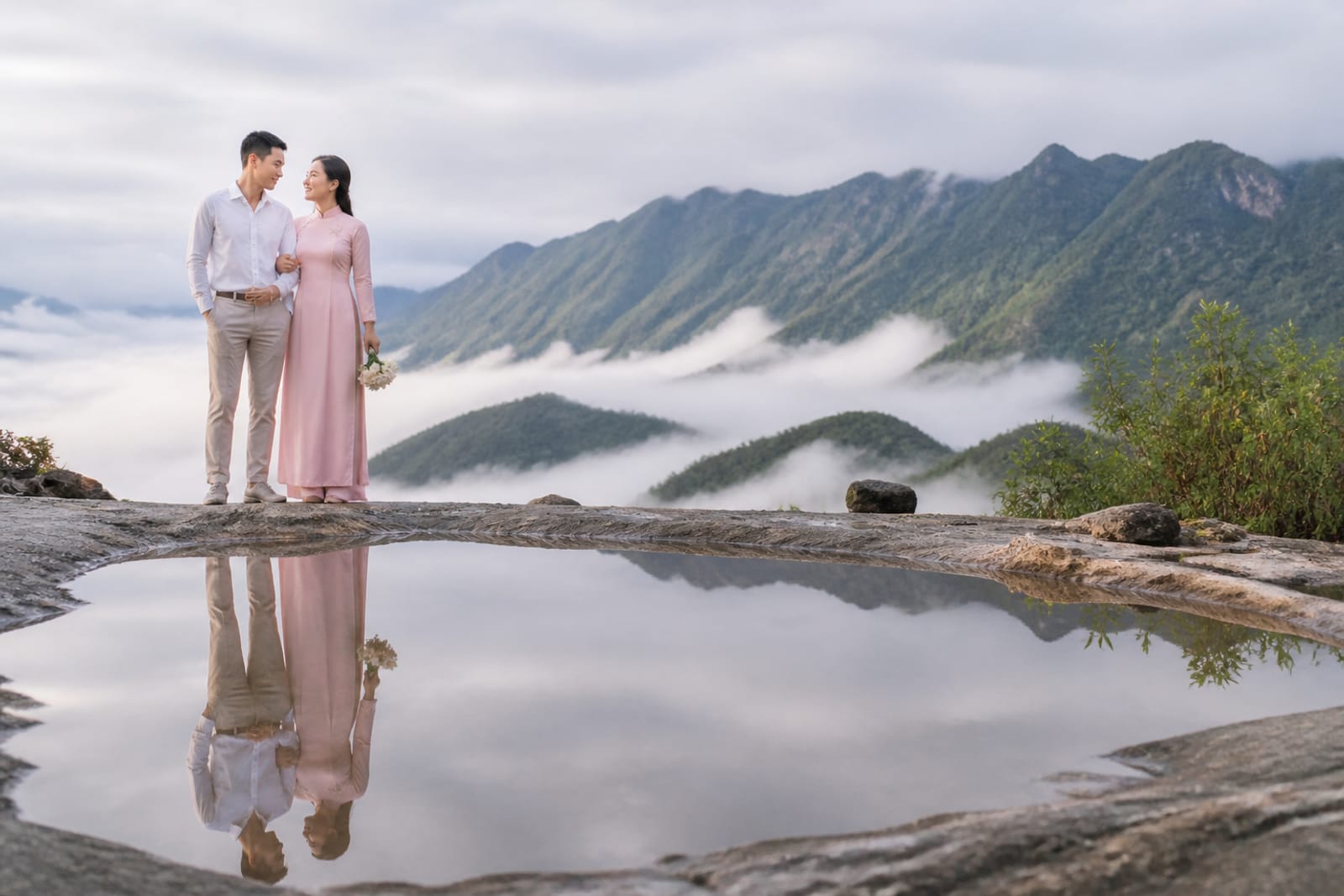
What light and weather actually look like in Ta Phin by season
| Season | Light | Cloud & mist | Rain risk | Why it matters |
|---|---|---|---|---|
| Dec–Feb | Soft, diffused, golden 7–9 am | Heavy morning fog until 9–10 am; clears midday | Low | Flat, forgiving light; limited golden hour; villages hidden in mist for hours |
| Mar–May | Variable; sharp midday, golden early morning/late afternoon | Morning fog; clears by 9 am | Moderate | Golden window is brief; midday sun too harsh for skin tone; afternoon wind |
| Jun–Aug | Bright, harsh midday; weak early/late | Rare; clear skies | High; short afternoon downpours | Best for detail shots; worst for couple portraits; sudden rain halts shoots |
| Sep–Nov | Soft morning light; afternoon glare | Morning mist Sep–Oct; clear by afternoon | High Sep–Oct (typhoon fringe); low Nov | Terraces greenest Sep–Oct; flooding risk; golden hour is short and angled steeply |
The reality: Ta Phin's light is manageable only in Nov–Feb and brief windows in Mar and May. Jun–Aug is bright but unpredictable. Sep–Oct are green but wet and risky. A crew that doesn't know mountain weather will miss the 90-minute window when light is usable and mist has cleared.
---
What you cannot do in Ta Phin (and why it matters for pre-wedding shoots)
Ta Phin is not a multi-outfit, multi-location studio day. You arrive with one outfit, one hairstyle, one makeup look. Changing into an ao dai mid-shoot is not feasible—no private space, no power for styling tools, no water to wash off makeup. Couples who picture "white gown at sunrise, red ao dai at the temple, casual outfit at sunset" cannot execute it here. A single outfit shoot in Ta Phin costs the same as three outfits in Hanoi or Hoi An, yet delivers fewer images and one story. Makeup and hair must be done before you arrive (ideally at your hotel in Sapa town, 1.5 hours away). If your team is not experienced in pre-shoot prep in mountains, you will arrive disheveled.
Hair and makeup also degrade faster in humidity and wind. Outdoor styling in a small village means no touch-ups between shots. Couples expecting "bride-fresh" looks throughout a multi-hour shoot should not book Ta Phin.
---
Comparison: Ta Phin vs. Hanoi, Hoi An, and Ho Chi Minh City for pre-wedding photos
| Destination | Best for | Outfit changes | Light windows | Season | Team availability | Cultural depth |
|---|---|---|---|---|---|---|
| Ta Phin, Sapa | Authenticity, isolation, ethnic textiles | 1 outfit (max 2 if you tolerate risk) | Nov–Feb (60–90 min); Mar, May (sketchy) | Cold, foggy winter best | Very few; vetted mountain photographers | Unmatched; Red Dao textile detail |
| Hanoi | Urban storytelling, temples, French architecture, diversity | 2–3 outfits indoors + outdoors | Year-round (winter grey, summer harsh) | Oct–Nov, Mar–Apr ideal | Abundant; Cáo Studio + competitors | Historic, layered, international feel |
| Hoi An | Ancient town, lanterns, riverfront, ao dai heritage | 2–3 outfits, frequent location changes | Feb–Aug (soft morning, harsh midday) | Feb–Aug dry; Sep–Dec typhoon & flood | Moderate; Cáo Studio travels by appointment | UNESCO old town, merchant-house romance |
| Ho Chi Minh City | Modern, hotel luxury, riverside, speed | 2+ outfits, fast location transitions | Nov–Jan (coolest); Feb–Apr (bright) | Dry Dec–Apr | Extensive; Cáo Studio Saigon base | Skyline, colonial, contemporary |
The takeaway: Ta Phin wins on authenticity and isolation. Everywhere else wins on logistics, outfit flexibility, and team reliability. Cáo Studio operates in Hanoi, Ho Chi Minh City, and Hoi An (by appointment); we do not shoot in Sapa.
---
How to find and vet a photographer in Ta Phin if you choose it
Booking a Ta Phin shoot requires more due diligence than a city session. Ask a prospective photographer:
- How many Ta Phin/Sapa shoots have you directed (not assisted)? A credible answer is 20+. Credentials matter; mountain light discipline is rare.
- Do you scout the route at your planned shoot time? Vetting a photographer who scouts at 6 am in December (your season) is non-negotiable. Generic "golden hour" advice does not apply in fog.
- Who arranges access to Red Dao homes and textiles? Reputable photographers have relationships with village guides or hosts; tourists cannot simply knock on doors. Consent and cultural etiquette are non-negotiable.
- What is your backup plan if mist doesn't clear by 9 am? A photographer who admits they will pause and wait is more honest than one who promises shots "no matter what."
- Where will makeup and hair be done? If the answer is "in the village," ask to see the venue. If it's in Sapa town, confirm transport and timing. A 6 am shoot means a 4 am pickup; makeup starts at 2:30 am. Exhaustion degrades every frame.
- Do you carry backup lighting (reflectors, diffusers, off-camera flash)? Mountain weather changes fast; a crew with no fallback plan will fail.
Check their portfolio for consistency in light quality and pose direction, not just pretty locations. A weak photographer can find Ta Phin's beauty; a strong one directs it.
---
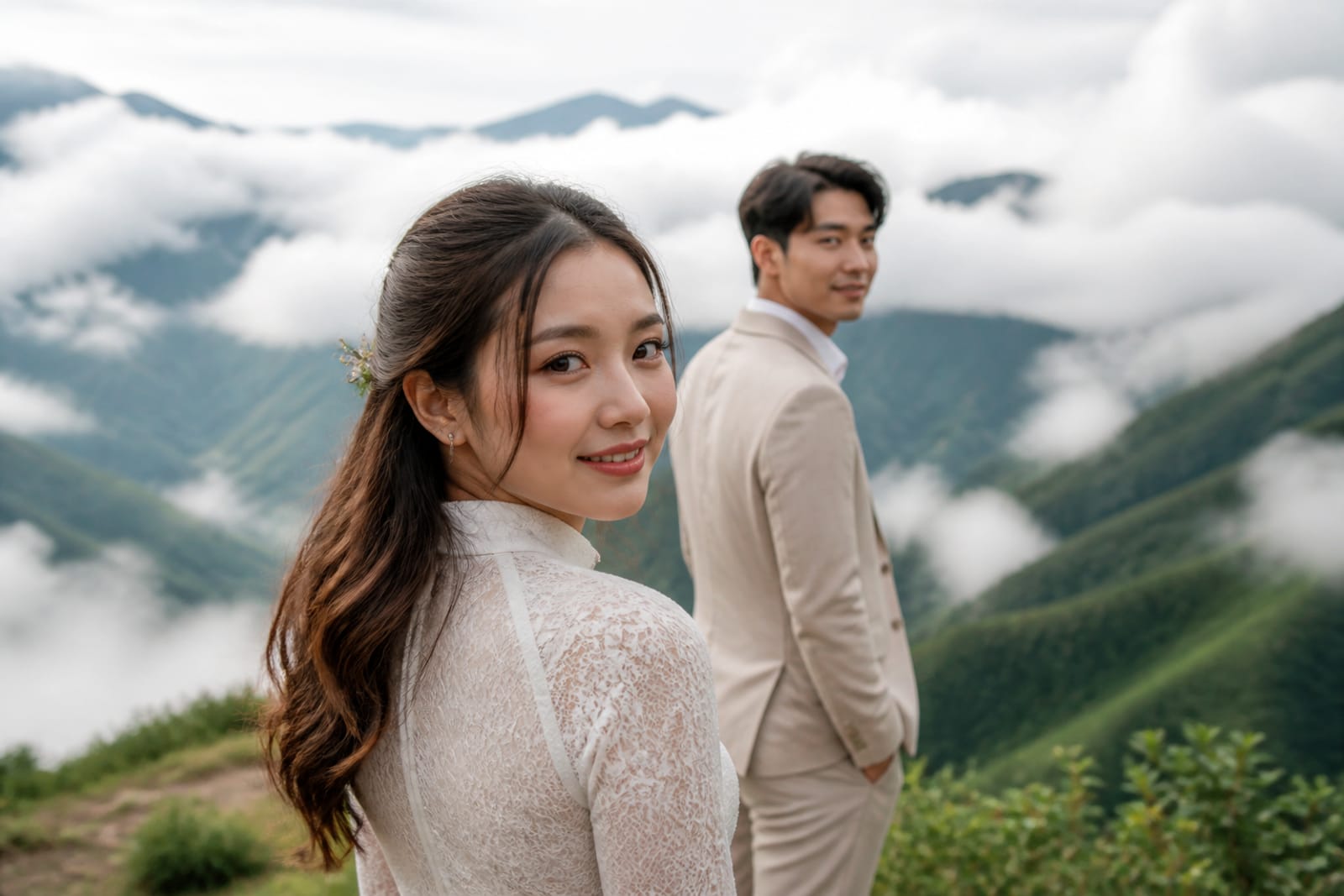
When to book Ta Phin and when to book elsewhere instead
Book Ta Phin if:
- You prioritize cultural authenticity and ethnic textiles over outfit variety.
- You are willing to wake at 2:30–3 am for a 6–7 am shoot to catch light before mist.
- You accept one outfit, one story, and one hairstyle for your entire session.
- You are traveling in Nov–Feb (best weather) and can afford Sapa logistics (transport, accommodation, guide fees).
- You have already shot or will shoot separately in a city (so Ta Phin is a second, complementary session, not your only pre-wedding content).
Book elsewhere (Hanoi, Hoi An, Ho Chi Minh City) if:
- You want two or more outfits with fresh hair and makeup for each.
- You prefer reliability: consistent light, abundant photographers, no weather gambling.
- You value speed: city shoots wrap in one afternoon; Ta Phin consumes a full day including travel.
- You are traveling Mar–Sep or Oct–early Nov (unpredictable or risky weather in Sapa).
- You want a team that can handle unexpected logistics (sudden rain, altered timing) without losing content.
📸 Book on WhatsApp — pre-wedding & elopement
---
What to check before you commit to Ta Phin
Location & access: Confirm the exact village and which homes/temples are accessible. Ask whether the shoot is private (just your team) or if other tourists will be present. Red Dao villages are small; crowds wreck framing.
Permits & cultural etiquette: Ask if the photographer has notified the village headman or arranged guide accompaniment. Unannounced foreign couples in traditional spaces can cause friction. Reputable teams handle this; verify it.
Makeup & hair logistics: Where will you be styled? In Sapa town at 2 am? In a village home without hot water? Accept the answer, don't negotiate it on shoot day.
Outfit count & changes: If you want more than one outfit, ask where and how you will change. "In a restaurant bathroom" is a real answer; decide if that suits you.
Backup weather plan: What happens if mist doesn't clear? Will the photographer shoot anyway (poor results) or pause and reschedule (lost time, extra cost)? Get it in writing.
Transport & timing: Confirm pickup times, vehicle condition, and who pays for guide fees and village entrance donations (if any). Hidden costs surface mid-shoot and ruin morale.
Deliverables & timeline: How many edited images? When are they ready? What format? Ask for examples of edited Ta Phin work, not just raw location shots.
---
Hanoi, Ho Chi Minh City, and Hoi An as proven pre-wedding alternatives
If Ta Phin's constraints outweigh its appeal, consider why Cáo Studio's home cities work: Hanoi offers temples (Tran Quoc, Quan Thanh), ancient streets (Old Quarter, Hang Trong), and soft winter light (Oct–Nov, Mar–Apr) with abundant outfit-change venues. Ho Chi Minh City delivers modernity (rooftop bars, Saigon River, Ben Thanh), riverside walks, and dry-season reliability (Dec–Apr). Hoi An combines UNESCO heritage, lantern-lit nights, and riverside framing with predictable Feb–Aug light. All three allow multiple outfits, professional hair and makeup at your hotel (Cáo Studio's makeup & hair service), and same-day outfit transitions.
For couples seeking cultural authenticity without Ta Phin's logistical friction, Hoi An's ancient town and tailor culture, or Hanoi's French colonial architecture and temple interiors, deliver narrative without the 3 am call time.
---
What a pre-wedding shoot actually includes at Cáo Studio
If you book a pre-wedding session with Cáo Studio in Hanoi, Ho Chi Minh City, or Hoi An, the exact scope—outfits, locations, hair and makeup, editing timeline, image count, film delivery—is confirmed on WhatsApp with your photographer. Every couple's needs differ; there is no fixed package. Discuss your vision (Ta Phin inspiration, Hoi An alternatives, multi-city options) on WhatsApp and we will outline what is realistic in your chosen location and timeframe.
FAQ
Is Ta Phin open year-round for tourists and photo shoots?
Yes, but access and logistics vary by season. Nov–Feb is safest (cold, clear mornings). Jun–Aug brings afternoon rain and occasional road blockage. Sep–Oct is rainy and at risk of typhoon fringe damage. No official closure; local guide availability depends on season.
Can I wear a Western wedding dress in Ta Phin or do I need an ao dai?
Either works, but Ta Phin's cultural setting (Red Dao textiles, traditional homes) favors an ao dai or long, modest dress. A white gown reads as tourist; a burgundy or deep-toned ao dai echoes the village's palette. Discuss with your photographer before booking.
How much does a Ta Phin pre-wedding shoot cost compared to Hanoi or Hoi An?
Costs depend on transport, guide fees, team size, and editing scope—not destination alone. Ask a Sapa-based photographer for a quote; Cáo Studio operates in Hanoi, Ho Chi Minh City, and Hoi An, where we can provide pricing on WhatsApp. Mountain logistics often add expense.
What if mist covers Ta Phin all morning and we don't get clear shots?
Mist is a real risk Nov–Feb. Reputable photographers build buffer time or offer rescheduling. Confirm the photographer's refund or rebook policy before signing. Many couples accept one misty, moody session as part of Ta Phin's character.
Can I combine a Ta Phin shoot with a city shoot in Hanoi or Ho Chi Minh City?
Yes. Many couples do 1–2 days in Sapa, then 2–3 days in a city for outfit variety and reliability. Coordinate with separate photographers or ask a Hanoi-based team (like Cáo Studio) for vendor introductions if you want continuity.
Is a guide mandatory in Ta Phin, and who pays for that?
A guide is strongly recommended for cultural access and logistics. Confirm with your photographer whether one is included, provided separately, or your responsibility. Costs and consent arrangements vary; clarify before arrival.
FAQ
Is Ta Phin open year-round for tourists and photo shoots?
Yes, but access and logistics vary by season. Nov–Feb is safest (cold, clear mornings). Jun–Aug brings afternoon rain and occasional road blockage. Sep–Oct is rainy and at risk of typhoon fringe damage. No official closure; local guide availability depends on season.
Can I wear a Western wedding dress in Ta Phin or do I need an ao dai?
Either works, but Ta Phin's cultural setting (Red Dao textiles, traditional homes) favors an ao dai or long, modest dress. A white gown reads as tourist; a burgundy or deep-toned ao dai echoes the village's palette. Discuss with your photographer before booking.
How much does a Ta Phin pre-wedding shoot cost compared to Hanoi or Hoi An?
Costs depend on transport, guide fees, team size, and editing scope—not destination alone. Ask a Sapa-based photographer for a quote; Cáo Studio operates in Hanoi, Ho Chi Minh City, and Hoi An, where we can provide pricing on WhatsApp. Mountain logistics often add expense.
What if mist covers Ta Phin all morning and we don't get clear shots?
Mist is a real risk Nov–Feb. Reputable photographers build buffer time or offer rescheduling. Confirm the photographer's refund or rebook policy before signing. Many couples accept one misty, moody session as part of Ta Phin's character.
Can I combine a Ta Phin shoot with a city shoot in Hanoi or Ho Chi Minh City?
Yes. Many couples do 1–2 days in Sapa, then 2–3 days in a city for outfit variety and reliability. Coordinate with separate photographers or ask a Hanoi-based team (like Cáo Studio) for vendor introductions if you want continuity.
Is a guide mandatory in Ta Phin, and who pays for that?
A guide is strongly recommended for cultural access and logistics. Confirm with your photographer whether one is included, provided separately, or your responsibility. Costs and consent arrangements vary; clarify before arrival.
Ao dai, makeup, hair and a local photographer in Hanoi or Saigon — one WhatsApp message.