/pre-wedding-photoshoot
Is Ta Van village good for pre-wedding photos? Pros, cons, alternative
Ta Van village in Mu Cang Chai (Yen Bai province, north Vietnam) sits 1,500 m high with dramatic rice terraces and minority Hmong settlements—photogenic, but fragile for pre-wedding work. The real light window is 6:00–7:30 am (side-lit terraces, soft sky) or 5:00–5:45 pm (long shadows, mist), each lasting 45 minutes before grey clouds or flat noon glare. Reach it by motorbike or driver (2.5 hours from Hanoi, road unpaved in sections, hairpin turns); the 45-minute golden window costs half a day in travel. Outfits—ao dai or dresses—risk mud, dust and cold wind. Season matters: terraces are water-filled (mirror-like) May–June, green July–August, and golden September–early October; November–March is grey, drizzly. Cáo Studio offers pre-wedding shoots in Hanoi, Ho Chi Minh City and Hoi An where light is reliable, outfits stay clean, and you're back to your hotel by lunch—book Ta Van only if you accept travel fatigue and conditional light in exchange for isolation. ---
Can Ta Van deliver the shots a pre-wedding needs?
Ta Van excels at one thing: isolation and scale. The terraced rice fields feel like a private backdrop; no crowds, no stalls, no temple gates. If your brief is "us alone in a vast landscape," Ta Van delivers. The problem is framing. Wide shots (you small against fields) read as landscape, not couple portraits. Medium shots (tight on you two) waste the location; you'd shoot the same frame in a Hanoi park. Detail work (hands, rings, fabric close-up) fights the mud and wind. Cáo Studio directs couple photoshoots by working wide first, then medium, then detail—Ta Van's extreme scale forces you to choose: either the place dominates (and you're incidental), or you dominate (and why travel 2.5 hours?). A director who understands framing knows when a location's glory becomes a liability.
📸 Book on WhatsApp — pre-wedding photoshoot
What makes the light at Ta Van unreliable?
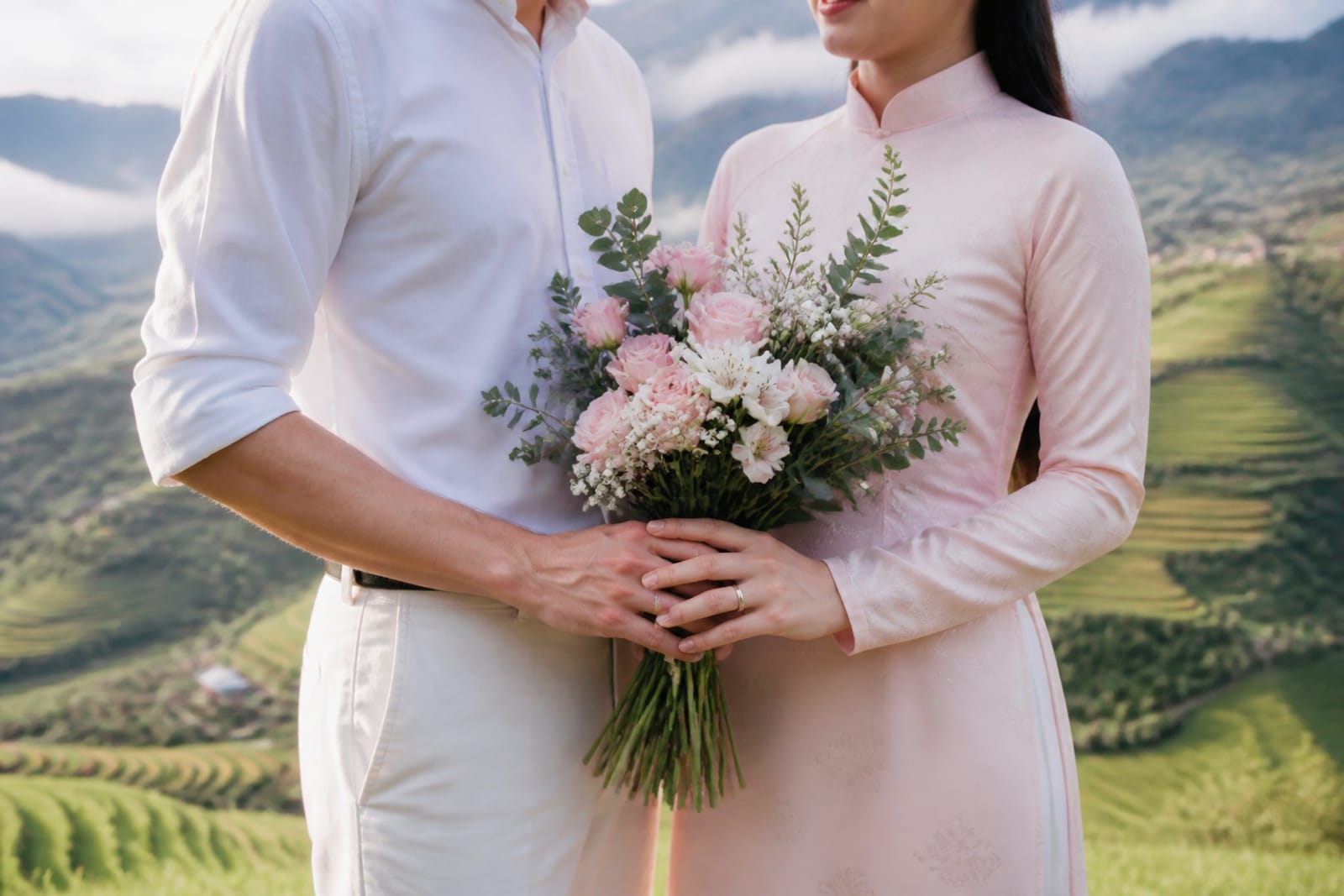
Ta Van sits in Yen Bai's mountain cloud belt. From November to March, fog rolls in by 7:00 am and doesn't lift until 10:00 am—if at all on grey days. April–May is transitional; sun appears but light is harsh at 7:30 am. June–August: afternoon thunderstorms stack fast, and morning mist lingers past 7:00 am on many days. September–October (the "golden" window) is most predictable, but still moody—sunrise comes late (6:30 am), and you're racing against cloud build-up by 7:30 am. The 45-minute sweet spot is genuine, but clouds don't read calendar. A shoot at Hoi An in February offers soft river light from 6:30–8:30 am, no mist, and ancient stone streets that work even if light softens. Hanoi parks and lakes offer 60-minute windows, repeatable. Ta Van's light is dramatic when it cooperates; it's a gamble when it doesn't.
Season table: When to shoot Ta Van (and when to choose elsewhere)
| Season | Terrace state | Light window | Weather risk | Best alternative |
|---|---|---|---|---|
| Nov–Jan | Grey/dry | 6:30–7:15 am (short) | Fog until 8:30 am, drizzle | Hanoi lakeside, Hoi An Ancient Town |
| Feb–Mar | Dry | 6:15–7:30 am | Improving; still overcast 40% of days | Central coast (Hoi An, Da Nang) |
| Apr–May | Water-filled (mirror) | 6:00–7:00 am | Harsh light by 7:15 am, unpredictable clouds | Hoi An (softer light, longer window) |
| Jun–Aug | Green, lush | 5:45–7:00 am | Afternoon storms, morning mist lingers | Studio day + Hanoi afternoon (makeup included) |
| Sep–Oct | Golden (harvest) | 5:50–7:30 am | Most reliable; still 30% cloud chance | Book Ta Van, but have indoor backup |
| Conclusion | Golden is most reliable, but a 45-minute window is tighter than Hanoi (60 min) or Hoi An river (70 min); choose Ta Van only if season is Sep–Oct and you accept short light. |
How does travel and outfit logistics work at Ta Van?
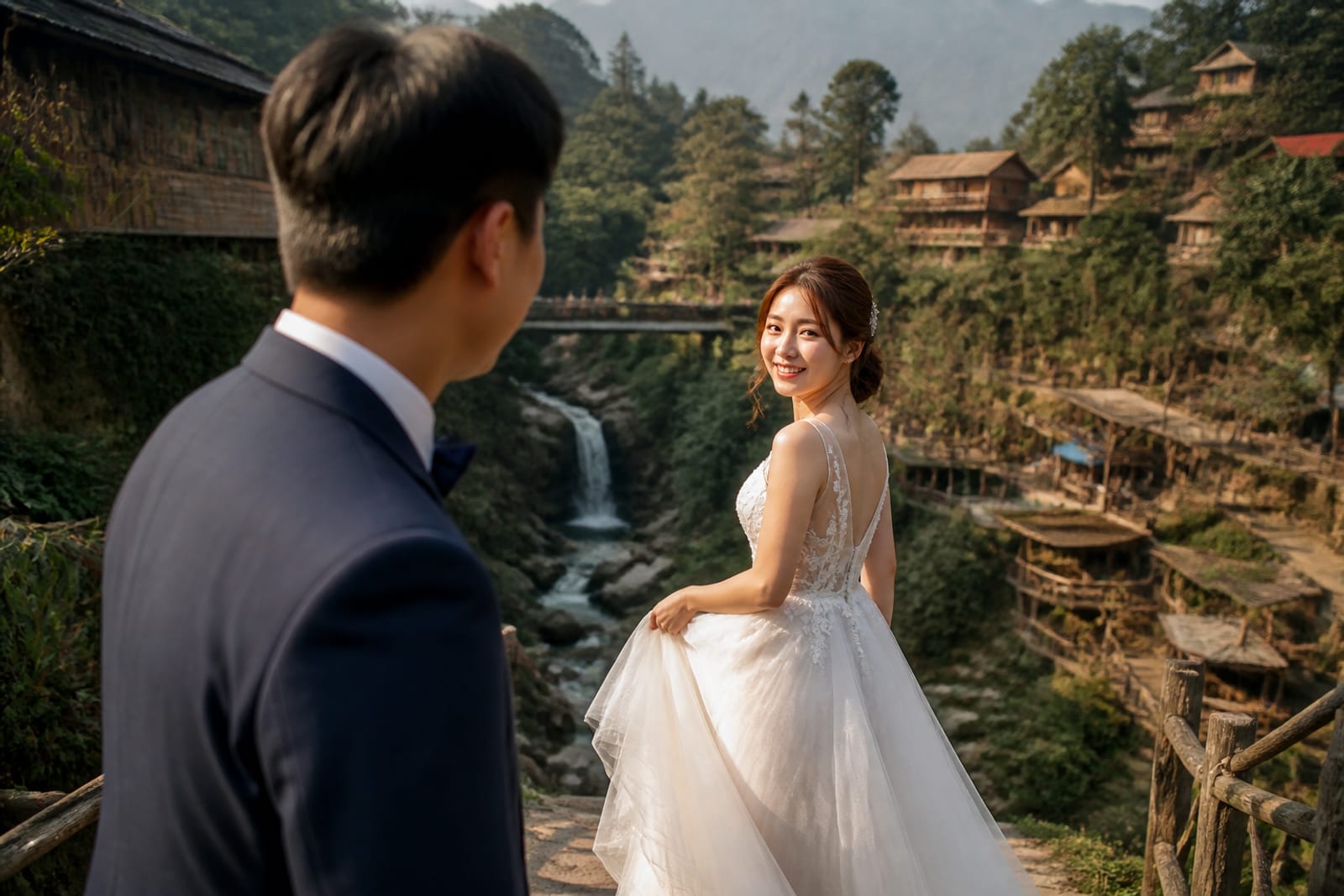
A Ta Van session starts 4:00–4:30 am: driver picks you up from Hanoi, 2.5-hour motorbike or car ride on a winding mountain road (not a highway). Arrive 6:45 am, catch light from 7:00–7:45 am. Outfit choices shrink in mountains: ao dai drags in mud and rice paddies; Western dresses and suits collect dust; walking downhill in heels risks falls. Hair and makeup applied in Hanoi (no studio on-site) must survive two-hour travel—sweat, wind, helmet hair if you bike. Shoes get caked; fabric hems wet. A mid-session outfit change is logistically hellish (nowhere to change, no facilities). Post-shoot, you're muddy and damp by 8:30 am, facing a 2.5-hour ride home. By 11:00 am, you're back in Hanoi. By contrast, pre-wedding shoots in Hanoi start at 6:00 am from your hotel—no drive, makeup applied on-site, multiple outfit swaps in the car between locations, you're clean and breakfasted by 9:00 am. Hoi An sessions run similarly: walk from your hotel at sunrise, change clothes at a prepared base, done by 10:00 am. Ta Van's travel cost isn't money (it's driver + fuel, ask on WhatsApp for a quote)—it's comfort, outfit integrity, and a second outfit becoming impractical.
What are the real alternatives to Ta Van?
If you want isolation and landscape: Hoi An's rice terraces lie 15 minutes outside town (flat, walkable, water-filled Feb–Jul), with the same terrace feel but 20 minutes of usable light each direction (longer window, no mountain fog). The trade-off is less dramatic scale; you're not alone, but the framing works better. If you want culture and scale: Hanoi's ao dai photoshoot in Tran Quoc Pagoda or the Red River dikes offers ethnic texture (water buffalo, local fishermen, traditional architecture) with a 60-minute light window and zero travel fatigue. If you want simplicity: a couple photoshoot in Hanoi's French Quarter or West Lake trades landscape drama for reliable light, professional backdrops, and outfit changes between four locations in one morning. If you're torn: book a studio pre-wedding session in Hanoi or Hoi An first (tested light, tested locations, fewer variables), then add a second Ta Van session later if the couple wants the gamble—knowing the team, camera, and director's framing improves odds of a usable result.
What to check before booking a Ta Van pre-wedding shoot
- Season confirmation: Is your date Sep–Oct? If Nov–Mar, confirm the photographer has a fog-backup plan (indoor venue, or rescheduling clause).
- Outfit realism: Will your ao dai be rentable locally, or flown in? Can it handle mud and dust? Is backup outfit packed?
- Makeup & hair base: Where is it applied? Hanoi (then travel) or on-site? If on-site, is a stylist included in the booking, or DIY?
- Light guarantee: Ask the photographer for their 45-minute window (e.g., "6:00–6:45 am") and what happens if fog extends past that.
- Backup plan: If light fails (clouds, fog), are you reshoot-able same day, or rescheduled? Cáo Studio's pre-wedding shoots include a reschedule clause on WhatsApp.
- Delivery timeline: How many photos? Edited in 48 hours or longer? Is a film included? Confirm exact inclusions on WhatsApp before booking.
- Travel fatigue reality: Are you alert and smiling after 2.5 hours on a mountain road at 5:00 am? Test it; don't assume.
---
Is Ta Van worth the logistics?
Ta Van is worth a dedicated travel day (not your only pre-wedding session) if you're committed to Sep–Oct light, you accept a 45-minute window, and isolation matters more than comfort. If you want reliability, multiple outfit changes, and breakfast after, book Hanoi or Hoi An first—both are tested by Cáo Studio's team and deliver in 48 hours. If you want both: start with a Hanoi pre-wedding shoot (two outfits, four locations, assured light), then add Ta Van as a second adventure later, knowing the couple, photographer, and director already work together. Contact us on WhatsApp to compare options and lock a date.
---
FAQ
How early do we need to wake up for a Ta Van shoot?
4:00–4:30 am pickup from Hanoi, 2.5-hour drive, arriving 6:45 am to catch 7:00–7:45 am light. You're home by 11:00 am, but the wake time is hard.
Will our ao dai stay clean in muddy rice fields?
No. Mud cakes hems, dust settles on fabric, and walking downhill risks tears. Plan one outfit change mid-session, or expect cleaning costs post-shoot.
What if it's foggy the morning we shoot?
Fog commonly lingers until 8:30–9:00 am Nov–Mar. Ask your photographer for a rescheduling clause and a backup indoor location (village building, homestay). Sep–Oct is safest.
Is Ta Van better than Hoi An for pre-wedding photos?
Ta Van offers isolation; Hoi An offers longer, more reliable light. Hoi An is safer; Ta Van is more dramatic. Choose Ta Van if Sep–Oct and isolation matters; choose Hoi An if you want repeatable light and walkable logistics.
Can we shoot Ta Van without a professional photographer?
Yes, but light fades fast (45 min), terrain is steep, and outfits risk damage. A director familiar with mountain light and quick framing is worth it; ask us on WhatsApp for guidance on local photographers or book via Cáo Studio for pre-wedding shoots in Hanoi or Hoi An as a tested alternative.
FAQ
How early do we need to wake up for a Ta Van shoot?
4:00–4:30 am pickup from Hanoi, 2.5-hour drive, arriving 6:45 am to catch 7:00–7:45 am light. You're home by 11:00 am, but the wake time is hard.
Will our ao dai stay clean in muddy rice fields?
No. Mud cakes hems, dust settles on fabric, and walking downhill risks tears. Plan one outfit change mid-session, or expect cleaning costs post-shoot.
What if it's foggy the morning we shoot?
Fog commonly lingers until 8:30–9:00 am Nov–Mar. Ask your photographer for a rescheduling clause and a backup indoor location (village building, homestay). Sep–Oct is safest.
Is Ta Van better than Hoi An for pre-wedding photos?
Ta Van offers isolation; Hoi An offers longer, more reliable light. Hoi An is safer; Ta Van is more dramatic. Choose Ta Van if Sep–Oct and isolation matters; choose Hoi An if you want repeatable light and walkable logistics.
Can we shoot Ta Van without a professional photographer?
Yes, but light fades fast (45 min), terrain is steep, and outfits risk damage. A director familiar with mountain light and quick framing is worth it; ask us on WhatsApp for guidance on local photographers or book via Cáo Studio for pre-wedding shoots in Hanoi or Hoi An as a tested alternative.
Ao dai, makeup, hair and a local photographer in Hanoi or Saigon — one WhatsApp message.