/pre-wedding-photoshoot
Japanese Covered Bridge Wedding Photos: Best Light & Timing
The Japanese Covered Bridge is best photographed at sunrise (5:30–6:30 a.m.) or during golden hour before sunset—when soft, directional light flatters skin and minimizes crowds. The bridge sits inside Hoi An Ancient Town, which requires an entrance ticket and fills with tour groups by 9 a.m.; shooting before opening or as the town closes around dusk gives you clean frames. Sessions typically run 45–90 minutes depending on outfit changes and location range. Cáo Studio – Makeup & Photoshoot books pre-wedding shoots at the bridge and across Hoi An, handling permits and timing logistics; team travels to Hoi An by appointment. Key trade-off: early morning is quietest but light is cool-toned; sunset is warmer but vendors linger. Weather shifts rapidly Sep–Dec (rainy season; worst Oct–Nov with flooding); Feb–Apr is dry and mild. Confirm exact session timing, outfit count, and included locations on WhatsApp before booking. ---
When should you shoot at the Japanese Covered Bridge—sunrise or sunset?
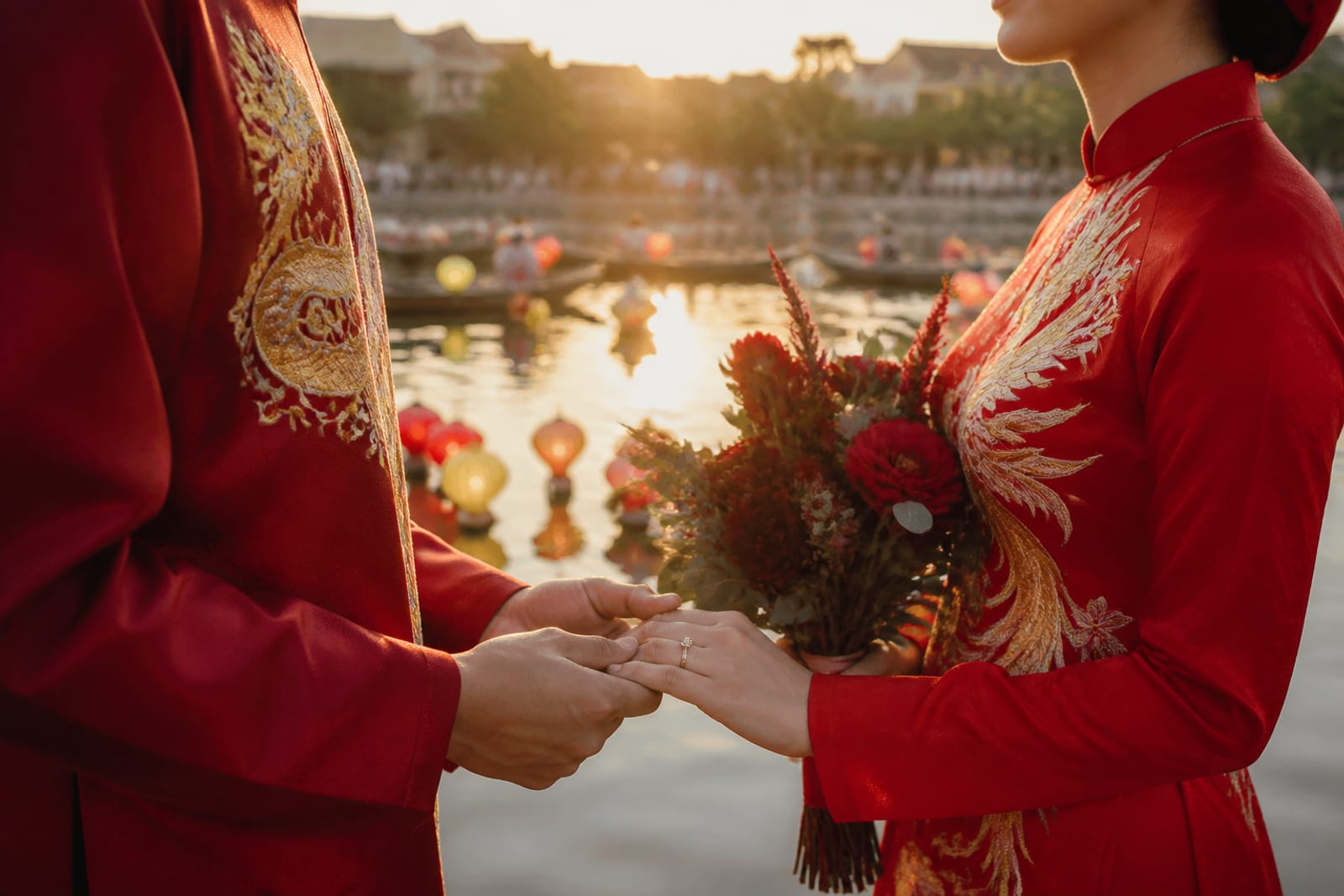
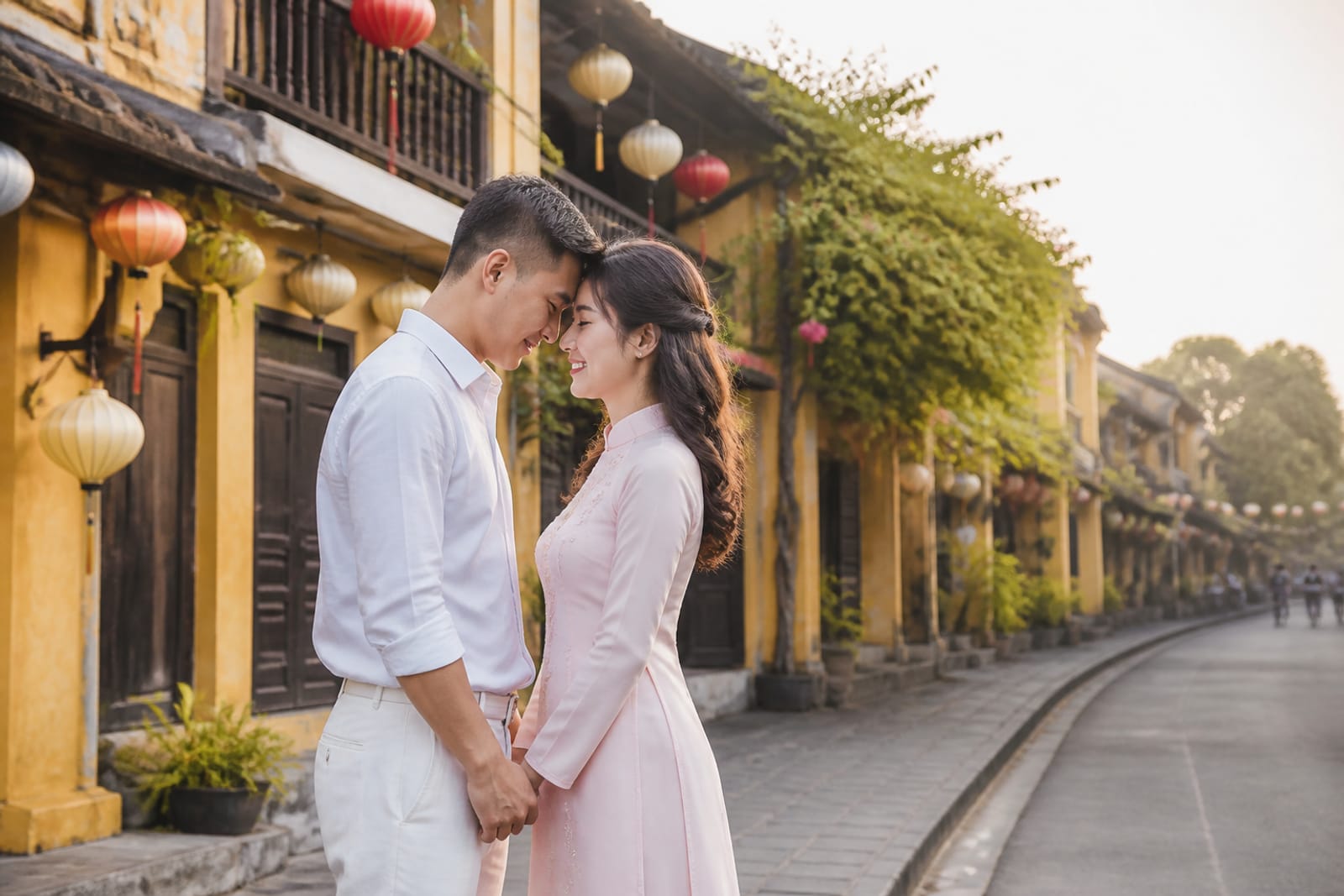
Sunrise (roughly 5:30–6:30 a.m., depending on the season) delivers the quietest conditions and cool, directional light that separates you from the water and architecture. The town is locked; you'll need a guide or photographer familiar with early access. Light is softer and skimming, reducing harsh shadows on faces. Sunset (dusk, around 6:30–7:30 p.m. in Feb–Apr) brings warm, honey tones and lantern glow—more romantic, but vendors, locals, and late-day tourists still populate the bridge. Both work; sunrise suits minimalist, serene aesthetics; sunset suits rich, moody romance. Choose based on your outfit color and the mood you want to convey—cooler tones (whites, pastels, ao dai silk) shine at sunrise; warmer tones (golds, burgundies, jewel silks) sing at sunset.
📸 Book on WhatsApp — pre-wedding photoshoot
How do permits and crowd management affect your shoot?
The Ancient Town requires a ticket for entry; photographers and couples need access before or after official hours to avoid crowds and the permit complications of shooting inside paid zones. Many licensed photographers know gatekeepers and timing windows—a real advantage. Shooting at sunrise means negotiating early access (typically 5:00–6:00 a.m., before the ticket office opens); sunset means timing around the last entry wave (usually 5:00 p.m.) and shooting as crowds thin. If you book independently (not through a studio), expect friction: gatekeepers may ask for permits or stop you mid-session. Cáo Studio's Hoi An shoots handle this logistically—the team arranges timing and knows which hours and gates work. Budget an extra 15–30 minutes for access negotiations if shooting solo or with an unfamiliar photographer.
Why does the rainy season (Sep–Dec) change your shooting strategy?
From Sep to Dec, Hoi An enters monsoon season; Oct–Nov is peak flood risk, with water occasionally rising into the Ancient Town and making early-morning access treacherous. Rain comes in short, heavy bursts. Feb–Apr is dry, mild (around 20–28°C), and offers consistent light. May–Aug is dry but very hot (35°C+); sunrise becomes essential to avoid heat stress and blown-out skin tones. If you're traveling Sep–Dec, confirm the forecast 2–3 days before; some weeks are clear, others are washouts. Flooding doesn't always close the bridge, but wet streets, puddles, and grey skies flatten light and make ao dai hems soggy. Reschedule if the forecast shows heavy rain; a day's delay often yields clear morning light. For Dec–Jan, expect cool (15–18°C), sometimes drizzly conditions—layers matter, and light is often soft and diffused (fewer hard shadows, but duller tones).
Should you shoot in an áo dài, Western wedding dress, or both?
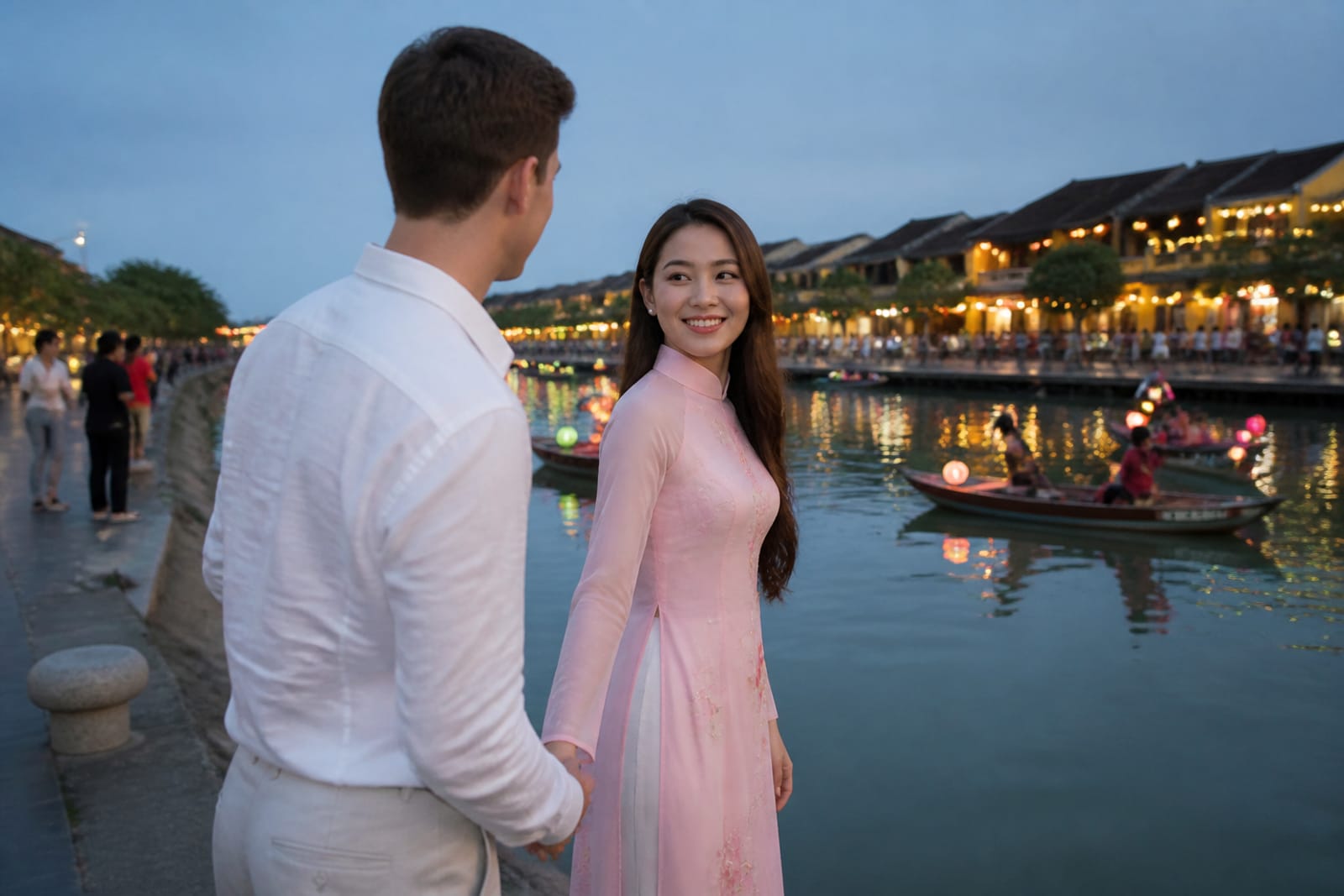
Áo dài (especially silk, in jewel tones or white) looks most striking in golden light and frames beautifully against the bridge's wood and water. It's part of Hoi An's cultural context, respected by locals, and photographs with rich texture. Western dresses (especially heavy fabrics like satin or tulle) show light direction more dramatically in sunrise; at sunset, they risk overexposure in bright silk. Many couples choose áo dài for the bridge itself, then change into a Western dress for a second location (riverside temple, rice fields, lantern-lit old town streets). This requires dedicated time and a prepared photographer—prep outfits, undergarments, and touch-up makeup ahead. Cáo Studio's pre-wedding packages confirm outfit count and change logistics on WhatsApp; clarify whether makeup and hair touch-ups between outfits are included. Undergarments and footwear matter: áo dài sits high on the waist, so avoid thick bra straps; the bridge has no railing and wet wood can be slippery—wear comfortable, grip-friendly shoes (easily removed for barefoot shots).
What does a typical Japanese Covered Bridge pre-wedding session look like—and what to check before booking?
A session typically runs 60–90 minutes. You arrive with the photographer (or pick up a guide 30 minutes early if shooting at sunrise). First 15–20 minutes: walk and scout framing, adjust poses, nail the light. Main shoot: 40–60 minutes of couple poses, solo close-ups, detail shots (hands, jewelry, flowers, ao dai fabric, bridge details). Buffer: 10 minutes for outfit changes or location moves (e.g., stepping to the river bank or into a nearby temple). Makeup and hair are either done beforehand (at your hotel or a studio) or the photographer arrives with a makeup artist—confirm this before booking. Post-session: you'll receive edited images within a timeframe specified on WhatsApp (varies by package).
Before you book, confirm these details on WhatsApp:
- Timing & access: Is the session before Ancient Town opens (sunrise) or during/after hours (sunset)? Who arranges early-access or permit logistics?
- Outfit count: How many outfit changes are included? Are ao dài rental and makeup/hair services add-ons or bundled?
- Location scope: Is the shoot only at the bridge, or does it include nearby spots (lantern maker's workshop, riverside, local temples)?
- Editing & delivery: How many edited images, in what format, and by what date?
- Weather policy: What happens if it rains heavily? Can you reschedule free, or is there a fee?
- Photographer experience: Has the photographer shot at this bridge before? Do they have a Hoi An guide or know the early-access window?
---
| Timing Option | Best For | Light & Season | Crowd & Access | Why It Works |
|---|---|---|---|---|
| Sunrise (5:30–6:30 a.m.) | Serene, minimalist aesthetics; cool tones (white, pastels) | Soft, cool-toned; Feb–Apr ideal; works in light rain | Nearly empty; requires early access logistics | Clean frames; directional light shapes faces and fabric |
| Golden hour sunset (30 min before dusk) | Romantic, moody; warm tones (gold, burgundy, jewel silks) | Warm, honey-toned; all seasons except heavy rain | Vendors linger; ticket office closing; semi-crowded | Rich color, lanterns light around dusk; familiar access |
| Midday (10 a.m.–3 p.m.) | Budget-conscious; high-energy couples | Harsh overhead light; strong shadows under eyes | Crowded; tour groups constant | Cheapest timing; not recommended for intimate feel |
| Early evening (4:30–6:00 p.m., before dusk) | Compromise: moderate crowds, warming light | Soft-to-warm; Feb–Aug best; Sep–Dec risk of rain | Thinning crowds; no ticket hassle | Bridges midpoint: some light direction, fewer people |
---
How does booking with a local studio differ from hiring a solo photographer?
Local studios (like Cáo Studio – Makeup & Photoshoot, which books Hoi An shoots by appointment) handle permits, early access, makeup/hair coordination, and often include outfit rental and post-session styling. Teams know the bridge's light patterns and gatekeepers. Rates reflect the coordination overhead. Turnaround for editing is often 2–4 weeks.
Solo photographers working Hoi An may cost less upfront but require you to negotiate access, arrange your own makeup, and confirm their familiarity with the site. Risk: a photographer unfamiliar with early-access windows or local sensitivities may struggle to deliver clean frames or find you shooting illegally.
Choose a studio if you want a seamless, stress-free day and are willing to book ahead (studios require appointments). Choose a solo photographer if you're flexible, budget-conscious, and comfortable handling logistics yourself—but vet their Hoi An portfolio first.
💄 Makeup & hair at your hotel | 🌸 See the lookbook
---
What about pairing the bridge with other Hoi An locations in one session?
The Japanese Covered Bridge sits central in the Ancient Town; a 60–90 minute session can include the bridge plus one nearby secondary spot: a temple courtyard (Phung Hung or Quan Thang temples, 5–10 min walk), the lantern maker's shop (quiet, morning-lit), riverside benches, or rice paddies (15 min outside town, green Feb–Apr). Adding a second location extends the session by 30–45 minutes and requires clear timing to catch light in both places. Cáo Studio's pre-wedding photoshoot packages can be tailored for multi-location days; confirm site access and travel time on WhatsApp. Avoid trying to cover 3+ locations in one session—light shifts, energy wanes, and ao dài fabric gets tired. One stellar location (the bridge, well-lit and unhurried) beats a rushed tour.
---
What to check before you book
- Photographer's Hoi An experience: Ask to see a portfolio with 3+ bridge sessions. Do the images show clean backgrounds and well-managed light?
- Access & timing: Confirm whether sunrise, sunset, or mid-afternoon suits your travel schedule—and whether the photographer handles early access or permits.
- Outfit & makeup: Will the photographer supply, rent, or expect you to bring ao dài and Western dress? Is makeup included, or is it a separate booking with hotel-based makeup service?
- Inclusions: How many edited images, what file format (digital, prints, album), and what's the delivery timeline?
- Rain policy: Sep–Dec brings unpredictable weather—can you reschedule free if conditions are unsafe?
- Meeting point & duration: Where do you meet (your hotel, Ancient Town gate, bridge)? How long is the actual session, and when do you review proofs?
📸 Book on WhatsApp — pre-wedding photoshoot
---
Related shoots at Cáo Studio
Pre-wedding photography doesn't end at the bridge. Cáo Studio also offers áo dài photoshoots (city or rural Hoi An), couple & family sessions, and proposal & anniversary packages. Many couples pair a bridge session with a destination elopement or intimate ceremony shoot. See the full range in the lookbook, and check pricing & packages for multi-location, multi-day options.
For Hanoi and Ho Chi Minh City pre-wedding work, visit Cáo Studio Hanoi and Cáo Studio Saigon pages.
---
FAQ
Can we shoot at the Japanese Covered Bridge without hiring a photographer?
Yes—the bridge is in a public, ticketed area. You'll need an entrance ticket for Hoi An Ancient Town. For uncluttered photos, arrive before 7 a.m. or after 5:30 p.m., use a tripod and self-timer, and be respectful of locals and vendors. Quality and framing depend on your phone or camera skills.
What's the best month to shoot wedding photos at the bridge?
Feb–Apr offers dry, mild weather (20–28°C), green rice fields nearby, and consistent light. May–Aug is hot but dry; sunrise becomes essential. Sep–Dec is rainy; Oct–Nov risks flooding. Tet (late Jan–mid Feb) closes many services—avoid.
Do we need a permit to shoot a pre-wedding session at the bridge?
Professional photographers and couples shooting in a commercial capacity (hired photographer, styled session) should clarify permit needs with their photographer or studio. Cáo Studio handles this when you book. Tourist snapshots and small groups typically don't require permits, but gatekeepers have discretion.
How long does a typical session take, and is it just at the bridge or other spots too?
Most sessions run 60–90 minutes. A bridge-only session focuses entirely on that landmark and nearby river views. Multi-location sessions (bridge + temple + rice fields) extend to 2+ hours and require more travel time. Confirm exact scope and locations when booking on WhatsApp.
What should we wear—ao dài, a Western wedding dress, or both?
Áo dài is culturally fitting, photogenic in warm light, and iconic to Hoi An; Western dresses show light direction and texture beautifully at sunrise. Many couples shoot both (one outfit per location or per session). Cáo Studio can arrange ao dài rental; confirm whether it's included or an add-on when booking.
What happens if it rains on our shoot day?
Light rain often adds mood. Heavy rain (common Oct–Nov) can flood the Ancient Town and make access unsafe. Ask your photographer about a reschedule policy—reputable studios offer a free reschedule if conditions are unsafe; confirm this before paying.
FAQ
Can we shoot at the Japanese Covered Bridge without hiring a photographer?
Yes—the bridge is in a public, ticketed area. You'll need an entrance ticket for Hoi An Ancient Town. For uncluttered photos, arrive before 7 a.m. or after 5:30 p.m., use a tripod and self-timer, and be respectful of locals and vendors. Quality and framing depend on your phone or camera skills.
What's the best month to shoot wedding photos at the bridge?
Feb–Apr offers dry, mild weather (20–28°C), green rice fields nearby, and consistent light. May–Aug is hot but dry; sunrise becomes essential. Sep–Dec is rainy; Oct–Nov risks flooding. Tet (late Jan–mid Feb) closes many services—avoid.
Do we need a permit to shoot a pre-wedding session at the bridge?
Professional photographers and couples shooting in a commercial capacity (hired photographer, styled session) should clarify permit needs with their photographer or studio. Cáo Studio handles this when you book. Tourist snapshots and small groups typically don't require permits, but gatekeepers have discretion.
How long does a typical session take, and is it just at the bridge or other spots too?
Most sessions run 60–90 minutes. A bridge-only session focuses entirely on that landmark and nearby river views. Multi-location sessions (bridge + temple + rice fields) extend to 2+ hours and require more travel time. Confirm exact scope and locations when booking on WhatsApp.
What should we wear—ao dài, a Western wedding dress, or both?
Áo dài is culturally fitting, photogenic in warm light, and iconic to Hoi An; Western dresses show light direction and texture beautifully at sunrise. Many couples shoot both (one outfit per location or per session). Cáo Studio can arrange ao dài rental; confirm whether it's included or an add-on when booking.
What happens if it rains on our shoot day?
Light rain often adds mood. Heavy rain (common Oct–Nov) can flood the Ancient Town and make access unsafe. Ask your photographer about a reschedule policy—reputable studios offer a free reschedule if conditions are unsafe; confirm this before paying.
Ao dai, makeup, hair and a local photographer in Hanoi or Saigon — one WhatsApp message.