/pre-wedding-photoshoot
Lantern Night Pre-Wedding Photos in Hanoi: Light & Logistics
Lantern night pre-wedding photos in Hanoi work best in autumn (Oct–Nov) and cool winter (Dec–Feb), when light is soft and crowds are manageable at dusk. The Hoan Kiem Lake area and Old Quarter lantern streets offer amber, directional light—ideal for walking, looking at each other, and letting the frame build around you rather than posing in front of monuments. Cáo Studio brings outfit, makeup artist, and photographer in one booking, so styling stays clean through the shoot and you move freely between spots. Sessions run 2–3 hours, typically starting 30 minutes before lantern lights activate (usually around 5:30–6 pm in autumn, earlier in winter). Expect crowds, narrow streets, and weather shifts; the team directs you to walk into available light rather than hunting for an empty frame. Edited photos and a short vertical film arrive within 48 hours. Check season, ao dai fit under layers, and whether you want lanterns as backdrop or lantern light as the story. ---
Why Does Lantern Light Suit Pre-Wedding Frames?
Lantern light is warm, diffuse, and flattering—it wraps around faces rather than creating hard shadows or requiring reflectors. Unlike midday sun or flash, it feels cinematic and intimate. The amber glow complements ao dai silk and skin tone across any ethnicity. Hanoi's lantern districts activate at dusk, when daylight still frames the sky and lanterns begin to glow; shooting in that 15–30 minute window gives you both natural and artificial light in one frame. One team (photographer + stylist + makeup artist) stays mobile through this transition, adjusting your position and expression as light shifts—not standing still while three separate vendors coordinate. The result: frames that feel like a story, not a posed shoot.
📸 Book on WhatsApp — pre-wedding photoshoot
When in the Year Does Lantern Light Work Best?
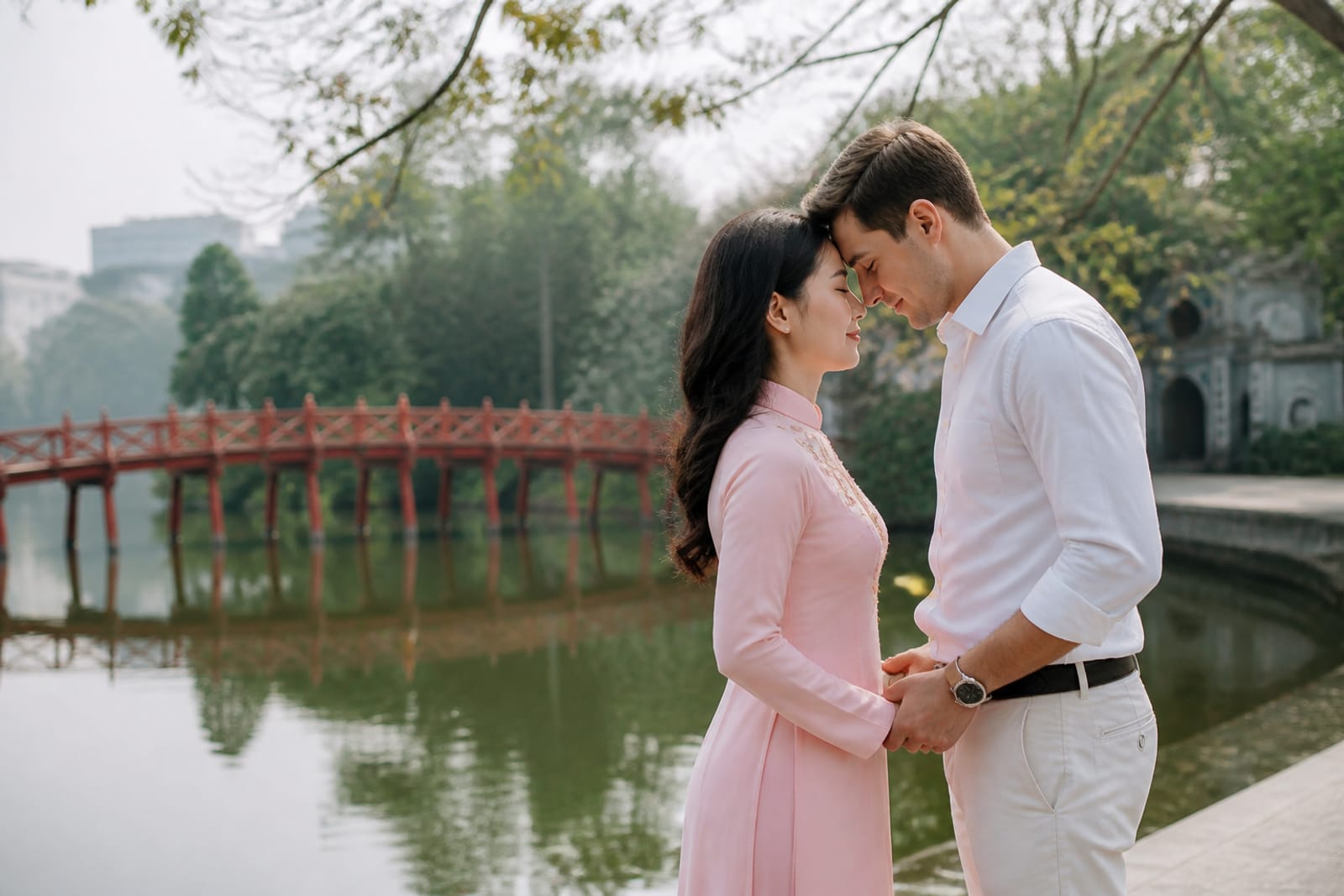
Hanoi's autumn (Oct–Nov) is the most reliable: dry, mild air (18–25°C), soft directional light, and fewer typhoon remnants than summer. Lanterns glow clearly against a peachy sky at 5:30–6 pm, and you can move comfortably between Old Quarter alleys. Winter (Dec–Feb) is cooler (10–20°C) and often overcast or drizzly; lantern light becomes moodier but hazier. Spring (Mar–Apr) brings humidity and haze, softening lantern glow but also reducing contrast. Summer (May–Sep) is hot, crowded, and prone to afternoon downpours that close streets or dampen ao dai silk. Tet (late Jan–mid Feb) shuts down many services and draws peak crowds days before. Book autumn if available; winter works if you accept muted tones and accept drizzle risk.
| Season | Light Quality | Crowds | Temperature | Rain Risk | Why Choose |
|---|---|---|---|---|---|
| Oct–Nov (autumn) | Soft, warm directional | Moderate | 18–25°C | Low | Gold-hour classic; dry |
| Dec–Feb (winter) | Muted, diffuse | Light–moderate | 10–20°C | Drizzle | Moody, intimate mood |
| Mar–Apr (spring) | Hazy, soft | Moderate | 20–28°C | Occasional | Mild; haze reduces contrast |
| May–Sep (summer) | Bright, harsh overhead | Heavy | 30–35°C | High (downpours) | Avoid: heat, crowds, storms |
What Should You Wear Under an Ao Dai for Evening Lantern Shoots?
Ao dai silk shows every layer underneath: a heavy bra line, thick slip, or wrinkled undergarments will read in photographs. Wear a smooth, thin slip or undergarment in a neutral tone that matches your skin (not white or black, which show through silk). If wearing a bra, choose a low-profile or adhesive style; many couples choose to forego a bra under a loose-fitting ao dai. Bring a thin cardigan or shawl if you're sensitive to cool evening air—silk alone offers no warmth. Test the outfit at home before the shoot date: sit, walk, and twist to check for bunching or visibility. The Cáo Studio team confirms fit during the makeup and styling phase (at your hotel or at the shoot location) and has adjustments on hand. If you're renting an ao dai, mention fit concerns when you book—ask about linings and undergarment recommendations on WhatsApp.
How Do You Move Through Lantern Streets Without Looking Posed?
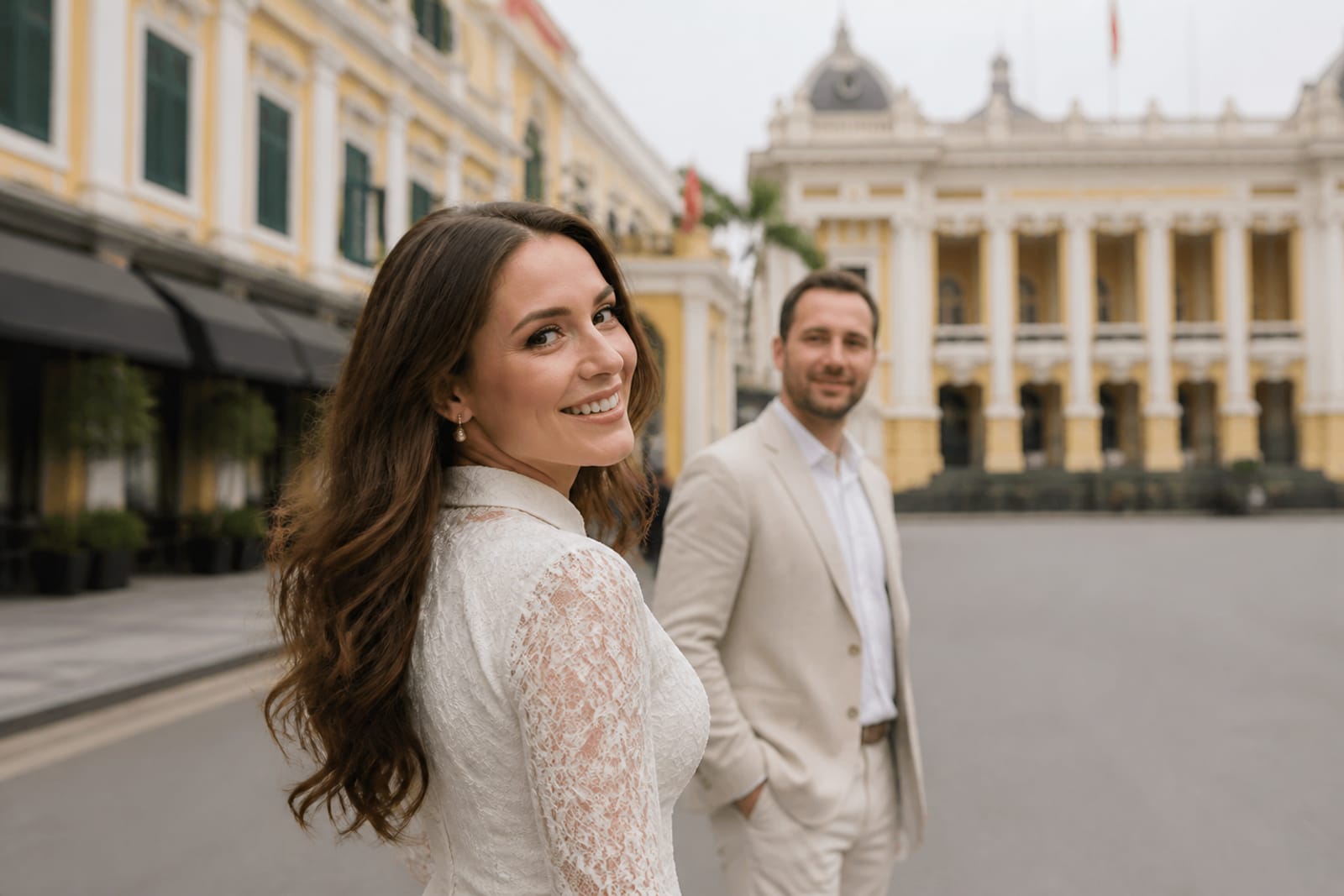
Crowds and tight alleys mean the photographer directs you to walk, pause, and interact—not stand and smile at the camera. The shoot typically starts with wide frames: you two walking up a lantern-lit alley, looking at each other mid-stride, the light catching your profile. Then medium frames: turning a corner, adjusting your ao dai, laughing at something real. Finally, close details: your hand on his shoulder, the embroidery of your dress, the lanterns blurred behind. This sequence takes 15–25 minutes per location; the team moves fast between two or three spots (e.g., Hang Buom Street at dusk, a quieter alley by 6:15 pm, Old Gate area by 6:30 pm). Moving, not posing, means: walk slightly ahead of the photographer so he catches you naturally lit; don't wait for him to frame—he follows your pace and finds the moment. Avoid staring at the camera or holding a fixed expression. If a crowd gathers, the team may pause or shift to a quieter spot; this is normal and expected. The 48-hour edit removes distracting passersby and polishes the frames you actually like.
What Goes Wrong on Lantern Shoots, and How Do You Avoid It?
Overexposed sky + dark silhouettes: If you stand with lanterns or bright sky behind you, your faces go dark. Solution: position yourself in open light, not in shadow between buildings. The photographer directs this; trust his placement.
Ao dai wrinkles and visible undergarments: Sitting in a café or narrow alley for photos creases silk. Solution: stay mostly standing or walking; if you sit, smooth the fabric before the shot and avoid heavy fabrics underneath.
Lanterns too dim to read: If you shoot too early (before lantern lights fully activate, typically 5:20–5:30 pm in autumn), lanterns glow faintly and don't register in photos. Solution: Cáo Studio times the shoot 30 minutes after sunset—most of Hanoi's lantern districts light up by then.
Crowds and photobombers: Hanoi's Old Quarter draws crowds; a motorbike or tourist walks into your frame constantly. Solution: book a weekday evening (Tue–Thu) instead of Fri–Sun, or accept that the edit will remove passersby from your keepers.
Weather shifts: A drizzle can dampen silk or create continuity issues between frames shot dry and wet. Solution: bring a small umbrella and communicate delays to the team on WhatsApp. If rain is heavy, reschedule.
Jet lag and stiffness: Couples arriving from overseas often feel tense on the first day. Solution: book the shoot 2–3 days after arrival to adjust; a pre-shoot styling session at your hotel (hair, makeup, outfit check) also warms you both up.
What Should You Check Before Booking a Lantern Pre-Wedding Shoot?
Dates & availability: Ask on WhatsApp which dates in your chosen season are open. Autumn books fastest; winter offers more flexibility.
Outfit plan: Confirm whether you're renting or bringing an ao dai. If renting, finalize fit and lining 1–2 weeks ahead (ask on WhatsApp about ao dai rental options). If you're bringing a dress or Western wedding dress, mention it—the team adjusts posing and movement.
Makeup & hair: Confirm whether the team does makeup and hair, or you're arranging it separately. Cáo Studio offers makeup and hair at your hotel—book this at the same time to keep continuity and avoid multiple vendors.
Session length: Ask exactly how long the shoot runs, how many locations, and whether you get a short video or just photos. Clarify the edit timeline (usually 48 hours) and how many edited files you receive.
Weather backup: Confirm the rescheduling policy if rain is heavy. Most sessions can adapt to light drizzle, but torrential rain may require a move to a different date or location.
Album or prints: Ask whether edited photos come as digital files only, or if printed albums, frames, or other formats are available separately. (See photo album and print options for details.)
---
FAQ
Is October or November better for lantern pre-wedding photos in Hanoi?
Both are excellent. October offers warmer evenings (20–25°C) and longer twilight; November cools slightly (18–22°C) but maintains clear skies and soft light. Choose whichever fits your schedule—both have similar sunset timing (~5:30 pm) and reliable conditions.
Can you do lantern photos in winter (December–February)?
Yes. Expect muted, hazy light and occasional drizzle; lanterns glow softer but create a more moody, intimate mood. Dress warmly (cool air) and allow extra time for weather checks. Fewer tourists visit in winter, so crowds are lighter.
What if I don't want an ao dai—can I wear a Western wedding dress?
Absolutely. The team adjusts framing and movement to suit the dress silhouette. Western dresses require different undergarments and movement than ao dai; mention your choice on WhatsApp so styling is planned accordingly.
Do you remove crowds and photobombers from the photos?
Yes. Edited frames remove distracting passersby; the 48-hour edit prioritizes the clearest, most intimate shots of you two.
Can I book a lantern shoot plus other locations (e.g., a temple or riverside) in one session?
Yes. Ask on WhatsApp about multi-location options and timing. Lantern districts work best at dusk; temples or riverside light changes with hour. The team can combine them if you have enough session time and are clear on outfit changes and travel between spots.
What's the difference between a lantern pre-wedding shoot and an elopement or proposal?
Lantern shoots are romantic backdrop-focused sessions, usually 2–3 hours in one or two evenings, with a couple. Elopements are full days (or multi-day) with ceremonies, vows, or intimate celebrations. Proposals capture the moment of asking. Ask on WhatsApp to compare what suits your story.
FAQ
Is October or November better for lantern pre-wedding photos in Hanoi?
Both are excellent. October offers warmer evenings (20–25°C) and longer twilight; November cools slightly (18–22°C) but maintains clear skies and soft light. Choose whichever fits your schedule—both have similar sunset timing (~5:30 pm) and reliable conditions.
Can you do lantern photos in winter (December–February)?
Yes. Expect muted, hazy light and occasional drizzle; lanterns glow softer but create a more moody, intimate mood. Dress warmly (cool air) and allow extra time for weather checks. Fewer tourists visit in winter, so crowds are lighter.
What if I don't want an ao dai—can I wear a Western wedding dress?
Absolutely. The team adjusts framing and movement to suit the dress silhouette. Western dresses require different undergarments and movement than ao dai; mention your choice on WhatsApp so styling is planned accordingly.
Do you remove crowds and photobombers from the photos?
Yes. Edited frames remove distracting passersby; the 48-hour edit prioritizes the clearest, most intimate shots of you two.
Can I book a lantern shoot plus other locations (e.g., a temple or riverside) in one session?
Yes. Ask on WhatsApp about multi-location options and timing. Lantern districts work best at dusk; temples or riverside light changes with hour. The team can combine them if you have enough session time and are clear on outfit changes and travel between spots.
What's the difference between a lantern pre-wedding shoot and an elopement or proposal?
Lantern shoots are romantic backdrop-focused sessions, usually 2–3 hours in one or two evenings, with a couple. [Elopements](/pre-wedding-photoshoot) are full days (or multi-day) with ceremonies, vows, or intimate celebrations. [Proposals](/proposal-and-anniversary) capture the moment of asking. Ask on WhatsApp to compare what suits your story.
Ao dai, makeup, hair and a local photographer in Hanoi or Saigon — one WhatsApp message.