hanoi
Long Biên Bridge Photoshoot: Best Times, Spots & Studio Packages
Long Biên Bridge draws 50+ photoshoot groups daily. The wrought-iron spans, Red River light, and minimal crowds at dawn make it iconic for Hanoi travelers. But timing, outfit prep, and knowing what to wear under an ao dai separate sharp images from blown highlights. This guide covers what light actually works, how to move safely on the bridge, outfit layers, and when to hire a professional studio versus self-shooting.
What time of day gives the sharpest Long Biên photos?
Golden hour—6–7 a.m. or 4:30–5:30 p.m.—produces the best contrast without harsh shadows. Morning light comes from the east, raking across the bridge's rivets and cables; evening light from the west bathes the Red River in amber. Midday (10 a.m.–3 p.m.) flattens color and burns highlights on water; afternoon haze dulls detail by 2 p.m. Sunrise requires being on-site by 5:45 a.m.; sunset traffic peaks 5–6 p.m., so arrive early or book a weekday slot. Overcast mornings (November–March) soften shadows but kill vibrancy—ideal for flattering skin, poor for landmark drama.
📸 Book on WhatsApp — ao dai photoshoot
Should you wear an ao dai, Western dress, or casual clothes?
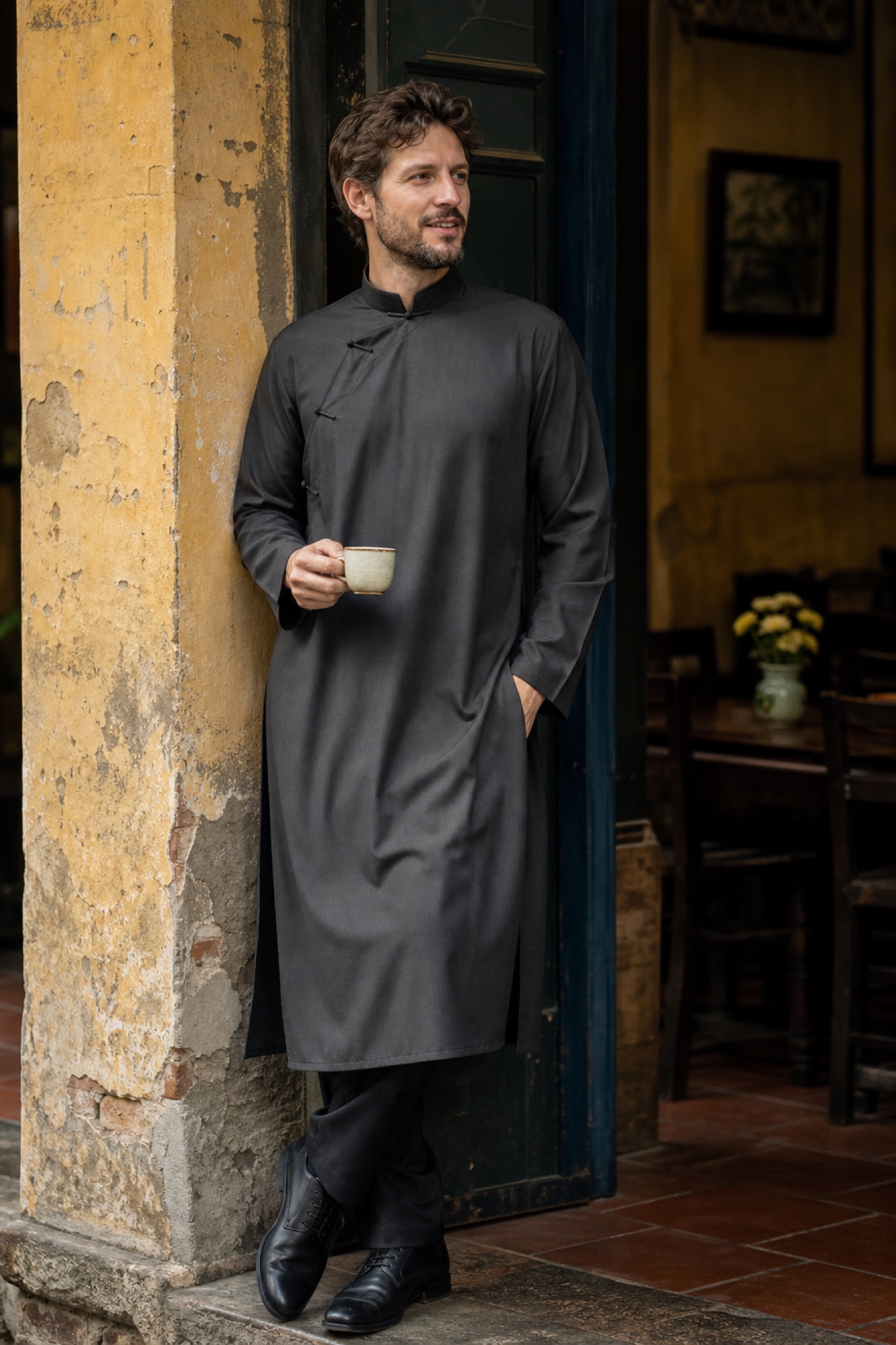
This depends on your shot style and budget. An ao dai flatters the bridge's flowing lines; traditional silk catches light beautifully and signals Hanoi travel to viewers. Tailored Western dresses (midi length, solid colors) photograph crisply against steel. Casual jeans and white blouses work but blend into foot traffic—reserve them for wide-angle landscape shots, not close portraits. Avoid patterns that compete with the bridge's geometry; solid pastels (blush, sage, cream) or jewel tones (emerald, navy, burgundy) pop. Wear comfortable walking shoes you'll hide in cropped shots; the bridge's metal grating catches heels.
Know what sits under your ao dai: most travelers skip a slip, causing transparency issues in side light. Wear a fitted, knee-length slip (ask Cáo Studio's stylists for loan pieces) or a plain white tube top and shorts. This prevents wardrobe malfunctions and keeps you comfortable during 90-minute sessions.
How do Cáo Studio's Long Biên packages differ from solo shooting?
| Service | Best for | Session time | Includes | Why |
|---|---|---|---|---|
| Ao dai photoshoot | Solo travelers, couples wanting traditional style | 90 mins, 2 locations | Hair, makeup, 2–3 outfits, 50+ images | Tailored fit, pro styling, fast turnaround |
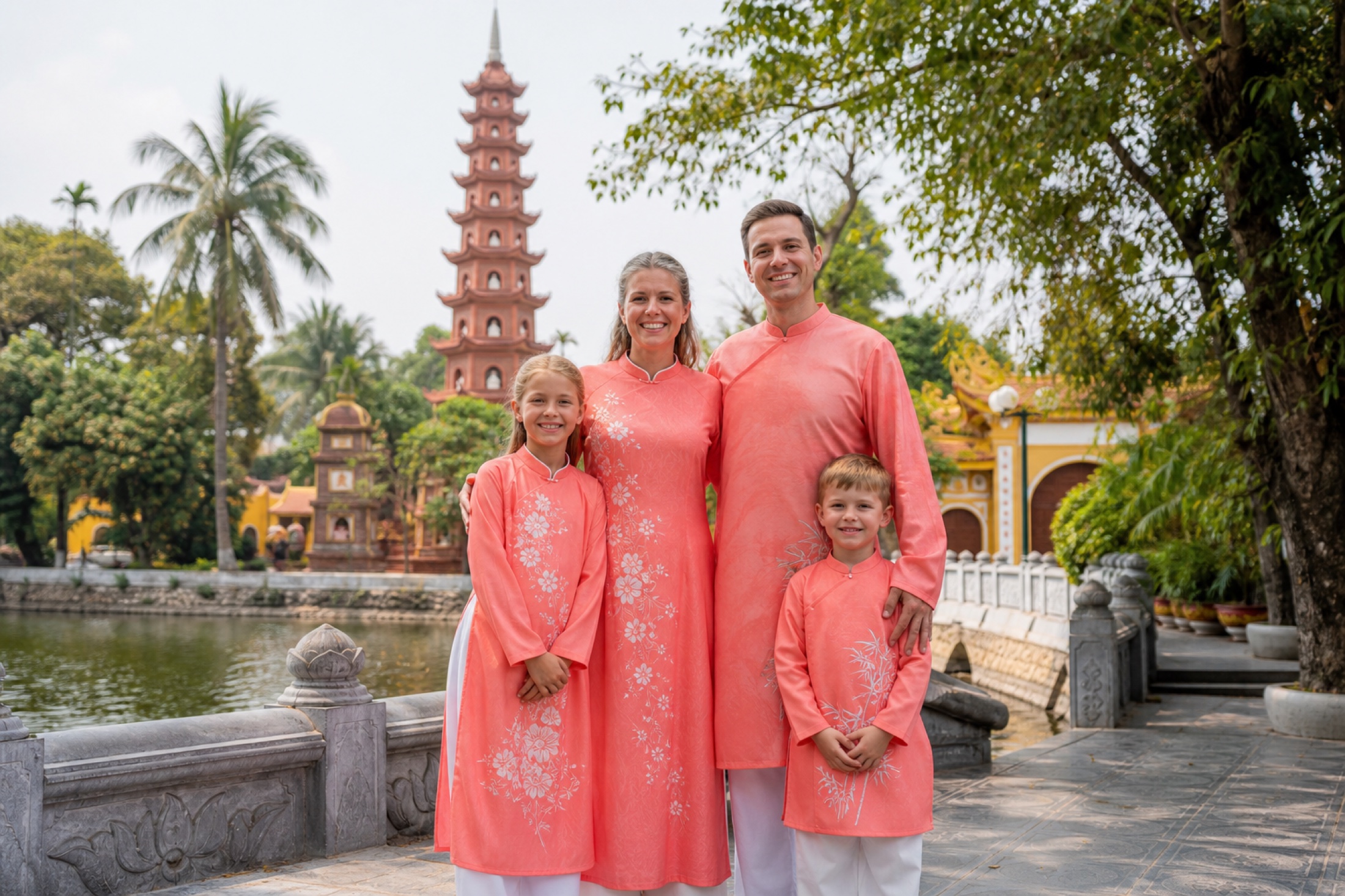
| Couple & family shoot | Partners, family groups, anniversary | 2 hours, 2–3 sites | Coordinated outfits, hair/makeup, 80+ images | Candid + posed, story arc across locations |
| Pre-wedding & elopement | Engaged couples, micro-ceremonies | 4–6 hours, multiple locations | Full styling, videography option, 200+ images | Narrative coverage, album-ready editing |
| Self-shooting with tripod | Budget travelers, confident phone users | Unlimited | None | Free, flexible, often blurry or backlit |
Self-shooting saves money but loses expert posing feedback and makeup touch-ups between outfit changes. Cáo Studio's stylists know Long Biên's best micro-spots (pedestrian walkway sunrise angles, river-level dusk reflections) and manage timing to miss tour groups. A solo ao dai session runs shorter than couple coverage because posing nuances and outfit swaps take longer for two people.
What outfits work best for a Long Biên photoshoot?
Build a 2–3 outfit rotation. First, the anchor: an ao dai in silk or linen (cream, blush, or jewel tones read best against grey steel and brown water). Add a contrasting silk scarf or traditional jewelry; metallic details catch bridge-side reflections. Second, a Western option: a midi dress in navy, emerald, or warm terracotta, or tailored trousers with a silk blouse. Skip white pants—they read as washed-out against concrete. Third, if time allows, a casual-formal hybrid: tailored shorts and a tucked linen shirt, or linen jumpsuit in cream or soft grey.
Fabrics matter: silk and linen flow in river breezes and photograph with depth; polyester looks flat and sticky in humidity. Avoid busy prints and neons; the bridge's geometric lines need visual simplicity. Shoes: ballet flats, loafers, or embroidered slippers (tucked into bags for the shoot) work; heels are uncomfortable on metal grating and show in wide shots.
Consider the lookbook to see real clients in Long Biên settings; this clarifies color palettes and silhouettes that translate in morning and evening light.
What safety and etiquette rules apply at Long Biên Bridge?
Long Biên is still a working truck and foot bridge; it's not a closed set. Peak traffic runs 6:30–9 a.m. and 4:30–6 p.m., so backpedal or find quiet side angles. The pedestrian walkway is narrow (2 meters); stand single-file when trucks pass. No tripods without local permits; Cáo Studio's team carries compact stands and shoots handheld or uses assistant support. Dress modestly—the bridge serves workers and residents; excessive costume or blocking foot traffic draws police intervention.
Photography is permitted but avoid setting up major productions (reflectors, multiple crew members) that disrupt flow. Early morning (5:45–6:45 a.m.) is peaceful; aim for off-peak times. Never lean over railings or sit on edges for "risky" shots; locals resent safety violations.
How do you choose between Hanoi and Hoi An if you have limited time?
If you're in Hanoi 2+ days, Long Biên is essential; it's 10 minutes by taxi from Old Quarter hotels and complements ao dai photoshoots or couple sessions booked same-day with makeup at your hotel. Hoi An's Japanese Bridge and river landscape offer softer, more romantic framing; narrow streets suit intimate family shots. Hoi An requires overnight stays; Cáo Studio travels there by appointment (ask on WhatsApp for Hoi An dates). Long Biên is faster, more dramatic, and urban—better for solo travelers and first-time visits to Vietnam. Hoi An is cinematic and nostalgic—better for couples and multi-day trips prioritizing atmosphere.
See the Hanoi pillar for other iconic sessions (temples, silk villages, water puppetry studios) that pair with bridge shoots.
What to check before booking a Long Biên photoshoot
- Light forecast: Clear skies are rare November–March; overcast mornings work but expect muted tones.
- Outfit fit: Bring ao dai to fitting 3–5 days early; alterations take time.
- Backup date: Monsoon rain (May–September) cancels sunrise shoots; book flexible or reschedulable dates.
- Shoe comfort: Test walking shoes for 90 minutes; metal grating is tiring.
- Editing timeline: Full image delivery is 5–7 days; rush fees apply for same-day digital copies.
- Group size: Solo shoots are faster; couples add 30 minutes; families over 4 people move to 2-hour couple & family sessions.
Cáo Studio provides a checklist on WhatsApp before your session; reply with outfit colors, any accessibility needs, and preferred shoot time so the team readies styling pieces and scout timing.
Comparing Long Biên solo, couple, and pre-wedding bookings
Most solo travelers choose ao dai photoshoots for cultural immersion and fast turnaround. Couples often bundle a Long Biên couple session with makeup & hair at your hotel to save transit time. Engaged pairs booking pre-wedding sessions use Long Biên as one of 3–5 Hanoi locations, pairing it with Sword Lake temples or Old Quarter backstreets for visual variety.
For gift-giving, a printed keepsake book or star map print of your shoot date makes a lasting memento. See pricing for package ranges and FAQ for cancellation and rescheduling policies.
FAQ
Can we shoot Long Biên Bridge at sunset instead of sunrise?
Yes. Sunset (4:30–5:30 p.m.) is warmer and easier for travelers; sunrise requires 5:45 a.m. arrival. Both are golden hour. Sunset has more foot traffic; sunrise is quieter. Cáo Studio books both; specify your preference on WhatsApp.
Is an ao dai necessary, or can I wear Western clothes?
Western clothes work fine. An ao dai is traditional and photographs beautifully, but tailored dresses, jumpsuits, or elegant casual wear are equally valid. Wear solid, flattering colors that contrast the bridge's grey steel.
How do you avoid tourists in the background?
Shoot before 7 a.m. or after 5:30 p.m. for minimal crowds. Midday is crowded; avoid 10 a.m.–3 p.m. Cáo Studio times sessions to these quiet windows and uses angles that isolate you from foot traffic.
What happens if it rains on my booked date?
Rain cancels sunrise shoots (safety and backlight haze). Cáo Studio reschedules free to your next available date or shoots indoors (studio backdrops, hotel rooms). Confirm cancellation policy on WhatsApp.
How long does a typical Long Biên shoot take?
Ao dai solo sessions run 90 minutes (hair/makeup 30 mins, shooting 60 mins, 2 outfit swaps). Couples take 2 hours. Pre-wedding shoots span 4–6 hours across multiple Hanoi locations including Long Biên.
Do I need to bring my own outfit, or does Cáo Studio provide it?
Bring your own Western outfits; Cáo Studio provides tailored ao dai (fitted at your fitting appointment). You keep the ao dai after your session if purchased; rental options available on request.
Can we shoot from inside a boat on the Red River?
No official boat permits exist for tourist photography. The pedestrian walkway and bridge railings are the legal zones. Cáo Studio maximizes these angles; water-level reflections are captured from the bank or walkway, not floating.
FAQ
Can we shoot Long Biên Bridge at sunset instead of sunrise?
Yes. Sunset (4:30–5:30 p.m.) is warmer and easier for travelers; sunrise requires 5:45 a.m. arrival. Both are golden hour. Sunset has more foot traffic; sunrise is quieter. Cáo Studio books both; specify your preference on WhatsApp.
Is an ao dai necessary, or can I wear Western clothes?
Western clothes work fine. An ao dai is traditional and photographs beautifully, but tailored dresses, jumpsuits, or elegant casual wear are equally valid. Wear solid, flattering colors that contrast the bridge's grey steel.
How do you avoid tourists in the background?
Shoot before 7 a.m. or after 5:30 p.m. for minimal crowds. Midday is crowded; avoid 10 a.m.–3 p.m. Cáo Studio times sessions to these quiet windows and uses angles that isolate you from foot traffic.
What happens if it rains on my booked date?
Rain cancels sunrise shoots (safety and backlight haze). Cáo Studio reschedules free to your next available date or shoots indoors (studio backdrops, hotel rooms). Confirm cancellation policy on WhatsApp.
How long does a typical Long Biên shoot take?
Ao dai solo sessions run 90 minutes (hair/makeup 30 mins, shooting 60 mins, 2 outfit swaps). Couples take 2 hours. Pre-wedding shoots span 4–6 hours across multiple Hanoi locations including Long Biên.
Do I need to bring my own outfit, or does Cáo Studio provide it?
Bring your own Western outfits; Cáo Studio provides tailored ao dai (fitted at your fitting appointment). You keep the ao dai after your session if purchased; rental options available on request.
Can we shoot from inside a boat on the Red River?
No official boat permits exist for tourist photography. The pedestrian walkway and bridge railings are the legal zones. Cáo Studio maximizes these angles; water-level reflections are captured from the bank or walkway, not floating.
Ao dai, makeup, hair and a local photographer in Hanoi or Saigon — one WhatsApp message.