/pre-wedding-photoshoot
Luxury pre-wedding photos in Da Lat: planning your shoot
Luxury pre-wedding photography in Da Lat means shooting during the dry season (Dec–Apr, best light and clear skies) with a photographer who understands highland dawn mist, golden hour reflections on lakes, and how fabric moves in cool mountain air. Sessions typically run 4–6 hours across two locations: one misty morning (Valley of Love, Tuyen Lam Lake, or pine forest paths at sunrise) and one golden-hour shoot (Lover's Hill, French church grounds, or garden estates). Expect to wear an áo dài or formal Western dress; the photographer should direct you to walk, pause at light changes, and shoot wide-then-detail rather than pose you stiffly. A real pre-wedding team—one photographer plus dedicated hair, makeup and styling—delivers edited frames faster and with one consistent vision. Cáo Studio operates in Hanoi, Ho Chi Minh City and Hoi An; for a Da Lat shoot, we recommend vetting a local photographer who knows the light hour-by-hour and has shot in fog before, or consider traveling to one of our bases.
Why does Da Lat suit pre-wedding photography?
Da Lat sits at 1,500 metres altitude in the Central Highlands, where the climate is dramatically cooler and mistier than the lowlands. The cool air (roughly 15–25°C year-round) means makeup holds longer, fabric drapes without clinging, and your skin doesn't sweat during a four-hour shoot. Pine forests, flower gardens, and man-made lakes create layered depth—wide shots show moody treelines, medium frames isolate you against mist, close-ups catch fabric and ring detail against blurred green. The morning mist that rolls off the lakes at sunrise is the signature light here: soft, directional, forgiving of skin texture, and impossible to replicate in a studio. This is why international couples often choose Da Lat specifically for pre-wedding work, even if they marry elsewhere. Local legend has made it romantic; the light makes it real.
📸 Book on WhatsApp — pre-wedding photoshoot
When is the best season to shoot?
Dry season (Dec–Apr) is unambiguous: clear dawn skies, no afternoon downpours, mist visible most mornings, and steady golden hour light 5–6 pm. Rainy season (May–Nov) brings afternoon showers—mornings are usually dry and misty, but by 2 pm cloud cover kills contrast and rain can stop a shoot. December to February offers the coolest air (ideal for movement and comfort) but occasional frost in valleys and Tet crowds (late Jan–mid Feb) close some venues briefly. March–April stays dry and misty without extreme cold; light is cleaner as dust clears. June–August clears morning mist faster (sunrise mist burns off by 7 am instead of 8:30 am) but afternoon rains are reliable, so you have a 6–7 hour daylight window before weather risk. Avoid October–November: typhoon season brings unpredictable heavy rain and flooding that can trap you or damage equipment.
| Season | Best for pre-wedding? | Mist & light | Comfort & risk |
|---|---|---|---|
| Dec–Feb | Very high | Heavy mist, cool light, long golden hour | Cold air; Tet crowds; clear framing |
| Mar–Apr | Very high | Moderate mist, warm light, stable weather | Ideal balance; low rain risk |
| May–Sep | Moderate | Light mist (burns off early), humid, afternoon showers likely | Muggy; 6–7 hour window only; unpredictable |
| Oct–Nov | Low | Mist may be heavy but rain/flooding common | High weather risk; avoid if possible |
How do you choose between local and traveling photographers?
A local Da Lat photographer knows which paths are open, what time mist appears at each lake, and how light behaves in April versus February—invaluable for shooting only 4–6 hours and not wasting frames on flat light. Vetting matters: ask to see at least 8–10 full pre-wedding sessions (not one-off couples or portraits), all shot in Da Lat across different seasons, with variety in framing (not all posed in front of landmarks). Look for evidence of direction (subjects walking, interacting, positioned in light, not facing the camera rigidly) and consistent color grading. A local who rents spaces and coordinates hair/makeup himself works faster than three separate vendors. However, coordination across vendors—photographer, makeup artist, stylist—often breaks down over timings and light intuition if they haven't worked together. If you book a pre-wedding session with Cáo Studio in Hanoi, Ho Chi Minh City or Hoi An, one team handles everything (photography, hair, makeup, styling, outfit sourcing—including áo dài rental if you want it), shoots to a single creative vision, and delivers edits within 48 hours. For Da Lat, you'll need to hire and coordinate locally; ask potential photographers whether they've worked with the same makeup artist and stylist for at least five pre-wedding shoots (consistency is a proxy for communication).
What should you wear and bring?
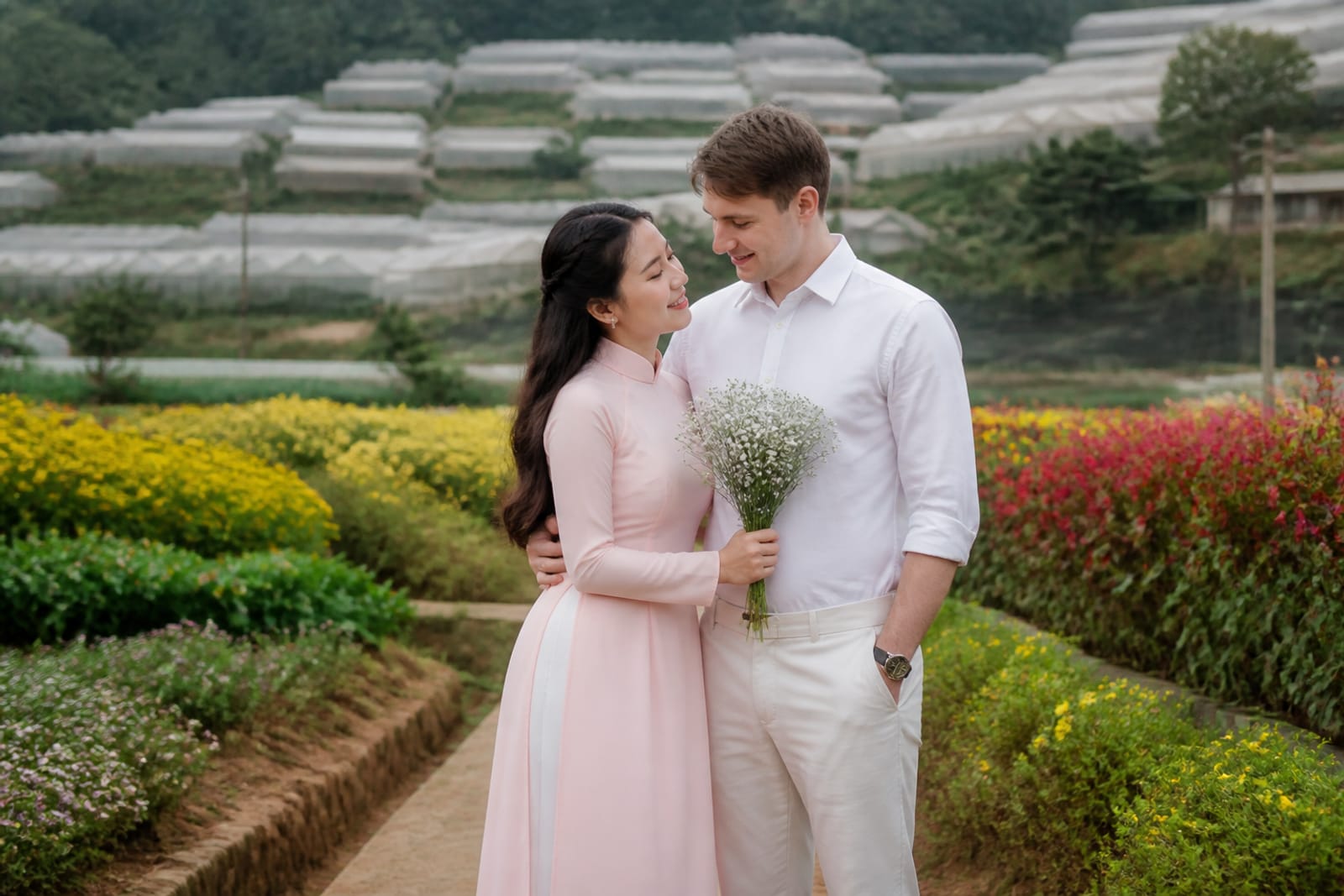
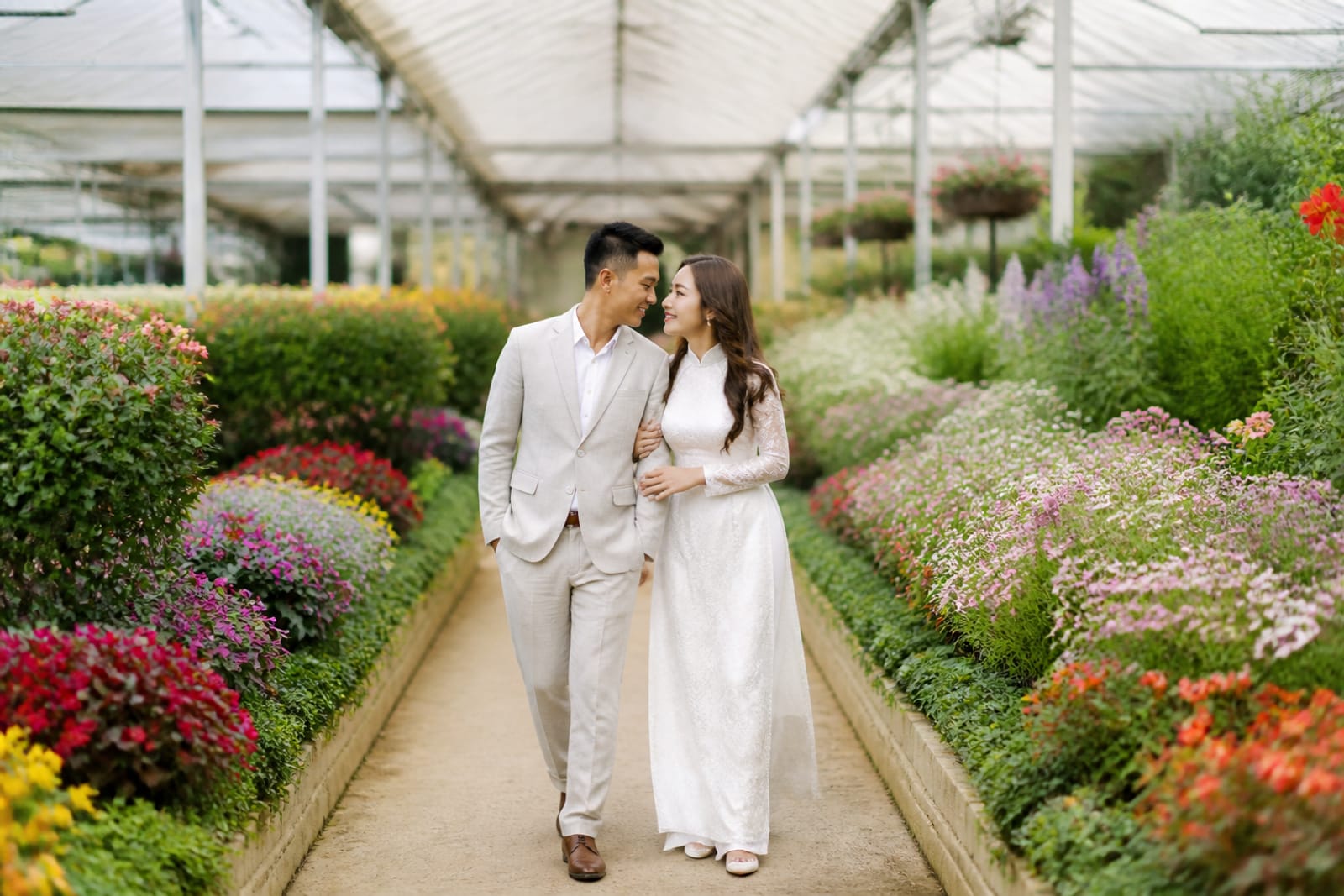
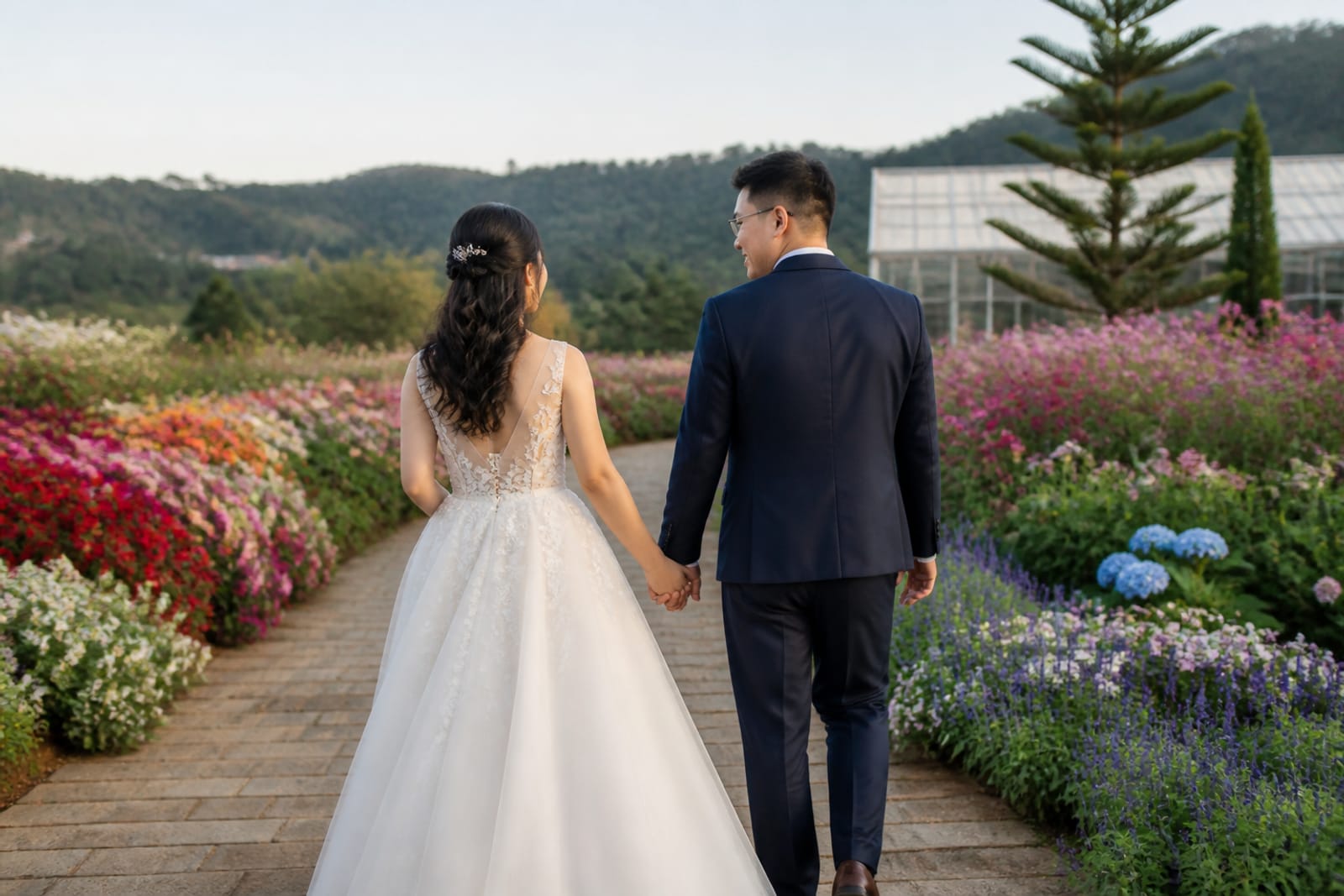
Áo dài (traditional silk tunic and trousers) photographs beautifully in Da Lat's mist and works across decades of frames—the fabric moves in the cool breeze, the silhouette is instantly recognizable, and color pops against grey mist. Formal Western wedding dress (a-line, ball-gown, sheath) also works well in the cool air; it won't cling with sweat, and train movement in pine forests reads as luxury on camera. Avoid heavy knit or velvet outdoors in afternoon sun—it flattens and looks hot even if you feel fine. Bring a cardigan, pashmina or light wrap for pre-dawn and for moments between outfits; it stays off-camera but keeps you warm and relaxed. Choose shoes (heels or flat shoes) that grip wet grass—Da Lat's parks are often dewy and muddy after mist. Jewelry should be simple; ornate necklaces compete with the fabric and mist. If wearing an áo dài, ensure the stylist or rental vendor knows Da Lat's climate: excess fabric bunching or linings that don't breathe will make you miserable over 4+ hours. See what to wear under an áo dài for layering specifics.
What are the cost factors (without fixed prices)?
Season affects cost: dry-season shoots (Dec–Apr) typically cost more because demand is higher and weather risk is lower, reducing photographer cancellations. Travel time for your photographer matters—a local living in Da Lat charges differently than a Saigon photographer traveling 5+ hours; ask whether travel fees or accommodation costs apply. Number of outfits compounds cost: one outfit means one hair/makeup setup; two means setup changes and longer labor. Location permits are required for some venues (certain gardens, colonial estates, French church grounds)—check with your photographer whether they're included in their rate or billed separately. Post-production (editing, color grading, album design, prints or video) varies by scope; a wedding photo album with lay-flat binding and metallic prints costs more than digital files alone. Makeup for cool highland light (bolder brows, deeper contour to read in mist) may require a makeup artist who understands this; hobbyist makeup artists often underestimate how much product reads on a misty mountain. Ask quotes to include all-in costs (photographer + makeup + hair + outfits or rental + permits + editing + delivery format) to compare fairly.
How do you vet a photographer before committing?
Ask for a full, unedited gallery of at least one pre-wedding shoot (10–15 RAW frames before color correction)—this shows lighting choices, posing variety, and frame composition before polish. Request 3–5 completed sessions across different seasons and lighting conditions; if a photographer has only shot in one season or has only a handful of past couples, they likely don't understand light variation. Check whether they shoot in manual mode (not auto, which will expose inconsistently across shade and mist) and whether their edited color palette is consistent (not wildly different from frame to frame, which suggests heavy cropping or sloppy editing). Look at posing direction: are couples walking, looking at each other, or stiffly frontal to the camera? Are there close-ups of detail (hands, fabric, face in profile) or only wide shots of two people in front of landmarks? Visit one of their pre-wedding shoots in progress if possible (ask the couple's permission) to see how the photographer communicates under time pressure and handles unexpected weather. Discuss backup plans: what happens if dawn mist doesn't appear, if rain arrives early, or if a key location is unexpectedly closed. Finally, check contract terms: refund policy if weather is unsuitable, what files you receive, and turnaround time for edits.
---
What to check before you book
- Season & weather risk: Confirm shoot date falls in dry season (Dec–Apr) and ask your photographer what their typical mist appearance time is for that month.
- Locations & permits: Request the exact two–three venues; ask whether permits are included and whether any venues have restricted shooting hours.
- Team coordination: If hiring separately, confirm your photographer, makeup artist and stylist have worked together before (ask for a reference from a previous couple).
- Outfit logistics: Decide on áo dài rental, Western dress, or both; confirm the stylist/rental vendor knows highland climate and can adapt fabric/fit accordingly.
- All-in cost clarity: Request one quote that includes photographer, makeup, hair, outfits (or rental), permits, editing, and delivery format—so you're comparing apples to apples.
- Backup & cancellation: Get the photographer's weather policy in writing (do they reschedule free, partial refund, no refund).
- Edits & delivery: Ask for turnaround time, file format (RAW, JPEG, edited), whether albums or prints are included, and how many edited images you receive.
For a pre-wedding shoot coordinated across multiple vendors in Da Lat, vetting takes 2–3 weeks and requires direct communication (most Da Lat photographers respond via WhatsApp, Messenger or phone—email is slow). If you prefer one team with zero coordination stress, book a pre-wedding shoot in Hanoi, Ho Chi Minh City, or Hoi An with Cáo Studio—we handle everything from outfit sourcing to final edits within 48 hours.
---
FAQ
Is Da Lat better than Hanoi or Saigon for pre-wedding photos?
Da Lat offers unique misty highland light and cooler comfort; Hanoi has iconic architecture and river light; Saigon offers cosmopolitan gardens and golden hour reflections. Choose by aesthetic preference and wedding theme, not just prestige. Each requires a photographer skilled in that landscape.
What time of day should we shoot?
Shoot dawn (5:30–8 am) for mist and soft side light; golden hour (4:30–6:30 pm) for warm backlight. Avoid 10 am–3 pm when sun is overhead and flatters no one. Misty mornings are Da Lat's signature; don't skip them.
Do we need a drone or cinematic video?
Drone shots add cost and often require local permits; they're nice-to-have, not essential for luxury pre-wedding frames. Ask your photographer whether aerial work is included or billed separately, and whether they're licensed/insured for it.
Can we shoot in the rainy season?
Mornings (dawn–9 am) are usually dry with mist; afternoon rain is common. You have a 6–7 hour window. Avoid October–November (typhoon season, flooding risk). If you must shoot May–September, confirm your photographer has wet-weather backup plans and has shot in rain before.
Should we hire a local photographer or bring our own?
A local knows Da Lat's light, venues and weather patterns—worth the investment. If bringing your own photographer, give them 2–3 weeks to scout, scout with them if possible, and coordinate closely with local makeup/hair artists for timing. One cohesive team (photographer + makeup + hair) always produces faster, more consistent results than three separate vendors.
How many edited photos do we get?
Typical pre-wedding packages deliver 50–150 edited images depending on scope and photographer. Ask upfront whether you receive all edited frames or a curated selection, and in what format (digital files, album, prints). Cáo Studio's packages are confirmed on WhatsApp—reach out for specifics.
What if the weather is bad on shoot day?
Confirm your photographer's reschedule policy before booking. Most allow free reschedule within a set window (7–30 days). Heavy rain during a shoot may mean cut hours and fewer frames; ask whether you get a partial refund or reshoot credit.
Do we need to hire a planner or coordinator?
If you're local to Da Lat or familiar with logistics, no. If traveling from abroad, a local planner (or your photographer, if they offer coordination) can arrange permits, timing, and backup venues, saving stress over 2–3 weeks. Budget this as a cost factor.
FAQ
Is Da Lat better than Hanoi or Saigon for pre-wedding photos?
Da Lat offers unique misty highland light and cooler comfort; Hanoi has iconic architecture and river light; Saigon offers cosmopolitan gardens and golden hour reflections. Choose by aesthetic preference and wedding theme, not just prestige. Each requires a photographer skilled in that landscape.
What time of day should we shoot?
Shoot dawn (5:30–8 am) for mist and soft side light; golden hour (4:30–6:30 pm) for warm backlight. Avoid 10 am–3 pm when sun is overhead and flatters no one. Misty mornings are Da Lat's signature; don't skip them.
Do we need a drone or cinematic video?
Drone shots add cost and often require local permits; they're nice-to-have, not essential for luxury pre-wedding frames. Ask your photographer whether aerial work is included or billed separately, and whether they're licensed/insured for it.
Can we shoot in the rainy season?
Mornings (dawn–9 am) are usually dry with mist; afternoon rain is common. You have a 6–7 hour window. Avoid October–November (typhoon season, flooding risk). If you must shoot May–September, confirm your photographer has wet-weather backup plans and has shot in rain before.
Should we hire a local photographer or bring our own?
A local knows Da Lat's light, venues and weather patterns—worth the investment. If bringing your own photographer, give them 2–3 weeks to scout, scout with them if possible, and coordinate closely with local makeup/hair artists for timing. One cohesive team (photographer + makeup + hair) always produces faster, more consistent results than three separate vendors.
How many edited photos do we get?
Typical pre-wedding packages deliver 50–150 edited images depending on scope and photographer. Ask upfront whether you receive all edited frames or a curated selection, and in what format (digital files, album, prints). Cáo Studio's packages are confirmed on WhatsApp—reach out for specifics.
What if the weather is bad on shoot day?
Confirm your photographer's reschedule policy before booking. Most allow free reschedule within a set window (7–30 days). Heavy rain during a shoot may mean cut hours and fewer frames; ask whether you get a partial refund or reshoot credit.
Do we need to hire a planner or coordinator?
If you're local to Da Lat or familiar with logistics, no. If traveling from abroad, a local planner (or your photographer, if they offer coordination) can arrange permits, timing, and backup venues, saving stress over 2–3 weeks. Budget this as a cost factor.
Ao dai, makeup, hair and a local photographer in Hanoi or Saigon — one WhatsApp message.