/pre-wedding-photoshoot
Luxury pre-wedding photoshoot in Phong Nha: caves, light, location gui
Phong Nha pre-wedding shoots capture dramatic limestone caves and jungle rivers, but success depends on season, light timing and local permits. February to August is driest; October to November brings floods that close cave access entirely. Best light falls between 6:30–7:30 am (soft, directional) and 4:30–5:30 pm (golden). Cave interiors require high ISO and fast lenses; outdoor jungle shots work best in overcast conditions or early morning before crowds arrive. Cáo Studio does not operate in Phong Nha—you'll need a local photographer experienced in cave permits and cave-light workflows. Plan three weeks ahead for permit confirmation. Alternatively, consider a pre-wedding shoot in Hanoi or Hoi An where an all-in-one team handles styling, hair, makeup and camera in one booking.
Why Phong Nha's caves attract pre-wedding shoots—and why they're harder than they look
Phong Nha's limestone karst landscape delivers a visual drama you won't find in urban settings. Son Doong, Paradise Cave and Phong Nha Cave offer soaring stone formations, water reflections and cathedral-like natural light shafts. The raw aesthetic appeals to couples seeking adventure over polish. That said, cave photography is technically and logistically demanding. Interior light is dim and uneven; permits are required; caves close seasonally; and a single miscalculation (wrong season, wrong time, wrong lens settings) can leave you with unusable frames. A couple asking, "Will a standard photographer handle cave light?" should know the answer is no—cave work needs specific gear and workflows. This is where local expertise becomes non-negotiable.
When should you shoot in Phong Nha—and when should you avoid it?
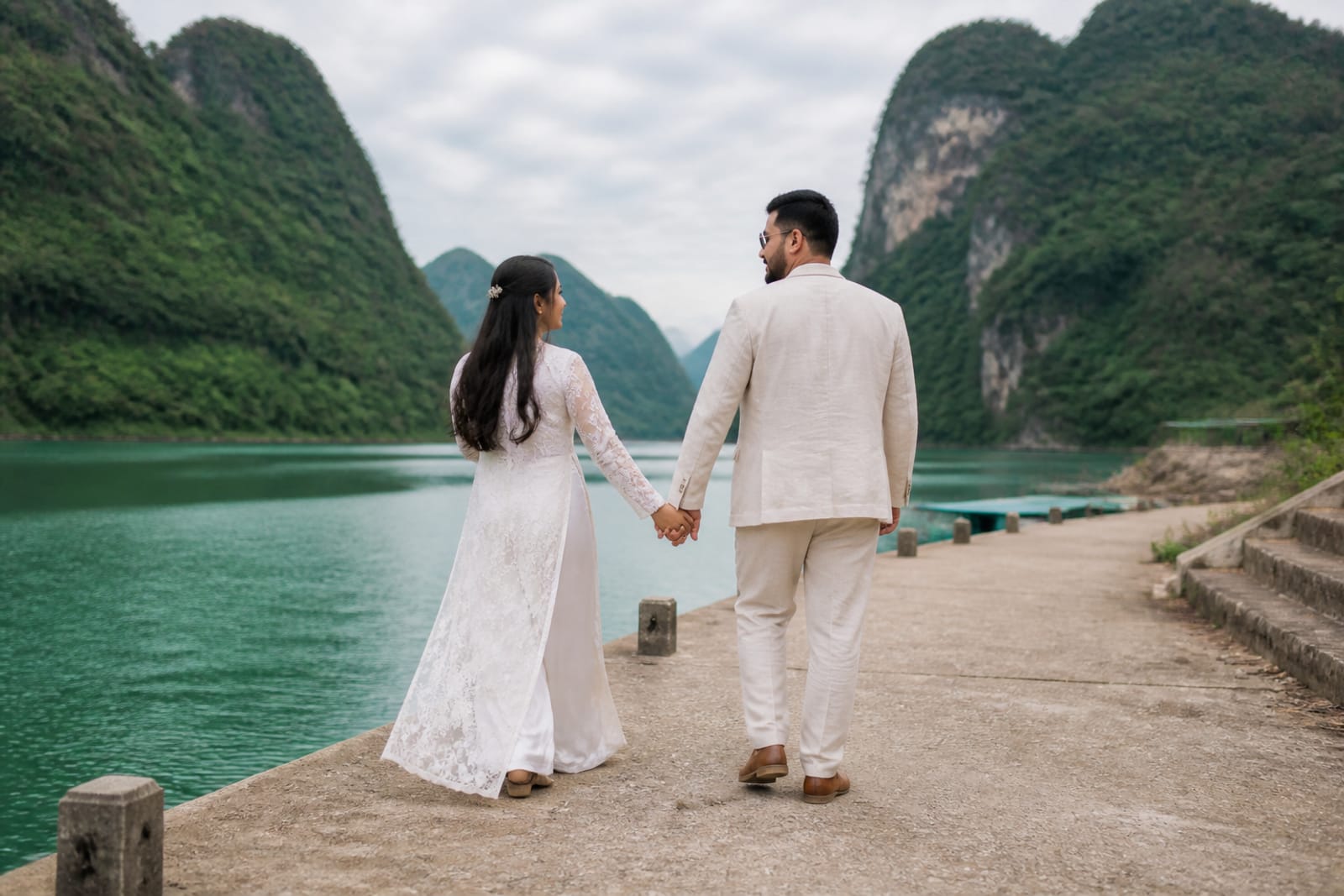
Phong Nha spans two climate zones. The dry season (February to August) offers stable weather, open caves and reliable access. The rainy season (May to November) brings afternoon downpours; October to November sees typhoons, floods and frequent cave closures. If your wedding is set for November or early December, plan an alternative location or accept a higher risk of cancellation. Winter (December to February) is cool and clear—ideal for energy during long shoots. Spring (March to April) is warm but increasingly humid; summer (June to August) brings heat, but caves stay cooler than outside. Tet (late January to mid-February) closes many attractions and clogs roads. Book a local photographer 6–8 weeks ahead; confirm cave access and permits 4 weeks before your shoot date. Weather forecasting in Phong Nha is unreliable past 10 days, so plan flexibility into your timeline.
| Season | Best for | Light quality | Access | Crowd/Heat |
|---|---|---|---|---|
| Feb–Apr | Dry, cool, clear | Soft, stable | Open caves | Moderate crowds |
| May–Jun | Longer daylight | Humid, golden hour shorter | Open (watch floods) | Hot, afternoon rain |
| Jul–Aug | Late shoots possible | Overcast often, predictable | Open but risky | Very hot, showers common |
| Sep–Dec | Avoid | Unstable, low light | Often closed | Typhoons, floods (Oct–Nov worst) |
Conclusion: Book Phong Nha for February to August; confirm local access 4 weeks before; expect to reschedule if weather turns.
How light works inside Phong Nha's caves—and what gear you need
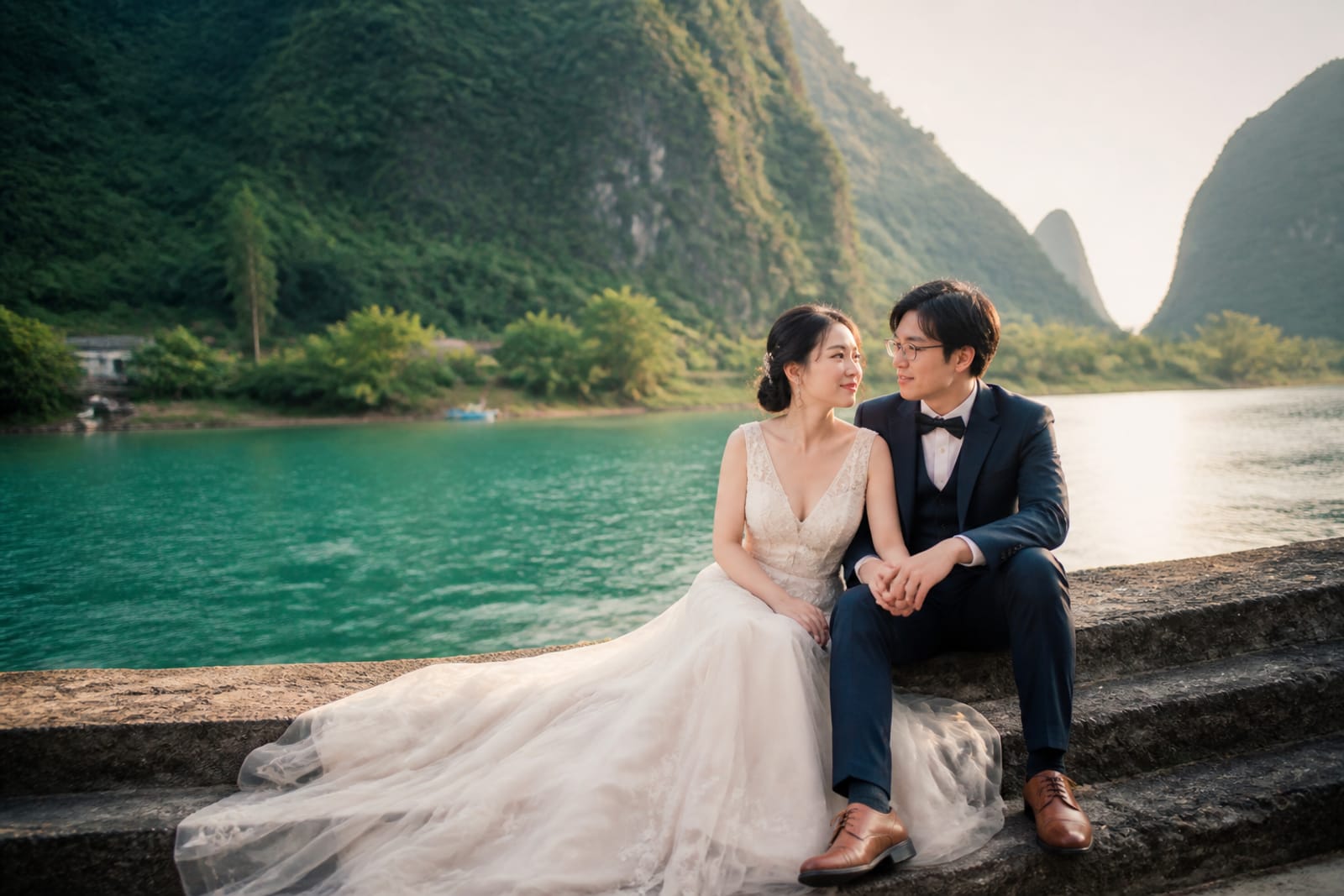
Cave interiors are deceptive. Son Doong's skylight opening creates directional shafts—magical at 8:00 am when sun angle is right, useless at noon when the beam is overhead and creates harsh shadows. Paradise Cave has less natural light; you'll rely on ambient glow and fast lenses (f/1.4–f/2.8). Most caves average ISO 3200–6400 with a tripod for stable 1/4-second exposures. Couples in white or pale ao dai will blow out near cave entrances; dark suits show detail in shadows but need fill light to avoid silhouette. A local cave photographer knows which entrance (north or south) suits your dress color and time of day. They carry off-camera flashes or LED panels to lift shadows without washing out stone texture. If you hire a general travel photographer unfamiliar with cave work, you risk flat, underexposed or noise-heavy frames. Ask candidates: "What is your typical ISO range in Son Doong? Have you shot weddings in Paradise Cave before? Do you bring off-camera lighting?" Their answers will reveal experience. Cáo Studio's approach—one team handling styling, hair, makeup and camera—works best in open-air settings where consistent light and team coordination matter most.
What to wear and how outfits fit Phong Nha's terrain
An ao dai's flowing silk looks ethereal on camera but tangles on cave ladders, muddy riverbanks and uneven limestone. Traditional white ao dai photographs beautifully in cave light but requires careful movement and a supportive crew to manage the fabric. Consider a darker or jewel-toned ao dai (navy, forest green, burgundy) for Phong Nha—it holds shadow detail, photographs richer against grey stone, and hides dirt better than white if you're walking through damp cave passages. Wear fitted trousers or shorts under the ao dai; cave access means climbing, ducking and wading. Grooms in dark suits photograph well in caves; pale or cream suits risk underexposure against limestone. Avoid bulky jewelry or heirloom pieces—they can catch on cave formations or fall into water. A local photographer will advise on outfit order (which cave visit, which ao dai, which time of day) to maximize light. If your vision requires multiple outfits, add 3–4 hours to the shoot; caves require slow movement and careful lens changes to avoid dust in sensor.
💄 Makeup & hair at your hotel or book a local stylist 2 weeks ahead—humidity and cave moisture will test makeup longevity.
Why a local Phong Nha photographer matters more than location alone
Hiring a photographer who knows Phong Nha's permit system, seasonal closures and light patterns is not optional—it's foundational. A cave-inexperienced photographer will struggle with white balance (caves shift blue, orange and grey minute by minute), focusing speed (dim light slows autofocus), and movement (they won't know safe paths or water depths). Ask your shortlist: "Are you familiar with current cave-access permits? Do you have contingency locations if our cave closes? What is your workflow for ISO and white balance in mixed ambient/flash light?" A solid answer suggests experience. A vague one suggests risk. Book someone with a local portfolio of cave shoots (not just travel portraits or studio work). Confirm they have backup gear (a failed camera or lens in a cave means a ruined day with no second chances). Cost varies by experience, travel time and outfit count; ask via WhatsApp for a local rate estimate once you've chosen a photographer. Cáo Studio operates in Hanoi and Ho Chi Minh City—if you prefer an all-in-one team handling styling, makeup, hair and photography in a single booking, consider a pre-wedding shoot in Hoi An, which pairs coastal and heritage light without the seasonal closure risk Phong Nha carries.
When to book and what to confirm before signing
Pre-wedding timelines in Phong Nha are tighter than urban shoots. Caves close without warning during rainy season; permits require 3–4 weeks' lead time; and good photographers fill 3–4 months ahead in peak season. Start your search in December for a shoot the following February to April. Confirm in writing: (1) backup dates if your primary date faces weather or permit issues, (2) cave-access contingencies (which caves are alternatives if your first choice closes?), (3) what happens if flooding or weather cancels the shoot (do you reschedule, get a refund, or forfeit?), (4) editing timeline and file format (RAW, JPEG, video?). A professional contract should specify weather cancellation policy, payment schedule and delivery date. If hiring a freelancer, ask for references from prior couples and check their portfolio for technical consistency (sharp focus, correct white balance, shadow detail in cave frames). If you're uncertain whether a local photographer is reputable, ask tourism offices in Dong Hoi (the nearest city) for recommendations. Alternatively, book a pre-wedding session in Hanoi or couple photoshoot in Ho Chi Minh City—where Cáo Studio's single team (photographer, makeup artist, stylist) coordinates one message across light, outfit, framing and timing.
📸 Book on WhatsApp — pre-wedding photoshoot
A side-by-side: Phong Nha adventure vs. studio/urban alternative
| Phong Nha caves | Urban/studio alternative (Hanoi, Saigon, Hoi An) |
|---|---|
| Requires cave-permit expertise, seasonal timing, local photographer vetting | One team: photographer + makeup + hair + styling, no freelancer coordination |
| Best for couples valuing dramatic geology, adventure narrative | Couples prioritizing outfit changes, consistent team communication, guaranteed access |
| Light challenges Dim caves, uneven reflections, ISO/white-balance sensitivity | Controlled golden hour, consistent outdoor + indoor light, fewer technical unknowns |
| Outfit logistics Multi-outfit changes require cave re-entry, extra time | Quick changes in hotel or studio, makeup/hair on-site, no terrain friction |
| Cancellation risk High (seasonal closures, permits, weather) | Low (year-round access, indoor fallback) |
| Timeline to book 6–8 weeks minimum; confirm access 4 weeks before | 3–4 weeks typical; flexible rescheduling |
Conclusion: Choose Phong Nha if adventure and geological drama outweigh logistical complexity; choose urban/studio if simplicity, guarantee and team coordination matter more.
🌸 See the lookbook for examples of how one team creates visual consistency across light, outfit and frame.
What to check before you book a Phong Nha pre-wedding photographer
- Portfolio depth: Request 5–10 cave-shoot galleries, not just 1–2 standout frames. Look for sharp focus, consistent white balance, and shadow detail—signs of technical control.
- Permit and access proof: Ask, "When were you last in Son Doong/Paradise Cave, and did you encounter access issues?" A vague answer signals inexperience.
- Backup equipment and locations: Confirm they carry redundant gear (second camera, backup lens) and can name 2–3 contingency cave/location options if primary site closes.
- Contract specifics: Reschedule-date policy, cancellation refund terms, and file delivery format (RAW, edited JPEG, video?) should all be written.
- References from other couples: Follow up with 1–2 prior clients about punctuality, professionalism, and whether frames matched expectations.
- Weather forecasting routine: Ask how they monitor forecasts and how much notice they give for reschedule decisions (ideally 5+ days ahead, not the morning of).
---
FAQ
Is February to August the only time to shoot in Phong Nha?
Yes. October to November brings typhoons and floods that close caves for weeks. September and December are transitional risk months. February to August is driest and safest; book 6–8 weeks ahead and confirm cave access 4 weeks before your date.
What makes cave photography different from outdoor pre-wedding shoots?
Caves demand fast lenses (f/1.4–f/2.8), high ISO (3200–6400), off-camera lighting for shadow fill, and white-balance expertise. A general photographer may lack this gear or workflow. Ask candidates about their ISO ranges and cave-specific experience.
How much should a local Phong Nha pre-wedding photographer cost?
Rates vary by experience, travel time and outfit count. Contact a local photographer through Dong Hoi tourism boards or ask via WhatsApp for estimates. Cost is influenced by season (peak vs. shoulder), shoot duration and how many caves you visit.
What if my Phong Nha shoot gets cancelled due to weather?
This is why your contract must specify a reschedule-date policy and cancellation refund. Book a photographer who offers 2–3 backup dates within 2 weeks of your original date, or confirm a full refund if rescheduling isn't possible.
Can I wear a white ao dai in Phong Nha caves?
Yes, but it's risky. White shows every dust particle and mud splash; it can blow out near cave entrances. Dark or jewel-toned ao dai (navy, forest green, burgundy) photograph richer against limestone and hide moisture and dirt better. Confirm outfit choice with your photographer during planning.
Is a pre-wedding shoot in Hanoi or Hoi An easier than Phong Nha?
Yes. Urban shoots offer year-round access, consistent light during golden hour, quick outfit changes in hotels, and one-team coordination (photographer + makeup + hair + stylist) rather than freelancer coordination. Phong Nha suits couples prioritizing geological drama; cities suit couples valuing simplicity and guarantee.
FAQ
Is February to August the only time to shoot in Phong Nha?
Yes. October to November brings typhoons and floods that close caves for weeks. September and December are transitional risk months. February to August is driest and safest; book 6–8 weeks ahead and confirm cave access 4 weeks before your date.
What makes cave photography different from outdoor pre-wedding shoots?
Caves demand fast lenses (f/1.4–f/2.8), high ISO (3200–6400), off-camera lighting for shadow fill, and white-balance expertise. A general photographer may lack this gear or workflow. Ask candidates about their ISO ranges and cave-specific experience.
How much should a local Phong Nha pre-wedding photographer cost?
Rates vary by experience, travel time and outfit count. Contact a local photographer through Dong Hoi tourism boards or ask via WhatsApp for estimates. Cost is influenced by season (peak vs. shoulder), shoot duration and how many caves you visit.
What if my Phong Nha shoot gets cancelled due to weather?
This is why your contract must specify a reschedule-date policy and cancellation refund. Book a photographer who offers 2–3 backup dates within 2 weeks of your original date, or confirm a full refund if rescheduling isn't possible.
Can I wear a white ao dai in Phong Nha caves?
Yes, but it's risky. White shows every dust particle and mud splash; it can blow out near cave entrances. Dark or jewel-toned ao dai (navy, forest green, burgundy) photograph richer against limestone and hide moisture and dirt better. Confirm outfit choice with your photographer during planning.
Is a pre-wedding shoot in Hanoi or Hoi An easier than Phong Nha?
Yes. Urban shoots offer year-round access, consistent light during golden hour, quick outfit changes in hotels, and one-team coordination (photographer + makeup + hair + stylist) rather than freelancer coordination. Phong Nha suits couples prioritizing geological drama; cities suit couples valuing simplicity and guarantee.
Ao dai, makeup, hair and a local photographer in Hanoi or Saigon — one WhatsApp message.