/pre-wedding-photoshoot
Ma Pi Leng Pass Wedding Photos: Best Time and Light
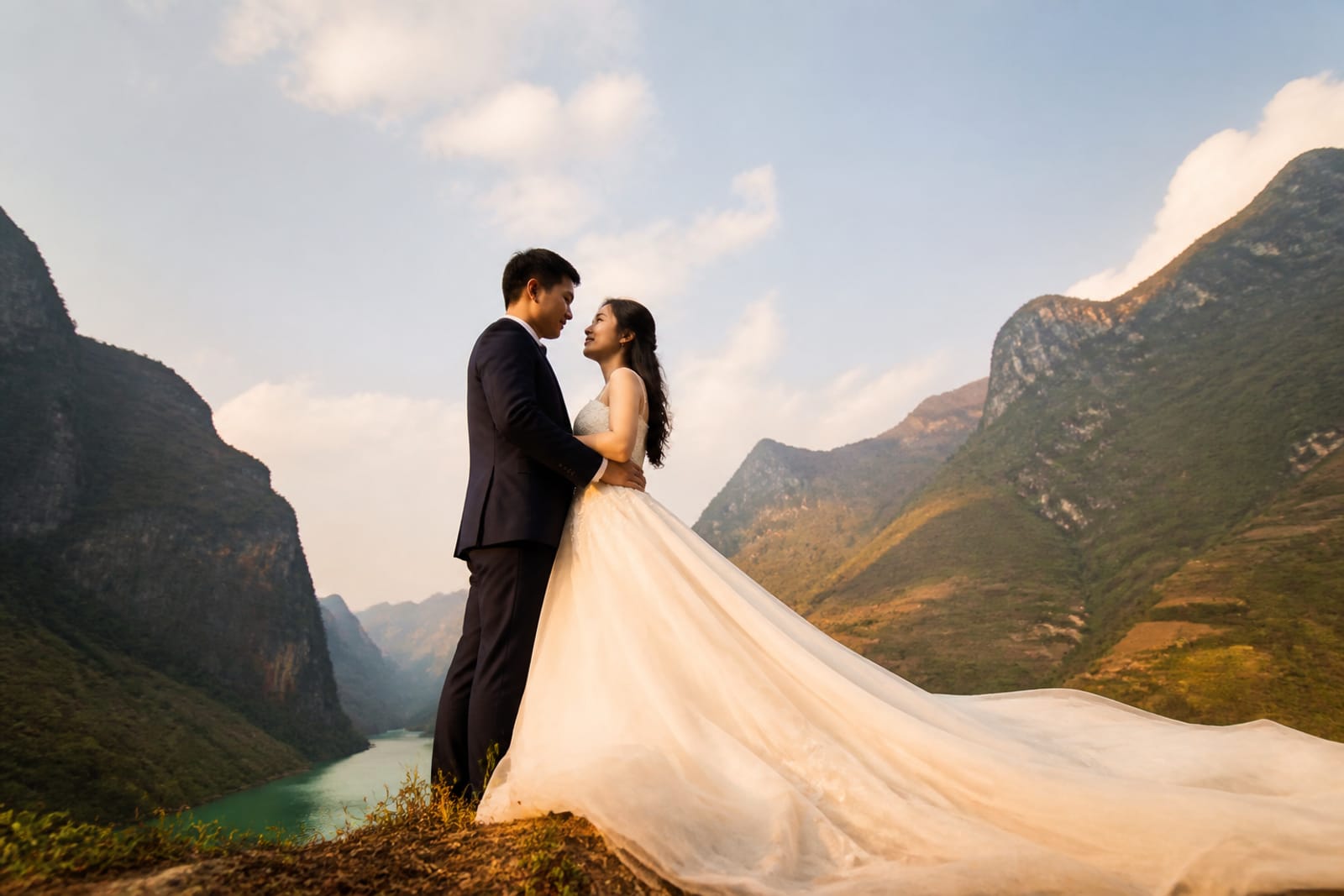
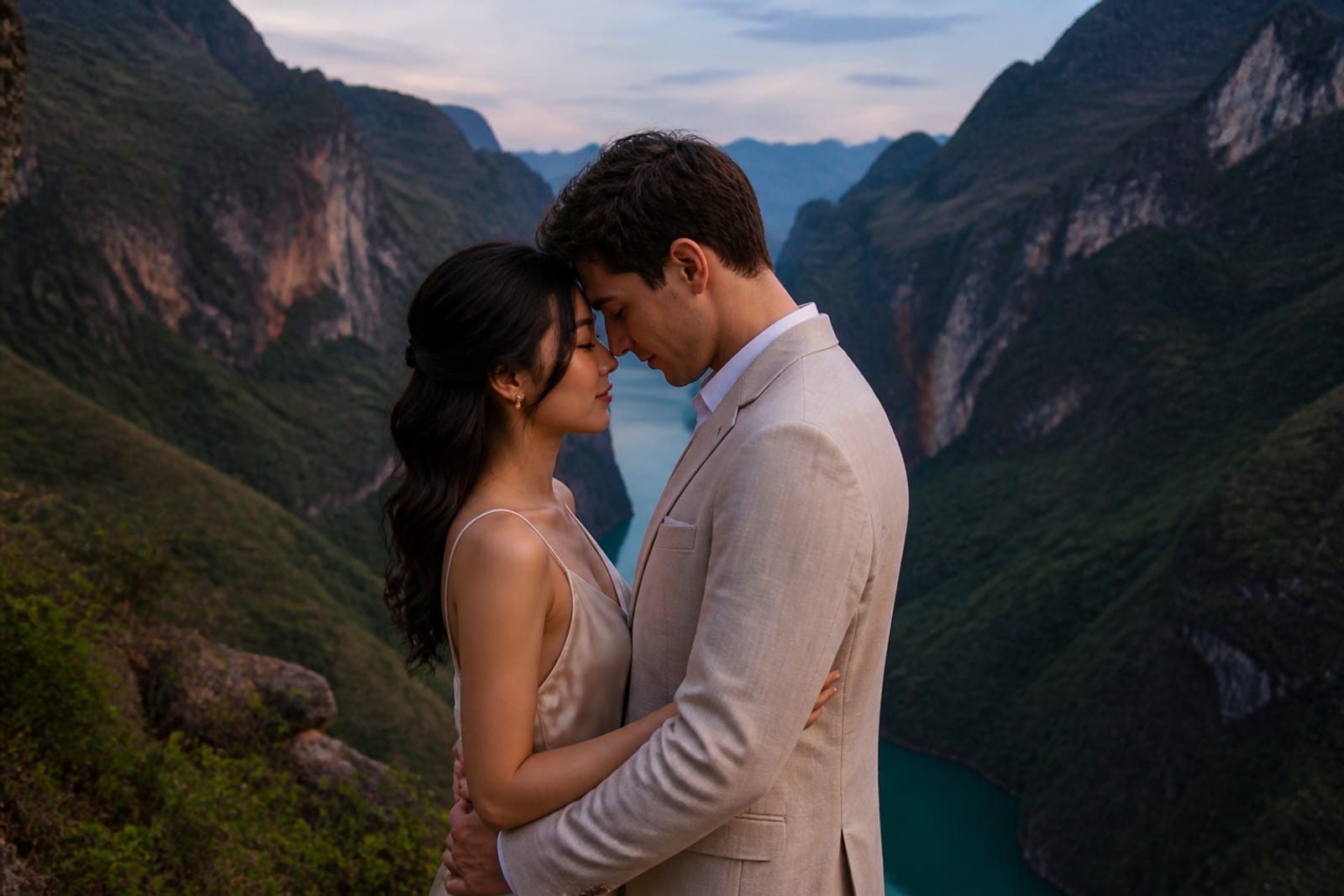
Ma Pi Leng Pass, straddling Cao Bang and Ha Giang provinces in northern Vietnam, is a photographic destination that demands precision: dawn (5:30–7:00 am) captures soft side light against the Nho Quan River and cliffs; golden hour (5:00–6:30 pm) from the opposite angle softens the limestone face. The pass sits 300 km from Hanoi—a 6–8-hour journey means shooting is part of a multi-day trip, not a standalone session. October to November offers stable weather and buckwheat flowers on surrounding hills; December–February is cold with occasional mist; summer (May–September) brings landslide risk on mountain roads. A local crew familiar with light, road timing and cliff access is essential: Cáo Studio does not operate here, so you'll need to coordinate a Hanoi-based photographer who travels, arrange transport separately, and confirm shoot dates and detailed shot lists in advance. Expect to budget extra for travel time, overnight stays and guides—discuss all factors upfront on WhatsApp before committing. ---
Is dawn or golden hour better for Ma Pi Leng Pass wedding photos?
Dawn (5:30–7:00 am) gives you side light that rakes across the limestone cliffs, creating sharp relief and texture. The river often holds mist that catches this angled light, adding depth. You shoot quickly—crowds arrive after 8:00 am. Golden hour (5:00–6:30 pm) requires you to shoot from the opposite ridge or lower angle; the light is warmer but flatter against the cliff face. Dawn is harder logistically (early wake, cold) but delivers more dramatic framing. Golden hour is gentler on the body but less distinctive for this landscape.
Pick dawn if you want bold texture and mist; choose golden hour if you're travelling with a group and prefer comfort.
---
What time of year offers the clearest light and safest roads?
October through November is the window: stable dry weather, crisp morning air, and buckwheat flowers blooming on terraces above the pass add foreground colour. Roads are navigable; no typhoon risk. December–February is cold (5–10°C at dawn), occasional mist obscures the cliffs mid-morning, but it clears quickly. Summer (May–September) brings heavy afternoon rain, landslides on winding roads, and humidity that dulls the light. Tet (late January–mid February) closes many services and swells tourist traffic.
Aim for October–November for both light quality and logistics.
---
Why does booking a full-day trip suit Ma Pi Leng better than a 4-hour session?
The pass lies 300–350 km from Hanoi or Cao Bang town; driving takes 6–8 hours one-way depending on road condition and stops. A single dawn shoot leaves no buffer for weather, traffic or re-positioning. A full-day itinerary (arrive afternoon before, scout at golden hour, shoot dawn the next morning, revisit afternoon cliffs if light allows) lets you adapt to cloud cover, capture multiple angles and times, and frame your photos as part of a landscape narrative, not isolated against a monument. Cáo Studio shoots in Hanoi and Saigon where walk-in logistics are straightforward; for remote locations like Ma Pi Leng, a multi-day photoshoot embedded in your travel plan ensures you get frames worth the journey.
Budget 2–3 days; rushing defeats the purpose.
---
Should you hire a Hanoi-based travel photographer or try a local guide who "does photos"?
| Option | Best For | Reality Check | Pitfall |
|---|---|---|---|
| Hanoi-based photographer (travels on request) | Couples serious about quality, pre-wedding direction, directorial vision | Familiar with Vietnam light, can scout and direct; costs extra for transport and time | May require 2+ day commitment; ask portfolio specifics before booking |
| Local Cao Bang guide (adds photos as side service) | Budget-conscious, happy-snaps documentation | Knows roads, weather windows, fast access to truck stop photo spots | Unlikely to direct posture, frame intentionally, or deliver edited files on time |
| Hybrid: Hanoi crew + local guide | Professional quality + local logistics knowledge | Best coverage and safety; one director, one logistics person | Coordination overhead; confirm all details in advance via WhatsApp |
A local guide is cheap but untrained in directing movement or managing light. A Hanoi photographer guarantees quality but needs transport arranged. The hybrid—Cáo Studio coordinates this for shoots in Hanoi, Saigon and Hoi An—spreads the load and ensures both the frame and the safety.
---
What do you wear for photos at a cliff-edge pass?
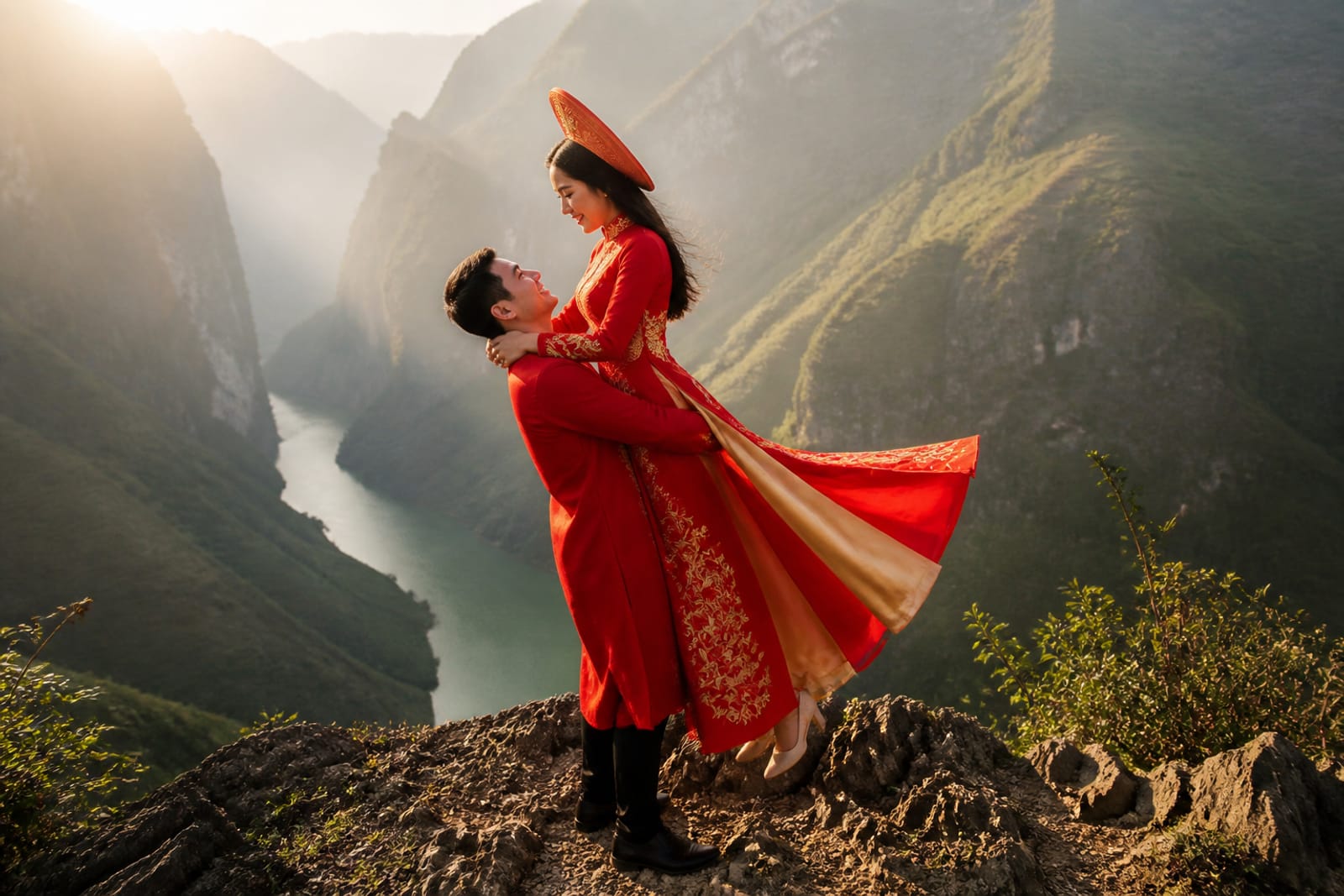
Ma Pi Leng's wind is real: ao dai works beautifully in stills but will be disheveled in movement shots and catches wind unpredictably. For a pre-wedding shoot, consider a fitted long-sleeved dress or embroidered áo dài worn under a structured jacket or shawl for stability. Grooms: trousers and a shirt (colours that read well in morning mist—cream, pale grey, soft pastels). Avoid white linen that flattens in mist. Shoes: closed leather (rocks, uneven paths, wet morning dew). Bring a second outfit for golden hour if doing a full day. Pack a windbreaker in a neutral tone to have on standby.
Test movement and wind in your studio or garden before the trip; mist and exposure demand dressed-to-move, not dressed-to-pose.
📸 Book on WhatsApp — pre-wedding & elopement
---
How do you plan outfit changes and makeup touch-ups on a mountain shoot?
Bring a crew: Cáo Studio's makeup & hair team works in hotel rooms in major towns (Hanoi, Cao Bang city), so you can be camera-ready before transport to the pass. On-site touch-ups are limited—wind dries skin, mist frizzes hair, and you won't have a chair or mirror. Pack: powder, a lip tint that stays put, bobby pins, and a small mirror in a ziplock (condensation risk). If you're doing two outfits, change in a vehicle parked nearby; bring a robe and a small steamer if the second outfit wrinkles. Coordinate exact timing with your photographer: "Outfit 1 for dawn (5:30–7:00 am), outfit 2 for golden hour (5:00–6:30 pm)" prevents rushed decisions and last-minute makeup disasters.
More outfits = longer trip and logistical friction; one powerful outfit per light window is the pro move.
---
What should you confirm with a photographer before booking?
Shot list: Dawn cliffs wide (full rock face), medium (you two walking toward the river), detail (hands, ring, mist detail). Golden hour: repeat from opposite angle. No standing-in-front-of-monument poses; ask for "walking and looking at each other in real light."
Delivery: How many edited files, by when (48 hours is Cáo Studio standard for urban shoots; remote locations may take longer), and in what format (RAW, JPEGs, vertical film for social media).
Backup plan: What if dawn is clouded out? Reshoot that afternoon, or push to the next morning? Document the agreement.
Transport and crew: Who arranges the van, driver, guide, and permits? Who pays extra if road closure extends the trip?
Payment and cancellation: Never wire full payment upfront to an unfamiliar photographer. Agree on a deposit (typically 25–50%) due before the trip, balance on delivery. Confirm cancellation terms if weather is truly impossible.
Accessibility: Ask the photographer to visit the site beforehand (virtually or in person) and specify exact shooting positions—some lookouts are cliff-edge, some are fenced, some require scrambling.
Insurance and liability: For a remote mountain shoot, confirm the photographer has liability insurance and that you've told your travel insurer you're doing a photoshoot in an exposed location.
Contact method: Confirm WhatsApp or phone is the only contact channel; avoid email for urgent logistics.
Ask these questions before sending money.
---
Why does Cáo Studio recommend coordinating Ma Pi Leng shoots through Hanoi, not booking direct?
Cáo Studio has roots in Hanoi and works with trusted local guides and drivers for remote northern locations. Rather than pretend we have a branch in Cao Bang, we coordinate the full trip: Hanoi-based director briefs a vetted local crew on framing and light, flies out or joins on-site for the key shoots, and ensures one message—outfit, hair, makeup, direction—stays coherent across the travel days. This model is slower than a quick booking, but it's honest: you get one team's vision, not three vendors stitched together. If you're interested in a Ma Pi Leng pre-wedding shoot, contact us on WhatsApp and describe your vision; we'll outline the logistics, timeline and cost factors (travel, overnight accommodation, crew, multiple outfits) specific to your dates.
📸 See the lookbook for inspiration, then ask on WhatsApp how we'd approach your Ma Pi Leng idea.
---
How does weather actually affect the shoot day-to-day?
Clear dawn + clouded mid-morning: Golden light hits cliffs sharply 5:30–6:30 am; by 8:00 am, monsoon clouds roll in from Hanoi direction. Mist swallows the river. You've already shot wide and medium; detail shots become hazy but moody. Proceed to breakfast and scout for afternoon light.
Overnight rain, dawn mist burns off by 7:30 am: Wait. The delay costs you the softest light, but if mist clears by 8:00–8:30 am, you get a secondary window of sharp side light with clearer skies. Reschedule to the next dawn if this day's timing is too late.
Afternoon typhoon rain (May–September): Road becomes impassable; descend immediately and wait in town. Reschedule. Never shoot in heavy rain on a cliff edge with slippery rocks.
Winter mist (December–February) that doesn't clear: Rare, but it happens. The cliffs vanish into grey. Shoot the mist as texture (intimate, moody) or wait another day. Some couples like mist; others don't. Agree upfront on the plan B.
Build a 2-day contingency into your trip; one day is never enough for a mountain location.
---
What to check before you book
- Portfolio: Ask the photographer for 5–10 shots from Ma Pi Leng or similar exposed landscapes (not just studio couples). Look for intentional posture (walking, looking at each other), directional light (side-lit cliffs, mist catching dawn rays), and sharp detail (hands, expressions).
- Crew size: Who's shooting (1 person with one camera = risky on dangerous terrain)? Is there a makeup artist on the crew or do you arrange separately?
- Weather clause: How many days are included in your booking if the first day clouds out? Is a full reshoot included or a partial refund?
- Permits and access: Does the photographer know the pass regulations (some lookouts require guide permission, others are open)? If shooting private property or a restricted zone, who clears it?
- Delivery format: How many photos, edited or RAW, and by what date? Vertical film for social media included?
- Transport: Is transport from Hanoi or Cao Bang included in the fee, or quoted separately? Who books the hotel?
- Backup locations: If the pass is unexpectedly closed or dangerous, what's the alternative? Trang An (similar karst, more accessible) or another northern site?
- References: Ask for one couple's contact info (they shot at Ma Pi Leng in the past 12 months) and ask them directly: "Did the photographer deliver on time? Did mist or weather affect the vision? Would you hire again?"
💄 Makeup & hair at your hotel ensures you're camera-ready before the long drive.
---
How does Ma Pi Leng compare to other northern pre-wedding locations?
| Location | Light Quality | Accessibility | Outfit Fit | Travel from Hanoi | Best Season |
|---|---|---|---|---|---|
| Ma Pi Leng Pass | Dramatic cliff-raking side light; mist adds depth | Narrow, winding roads; cliff-edge shoot | Ao dai works in stills; wind risk in movement | 6–8 hours | Oct–Nov |
| Trang An Scenic Area | Diffuse light among limestone karst and water; less directional | River boats + walking; less exposed | Ao dai comfortable; calm water reflects light well | 2–3 hours | Mar–May, Sep–Oct |
| Ha Giang Buckwheat Fields | Warm side light on terraces; low-angle golden hour | High elevation (1200+ m); cold; herding livestock present | Simple dress better than structured ao dai | 5–6 hours | Oct–Nov (flowers) |
| Ninh Binh rice paddies (Mua Cave) | Soft overcast light; no direct cliff raking | Steep 500+ step hike; busy with tourists | Casual dress or ao dai; manageable terrain | 2 hours | May–Sep (green), Oct–Nov (golden) |
| Sapa mountain terraces | Misty, soft light; needs 2+ days to chase clear windows | Very remote; landslide risk Jun–Sep; cold Dec–Feb | Layered outfit; wind is constant | 6 hours + overnight | Oct–Nov, Dec–Feb if prepared |
Ma Pi Leng delivers the boldest light but demands the most logistics. Trang An is the accessible alternative with 60% of the drama and half the travel.
---
One original angle: the timing trade-off between peak light and tourist crowds
Most couples chase the "perfect light" (5:30–6:30 am dawn, 5:00–6:30 pm golden hour) without accounting for the human factor. By 7:30 am, the first truck stop visitors arrive and clutter the lower overlooks. By 4:00 pm, the golden hour crowd swells—families with phone cameras, guided tours. If your photographer's vision relies on isolation and clean foreground (you walking alone on the ridge), you're competing with dozens of others. A two-part strategy: shoot the 5:30–6:15 am slot for wide and medium (usually empty); pack a substantial breakfast and a book; return at 5:45–6:30 pm golden hour when the tour groups have left (they catch 4:30 pm light and depart by 5:30 pm). This means a 12-hour day on-site but guarantees uncluttered frames. Alternatively, shoot a 6:30–7:30 am secondary window when early crowds are still below the ridge—light is good enough, and you're alone.
Clarity on timing prevents the regret of "gorgeous light, but seven other weddings in the frame."
---
📸 Book on WhatsApp — pre-wedding & elopement
---
For inspiration, explore the lookbook and browse pricing for Hanoi-based shoots. If Ma Pi Leng is your dream, WhatsApp us with your dates, and we'll map the full itinerary—light windows, outfits, crew, transport, and cost factors—so you know exactly what the trip entails before you commit.
---
FAQ
Do I need a full ao dai or can I wear a dress for Ma Pi Leng?
Ao dai reads beautifully in stills but wind at cliff edges tangles the layers. Wear a fitted long-sleeved dress or ao dai under a structured jacket for stability. Test movement in advance. Grooms: trousers and a neutral-toned shirt. Closed shoes for rocky terrain.
What's the difference between booking a photographer who travels versus a local guide who "does photos"?
A travel photographer (trained in light, direction, editing) costs more but guarantees intentional framing and edited files on schedule. A local guide is cheaper, knows the terrain, but likely won't direct posture or deliver polished photos. Cáo Studio bridges both by coordinating Hanoi-based directors with trusted local crews for remote sites.
Can we shoot Ma Pi Leng if we only have one morning free?
Possible but risky. One dawn session assumes clear weather and road access—no margin for clouds, traffic delays or reshoot if light is off. Budget 2–3 days for a remote mountain location; build in a rain day and a backup window.
Do we need permits or guides to shoot at Ma Pi Leng Pass?
Confirm locally with your photographer or guide. Some overlooks are open access; others require a guide or have restricted hours. Your photographer should know this and arrange it. Never assume it's open.
How many photos can we expect and when will we receive them?
Depends on your photographer's package. Cáo Studio delivers edited photos within 48 hours for urban shoots; remote trips may take 3–5 days due to travel time. Agree on exact number (e.g., 80–120 edited JPEGs plus 5–10 RAW files for printing) before booking.
Is October or November better for Ma Pi Leng, or is the difference tiny?
October is stable, crisp, and a touch warmer; November edges colder and occasional mist lingers longer into morning. Both are excellent. October is slightly more forgiving if you're new to mountain shoots. Book based on your travel schedule, not season.
What happens if it rains the morning of our shoot?
Agree in advance: does the booking include a full reshoot the next day, a partial refund, or rescheduling later that week? Never assume the photographer absorbs the cost. Document the clause in writing before paying.
FAQ
Do I need a full ao dai or can I wear a dress for Ma Pi Leng?
Ao dai reads beautifully in stills but wind at cliff edges tangles the layers. Wear a fitted long-sleeved dress or ao dai under a structured jacket for stability. Test movement in advance. Grooms: trousers and a neutral-toned shirt. Closed shoes for rocky terrain.
What's the difference between booking a photographer who travels versus a local guide who "does photos"?
A travel photographer (trained in light, direction, editing) costs more but guarantees intentional framing and edited files on schedule. A local guide is cheaper, knows the terrain, but likely won't direct posture or deliver polished photos. Cáo Studio bridges both by coordinating Hanoi-based directors with trusted local crews for remote sites.
Can we shoot Ma Pi Leng if we only have one morning free?
Possible but risky. One dawn session assumes clear weather and road access—no margin for clouds, traffic delays or reshoot if light is off. Budget 2–3 days for a remote mountain location; build in a rain day and a backup window.
Do we need permits or guides to shoot at Ma Pi Leng Pass?
Confirm locally with your photographer or guide. Some overlooks are open access; others require a guide or have restricted hours. Your photographer should know this and arrange it. Never assume it's open.
How many photos can we expect and when will we receive them?
Depends on your photographer's package. Cáo Studio delivers edited photos within 48 hours for urban shoots; remote trips may take 3–5 days due to travel time. Agree on exact number (e.g., 80–120 edited JPEGs plus 5–10 RAW files for printing) before booking.
Is October or November better for Ma Pi Leng, or is the difference tiny?
October is stable, crisp, and a touch warmer; November edges colder and occasional mist lingers longer into morning. Both are excellent. October is slightly more forgiving if you're new to mountain shoots. Book based on your travel schedule, not season.
What happens if it rains the morning of our shoot?
Agree in advance: does the booking include a full reshoot the next day, a partial refund, or rescheduling later that week? Never assume the photographer absorbs the cost. Document the clause in writing before paying.
Ao dai, makeup, hair and a local photographer in Hanoi or Saigon — one WhatsApp message.