services/ao-dai-photoshoot
Matching Ao Dai for Couples: Choose the Right Style & Fit
Matching ao dai for couples works because it signals partnership while honoring Vietnamese tradition. Whether you're celebrating an anniversary, pre-wedding moment, or travel milestone, a coordinated set creates visual harmony—but only if you understand fabric weight, color contrast, fit, and the cut that flatters both bodies.
This guide covers what to check, which styles pair best, common mistakes, and how professional styling locks in the look before you shoot.
What's the difference between "matching" and "coordinating" ao dai?
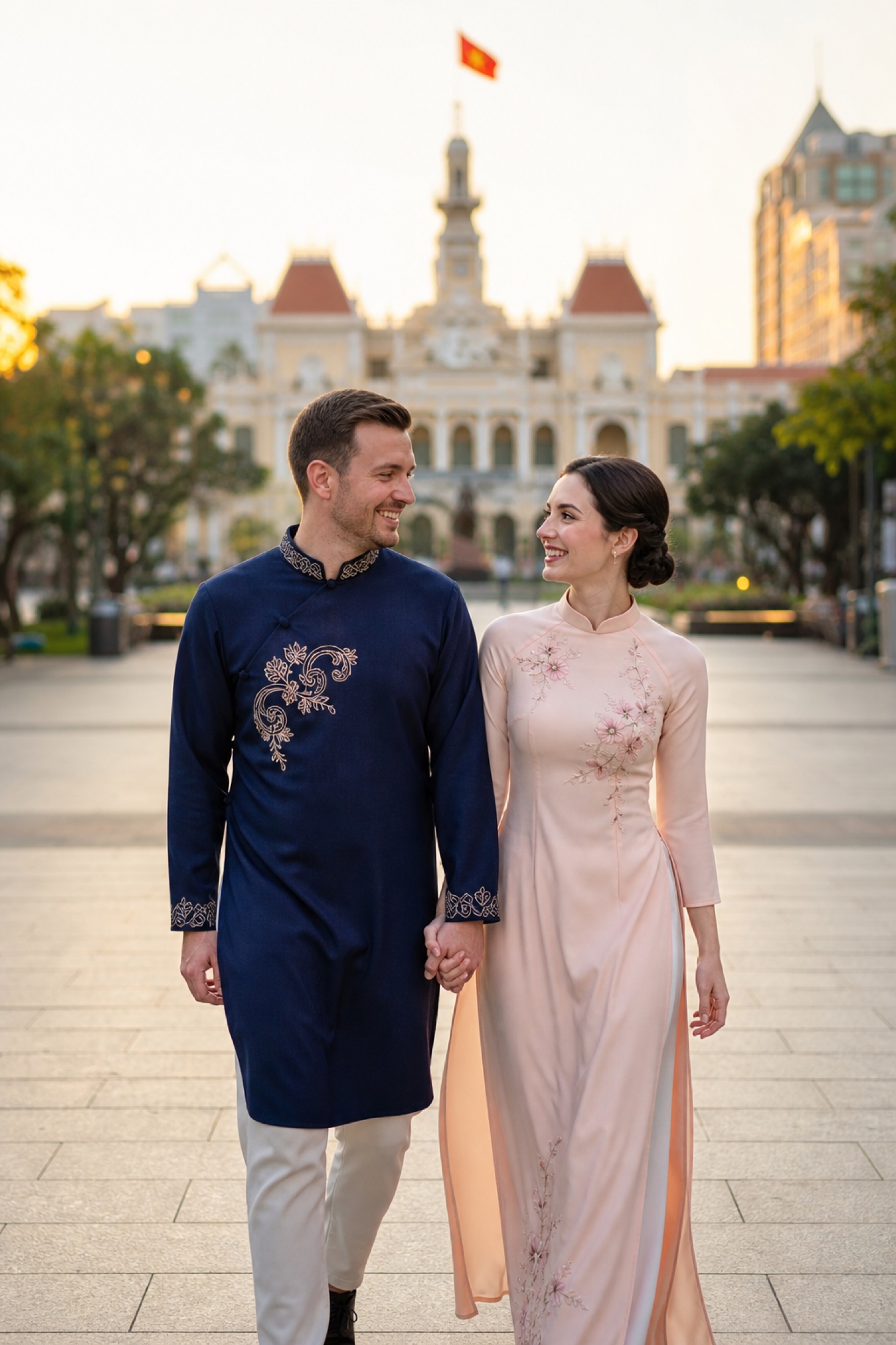
Matching means identical designs in the same or complementary colors—for example, both partners in cream silk with the same embroidered panel, one with a darker tunic. Coordinating means related fabrics, trims, or color families that read as intentional but not identical. Most couples choose coordinating sets because identical cuts rarely flatter both body types equally. A real option: he wears a deeper jewel tone in heavier brocade; she wears the same pattern in lighter silk with a shorter tunic. Both feel connected, both look proportionate.
📸 Book on WhatsApp — ao dai photoshoot
Which fabrics work best for couples' photos?
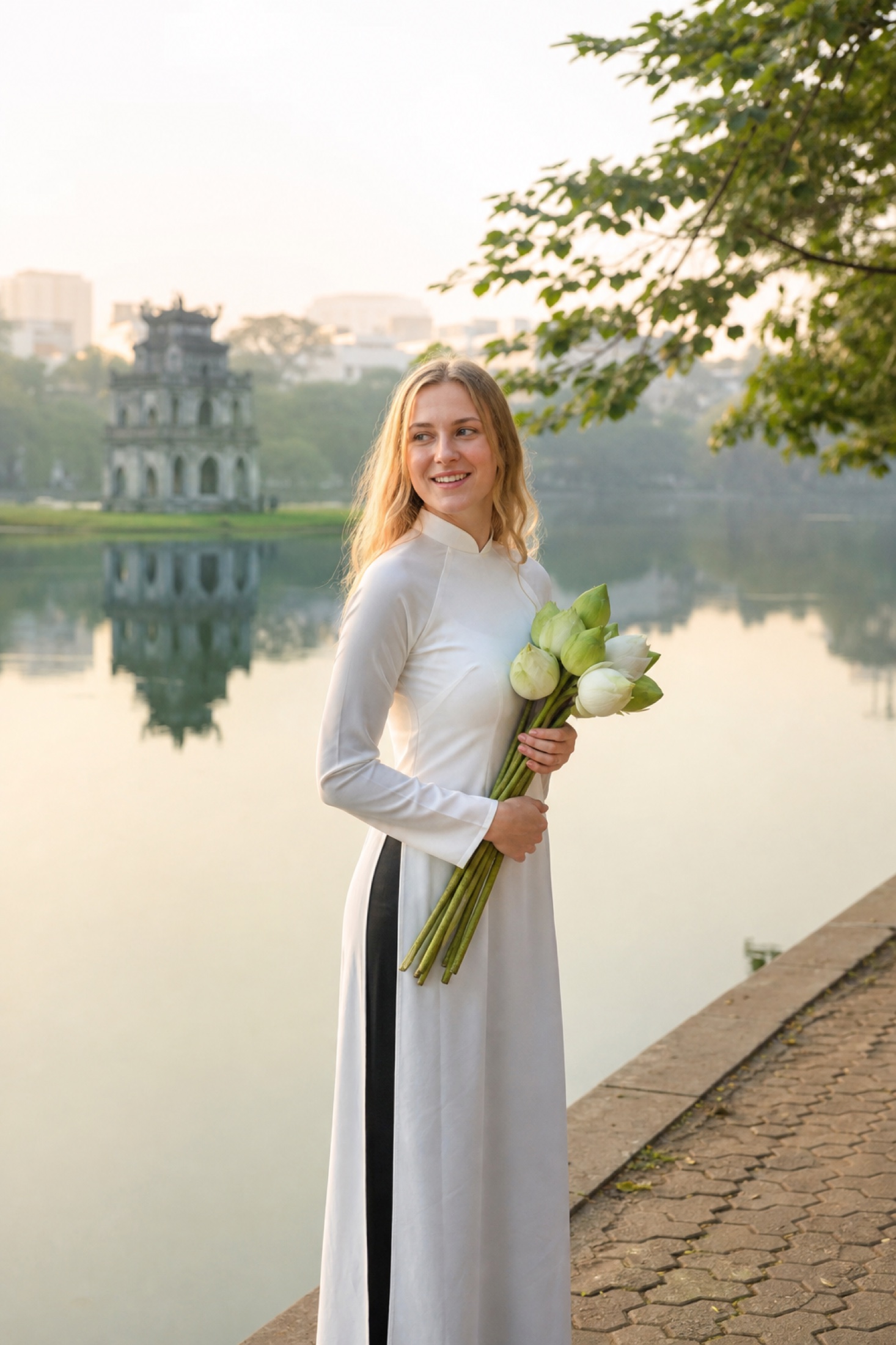
Silk, silk-cotton blends, and premium polyester are standard. Silk photographs with luxury and movement—it catches light and flows naturally. Brocade (woven silk with gold or silver thread) reads richer on camera and suits formal moments; it's stiffer and heavier, so confirm comfort before ordering. Linen-silk blends are breathable, less formal, and ideal for Hanoi heat. Avoid cheap polyester—it looks flat in photos and clings to skin under studio lights or outdoor sun. For couples, match the base fabric (both silk, or both blend) so they photograph as one coordinated effort, not two random choices. Ask the maker or seller: "Is this silk or a blend? What's the weight per meter?" Weight matters—lightweight silk photographs ethereal; heavy brocade reads ceremonial. Choose the weight that matches your shoot's vibe and season.
What color combinations actually work in photos?
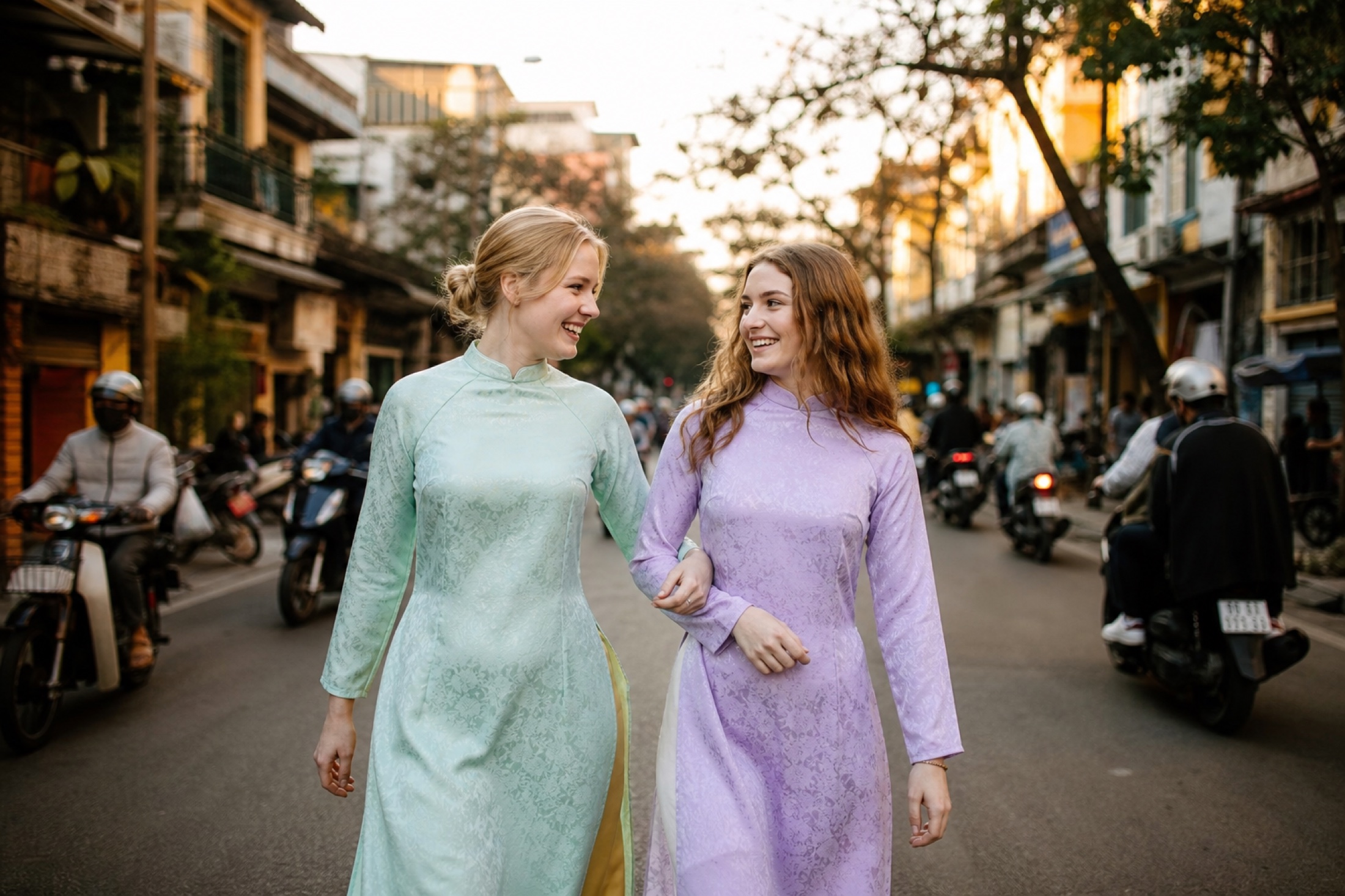
Contrast is your friend on camera. Black-and-cream, navy-and-gold, deep burgundy-and-blush, or cream-and-champagne all read clearly and feel intentional. Avoid two jewel tones at the same saturation (e.g., both emerald)—they flatten each other. A tested framework: one partner wears a neutral anchor (cream, ivory, pale pink, soft gray), the other wears a deeper or warmer tone. This creates visual rhythm without clashing. Alternatively, both wear the same color family but in vastly different depths—navy and pale blue, or burgundy and rose. Test your color pair in daylight before committing. Phone photo in natural window light often reveals whether they genuinely harmonize or feel random. Hanoi's winter light is cool and gray; Ho Chi Minh's tropical light is warm and intense. Choose accordingly: warm golds suit Ho Chi Minh; cool silvers suit Hanoi. See the Cáo Studio lookbook for real examples of couples' ao dai in different settings.
How do you measure for a perfect fit on both partners?
Fit determines whether the photo flatters or betrays. Standard measurements: bust, waist, hip, shoulder-to-wrist, shoulder width, tunic length (ankle or calf), and inseam for the trouser. Many couples order from the same maker but get different tunic lengths—this is correct. Her tunic may stop at the ankle; his might hit mid-calf for proportion. Length is personal; it's not a unisex choice. Take measurements standing upright, in light clothes, with a soft tape. Ask the maker: "Do you adjust length and waist without upcharge?" Reputable makers do. Request a measurement guide specific to their sizing—Asian sizing runs smaller than Western, and different ateliers cut differently. Order samples or ask for photos of previous customers in your size range. Cáo Studio's couple & family photoshoot includes professional styling; our team can guide fit during the booking consultation.
What embroidery or trim pairing looks intentional, not matchy?
Identical embroidery on both pieces reads costume-y. Instead: both tunic fronts have beaded panels, but hers features lotus motifs while his shows geometric patterns. Or, both wear solid silks with matching trouser trim—subtle coordination. Asymmetry works. She wears a heavily embroidered shoulder and collar; he wears a simple monochrome tunic with a matching undershirt. The rule: shared elements (color, metal thread, trim style), not shared placement. If you're unsure, ask the maker for a mockup or photo. And yes, the quality of embroidery shows on camera—loose stitching, uneven beads, and frayed edges are visible in close-ups. Request thread samples and ask about hand-stitching vs. machine work. Hand-stitched embroidery costs more but photographs with clarity and craft.
| Pairing Type | Who It's For | Key Consideration | Why It Works |
|---|---|---|---|
| Identical color, different tunic lengths | Formal couples, anniversaries | Body proportion | Length hides or flatters; color unity reads ceremonial |
| Complementary colors, same fabric | Pre-wedding, travel | Contrast on camera | Jewel tone + neutral balances visual weight |
| Solid silk + embroidered brocade | Modern couples | Budget and comfort | One statement piece, one understated anchor |
| Matching trim, different embroidery | Subtle coordination | Cohesion without costume | Shows thoughtfulness, not uniformity |
What's the common mistake to avoid?
Ordering identical suits without a fitting trial. Ao dai is cut for specific proportions. An identical design in the same size rarely flatters both partners equally—shoulder seams sit wrong, the tunic bunches, or the trouser inseam is off. Solution: order from makers who offer alterations included in the price. Request a trial fitting photo or video call before final payment. Never skip this step. Another mistake: choosing the color for the photo aesthetic without checking how it sits on skin tone. Cream photographs beautifully but can wash out cool undertones; gold suits warm skin but may clash with cool undertones. Ask the maker for fabric swatches and hold them to your face in natural light. A third mistake: ignoring the undershirt. The undershirt affects the silhouette and neckline. Confirm the undershirt color and fabric with your order—mismatched undershirts break the coordinated look.
How long does a custom ao dai take to make?
Standard lead time is 4–6 weeks for custom tailoring. Express options (2–3 weeks) cost more and risk fit errors. If you're shooting within a month, order immediately or consider ready-made pieces from established sellers—less customizable but faster. Some makers offer pre-made sizes in standard colors; these ship in days. Ask: "Can you show me photos of this style on real customers in my size range?" and "What's your return policy if fit is wrong?" (Many reputable makers offer one free alteration; others charge a fee.) Don't rely on reviews posted online—ask the seller directly for references or recent customer photos.
Should we book the photoshoot before or after we have the ao dai?
Book the shoot after you have the garments in hand and confirmed the fit. A rush order with a photoshoot booked weeks ahead creates pressure and risk. Cáo Studio's ao dai photoshoot runs in Hanoi, Saigon, and Hoi An by appointment—contact on WhatsApp to check dates and coordinate. Once your ao dai fit perfectly, book the session. Our team offers makeup & hair at your hotel or on-location styling, ensuring the full look (garment, makeup, light) harmonizes in the final image.
What to check before you order
- Fabric weight & content: Confirm it's silk or a specified blend. Ask grams per meter or "heavy" vs. "light."
- Size guide from the actual maker: Don't rely on generic sizing. Different ateliers cut differently.
- Undershirt color & fabric: Will it coordinate with your partner's? Order at the same time.
- Alterations policy: Are they included? One free alteration or a fee? Timeline for adjustments?
- Embroidery durability: Hand-stitched or machine? Loose threads or uneven beads show on camera.
- Return or refund policy: If fit is wrong, what's the process and window?
- Photos from recent customers: Ask for real customer images, not just studio mockups.
- Payment schedule: Is it 50% upfront, 50% on completion? Or staged? Avoid paying in full upfront if possible.
Next steps
A matching ao dai is a visible commitment. The garments anchor your shoot, but the styling and lighting complete it. Contact Cáo Studio on WhatsApp to discuss your vision, fit timeline, and shoot date. Our team in Hanoi and Saigon specializes in couples' sessions—we'll guide you on fabric, color coordination, and the shoot to make every detail count. See real examples in the lookbook, check our FAQ, and review pricing before booking.
FAQ
Can we wear different ao dai styles as a couple (e.g., she wears traditional, he wears a modern cut)?
Yes, but confirm visual cohesion. Match fabric, color family, or trim so they read as intentional, not random. A modern tunic paired with a traditional silk in the same jewel tone works; entirely unrelated pieces feel disjointed on camera.
What if we don't know our exact Vietnamese size?
Request a measurement guide from your maker and send your Western measurements. Specify your height, typical clothing size, and any fit preferences (slim, relaxed). Ask for a photo of that style on someone similar to you in build.
Is hand-embroidered ao dai worth the extra cost for photos?
Yes, if visible in your composition. Hand-stitching reads with texture and clarity on camera. Machine embroidery is sharp but flatter. For close-up detail shots, hand work shows the craft. For full-body or wide shots, the difference is subtle.
How should we coordinate undershirts for a photo?
Both wear white or cream, or both wear a complementary neutral. Mismatched undershirts (one white, one cream) visible at the neckline breaks the unified look. Confirm undershirt color when you order the tunic.
What if the ao dai arrives and doesn't fit?
Contact the maker immediately with measurements and photos of the fit problem. Reputable makers offer one free adjustment. Confirm this policy before ordering. Alterations take 1–2 weeks, so don't order too close to your shoot date.
Should we wear jewelry with matching ao dai?
Yes, subtly. Matching or complementary earrings, a simple necklace, or a watch work well. Avoid heavy, clinking bracelets or rings that distract or photograph poorly under studio light. Less is more with traditional dress.
Can we do a couples' shoot in ao dai indoors and outdoors in one session?
Yes. Many couples change into ao dai for the shoot. Cáo Studio's couple & family photoshoot includes location work in Hanoi or Saigon. Discuss outfit changes when you book to confirm timing and wardrobe management.
What's the best season to shoot in matching ao dai in Vietnam?
October–November (Hanoi) and November–January (Saigon) offer mild temperatures and clear light. April–September is hot and humid—ao dai will wrinkle and cling. Plan ahead and hydrate during summer shoots.
FAQ
Can we wear different ao dai styles as a couple (e.g., she wears traditional, he wears a modern cut)?
Yes, but confirm visual cohesion. Match fabric, color family, or trim so they read as intentional, not random. A modern tunic paired with a traditional silk in the same jewel tone works; entirely unrelated pieces feel disjointed on camera.
What if we don't know our exact Vietnamese size?
Request a measurement guide from your maker and send your Western measurements. Specify your height, typical clothing size, and any fit preferences (slim, relaxed). Ask for a photo of that style on someone similar to you in build.
Is hand-embroidered ao dai worth the extra cost for photos?
Yes, if visible in your composition. Hand-stitching reads with texture and clarity on camera. Machine embroidery is sharp but flatter. For close-up detail shots, hand work shows the craft. For full-body or wide shots, the difference is subtle.
How should we coordinate undershirts for a photo?
Both wear white or cream, or both wear a complementary neutral. Mismatched undershirts (one white, one cream) visible at the neckline breaks the unified look. Confirm undershirt color when you order the tunic.
What if the ao dai arrives and doesn't fit?
Contact the maker immediately with measurements and photos of the fit problem. Reputable makers offer one free adjustment. Confirm this policy *before* ordering. Alterations take 1–2 weeks, so don't order too close to your shoot date.
Should we wear jewelry with matching ao dai?
Yes, subtly. Matching or complementary earrings, a simple necklace, or a watch work well. Avoid heavy, clinking bracelets or rings that distract or photograph poorly under studio light. Less is more with traditional dress.
Can we do a couples' shoot in ao dai indoors and outdoors in one session?
Yes. Many couples change into ao dai for the shoot. Cáo Studio's [couple & family photoshoot](/services/couple-photoshoot) includes location work in Hanoi or Saigon. Discuss outfit changes when you book to confirm timing and wardrobe management.
What's the best season to shoot in matching ao dai in Vietnam?
October–November (Hanoi) and November–January (Saigon) offer mild temperatures and clear light. April–September is hot and humid—ao dai will wrinkle and cling. Plan ahead and hydrate during summer shoots.
Ao dai, makeup, hair and a local photographer in Hanoi or Saigon — one WhatsApp message.