/pre-wedding-photoshoot
Mistakes to Avoid on a Pre-Wedding Photoshoot in Mui Ne
Mui Ne's dry season (Nov–Apr) and iconic dunes attract couples, but pre-wedding shoots here fail when booked without understanding wind, sand, and local light patterns. The strongest mistakes: shooting midday on the dunes (harsh shadows, overheated sand), arriving unprepared for wind (loose hair and fabric get destroyed), trusting an out-of-area team (three vendors + one coordinator = slower edits and mismatched vision). Pre-wedding shoots work best Nov–Jan when wind is predictable and morning light is long. Cáo Studio operates from Hanoi and Ho Chi Minh City; for a Mui Ne shoot, hire a local photographer who understands the dunes and can deliver polished edits within 48 hours. Read on to plan a shoot that delivers frames instead of regrets.
Why do most pre-wedding shoots in Mui Ne deliver flat light and ruined hair?
Mui Ne's biggest asset—the sand dunes—becomes a liability without timing discipline. The dunes face west, so midday (10 am–2 pm) light is harsh overhead, flattening every face and forcing squinting. By noon, the sand surface heats to a point where standing barefoot is painful; couples rush poses instead of walking naturally. Wind picks up from mid-morning and peaks mid-afternoon, turning loose ao dai fabric and bridal hair into chaos. Most photographers arrive around 10 am (easy for the schedule, worst for light), shoot for two hours, and leave with underexposed or backlit frames from afternoon wind gusts. The fix: shoot dunes at sunrise (5:30–7 am, soft golden light, minimal wind, sand is cool enough to walk on) or late afternoon (4:30–5:45 pm), never midday. Book a photographer who knows these timings are non-negotiable, not preferences.
📸 Book on WhatsApp — pre-wedding photoshoot
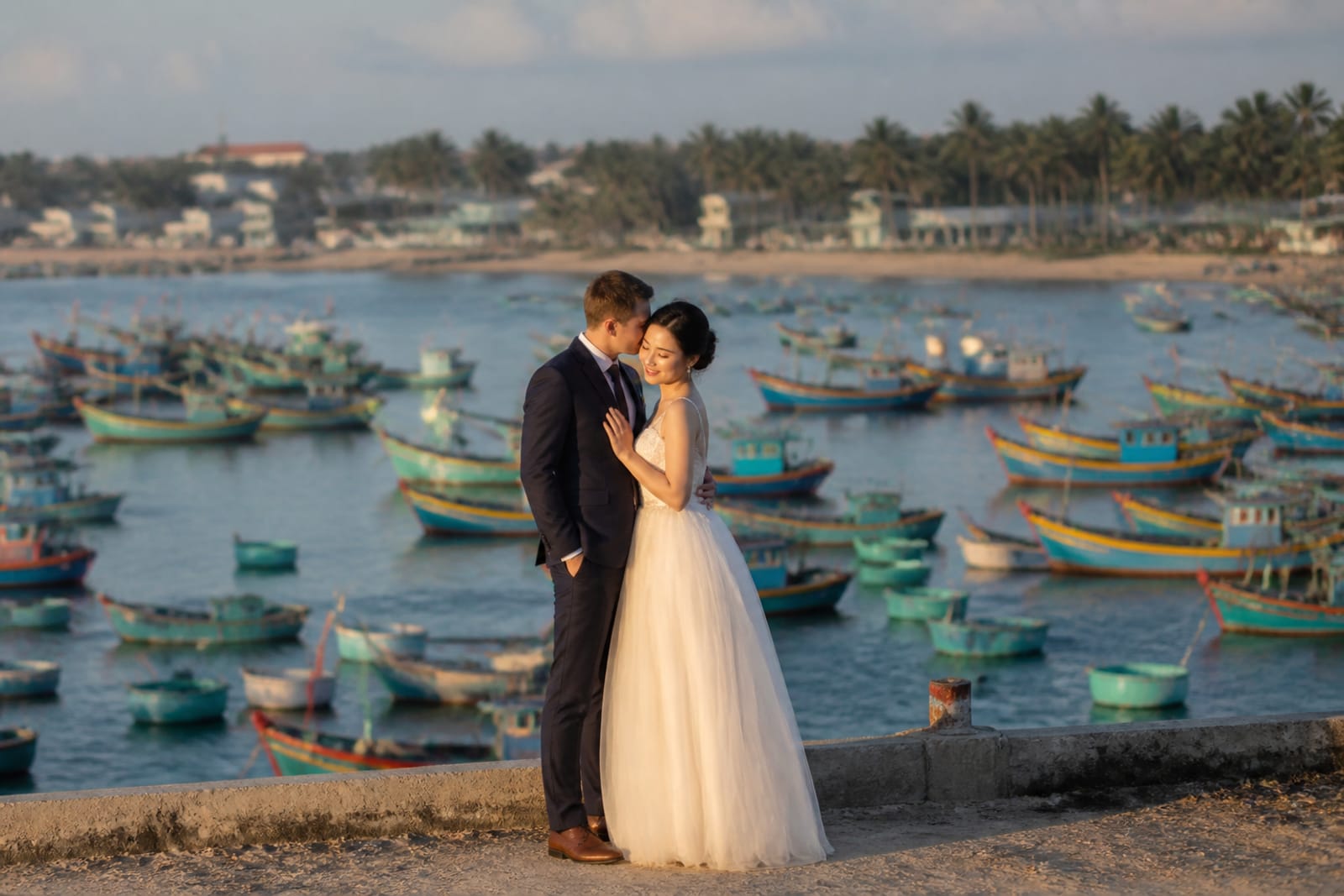
What outfits and preparations get destroyed by Mui Ne wind?
Wind in Mui Ne runs Nov–Mar at 15–25 km/h during peak daylight hours; it flips ao dai hems, tangles long hair, and coats everything in fine sand within minutes. Loose ao dai—especially silk or chiffon styles—photograph beautifully in still light but become uncontrollable in wind. Long, unbraided hair looks ethereal in still air but wraps around the face and flies into the groom's eyes the moment wind hits. Heavy jewelry, hairpieces, or clips that aren't secured come loose. Many couples arrive with elaborate hairstyles expecting magazine-look frames; by the second photo, their hair is a tangled mess and the mood sours. A prepared shoot includes: securing the ao dai hem (safety pins inside, tailored fit reduces flutter), wearing hair in a low, tight braided style or an updo with strong hold (hairspray, multiple bobby pins, covered with a lightweight silk scarf until the last moment), choosing cotton or linen ao dai over silk in windy months, and leaving heavy jewelry in the hotel (sand gets into every crevice and ruins finishes). The photographer should carry wind-resistant tools—gaff tape, hair pins, lint rollers—and know how to frame shots that make wind-blown movement look intentional, not chaotic.
Should you hire a Hanoi or Saigon team to shoot in Mui Ne, or find a local photographer?
This is the central trade-off in pre-wedding shoots outside your photographer's home base. The comparison below shows what each option costs in time, quality and logistics:
| Option | Best for | Light & Season Knowledge | Edits & Vision | Travel & Timing | Why It Matters |
|---|---|---|---|---|---|
| Cáo Studio from Hanoi/HCMC | Couples who want a known team with a cinematic house style | Strong (shoot Hanoi/HCMC regularly, understand Vietnam light) | Fast (48-hour edit, one director's vision throughout) | 3–5 hour drive each way; plan full day shoot, higher coordination cost | Consistency and speed, but travel costs factor into budget |
| Local Mui Ne photographer | Couples living nearby or with flexible dates | Excellent (shoots dunes weekly, knows wind patterns and exact hour light turns) | Variable (depends on the individual's workflow and gear; confirm edit timings before booking) | Minimal travel, can adapt to wind forecasts same-day, shoots familiar angles | Best for light quality and spontaneity, but research the portfolio carefully |
| Three separate vendors (photographer + makeup + stylist from different cities) | Budget-conscious couples willing to coordinate themselves | Weak (each vendor unfamiliar with Mui Ne conditions, guesses on timing) | Slowest (three edit schedules = 7–14 day wait, mismatched color grading and framing) | Logistics chaos (hair artist late, photographer can't wait, stylist uses wrong pins) | Avoids one-team upfront cost but almost always costs more in reshoot fees and slow edits |
Cáo Studio shoots from Hanoi and Ho Chi Minh City, with edits delivered in 48 hours and a single director's vision. For a Mui Ne shoot, if you're based in or near Ho Chi Minh City and want a known team, ask on WhatsApp +84 338 762 340 whether Cáo can cover your date. If not, hire a local photographer whose portfolio shows strong dune frames with good skin tone and fabric texture (not blown-out highlights or muddy sand). Ask that photographer directly: "What hour do you shoot the dunes, and why? How many reshoot dates do you allow? When do I get edits?"
What weather and season mistakes cost couples the most wasted shots?
Mui Ne's dry season runs Nov–Apr; within that window, Nov–Jan is optimal (wind is strong but predictable, sun is warm, no rain risk). Feb–Apr sees rising heat and occasional stray rain from the tail end of the northern winter monsoon. May–Oct is the wet season with afternoon downpours and high humidity (sweat ruins makeup, fabric clings, light scatters in haze). Many couples book Feb–Apr thinking "still dry" but encounter 35°C+ heat, sweat breaking makeup within 30 minutes, and unexpected rain that shuts down the shoot. Wind speed matters more than temperature: Nov–Dec winds are often 20+ km/h (challenging for hair and fabric), Jan winds settle to 15–18 km/h (manageable with preparation), and Mar–Apr winds ease but heat spikes. If you must shoot outside Nov–Jan, request a morning-only session (finish by 9 am before the peak wind and heat) and bring extra makeup-setting spray and microfiber cloths. Cancel if rain is forecast; wet sand looks dark and lifeless, and damp ao dai clings instead of flowing. Check Vietnam's weather service or ask your local photographer for wind and rain forecasts before finalizing the date.
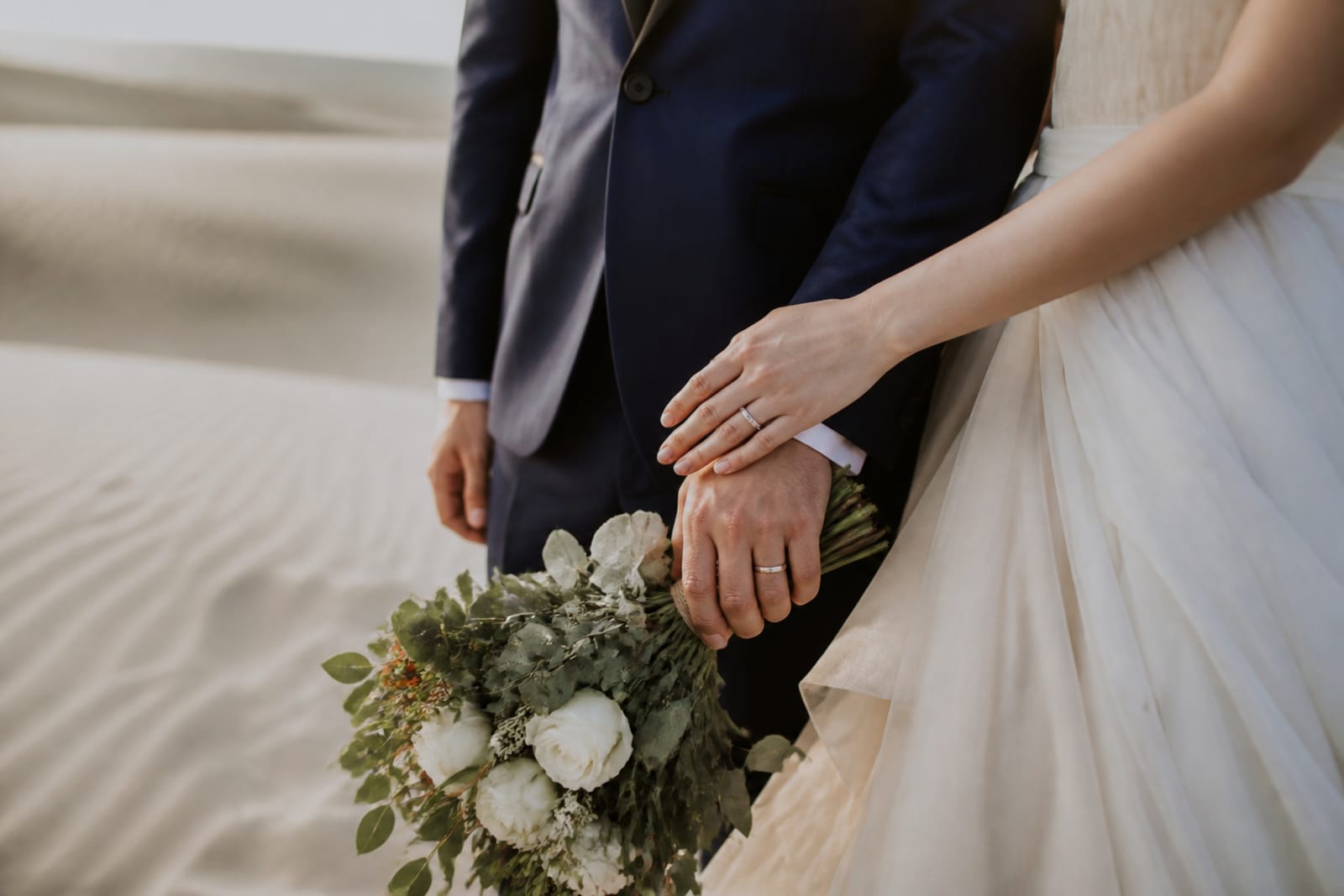
How do you avoid hiring a photographer who's never shot Mui Ne before?
A photographer unfamiliar with Mui Ne will make predictable errors: missing the one-hour window when light is perfect, overexposing the bright sand, underexposing skin tones (trying to "save" the sand), shooting too close to crowds, and not knowing which dune angles are photogenic. When vetting a local photographer or asking Cáo Studio about Mui Ne capability, request three things: a portfolio with at least 10 Mui Ne pre-wedding or couple frames (not just vacation snapshots), a written shot list showing the exact times and locations they'll use (e.g., "Fish Sauce Dunes at 6 am for sunrise, then Mui Ne coast road at 5 pm for backlit walking shots"), and their edit turnaround time in writing (48–72 hours is standard; anything longer suggests they're juggling too many shoots). Ask whether they shoot one location multiple ways (wide, medium, close-up detail) or just one angle and move on; the former shows experience and intention. Check that they've worked with couples in ao dai or formal wear, not just casual vacation tourists (different framing, different respect for the outfit). If a photographer can't provide a portfolio or seems vague about timing, their experience level isn't high enough for a pre-wedding shoot.
What should you confirm in writing before the shoot?
Before you book any pre-wedding session in Mui Ne, lock down these details in a written quote or contract (email or WhatsApp screenshot):
- Shoot date, time window, and locations (e.g., "Nov 15, 5:30–7 am on Fish Sauce Dunes, then 5–6:30 pm on Mui Ne coast road near the lighthouse")
- Outfit and makeup plan – how many outfits, whether the photographer is coordinating hair/makeup or you're hiring separately, and contingency if the ao dai gets sand-stained (reshoot the same location same day, or accept the take as-is)
- Weather cancellation policy – what counts as a cancel-worthy forecast, whether you reschedule for free or lose the booking fee
- Delivery timeline – "edited photos by [date]" and how many files you receive (confirm this in writing; don't assume)
- Retouching scope – sand removal from skin/fabric, color correction, or minimal editing
- Payment and deposit – how much is due upfront and when the rest is due
For Cáo Studio sessions in Hanoi, Ho Chi Minh City, or Hoi An, all inclusions are confirmed on WhatsApp +84 338 762 340. For a Mui Ne shoot with a local photographer, insist on written confirmation of the above; verbal agreement leads to mismatched expectations and disputes after the shoot. If the photographer resists writing anything down, that's a sign they're not professional enough.
---
What to Check Before You Book
Portfolio clarity: Does their Mui Ne work show strong skin tones, clean sand (not blown-out), and natural movement (walking, looking at each other) or stiff monument poses?
Light knowledge: Can they explain why they shoot at specific hours? If they say "any time is fine," they haven't shot Mui Ne enough.
Responsiveness: Do they reply to WhatsApp or email within 24 hours? Slow communication before the shoot often means slow edits after.
Outfit coordination: Are they helping source or prepare the ao dai, or expecting you to arrive fully styled? One-team coordination (photographer + stylist + makeup) always delivers better results than three separate vendors.
Backup plan: If weather cancels the shoot, can you reschedule for free within a month? If they don't offer this, they're not confident in the work or conditions.
FAQ
Can Cáo Studio shoot a pre-wedding in Mui Ne?
Cáo Studio operates from Hanoi and Ho Chi Minh City. For Mui Ne, contact us on WhatsApp +84 338 762 340 to ask if we can travel for your date. Otherwise, we recommend hiring a local photographer who shoots the dunes regularly and understands Mui Ne's wind and light patterns.
What's the best month to shoot pre-wedding photos in Mui Ne?
Nov–Jan is optimal: dry conditions, predictable wind, and long morning/late-afternoon light. Feb–Apr is still dry but hotter and less windy (manageable but less dramatic). May–Oct is wet season with rain risk and midday haze; avoid unless you shoot sunrise-only.
Should I wear an ao dai or a wedding dress for a Mui Ne pre-wedding shoot?
Ao dai flows beautifully in Mui Ne light and wind; traditional wedding dresses tend to get sand-stained and drag heavily on soft sand. If you want both, shoot the ao dai in the main session and the dress in a quick indoor or hotel shot. Ask your photographer whether they've styled couples in formal wear on dunes before.
How much extra does it cost to hire a photographer who travels to Mui Ne?
Cost factors include the photographer's travel time, fuel, and accommodation (if they're from Hanoi or Saigon). Ask for a quote that breaks this down separately from the shoot fee. Local Mui Ne photographers usually don't charge extra travel; imported teams do. Get written quotes from both before deciding.
Why do I need a makeup and hair artist on the day if I look fine already?
Wind, heat, and sand wreck makeup and hair within 30 minutes. A professional artist arrives early, uses long-hold products, and refreshes you between locations—essential for Mui Ne conditions. Ask your photographer whether they coordinate hair/makeup or recommend vendors; this shouldn't be left to chance on shoot day.
FAQ
Can Cáo Studio shoot a pre-wedding in Mui Ne?
Cáo Studio operates from Hanoi and Ho Chi Minh City. For Mui Ne, contact us on WhatsApp +84 338 762 340 to ask if we can travel for your date. Otherwise, we recommend hiring a local photographer who shoots the dunes regularly and understands Mui Ne's wind and light patterns.
What's the best month to shoot pre-wedding photos in Mui Ne?
Nov–Jan is optimal: dry conditions, predictable wind, and long morning/late-afternoon light. Feb–Apr is still dry but hotter and less windy (manageable but less dramatic). May–Oct is wet season with rain risk and midday haze; avoid unless you shoot sunrise-only.
Should I wear an ao dai or a wedding dress for a Mui Ne pre-wedding shoot?
Ao dai flows beautifully in Mui Ne light and wind; traditional wedding dresses tend to get sand-stained and drag heavily on soft sand. If you want both, shoot the ao dai in the main session and the dress in a quick indoor or hotel shot. Ask your photographer whether they've styled couples in formal wear on dunes before.
How much extra does it cost to hire a photographer who travels to Mui Ne?
Cost factors include the photographer's travel time, fuel, and accommodation (if they're from Hanoi or Saigon). Ask for a quote that breaks this down separately from the shoot fee. Local Mui Ne photographers usually don't charge extra travel; imported teams do. Get written quotes from both before deciding.
Why do I need a makeup and hair artist on the day if I look fine already?
Wind, heat, and sand wreck makeup and hair within 30 minutes. A professional artist arrives early, uses long-hold products, and refreshes you between locations—essential for Mui Ne conditions. Ask your photographer whether they coordinate hair/makeup or recommend vendors; this shouldn't be left to chance on shoot day.
Ao dai, makeup, hair and a local photographer in Hanoi or Saigon — one WhatsApp message.