/pre-wedding-photoshoot
Mistakes to avoid on a pre-wedding photoshoot in Phong Nha
Pre-wedding shoots in Phong Nha (Quang Binh province, central Vietnam) rely on cave drama and river mist, but the setting demands season sense and logistical care. The dry window (February to August) shoots cleanly; September to December brings flood risk and cave closures. Caves require permits, tight corridors limit dress trains, and morning light on the river works best before 7 a.m. Couples often book crews based on Instagram alone, arrive in the wrong month, or underestimate travel time between sites (20–40 minutes by motorbike). Cáo Studio shoots pre-wedding in Hanoi and Ho Chi Minh City; for Phong Nha, ask on WhatsApp about partnering with a local photographer who knows cave safety and seasonal constraints. 🌸 See the lookbook | 💑 Pre-wedding & elopement | 📸 Book on WhatsApp — couple photoshoot ---
What season actually works for Phong Nha cave shoots?
Phong Nha's rainy season (September to December, peak chaos October to November) closes caves, floods river access roads and fills cave lakes unpredictably. Heavy rain can arrive 2–3 p.m. and block return routes. February to August is dry; February to May offers cooler temps and clearer cave air, while June to August heat and humidity intensify by afternoon. Shoot morning only (5:30–8 a.m.) to use soft cave light and avoid afternoon flash-flood risk—a choice that ends early, demands an early wake and travel from Dong Hoi town (45 minutes away) before dawn.
| Season | Cave access | Light quality | River mood | Best timing |
|---|---|---|---|---|
| Feb–May | Full | Soft, cool | Mist mornings | 6–8 a.m., no rain risk |
| Jun–Aug | Full | Intense heat afternoon | Clear, busy | 5:30–7 a.m. only |
| Sep–Dec | Closed Oct–Nov, restricted Jan | Grey, damp | Flood risk, access blocked | Avoid; check closures |
The lesson: book February to May for real flexibility. A crew that doesn't mention season limits is selling you risk, not experience.
Why your ao dai or dress won't fit cave stairs and boat passages?
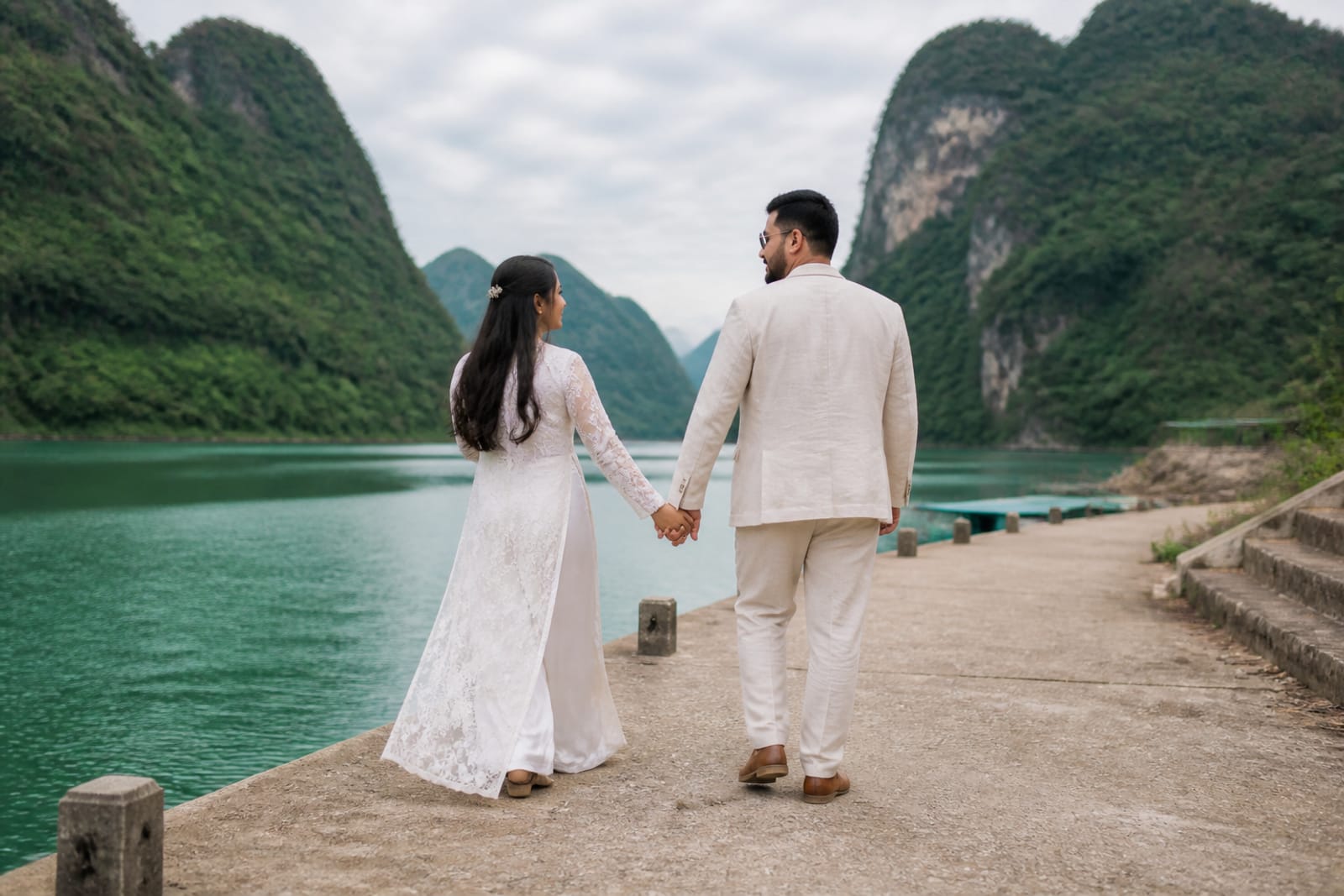
Phong Nha's main caves (Son Doong, Paradise Cave, Phong Nha Cave) require ducking, scrambling over wet stone and climbing narrow boat stairs—a trained dress won't survive the day. Ao dais with long trains snag rock edges; full skirts catch water spray; heels slip on wet stone. Teams unfamiliar with cave geometry dress couples in impractical silhouettes, then waste an hour styling hair no cave mist will honor. Practical crews bring climbing-friendly outfits: tailored pants or a short ao dai split high, water-safe footwear, a backup outfit for calmer riverside shots. A bride who insists on a full cathedral train learns too late that caves demand athleticism, not ballroom drama.
Check before booking: does the crew propose outfit changes between cave and river? Do they own climbing-safe clothes, or will you buy/rent locally? Will makeup be reapplied after cave exertion (you will sweat)?
How far apart are the photo spots, and what does travel time mean for your day?
Phong Nha's best sites—Son Doong Cave entrance, Paradise Cave, the river at Phong Nha pier, limestone cliffs near Hang En—are scattered across 20–40 minutes of rough, winding motorbike or car routes. A crew that promises "cave and river and waterfall all in one afternoon" has not timed the logistics. Realistically, pick two locations (one cave, one riverside), account for 1.5–2 hours travel with outfit changes and makeup touch-ups, and shoot 4–5 hours total. Travel time eats light windows; miss the 6:10 a.m. soft light on the river, and you're chasing harsh midday sun in a cave (where flash washes out texture anyway).
A crew based in Hanoi or Saigon travelling to Phong Nha for the first time will spend a shoot day location-scouting, not directing. Local teams know shortcut routes and have pre-scouted light paths. Compare: a crew that arrives with a detailed shot list (cave entrance west-facing light at 6:40 a.m., river mist clearing by 7:20 a.m.) versus one that says "we'll find the best spots when we arrive."
Do you need a permit, and who arranges it?
Son Doong and Paradise Cave require paid entry permits obtained at the park gate (Phong Nha-Ke Bang National Park, Quang Binh). A crew that doesn't mention permits is either assuming you'll handle it or planning to skirt rules. Local guides manage permit logistics automatically; outside teams often delay entry or shoot illegally in restricted zones (a fine and confiscated footage risk). Ask the crew: do they hold a guide license, or will you hire a park guide separately (added cost factor)? Will they coordinate with the park, or will you? Permits are non-negotiable; a crew that sidesteps the question signals inexperience.
How to choose between a local Phong Nha crew and a Hanoi team travelling in?
| Approach | Best for | Knowledge | Coordination | Light readiness |
|---|---|---|---|---|
| Local crew (Dong Hoi–based) | Couples wanting cave expertise, permit shortcuts | Cave safety, flood timing, permit routes | Seamless; guides on staff | High; shoots cave light daily |
| Hanoi team (Cáo Studio or similar, travel day) | Couples wanting consistent art direction, makeup & styling | Broader aesthetic, couple direction, outfit fit | Requires pre-planning; travel delays risk | Medium; one-time scout, no local shortcut knowledge |
| Hybrid: hire local guide + send art direction crew | Couples wanting both—guided expertise and directed framing | Splits knowledge; guide handles route, director frames | Complex; three parties, miscommunication risk | Medium-high; guide knows light, director frames it |
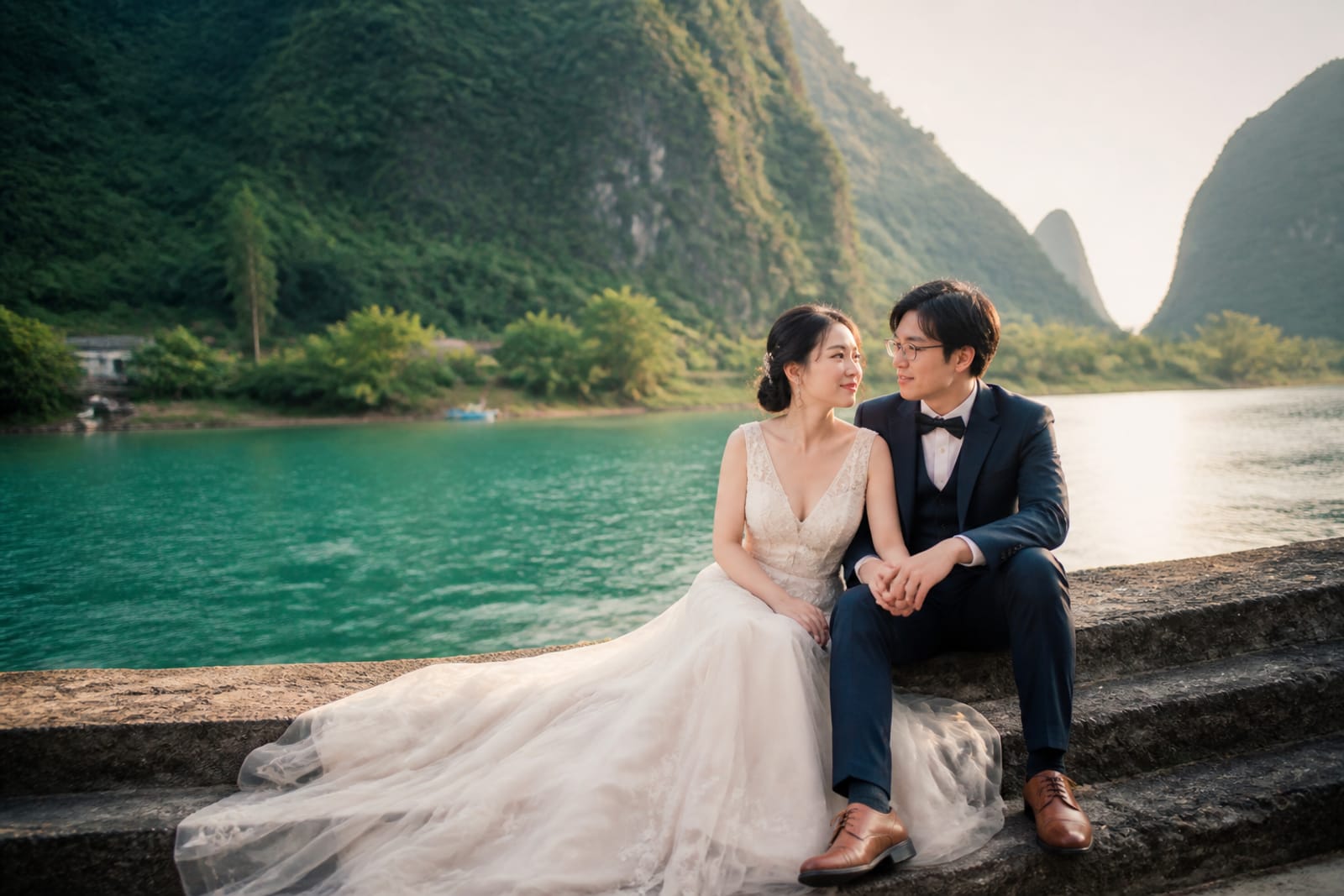
Local crews are faster and safer in caves but may lack the cinematic direction and styling finesse of a travel-in team. Hanoi-based crews like Cáo Studio (Hanoi base) bring outfit, makeup and a consistent visual story but require more lead time and a pre-shoot call to confirm logistics. A hybrid approach (hire a local cave guide, send a separate art director) splits cost and accountability and often fails—three coordinators mean slower decisions and finger-pointing if weather closes caves.
💑 Pre-wedding & elopement | 📸 Book on WhatsApp — makeup & hair
Why flash and reflectors fail in caves (and what shoots instead)?
Phong Nha's cave passages are narrow, limestone-heavy and light-absorbing. Flash bounces chaotically; reflectors are bulky on wet rock and often abandoned mid-shoot. Crews unfamiliar with cave light try to "brighten" faces with flash, creating harsh shadows and unnatural skin tone shifts in the cave's cool, greenish limestone glow. Professional cave shoots use the cave's natural light (shoot facing the entrance or a skylight opening), movement to catch existing reflections on water, and patience—long exposures on a tripod, couple walking slowly, letting limestone textures layer behind them.
A crew that arrives with a ring light or large softbox is signalling they don't understand cave logistics. Ask: how will you light us in the dark passages? If the answer is "flash" or "we'll bring lights," push back. Phong Nha's best frames come from walking toward low cave entrances, shooting silhouettes against skylight, or sitting on the river with mist-soft backlight—none of which need external lighting.
---
What to check before you book a pre-wedding shoot in Phong Nha
- Confirm the season. Ask the crew: "What months do you recommend for Phong Nha?" If they say "any time" or suggest October–November, they haven't shot caves in flood season.
- Request a detailed shot list tied to light timing. "6:15 a.m. at Son Doong entrance, soft side light" beats "we'll shoot caves and the river." A crew with a timed itinerary has pre-scouted.
- Clarify outfit logistics. Can the crew fit you for climbing-safe clothes before the shoot? Will they bring backup outfits, or should you? Will makeup be reapplied between cave and river?
- Ask who handles permits and guides. Is the crew licensed as a guide, or will they hire a local? Who pays? Will they coordinate, or will you manage three separate vendors?
- Check how they light caves. "How do you frame faces in the dark passages without flash?" Honest crews explain movement, timing, composition—not lighting gear.
- Confirm travel logistics. How many locations, how much time between sites, what's the start time, and when do you finish? A vague "all day" is a red flag.
- Ask for references from couples who shot in caves in the same month. Instagram galleries don't show you light timing or whether the couple felt rushed.
- Discuss backup plans. If rain closes caves, will the crew pivot to river or temple shoots, or reschedule? Is rescheduling free?
---
For a pre-wedding shoot in Hanoi or Ho Chi Minh City with Cáo Studio's full team (outfit, makeup, direction, video), WhatsApp +84 338 762 340. For Phong Nha, ask on WhatsApp about vetting a local partner or travel logistics if you're set on this destination.
📸 Book on WhatsApp — pre-wedding photoshoot | 🌸 See the lookbook
---
FAQ
Can we do a pre-wedding shoot in Phong Nha in December?
December is at the tail end of flood season (October–November peak). Cave access may be restricted; rain and mist are frequent. Book February–August for reliable cave access and clearer light. Ask your crew about current closures before committing.
What's the difference between shooting caves with a local guide and a Hanoi photographer?
Local guides know permit routes, cave safety and flood timing but may not direct framing or outfit styling. Hanoi teams bring consistent art direction and styling but require pre-planning and travel time. A hybrid approach (guide + director) splits expertise but risks miscommunication. Choose based on whether you prioritize logistics or cinematic direction.
Do we need to wear an ao dai in caves, or can we wear pants?
Caves demand climbing-friendly outfits: tailored pants, a short ao dai (split high), or a fitted dress that moves with you on wet stone. Long trains, full skirts and heels will snag, catch water and trap you. Ask your crew if they provide climbing-safe clothes or if you should rent locally.
How long does a pre-wedding shoot in Phong Nha typically take?
Plan 4–5 hours total, including travel between two locations, outfit changes, makeup touch-ups and actual shooting time. Morning light (5:30–8 a.m.) is best; afternoon heat and flash-flood risk limit late-day options. Early starts are non-negotiable.
Why is flash not recommended in caves?
Narrow limestone passages absorb and scatter flash light unpredictably, creating harsh shadows and unnatural skin tones. Professional cave photographers use the cave's natural light (entrance glow, skylight reflections, silhouettes against openings) and movement to frame couples. If a crew mentions bringing large lights or reflectors, they're likely inexperienced with caves.
Does Cáo Studio shoot pre-wedding photos in Phong Nha?
Cáo Studio is based in Hanoi and Ho Chi Minh City. For Phong Nha, contact us on WhatsApp (+84 338 762 340) to discuss partnering with a vetted local crew or arranging a travel shoot from Hanoi (logistics and cost factors apply). We direct and style wherever you choose, but local expertise is essential for cave safety and permits.
FAQ
Can we do a pre-wedding shoot in Phong Nha in December?
December is at the tail end of flood season (October–November peak). Cave access may be restricted; rain and mist are frequent. Book February–August for reliable cave access and clearer light. Ask your crew about current closures before committing.
What's the difference between shooting caves with a local guide and a Hanoi photographer?
Local guides know permit routes, cave safety and flood timing but may not direct framing or outfit styling. Hanoi teams bring consistent art direction and styling but require pre-planning and travel time. A hybrid approach (guide + director) splits expertise but risks miscommunication. Choose based on whether you prioritize logistics or cinematic direction.
Do we need to wear an ao dai in caves, or can we wear pants?
Caves demand climbing-friendly outfits: tailored pants, a short ao dai (split high), or a fitted dress that moves with you on wet stone. Long trains, full skirts and heels will snag, catch water and trap you. Ask your crew if they provide climbing-safe clothes or if you should rent locally.
How long does a pre-wedding shoot in Phong Nha typically take?
Plan 4–5 hours total, including travel between two locations, outfit changes, makeup touch-ups and actual shooting time. Morning light (5:30–8 a.m.) is best; afternoon heat and flash-flood risk limit late-day options. Early starts are non-negotiable.
Why is flash not recommended in caves?
Narrow limestone passages absorb and scatter flash light unpredictably, creating harsh shadows and unnatural skin tones. Professional cave photographers use the cave's natural light (entrance glow, skylight reflections, silhouettes against openings) and movement to frame couples. If a crew mentions bringing large lights or reflectors, they're likely inexperienced with caves.
Does Cáo Studio shoot pre-wedding photos in Phong Nha?
Cáo Studio is based in Hanoi and Ho Chi Minh City. For Phong Nha, contact us on WhatsApp (+84 338 762 340) to discuss partnering with a vetted local crew or arranging a travel shoot from Hanoi (logistics and cost factors apply). We direct and style wherever you choose, but local expertise is essential for cave safety and permits.
Ao dai, makeup, hair and a local photographer in Hanoi or Saigon — one WhatsApp message.