/pre-wedding-photoshoot
Mistakes to Avoid on a Pre-Wedding Photoshoot in Sapa
A pre-wedding photoshoot in Sapa means capturing you two against terraced fields, colonial architecture and shifting mist—but timing, weather and logistics trip up most couples. The best light arrives early morning (6–7 am, before clouds thicken) or late afternoon (4–5 pm) on clear days; Sapa's cool, wet climate means Dec–Feb brings grey, foggy skies, while Mar–May and Sep–Nov offer the clearest windows. Common mistakes: booking in peak rain season (May–Sep), wearing thin summer fabrics in 10–15°C air, expecting a solo photographer to handle hair, makeup and camera, or underestimating the 300+ m elevation gain on terraced paths. Cáo Studio does not shoot in Sapa (the team is based in Hanoi, Ho Chi Minh City and Hoi An by appointment), so this guide walks you through local options, what to verify before booking, and how to work with an independent Sapa photographer to get frames that last.
Why does the season make or break a Sapa pre-wedding shoot?
Sapa sits at 1,600 m elevation in northern Vietnam's cool, wet zone. From December to February, mornings are grey and misty—good for moody, intimate frames but risky if you want clear sky or distant mountain views. May to September brings daily rain and cloud cover; shoots can happen between downpours, but timing is unpredictable and clothing gets soaked. March to May and September to November are the dry, clear windows: you'll see terraces, valley depth, and consistent morning light. Book a shoot outside Jun–Aug if detail and colour matter to you.
| Season | Light quality | Terrace view | Temperature | Rain risk | Outfit fit |
|---|---|---|---|---|---|
| Dec–Feb | Grey, soft, misty | Obscured | 8–15°C | Occasional | Layers essential; thick fabrics work |
| Mar–May | Clear, warm morning | Visible | 15–22°C | Low | Light layers or ao dai over thermal |
| Jun–Aug | Overcast, humid | Partly hidden | 18–25°C | High | Quick-dry fabrics only |
| Sep–Nov | Clear, golden hour | Visible | 12–20°C | Low | Sweater and ao dai combination |
Conclusion: Mar–May and Sep–Nov give you the best light-to-risk ratio; book your shoot three to four months ahead to secure those dates.
📸 Book on WhatsApp — ao dai photoshoot
What clothing mistakes do couples make in Sapa's mountain climate?
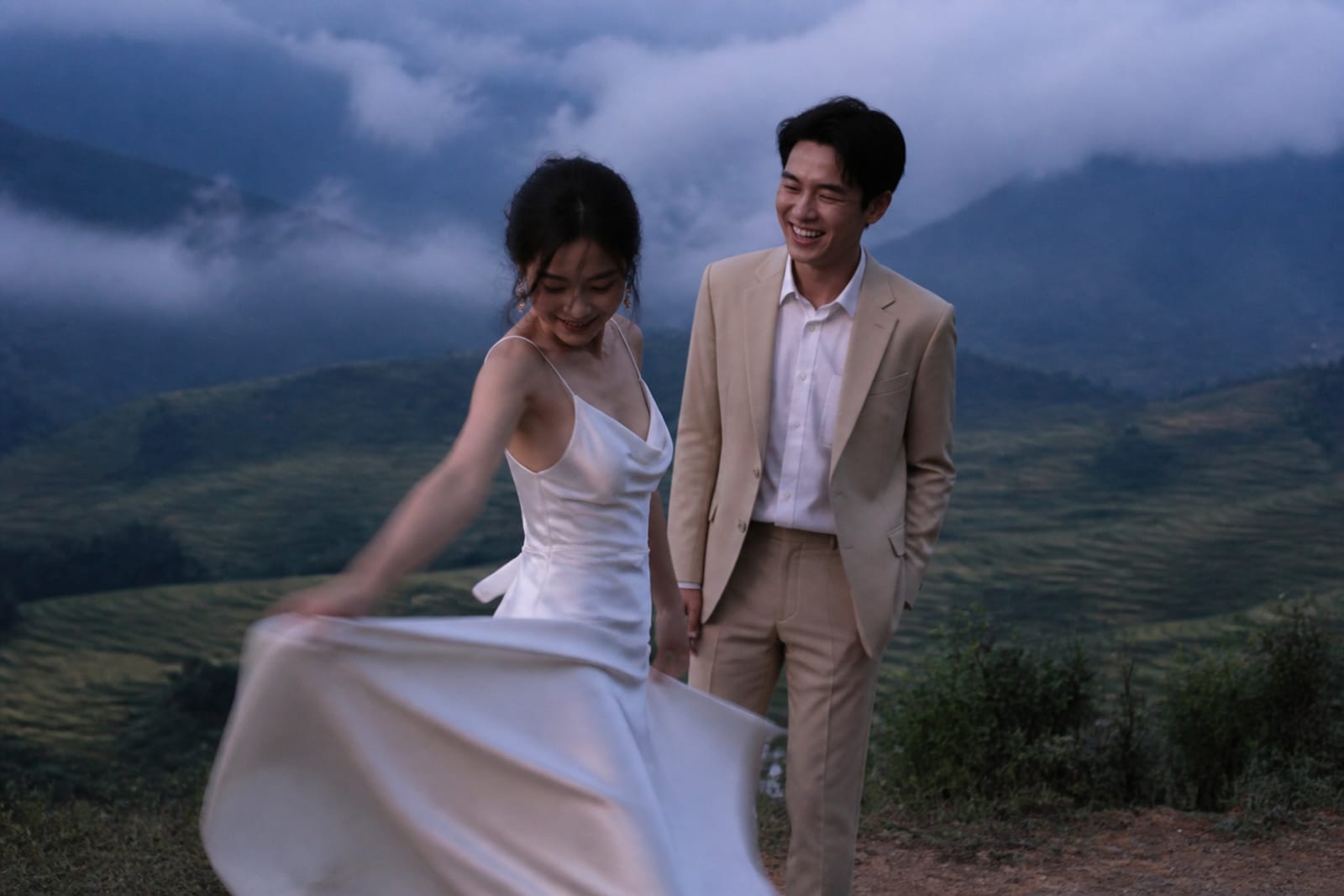
Sapa is cold and unpredictable. Many couples arrive with summer dresses or lightweight ao dai and no layers underneath—within an hour, they're shivering and the shoot becomes a rush to stay warm. An ao dai is beautiful but thin; the wind cuts through it. Wear thermal leggings or a fitted long-sleeved thermal under your ao dai, then a warm sweater or cardigan over it before the shoot begins. The photographer removes the outer layer for frames, keeping you warm between shots. For grooms, bring a thick waistcoat, wool scarf or layered vest under the suit jacket; jeans or wool trousers, not shorts. Avoid leather shoes on wet terrace paths—they slip. Wear hiking boots to the location, change into dress shoes for frames. Pack a waterproof bag with a microfiber towel and spare socks; Sapa mist wets your feet quickly.
Conclusion: Treat Sapa like a winter shoot, not a beach destination; cold, wet feet kill both the shoot and the mood.
Does one photographer handle hair, makeup and camera in Sapa?
This is where many couples stumble. Sapa has skilled local photographers, but most work solo or with a partner. If you book a single photographer and want makeup or hair done on location, someone has to pause shooting to tend to your look. The best-run Sapa pre-wedding sessions use a small team: a photographer who stays focused on light and framing, a makeup and hair artist (often based in Sa Pa town, 10 km away) who arrives early and travels with you, and sometimes a local guide who knows the terraces and light patterns. Booking three separate vendors—photographer, makeup artist, hair stylist—creates delays and inconsistent messaging about outfit, colour palette and timing. When you ask a Sapa photographer "What does your package include?", listen carefully: does makeup/hair come with them, or do you hire separately? Cáo Studio's core belief is that one team (photographer, hair, makeup, wardrobe guidance) produces better frames and fewer mishaps; if you're considering a pre-wedding photoshoot in Hanoi or Ho Chi Minh City, that integrated approach saves stress and reshoot anxiety. For Sapa, find a photographer whose network includes a trusted makeup artist, or travel with one from Hanoi (budget time for a 4-hour drive).
Conclusion: Verify beforehand whether your photographer coordinates hair and makeup or if you're hiring them separately; expect delays and cost if vendors aren't communicating.
What are the hidden logistical traps on Sapa terrace shoots?
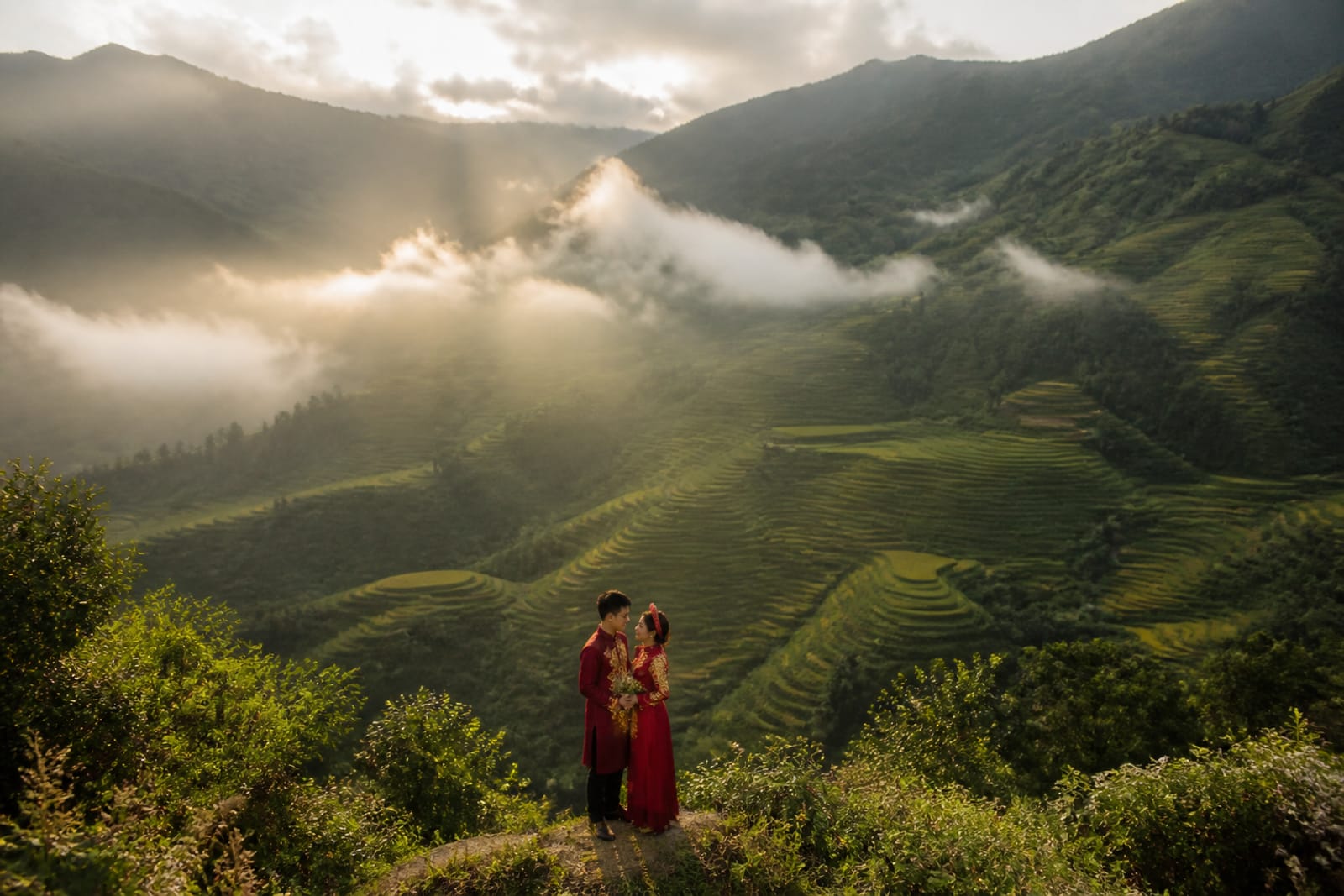
Sapa's most photogenic rice terraces are a 20–45 minute hike from Sa Pa town centre. The paths are narrow, steep, wet in rain, and carved into the slope; you can slip, mud gets on dress shoes and ao dai hems, and the climb back takes energy you need for posing. Most couples underestimate the physical toll. Plan your itinerary with your photographer in advance: which terraces (Y Linh Ho, Ta Phin, Muong Hoa are the most-shot), how many locations, what time to start, and whether a local guide is included. A good photographer knows which terraces have the gentlest paths, the softest morning light at 6:30 am, and the least tourist foot traffic by 7:15 am. Weather can flip in 30 minutes—cloud rolls in, light flattens, and you're losing frames to grey skies. Always have a backup location closer to town so the shoot doesn't fail if fog thickens. Some couples book a 6–8 hour session thinking they'll hit five locations; by location two, they're exhausted and the light has moved. Aim for two to three carefully chosen spots and one outfit change, not four outfits across six sites. Transport up and down can be a shared minivan or a private vehicle (budget time and confirm this with your photographer in writing).
Conclusion: Overestimating the number of locations and underestimating the hike exhausts you before the best light arrives; simplify your shot list and confirm transport beforehand.
How do you vet a Sapa pre-wedding photographer if Cáo Studio isn't based there?
Cáo Studio operates from Hanoi, Ho Chi Minh City (Saigon) and Hoi An by appointment; Sapa shoots are outside our geography. If you want a Sapa session, search for local photographers via Instagram, wedding forums, or referrals from your hotel or travel guide. Ask for their portfolio (look for sharp focus, consistent colour grading, natural posing—not stiff monument shots). Request a detailed itinerary in writing: start time, locations, outfit changes, number of final edited photos, and delivery timeline. Ask whether they include a makeup and hair artist, a local guide, and a backup plan if weather sours. Check their cancellation and rescheduling policy; if a shoot is rained out, can you reschedule at no cost or partial refund? Verify their equipment (they should have backup batteries, a second camera body, and a weather-resistant bag for mist). Ask for client references—phone numbers you can call, not just testimonials on their website. Visit Sa Pa in person if possible before committing, or ask the photographer to video-call you from a location so you see the actual light and landscape, not just curated portfolio shots. For couples preferring a studio with proven logistics and team coordination, booking a pre-wedding and elopement session in Hanoi or a couple photoshoot in Ho Chi Minh City gives you the safety of an established workflow and a fixed team, then you'd travel to Sapa with a local day photographer for a second shoot.
Conclusion: A vetted Sapa photographer has a written itinerary, references you can contact, a backup plan, and proof of team coordination—check all four before paying any deposit.
What's the honest difference between booking local and traveling with a studio-based team?
Local Sapa photographers know the terrain, the best light windows, and the off-season quiet spots—invaluable for authentic frames. The trade-off: you're managing communications across time zones, verifying individual vendors' credentials, and handling logistics yourself if weather changes plans. A studio-based team (like Cáo Studio in Hanoi or Ho Chi Minh City) offers coordination, a consistent visual style, and a backup team if someone falls ill—but you're paying for travel time and they're often working with a local guide anyway. For Sapa specifically, the hybrid approach works: book a Sapa photographer for the terrace shoot, and if you want a second shoot in Hanoi (Old Quarter, Huc Bridge, French Colonial architecture), hire Cáo Studio for ao dai photoshoot or proposal and anniversary sessions there. This gives you two distinct aesthetics (mountain, misty frames plus urban, clean light) and spreads the risk across two teams, each expert in their location. Budget and timeline: Sapa shoots take one full day or two mornings; turnaround is typically two to three weeks for edited photos. If you're planning a broader Vietnam trip, allow three to four weeks and two separate bookings—Sapa local, then Hanoi studio—so each team has time to deliver.
Conclusion: Sapa photographers offer local expertise; studios offer coordination and visual consistency—decide which matters more, or book both for a multi-location narrative.
---
What to Check Before You Book a Sapa Pre-Wedding Shoot
- Season and light window: Confirm the photographer's recommended dates (Mar–May or Sep–Nov) and ask for example photos from that exact month.
- Team composition: Get a written list of who attends—photographer, makeup artist, hair stylist, guide, assistant—and their roles on shoot day.
- Itinerary in writing: Exact start time, location names, hike duration, number of outfit changes, and backup location if weather fails.
- Outfit and climate guidance: Ask what fabrics work, what layers to bring, shoe advice, and whether they'll pause the shoot for you to rewarm between locations.
- Delivery and revisions: How many edited photos will you receive, when, and what's included (retouching, color grading, print-ready files)? Are revisions free or extra?
- Cancellation and rescheduling: If rain shuts down the shoot, can you reschedule at no cost, with partial refund, or are you forfeited? Get this in writing.
- References and portfolio: Ask for contact details of three recent couples and a link to a recent full-day shoot gallery (not just highlight reels).
- Backup communication: Confirm WhatsApp, email, and phone numbers for questions on shoot day (time zones matter; Sapa is Vietnam standard time).
---
FAQ
What's the best month for a pre-wedding photoshoot in Sapa?
September to November and March to May offer clear skies, consistent morning light, and terraces in full green or golden harvest. December to February is grey and misty; May to August brings daily rain. Pick Sep–Nov or Mar–May and book three to four months ahead for your preferred dates.
Can I wear a summer ao dai in Sapa?
A summer ao dai alone will leave you shivering in Sapa's 10–15°C mornings. Wear thermal leggings and a long-sleeved thermal underneath, then add a warm sweater or cardigan over it before the shoot; the photographer removes layers for frames. Bring extra socks and a microfiber towel for wet feet.
How many locations can I shoot in one Sapa pre-wedding session?
Plan for two to three carefully chosen terrace spots, not five or six. The hike to and from each location takes energy; by the third location, you'll be exhausted and the light will have shifted. A focused itinerary with two locations and one outfit change produces better frames than rushing through four locations with multiple changes.
Should I hire a photographer in Sa Pa town or book someone from Hanoi?
A local Sapa photographer knows the terrain and light patterns; they save on travel time and cost. A Hanoi-based studio offers team coordination and consistent visual style but charges for travel. For Sapa, vet a local photographer's portfolio and references carefully. If you want a second shoot elsewhere in Vietnam, book Cáo Studio in Hanoi or Ho Chi Minh City as a complement.
What happens if it rains on my Sapa shoot day?
Ask your photographer's rescheduling policy in writing beforehand. Good photographers have a backup terrace location closer to town with better cloud cover, or they pause between showers. Some offer free reschedule if weather fails; others offer a partial refund. Confirm this before booking so you're not surprised on shoot day.
How long does it take to get edited photos after a Sapa pre-wedding shoot?
Most local Sapa photographers deliver edited photos in two to three weeks. Ask beforehand what's included (number of photos, retouching, color grading, print-ready files) and whether revisions are free or cost extra. Get the exact delivery date in writing.
FAQ
What's the best month for a pre-wedding photoshoot in Sapa?
September to November and March to May offer clear skies, consistent morning light, and terraces in full green or golden harvest. December to February is grey and misty; May to August brings daily rain. Pick Sep–Nov or Mar–May and book three to four months ahead for your preferred dates.
Can I wear a summer ao dai in Sapa?
A summer ao dai alone will leave you shivering in Sapa's 10–15°C mornings. Wear thermal leggings and a long-sleeved thermal underneath, then add a warm sweater or cardigan over it before the shoot; the photographer removes layers for frames. Bring extra socks and a microfiber towel for wet feet.
How many locations can I shoot in one Sapa pre-wedding session?
Plan for two to three carefully chosen terrace spots, not five or six. The hike to and from each location takes energy; by the third location, you'll be exhausted and the light will have shifted. A focused itinerary with two locations and one outfit change produces better frames than rushing through four locations with multiple changes.
Should I hire a photographer in Sa Pa town or book someone from Hanoi?
A local Sapa photographer knows the terrain and light patterns; they save on travel time and cost. A Hanoi-based studio offers team coordination and consistent visual style but charges for travel. For Sapa, vet a local photographer's portfolio and references carefully. If you want a second shoot elsewhere in Vietnam, book Cáo Studio in Hanoi or Ho Chi Minh City as a complement.
What happens if it rains on my Sapa shoot day?
Ask your photographer's rescheduling policy in writing beforehand. Good photographers have a backup terrace location closer to town with better cloud cover, or they pause between showers. Some offer free reschedule if weather fails; others offer a partial refund. Confirm this before booking so you're not surprised on shoot day.
How long does it take to get edited photos after a Sapa pre-wedding shoot?
Most local Sapa photographers deliver edited photos in two to three weeks. Ask beforehand what's included (number of photos, retouching, color grading, print-ready files) and whether revisions are free or cost extra. Get the exact delivery date in writing.
Ao dai, makeup, hair and a local photographer in Hanoi or Saigon — one WhatsApp message.