services/couple-photoshoot
Moc Chau Couple Photoshoot Guide: Light, Season & Local Photographer T
Moc Chau (a highland town about 140 km southwest of Hanoi) offers tea terraces, blooming fruit trees (January–February, around Tet), and morning mist for moody couple portraits. Winter (December–February) brings cold, soft light and occasional fog ideal for intimate frames; avoid the rainy monsoon (May–September) when clouds block sun and muddy paths limit movement. Sessions work best at dawn (6–7 am) on the tea hills or forest edges before crowds, wearing layers you can shed for lighter outfits in photos. Cáo Studio does not operate in Moc Chau—the terrain and distance make day-trips from Hanoi difficult—so you'll hire a local photographer through referrals or platforms like Instagram; brief them on light direction, framing style (wide first, then detail) and whether you want the ao dai or casual outfits. Budget time for travel, scout locations beforehand, and confirm the photographer's gear, editing turnaround and backup plan for weather.
A Moc Chau couple photoshoot trades the urban landmarks of Hanoi and Ho Chi Minh City for misty valleys and tea rows—but those same natural elements demand careful planning. Unlike a studio setting, light here shifts fast, mist obscures composition, and muddy terrain limits where you can walk in formal wear. This guide walks you through the decisions: season and light timing, what to wear and pack, how to find and brief a local photographer, and what to scout before the shoot day.
When is the best season for a couple photoshoot in Moc Chau?
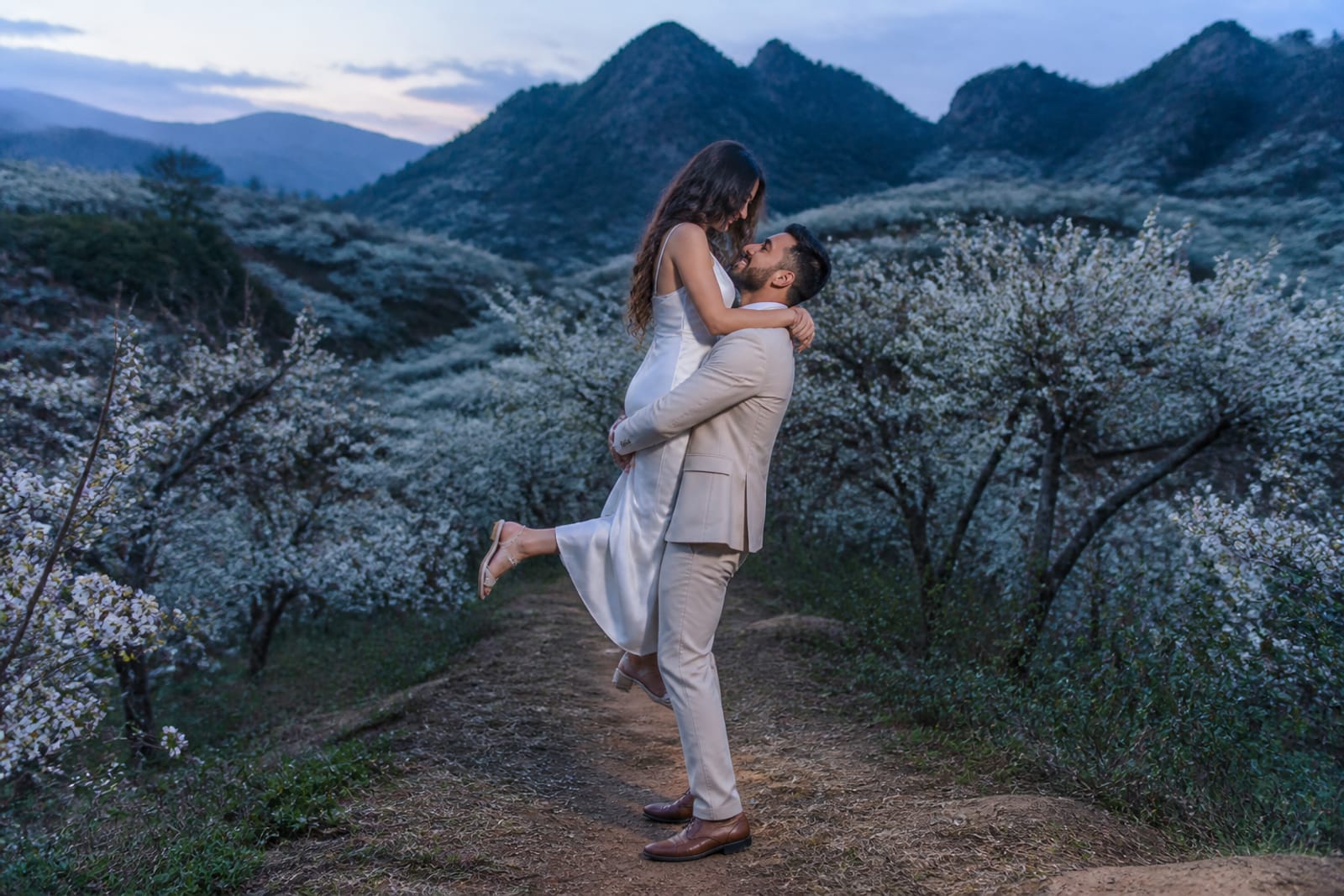
Moc Chau's winter (December–February) is the only season truly suited to couple photography. Temperatures drop to 5–12°C, bringing crisp, soft light and morning mist that photographs beautifully—especially around dawn on the tea hills. Late January and early February coincide with plum and cherry blossoms blooming across the terraces, adding a natural frame; Tet holidays also draw fewer tourists mid-week, so you'll have quieter paths. Avoid May–September entirely: afternoon monsoons arrive suddenly, tea plants are overgrown and muddy, and humidity creates flat, hazy light that erases depth in frames. March–April (the transition into summer heat) can work if you shoot before 6 am, but the light is still weak and unpredictable. Conclusion: book for December through mid-February, ideally on a clear day when the forecast shows no rain or mist so thick it obscures the landscape.
What light times and locations work best for couple frames?
Dawn (5:45–7:00 am) is the only reliable window: mist still clings to valleys, side light from the east hits tea rows at a low angle, and fewer motorbikes and farm workers are visible. Scout locations two days before: walk the main tea plantation area (accessible by motorbike or hired car from town) and note where the sun rises, which paths have the clearest sightlines, and where you can frame wide shots without power lines or trash. Mid-morning (8:00–9:30 am) becomes too bright and flat for intimate portraits unless you're shooting in shade under trees or inside a small café. Afternoon light (after 3 pm) is behind you on west-facing slopes, creating rim-lit frames if the mist lifts, but by then crowds gather and the light hardens. Avoid the "golden hour" myth here: in winter, that soft light extends all morning if mist is present, so your window is longer than mountain locations further north. Conclusion: plan to wake early, scout day-of locations by 5 pm the day before, and brief your photographer to start shooting by 6 am before the light angle changes.
What should a couple wear and pack for Moc Chau hills?
Layer everything: bring a warm jacket or sweater to the location, wear thermal leggings under formal trousers or an ao dai, and pack socks and closed shoes (tea paths are muddy and uneven, and formal footwear will slip). If you're wearing an ao dai, a lightweight one suited to cool weather works better than silk; ask a local ao dai rental shop in Moc Chau about fabric weight and whether they alter the hem for walking on terrain. Casual couples (jeans, linen shirts, sneakers) move more freely and photograph well in mist—the informality suits the landscape. Bring a second outfit: shoot one set in formal wear on the tea rows, then change into casual clothes for frames walking through mist or sitting on a bench overlooking the valley. Avoid white (muddy paths splash), bright neons (they overwhelm mist and muted tones), and loose skirts (wind and mud catch them). Pack a small bag with tissues, hair ties, and touch-up makeup—the photographer will not have access to mirrors or power on location. Conclusion: choose outfits suited to 8–10°C weather, plan two looks (one formal, one casual), and wear shoes you can move in without slipping.
| Outfit Choice | Best For | Season Fit | Movement on Terrain | Why It Works |
|---|---|---|---|---|
| Ao dai (lightweight cotton/linen) | Couple seeking formal, traditional frames | Dec–Feb only | Tricky; hem catches mud, requires careful walking | Photographs beautifully in mist; requires local rental and fitting |
| Casual (jeans, linen shirt, sweater) | Couples prioritizing natural movement | Dec–Feb or early Mar | Easy; allows fast walking and climbing | Suits mist aesthetic; no rental needed; easier touch-ups |
| Formal Western (suit, dress) | Couples wanting contrast with landscape | Dec–Feb only | Difficult; trousers dirty quickly, dress catches wind | Strong silhouettes against mist; requires frequent cleaning breaks |
| Layered mix (thermal + outer shirt) | All couples wanting warmth and flexibility | Dec–Feb essential | Easy when outer layer removed for frames | Solves cold-weather problem; allows quick outfit swap |
How do you find and brief a photographer in Moc Chau?
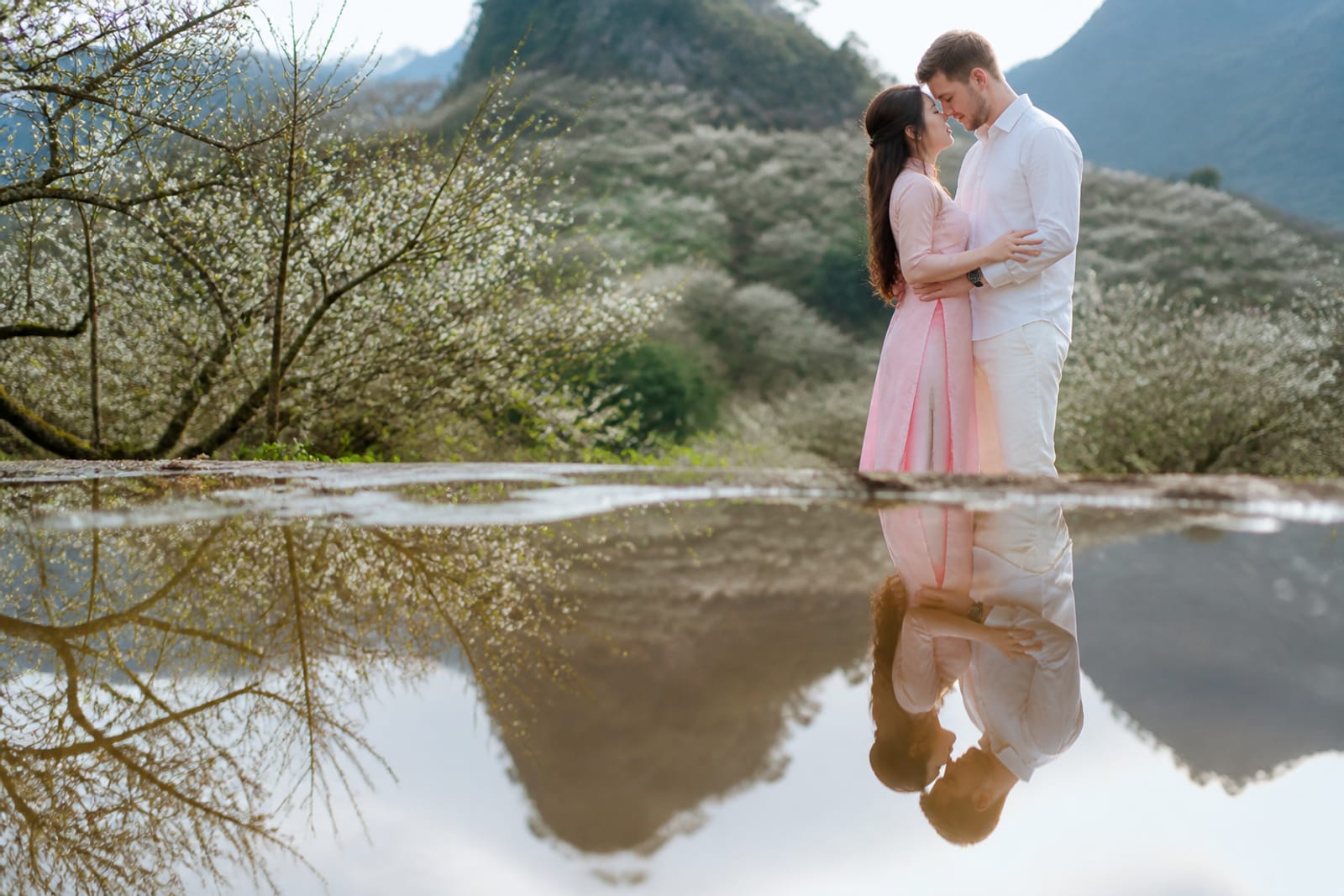
Cáo Studio operates in Hanoi, Ho Chi Minh City, and by appointment in Hoi An—not in Moc Chau. For a shoot there, search Instagram hashtags like #mocchauphoto or #mocchaucouplesession and look for portfolios with strong winter light, mist frames, and couples in natural poses (not stiff monument backdrops). Ask for references, check if they've shot tea plantations before, and confirm their gear: a full-frame camera, a 35mm or 50mm lens for intimate portraits, and a 24mm or wider for landscape context shots. Before booking, send them a visual brief: screenshot frames from the lookbook showing the framing style you want (wide first, then medium, then detail), and write out your priorities in plain English—e.g., "We want us walking through mist, looking at the landscape, not posing; soft light on our faces; the tea rows in the frame to show where we are." Confirm they will deliver edited JPEGs (not RAW files) within 2–3 weeks, that they have a backup camera if one fails, and their cancellation policy if weather forces a reschedule. Agree on location logistics: who arranges transport from Moc Chau town, whether they scout beforehand, and what happens if mist is too thick or rain arrives. Conclusion: find a local photographer with a tea-plantation portfolio, brief them with visual examples and clear priorities, and confirm logistics and backup plans in writing before you pay any deposit.
What logistics and weather backup do you need to plan?
Travel from Hanoi to Moc Chau takes 3–4 hours by car or hired driver; book accommodation in Moc Chau town the night before so you can be at the tea hills by 5:45 am. Check the weather forecast 5 days before; if rain is predicted, reschedule rather than shoot in downpour (flash floods can close paths). Bring waterproof bags for phones and a small umbrella, but avoid shooting under umbrellas—they create harsh shadows. If mist is so thick you can't see 20 meters ahead, embrace it: moody, obscured frames often photograph better than clear ones, but confirm with your photographer that they understand mist as an asset, not a failure. Plan a backup indoor location: a small café or homestay with windows overlooking valleys, where you can shoot if paths are too muddy. Budget an extra day in Moc Chau in case weather delays the session; don't rush a shoot just because you have a flight the next day. Discuss with your photographer whether they've worked in heavy mist before and how they frame around poor visibility. Conclusion: book accommodation nearby, check weather 5 days out, prepare a muddy-path and backup indoor plan, and give yourself one extra day in case conditions delay the shoot.
---
📸 Book on WhatsApp — couple photoshoot
What to check before you book a photographer in Moc Chau
- Portfolio: Do they have at least five frames shot in winter mist or tea plantations? Are couples framed naturally (walking, looking at each other, candid) or posed stiffly?
- Gear and backup: Full-frame camera, wide and portrait lenses, backup camera/lens if one fails, and a way to backup files (external drive, cloud storage)?
- Editing turnaround: 2–3 weeks is standard; confirm the number of edited photos you'll receive and the file format (JPEGs ready to print or share).
- Location knowledge: Have they scouted Moc Chau tea hills before? Do they know which paths are passable in winter and where the best light hits at dawn?
- Weather clause: What's their rescheduling policy if rain or fog makes the shoot unsafe? Do they offer a partial refund or free reschedule?
- Communication style: Do they ask clarifying questions about your vision, or do they assume all couple shoots are the same? Can they take direction on framing and light without defensiveness?
- Price factors (never amounts): Confirm what costs increase the quote—travel time from their base to Moc Chau, a second outfit change, extra locations, video add-ons, rush editing, or prints and albums.
---
If you're traveling from Hanoi for the shoot, ask whether your photographer recommends having makeup and hair done at your hotel in Moc Chau town beforehand. Some photographers have trusted makeup artists they work with; others expect you to arrive ready. Confirm this before booking.
---
🌸 See the lookbook to understand Cáo Studio's framing style (which a local Moc Chau photographer can adapt to tea hills).
For a couple photoshoot in Hanoi or Ho Chi Minh City—where Cáo Studio operates—one team handles photography, makeup, hair and styling, which removes logistics friction and ensures a single creative direction. In Moc Chau, you'll coordinate the photographer separately; doing so thoughtfully ensures your session feels directed, not pieced together. Start conversations with potential photographers now, check their availability for your winter dates, and confirm all details in writing.
---
📸 Book on WhatsApp — ao dai photoshoot
FAQ
Can Cáo Studio shoot a couple session in Moc Chau?
No. Cáo Studio operates in Hanoi, Ho Chi Minh City, and by appointment in Hoi An. For Moc Chau, hire a local photographer using the scouting and briefing steps in this guide. Contact us on WhatsApp if you'd like a couple shoot in Hanoi before or after your Moc Chau trip.
What's the best month to shoot in Moc Chau?
December through mid-February. Winter brings soft, misty light ideal for couple frames, and late January–early February has blooming fruit trees. Avoid May–September (monsoon rain, flat light, muddy paths).
Should we wear an ao dai or casual clothes in Moc Chau?
Both work—but plan carefully. An ao dai photographs formally and beautifully in mist, but requires local rental, fitting, and careful movement on muddy paths. Casual clothes (jeans, linen, sweater) suit the landscape better and let you move freely. Consider two outfits: one formal on the tea rows, one casual for walking frames.
How early do we need to wake up for the shoot?
You should be at the tea hills by 5:45–6:00 am to catch the soft light and mist before crowds. This means waking at 4:30–5:00 am in Moc Chau town. Scout locations the afternoon before so the photographer knows exactly where to start.
What happens if it rains or the mist is too thick?
Discuss a backup plan with your photographer before booking—either an indoor location (café, homestay) or a rescheduled date. Mist can create beautiful moody frames, but heavy rain makes paths unsafe. Budget an extra day in Moc Chau in case weather delays the session.
How much does a local Moc Chau photographer cost?
Pricing varies by photographer, experience, location travel time, number of outfits, and editing turnaround. Ask photographers directly for quotes; cost factors include their base location, whether they scout beforehand, and how many edited photos they deliver.
FAQ
Can Cáo Studio shoot a couple session in Moc Chau?
No. Cáo Studio operates in Hanoi, Ho Chi Minh City, and by appointment in Hoi An. For Moc Chau, hire a local photographer using the scouting and briefing steps in this guide. Contact us on WhatsApp if you'd like a couple shoot in Hanoi before or after your Moc Chau trip.
What's the best month to shoot in Moc Chau?
December through mid-February. Winter brings soft, misty light ideal for couple frames, and late January–early February has blooming fruit trees. Avoid May–September (monsoon rain, flat light, muddy paths).
Should we wear an ao dai or casual clothes in Moc Chau?
Both work—but plan carefully. An ao dai photographs formally and beautifully in mist, but requires local rental, fitting, and careful movement on muddy paths. Casual clothes (jeans, linen, sweater) suit the landscape better and let you move freely. Consider two outfits: one formal on the tea rows, one casual for walking frames.
How early do we need to wake up for the shoot?
You should be at the tea hills by 5:45–6:00 am to catch the soft light and mist before crowds. This means waking at 4:30–5:00 am in Moc Chau town. Scout locations the afternoon before so the photographer knows exactly where to start.
What happens if it rains or the mist is too thick?
Discuss a backup plan with your photographer before booking—either an indoor location (café, homestay) or a rescheduled date. Mist can create beautiful moody frames, but heavy rain makes paths unsafe. Budget an extra day in Moc Chau in case weather delays the session.
How much does a local Moc Chau photographer cost?
Pricing varies by photographer, experience, location travel time, number of outfits, and editing turnaround. Ask photographers directly for quotes; cost factors include their base location, whether they scout beforehand, and how many edited photos they deliver.
Ao dai, makeup, hair and a local photographer in Hanoi or Saigon — one WhatsApp message.