services/ao-dai-photoshoot
Modern vs. Traditional Ao Dai: Which to Wear for Your Photoshoot?
The ao dai is Vietnam's national dress, but the version you wear to a photoshoot depends entirely on the atmosphere you're creating. Both styles are stunning; neither is "better." What matters is alignment: traditional designs demand temple etiquette and formal settings, while modern interpretations suit creative collaborations and contemporary venues. This guide walks you through the differences so you order or rent with confidence.
What defines a traditional ao dai for photography?
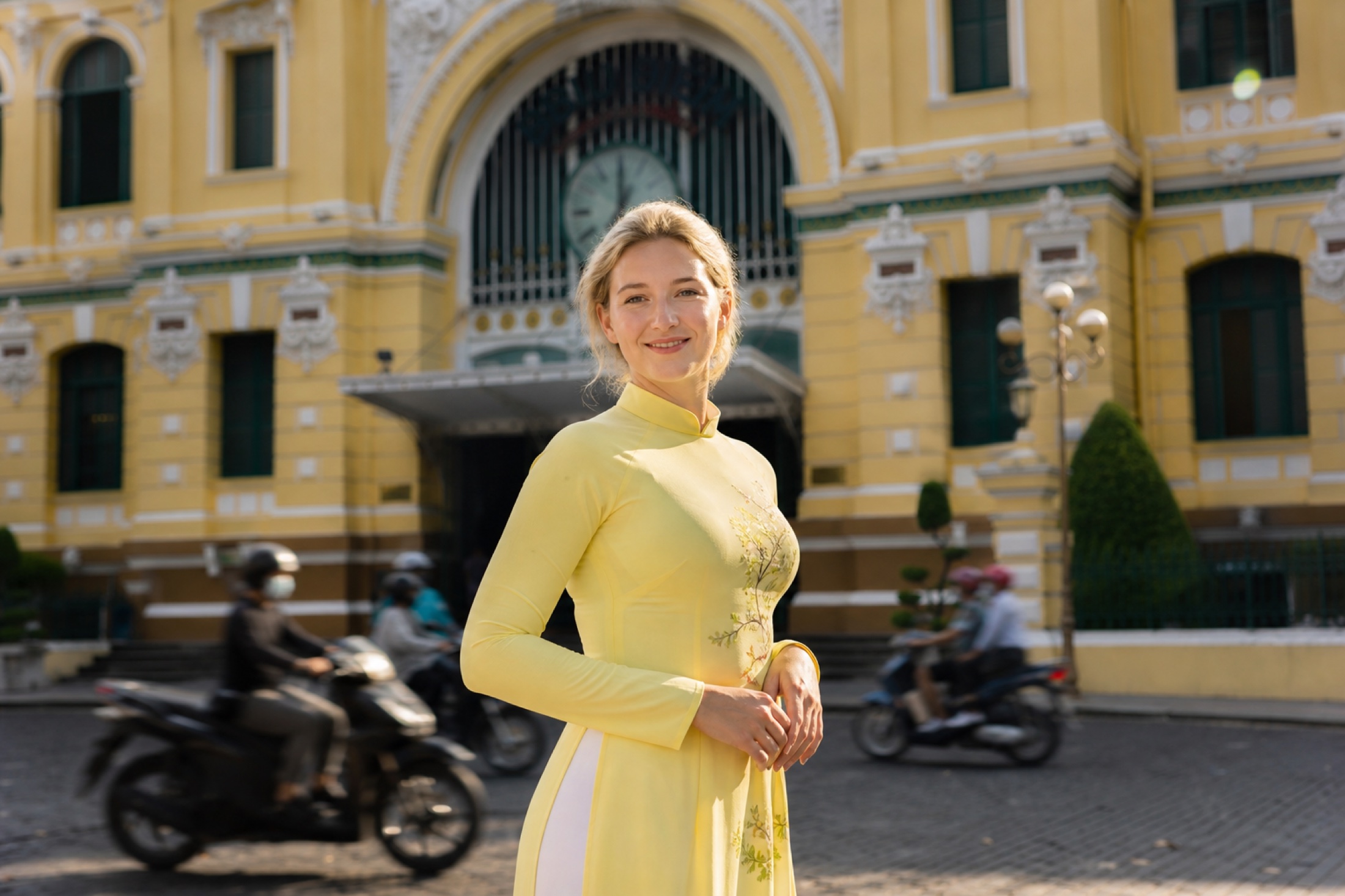
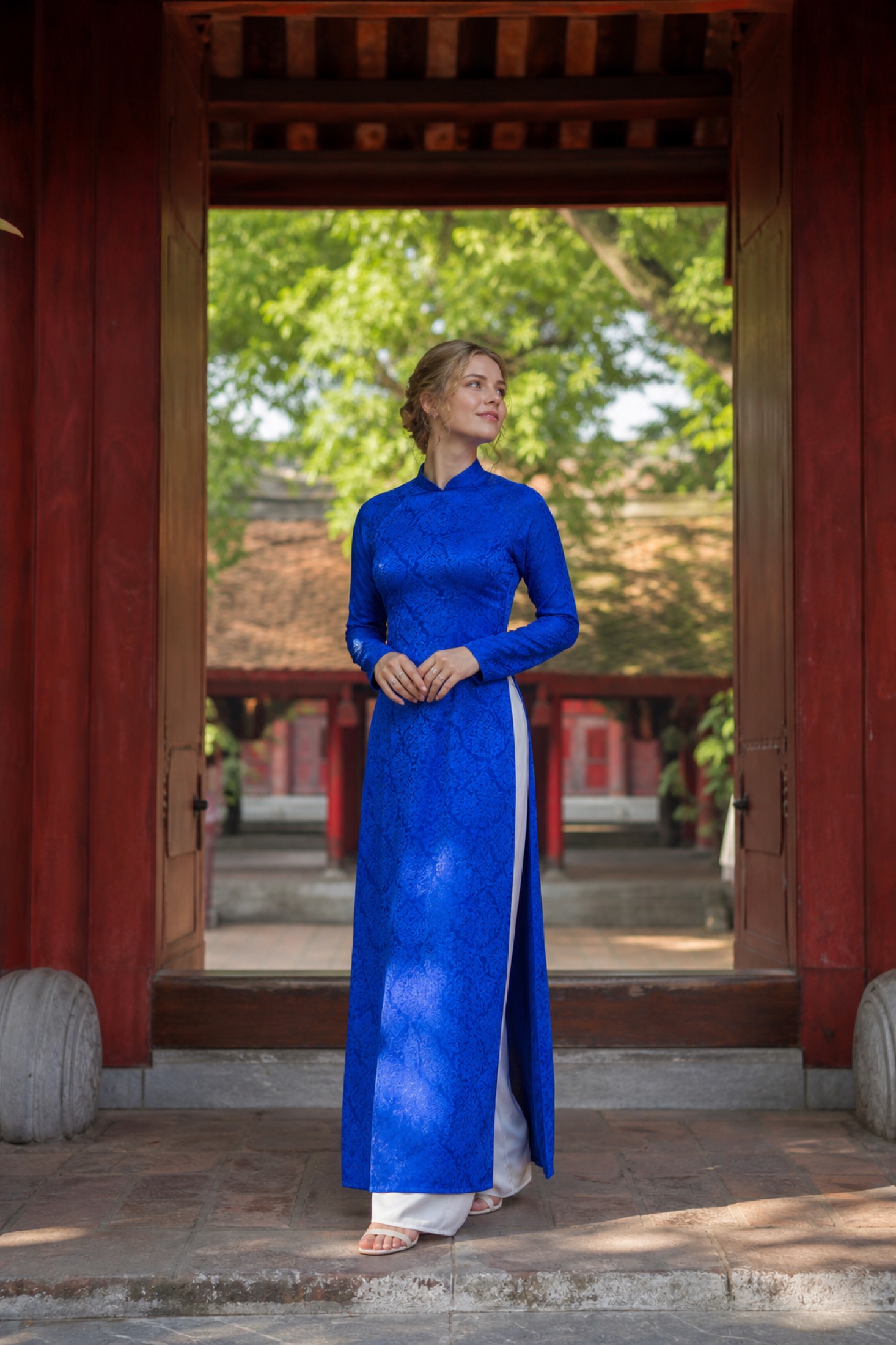
Traditional ao dai follows rules refined over centuries. The neckline sits high, often with a stiff mandarin collar that frames the face. The bodice is cut to emphasize the wearer's natural curves without exposure—sleeves extend to the wrist, the front seam runs center, and the back splits at hip level, creating two graceful panels that flow to the ankles. Fabrics are almost always silk, cotton, or silk-blend materials, chosen for drape and durability. Colors stick to jewel tones: deep red, ivory, midnight blue, emerald, or black.
In photographs, traditional ao dai reads as formal, reverent, and timeless. It works beautifully in temples, heritage sites, and formal family sessions. The high collar and full sleeves demand good posture and create clean lines in every frame. If you're photographing at a historical village or honoring a rite of passage, traditional is your choice.
📸 Book on WhatsApp — ao dai photoshoot
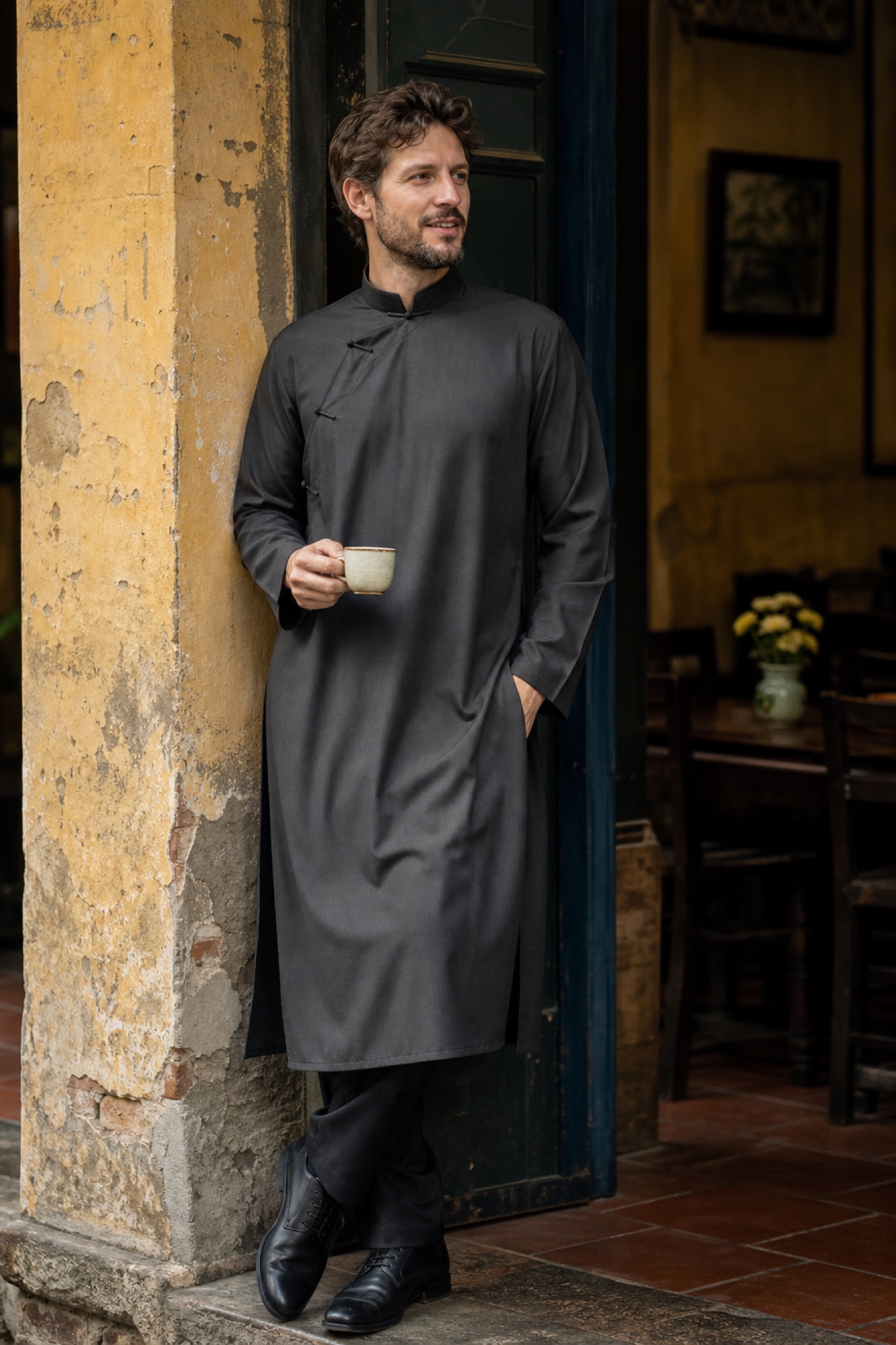
How does modern ao dai change the silhouette?
Modern interpretations keep the fundamental structure—two front panels, back split, long length—but break the rules on every other detail. Necklines drop to the collarbone or off-shoulder. Sleeves become sheer overlays or flutter cuts. Asymmetric hems, slit panels, and cutouts introduce playfulness. Dyes shift to ombre, pastels, and jewel-to-neutral gradients. Some designers add structured shoulders or waist corseting. Fabrics diversify: cotton, linen, silk-chiffon blends, even jersey knits.
Modern ao dai photographs beautifully in contemporary settings—urban streets, rooftop venues, cafés, and beach locations. The lower neckline and breathable fabrics suit warmer weather shoots. Asymmetric cuts photograph dramatically from the side. If you're mixing Vietnamese heritage with personal style, modern is often the bridge.
Which style works best in different seasons and weather?
| Season | Traditional | Modern | Comfort Factor |
|---|---|---|---|
| May–September (hot/humid) | Challenging; high collar traps heat | Ideal; lower neckline, sleeveless options breathe | Modern wins for outdoor summer shoots |
| October–April (cool/dry) | Excellent; silk drapes smoothly, full sleeves keep you warm | Good; layering with sheer sleeves adds depth | Both work; choose by venue mood |
| Monsoon months (July–August) | Heavy silk can absorb moisture and cling | Lightweight blends dry faster, less pooling | Modern handles humidity better |
Hanoi summers are brutal—temperatures exceed 32°C with 80% humidity. A traditional high-necked ao dai in full silk will leave you uncomfortable within an hour, even indoors. Modern ao dai with lower necklines and breathable fabrics allow for longer shoots without overheating. Conversely, Hanoi winters (December–February) are cool and dry; both styles shine, but traditional silk holds warmth better over bare arms.
What should you check before ordering or renting?
Measurements: Traditional ao dai fit snugly at the bodice and waist. If your measurements fall between standard sizes, the high collar and sleeves will show poor fit dramatically. Modern ao dai with looser silhouettes forgive 2–3cm variance. Always provide bust, waist, hip, and length from shoulder to ankle—not approximate guesses.
Venue etiquette: Traditional ao dai is mandatory at temples, pagodas, and family ceremonies. Modern ao dai may not be appropriate at sacred sites. If your photoshoot includes a temple backdrop, book a traditional style or confirm house rules with Cáo Studio's Hanoi team first.
Fabric care: Silk stains easily and shrinks if washed hot. Traditional ao dai require dry cleaning after sessions. Modern blends with cotton or linen are washable and forgiving for back-to-back shoots or if you're wearing it multiple times.
Neckline and undergarments: Traditional ao dai require a fitted undershirt or bra—straps must not show. Modern off-shoulder styles need adhesive bras or strapless options. Plan this ahead; last-minute struggles show in your images.
Photo timing: Traditional ao dai photograph best during golden hour (6–8 a.m., 4–6 p.m.) when soft light flatters the high neckline and complex pleats. Modern ao dai suit midday sunlight better because the lighter colors and asymmetric cuts hold interest in harsh shadows.
How do prices differ, and what affects cost?
We don't quote specific prices here—all quotes arrive via WhatsApp after you describe your needs. But here's what shapes cost:
- Silk vs. cotton: Silk (traditional ao dai) costs more to produce, import, and maintain than cotton blends.
- Custom tailoring vs. rental: Custom makes sense if you're tall, have an unusual build, or want a one-of-a-kind design. Rental is economical for single sessions.
- Embroidery and embellishment: Hand-stitched details, beading, or gold thread add cost to both styles.
- Quantity: Booking multiple ao dai for different looks in one shoot lowers per-garment cost.
- Duration: 4-hour shoots cost less per hour than 2-hour rushes; tailors need lead time.
At Cáo Studio, makeup and hair packages bundle the ao dai shoot into a coordinated session, which is more economical than booking separately.
Which style is right for your story?
Ask yourself:
- Where are you photographing? Temple or heritage site → traditional. Urban café or studio → modern.
- What's the occasion? Family milestone or Tet → traditional. Personal portfolio or creative collaboration → modern.
- What's the weather? Hot and humid → modern. Cool and dry → either.
- How do you feel in fitted garments? Comfortable and confident → traditional. Prefer ease of movement → modern.
- Are you honoring a specific tradition? Yes → traditional. Blending heritage with contemporary style → modern.
Both styles work for couple and family photoshoots and pre-wedding sessions. If you're unsure, discuss your vision with the Cáo Studio team when you inquire; they'll help you visualize the final images.
For inspiration, browse the lookbook to see both styles in action across Hanoi and Saigon locations. You'll instantly recognize which silhouette feels like "you."
---
What to Check Before You Buy or Rent
- [ ] Provide exact measurements (bust, waist, hip, shoulder-to-ankle length).
- [ ] Confirm the venue permits your chosen style (temple rules vary).
- [ ] Ask about undershirt/undergarment requirements before ordering.
- [ ] Check fabric care instructions and post-shoot cleaning costs.
- [ ] Discuss delivery/tailoring timeline if custom-ordered (lead time is critical).
- [ ] Request a fitting appointment if local (Hanoi, Saigon) to avoid returns.
- [ ] Confirm return/exchange policy before paying.
---
📸 Book on WhatsApp — ao dai photoshoot
Still deciding between modern and traditional? Browse our couple and family packages to see how both styles look in real sessions—then message us on WhatsApp with your vision. We'll guide you to the right choice and handle the rest.
FAQ
Can I wear a modern ao dai to a temple in Hanoi?
Many temples permit modern ao dai if the fit is respectful—neckline not too low, sleeves covering shoulders. Always email or call ahead. Traditional is safer; temples never object to a high-necked, full-sleeved design. Cáo Studio can advise when you book.
How long does it take to get a custom ao dai made in Hanoi?
Standard tailoring takes 10–14 days for an in-stock fabric and fit. Custom embroidery or rare silk adds 2–4 weeks. Order early if your shoot date is within a month. Cáo Studio partners with trusted tailors; ask on WhatsApp for timelines.
Do I need to wear a slip or undershirt under a traditional ao dai?
Yes. The bodice sits snug and reveals every undergarment line. Wear a fitted, flesh-toned undershirt or compression bra. Strapless bras work best for sleeveless modern styles. Plan this detail before your session to avoid discomfort on camera.
Which style photographs better in black and white?
Traditional ao dai—the high neckline, cuffs, and pleats create strong texture and contrast. Modern asymmetric cuts can feel muddled in monochrome unless the silhouette is very bold. If you want B&W images, traditional often wins. Cáo Studio's lookbook shows both in color and B&W.
Can I rent an ao dai in Hanoi for just a few hours?
Yes, rental is standard. Pricing depends on style (traditional costs slightly more due to silk) and duration. Ask about same-day pickup/drop-off when you message WhatsApp. Cáo Studio can coordinate rental and photoshoot timing in Hanoi or Saigon on the same day.
What's the difference in how makeup looks with traditional vs. modern ao dai?
Traditional ao dai and high necklines demand bolder eyes and defined brows—the face becomes the focal point. Modern off-shoulder styles can carry softer makeup because the neckline and shoulders draw attention too. Cáo Studio's makeup and hair service adjusts the entire look to your chosen ao dai.
FAQ
Can I wear a modern ao dai to a temple in Hanoi?
Many temples permit modern ao dai if the fit is respectful—neckline not too low, sleeves covering shoulders. Always email or call ahead. Traditional is safer; temples never object to a high-necked, full-sleeved design. Cáo Studio can advise when you book.
How long does it take to get a custom ao dai made in Hanoi?
Standard tailoring takes 10–14 days for an in-stock fabric and fit. Custom embroidery or rare silk adds 2–4 weeks. Order early if your shoot date is within a month. Cáo Studio partners with trusted tailors; ask on WhatsApp for timelines.
Do I need to wear a slip or undershirt under a traditional ao dai?
Yes. The bodice sits snug and reveals every undergarment line. Wear a fitted, flesh-toned undershirt or compression bra. Strapless bras work best for sleeveless modern styles. Plan this detail before your session to avoid discomfort on camera.
Which style photographs better in black and white?
Traditional ao dai—the high neckline, cuffs, and pleats create strong texture and contrast. Modern asymmetric cuts can feel muddled in monochrome unless the silhouette is very bold. If you want B&W images, traditional often wins. Cáo Studio's lookbook shows both in color and B&W.
Can I rent an ao dai in Hanoi for just a few hours?
Yes, rental is standard. Pricing depends on style (traditional costs slightly more due to silk) and duration. Ask about same-day pickup/drop-off when you message WhatsApp. Cáo Studio can coordinate rental and photoshoot timing in [Hanoi](/hanoi) or [Saigon](/saigon) on the same day.
What's the difference in how makeup looks with traditional vs. modern ao dai?
Traditional ao dai and high necklines demand bolder eyes and defined brows—the face becomes the focal point. Modern off-shoulder styles can carry softer makeup because the neckline and shoulders draw attention too. Cáo Studio's [makeup and hair](/services/makeup-and-hair) service adjusts the entire look to your chosen ao dai.
Ao dai, makeup, hair and a local photographer in Hanoi or Saigon — one WhatsApp message.