services/proposal-and-anniversary
Mù Cang Chải Proposal Photographer Guide: Book, Plan & Capture
Mù Cang Chải, in Yên Bái province, is one of Southeast Asia's most photogenic proposal destinations. The tiered rice terraces stretch for miles, changing color with season: emerald (May–June), gold (September–October), fallow brown (November–February). But proposing there means navigating logistics—permits, distance from Hanoi (140 km), and timing that catches both the person and the light. This guide walks you through scouting, booking, and capturing the moment the way professionals do.
📸 Book on WhatsApp — ao dai photoshoot | 💄 Makeup & hair at your hotel
Why Does Location Scouting Matter Before Your Proposal?
The same terrace that glows at sunrise looks dull by 10 am. Scouts identify specific vantage points—elevated paths, a particular staircase between paddies, or a flat viewing platform—weeks in advance. They check water levels, foot traffic, local access and whether the season's colors will be visible when you propose. Most proposals fail photos not because of the camera, but because the spot was chosen the week before.
Visit in person 4–8 weeks ahead, if possible, or hire a local scout who knows the area. Ask: Are there footpaths where we won't disturb farmers? Is there a sunrise or sunset spot with unobstructed terraces behind us? Will there be crowds on our date? Take reference photos yourself at different times. A good scout also confirms whether you need a local guide (often yes, to avoid trespassing).
What Are the Best Times of Day for Proposal Photos in Mù Cang Chải?
Golden hour—the first 45 minutes after sunrise (6–7 am) or the last 90 minutes before sunset (4–5:30 pm)—is non-negotiable. At sunrise, the terrace curves catch soft, warm light from the east; mist often lingers in valleys, adding drama. Sunset shoots the opposite—warm light from the west, with long shadows down the terraces. Noon and early afternoon (10 am–3 pm) produce harsh shadows and blown-out sky.
Sunrise pros: Fewer tourists, mystical mist, soft skin tones, fewer shadows. Sunrise cons: Early wake-up (4:30 am from your accommodation), cold, possible cloud cover.
Sunset pros: Warmer light, time to visit waterfalls or villages first, longer golden hour. Sunset cons: Tour groups often converge; you may have less privacy.
Book a photographer who arrives on-site 30 minutes before your target time to scout final angles and test light. Many Hanoi-based teams, including Cáo Studio's Hanoi branch, can arrange multi-day trips to Mù Cang Chải with scouting included.
How Should You Dress for a Mù Cang Chải Proposal Shoot?
Terraces are natural neutrals—greens, browns, golds. Your outfit should contrast, not blend. Bright jewel tones (sapphire, emerald, burgundy, gold) pop against foliage. Pastels (blush, cream, pale gold) work well in soft morning light. Avoid whites (washes out skin in glare) or dark blacks (too heavy against nature).
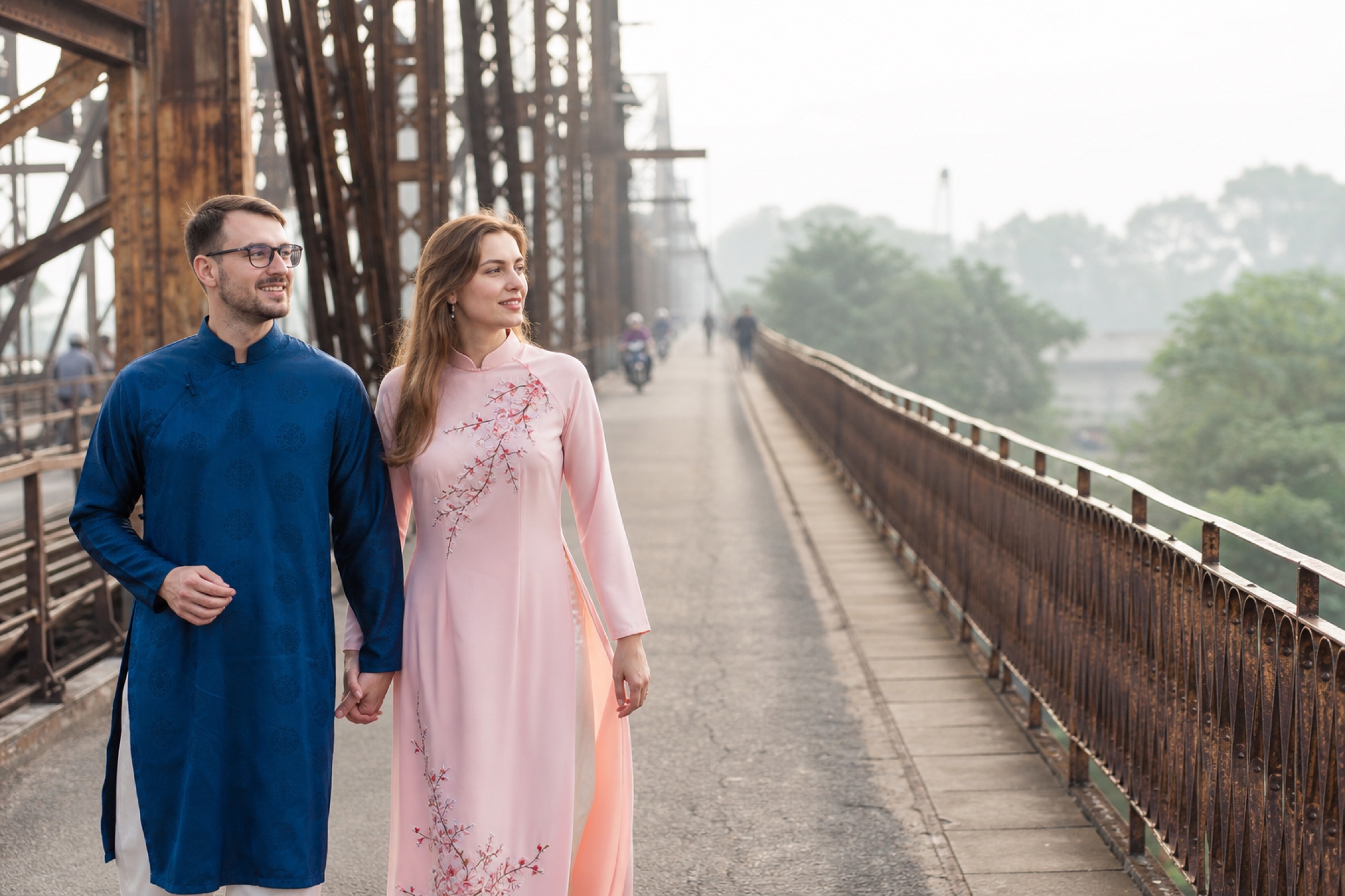
Consider traditional dress: an ao dai in a bold color creates visual drama and ties the moment to Vietnamese culture. If you choose ao dai, book hair and makeup at least 1–2 days before; traveling in ao dai requires a stylist familiar with fabric and heat. Cáo Studio's makeup & hair service includes trial runs and works with clients planning multi-day shoots.
What to wear under an ao dai on a hike: Breathable undergarments, no visible bra lines, lightweight slip shorts. The fabric is delicate; protect it before the shoot with a casual robe or shawl during travel.
Practical layers: Mù Cang Chải is 600+ meters above sea level; mornings are cool (50–60°F in winter, 65–70°F in warm months). Wear a light jacket or cardigan that you'll remove for photos. Avoid logos, patterns, and large jewelry—they distract.
| Outfit Type | Best Light | Seasons | Why It Works |
|---|---|---|---|
| Ao dai (jewel tone) | Sunrise, golden hour | Any | Bold silhouette, cultural resonance, timeless photos |
| Casual dress (contrast color) | Sunset, golden hour | May–Oct | Comfort for hiking, easy to move in |
| Western formal (suit + dress) | Golden hour both times | Nov–Apr | Classic, works in all light if fabric shines |
| Pastels | Sunrise only | May–Jun (fresh greens) | Soft, dreamy, but needs strong skin tone |
What Weather and Season Factors Should You Know?
Mù Cang Chải sits at 1,000+ meters; weather shifts fast. Spring (February–April) brings cool mornings, mist, and spring shoots of new rice. Summer (May–August) is humid and hot, with afternoon rains common. Autumn (September–November) offers the most stable light and clearest skies—the high season for proposals. Winter (December–January) is cool but dry; mornings can be misty or cloudy.
Rainy season (May–August): Unpredictable afternoon storms. Shoot early; have a backup indoor venue (village homestay, market) for a second photo moment.
Best months: September–November (clear skies, moderate temps, vivid terrace colors). Second choice: February–April (mist is romantic, fewer tourists).
Altitude note: If you're flying in from lowland areas, spend 1–2 days in Hanoi to adjust before the shoot. Exertion on uneven terrain at 3,000+ feet can tire you faster.
Hire a photographer who shoots in your chosen season and understands its mood. The golden-hour mist of March looks entirely different from the hazy heat of July. View past seasonal shoots in our lookbook to see how light changes across months.
How Do You Book a Proposal Photographer for Mù Cang Chải?
Most Hanoi-based photographers can travel to Mù Cang Chải, but few offer dedicated scouting or multi-day itinerary planning. Here's what to compare:
Option 1: Local Mù Cang Chải photographer — Pros: know every path, local connections, lower day rate. Cons: may not have formal English communication, limited portfolio online, unclear licensing or backup.
Option 2: Hanoi studio with Yên Bái experience — Pros: professional contracts, backup team, styling included (makeup, ao dai coordination), portfolio you can review. Cons: travel fee, need to book 4–6 weeks ahead.
Option 3: International photographer based in Vietnam — Pros: fluent English, modern editing, familiar with Western couple expectations. Cons: premium rates, may not know Mù Cang Chải intimately.
Cáo Studio – Makeup & Photoshoot (Hanoi base, Saigon base) specializes in proposal and anniversary shoots. They offer:
- Pre-shoot WhatsApp scouting consultation (location, timing, outfit, backup plan).
- Professional hair & makeup coordination (ao dai or Western wear).
- Multi-day itinerary options (propose, then intimate couple shoot next morning, plus city photos in Hanoi before/after).
- Digital gallery (typically 150–300 edited images, 2–week turnaround).
Checklist before you book:
- [ ] Photographer has shot at Mù Cang Chải before (ask for 3+ samples, same season as your date).
- [ ] Contract specifies number of photos, turnaround time, and ownership (who can use images, print rights).
- [ ] Backup plan in writing (if weather cancels sunrise, what's the rescheduled date or refund policy?).
- [ ] Travel costs transparent (is transport, meals, accommodation included, or separate?).
- [ ] Styling services separate or bundled? (Makeup/hair adds ½–1 day, needs advance payment.)
- [ ] Drone shots, if you want them, licensed and declared upfront (Vietnam requires permits; confirm the photographer has them).
Get a quote via WhatsApp or email; studios send customized packages based on your dates, guest count (solo proposal, or mini elopement with 2–3 family members?), and shot list. See our full proposal and anniversary service for what's included in a typical day.
What Should You Do on the Day of the Shoot?
Arrive 1–2 days early to acclimate, tour the area, and relax. Proposal days are emotional; fatigue and stress show in photos. Eat a good breakfast (light protein, no heavy dairy if you're nervous), hydrate, and avoid alcohol the night before.
Wear your outfit under a robe or cardigan; arrival photos at the homestay or your accommodation are often as memorable as the terrace moment. Bring:
- Phone fully charged (for backup shots, video to send family).
- Extra shoes (hiking boots for travel, flats for photos if wearing ao dai).
- Sunscreen and lip balm (high UV at altitude).
- Tissues or handkerchief (tears are beautiful; prepare to capture emotion).
- Water and a light snack (you'll be standing, posing, walking for 2–3 hours).
Listen to your photographer. They'll direct you on where to stand, how close to walk, and when to turn. Trust their angles—they're thinking about light and composition while you're thinking about the emotion. Smile naturally; the best shots often come when you're laughing or between poses.
If you're doing makeup and hair on-site (hair especially is essential for windy, humid locations), book the stylist to arrive 1–1.5 hours before the shoot. Cáo Studio's makeup & hair service is available for on-location work if you book the full proposal package.
📸 Book on WhatsApp — ao dai photoshoot
How Do You Choose Between DIY, Local Guide, and Professional Studio?
A DIY approach (you propose, friend takes photos) is free but risky: your friend is watching the moment, not framing it; lighting mistakes are permanent; phone cameras don't handle golden hour well. Use it only as backup.
A local guide + self-shot (hire guide, you bring a tripod or GoPro) reduces cost but loses the artistry. You'll have memories, but not the polished, lit, composed images that make proposals iconic.
A professional photographer costs more (custom quotes via WhatsApp, /pricing) but delivers:
- Technically perfect exposure, focus, and composition.
- Emotional storytelling (they anticipate your reaction, capture it).
- Licensing and backup (images are secure, insured).
- Styling consultation (what to wear, how to present).
- Editing (color correction, cropping, retouching). Often 100–300 final images in 2 weeks.
For Mù Cang Chải, professionals are worth the investment. The location deserves the same care as the ring.
🌸 See the lookbook to compare shooting styles and see how different photographers frame proposals.
What Happens After the Proposal Shoot?
Photographer typically delivers a private digital gallery (Dropbox or password-protected site) within 2–3 weeks. You review, request any adjustments, download high-resolution files for printing or social sharing. Many studios offer optional prints, albums, or framed prints; inquire during booking.
Plan a couple photoshoot for 1–2 days after the proposal. The emotional high is fresh, you've scouted locations, and daylight for couple portraits near the terraces is even better than proposal-day timing (less pressure means more natural smiles).
Some studios bundle a pre-wedding photoshoot in a second location (Hanoi Old Quarter, Hoi An, or a nearby lake) with the Mù Cang Chải proposal—all in one 3–5 day trip. Efficiency + continuity of images. Ask about multi-day packages when you inquire.
FAQ
Do I need permission to propose at Mù Cang Chải terraces?
Not formally, but stay on marked paths to respect farming operations. Avoid paddies during planting/harvest. A local guide knows where to safely stand. Professional photographers work with guides who confirm access.
What if the weather is bad on my proposal day?
Have a backup date (24–48 hours later) written into your contract. Mist is photogenic; light rain is not. Most studios offer one reschedule free; a second reschedule may incur a fee. Propose indoors (homestay, nearby temple) only as last resort—the landscape is half the beauty.
Can we do both sunrise and sunset shoots?
Yes, but it's exhausting. Most couples do a main shot (sunrise or sunset, 2–3 hours) plus a second intimate moment at noon or late afternoon. Book a full day; cost is typically higher than a single session.
Should we hire a makeup artist if we're not wearing traditional dress?
If you're in Western formal or casual wear and comfortable with your look, no. But makeup sets in photos better than bare skin, especially at high altitude with UV exposure. A 30-minute on-site touch-up (concealer, blush, lip color, setting spray) is $20–40 and worth it for the sake of the photos.
How far in advance should we book?
6–8 weeks for the best photographers and clear seasonal planning. Autumn (Sept–Nov) books 3+ months ahead. Spring/summer, 4–6 weeks is typical. Last-minute bookings (2 weeks or less) may incur a rush fee or availability may be limited.
FAQ
Do I need permission to propose at Mù Cang Chải terraces?
Not formally, but stay on marked paths to respect farming operations. Avoid paddies during planting/harvest. A local guide knows where to safely stand. Professional photographers work with guides who confirm access.
What if the weather is bad on my proposal day?
Have a backup date (24–48 hours later) written into your contract. Mist is photogenic; light rain is not. Most studios offer one reschedule free; a second reschedule may incur a fee. Propose indoors (homestay, nearby temple) only as last resort—the landscape is half the beauty.
Can we do both sunrise and sunset shoots?
Yes, but it's exhausting. Most couples do a main shot (sunrise or sunset, 2–3 hours) plus a second intimate moment at noon or late afternoon. Book a full day; cost is typically higher than a single session.
Should we hire a makeup artist if we're not wearing traditional dress?
If you're in Western formal or casual wear and comfortable with your look, no. But makeup sets in photos better than bare skin, especially at high altitude with UV exposure. A 30-minute on-site touch-up (concealer, blush, lip color, setting spray) is $20–40 and worth it for the sake of the photos.
How far in advance should we book?
6–8 weeks for the best photographers and clear seasonal planning. Autumn (Sept–Nov) books 3+ months ahead. Spring/summer, 4–6 weeks is typical. Last-minute bookings (2 weeks or less) may incur a rush fee or availability may be limited.
Ao dai, makeup, hair and a local photographer in Hanoi or Saigon — one WhatsApp message.