/pre-wedding-photoshoot
Mui Ne fishing village for pre-wedding photos: pros, cons, best times
Mui Ne fishing village shoots best at sunrise (5:30–6:30 am), when side light hits wooden boats and nets without heat haze. The village sits on Vietnam's southern coast, one of the driest areas; dry season runs Nov–Apr, with strong winds Nov–Mar that can kick sand onto gear. A typical session runs 2–3 hours including travel to the beach, setup, and walking the village while the light lasts. Expect authentic chaos—dogs, fishermen, salt spray—not curated silence. Cáo Studio does not shoot in Mui Ne (we operate Hanoi, Ho Chi Minh City and Hoi An); a local photographer familiar with tidal schedules and village access is essential, as boats move by 7 am and the light flattens after 7:30 am. This works if you want texture and story; skip it if you need a pristine, climate-controlled backdrop.
What makes Mui Ne fishing village different from other pre-wedding spots?
Mui Ne's fishing village is not manicured. The light is raw: golden, angular, full of texture at sunrise. Unlike Hoi An Ancient Town (lanterns and symmetry), or Hanoi's Red River (urban calm), Mui Ne gives you working boats, salt-stained nets, actual fishermen, and sand. The trade-off is control—you share the frame with village life. If your vision is "real Vietnam, not a set," the village works. If you want the couple as the only focal point, choose elsewhere. The light window is tight: 45 minutes of usable morning side light before the sun climbs and flattens everything.
When is the light and season actually good for shooting?
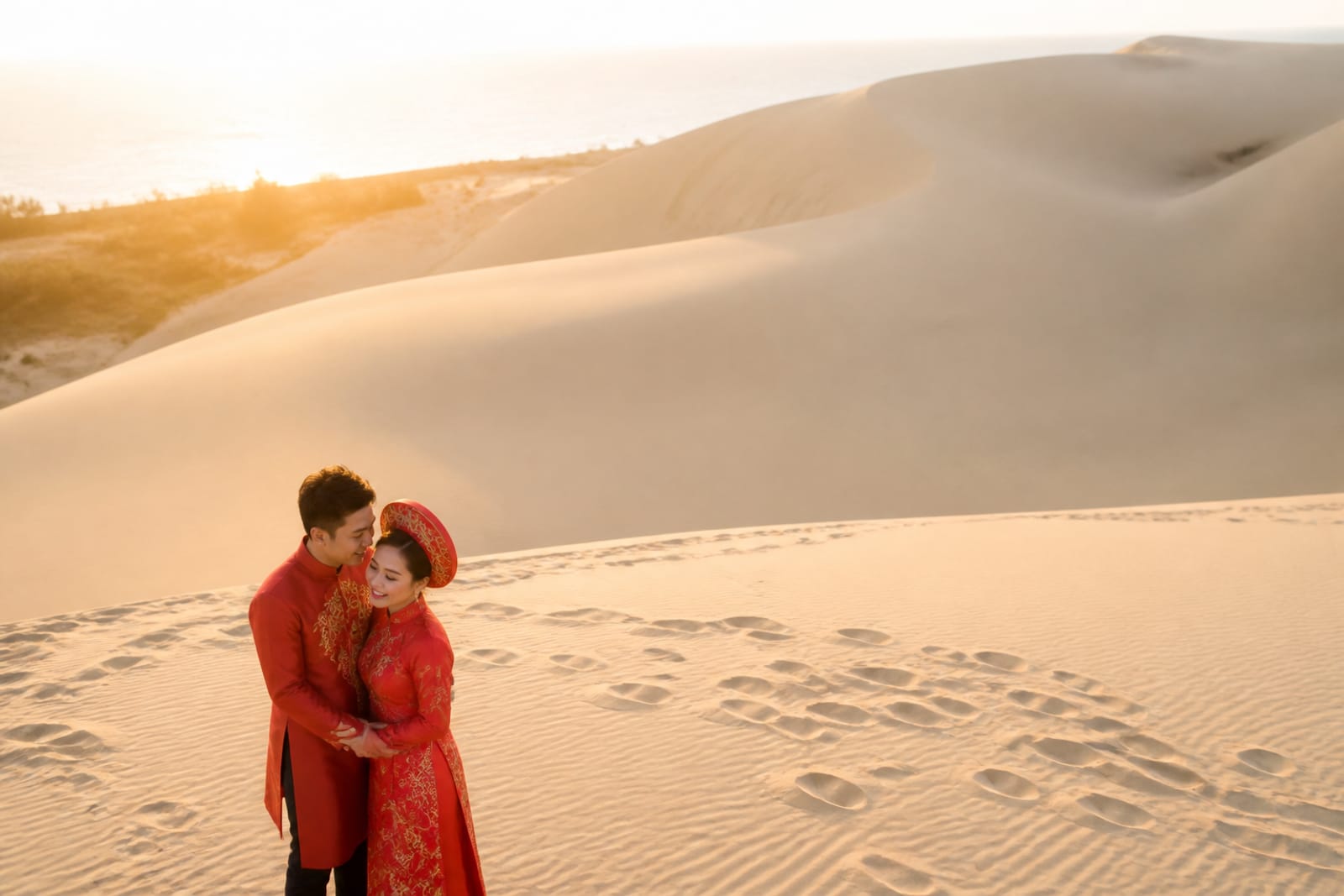
Dry season Nov–Apr offers clear skies and calm water. Strong winds Nov–Mar blow sand constantly; this can ruin gear and create blown-out skies, but also adds drama to hair and fabric. Feb–Mar is ideal: dry, warmer than Jan, wind slightly calmer. Sunrise 5:30–6:30 am is non-negotiable; arrive by 5 am to scout and position before fishermen leave. Shoot vertical and wide first (boats, nets, village street) before tightening to couples or details. Avoid May–Oct: monsoonal rains, afternoon thunderstorms (sudden and severe), and humidity that fogs lenses. A local photographer will know the exact tidal schedule—high tide brings boats closer, low tide spreads them across sand.
How does Mui Ne compare to Hoi An, Hanoi, and Ho Chi Minh City?
| Destination | Best for | Light/Season | Why it works / when to skip |
|---|---|---|---|
| Mui Ne fishing village | Raw texture, working boats, chaos | Sunrise Nov–Apr; sand winds Nov–Mar | Authentic, tight light window; skip if you dislike unpredictability |
| Hoi An Ancient Town | Lanterns, symmetry, cultural depth | Golden hour Oct–Jan; Feb–Aug dry; crowded 6–8 am & 5–7 pm | Curated beauty; book a photographer who starts pre-dawn |
| Hoi An beaches | Soft sand, warm light, serenity | Dry season Feb–Aug; avoid Sep–Dec rain/typhoon | Peaceful; light is diffuse, less dramatic than village |
| Hanoi Red River | Urban geometry, temples, bridges | Cool clear light Oct–Feb; grey Dec–Jan | Architectural depth; fewer crowds than beach; cold mornings |
| Ho Chi Minh City (urban & Saigon River) | Modern skyline, Saigon River, energy | Oct–Mar (cooler, clearer); Nov–Mar best | City pace; light changes fast; skip May–Sep humidity |
Explore pre-wedding photoshoots at Cáo Studio.
Hoi An works if you want cultural layers (silk, lanterns, temples in one shoot). Hanoi suits couples who want architecture and local texture without heat. Ho Chi Minh City is best for urban energy and multi-location variety. Mui Ne isolates you—it's a dedicated fishing village session, not a day itinerary. Each demands different prep (outfit fit, makeup durability, timing, hiring crew). Cáo Studio shoots Hanoi, Ho Chi Minh City, and Hoi An, and we can advise which location matches your story in a WhatsApp conversation.
📸 Book on WhatsApp — pre-wedding photoshoot
What actually goes wrong in Mui Ne, and how do you avoid it?
Sand on optics: Salt spray and wind-blown sand coat lenses and filters. Bring lens caps, a blower, and cleaning cloths. Change lenses inside a camera bag, never mid-open air.
Tidal timing: Boats leave by 7 am. If you arrive at 6:30 am, the best boats are already gone. Hire a photographer who lives locally—they know the schedule.
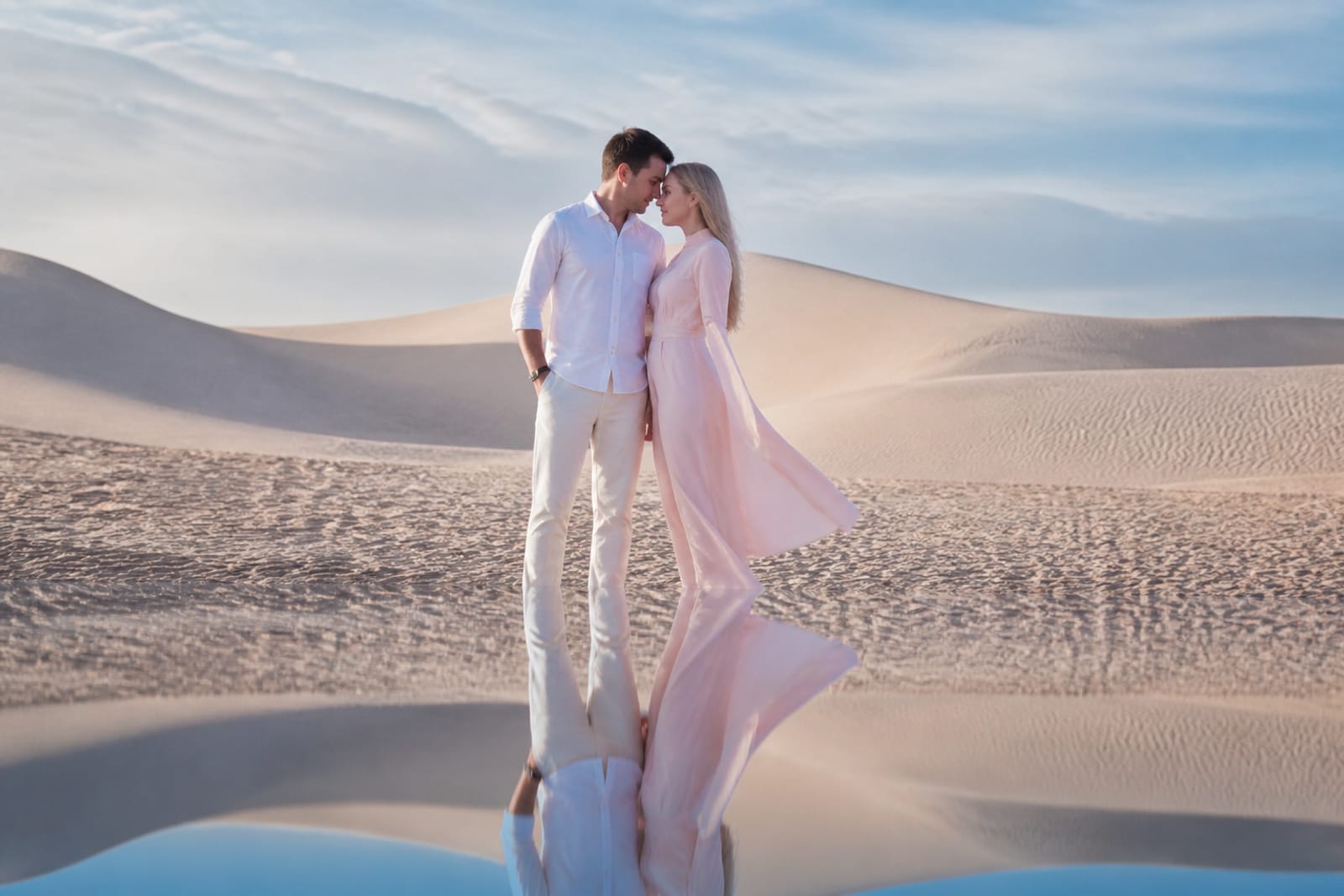
Wind and hair: Strong Nov–Mar winds whip ao dai fabric and hair into tangles. Bring hair spray, clips, and plan for messy, wind-swept frames (often better than "perfect"). Fabrics with weight (silk, brocade) handle wind better than lightweight cotton.
Fishermen and privacy: The village is working space, not a photo set. Fishermen may not want you in their nets, or may charge. Agree fees and permissions with your photographer upfront. Frame shots to include them (they add authenticity) or shoot in gaps.
Heat haze and sun angle: 7:30 am onward, sun climbs fast and creates shimmer over sand and water. Your light window shrinks. Shoot the village first, then move to beach if you want softer, wider water shots—but the village magic is the morning phase.
Makeup durability: Salt spray and humidity degrade makeup by hour two. Use long-wear primer, waterproof mascara, and liquid lipstick. Bring blotting papers and powder. If you're doing an ao dai session here, the makeup artist must use sea-resistant products.
Should you hire a local Mui Ne photographer or travel with your own team?
Hire local. A photographer who shoots Mui Ne weekly knows boat schedules, village permissions, light angles by the month, and backup spots if conditions shift. They have relationships with fishermen and can sometimes negotiate access. Traveling your own team (makeup, hair, photographer from Hanoi or Ho Chi Minh City) costs more and loses local knowledge—your photographer might miss the tidal window or shoot at the wrong angle because they don't know the geography.
Cáo Studio does not operate in Mui Ne; we're based in Hanoi, Ho Chi Minh City, and Hoi An. If you want a pre-wedding shoot that includes makeup, hair, and photography (one team, one message), book us in one of those cities. If Mui Ne is your heart, find a local photographer by:
- Asking your hotel for referrals (they know who shoots regularly).
- Searching Instagram for "Mui Ne pre-wedding" and checking who shoots sunrise, not midday.
- Asking in Vietnam travel forums (r/vietnam, Travelfish) for recent recommendations.
- Requesting a portfolio of fishing village work, not generic beach portraits.
Vet them by seeing their sunrise portfolio, asking how many sunrise village shoots they've done, and confirming they own or have access to permits/access agreements.
What outfit and timing decisions matter most?
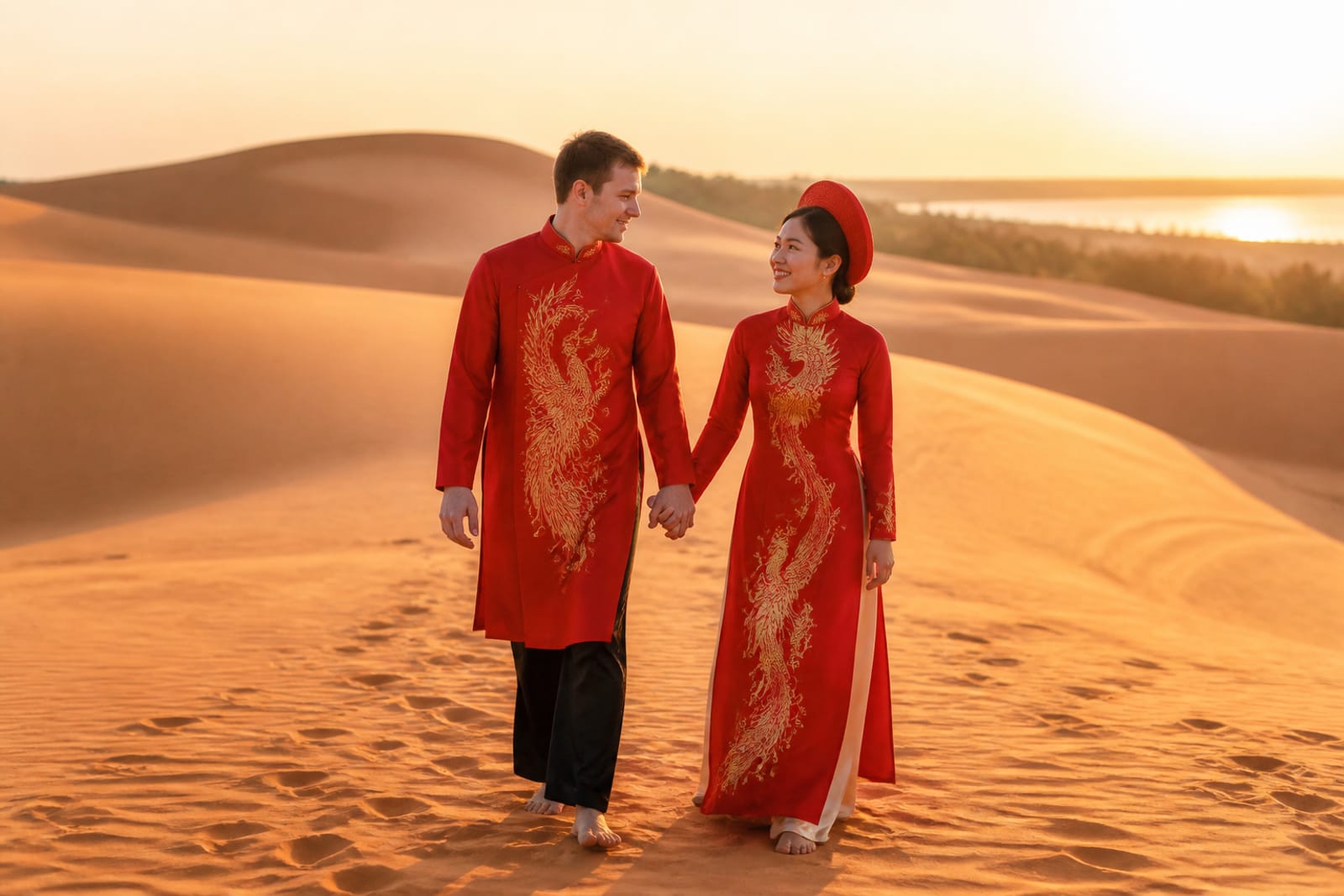
Áo dài in Mui Ne? Áo dài works in calm light but fights wind. If wind is strong (Nov–Mar), the silk splits apart, makeup blows, and you spend energy on continuity instead of connection. A fitted áo dài with lining is easier than loose layers. If you want traditional beauty, shoot áo dài in controlled light (late afternoon in a courtyard or by a temple); save Mui Ne for casual dress (linen, cotton, flowing but anchored).
Western dress: Simpler, less fussy in wind. A wedding dress or formal gown gets salt spray and sand; only do this if your photographer is excellent at quick-dry resets.
Timing: Plan arrival for 4:45 am, light-check by 5:15 am, first frames by 5:45 am, wrap by 7:15 am. Total session 2.5–3 hours. Then return to your hotel, rest, and maybe shoot a second location (Mui Ne sand dunes at golden hour, or Phan Thiet town in softer light) if energy and schedule allow.
Travel time: Mui Ne is 4 hours from Ho Chi Minh City by road, 5+ hours from Hanoi. Base yourself in Mui Ne the night before, or leave Ho Chi Minh City by 1 am to arrive for a 5:30 am shoot (not ideal, logistically). Factor in driver fatigue and gear prep time.
What to check before you book a Mui Ne fishing village session.
- Photographer's sunrise portfolio: ask for 5–10 images shot in the village at dawn. Avoid portfolios with only midday or beach shots.
- Tidal schedule: confirm your photographer has checked the tide for your shoot date. High tide (boats closer) is preferable.
- Permit or access arrangement: confirm the photographer has negotiated with fishermen or village leaders. No surprises on shoot day.
- Weather contingency: what happens if it rains? Ask for a reschedule date, not a refund clause that benefits only you.
- Makeup artist familiar with salt and humidity: if hiring separately, brief them on sea conditions. Standard makeup won't last.
- Transport plan: who drives you from your hotel to the village? How early? Confirm the driver knows the route and will be ready 5 am.
- Backup location: if boats are scarce that morning, where else will you shoot? (Other parts of the village, the beach, nearby dunes.)
- Delivery time for edits: fishing village sessions are unpredictable. Agree on a realistic turnaround (typically 1–2 weeks for a professional, not 48 hours).
FAQ
Can Cáo Studio shoot in Mui Ne?
No. Cáo Studio operates in Hanoi, Ho Chi Minh City, and Hoi An only. For Mui Ne, hire a local photographer who specializes in sunrise fishing village work. Ask on WhatsApp if you'd like advice on vetting a Mui Ne photographer or booking a pre-wedding session in one of our base cities instead.
Is fishing village light really better than the beach for pre-wedding photos?
For drama and story, yes. Wooden boats, nets, and working activity add layers that empty beach doesn't. The light is also more directional (side light from sunrise) instead of flat. Trade-off: less control, more chaos. Choose fishing village if you want authenticity; choose beach if you want calm and isolation.
What's the best month to shoot in Mui Ne?
Feb–Mar. Dry season (Nov–Apr) is clear, but Jan can be cool and grey, Nov–Mar have strong winds. Feb–Mar hit the sweet spot: dry skies, warmer than Jan, winds slightly gentler. Always check the local forecast 3 days before.
Do I need a permit to shoot in Mui Ne fishing village?
No formal permit for tourists, but you must arrange access with fishermen or a local guide. Your photographer should have these relationships. Shooting without permission can disrupt their work. Agree on any gratuity upfront.
Can I do an áo dài session in Mui Ne?
Technically yes, but not ideal if wind is strong (Nov–Mar). Áo dài silk catches wind, makeup gets salt spray, and continuity suffers. If you want áo dài, choose a calmer, controlled location (temple, courtyard, Hoi An) or time Mui Ne for late afternoon when wind may ease (but light will be warmer and less dramatic). Cáo Studio offers áo dài photoshoots in Hanoi, Saigon, and Hoi An.
How much does a Mui Ne fishing village shoot cost?
Cáo Studio doesn't shoot in Mui Ne. For a local Mui Ne photographer, costs depend on their day rate, whether makeup and hair are included, and edit delivery time. Discuss this directly with the photographer you hire. Factors that affect price: number of outfits, travel time from town, whether they're providing a makeup artist, and turnaround speed for edits.
FAQ
Can Cáo Studio shoot in Mui Ne?
No. Cáo Studio operates in [Hanoi](/hanoi), [Ho Chi Minh City](/saigon), and [Hoi An](/hoi-an) only. For Mui Ne, hire a local photographer who specializes in sunrise fishing village work. Ask on WhatsApp if you'd like advice on vetting a Mui Ne photographer or booking a pre-wedding session in one of our base cities instead.
Is fishing village light really better than the beach for pre-wedding photos?
For drama and story, yes. Wooden boats, nets, and working activity add layers that empty beach doesn't. The light is also more directional (side light from sunrise) instead of flat. Trade-off: less control, more chaos. Choose fishing village if you want authenticity; choose beach if you want calm and isolation.
What's the best month to shoot in Mui Ne?
Feb–Mar. Dry season (Nov–Apr) is clear, but Jan can be cool and grey, Nov–Mar have strong winds. Feb–Mar hit the sweet spot: dry skies, warmer than Jan, winds slightly gentler. Always check the local forecast 3 days before.
Do I need a permit to shoot in Mui Ne fishing village?
No formal permit for tourists, but you must arrange access with fishermen or a local guide. Your photographer should have these relationships. Shooting without permission can disrupt their work. Agree on any gratuity upfront.
Can I do an áo dài session in Mui Ne?
Technically yes, but not ideal if wind is strong (Nov–Mar). Áo dài silk catches wind, makeup gets salt spray, and continuity suffers. If you want áo dài, choose a calmer, controlled location (temple, courtyard, Hoi An) or time Mui Ne for late afternoon when wind may ease (but light will be warmer and less dramatic). Cáo Studio offers [áo dài photoshoots](/ao-dai-photoshoot) in Hanoi, Saigon, and Hoi An.
How much does a Mui Ne fishing village shoot cost?
Cáo Studio doesn't shoot in Mui Ne. For a local Mui Ne photographer, costs depend on their day rate, whether makeup and hair are included, and edit delivery time. Discuss this directly with the photographer you hire. Factors that affect price: number of outfits, travel time from town, whether they're providing a makeup artist, and turnaround speed for edits.
Ao dai, makeup, hair and a local photographer in Hanoi or Saigon — one WhatsApp message.