/pre-wedding-photoshoot
Mui Ne or Quy Nhon for pre-wedding photos: which coastal town?
Mui Ne (4 hours south of Ho Chi Minh City) excels from February to August when the sun fires red sand dunes and clear water — dramatic, graphic frames. Quy Nhon (central coast, 12 hours from Saigon or 13 from Hanoi) shines the same months but delivers softer, rockier coves and fewer crowds; it's harder to reach, so you'll book a local photographer or fly from Hanoi via Da Nang. Both need a full-day session to capture dawn light, outfit changes and travel between spots. Mui Ne suits couples who want bold color and scale; Quy Nhon suits those who prefer intimate, moody frames with walking room. Neither is a Cáo Studio base, but Cáo Studio shoots pre-wedding photoshoots in Hanoi, Ho Chi Minh City and Hoi An — if you're rooted near those cities, we travel and coordinate there. For Mui Ne or Quy Nhon, hire a vetted local photographer and plan 48+ hours before for scouting and outfit prep. 📸 Book on WhatsApp — pre-wedding photoshoot ---
What makes Mui Ne the easier choice for pre-wedding photos?
Mui Ne lies just 4 hours' drive from Ho Chi Minh City, making logistics simple for couples based in Saigon or flying into it. The landscape is visually bold: red and white sand dunes, turquoise coves, and a long coastline mean you can shoot five distinct scenes in one session without much driving. February through August brings consistent dry weather and the low sun angles that carve dunes into sharp shadows — perfect for wide, cinematic frames at 6 am or 5 pm. The town has established guesthouses, restaurants and local photographers who understand pre-wedding timings. The trade-off: Mui Ne has become a tourist hub, so beaches can be crowded by 7 am; you'll need to start before dawn or book a private patch of sand. Weather is stable, so you can plan weeks ahead without weather fear. Couples chasing bold, graphic desert-and-sea backdrops with minimal logistical risk choose Mui Ne.
Why choose Quy Nhon if crowds and Instagram aesthetics matter less?
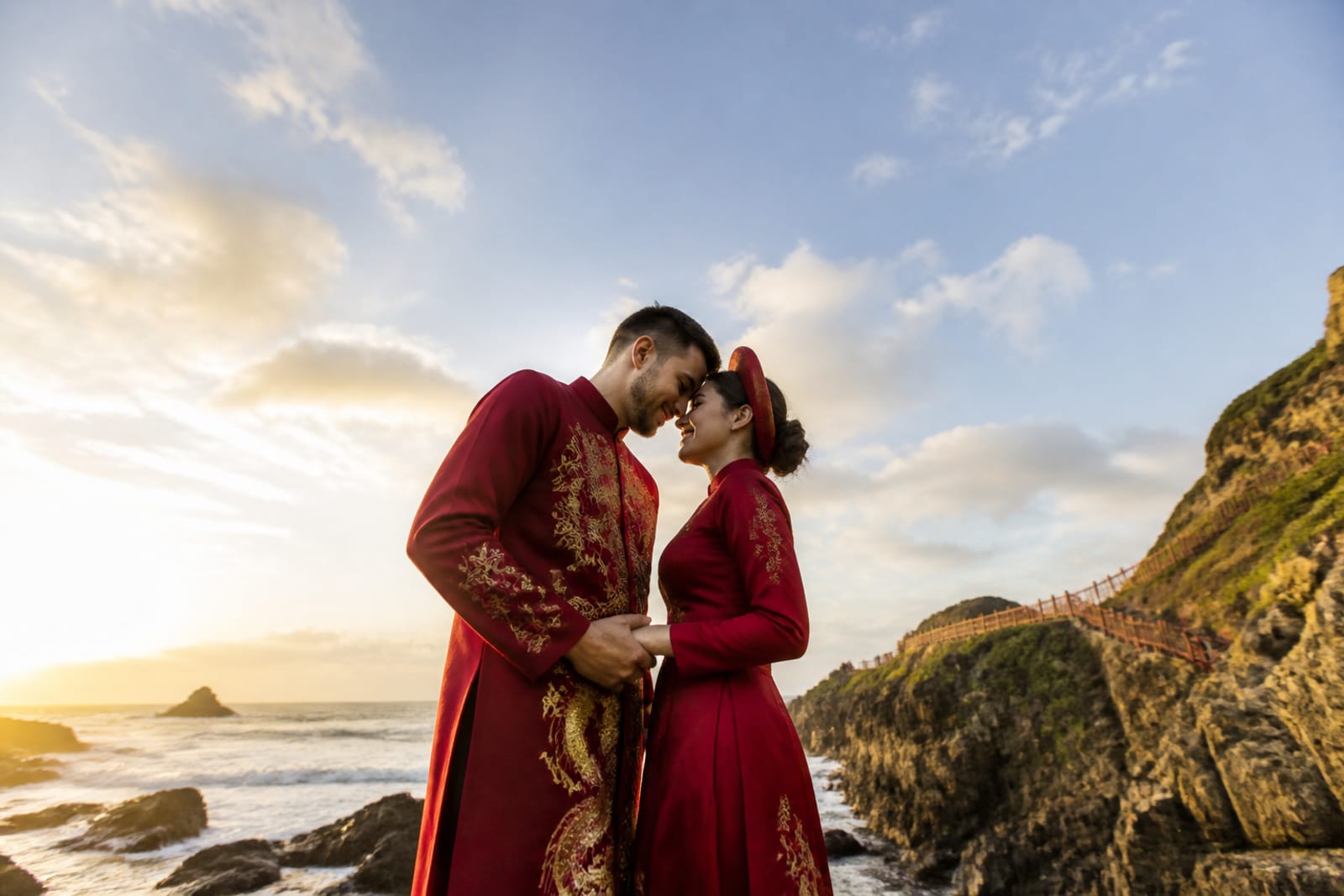
Quy Nhon (east coast, central region) is harder to reach — 12 hours from Ho Chi Minh City, 13 from Hanoi, or a 3-hour drive from Da Nang airport — so it stays quieter. The reward is moody, intimate landscape: rocky coves, turquoise water, lush hills rolling into bays, and almost no other tourists at sunrise. February through August is equally dry, but the light is softer because coves face north-northeast; you'll get diffused, rich skin tones rather than harsh shadows. The walking is easy (loose sand, low rocks), so ao dai and formal wear stay cleaner longer. A local photographer here has the advantage of knowing exact tide times, hidden caves, and which rocks stay dry — critical knowledge you won't find on Google Maps. Quy Nhon suits couples who want frames that feel discovered, not performed; who value silence and a partner's presence over Instagrammable scale. The downside: you must fly and commit to a local crew you'll vet on WhatsApp or phone; no Cáo Studio base exists there yet.
How do seasons and weather affect pre-wedding light in each town?
| Factor | Mui Ne (Feb–Aug) | Quy Nhon (Feb–Aug) | Both (Sep–Jan) |
|---|---|---|---|
| Light quality | Hard, direct sun; sharp dune shadows; golden hour is brief | Softer, cove-reflected light; longer diffused periods | Unpredictable; rain, typhoon risk Oct–Nov; Feb onward improves |
| Water clarity | Clear turquoise; consistent | Clear turquoise; variable with tide | Murky, risky; avoid |
| Crowds | Peak 6–8 am; book private sand or go 5 am | Minimal; local guides help you avoid crowds | Rain drives off tourists; unpredictable |
| Wind | Moderate; may disturb fabric and hair | Sheltered coves; quieter air | Strong; wear and tear on ao dai |
| Outfit durability | Sand stays on fabric; quick rinses needed | Rock grip is gentle; sand minimal | Wet fabric; high humidity; mold risk |
February to August is your safe window for both towns — the sun is consistent, water colour is vivid, and humidity is moderate. September through December is the rainy, typhoon season (worst October–November); avoid booking then. January is drying out but can still be grey in the north; Mui Ne and Quy Nhon are clearer. If you're set on winter (Dec–Feb), Mui Ne handles cooler light better because its open landscape means less mist; Quy Nhon's coves trap moisture.
How do you find and vet a photographer for these remote towns?
Since Cáo Studio doesn't operate in Mui Ne or Quy Nhon, you'll hire a local. Start by searching Instagram hashtags: #MuiNeEngagement, #MuiNePreWedding, #QuyNhonPhotographer — screenshot photographers whose color, framing and ao dai fit speak to you. Message at least three; ask for: portfolios (≥30 pre-wedding images), references (phone or WhatsApp with past couples), a detailed shot list for your half-day or full-day session, and confirmation they've shot your chosen spots (sunrise dunes, specific caves, beaches) in good light. Ask how they'll handle outfit changes — will they coordinate a makeup artist or hairdresser? Do they have a second camera (insurance against failure)? How soon will you see unedited previews and edited finals? A strong local photographer will ask you questions: what season do you prefer, do you speak Vietnamese, what's your ao dai's fabric weight (critical for wind), do you want both traditional and modern frames? Avoid photographers who only show styled studio portraits or Instagram-famous heavily retouched images — ask specifically for unretouched JPGs. Get a WhatsApp introduction and a phone call before booking; trust your gut on communication speed and thoughtfulness. Pricing varies; ask what's included (photos, video, travel time, a makeup artist if needed) and confirm delivery time and file format.
What should you wear and pack for Mui Ne vs. Quy Nhon?
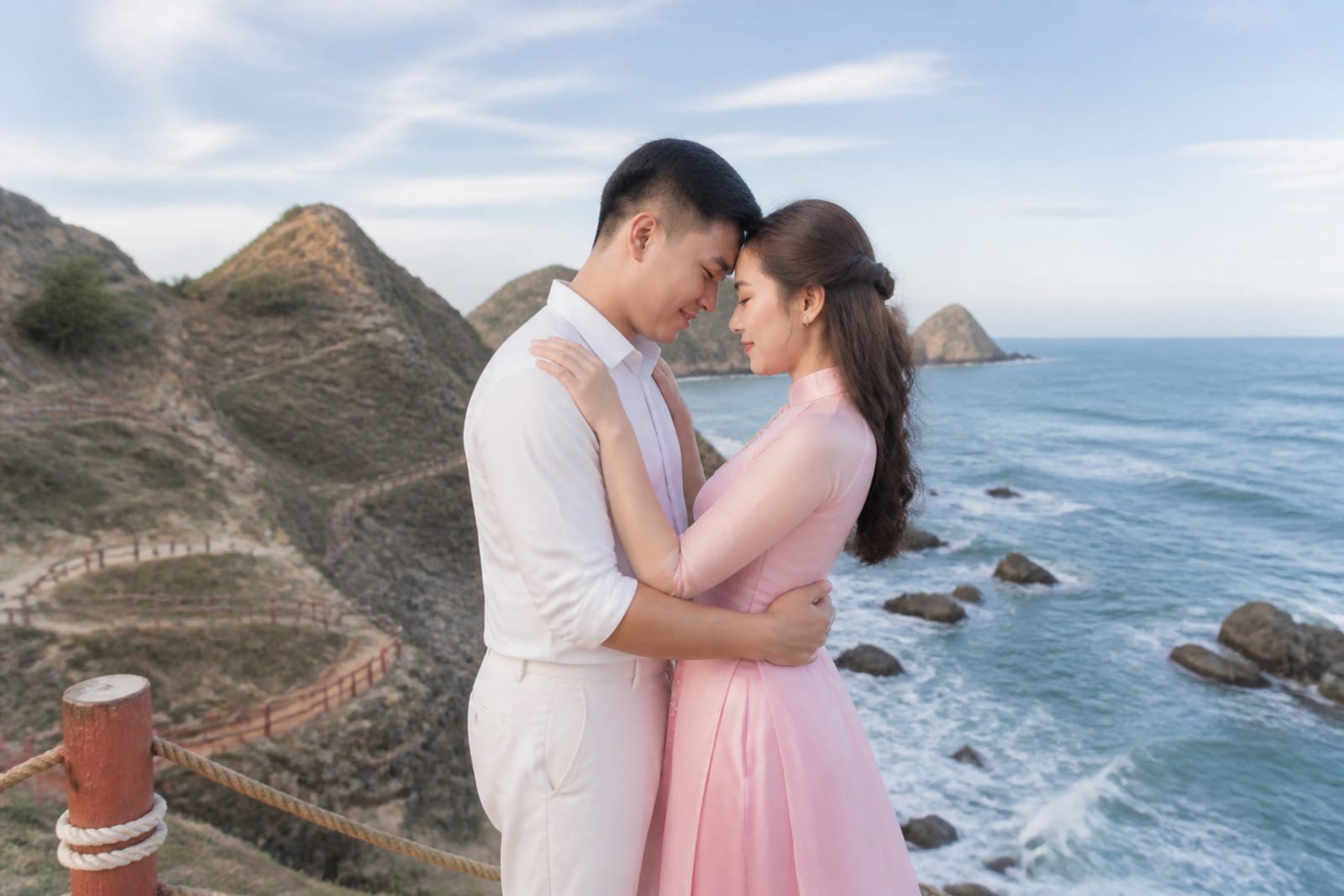
Outfits: Both towns demand at least two looks (a traditional ao dai and a modern dress or suit) to fill a full-day session. For Mui Ne's dunes, choose lightweight, flowing ao dai in white, cream, blush or pastels — dark colors absorb heat and photograph flat under harsh sun. Bring a second outfit (a slip dress, linen suit or casual ao dai) for cave or beach shots; the contrast breaks monotony. For Quy Nhon, the same applies, but you can go slightly bolder in color because cove light is forgiving — jewel tones, soft greens and blues work without washing out.
Footwear: For Mui Ne, pack sandals or go barefoot (sand is soft); bring socks to slip on between shoots (sand in shoes wastes time). For Quy Nhon, wear reef shoes or sandals with grip — rocks are slippery when wet, and sharp edges catch delicate fabrics.
Hair and makeup: Both towns have humidity and salt spray. Book a hairdresser and makeup artist the evening before or early morning of the shoot — don't rely on a hotel spa's bridal experience. Ask them to use waterproof makeup and salt-resistant hairspray. Bring a small mirror, lip balm, blotting powder and hair pins in your pocket; you'll touch up between locations. If you're coordinating a local team (photographer + artist), confirm they've worked together before — timing matters when you're changing outfits every 90 minutes.
Packing essentials: Sunscreen (reef-safe), a sarong or light wrap (sun protection and modesty between shots), flip-flops, a small umbrella (Feb–Aug is dry, but brief showers happen), wet wipes, and a phone charger. Bring two ao dai if possible — one stays pristine for evening shots; the other is your working gown. If your ao dai is silk, pack tissue paper to stuff the sleeves and bodice while sitting in a car.
What does a realistic pre-wedding timeline look like in these towns?
A pre-wedding session in Mui Ne or Quy Nhon typically runs 6–8 hours (dawn start around 5 am, finishing by 1–2 pm, or late afternoon 3 pm to sunset 6 pm). Here's how time breaks down:
- 5:00–5:30 am: Crew meets you at hotel; final hair/makeup touch-up if needed (local makeup artist travels with photographer).
- 5:30–6:30 am: First location (dunes in Mui Ne, a northern cove in Quy Nhon); shoot one outfit, walk and look, wide then medium then detail frames.
- 6:30–7:15 am: Drive to second location; brief outfit change (ao dai to slip dress, or vice versa) in a car or private shelter.
- 7:15–8:30 am: Second location; repeat shot sequence.
- 8:30–9:30 am: Return to hotel or a cafe; outfit three (optional modern dress or groom suit) and full makeup refresh if needed.
- 10:00 am–12:30 pm: Third and fourth locations (cave, village, quiet beach, fishing boats); two more outfits or a sustained moment of walking and sitting.
- 12:30–1:00 pm: Drive back; wrap.
Sunset sessions are tempting but risky — light fades fast, you lose shooting time if travel is delayed, and ao dai don't photograph as sharply in low golden light (fabric becomes muddy). Sunrise sessions, though early, give you sharp, rich color for 2 hours, then overcast midday light for softer close-ups. Plan ahead with your photographer: which locations need which light, and what's the fallback if dawn is cloudy?
What should you check before committing to a pre-wedding shoot in these towns?
Before booking a pre-wedding shoot in Mui Ne or Quy Nhon, confirm:
- Photographer's cancellation policy: If typhoon or heavy rain hits (rare Feb–Aug, but possible), can you reschedule to the next clear day at no extra cost?
- Travel time on your wedding day: If you're marrying the day after the shoot, how long is your photographer's turnaround for edited photos? (Local photographers usually deliver in 3–5 days; ask for a rush option if needed.)
- Ao dai sourcing: Does your photographer know a rental shop (common in Mui Ne; rarer in Quy Nhon)? Or will you bring your own? If the latter, confirm it fits your chosen outfits and can survive a full day of shooting and sand/salt exposure.
- Insurance and backup equipment: Does the photographer carry two cameras, backup memory cards, and a backup lens? One equipment failure can cost you your entire session.
- Language and communication: If you don't speak Vietnamese, confirm your photographer speaks English fluently and is available on WhatsApp during prep and the shoot day.
- Delivery format and usage rights: Ask for original JPGs (not heavily compressed), RAW files if you want to edit yourself, and written permission to use images for personal Instagram or wedding website (not professional resale).
- Local guide or solo crew: In Quy Nhon especially, a photographer who works with a local guide (who knows tide times, hidden spots and when tourists arrive) is worth the added cost.
For inspiration and to see how pre-wedding shoots are framed, explore Cáo Studio's lookbook, which shows ao dai, couple, and location work. If you're flying into Hanoi, Ho Chi Minh City or Hoi An instead, Cáo Studio offers full pre-wedding coordination — one team handles all outfits, makeup, hair, and photography, so there's no vendor hand-off and no risk of miscommunication.
---
FAQ
Is Mui Ne or Quy Nhon better for February to August pre-wedding photos?
Both are excellent Feb–Aug. Mui Ne offers bold dune light and easy logistics (4 hours from Saigon); Quy Nhon delivers quieter, softer cove light but requires more travel and a locally vetted photographer. Choose Mui Ne for dramatic scale, Quy Nhon for intimate, undiscovered frames.
Can I hire Cáo Studio to shoot my pre-wedding in Mui Ne or Quy Nhon?
Cáo Studio is based in Hanoi, Ho Chi Minh City and Hoi An. For Mui Ne or Quy Nhon, hire a local photographer vetted via Instagram portfolios and couple references. Contact Cáo Studio on WhatsApp if you'd like pre-wedding coordination in one of our bases.
What's the best time of day to shoot in each town?
Sunrise (5–7 am) gives sharp, rich light in both towns and avoids crowds. Late afternoon (4–6 pm) works for Quy Nhon's coves (softer, diffused) but is harsh in Mui Ne unless you're in shade. Avoid midday (11 am–3 pm); light is flat and couples sweat.
Do I need a makeup artist and hairdresser on the shoot day?
Yes. Both towns have humidity and salt spray; a local makeup artist and hairdresser who've worked with your photographer before ensure smooth timing and waterproof touch-ups between outfits. Book the evening before or early morning.
What happens if the weather turns bad on my shoot day?
Feb–Aug is dry, but confirm your photographer's rain-date policy in writing. If you're marrying the next day, ask for a rush edit turnaround; if you have flexibility, agree to reschedule to the next clear day at no added cost.
How many outfits should I bring for a full-day pre-wedding shoot?
Bring two or three: one traditional ao dai, one modern dress or suit, and optionally a casual/casual ao dai. Three outfits fill 6–8 hours without repetition and let your photographer shape each location to a different mood.
FAQ
Is Mui Ne or Quy Nhon better for February to August pre-wedding photos?
Both are excellent Feb–Aug. Mui Ne offers bold dune light and easy logistics (4 hours from Saigon); Quy Nhon delivers quieter, softer cove light but requires more travel and a locally vetted photographer. Choose Mui Ne for dramatic scale, Quy Nhon for intimate, undiscovered frames.
Can I hire Cáo Studio to shoot my pre-wedding in Mui Ne or Quy Nhon?
Cáo Studio is based in Hanoi, Ho Chi Minh City and Hoi An. For Mui Ne or Quy Nhon, hire a local photographer vetted via Instagram portfolios and couple references. Contact Cáo Studio on WhatsApp if you'd like [pre-wedding coordination in one of our bases](/pre-wedding-photoshoot).
What's the best time of day to shoot in each town?
Sunrise (5–7 am) gives sharp, rich light in both towns and avoids crowds. Late afternoon (4–6 pm) works for Quy Nhon's coves (softer, diffused) but is harsh in Mui Ne unless you're in shade. Avoid midday (11 am–3 pm); light is flat and couples sweat.
Do I need a makeup artist and hairdresser on the shoot day?
Yes. Both towns have humidity and salt spray; a local makeup artist and hairdresser who've worked with your photographer before ensure smooth timing and waterproof touch-ups between outfits. Book the evening before or early morning.
What happens if the weather turns bad on my shoot day?
Feb–Aug is dry, but confirm your photographer's rain-date policy in writing. If you're marrying the next day, ask for a rush edit turnaround; if you have flexibility, agree to reschedule to the next clear day at no added cost.
How many outfits should I bring for a full-day pre-wedding shoot?
Bring two or three: one traditional ao dai, one modern dress or suit, and optionally a casual/casual ao dai. Three outfits fill 6–8 hours without repetition and let your photographer shape each location to a different mood.
Ao dai, makeup, hair and a local photographer in Hanoi or Saigon — one WhatsApp message.