services/proposal-and-anniversary
Mui Ne Proposal Photographer Guide: Booking & Locations 2026
Proposing in Mui Ne means betting on one of Vietnam's most photogenic landscapes—but a beautiful backdrop doesn't guarantee beautiful photos. The difference between a snapshot and a keepsake comes down to photographer choice, timing, and logistics few first-time planners know to ask about.
This guide walks you through what Mui Ne proposal photography actually entails: where to shoot, when light works, which photographer type suits your budget and stress level, and what contract details protect you before the day arrives.
Where Should We Shoot in Mui Ne for Proposal Photos?
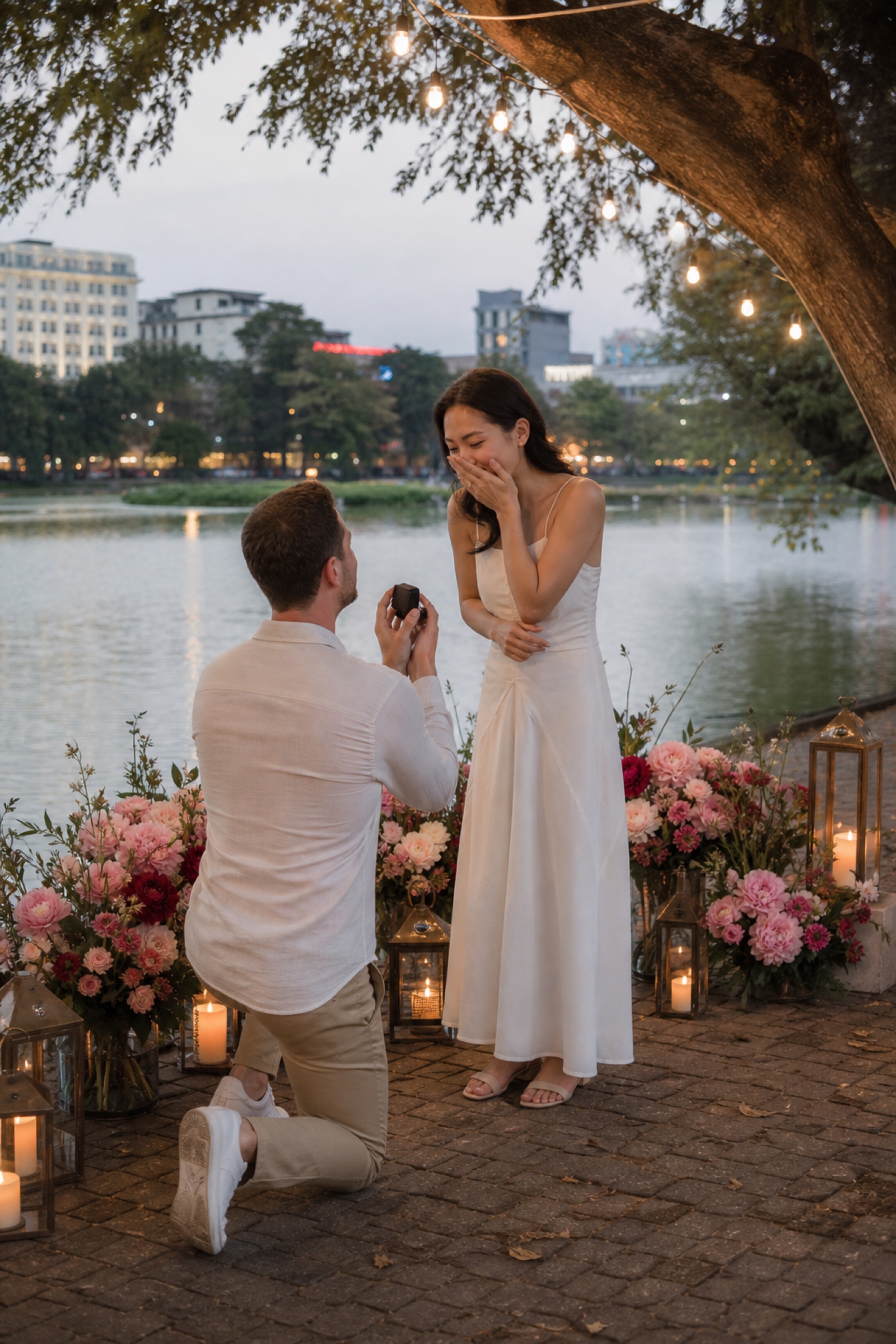
Mui Ne's appeal lies in three distinct zones, each with different light patterns, crowds, and accessibility. The white sand dunes (15 km northeast) offer drama and isolation—but require a 4WD vehicle and early starts to avoid tour buses. Red cliffs and yellow sand (between town and dunes) photograph warmer and are reachable by regular taxi; they fill with tourists by 9 a.m. The seafront strip around Mui Ne town itself provides golden-hour glow over water and is walkable, though less "exotic" than dunes. Choose by how much gear your photographer can carry and what light direction suits your couple's pose.
What Time of Day Gets the Best Light for Proposals?
Golden hour—5 to 6:30 p.m.—is non-negotiable in Mui Ne. Midday sun (10 a.m.–3 p.m.) flattens color, creates unflattering shadows under eyes and noses, and turns sand reflections harsh. Early morning (6:30–7:30 a.m.) works if you're at dunes before tour groups; light is soft but cool-toned. Late golden hour (6–6:30 p.m.) is safest because it's consistent and forgiving. The catch: sunset happens fast in Vietnam—by 6:45 p.m., you're shooting in blue hour with fast shutter speeds and high ISO. Plan a 90-minute window and expect your photographer to move between three locations.
See our couple & family sessions—same light principles.
Studio (Traveling) vs. Local Freelancer: Which Fits Your Proposal?
Deciding between a Saigon-based studio like Cáo Studio or a local Mui Ne photographer hinges on comfort, budget, and what you're buying. Here's the tradeoff:
| Option | Best For | Turnaround | What to Check |
|---|---|---|---|
| Traveling Studio (e.g. Cáo Studio Saigon) | Couples wanting consistent style, editing, and guarantee on retouches; peace of mind | 2–3 weeks post-shoot | Confirm they've shot Mui Ne; ask for portfolio; check travel fee + session fee separately |
| Local Freelancer | Budget-conscious planners; couples who want personal recommendation from resort/guide | 1–2 weeks (often slower) | No written contract? High risk. Ask who owns equipment. No backup gear = no reshoot if camera fails. |
Studios traveling from Saigon charge a travel fee (ask on WhatsApp—never assume it's included). Local photographers are cheaper upfront but often lack liability insurance and backup equipment. If your freelancer's camera fails mid-proposal, you have no recourse.
Start your proposal planning with Cáo Studio Saigon.
How Do You Book and What Should You Ask Before Paying?
Before you commit to any photographer, run this checklist:
- Portfolio: Do their other proposal shoots match your style? (Posed, candid, color-graded?) Insist on full galleries, not Instagram highlights.
- Backup dates: What happens if light is terrible or they get sick? Do they reshoot free?
- Retouching turnaround: When do you get finals? "2–3 weeks" is standard; clarify if that's raw files or finished edits.
- Ownership of files: Do you get high-resolution downloads? (You should.)
- Contract terms: Is cancellation refundable? Who owns copyright? Written, not verbal—every time.
- Gear redundancy: Do they carry two cameras and backup lenses? If not, you're at risk.
- Delivery format: Raw files, JPEG, prints, video? Don't assume.
Traveling studios (like Cáo Studio) provide written quotes via WhatsApp; they handle coordination and travel logistics. Local freelancers often work on WhatsApp too—but insist on a written contract, even a simple one.
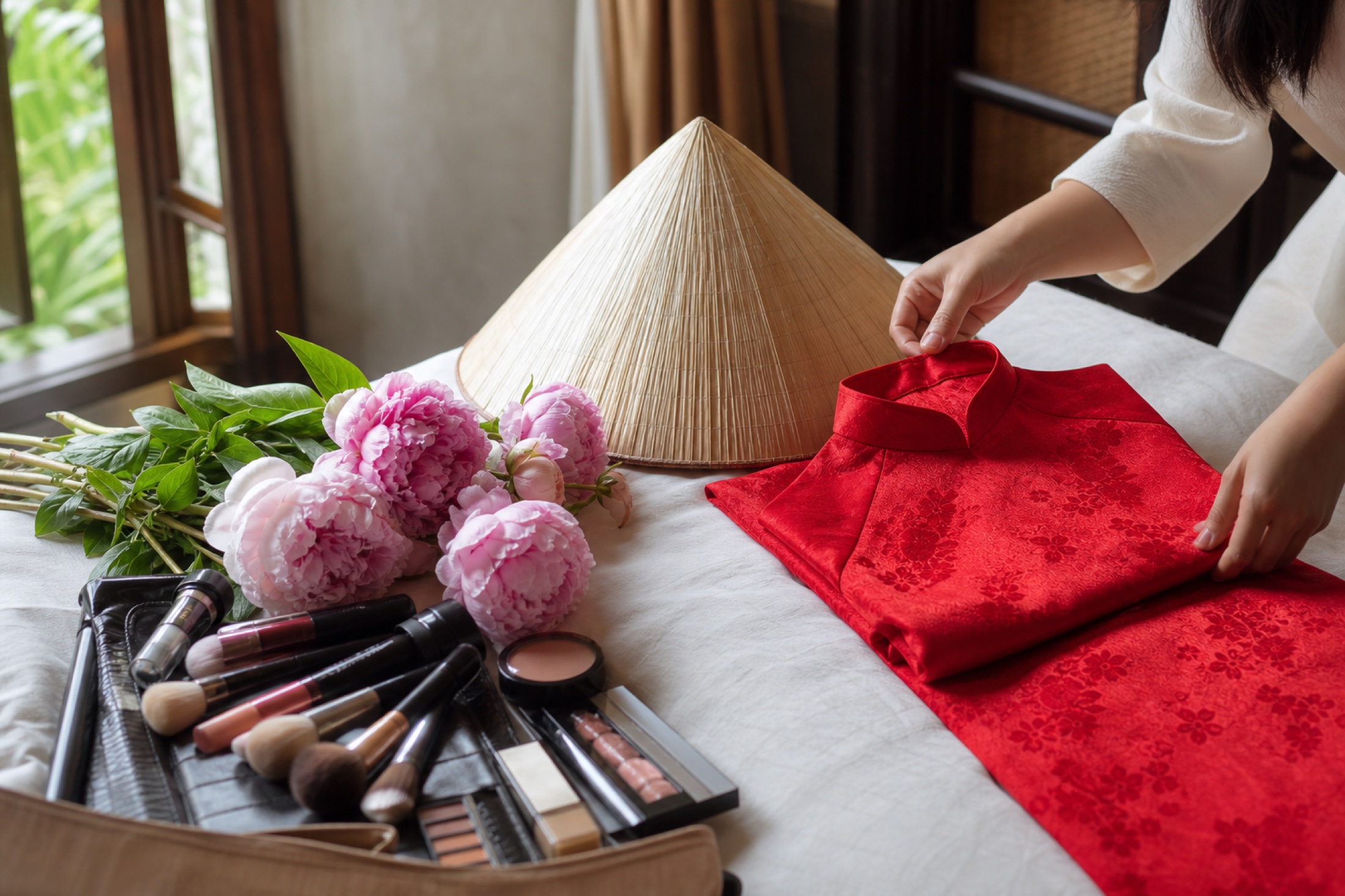
💄 Makeup & hair at your hotel —add polish before the proposal shoot.
What Should You Wear and How to Prepare?
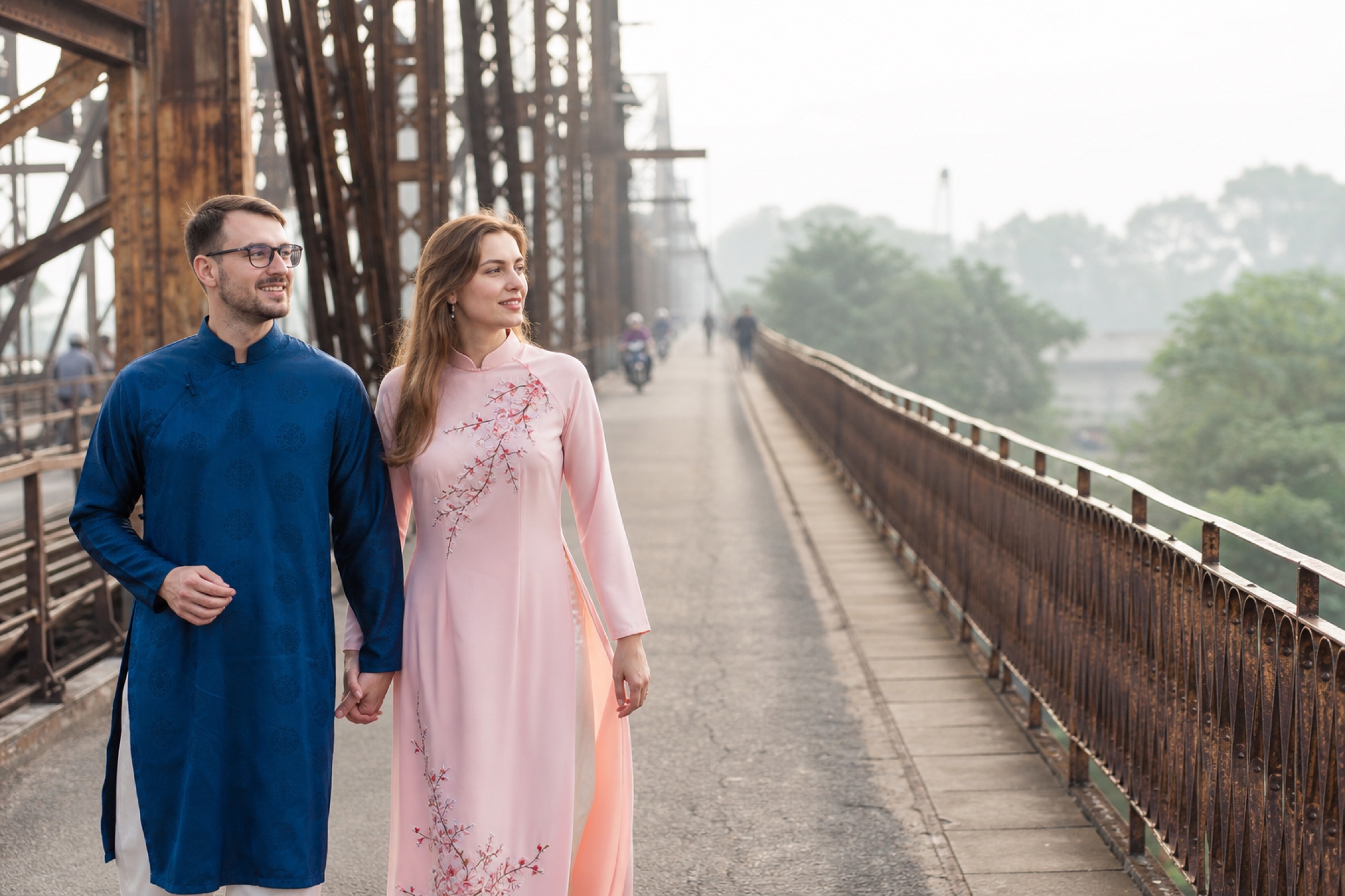
Proposal outfits in Mui Ne should suit sand, heat, and wind without looking overwrought. An ao dai is striking against dunes and water—consider a professional ao dai photoshoot beforehand to test what works. For Western wear, breathable fabrics beat heavy dresses; sand gets everywhere. Avoid white unless you're okay with sand showing in edits. Jewelry should be secure; wind on dunes is genuinely strong.
Makeup for Mui Ne proposals needs extra durability: heat, sweat, and sand reflect light differently than studios. If your photographer doesn't include a makeup artist, hire one separately—or ask studios like Cáo if makeup & hair at your hotel is available days before. Sunscreen (reef-safe) the morning of, reapply before photos. Sunburned skin doesn't forgive harsh golden-hour light.
Hair: Bring a stylist or clips. Wind will disrupt loose hair after 20 minutes; updos or braids photograph cleaner against dramatic backdrops.
What Happens in Bad Weather or Light? Backup Plans?
Mui Ne is mostly dry (October–April), but late afternoon storms roll in from the sea. A good photographer arrives with a backup plan: move to a covered location, shift to early golden hour tomorrow, or shoot in overcast light (which is actually soft and forgiving—many love the aesthetic). Your contract should state:
- Postponement terms: If light is genuinely bad tomorrow, is a resshoot included?
- Partial reshoot: If only your first location had bad light, do you pay extra or is it covered?
Overcast golden hour is underrated. Pros often prefer it: no harsh shadows, skin looks smooth, colors are saturated without blown highlights. Don't panic if clouds roll in at 5 p.m.
Book with Cáo Studio Saigon—travel experience included.
What Keepsakes Should You Order After the Photoshoot?
Once you have images, think beyond the digital file. Couples often overlook prints, albums, and keepsakes—then regret it when hard drives fail. Options:
- Album: A fine-art album (leather-bound, custom layout) lives on your coffee table and doesn't degrade like cloud storage.
- Framed print: One hero shot on your wall—worth the investment.
- Acrylic or metal print: Durable, modern, holds color longer than paper.
- Custom keepsake box or guest book: For couples who want a memento beyond photos.
Studios often bundle these into proposal & anniversary packages. Ask whether prints are included or à la carte.
---
What to Check Before You Book: A Final Checklist
- ✅ Has the photographer shot Mui Ne at your time of year? Ask for location examples.
- ✅ Is the travel fee itemized separately from the session fee?
- ✅ Do you get raw files, JPEGs, or both? In what timeline?
- ✅ What happens if the camera malfunctions? Is there backup gear?
- ✅ Is a contract provided? (It should be—verbal agreement = no safety net.)
- ✅ What's their retouching philosophy? Do they deliver 50 edited images or 200 culled+edited?
- ✅ Do they offer makeup & hair, or should you hire separately?
- ✅ Is the price all-in, or are prints/products extra?
---
Next Steps: Propose with Confidence
If you're flying into Vietnam for this proposal, Cáo Studio Saigon coordinates travel, retouching, and keepsakes—reducing your planning load. If you prefer a local photographer, ask your resort for references and vet them hard: portfolio, contract, backup plan. Mui Ne's light is magical, but only if someone trained is there to capture it.
📸 Book on WhatsApp — ao dai photoshoot | 🌸 See the lookbook
FAQ
Can we shoot our Mui Ne proposal at sunrise instead of sunset?
Yes, but earlier light (6:30–7:30 a.m.) is cooler-toned and less forgiving; you'll need a makeup touch-up. Golden hour (5–6:30 p.m.) is warmer and hides skin imperfections better. Tour buses also flood dunes after 8 a.m., so sunrise is quieter—trade-off between crowd and light quality.
Do we need to hire a local guide to reach proposal photo locations?
For dunes, yes—a 4WD driver prevents you from getting stuck and knows safe areas away from tour groups. Seafront and red-cliff spots are walkable from town. Your photographer may arrange this or recommend local contacts; confirm beforehand so you're not paying separately for a guide and driver.
How much notice do we need to book a photographer for a Mui Ne proposal?
6–8 weeks minimum for traveling studios like Cáo Studio, 3–4 weeks for local freelancers. Shorter notice is possible if they're available, but you lose choice of dates and may miss peak-season discounts. Holidays (Lunar New Year, summer) book out 10+ weeks ahead.
What if we can't afford a professional photographer for a full proposal session?
Many couples hire a photographer for 2 hours (dunes or seafront, golden hour only) instead of a full day—much lower cost, still captures the moment. Ask about half-day rates. Alternatively, ask your resort or a trusted friend with a good camera to be on standby while you have an intimate proposal, then book a portrait session the next day using photos as reference.
Can we edit our Mui Ne proposal photos ourselves, or should the studio handle it?
Studios like Cáo handle color grading and retouching—sand glare, skin shine, and blown highlights are tricky without experience. If you get raw files, be prepared for a steep learning curve; most couple don't have the software or skill. Studios' turnaround is 2–3 weeks; editing yourself takes weeks. Budget for professional retouching either way.
FAQ
Can we shoot our Mui Ne proposal at sunrise instead of sunset?
Yes, but earlier light (6:30–7:30 a.m.) is cooler-toned and less forgiving; you'll need a makeup touch-up. Golden hour (5–6:30 p.m.) is warmer and hides skin imperfections better. Tour buses also flood dunes after 8 a.m., so sunrise is quieter—trade-off between crowd and light quality.
Do we need to hire a local guide to reach proposal photo locations?
For dunes, yes—a 4WD driver prevents you from getting stuck and knows safe areas away from tour groups. Seafront and red-cliff spots are walkable from town. Your photographer may arrange this or recommend local contacts; confirm beforehand so you're not paying separately for a guide and driver.
How much notice do we need to book a photographer for a Mui Ne proposal?
6–8 weeks minimum for traveling studios like Cáo Studio, 3–4 weeks for local freelancers. Shorter notice is possible if they're available, but you lose choice of dates and may miss peak-season discounts. Holidays (Lunar New Year, summer) book out 10+ weeks ahead.
What if we can't afford a professional photographer for a full proposal session?
Many couples hire a photographer for 2 hours (dunes or seafront, golden hour only) instead of a full day—much lower cost, still captures the moment. Ask about half-day rates. Alternatively, ask your resort or a trusted friend with a good camera to be on standby while you have an intimate proposal, then book a portrait session the next day using photos as reference.
Can we edit our Mui Ne proposal photos ourselves, or should the studio handle it?
Studios like Cáo handle color grading and retouching—sand glare, skin shine, and blown highlights are tricky without experience. If you get raw files, be prepared for a steep learning curve; most couple don't have the software or skill. Studios' turnaround is 2–3 weeks; editing yourself takes weeks. Budget for professional retouching either way.
Ao dai, makeup, hair and a local photographer in Hanoi or Saigon — one WhatsApp message.