/pre-wedding-photoshoot
Mui Ne white sand dunes wedding photos: best time and light
Mui Ne's white sand dunes photograph best at sunrise (before 06:30) or from 16:00 onward, when side light rakes across the sand and creates depth without harsh shadows. Sunrise is calmest and least crowded; afternoon wind picks up between 11:00–15:00, blowing sand onto skin and gear. One team (photographer, makeup, outfit) works better than three vendors meeting on-site—they anticipate wind shifts and reframe shots in real time. Cáo Studio has a Saigon base and can coordinate pre-wedding shoots in Mui Ne with a local photographer, handling your outfit, hair and makeup in your hotel before you drive out. Book on WhatsApp to confirm dates and logistics. 📸 Book on WhatsApp — pre-wedding photoshoot | 💄 Makeup & hair at your hotel | 🌸 See the lookbook
The white sand dunes near Mui Ne are one of southern Vietnam's most sought-after wedding backdrops. The landscape is stark—rippled sand, empty sky, soft curves that frame two people beautifully. But the dunes are unforgiving: light moves fast, wind carries sand into eyes, and midday sun flattens texture into a white void. Timing is everything. Sunrise shoots work. Late afternoon works. Midday does not.
This guide covers what you actually see on the ground, how light behaves hour by hour, what to wear and pack, and how to choose between a local Mui Ne photographer and coordinating with Cáo Studio's Saigon base to bring your makeup, outfit and creative direction together.
Does sunrise really make a difference on Mui Ne dunes?
Yes. Sunrise light—roughly 05:30 to 06:45 depending on the season—hits the dunes from the east at a low angle. Sand grains cast tiny shadows, creating texture and depth. The air is cool, calm, and the dunes are empty. By 07:00, the first tour groups arrive. By 08:00, the dunes are busy with backpackers and families. A sunrise shoot takes two to three hours, with your couple walking, sitting, catching light on fabric and skin. The light stays directional and soft until around 07:30; after that, the angle rises and shadows shrink. If you're in Mui Ne for one morning, sunrise is your best bet.
Wind and sand are the real friction: by 06:00, a light breeze usually rises. Your photographer and makeup artist need to move fast, keep products sealed, and anticipate gusts. A one-team approach—makeup, wardrobe, camera all coordinated—means your artist can shield your face, your photographer can reset framing mid-gust, and your stylist can adjust fabric without waiting for a third vendor to arrive.
Why does afternoon light work if midday is flat?
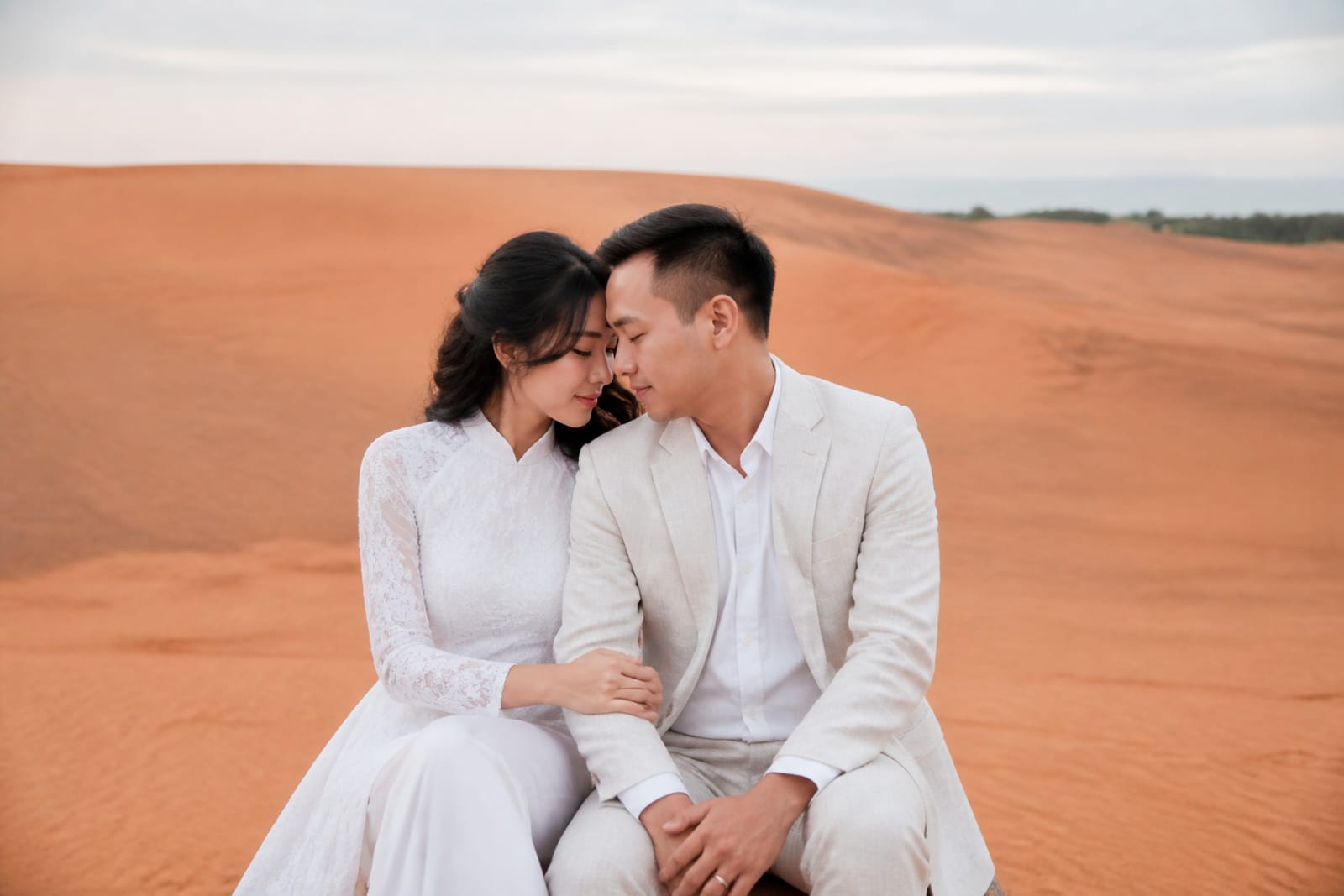
Midday sun (10:00–14:00) is directional from above and creates no shadows. Sand looks bleached, faces are backlit or squinting, and depth disappears. But from 16:00 onward, the sun drops toward the west. By 17:00–18:30, side light returns. The sand glows golden or amber, shadows lengthen across the ripples, and fabric (especially ao dai silk) catches warm highlights. This light lasts 45 minutes to an hour, depending on the season and cloud cover. Afternoon shoots are less crowded than sunrise but busier than early morning. Wind is often stronger in late afternoon (due to thermal effects through the day), so sand blows more than at sunrise.
The trade-off: afternoon light is warmer and more dramatic, but you need a photographer who can read fast-changing angles and a makeup artist prepared for sand and sweat. Sunrise is calmer but requires an early start and limited shooting time.
What should a couple wear under an ao dai for dune photos?
An ao dai (the traditional silk tunic) is designed for elegant, upright posture. On sand, it's delicate. Wear a fitted, breathable slip or a plain cotton dress underneath (knee-length, no pattern), so the ao dai drapes cleanly without clinging to your body. Avoid thick undergarments that show through light-colored silk. The groom typically wears an ao dai in a complementary color or a linen shirt and trousers. On sand, linen wrinkles but photographs well in side light.
Footwear: go barefoot on the sand for authenticity and freedom to walk. Have sandals in the car for the journey to and from the shoot location. Sand particles stick to feet and will end up in your vehicle, so accept it or plan a rinse stop. If barefoot feels wrong, wear minimal flat sandals or jeweled anklets that read on camera but don't sink into dunes.
Fabric weight matters: heavy silk holds shape better in wind than lightweight cotton. A good ao dai rental or tailored piece will be silk-cotton blend. Ask your photographer or outfit coordinator (e.g., Cáo Studio's makeup and hair service) for material recommendations if you're renting.
| Option | Best for | Light & season | Why it works |
|---|---|---|---|
| Sunrise shoot (05:30–07:00) | Couple wanting calm, texture, few crowds | Low east-side light Feb–Aug; stronger angle Nov–Mar | Directional light, still air, empty dunes |
| Late afternoon (16:00–18:30) | Couple wanting warm tones, drama, romantic mood | Golden hour Feb–Apr (Apr best in south); works year-round | Warmer light rakes across sand, harder shadows |
| Midday (10:00–14:00) | Not recommended | Harsh overhead sun | Flat light, bleached sand, no texture |
| Sunset after 18:30 | Not recommended in Mui Ne | Sun drops behind coastal haze/clouds | Sand goes grey, light disappears fast |
How does season affect dune photography in Mui Ne?
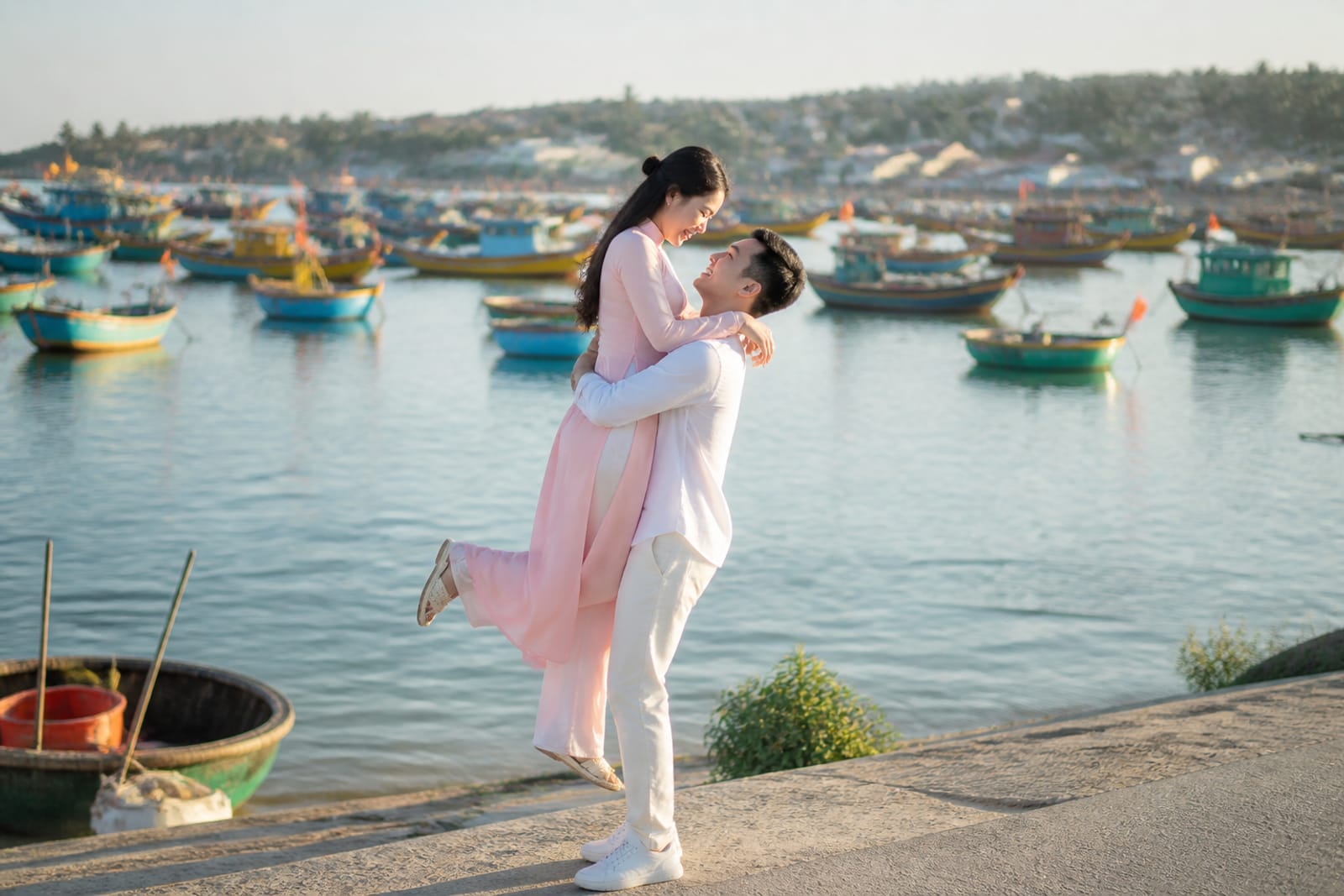
Mui Ne is one of Vietnam's driest regions. Dry season runs November to April; wet season May to November. Year-round, dunes are accessible, but wind and sand conditions vary. November to March brings strong winds from the northeast. Sand blows frequently, especially afternoon. February to August is calmer—wind softens and light is consistent. September to October can bring occasional rain and humidity. December to January is ideal: dry, breezy but manageable, and consistent cool-to-warm light.
For a pre-wedding shoot, February through April offers the best balance of dry conditions, calm mornings, and warm afternoon light. November to January is also strong but windier. Avoid late May through September if you're sensitive to humidity or afternoon downpours, though quick showers rarely ruin a morning shoot.
Crowd season: December through February (peak tourism, winter escape). Sunrise crowds are smaller even in peak season, but dunes will have tour groups by 07:30. Book early if you're shooting in December or January.
Who should you book—a local photographer or coordinate with Cáo Studio?
Mui Ne has several local photographers who know the dunes intimately. They understand the light cycle, can navigate wind, and have backup gear and insurance. The downside: you coordinate separately with a photographer, a makeup artist, and maybe a stylist. They may not have worked together. If one person is late or the makeup artist doesn't match the photographer's framing style, you're managing conflict on the shoot day.
See the lookbook for pre-wedding inspiration
Cáo Studio's Saigon base offers a different model. The team coordinates outfit, hair, makeup, and your creative direction together. Then you hire a local Mui Ne photographer on Cáo Studio's recommendation or partner. Cáo Studio handles the brief—what light you want, how you move, outfit changes—so the photographer isn't guessing. Makeup and wardrobe are pre-tested in your hotel (your Mui Ne resort or Phan Thiet accommodation), and the team knows how your ao dai or dress moves and how your face reads in sand light before you leave for the dunes.
Cost factors: a local photographer's rate depends on experience and package size (hours, edited files, video). Cáo Studio's coordination adds structure and one consistent creative voice. Ask on WhatsApp for a custom quote that includes your preferences.
| Approach | Best if you want | Logistics | Ideal when |
|---|---|---|---|
| Local Mui Ne photographer alone | Flexibility, direct local knowledge | You coordinate outfit, makeup separately | You have a trusted makeup artist already or want minimal crew |
| Cáo Studio coordinate + local photographer | One creative direction, professional makeup/outfit managed together | Makeup and styling at your hotel, photographer meets you at dunes | You want hair, makeup, outfit, and camera direction aligned |
| Cáo Studio + Hanoi/Saigon team travel to Mui Ne | Full production (outfit, makeup, photography in one team) | Cáo Studio team travels from Saigon base; costs reflect travel time | You prioritize one cohesive team over split vendors |
What should you check before you book a Mui Ne dunes shoot?
Light and timing: confirm with your photographer what hour they recommend based on the season and current wind forecasts. Ask to see recent work shot at that same hour. Sunrise and late afternoon are the only two options worth shooting; refuse a midday slot.
Outfit and weather: if you're renting ao dai locally, try it on in your hotel with makeup and jewelry before you go to the dunes. Sand and sweat will affect fit and color. Ask your makeup artist if the foundation and powder they're using will hold in wind and humidity. Bring a lip balm and sunscreen.
Logistics and backup: confirm transportation to the dunes (your car, the photographer's car, or arranged shuttle), parking at the trailhead, and whether entry fees or permits are required. Check the current entry fees on the official site. Ask your photographer if they have backup gear and how they protect equipment from sand.
Crew size: if you're bringing makeup and wardrobe, confirm they've worked outdoors on sand before. Sand particles get into everything. A crew of three (makeup, wardrobe, photographer) is ideal for pre-wedding photoshoots; more feels crowded on the dunes.
Photo delivery: agree on the number of edited photos, video clips (if any), and delivery timeline before you book. Cáo Studio delivers edited frames and a short vertical film within 48 hours; confirm your photographer's timeline.
---
💄 Makeup & hair at your hotel | 📸 Book on WhatsApp — pre-wedding photoshoot
If you're planning a pre-wedding shoot in Mui Ne and want professional hair and makeup coordinated with your photography, reach out on WhatsApp. Cáo Studio's Saigon base can brief a local photographer on your vision and handle your styling before you head to the dunes.
FAQ
Is sunrise or late afternoon better for Mui Ne dune photos?
Sunrise (before 06:30) is calmer and emptier, with soft directional light. Late afternoon (16:00–18:30) is warmer and more dramatic but windier. Choose sunrise if you prioritize texture and quiet; afternoon if you want warm tones and don't mind stronger wind.
What ao dai color works best on white sand?
Deep jewel tones (emerald, sapphire, burgundy) or warm pastels (blush, peach) photograph well against white sand. Avoid pale blue or grey, which can blend with sky. Ask your photographer for color mockups if you're unsure.
Can we shoot midday on the dunes?
Not recommended. Midday sun (10:00–14:00) is overhead and creates flat, harsh light with no texture. Sand looks bleached and faces squint. Sunrise or late afternoon are your only strong options.
Do we need permits or pay entry to access Mui Ne dunes?
Entry fees are required at some dune access points—check the current price on the official site or ask your hotel. Most dune locations are accessed via paid parking or guide services; confirm with your photographer.
How far in advance should we book a Mui Ne dune shoot?
Book 2–4 weeks ahead if you're coordinating with a local photographer. If you're working with Cáo Studio to coordinate styling and photography, book 4–6 weeks ahead to allow time for outfit fittings and hair trials at your hotel.
FAQ
Is sunrise or late afternoon better for Mui Ne dune photos?
Sunrise (before 06:30) is calmer and emptier, with soft directional light. Late afternoon (16:00–18:30) is warmer and more dramatic but windier. Choose sunrise if you prioritize texture and quiet; afternoon if you want warm tones and don't mind stronger wind.
What ao dai color works best on white sand?
Deep jewel tones (emerald, sapphire, burgundy) or warm pastels (blush, peach) photograph well against white sand. Avoid pale blue or grey, which can blend with sky. Ask your photographer for color mockups if you're unsure.
Can we shoot midday on the dunes?
Not recommended. Midday sun (10:00–14:00) is overhead and creates flat, harsh light with no texture. Sand looks bleached and faces squint. Sunrise or late afternoon are your only strong options.
Do we need permits or pay entry to access Mui Ne dunes?
Entry fees are required at some dune access points—check the current price on the official site or ask your hotel. Most dune locations are accessed via paid parking or guide services; confirm with your photographer.
How far in advance should we book a Mui Ne dune shoot?
Book 2–4 weeks ahead if you're coordinating with a local photographer. If you're working with Cáo Studio to coordinate styling and photography, book 4–6 weeks ahead to allow time for outfit fittings and hair trials at your hotel.
Ao dai, makeup, hair and a local photographer in Hanoi or Saigon — one WhatsApp message.