/pre-wedding-photoshoot
Muong Hoa Valley Rice Terraces for Pre-Wedding Photos: Pros, Cons, Alt
Muong Hoa Valley, near Sapa in north Vietnam, is a working rice terrace landscape carved into mountains—green Jun–Aug, golden mid-Sep to early Oct during harvest, and shrouded in fog most other months. A pre-wedding shoot there runs 3–4 hours including a steep 30–40 min trek down (and back up) to the valley floor, where soft morning light lasts roughly 90 minutes before harsh midday sun hits the open slopes. The payoff: cinematic wide frames no studio offers. The risk: fog clouds the light, rain halts shoots same-day, cold temperatures muddy the climb, and you'll shoot in hiking gear unless you change on-location. Cáo Studio does not operate in Sapa—book a local Sapa photographer and budget for permit, guide and weather delays. If terraces appeal but Sapa logistics overwhelm, compare Hoi An's rice paddies (flatter, closer to town, longer light window) or a pre-wedding shoot in Hanoi combining ao dai, landmarks and controlled light.
What does Muong Hoa Valley actually look like in a photo?
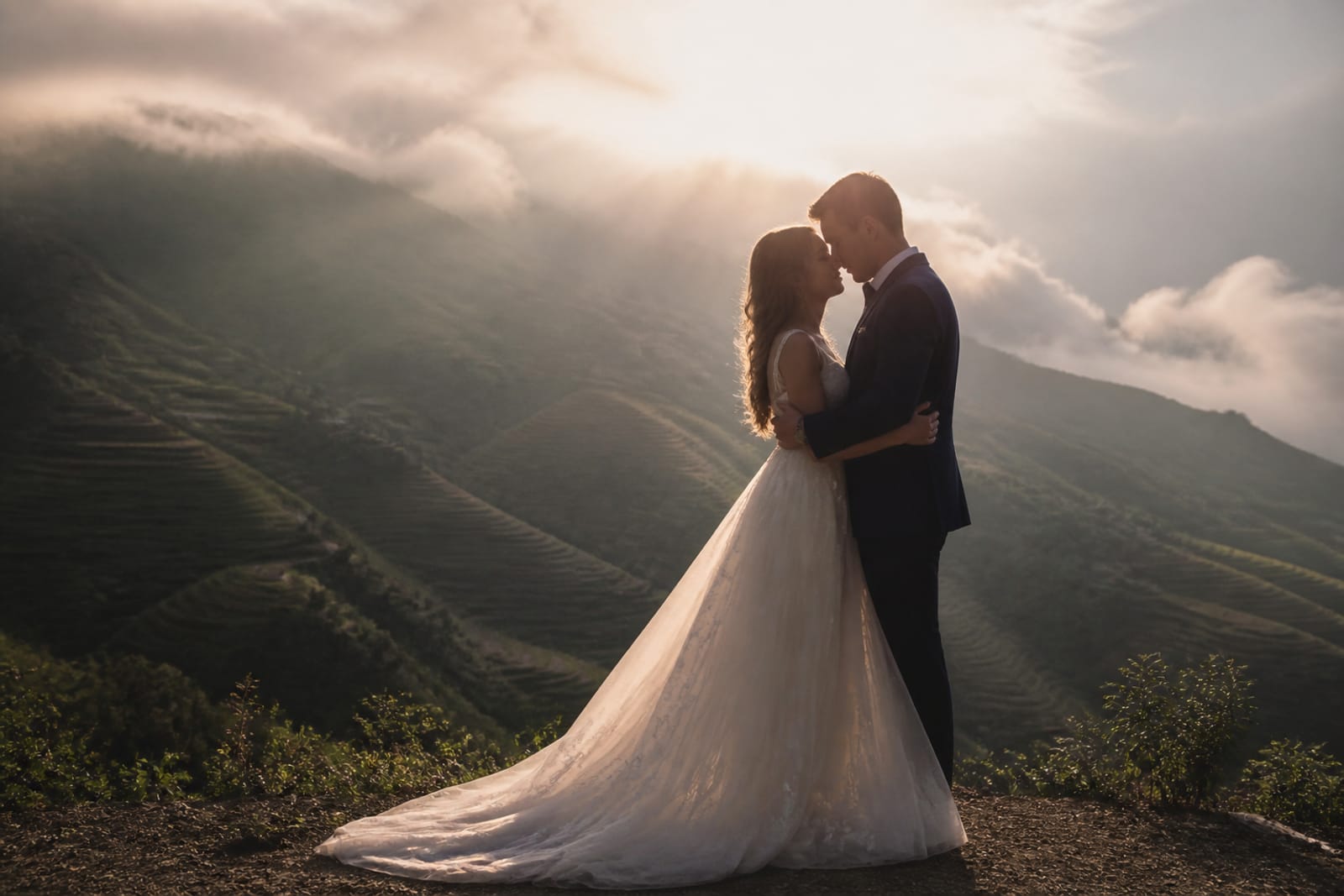
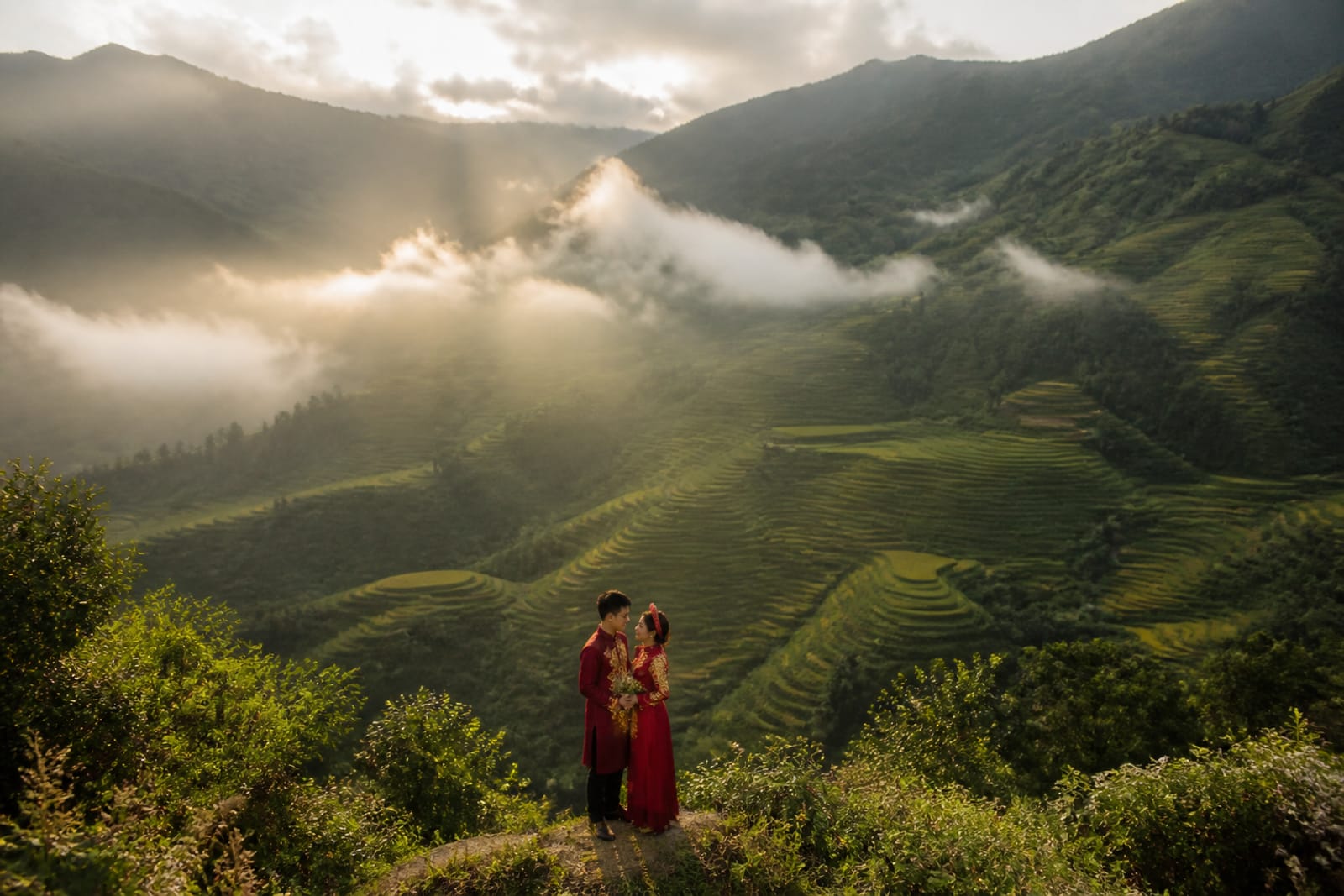
Muong Hoa Valley shows parallel terrace lines stacked down steep slopes, with narrow paths dividing paddies. The terraces photograph widest at dawn when soft light rakes across the contours—each ridge casts a shadow, sculpting depth. By 9 am, sun angle flattens the landscape; by noon, it's washed-out and harsh. Cloudy mornings are frequent (Dec–Feb especially), washing out colour and silhouette entirely. Best frames arrive Sep–Nov when terraces are golden or green, and Jun–Aug when water reflects sky. A couple walking a terrace path or standing on a ridge works well; shooting among active farmers (ploughing, planting) adds lived-in depth that posed couple shots alone can't match. The valley's real strength is landscape drama, not intimate portraiture—faces are small in the frame, detail is lost, and you need strong light to separate the couple from the background.
Why does light fail most hours at Muong Hoa Valley?
The valley runs north–south with steep west and east walls. Morning sun (5:30–7:00 am) hits from the east, casting long shadows across terraces and creating the "golden raking light" photographers chase. By 7:30 am, the sun climbs higher; by 9 am it's overhead and the shadows flatten. Afternoon light (4:00–6:00 pm) would repeat the raking effect, but you've already hiked out and the hike back up takes 40 minutes—most couples are exhausted by 2 pm. Cloud cover is the biggest x-factor: fog rolls in from around 8 am most days (especially Sep–Feb), erasing the valley entirely. Rain, common May–Sep and frequent Oct–Nov, stops shoots same-day because the muddy paths become unsafe and light disappears. This narrow window—roughly 5:30–7:00 am in clear weather—explains why Sapa photographers wake clients at 4:30 am and demand backup dates.
📸 Book on WhatsApp — ao dai photoshoot
When is Muong Hoa Valley actually shootable?
| Season | Terrace colour | Weather | Light window | Couple comfort | Crowds |
|---|---|---|---|---|---|
| Dec–Feb (winter) | Dry, muted green | Cold, fog common, occasional frost | 30–45 min, fog likely | Cold hands, muddy paths | Sparse early, busy by 7 am |
| Mar–May (spring) | Bright green | Dry, warm, some haze | 60–90 min, clearer | Good; warm midday climb back | Few |
| Jun–Aug (summer) | Green + water reflection | Rainy afternoons, morning mist common | 45–60 min, mist likely | Hot descent, sweat in ao dai or wedding dress | Few, more rain delays |
| Sep–Nov (autumn harvest) | Golden to green, transitions | Typhoon/flood risk Oct–Nov, clearest Sep | 60–90 min Sep, 30–45 min Oct–Nov | Good Sep, unpredictable Oct–Nov | Busiest; most cancellations Oct–Nov |
Autumn (Sep–early Oct) is the only season with both good light window and acceptable weather—but it's also peak tourist season, so you'll share the valley. Oct–Nov risks typhoons and floods that cancel shoots last-minute. Mar–May is warm and quiet but terraces are bright green, not golden. Winter is cold and foggy but manageable if you're early. Jun–Aug is lush but rainy and misty.
How does a Muong Hoa pre-wedding shoot actually run?
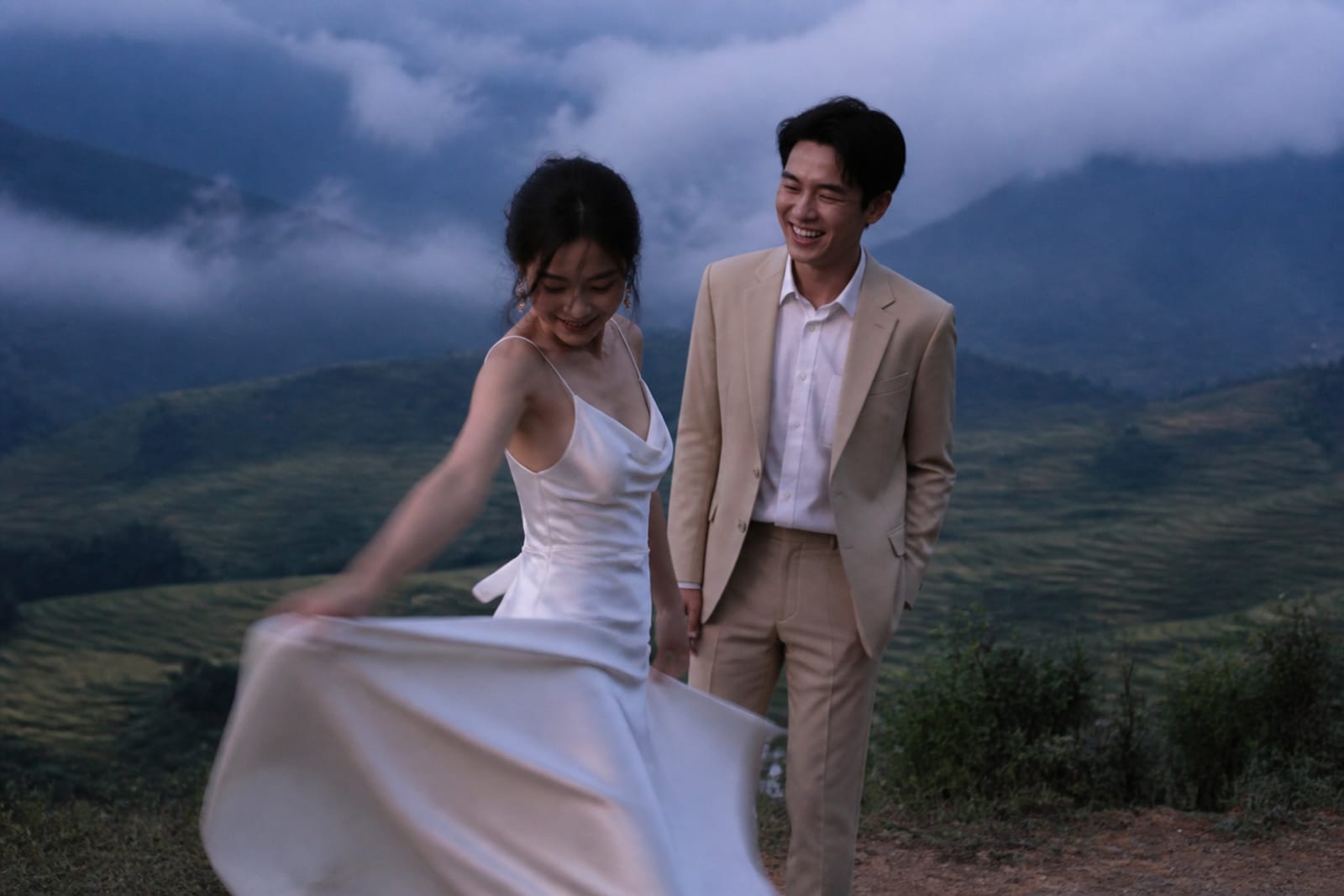
A typical day: wake 4:30 am, breakfast, 5:15 am meet your hired guide (required for safety and permit) and photographer, 5:45 am start the descent (steep, uneven stone steps, 30–40 min). You're in hiking clothes or changed on arrival. Light is soft. Photographer shoots wide (you walking the terrace paths, standing on ridges), then medium (couple together), then detail (hands, faces, ao dai fabric). By 7:00 am, light hardens; by 7:30 am, fog often arrives or sun flattens the scene. Ascent back (40–50 min, hot and tired) happens by 8:30 am. Total time on location: 2.5–3 hours. Total session time including travel: 4–5 hours. You're muddy, sweating, possibly wet from rain or mist. Outfit changes aren't practical—one outfit (ao dai, hiking boots) is realistic. Editing takes 1–2 weeks (Sapa photographers are solo or small teams, not fast-turnaround). Compare this to Hoi An's rice paddies: 15 min drive from town, flat terrain, 3–4 hour light window, outfit changes possible, 48-hour edits available.
When should you choose Muong Hoa over studio or city alternatives?
Choose Muong Hoa Valley if:
- You want iconic, cinematic landscape frames (terraces are genuinely dramatic—no city shoot replicates this).
- You're in Sapa already (permits, guide, travel time are justified).
- You accept one outfit (ao dai in autumn gold light is the goal).
- You can shoot Sep–early Oct (weather and light align).
- You're flexible on date (willing to reschedule for fog/rain).
Skip Muong Hoa Valley if:
- You want multiple outfit changes (the 4-hour session, muddy conditions and light window don't support this).
- You prefer intimate couple portraits (faces are small; busy landscape distracts).
- You need guaranteed edits within days (Sapa turnarounds are 1–2 weeks).
- You dislike early mornings or high-exertion hikes (the descent/ascent is steep, not a casual walk).
- Autumn is not your season (winter is foggy, spring is muted green, summer is rainy).
Alternatives to Muong Hoa Valley:
Hoi An rice paddies — 20 min outside town, flat terrain, 4-hour light window (6–10 am, 3–6 pm), multiple outfits and makeup touch-ups possible, Dec–Aug best, local photographers offer 48-hour edits. Works if you want "rice terrace" without the trek.
Pre-wedding photoshoot in Hanoi — ao dai in Old Quarter at dawn, Huc Bridge, temple interiors, controlled light, multiple locations in one session, 48-hour edits, no weather delays. Works if you prioritize couple intimacy and reliabilityover landscape.
Couple photoshoot at your hotel or city location — studio backdrop or urban spot near your venue, consistent light, easy styling, no travel. Works if logistics trump landscape drama.
Ba Na Hills, Da Nang — golden bridging, French-colonial architecture, cable car (weather-dependent), muddy paths if rainy, 3–4 hour light window, mid-range exertion. Alternative mountain option without rice terraces.
Muong Hoa is the only choice if "golden rice terraces" is non-negotiable; otherwise, weigh effort (4-hour hike, 4:30 am wake, fog risk) against light window (90 min realistic) and editing speed (slow).
What to check before you book a Muong Hoa Valley session
On the photographer:
- Do they have a Sapa-registered guide (permit required; not all photographers do)?
- What's their weather-delay policy? (Ask for written confirmation of reschedule terms.)
- How fast is turnaround? (Confirm editing timeline in writing—1–2 weeks is standard Sapa pace.)
- Have they shot in the valley in Oct–Nov? (If so, ask how they've handled typhoon/flood cancellations.)
On the shoot itself:
- Confirm exact wake time, descent time and ascent buffer.
- Ask how many outfits are realistic (usually one; changing clothes on a muddy terrace is impractical).
- Clarify what counts as "bad weather" for a reschedule (fog, light rain, heavy rain?).
- Request sample frames from your preferred season (Sep, winter, etc.) so you know the look.
On logistics:
- Are permits (if any) included or your cost? Ask clearly.
- Do you need to hire a separate guide, or does the photographer provide one?
- What time do edits arrive, and in what format (files, printed album, video)?
Cost factors (never quoted here—ask on WhatsApp):
- Season (autumn costs more; winter may cost less).
- Travel time from your hotel (Sapa town to valley is 15 min; Hanoi to Sapa is 5+ hours).
- Number of outfits (each adds styling time and complexity).
- Editing speed (48-hour rush vs. standard 2-week turnaround).
- Backup dates (rescheduling in peak season is harder).
FAQ
Can we wear a wedding dress to Muong Hoa Valley?
Not practically. The descent is steep, muddy, 30–40 min in full gear. Dress hems snag, trains drag, heels slip. Ao dai (fitted, no train) works if worn with sturdy boots. Change on-site into wedding dress only if your photographer confirms a safe, dry spot. Most couples skip the dress here and choose Hoi An or Hanoi where venue + terrain support it.
What if it's foggy on shoot day—do we still go down?
Fog erases the valley entirely, so frames are silhouettes or white-out. Responsible photographers will recommend rescheduling rather than shooting blind. Confirm the weather-delay policy (written terms) before you book. Sep–early Oct has the clearest mornings; Oct–Nov is a gamble.
How muddy do we actually get?
If it rained overnight or that morning, the stone steps and terrace paths are slick. Boots or hiking shoes are essential, not optional. Ao dai hems get splashed; couple's hands get dirty climbing back up. Plan a clean-up spot before returning to town. This isn't a problem on dry days but happens frequently Sep–Nov.
Is Muong Hoa Valley better than a Hanoi pre-wedding shoot?
Different goals. Muong Hoa gives you iconic landscape and 90 min of soft light, but limited outfits and slow edits. Hanoi offers multiple locations, outfit changes, 48-hour edits and controlled light, but no rice terraces. Muong Hoa is the choice if "golden terraces" is your core vision; Hanoi if you want storytelling and speed.
Can we combine Muong Hoa with a couple shoot in Sapa town?
Yes. Shoot the valley early (5:30–7:30 am), rest/clean up (8:30–10 am), then shoot town streets or hotel in soft late-morning light (10:30 am–noon). This adds 2–3 hours to the session and gives you landscape + intimacy. Ask your photographer for a bundled rate and confirm editing includes both parts.
How far in advance should we book?
Sapa photographers often have 2–4 week lead times. Sep–Oct books fastest (2–3 weeks). Book at least 6 weeks ahead if you have a fixed travel date. Confirm reschedule terms in writing because weather delays are common.
FAQ
Can we wear a wedding dress to Muong Hoa Valley?
Not practically. The descent is steep, muddy, 30–40 min in full gear. Dress hems snag, trains drag, heels slip. Ao dai (fitted, no train) works if worn with sturdy boots. Change on-site into wedding dress only if your photographer confirms a safe, dry spot. Most couples skip the dress here and choose Hoi An or Hanoi where venue + terrain support it.
What if it's foggy on shoot day—do we still go down?
Fog erases the valley entirely, so frames are silhouettes or white-out. Responsible photographers will recommend rescheduling rather than shooting blind. Confirm the weather-delay policy (written terms) before you book. Sep–early Oct has the clearest mornings; Oct–Nov is a gamble.
How muddy do we actually get?
If it rained overnight or that morning, the stone steps and terrace paths are slick. Boots or hiking shoes are essential, not optional. Ao dai hems get splashed; couple's hands get dirty climbing back up. Plan a clean-up spot before returning to town. This isn't a problem on dry days but happens frequently Sep–Nov.
Is Muong Hoa Valley better than a Hanoi pre-wedding shoot?
Different goals. Muong Hoa gives you iconic landscape and 90 min of soft light, but limited outfits and slow edits. Hanoi offers [multiple locations, outfit changes, 48-hour edits](/pre-wedding-photoshoot) and controlled light, but no rice terraces. Muong Hoa is the choice if "golden terraces" is your core vision; Hanoi if you want storytelling and speed.
Can we combine Muong Hoa with a couple shoot in Sapa town?
Yes. Shoot the valley early (5:30–7:30 am), rest/clean up (8:30–10 am), then shoot town streets or hotel in soft late-morning light (10:30 am–noon). This adds 2–3 hours to the session and gives you landscape + intimacy. Ask your photographer for a bundled rate and confirm editing includes both parts.
How far in advance should we book?
Sapa photographers often have 2–4 week lead times. Sep–Oct books fastest (2–3 weeks). Book at least 6 weeks ahead if you have a fixed travel date. Confirm reschedule terms in writing because weather delays are common.
Ao dai, makeup, hair and a local photographer in Hanoi or Saigon — one WhatsApp message.