/pre-wedding-photoshoot
Muong Hoa Valley Rice Terraces Wedding Photos: Best Light & Season
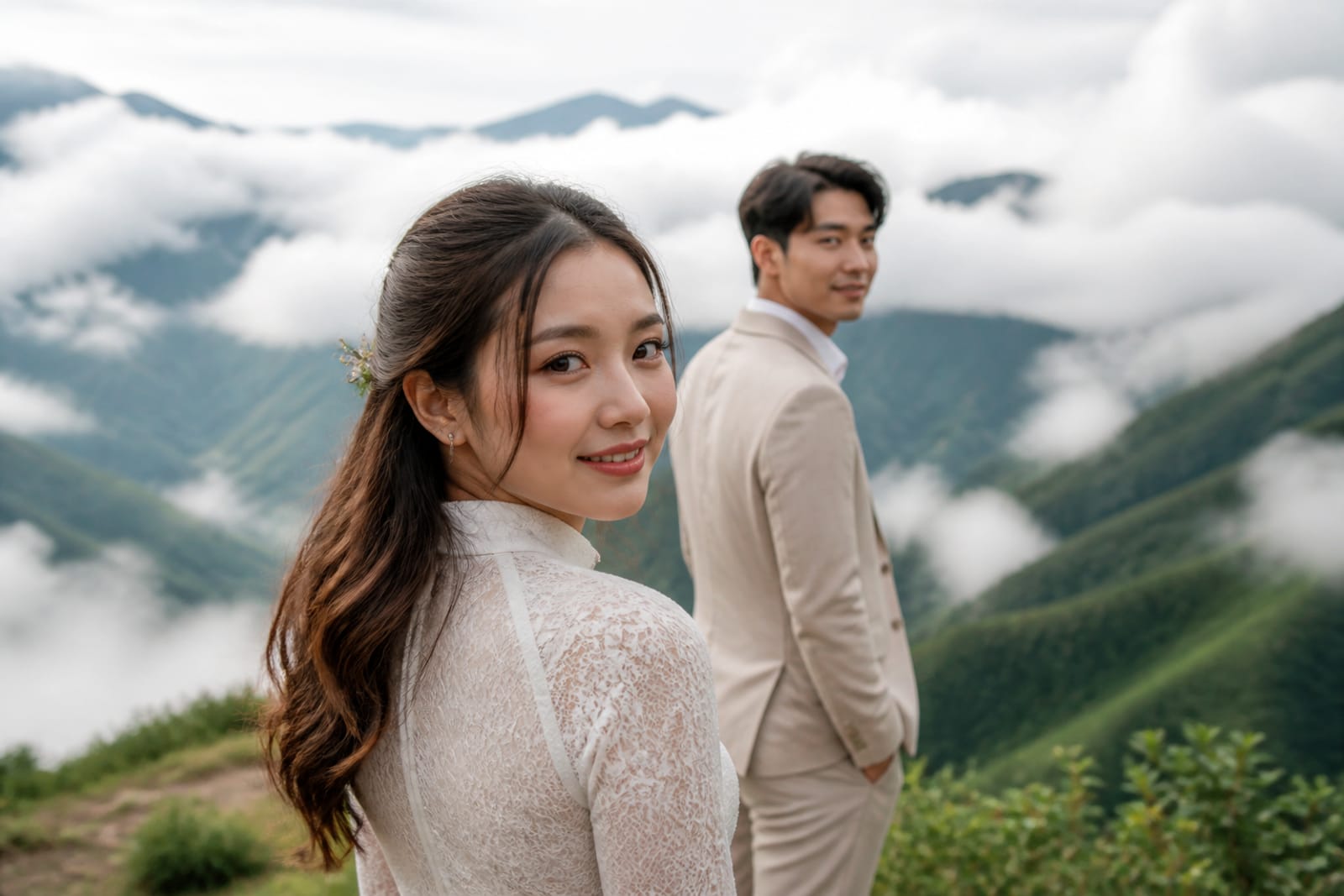
Muong Hoa Valley rice terraces photograph best in early morning (6:00–7:30 am) or late afternoon (4:30–6:00 pm) from September through October, when soft side light rakes the water and green terraces. The valley sits in Sapa's northwest, about 1,600 metres elevation, where fog clears by sunrise and cloud cover provides diffuse light without harsh shadows. Winter (December–February) is cold and foggy; summer (May–August) is green but rainy and humid. Wear layers and moisture-wicking fabric under an ao dai—the trek involves steep paths and humidity. Cáo Studio does not operate in Sapa; book a vetted local guide-photographer team who knows the terrain, weather windows and permits. The best pre-wedding frames come from walking the paths naturally, not posing at viewpoints.
Why Muong Hoa Valley Works for Pre-Wedding Light
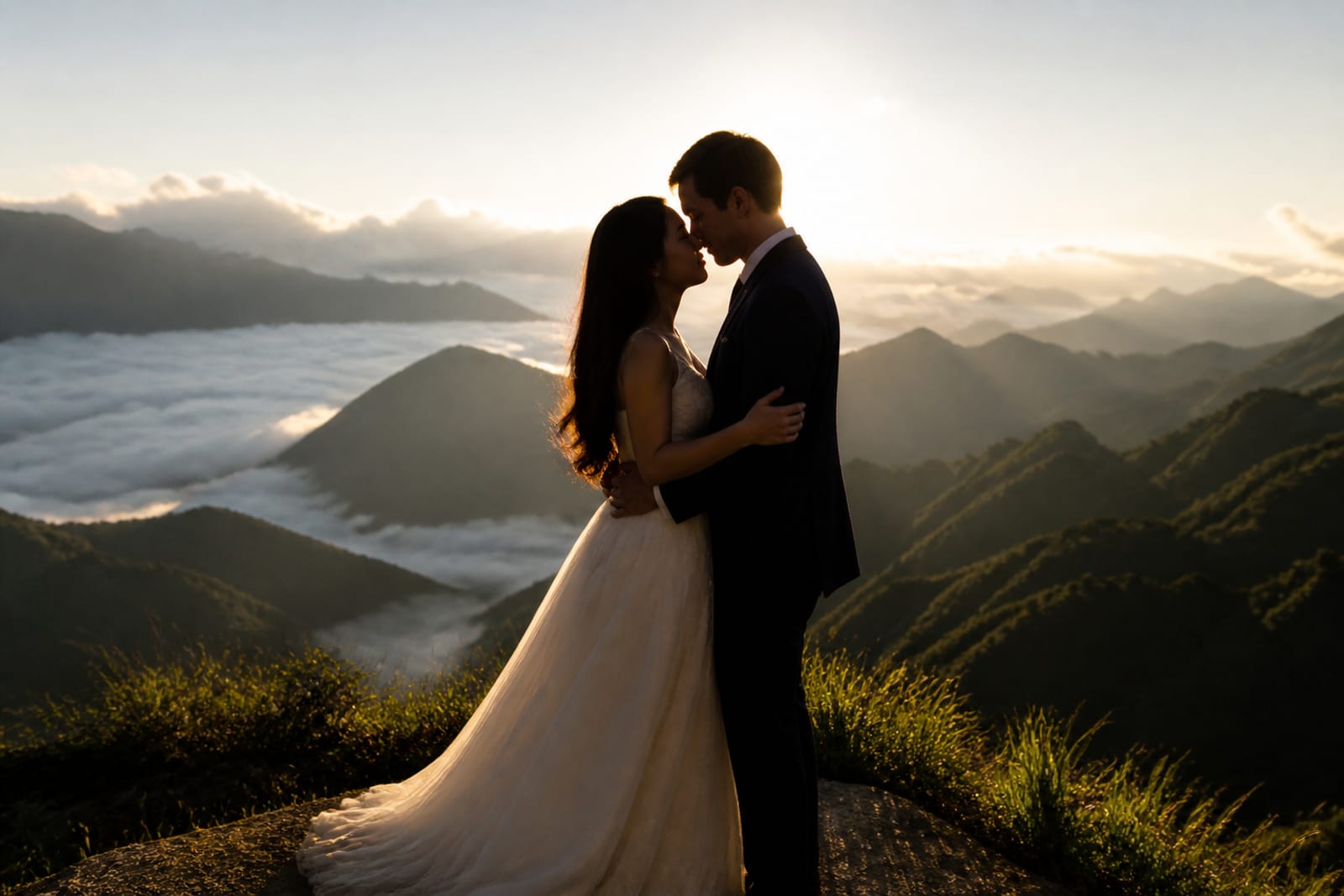
Muong Hoa Valley's terraces run north–south, creating a natural light corridor. At sunrise, the sun hits the eastern terraces at a shallow angle, filling the water with mirror-bright reflection and separating foreground, middle and background layers. At sunset, western-facing slopes glow amber while shadows pool in the water—a cinematic depth impossible at noon. The valley's elevation (1,600 m) means you're often above cloud cover in early morning, giving clear overhead sky and soft diffuse light on skin. No flat, boring landmarks here; every frame carries depth and story because the terrain guides the shot.
This directional light window is short—90 minutes maximum before the sun climbs too high or dips below the ridge. Timing is not negotiable. A photographer who arrives at 7:30 am in September will find harsh overhead light and no advantage over midday. This is why a guide who knows the valley's exact sun path and cloud pattern is worth the investment.
📸 Book on WhatsApp — ao dai photoshoot | 💄 Makeup & hair at your hotel
When Does Muong Hoa Look Best: Season & Weather Window
| Season | Light Quality | Terrace Colour | Weather | Trek Difficulty | Why or Why Not |
|---|---|---|---|---|---|
| Sep–Oct | Soft, golden side light; clear early mornings | Green with occasional golden edges at harvest | Cool, low humidity, rare rain | Moderate; paths are dry and clear | Best window: green terraces, stable weather, golden hour light all morning. Pick Sep for deeper green; mid-Oct for hints of gold. |
| May–Aug | Bright, harsh midday; overcast morning diffuse | Bright green; water abundant | Hot, humidity 80%+; frequent afternoon rain; thick clouds | Moderate to hard; muddy sections, wet rocks | Green is vivid but light is flat or blocked by clouds. Early morning can be clear, but humidity fogs lens and clothes drip sweat on an ao dai. Sunset is often rained out. |
| Nov–Dec | Clear but cool side light; sun lower angle | Terraces golden or harvested (bare mud) | Cool, dry, minimal rain | Easy; paths are dry | Light is excellent but terraces are post-harvest brown or empty of water. Frames lack the story of wet, cultivated terraces. Right for a moody, minimalist aesthetic. |
| Jan–Feb | Weak side light; sun hidden by fog until 9:00+ am | Terraces fallow or ploughed; occasional frost | Cold (5–10°C), frequent fog, occasional frost | Moderate; misty, slippery surfaces | Fog can be atmospheric but unpredictable. Sunrise is often a grey wall. Ao dai worn over heavy layers looks bulky. Most shoot days are compromised by fog. |
| Mar–Apr | Clear, warm mid-morning light; sun climbing fast | Green terraces, water-filled; some ploughing | Warm, low humidity, rare rain | Easy to moderate | Light hardens by 8:00 am. Terrace colour is vivid but the hour to catch side light is narrow. Humidity is lower than summer, making it comfortable for trekking. Underrated season. |
Conclusion: September through October is the professional choice—you get green terraces, stable weather and a 90-minute golden-hour window. If you shoot any other month, expect either flat light, compromised weather or terraces that lack cultivated character.
What to Wear Under an Ao Dai in the Valley: Practical Checklist
An ao dai is a silk or silk-blend tunic designed for flat, urban heat. Muong Hoa is 1,600 metres up, muddy, humid and steep. Here's what works:
- Base layer: Moisture-wicking sports bra and seamless underwear. Cotton holds sweat and clings to skin under the ao dai's thin fabric. Humidity will be visible as dark patches on the chest and back.
- Undershirt: Skip heavy base layers. A lightweight, quick-dry undershirt in white or skin tone, sleeveless or short-sleeved, prevents the ao dai from clinging to wet skin and protects against sun and insects.
- Trousers (áo tơi): The ao dai's loose legs will muddy on wet rocks. Rent white silk trousers or wear clean, fitted light trousers underneath—they'll be hidden when walking but keep your legs dry and prevent the hem from dragging through mud and water.
- Footwear: Wear hiking boots with good ankle support and grip (keep them clean before photos). Many photographers shoot close-up frames of feet on wet rock or in water; muddy boots or slippery shoes look careless.
- Layers: Bring a lightweight rain jacket tied around the waist (it will be hot). Sunrise in September is cool (12–15°C); by 8:30 am it warms to 18–22°C. Overdressing means heavy sweating during the trek.
- Hair & makeup: Humidity is your enemy. Use a sweat-proof base and waterproof mascara. Pin hair back or braid it during the trek; let it down only for framing shots. Makeup will oxidize and run within 60 minutes if applied before 6:00 am—ask your makeup artist to start at 5:30 am so you're fresh for 6:45 am shooting.
Pack a small towel and hair clips. Wet hair falling on an ao dai looks messy, not romantic.
Hiring a Local Photographer: Vetting & Logistics
Cáo Studio operates in Hanoi, Ho Chi Minh City and Hoi An; Sapa and Muong Hoa Valley are outside our service area. Booking a strong local guide-photographer is non-negotiable. Here's how to vet one:
- Ask for a portfolio of Muong Hoa Valley work. Scroll past generic Sapa town shots. Look for frames taken at sunrise or sunset—you'll see layered light and real colour. If their portfolio is all midday or overcast, they don't know the valley's light schedule.
- Confirm they carry a backup camera. The trek is wet. Rain or a dropped lens is real. Ask if they have weather-sealed gear.
- Request their exact sunrise and sunset timing. If they say "we'll shoot at sunrise" but can't name a specific time (e.g., "6:15 am on September 15"), they're guessing. The valley's light window moves 2–3 minutes daily.
- Ask how many outfits they'll work with. A outfit change in Muong Hoa means a 20-minute hike down and back up. Stick to one ao dai and one location unless you have 4+ hours and a guide carrying a second camera for efficiency.
- Check transport and permits. Do they arrange the jeep from Sapa town (15-minute drive)? Is a local guide fee included? Some photographers charge separately for the guide; clarify upfront.
- Confirm turnaround time. Ask how many edited photos you'll receive and by when. Local photographers often deliver a USB after 1–2 weeks; compare this to Cáo Studio's 48-hour turnaround if you're also shooting in Hanoi or Saigon.
A good local team costs more than a tourist photographer but delivers frames that don't look posed or overexposed.
Muong Hoa vs. Other Sapa Photo Locations: Which Suits Your Vision
| Location | Light Advantage | Terrain | Crowds | Best For | Outfit Fit |
|---|---|---|---|---|---|
| Muong Hoa Valley (terraces) | Layered side light; water reflects golden hour | Steep, muddy, wet rocks | Low; requires a guide | Cinematic, narrative pre-wedding frames | Ao dai; layers underneath |
| Ta Phin Village | Soft diffuse light; mist in early morning | Gentle hills, village paths | Low to moderate | Cultural backdrop, intimate couple moments | Ao dai; light jacket |
| Fansipan summit (cable car) | Clear sky, expansive view; harsh midday light | Paved; no trekking | High; cable car queues | Aerial, iconic Sapa moments | Any outfit; it's cold and windy |
| Sapa Town market | Reflected light off buildings; no direct sun | Flat, urban street | Very high; daily crowds | Candid, street-style moments | Casual outfit; ao dai can crowd with locals |
| Silver Waterfall | Overcast, diffuse; water is white, not reflecting | Moderate trek; slippery rocks | Moderate | Moody, intimate frames; green foliage | Ao dai; waterproof layers |
Conclusion: Muong Hoa Valley is the only location where you get layered, directional golden-hour light and a cultivated landscape that feels sacred. Choose it if you want depth and story. Choose the summit if you want an iconic aerial moment and can handle crowds.
Step-by-Step Pre-Wedding Shoot Day in Muong Hoa: Realistic Timeline
5:15 am — Makeup starts at your Sapa hotel (allow 45 minutes for an ao dai photoshoot look: base, eyes, lips, light contouring). Avoid heavy foundation; use primer and powder to control shine in humidity.
6:00 am — Jeep pickup. Drive 15 minutes to the valley trailhead. Photographer and local guide meet you there.
6:15–6:45 am — Gear check. Walk down the initial slope (10 minutes) to the first flat terrace where sunrise light is starting to hit the water. Photographer shoots wide frames of the valley, medium frames of you on the path, then detail frames (hands, feet, water).
6:45–7:45 am — Primary shoot window. Light is softest and most directional. You'll walk the terraces naturally—no static poses. Real walking, real looking at each other, real pauses at scenic overlooks. The guide watches footing and watches for other trekkers in the frame.
7:45–8:30 am — Light begins to climb; shadows shrink. Photographer captures the transition and shoots tighter, more intimate frames. By 8:15 am, the magic is fading.
8:30 am — Trek back up (15 minutes). Jeep to hotel.
9:00 am — You're back at the hotel, changed and dry, ready for breakfast or rest.
Realistic outcome: 150–250 frames shot; 40–80 edited and delivered by the photographer's turnaround date (ask upfront). This is not a full day of shooting—it's a focused 2.5-hour light window. Plan for depth, not volume.
What goes wrong:
- Photographer arrives at 7:00 am and finds light already harsh.
- Ao dai hem catches on wet rocks; photographer wastes time reshaping fabric instead of shooting.
- Humidity fogs your makeup by 7:30 am; no time to touch up.
- Local guide doesn't watch for tourists in the background; frames include strangers.
Prevent this by: hiring experienced crew, sending ao dai specifications to the guide a week prior (length, fabric weight), and starting makeup at 5:30 am.
What to Check Before You Book a Sapa Photographer
Contract & cancellation: Ask the cancellation policy if weather is bad (fog, heavy rain). Can you reschedule for the next day?
Included: Does the quote include the guide, jeep, parking fees, local permits? Or are these separate?
Exclusions: Do they charge extra for additional outfit changes, longer hours, or delivery method (USB, cloud drive, prints)?
Timeline for delivery: Ask the exact number of photos and the delivery date. "One week" is common; confirm it in writing.
Your ao dai: If renting, ensure the rental shop has fitted you before the shoot day. Wrinkled or ill-fitting ao dai waste precious light time.
Weather window: Confirm the photographer has a rain contingency. In September, afternoon showers are rare but possible. In October, morning fog clears by 7:00 am on 8 out of 10 days—not guaranteed.
For comparison, if you're also shooting in Hanoi or Saigon pre-wedding sessions, Cáo Studio's pre-wedding photoshoot operates with one team (photographer, hair, makeup, stylist) and delivers edited frames in 48 hours—a different service model suited to urban locations and multiple outfits, not mountain terrain.
---
Comparison: Book with Cáo Studio or Hire a Local Sapa Photographer
If you're planning a multi-day pre-wedding tour across Vietnam:
- Cáo Studio (Hanoi, Saigon, Hoi An): One shoot day covers ao dai, couple portraits, detail shots, makeup and hair all in-house. Turnaround is 48 hours. Ideal for urban, cultural and temple locations where logistics are stable. See the pre-wedding photoshoot service.
- Local Sapa guide-photographer: Specialises in mountain terrain, knows Muong Hoa Valley's light intimately, coordinates trekking logistics. Turnaround is 1–2 weeks. Ideal for a singular mountain shoot day that stands apart from your urban sessions.
Hybrid approach: Shoot Muong Hoa with a local guide, then book Cáo Studio for ao dai or couple portraits in Hanoi or Saigon during the same trip. You get mountain authenticity and urban professional efficiency.
📸 Book on WhatsApp — ao dai photoshoot
---
FAQ
Can Cáo Studio photograph us in Muong Hoa Valley?
No. Cáo Studio operates in Hanoi, Ho Chi Minh City and Hoi An. Muong Hoa Valley requires a local guide familiar with terrain and light. We can photograph you in Hanoi or Saigon before or after your Sapa trip. Contact us on WhatsApp to plan a multi-city pre-wedding itinerary.
What's the best time of year for Muong Hoa wedding photos?
September through October. Green terraces, stable weather, and a clear 90-minute golden-hour light window at sunrise. May–August is lush but rainy and humid; January–February is fog-prone; November–December has excellent light but bare or harvested terraces.
Do I have to wear an ao dai in Muong Hoa Valley, or can I wear a wedding dress?
Ao dai is ideal—it's light, moves beautifully on the terraces, and fits the cultural landscape. A heavy wedding dress will pick up mud, limit walking comfort, and risk tearing on wet rocks. If you prefer Western dress, keep it simple and short (above the knee). Discuss with your photographer; they'll advise on weight and fabric.
How long is the trek, and how difficult is it?
The primary shoot area is a 30-minute round trip from the trailhead (10 minutes down, 20 minutes returning uphill). The terrain is muddy, steep and wet; good hiking boots are essential. If you're not comfortable on uneven, slippery ground, consider a higher, more accessible viewpoint like Ta Phin Village or Sapa Town.
How much does hiring a local Sapa photographer cost?
Pricing varies by photographer experience and package scope. Ask prospects directly for a quote. Factors include the guide fee, jeep, number of edited photos, and delivery timeline. Compare total cost (photography + guide + transport) against value (portfolio quality, light knowledge, reliability).
Should I hire a makeup artist separately, or can the photographer's guide arrange it?
Hire a makeup artist in Sapa town the evening before or early morning of the shoot (5:30 am start). Ask your photographer for a recommendation; many work with trusted makeup artists regularly. Confirm the artist understands humidity-proof makeup for a mountain trek.
What happens if it's foggy on the shoot day?
Fog is common in January–February; rare in September–October. If fog blocks the valley on your scheduled day, ask the photographer about a rain-check for the next morning. September fog typically clears by 7:00 am; October fog by 8:00 am. Afternoon shooting (4:30 pm onward) is a backup if morning fog lingers.
Can I do multiple outfit changes in Muong Hoa?
Possible but inefficient. Carrying two ao dais and hiking up and down for outfit changes costs 20–30 minutes of prime light time. Better to shoot one ao dai thoroughly, capturing wide, medium and detail frames, than rush through two outfits. Discuss with your photographer before booking.
How many edited photos will I receive?
Depends on your photographer's package. Ask upfront: "How many photos do you typically deliver from a 2.5-hour Muong Hoa shoot?" Expect 40–100 edited frames. Clarify whether you get RAW files (unedited) or edited JPEGs only.
FAQ
Can Cáo Studio photograph us in Muong Hoa Valley?
No. Cáo Studio operates in Hanoi, Ho Chi Minh City and Hoi An. Muong Hoa Valley requires a local guide familiar with terrain and light. We can photograph you in Hanoi or Saigon before or after your Sapa trip. Contact us on WhatsApp to plan a multi-city pre-wedding itinerary.
What's the best time of year for Muong Hoa wedding photos?
September through October. Green terraces, stable weather, and a clear 90-minute golden-hour light window at sunrise. May–August is lush but rainy and humid; January–February is fog-prone; November–December has excellent light but bare or harvested terraces.
Do I have to wear an ao dai in Muong Hoa Valley, or can I wear a wedding dress?
Ao dai is ideal—it's light, moves beautifully on the terraces, and fits the cultural landscape. A heavy wedding dress will pick up mud, limit walking comfort, and risk tearing on wet rocks. If you prefer Western dress, keep it simple and short (above the knee). Discuss with your photographer; they'll advise on weight and fabric.
How long is the trek, and how difficult is it?
The primary shoot area is a 30-minute round trip from the trailhead (10 minutes down, 20 minutes returning uphill). The terrain is muddy, steep and wet; good hiking boots are essential. If you're not comfortable on uneven, slippery ground, consider a higher, more accessible viewpoint like Ta Phin Village or Sapa Town.
How much does hiring a local Sapa photographer cost?
Pricing varies by photographer experience and package scope. Ask prospects directly for a quote. Factors include the guide fee, jeep, number of edited photos, and delivery timeline. Compare total cost (photography + guide + transport) against value (portfolio quality, light knowledge, reliability).
Should I hire a makeup artist separately, or can the photographer's guide arrange it?
Hire a makeup artist in Sapa town the evening before or early morning of the shoot (5:30 am start). Ask your photographer for a recommendation; many work with trusted makeup artists regularly. Confirm the artist understands humidity-proof makeup for a mountain trek.
What happens if it's foggy on the shoot day?
Fog is common in January–February; rare in September–October. If fog blocks the valley on your scheduled day, ask the photographer about a rain-check for the next morning. September fog typically clears by 7:00 am; October fog by 8:00 am. Afternoon shooting (4:30 pm onward) is a backup if morning fog lingers.
Can I do multiple outfit changes in Muong Hoa?
Possible but inefficient. Carrying two ao dais and hiking up and down for outfit changes costs 20–30 minutes of prime light time. Better to shoot one ao dai thoroughly, capturing wide, medium and detail frames, than rush through two outfits. Discuss with your photographer before booking.
How many edited photos will I receive?
Depends on your photographer's package. Ask upfront: "How many photos do you typically deliver from a 2.5-hour Muong Hoa shoot?" Expect 40–100 edited frames. Clarify whether you get RAW files (unedited) or edited JPEGs only.
Ao dai, makeup, hair and a local photographer in Hanoi or Saigon — one WhatsApp message.