/pre-wedding-photoshoot
Nha Trang or Quy Nhon for pre-wedding photos: which coastal city to ch
Nha Trang suits January through August: calm seas, bright morning light off the bay (facing east), and manageable crowds at dawn. Quy Nhon works year-round except October–November typhoon season; it has fewer tourists, softer afternoon light from the west, and longer golden-hour windows. Both need a local photographer since Cáo Studio operates in Hanoi, Ho Chi Minh City and Hoi An only. Choose Nha Trang if you want dramatic open water and predictable early light; pick Quy Nhon if you prefer quieter beaches, flexible timing and dramatic sunset. Book a location scout 2–3 weeks ahead; weather can shift tide access and sand texture overnight. 📸 Book on WhatsApp — pre-wedding photoshoot | 💄 Makeup & hair at your hotel | 🌸 See the lookbook ---
Why Nha Trang's reputation rests on one window: January to August
Nha Trang's high season (January–August) gives you calm seas and stable early light. The bay faces east, so sunrise reflections on wet sand peak between 6:00 and 7:30 am. By 9:00 am, sun angle flattens the drama. Mid-day is bright but harsh; late afternoon (4:00–6:00 pm) brings softer sidelight but the bay looks darker. From September onward, afternoon rain becomes frequent, and October–November bring typhoon swells that close beaches. The tourist crowd thins after August, which sounds quiet until you realize the light and water don't cooperate. If your pre-wedding shoot falls January–August, Nha Trang delivers consistent results. Outside those months, you're gambling with weather and light.
| Aspect | Nha Trang (Jan–Aug) | Nha Trang (Sep–Dec) |
|---|---|---|
| Light quality | Sharp dawn gold, calm midday | Overcast, sudden storms |
| Sea state | Flat, reflective | Rough, murky |
| Crowds at dawn | Moderate; some joggers | Minimal |
| Best shot time | 6:00–7:30 am | 4:00–5:00 pm (if dry) |
| Outfit concerns | Lighter fabrics work; wind manageable | Wet sand sticks; fabric clings |
📸 Book on WhatsApp — ao dai photoshoot | 💄 Makeup & hair at your hotel
Why Quy Nhon offers flexibility your timeline might need
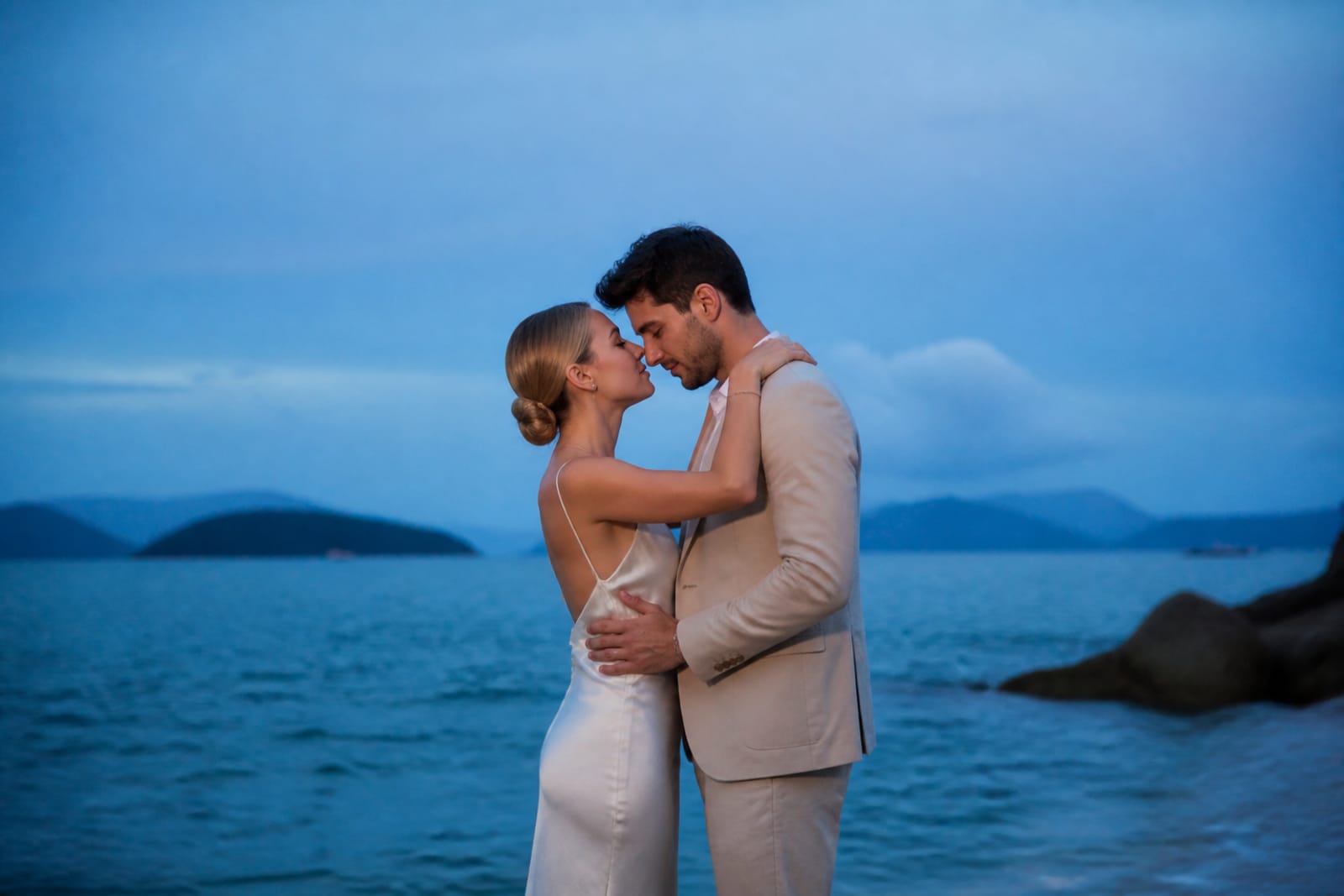
Quy Nhon sits farther north and faces west; its beach cliffs catch late afternoon and sunset light beautifully year-round. The dry season (roughly Feb–Aug) has clear skies; the wet season (May–Nov) brings short afternoon showers, not all-day rain. October–November can be rough, but individual days still yield usable light. Fewer resorts mean fewer pre-wedding photographers and smaller breakfast crowds on the sand. This quiet matters: you're not composing shots around strangers' beach equipment at 6:00 am. The trade-off is logistics. Quy Nhon has one airport (small, few flights) and fewer dedicated wedding vendors, so you'll need to source a local photographer carefully and confirm backup dates early. Light-wise, you gain 2–3 extra shooting hours each evening compared to Nha Trang because the bay's western aspect holds gold light until 6:30–7:00 pm.
What to check before committing: a location-scouting checklist
Before booking either city, verify these factors on-site or via video call with a potential photographer:
- Tide tables for your shoot date: low tide at dawn exposes smooth sand; high tide brings rough water closer. Same beach looks completely different at opposite tides.
- Spring vs neap tide (two-week cycle): spring tides offer the most sand exposure. Check lunar phases 2–3 weeks before your date.
- Actual sunrise/sunset times: use a sun-position app (e.g. Sun Surveyor or Photopills) to see angle and duration of golden light on your specific date.
- Wave forecast 7 days out: surf reports show swell height and period. 0.5–1.0 meter swells are photogenic; above 1.5 meters, the beach closes or becomes hazardous.
- Street-level access: many coastal towns have sea walls or promenades. Ask the photographer: can you walk directly onto sand, or do you climb down rocks?
- Outfit fit: ao dai and wedding dresses catch wind. Video-call the photographer in wind to see how fabric moves in real conditions.
A location scout (even just 30 minutes by car before dawn on your shoot day) costs time but prevents wasted light on an inaccessible or unsuitable beach.
Season-by-season reality: when each city actually works
January–February: Nha Trang is peak tourist season; crowds build. Quy Nhon is quiet, light is clean, winds are calm. Advantage: Quy Nhon.
March–April: Both cities have warm, dry mornings. Nha Trang's bay is glassy at dawn; Quy Nhon's afternoon light is longer. Tie; choose based on crowd tolerance.
May–August: Nha Trang remains safe (dry season peak); Quy Nhon enters monsoon transition but still shoots well if you time around afternoon downpours. Advantage: Nha Trang for consistency.
September–November: Nha Trang risks typhoons and rain; Quy Nhon is unpredictable but shorter storms. Both have fewer crowds. Advantage: Quy Nhon if you have flexible dates within the week.
December: Nha Trang clears, sea is calm, light returns. Quy Nhon is damp. Advantage: Nha Trang.
How to find and vet a local photographer when Cáo Studio isn't available
Cáo Studio operates in Hanoi, Ho Chi Minh City and Hoi An only. For Nha Trang or Quy Nhon, you'll need a local photographer. Here's how to avoid mismatches:
- Search "pre-wedding photographer [city name]" on Instagram. Look for accounts with 20+ full shoots (not single portraits). Scroll to see consistency of light and framing, not follower count.
- Message 3–4 candidates and ask for a 15-minute Zoom. Ask: "Show me a shoot from [your intended month]." Light and conditions matter more than portfolio style.
- Request a location scout video. A real photographer will record sunrise/sunset timing and tide state on a trial date. Fake portfolios can't do this.
- Ask about backup dates. If weather cancels your shoot, what's their reschedule policy? Honest photographers have one.
- Confirm they do hair and makeup coordination, or hire a separate artist. One team shoots better than two vendors stitched together — the same principle Cáo Studio follows.
Watch for red flags: overpromising turnaround times, refusing to discuss weather contingencies, or showing only edited/filtered images without showing the raw light.
When to lean on your shoot date, not the city
If your wedding is set (say, March 15 in Nha Trang), don't overthink. Book the local photographer, do a tide and light check 2 weeks out, and adjust the shot times accordingly. Both cities deliver beautiful pre-wedding frames if the photographer knows the tides and light window. The real difference is comfort: Nha Trang moves faster, Quy Nhon feels quieter. Neither is wrong. Pick based on what your day needs, not hype.
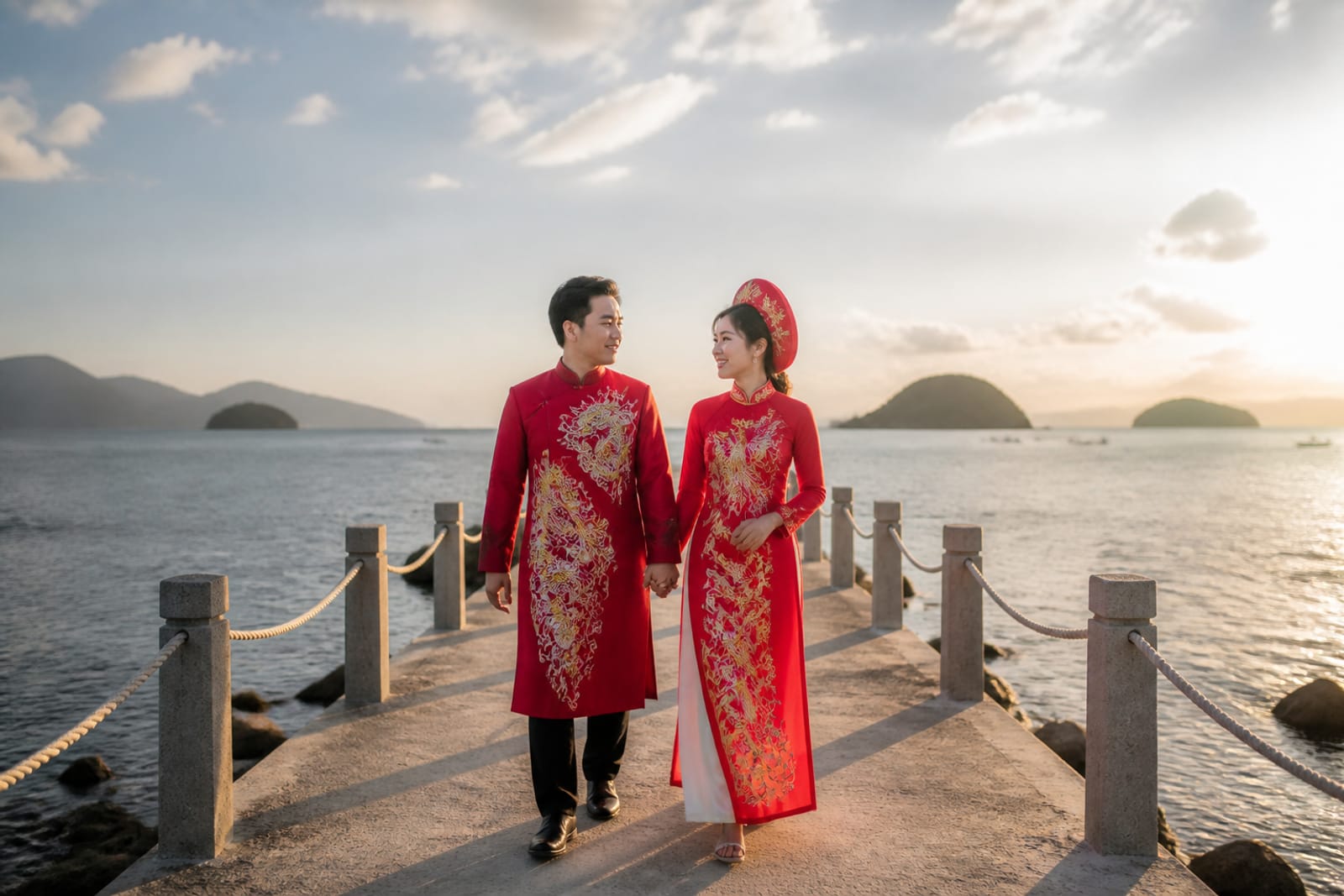
For comparison, Cáo Studio's pre-wedding photoshoot approach uses the same logic: one message, one team, real light. Whether you're on a Nha Trang pier or a Quy Nhon cliff, the principle is the same.
📸 Book on WhatsApp — couple photoshoot | 🌸 See the lookbook | 💄 Makeup & hair at your hotel
---
What to check before you commit
- Confirm tide tables for your specific shoot date (not just the season).
- Video-call a potential photographer during sunrise or sunset to see real light.
- Ask about their reschedule policy if weather shifts.
- Verify outfit fit in coastal wind; ao dai and dresses move differently by breeze.
- Plan a location scout 7–10 days before your shoot to check sand texture, water color and access points.
---
FAQ
Does Nha Trang work for a September wedding shoot?
Not ideally. September marks monsoon transition; afternoon storms are common and light is overcast. Quy Nhon is more forgiving because showers are brief. If your date is fixed, hire a photographer with September portfolio work and plan indoor or sheltered backup shots.
Which city has fewer tourists during pre-wedding season?
Quy Nhon is consistently quieter year-round because it has fewer resorts and flights. Nha Trang draws more visitors January–August. If solitude matters, Quy Nhon wins, but you'll need more detailed location scouting because fewer photographers operate there.
Can we shoot both Nha Trang and Quy Nhon in one trip?
Geographically, yes (one hour by car), but operationally, no. Traveling between cities, changing clothes, coordinating two hair/makeup sessions, and chasing different light windows exhausts both you and the photographer. Pick one city and maximize that light. Move to the second location for a separate session if you want both.
What should we wear under an ao dai for a beach shoot?
Wear seamless briefs (light color); bras show through white or pale silk. Avoid patterns; they shadow onto fabric. Bring a light robe or cover-up to the beach; changing in a car or portable tent is uncomfortable. A local photographer will know which beaches have changing facilities.
How many days before the shoot should we scout the location?
7–10 days minimum. This lets you check actual tide tables, weather patterns and sunrise/sunset times for that week. A 30-minute dawn scout on your shoot day itself catches any last-minute sand or access changes. Tide times shift monthly, so pre-wedding planning 2–3 weeks out isn't too early.
Which city is cheaper for a pre-wedding shoot?
Photographer rates vary by experience and demand; Quy Nhon's smaller market sometimes means lower fees, but fewer vendors mean higher travel or location-scout costs. Ask three photographers in each city for transparent quotes. Compare by service (outfit changes, hair/makeup, turnaround time), not price alone.
FAQ
Does Nha Trang work for a September wedding shoot?
Not ideally. September marks monsoon transition; afternoon storms are common and light is overcast. Quy Nhon is more forgiving because showers are brief. If your date is fixed, hire a photographer with September portfolio work and plan indoor or sheltered backup shots.
Which city has fewer tourists during pre-wedding season?
Quy Nhon is consistently quieter year-round because it has fewer resorts and flights. Nha Trang draws more visitors January–August. If solitude matters, Quy Nhon wins, but you'll need more detailed location scouting because fewer photographers operate there.
Can we shoot both Nha Trang and Quy Nhon in one trip?
Geographically, yes (one hour by car), but operationally, no. Traveling between cities, changing clothes, coordinating two hair/makeup sessions, and chasing different light windows exhausts both you and the photographer. Pick one city and maximize that light. Move to the second location for a separate session if you want both.
What should we wear under an ao dai for a beach shoot?
Wear seamless briefs (light color); bras show through white or pale silk. Avoid patterns; they shadow onto fabric. Bring a light robe or cover-up to the beach; changing in a car or portable tent is uncomfortable. A local photographer will know which beaches have changing facilities.
How many days before the shoot should we scout the location?
7–10 days minimum. This lets you check actual tide tables, weather patterns and sunrise/sunset times for that week. A 30-minute dawn scout on your shoot day itself catches any last-minute sand or access changes. Tide times shift monthly, so pre-wedding planning 2–3 weeks out isn't too early.
Which city is cheaper for a pre-wedding shoot?
Photographer rates vary by experience and demand; Quy Nhon's smaller market sometimes means lower fees, but fewer vendors mean higher travel or location-scout costs. Ask three photographers in each city for transparent quotes. Compare by service (outfit changes, hair/makeup, turnaround time), not price alone.
Ao dai, makeup, hair and a local photographer in Hanoi or Saigon — one WhatsApp message.