/pre-wedding-photoshoot
Night pre-wedding photos in Hue: spots, timing & how to book
Night pre-wedding photos in Hue work best Feb–Apr when skies stay clear and golden hour runs 5:30–6:30 pm—ideal for the Perfume River, Huc Bridge, and Old Town lanterns without summer heat or monsoon rain. You'll shoot either golden-hour frames (soft side light on water, silhouettes against old walls) or lantern-lit night scenes (7:00–8:30 pm, needing higher ISO and tripod control). Hue's central-coast climate brings typhoon risk Sep–Dec (avoid Oct–Nov entirely); May–Aug is very hot and humid. Book a photographer 4–6 weeks ahead who knows Imperial City permit rules—some areas restrict tripods or professional gear. Cáo Studio does not operate in Hue; this guide helps you find and vet a local team. Consider traveling to Hanoi or Ho Chi Minh City if you prefer working with an established one-team studio that handles outfit, hair, makeup and photography together. ---
Why does timing matter more than location in Hue?
Light changes everything. Feb–Apr offers stable, golden-hour windows (5:30–6:30 pm) with minimal cloud cover—you'll get warm, directional side light on the Perfume River that reads on film. May–Aug brings tropical humidity and haze; your 6:00 pm light will look flat and grey. Sep–Dec introduces monsoon risk: Oct–Nov is the wettest, with sudden downpours that stop shoots mid-session. Golden hour lasts 45–50 minutes in winter, longer in spring; lantern photography (7:00–8:30 pm) requires a tripod and a photographer skilled in high-ISO settings without noise. Plan your shoot date 6–8 weeks in advance and confirm weather patterns with your photographer—they know Hue's microclimate better than any guidebook.
📸 Book on WhatsApp — pre-wedding photoshoot
What are the best night spots, and do you need permits?
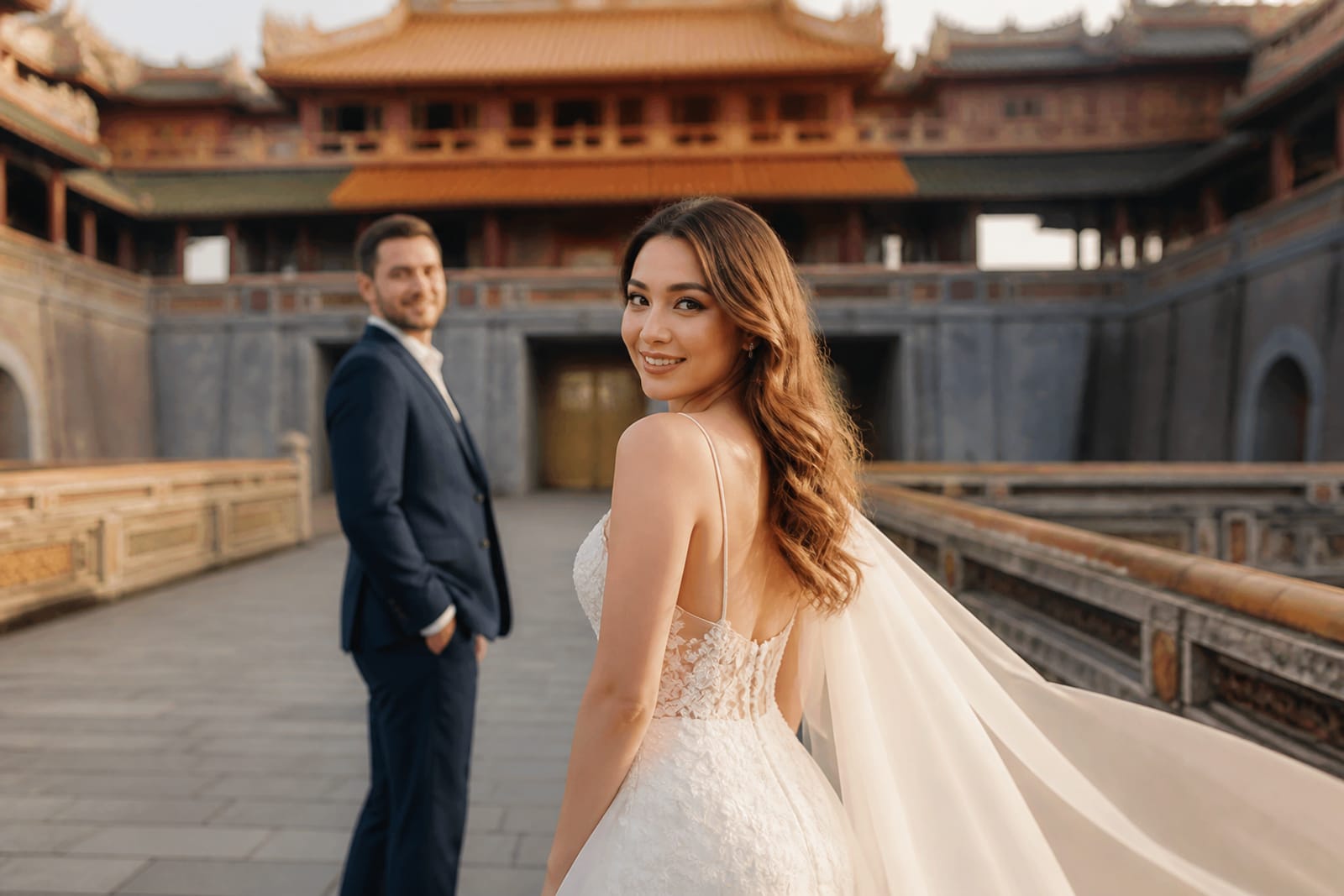
The Perfume River Walk (Trang Tien Bridge area) and Huc Bridge attract evening strollers and offer open space for movement—no permit needed for casual photography. The Imperial City requires entry tickets; professional tripods or commercial shoots may need advance permission from the heritage office. Old Town's lantern-lit streets (narrow alleys near Dong Ba Market) work for intimate, moody frames but restrict wheeled equipment. Tomb complexes (Tu Duc, Minh Mang) close at sunset; shoot before 5:00 pm if that's your backdrop. Always ask your photographer to confirm current restrictions—permit rules update seasonally, and a local who shoots there weekly knows which temples allow cameras on-location versus off-site only. Budget time (30–40 minutes) for walking between spots; heat and humidity in May–Aug make frequent moves exhausting.
Golden hour vs. lantern light: which suits your vision?
| Approach | Best for | Light character | Season fit | Why it works |
|---|---|---|---|---|
| Golden hour (5:30–6:30 pm) | Outdoor walking, river silhouettes, warm skin tone | Soft, directional, flatters faces | Feb–Apr (stable sky) | No post-processing needed for warmth; real reflections on water; minimal artificial light dependency |
| Lantern night (7:00–8:30 pm) | Intimate framing, old-town romance, moody storytelling | Warm tungsten glow + cool sky transition | Feb–Apr, early May only | Lanterns read as key light; no harsh sun; colonial arches frame foreground; requires tripod & ISO control |
| Dusk mixed light (6:30–7:15 pm) | Transitional, bridging golden + lantern | Balance of both, sky fades blue | Feb–Apr | Best technical compromise; sky holds colour; lanterns glow naturally; less ISO noise |
Golden hour demands perfect timing—miss it by 10 minutes and you lose directional warmth. Lantern shots need a tripod and a photographer comfortable shooting at ISO 1600–3200 (noise is acceptable in moody work). Choose golden hour if you want clean, bright frames ready in 48 hours; choose lanterns if you value cinematic mood and accept longer editing for noise reduction. Dusk mixed light is the safest bet: lanterns glow without dominating, and the sky still holds colour—ideal if your photographer is learning night exposure.
How do you find a trustworthy local photographer in Hue?
Ask your hotel concierge or wedding planner for referrals—they vet photographers monthly. Check Instagram portfolios for night work: look for sharp focus, consistent white balance (no ugly orange casts), and frames that show movement (couples walking, not stiff poses). Message 2–3 candidates and ask:
- Do you have night pre-wedding samples in Hue? (Not just daytime or other cities.)
- Which areas have you shot in, and what permits did you need?
- How many shoots do you handle per weekend? (Fewer = more attention to your session.)
- What's your backup plan if monsoon weather hits?
Request a video call to discuss your vision—a photographer who asks about your story, light preference and outfit is more careful than one who immediately quotes a rate. Confirm they bring a tripod, backup batteries and an assistant for night work. Vet their editing style by asking to see 3–5 full galleries (not just highlight reels). Budget 4–6 weeks for booking; local teams fill weekends quickly in Feb–Apr.
What should you wear, and how does Hue's climate affect outfit choices?
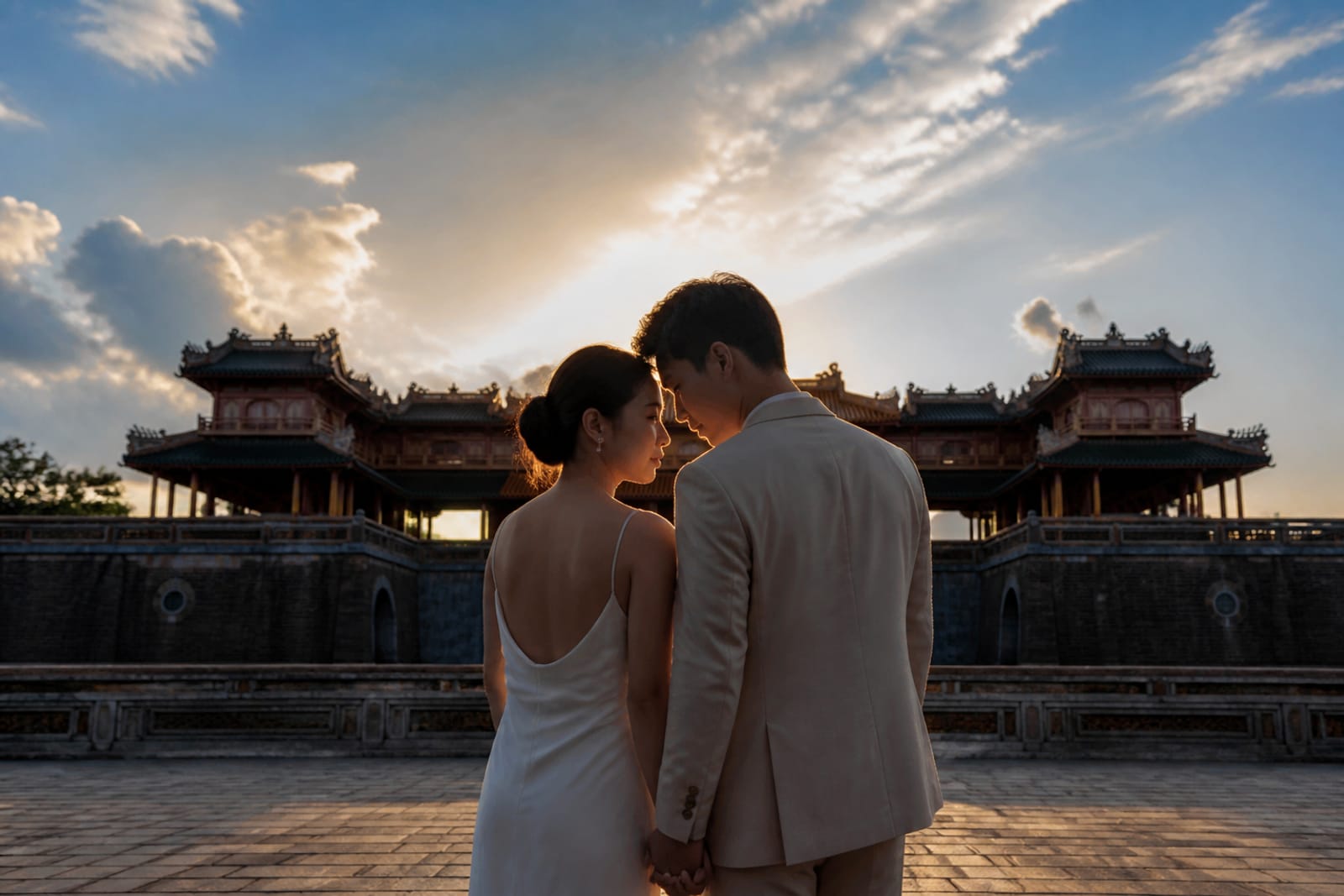
An áo dài works beautifully in Feb–Apr—the cooler season (air around 20–24 °C) keeps silk from clinging, and evening air means no sweat stains by 7:00 pm. Choose a lightweight silk or linen blend in jewel tones (deep blues, emeralds, burgundy) that pop against lantern gold and river reflections. Avoid pure white or pastels—they blow out in overexposed golden hour and look washed-out under tungsten light. Wear a slip or structured undergarment so the áo dài drapes cleanly during movement shots. Grooms in suits should choose breathable fabric (linen blend) if shooting May–Aug; otherwise, classic tailoring works year-round. Bring a light cardigan or shawl for the 6:00–7:00 pm cool breeze on the river. Have your makeup artist apply waterproof foundation and long-wear lip—sweat and humidity are real. If you prefer Western wedding dress, ensure it's hemmed for walking on wet or uneven old-town stones—no long trains on narrow alleys.
How to plan your Hue shoot step-by-step
Before booking (6–8 weeks out):
- Confirm your travel dates; cross-check Feb–Apr for clearest skies or avoid Oct–Nov (typhoon season).
- Scout 2–3 photographers via Instagram; message each with your vision (lantern romance, golden-hour silhouettes, etc.).
- Ask for a site walk-through video or call—they'll flag permit issues and suggest light timing specific to your date.
4 weeks before:
- Confirm photographer, date and exact meet-time (arrive 15 minutes before golden hour).
- Discuss outfit, hair and makeup; arrange a local artist if bringing none. Note climate (Feb–Apr is cool; May–Aug needs waterproof makeup).
- Ask photographer to secure any Imperial City or tomb permits on your behalf.
1 week before:
- Check weather forecast (Hue weather updates 7 days out are reliable).
- Confirm the shot list (river, temple arches, lantern close-ups, couple movement) and rough location order.
- Have photographer confirm backup indoor spots if rain threatens.
Shoot day:
- Arrive 20 minutes early; allow 10 minutes for outfit checks and hair touch-ups.
- Bring water, phone charger and a light layer.
- Follow photographer's cues on posture and gaze—the best frames come from walking, looking at each other, or pausing, not stiff poses in front of monuments.
- Expect 60–90 minutes on location; night shoots take longer due to slower shutter speeds.
After shoot (48–72 hours):
- Photographer delivers edited selects and a short vertical film reel.
- Review and request minor adjustments (crop, skin tone tweaks—major retouches cost extra).
- Order prints or albums within 2 weeks while the shoot is fresh in their mind.
---
Cáo Studio alternative: pre-wedding shoots in Hanoi or Ho Chi Minh City
If Hue's permit complexity or monsoon risk feels steep, consider booking a pre-wedding photoshoot in Hanoi or Ho Chi Minh City. Cáo Studio's one-team model means your photographer, makeup artist and stylist communicate in real time—no vendor mismatches on the day. Hanoi's Old Town and Long Bien Bridge offer night-shoot potential (Oct–Mar best, same timing principle as Hue). Saigon's District 1 colonial streets, riverside and Binh Quoi Village work year-round (dry season Dec–Apr is ideal). You skip the permit uncertainty; Cáo Studio handles it. Turnaround is 48 hours: edited photos plus a short film. Book via WhatsApp at least 4 weeks ahead.
📸 Book on WhatsApp — pre-wedding photoshoot
---
What to check before you book a night pre-wedding shoot in Hue
- Photographer's night portfolio: Ask for 5+ full galleries of evening/lantern work in Hue, not other cities. Lighting and composition skills don't always transfer to night work.
- Permit clarity: Confirm in writing which areas require permits and who pays. Some photographers bundle this; others pass cost to you.
- Backup plan: If monsoon rain hits, does the photographer offer a reshoot or indoor alternative (hotel, colonial villa)?
- Editing timeline: Are edits delivered in 48–72 hours, or does the photographer batch-edit across 10 shoots? Night work needs careful colour correction; slow turnaround may reflect better quality.
- Tripod and lighting gear: Ask if they bring a sturdy tripod and any fill light for lantern scenes. Budget-tier photographers may hand-hold only (acceptable for golden hour, risky for 7:30 pm shooting).
- Communication style: Can they explain their shot plan over a call, or do they say "trust me"? A director who walks you through light timing and framing will deliver better results.
- Cancellation policy: In writing—what if weather forces a reschedule, and how many free rescheduling attempts are included?
---
Consider the broader pre-wedding journey
Night Hue photography works as one chapter of your pre-wedding story. Many couples also book an áo dài photoshoot (traditional, sacred framing), a couple photoshoot (intimate, story-focused) or makeup & hair at your hotel so professionals coordinate with your photographer. If you want a complete vision—outfit, styling, direction and film—Cáo Studio offers this integrated model in Hanoi and Saigon. For Hue, a local photographer using this mindset (one team, directed not posed, real light) will give you similar results. Ask your photographer: Do you prefer posing guests in front of landmarks, or do you direct movement and capture frames as they unfold? The answer reveals their philosophy.
FAQ
Is Feb–Apr really the only time to shoot nights in Hue?
Feb–Apr offers the clearest, most stable skies (20–24 °C, low rain risk). Early May works if you accept higher heat and occasional afternoon clouds. Oct–Nov is monsoon season and too risky for booking. Sep and Dec are wetter; Jun–Sep is very hot and prone to afternoon downpours. If you're set on another month, choose early morning (5:00–6:30 am) instead—golden light, fewer crowds, and no night-shooting technical overhead.
Do I need a permit to shoot the Imperial City at night?
Yes. Entry tickets are required for day entry; professional/tripod photography may need separate approval from the heritage office. Hire a local photographer who holds these permits or knows the process—don't assume walk-up shooting is allowed. Permit rules update seasonally; confirm in writing before your shoot date.
What's the difference between hiring a solo photographer versus a local studio?
Solo photographers often cost less and know specific Hue locations deeply. Studios (if they operate in Hue, which most don't) coordinate outfit, hair, makeup and photography in one booking—fewer vendor mismatches but often higher cost. Cáo Studio operates only in Hanoi, Ho Chi Minh City and Hoi An; for Hue, a vetted local is your best option. Interview both to compare vision clarity and communication style.
How many edited photos should I expect from a night shoot?
Ask this directly. Budget night work often delivers 30–50 selects (curated, edited frames). Comprehensive packages may offer 100–150. Clarify whether the quote includes basic edits (crop, colour, skin tone) or full retouching. Longer timelines (2–3 weeks) may reflect more thorough editing; fast 48-hour turnaround prioritizes speed over detail.
What if weather ruins my shoot day?
Confirm the photographer's reschedule policy before booking—most offer one free reshoot within 30 days. Oct–Nov monsoons can be unpredictable; book in Feb–Apr to minimize this risk. Ask the photographer for an indoor backup: hotel suites, colonial villas or covered old-town arches. Night shooting indoors is technically harder but possible with strong ISO and tripod.
Can I do night pre-wedding photos in Hoi An instead?
Yes. Hoi An's lantern-lit Ancient Town is iconic for evening shoots (similar lantern-light approach as Hue's old streets). Central-coast climate applies (Feb–Aug dry, Oct–Nov worst rain). Ask Cáo Studio about Hoi An availability via WhatsApp—the team travels there by appointment. For standard bookings with integrated outfit, hair and makeup, Hanoi and Saigon are Cáo Studio's full-service bases.
FAQ
Is Feb–Apr really the only time to shoot nights in Hue?
Feb–Apr offers the clearest, most stable skies (20–24 °C, low rain risk). Early May works if you accept higher heat and occasional afternoon clouds. Oct–Nov is monsoon season and too risky for booking. Sep and Dec are wetter; Jun–Sep is very hot and prone to afternoon downpours. If you're set on another month, choose early morning (5:00–6:30 am) instead—golden light, fewer crowds, and no night-shooting technical overhead.
Do I need a permit to shoot the Imperial City at night?
Yes. Entry tickets are required for day entry; professional/tripod photography may need separate approval from the heritage office. Hire a local photographer who holds these permits or knows the process—don't assume walk-up shooting is allowed. Permit rules update seasonally; confirm in writing before your shoot date.
What's the difference between hiring a solo photographer versus a local studio?
Solo photographers often cost less and know specific Hue locations deeply. Studios (if they operate in Hue, which most don't) coordinate outfit, hair, makeup and photography in one booking—fewer vendor mismatches but often higher cost. Cáo Studio operates only in Hanoi, Ho Chi Minh City and Hoi An; for Hue, a vetted local is your best option. Interview both to compare vision clarity and communication style.
How many edited photos should I expect from a night shoot?
Ask this directly. Budget night work often delivers 30–50 selects (curated, edited frames). Comprehensive packages may offer 100–150. Clarify whether the quote includes basic edits (crop, colour, skin tone) or full retouching. Longer timelines (2–3 weeks) may reflect more thorough editing; fast 48-hour turnaround prioritizes speed over detail.
What if weather ruins my shoot day?
Confirm the photographer's reschedule policy before booking—most offer one free reshoot within 30 days. Oct–Nov monsoons can be unpredictable; book in Feb–Apr to minimize this risk. Ask the photographer for an indoor backup: hotel suites, colonial villas or covered old-town arches. Night shooting indoors is technically harder but possible with strong ISO and tripod.
Can I do night pre-wedding photos in Hoi An instead?
Yes. Hoi An's lantern-lit Ancient Town is iconic for evening shoots (similar lantern-light approach as Hue's old streets). Central-coast climate applies (Feb–Aug dry, Oct–Nov worst rain). Ask Cáo Studio about Hoi An availability via WhatsApp—[the team travels there by appointment](/hoi-an). For standard bookings with integrated outfit, hair and makeup, [Hanoi](/hanoi) and [Saigon](/saigon) are Cáo Studio's full-service bases.
Ao dai, makeup, hair and a local photographer in Hanoi or Saigon — one WhatsApp message.