/pre-wedding-photoshoot
Night Pre-Wedding Photos in Sapa: Light, Season & Booking Guide
Night pre-wedding shoots in Sapa are rare and logistically demanding: the mountain cools fast (can drop near 0°C Dec–Feb), headlamps and gels are essential for safety and mood, and a single team (photographer, hair, makeup) avoids the chaos of coordinating vendors on a steep, dark path. Best seasons are March–May or September–November when evening temperatures stay above 10°C and cloud cover is lighter; winter looks moody but risks frostbite and lens fogging. Cáo Studio does not operate in Sapa—the team is based in Hanoi, Ho Chi Minh City and Hoi An—but you can hire a vetted local photographer using the framework below: check their portfolio for night work in mountains, confirm they carry backup lighting and a location scout, and ask how they handle weather pivots. A night shoot takes 2–4 hours depending on outfit changes; allow a full afternoon for hair, makeup and travel. Read the planning checklist below before contacting anyone. 📸 Book on WhatsApp — pre-wedding photoshoot | 💄 Makeup & hair at your hotel
Does Sapa light up better at night than golden hour?
No. Golden hour (5:30–6:30 pm, before full dark) gives soft, natural warmth without adding equipment weight; full night requires headlamps, portable LED panels or gels—all heavier, slower and trickier in rain or fog. Night shots trade control (you choose exactly where light falls) for mood and romance, but only if the photographer knows how to meter, gel and avoid harsh shadows on faces. Most Sapa pre-wedding shoots happen at dusk, not full night, to keep things safe and luminous. If your dream is lanterns, mist and silhouettes, dusk into twilight (6–7:15 pm) is the sweet spot; beyond 7:30 pm you're working entirely off flash or panels, which demands a skilled crew.
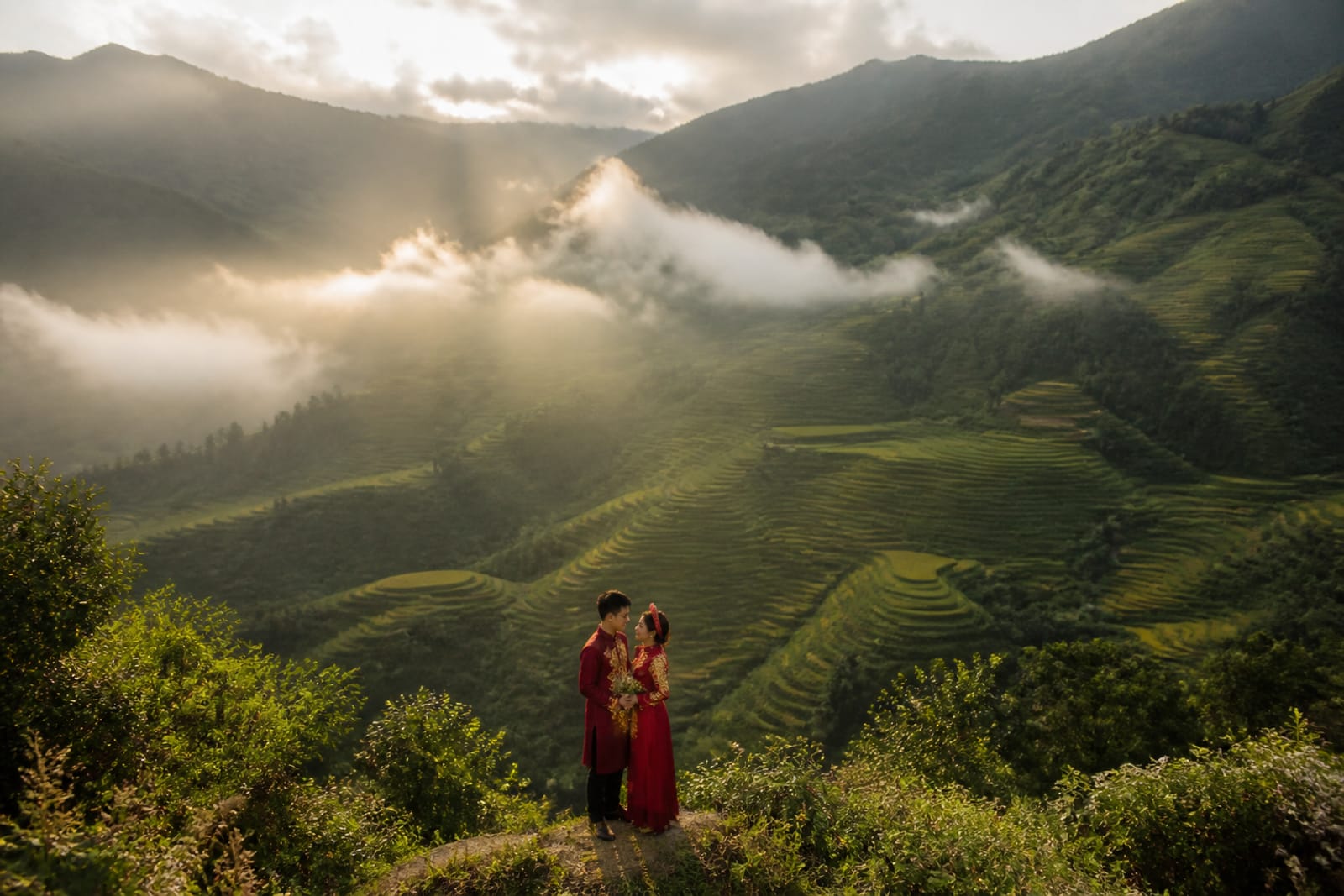
How do you stay warm during a mountain night shoot?
Bring a thick robe to wear between setups—not in frame, but easy to slip on while hair and makeup retouch. Wear thermal leggings under your dress and thick socks (change them if damp). Ask the photographer to scout indoors (a homestay, café, hotel room) as a backup location and warmth station. The golden rule: if you're shivering, your face tightens; tension reads in photos. A 10-minute break inside with hot tea costs time but saves the next shot. Sapa's homestays and cafés are welcoming; a pre-shoot walk-through lets you identify a warm shelter beforehand.
What's the real cost difference between hiring locally vs. a Hanoi team?
You can't compare Cáo Studio to local Sapa photographers directly—Cáo Studio is based in Hanoi, Ho Chi Minh City and Hoi An, not Sapa. A local photographer costs factors include: their experience (portfolio depth), travel time from town to your location, whether they bring a makeup artist and hair stylist separately (adds logistics) or work solo, and how many outfit changes or locations you want. The bigger cost is usually travel time and wait time on the mountain if weather shifts. Hiring a single vetted Sapa photographer who also books local makeup and hair separately is usually cheaper than flying a Hanoi team up, but slower to coordinate and riskier if weather cancels—no backup team. Get a detailed quote before committing; ask what's included in their fee (editing, albums, how many photos you receive).
🌸 See the lookbook | 💍 Pre-wedding & elopement
How do you find and vet a Sapa night-photography specialist?
Search Instagram for hashtags like #SapaPhotographer, #SapaWeddingPhotography, #SapaNightPhotoshoot. Scroll their grid specifically for night or dusk work in mountains—not daytime landscape shots (light is different, skill doesn't transfer). Look for: sharp focus on faces in low light (not blurry or overly noisy), natural-looking skin tone (not orange or blown-out from flash), and at least 3–5 night-mode examples. Ask them directly: "Do you shoot night pre-wedding in Sapa? Show me recent examples." Red flags: no night portfolio, vague answers about equipment or lighting, or a reply that promises "magical sunset light" when you're booking for 7 pm (dusk is not magic, it's a technique). Check their communication speed (do they reply within 24 hours?) and ask for a reference from another couple who shot at night. Once you shortlist 2–3, get written quotes and confirm: location scout included?, backup indoor location?, what weather counts as unshootable?, how many photos in the final edit?, and do you get RAW files or JPEGs only?
| Option | Best For | Season & Light | Why It Fits (or Doesn't) |
|---|---|---|---|
| Local Sapa photographer solo | Budget couples, simple story, 1–2 outfits | Sep–Nov, Mar–May (dusk 6–7 pm) | Cheaper, knows terrain; no backup stylist if logistics fail |
| Local + hired makeup/hair separately | Mid-budget, 2–3 outfit changes | Sep–Nov, Mar–May (dusk into night) | More looks; adds coordination risk and wait time between vendor handoffs |
| Hanoi team traveling to Sapa | Quality control, matching hair/makeup/photo vision, couple peace of mind | Sep–Nov, Mar–May (requires 1–2 days advance scouting) | Higher cost and travel time; one unified message; Cáo Studio does not offer this—ask on WhatsApp if a partner referral exists |
| Honeymoon + vacation shoot combo (hire locally, book light-only day) | Couples wanting editorial + candid, separate day for playful content | Mar–May, Sep–Nov (pair dusk shoot with daytime golden-hour session) | Splits the pressure; night for formal, day for joy; book two photographers or same photographer two sessions |
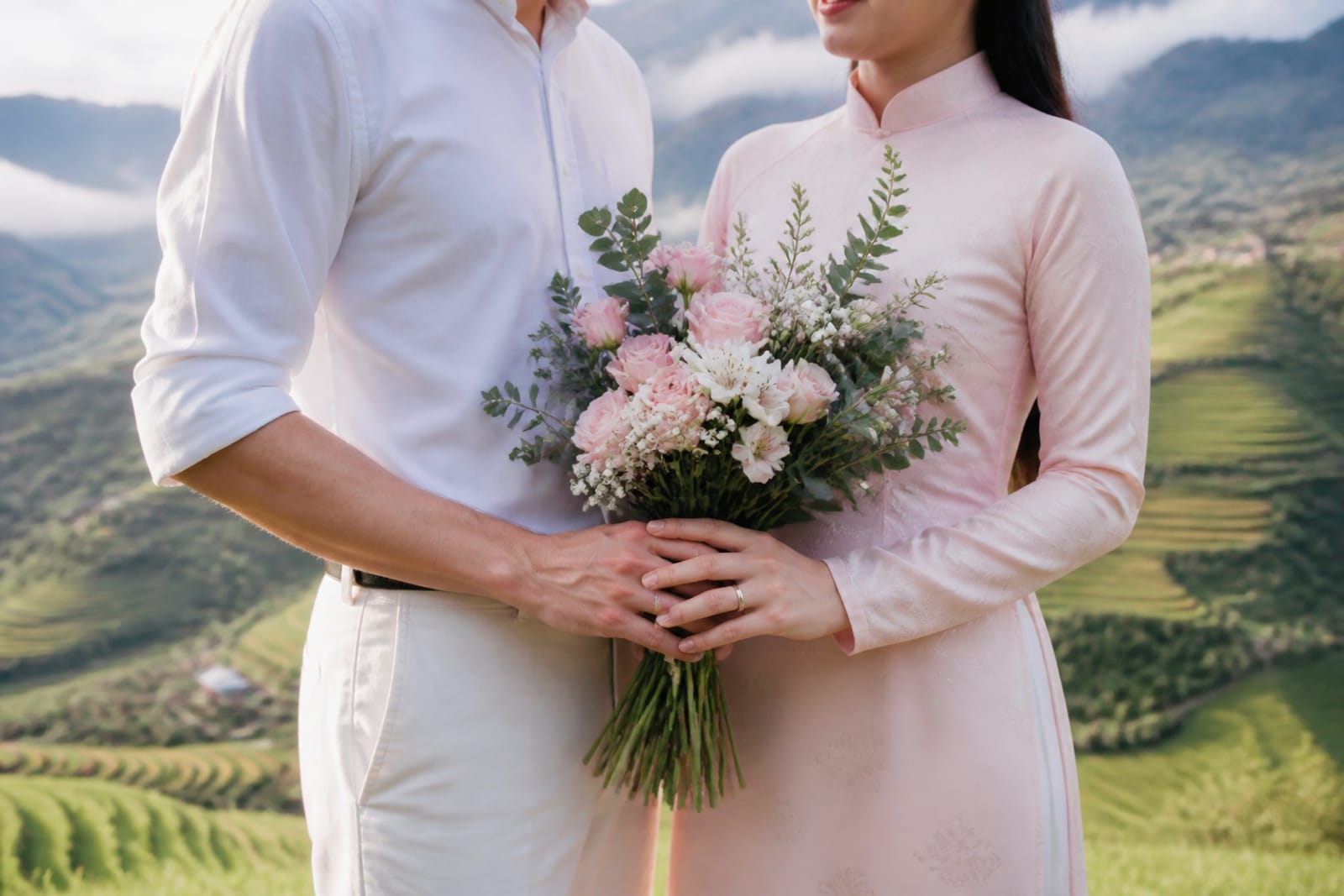
What pre-wedding outfit works best in Sapa night light?
Light fabrics (chiffon, silk, tulle) glow under headlamp or LED gel; heavy brocade reads dark and flat. Bright or jewel tones (emerald, sapphire, burgundy) photograph richer than pastels in artificial light. An áo dài works beautifully—the silhouette reads clear even in shadow—but layer underneath: thermal base, a shawl or áo tấc (traditional overjacket) for warmth between shots. Groom or partner in dark suit reads formal; pair it with a light shirt or vest so faces aren't bracketed by darkness. Avoid all-black outfits; add a lighter layer (white shirt, cream sweater, gold jewelry) to keep the eye on your face. If you're renting an áo dài, ask the rental studio if they carry thermal-friendly underpinnings (many do). See ao dai rental or suit & groom outfit rental for inventory near your dates.
What weather should stop a night shoot, and what's the plan B?
Rain: If steady rain starts 2 hours before your shoot, cancel or move indoors (covered walkways, homestay courtyards, café interiors—ask your photographer to pre-scout). Drizzle can work (moody, reflective); heavy rain causes slips on mountain paths and kills light metering. Fog: Sapa fog is unpredictable; if it rolls in and visibility drops, you can't guarantee sharp focus on faces. The photographer should have a backup indoor location pre-approved. Frost or snow: If the temperature drops near 0°C (Dec–Feb) and the path is icy, the risk of falls and frostbite outweighs the aesthetic. Wind: High winds destabilize lights, make hair and makeup uncontrollable, and tire everyone fast. Before booking, confirm with your photographer: Do they reschedule free if weather is unshootable? Do they offer a rain date or full refund? What counts as "unshootable" in writing? Get it in the quote.
📸 Book on WhatsApp — couple photoshoot
Where in Sapa do night pre-wedding shoots actually happen?
Common spots: Fansipan mountain (base lodge or mid-way station, requires cable car access and permission), Stone Church (Hang Pagoda) courtyard (atmospheric, indoors if needed, check entry rules), Sapa town center around Sapa Silver Waterfall area (easier logistics, fewer permit headaches), and private homestay gardens or rice terrace edges (intimate, requires landowner permission and safety railings checked). Avoid: steep terraces in dark (slips and falls; not worth the shot), and areas without marked paths or cell service (safety issue if someone gets hurt). Your photographer should visit the site in daylight first—ideally 1–2 days before the shoot—to scout lighting angles, identify hazards, check phone signal, and confirm access (some homestays close at 9 pm; churches may have prayer times). Ask them to provide a simple map showing the start point, backup indoor space, and emergency exit. This step prevents rushed decisions in the dark.
---
What to check before you book a Sapa night pre-wedding shoot
- Portfolio: Ask to see at least 5 night pre-wedding or couple shoots in mountains (not daytime landscapes or studio work).
- Gear: Confirm they carry portable lighting (LED panels or flash + gels), a tripod, and backup batteries—in writing.
- Team: Do they bring makeup and hair, or will you coordinate separately? If separate, get contact details for all three vendors.
- Scout: Will they visit the location in daylight before the shoot? Ask for photos or notes.
- Weather clause: Get a written cancellation/reschedule policy tied to specific conditions (rain, fog, temperature).
- Edits & files: Ask how many final edited photos, turnaround time (days?), and whether you receive JPEG or RAW.
- Outfit logistics: Do they know where you're changing? Is there a heated space? Confirm with them 1 week before.
- Communication: Test their response time now—do they reply within 24 hours?
- Payment: Ask for a deposit amount, payment plan, and cancellation refund terms.
- Reference: Request contact info for one couple who shot with them at night—call or message them.
---
If you're based in or near Hanoi and want to shoot a pre-wedding session with a unified team (photographer, makeup, hair) in easier terrain, Cáo Studio's Hanoi pre-wedding shoots offer the same creative direction and 48-hour turnaround, minus the mountain logistics. Or explore a couple photoshoot in Ho Chi Minh City or photoshoots in Hoi An if you're flexible on location.
FAQ
Can Cáo Studio shoot night pre-wedding photos in Sapa?
No. Cáo Studio operates in Hanoi, Ho Chi Minh City and Hoi An only. For Sapa, hire a vetted local photographer using the framework above, or reach out on WhatsApp to ask if we have a trusted partner referral.
Is night better than golden hour for pre-wedding in Sapa?
No. Golden hour (5:30–6:30 pm) offers soft natural light without equipment hassle. Night requires portable lighting and is riskier in cold, fog and terrain. Dusk into twilight (6–7:15 pm) balances mood and safety.
What's the best season for a night Sapa shoot?
March–May or September–November. Winter (Dec–Feb) is cold, foggy and risks frostbite; summer (Jun–Aug) is rainy. Aim for dusk (6–7 pm) when temperatures stay above 10°C.
How much does a local Sapa night photographer cost?
Cost depends on experience, outfit changes, location, and whether makeup/hair are included. Get written quotes from 2–3 photographers before booking. Ask what's bundled in their fee.
What should I wear for a night pre-wedding in Sapa?
Choose light fabrics (chiffon, silk) and jewel tones; they photograph richer under artificial light. Wear thermal layers underneath. An áo dài works beautifully; add a shawl for warmth between shots. Avoid all-black.
FAQ
Can Cáo Studio shoot night pre-wedding photos in Sapa?
No. Cáo Studio operates in Hanoi, Ho Chi Minh City and Hoi An only. For Sapa, hire a vetted local photographer using the framework above, or reach out on WhatsApp to ask if we have a trusted partner referral.
Is night better than golden hour for pre-wedding in Sapa?
No. Golden hour (5:30–6:30 pm) offers soft natural light without equipment hassle. Night requires portable lighting and is riskier in cold, fog and terrain. Dusk into twilight (6–7:15 pm) balances mood and safety.
What's the best season for a night Sapa shoot?
March–May or September–November. Winter (Dec–Feb) is cold, foggy and risks frostbite; summer (Jun–Aug) is rainy. Aim for dusk (6–7 pm) when temperatures stay above 10°C.
How much does a local Sapa night photographer cost?
Cost depends on experience, outfit changes, location, and whether makeup/hair are included. Get written quotes from 2–3 photographers before booking. Ask what's bundled in their fee.
What should I wear for a night pre-wedding in Sapa?
Choose light fabrics (chiffon, silk) and jewel tones; they photograph richer under artificial light. Wear thermal layers underneath. An áo dài works beautifully; add a shawl for warmth between shots. Avoid all-black.
Ao dai, makeup, hair and a local photographer in Hanoi or Saigon — one WhatsApp message.