/pre-wedding-photoshoot
One-Day Pre-Wedding Photoshoot Itinerary in Hoi An
A one-day pre-wedding photoshoot in Hoi An typically runs from pre-dawn through late afternoon, hitting the Ancient Town at sunrise (quietest, best light), moving to rural rice paddies or riverside backdrops mid-morning, and returning for golden-hour shots before dusk. Hoi An's dry season runs February to August—ideal for predictable light and dry paths—while September to December brings typhoon risk and flooding in the Old Town, especially October–November; avoid those months. Cáo Studio – Makeup & Photoshoot coordinates timing around tides, temple opening hours, and crowd density; the team travels to Hoi An by appointment. Success hinges on starting before 6 a.m., wearing ao dai or Western formal wear that moves freely, and confirming exact inclusions (locations, outfit changes, edited files) on WhatsApp before booking. Most daylong sessions include two or three distinct backdrops and allow an outfit change between them.
A one-day pre-wedding shoot in Hoi An requires precision: the Ancient Town closes to daytime tourists by mid-morning, sunrise light lasts only 90 minutes, and the narrow lanes flood during the rainy season. This guide breaks down the real rhythms of a Hoi An shoot day, what works and what doesn't, and how to plan an itinerary that delivers the images you want without regret.
Why does Hoi An rank first for pre-wedding shoots, and when should you actually book?
Hoi An's UNESCO-listed Ancient Town offers unmatched backdrop authenticity: lantern-lit wooden shophouses, arched bridges, and weathered riverside walls that frame intimate couple moments. The surrounding countryside—endless green rice terraces, quiet rural temples, and stilted villages—provides stark contrast to urban heritage. The catch: this appeal is seasonal. February to April combines mild temperatures (18–25°C), dry skies, and vibrant new rice growth; May to August stays dry but reaches 35°C+ heat by midday, pushing shoots earlier and making midday breaks essential. September to December brings the rainy season with frequent typhoons and Active Town flooding (October–November worst), turning those picturesque lantern-lit lanes into water hazards. December to January is cooler but often drizzly and grey, reducing golden-hour drama. Book a Hoi An shoot between February and August; prioritize February–April for comfort and light.
📸 Book on WhatsApp — pre-wedding photoshoot
How should a typical daylong itinerary flow, hour by hour?
5:00–5:30 a.m.: Meet the team at your hotel or a prearranged point. Hair and makeup happen on-site (at hotel or a quiet local café) so you're camera-ready by 5:45 a.m. Avoid heavy makeup; Hoi An's humidity and morning dew will alter it, and pre-dawn light is soft enough to skip contouring. 5:45–7:30 a.m.: Arrive at the Ancient Town entrance before it opens to the public; you'll have near-empty streets, cool air, and the gentle blue-grey light photographers call "civil twilight." The team shoots you crossing the Japanese Bridge, walking lantern-lit alleys, and posing by shuttered storefronts without crowds or intrusive backgrounds. Temple shots (if your itinerary includes them) must happen now; temples charge entrance fees and may restrict photography during daylight visitor hours. 7:30–9:00 a.m.: The sun rises and light hardens; crowds begin arriving. Exit the Old Town and head to a secondary location—often a rice paddy, rural temple, or riverside spot outside town. Light remains golden and directional, ideal for full-body couple portraits. 9:00 a.m.–12:00 p.m.: Mid-morning light becomes harsh and flat. This is break and outfit-change time. Head to a shaded location (a local café, homestay, or sheltered rice field edge) where you can rest, hydrate, and switch into a second outfit if booked. 12:00–3:00 p.m.: Midday light is poor for flattering photos. Many teams use this window for lunch, admin, and planning the afternoon final shots. If your itinerary runs through midday, expect to spend time in transit or seeking shade rather than shooting. 3:00–5:30 p.m.: Golden hour approaches; the light tilts low and warm again. A third location—often a quiet village street, agricultural landscape, or riverbank—yields strong final images. Sunsets over the Hoai River are clichéd but effective; arriving early enough to control compositions (not just snap at peak dusk) makes the difference. 5:30–6:00 p.m.: Pack and depart.
The trade-off: starting at 5 a.m. demands pre-dawn waking, but skipping it loses the only quiet-street window Hoi An offers. Pushing the shoot later (7 a.m. start) shortens the golden-hour window and traps you in crowds by 8 a.m.
What outfit, makeup and logistics choices affect how a shoot day actually runs?
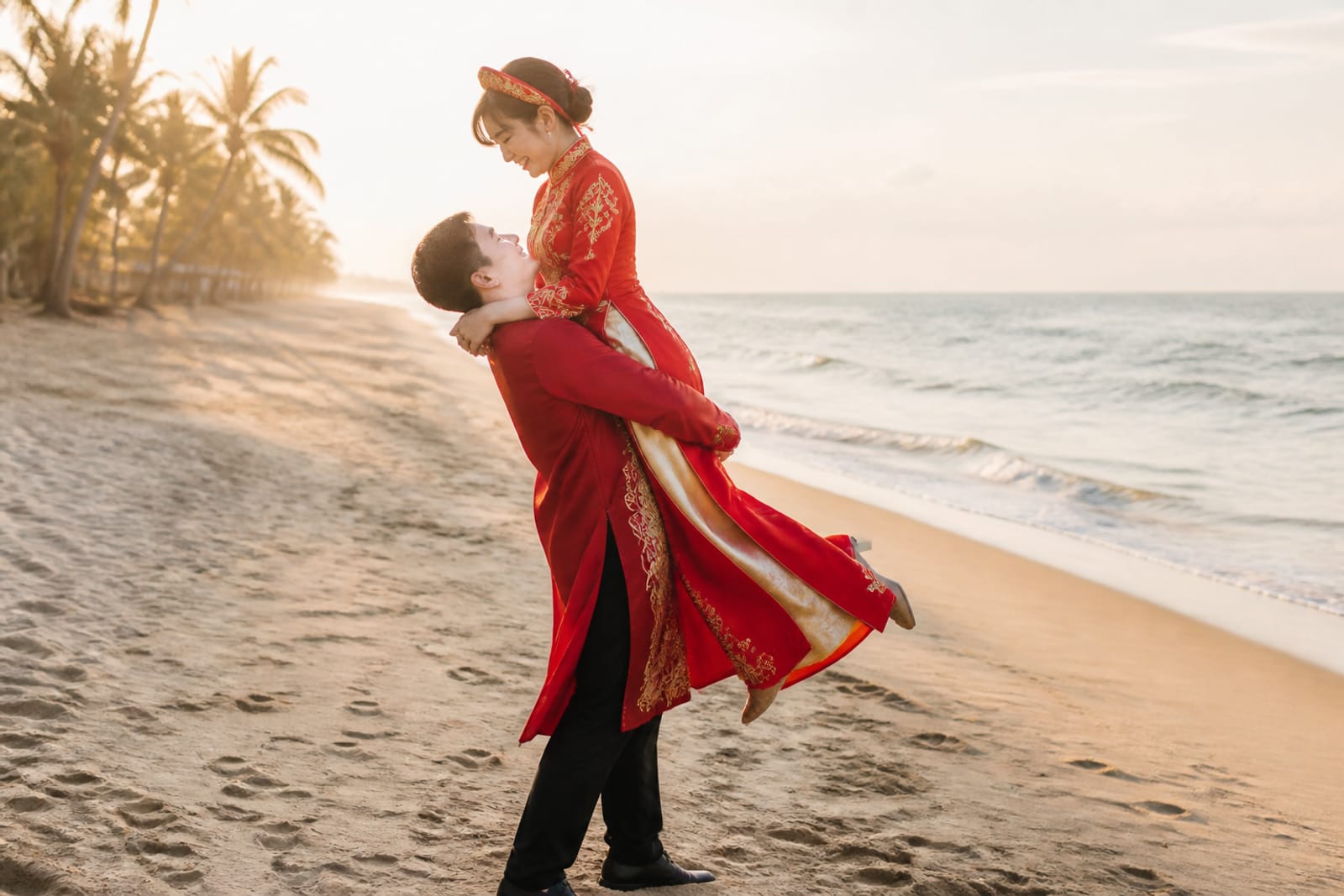
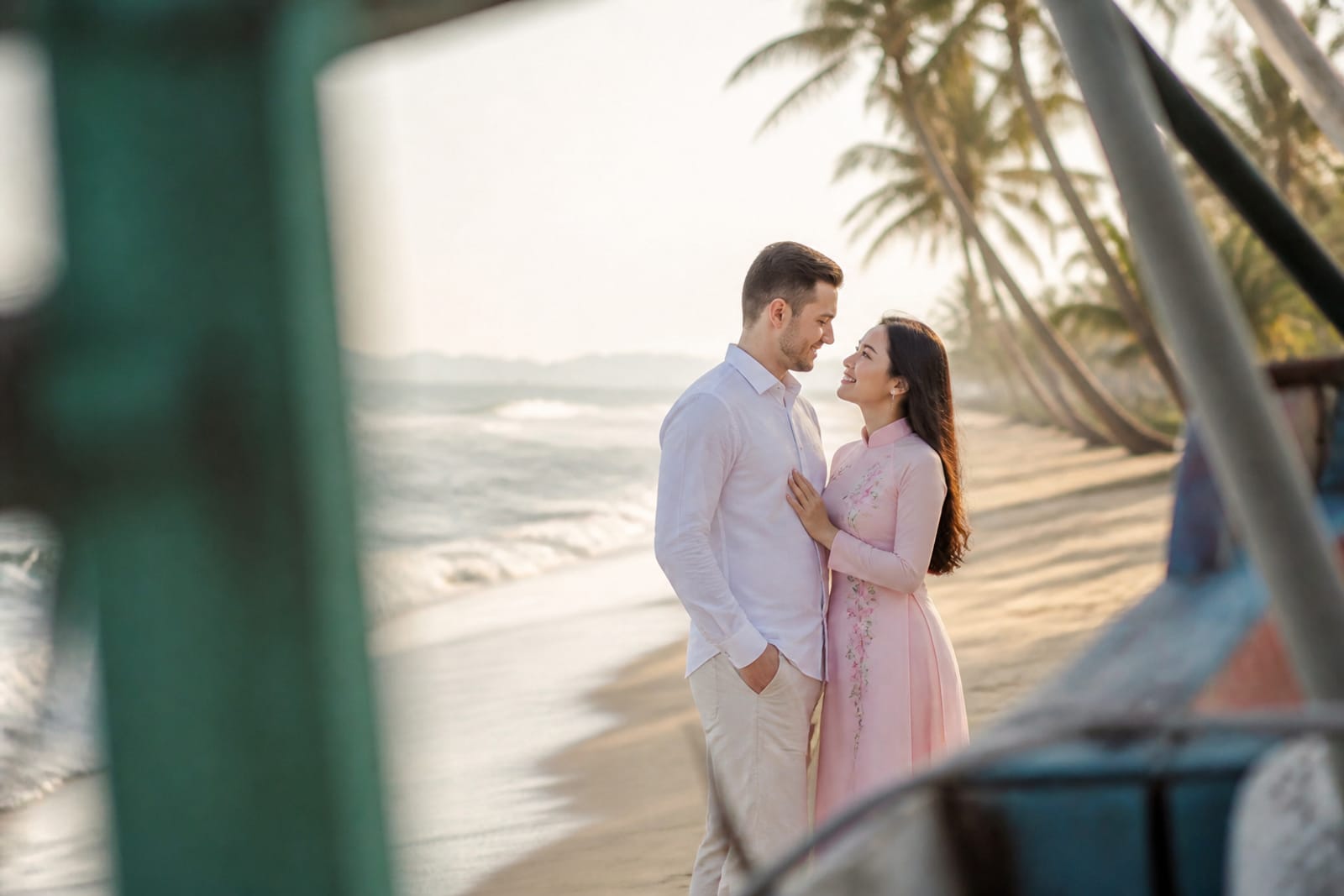
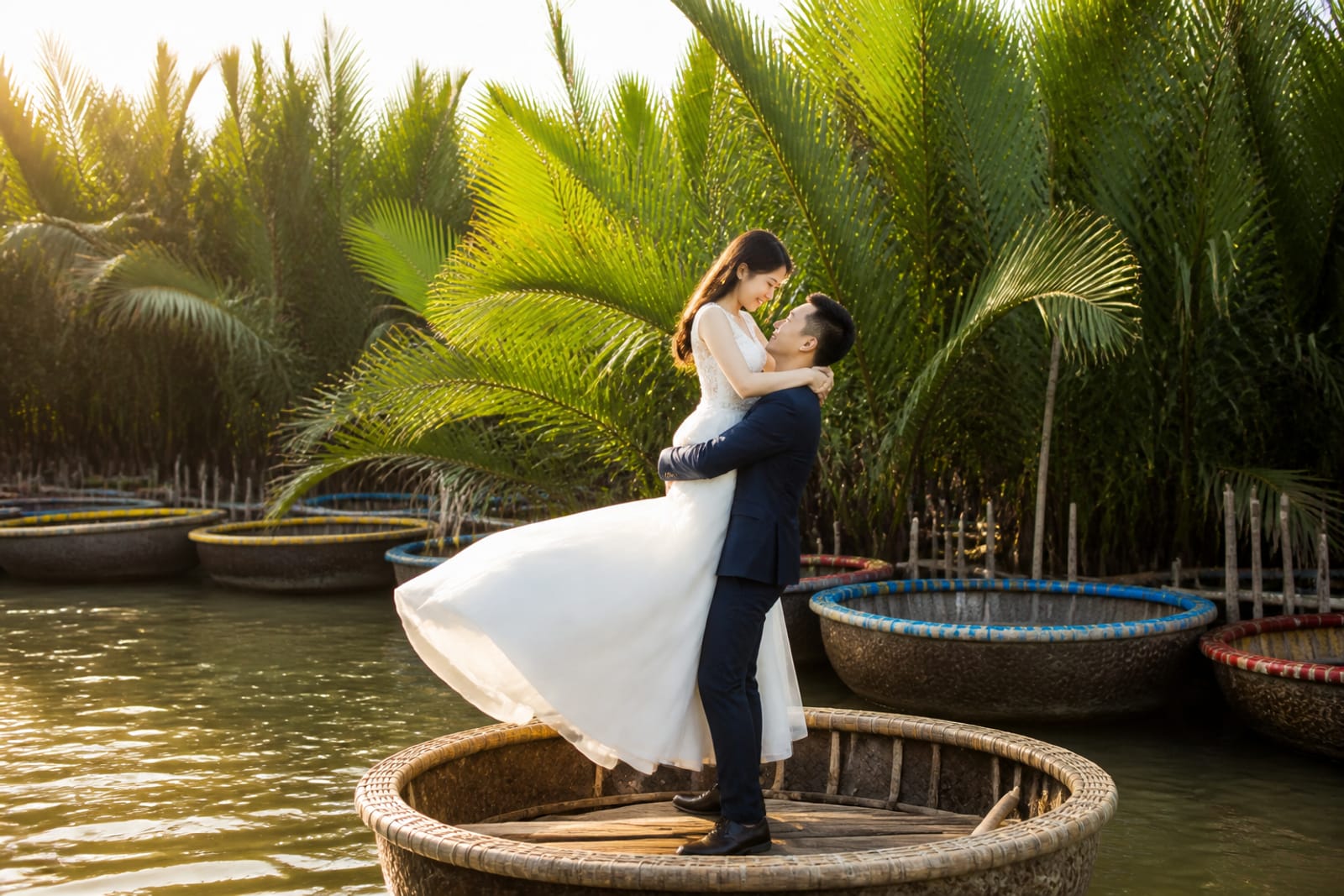
Ao dai vs. Western formal wear: An ao dai (the traditional Vietnamese long tunic and fitted trousers) photographs beautifully in Hoi An's heritage setting and feels culturally resonant; it drapes elegantly in breeze and requires no tailoring if rented locally. Rental is available through Cáo Studio's ao dai rental partner and costs a small fraction of buying. Western bridal gowns are heavier, tangle in narrow alleys, and wet easily in morning dew; they suit studio or open-field backdrops better than ancient cobblestone streets. Deciding between them shapes your location choices—an ao dai lends itself to temple and Old Town shots, while a gown might push you toward rural open-air scenes. Make the choice before booking; it changes the itinerary.
Makeup resilience: Hoi An in February–April is cool enough that makeup holds through morning shooting. May–August humidity and pre-dawn dew will lift foundation and smudge eyeliner within 90 minutes; waterproof formulas and a touch-up kit (powder, blotting papers, lipstick) are non-negotiable. Heavy contouring fades under soft dawn light anyway; the team (through makeup and hair at your hotel service) will advise lighter, fresher makeup that photograph truer to your actual face. Plan for one makeup refresh at the 9 a.m. break.
Footwear: Hoi An's Ancient Town is 90% uneven stone and narrow alleys. Heeled bridal shoes sink, slip, and slow shooting. Flat sandals, soft ballet flats, or traditional Vietnamese silk slippers (áo dép, available locally) let you move naturally and keep pace with the team. Change shoes between locations if needed. Avoid heels unless shooting only on flat open ground.
Physical stamina: A full daylong shoot covers 4–6 kilometers of walking, with early waking and peak-hour heat around midday. Couples in their 40s+ and those unaccustomed to Vietnamese heat should factor in rest days afterward and bring electrolyte drinks, not just water. Start training walks 2–3 weeks before the shoot.
How do weather and season choices reshape the actual shoot locations available?
| Season | Light Quality | Ancient Town Condition | Rice Fields | Why Choose It |
|---|---|---|---|---|
| Feb–Apr | Soft, directional, golden hour sharp | Dry, walkable, cool breeze | Lush green, vibrant | Comfort, classic beauty, manageable crowds |
| May–Aug | High contrast, harsh midday | Dry, very hot, early start required | Mature, sometimes brown | Dramatic afternoon light if you shoot early & late |
| Sep–Dec | Moody, overcast, diffuse | Wet, flooded (Oct–Nov worst), slippery | Muddy or harvested | Avoid; light is flat, safety risk high |
February to April: Daytime temperatures hover 20–25°C; morning dew evaporates by 6:30 a.m. Rice fields are at peak green after the January planting. Sunrise light is crisp and warm; golden hour (4:30–5:45 p.m.) yields rich color. Crowds build by 8 a.m., but early-morning windows are achievable. This is peak season; book 3–4 months ahead.
May to August: Dry but hot (often 35°C+ by noon). Shoots must start by 5 a.m. and finish by 11 a.m. to avoid heat stress; the team may skip midday location changes. Afternoon light is harsh unless you return for the final 90 minutes before sunset. Rice is taller and less uniformly green. Humidity is high; makeup touch-ups are frequent. This season suits couples prioritizing heat tolerance and dramatic contrast over comfort.
September to December: The rainy season brings typhoons, afternoon downpours, and active flooding in the Ancient Town's lower streets, especially October–November. Morning light is flat and overcast; afternoon clouds obscure golden hour. Temple paths may be slippery. Unless you're committed to moody aesthetics and flexible dates, avoid. If you must shoot October–November, move the itinerary to higher-ground rural locations and plan indoor backup shots.
Lunar New Year (late January to mid-February): Tet closes many local businesses and temples for several days; crowds surge in the days before. Avoid booking within two weeks of Tet.
What's the real difference between a Hoi An day-shoot and a multi-day pre-wedding itinerary?
A one-day Hoi An shoot maximizes a single location's potential—you return to the Ancient Town's best light windows and explore rural backdrops an hour's drive away, building a cohesive visual story within 12 daylight hours. You trade depth (one itinerary, two or three outfit changes) for focus.
A multi-day pre-wedding itinerary spans Hoi An, nearby Quy Nhon's beaches, and Da Nang's coastal temples, distributing the visual load across contrasting backdrops and shooting across two or three locations' peak-light windows. It suits couples who want landscape variety, outfit changes across different climates, and time to relax between shoot sessions. Cost factors increase (team travel time, additional accommodation, logistics) and flexibility becomes essential—if typhoon weather hits Quy Nhon, the team must pivot to an inland backup location, costing time.
Choose one-day if: you have limited time, want efficiency, and prefer emotional depth in one location over visual breadth.
Choose multi-day if: you value scenic variety, are willing to adapt to weather delays, and can spend 3+ days on-site.
Cáo Studio – Makeup & Photoshoot coordinates both; multi-day itineraries are booked on WhatsApp and customized to your priorities. Ask the team about layering a Hoi An day-shoot with a beach session in Da Nang (90 minutes' drive).
What specific decisions should you confirm with the studio before booking?
A booking confirmation is only solid once you've clarified these points on WhatsApp:
Locations: Ask which three exact locations the team proposes (e.g., Ancient Town, rice paddy, riverside temple) and why, based on your date's season. Confirm whether the entrance fee to the Ancient Town (required if shooting public streets) is included or separate, and check the current fee on Hoi An's official tourism site.
Start and end times: Confirm the exact meet time (often 5:00 or 5:30 a.m.) and end time (typically 5:30 or 6:00 p.m.). Ask whether the time includes travel from your hotel.
Outfit changes: How many outfit changes fit in the itinerary? Where does makeup refresh happen—at your hotel, on-site at a café, or does the team carry a makeup kit? For ao dai, does the team use a local rental partner, or do you source it yourself?
Weather contingencies: If rain or typhoon warnings arise 48 hours before your shoot, what's the rescheduling policy? Can dates be moved within a season, or is your deposit non-refundable?
Deliverables: How many edited photos do you receive, when, and in what format? Are raw files included? Do you get digital copies, prints, or a printed album? Exact inclusions are confirmed on WhatsApp; they vary by package.
Transportation: Does the team provide transport between locations, or are you responsible for the van/scooter? If hiring local transport, what's the booking process?
Before you commit: Review Cáo Studio's lookbook to see real Hoi An shoots and understand the aesthetic. Check the FAQ for session policies. Ask to speak with the Hoi An team (they travel to Hoi An by appointment) about their specific experience with your preferred season.
💄 Makeup & hair at your hotel | 🌸 See the lookbook
---
Hoi An's real light and crowd rhythms: a practical comparison
Most pre-wedding couples assume afternoon golden hour is non-negotiable. In Hoi An, the opposite is true: an early 5 a.m. start unlocks the only window where the Ancient Town's lantern-lit alleys are yours alone and light is directional enough to sculpt faces flatly. By 7:30 a.m., public visitors arrive, and by 9 a.m., the streets are congested. Afternoon golden hour (4:30–5:45 p.m.) is bright and warm, but you're sharing space with other couples, tour groups, and sunset-chasing tourists. If your priority is intimate, uncluttered portraits, the pre-dawn window is not optional—it's the only one available.
Similarly, most guides suggest avoiding the rainy season. This is sound for predictability, but honest detail matters: if you shoot October–November expecting "moody atmospheric light," you'll often get flat grey overcast and sudden downpours that halt shooting mid-session. Hoi An's ancient streets also flood in heavy rain; the lower lanes become impassable, redirecting the team to improvised high-ground locations and stalling the planned itinerary. Unless you're deeply committed to rescheduling mid-shoot and have flexible dates, February–April is the only season that delivers both aesthetic and logistical certainty.
Moving toward your booking decision
A one-day Hoi An pre-wedding shoot is not a casual snapshot session; it's a logistically coordinated 12-hour production that hinges on early waking, season selection, outfit readiness, and clear communication with the team. The reward is a cohesive visual story: your couple identity woven through heritage streets, rural tranquility, and the specific light only Hoi An offers at that moment.
If you're leaning toward Hoi An, the next step is messaging the team on WhatsApp with three pieces of information: your preferred shoot date (or month, if the exact date is flexible), your location choices (Old Town, rice paddies, temples, all of the above), and whether you want one outfit, two, or three. They'll respond with a custom itinerary, cost factors (team size, travel time, outfit rental or makeup services), and a proposal tailored to your season and vision.
If you're still exploring options—considering a multi-day pre-wedding itinerary, a couple's photoshoot in Hanoi instead, or a pre-wedding and elopement package that combines shoot and ceremony—review the full service menu and message the team to compare.
📸 Book on WhatsApp — pre-wedding photoshoot
Hoi An is not the only pre-wedding destination; it's the one that rewards early planning and precise execution.
FAQ
Can we shoot a pre-wedding session in Hoi An during the rainy season and still get good photos?
Technically yes, but September–December brings typhoons, afternoon flooding (worst October–November), and flat grey light. Unless you're prioritizing rescheduling flexibility and moody aesthetics, February–August is safer for predictable conditions and striking light. Ask the team on WhatsApp about October–November risks before committing.
What if we arrive late and can't start at 5 a.m.?
A 7 or 8 a.m. start is possible, but you'll lose the quiet Ancient Town window and face mid-morning crowds by 8:30 a.m. Light becomes harsher by late morning. Expect fewer uncluttered shots of the Old Town and a tighter afternoon schedule. Confirm with the team whether a later start affects your quoted itinerary.
Do we need an ao dai, or can we wear Western formal wear instead?
Both work. An ao dai suits the heritage setting and rents affordably through local partners; Western bridal gowns photograph beautifully but are heavier and tangle on Hoi An's narrow stone alleys. Decide early—it shapes location choices. Ask the team about outfit-specific venue recommendations on WhatsApp.
How many outfit changes should we budget for in one day?
Most daylong shoots include one or two outfit changes (e.g., ao dai for the Ancient Town, formal Western wear for rural backdrops). Three changes are possible but tight, reducing time per location. Confirm outfit count with the team so they can plan location transitions and makeup-refresh timing.
What happens if it rains during our scheduled shoot day?
Light rain often yields atmospheric shots, but heavy rain or typhoon warnings may halt the session. Ask the team in advance: Can you reschedule within the same season? Is your deposit refundable if weather forces postponement? Policies vary; confirm before booking.
FAQ
Can we shoot a pre-wedding session in Hoi An during the rainy season and still get good photos?
Technically yes, but September–December brings typhoons, afternoon flooding (worst October–November), and flat grey light. Unless you're prioritizing rescheduling flexibility and moody aesthetics, February–August is safer for predictable conditions and striking light. Ask the team on WhatsApp about October–November risks before committing.
What if we arrive late and can't start at 5 a.m.?
A 7 or 8 a.m. start is possible, but you'll lose the quiet Ancient Town window and face mid-morning crowds by 8:30 a.m. Light becomes harsher by late morning. Expect fewer uncluttered shots of the Old Town and a tighter afternoon schedule. Confirm with the team whether a later start affects your quoted itinerary.
Do we need an ao dai, or can we wear Western formal wear instead?
Both work. An ao dai suits the heritage setting and rents affordably through local partners; Western bridal gowns photograph beautifully but are heavier and tangle on Hoi An's narrow stone alleys. Decide early—it shapes location choices. Ask the team about outfit-specific venue recommendations on WhatsApp.
How many outfit changes should we budget for in one day?
Most daylong shoots include one or two outfit changes (e.g., ao dai for the Ancient Town, formal Western wear for rural backdrops). Three changes are possible but tight, reducing time per location. Confirm outfit count with the team so they can plan location transitions and makeup-refresh timing.
What happens if it rains during our scheduled shoot day?
Light rain often yields atmospheric shots, but heavy rain or typhoon warnings may halt the session. Ask the team in advance: Can you reschedule within the same season? Is your deposit refundable if weather forces postponement? Policies vary; confirm before booking.
Ao dai, makeup, hair and a local photographer in Hanoi or Saigon — one WhatsApp message.