/pre-wedding-photoshoot
One-day pre-wedding photoshoot itinerary in Mui Ne
A one-day pre-wedding photoshoot in Mui Ne works as a two-location shoot: dunes at sunrise (5:30–7:30 am, soft side light, minimal crowds) and fishing village or beach at 4–6 pm (golden hour, boats and nets as foreground). The itinerary is built around Mui Ne's dry season (November–April); May–September brings heat and rain that flatten light and close beach access. Cáo Studio does not operate in Mui Ne—it's a day trip for teams based in Ho Chi Minh City or Da Nang. Couples choose this route when they want frames on sand dunes and want to avoid Phu Quoc or Nha Trang crowds. Success depends on hiring a local photographer who understands Mui Ne wind patterns (stronger November–March mornings, which scatters sand into hair and gear) and securing the right outfit for each location: ao dai or silk dress for dunes (weight and train matter), casual or light layers for beach walking.
A one-day pre-wedding shoot in Mui Ne splits into two light windows, each with its own logistical rhythm. The dunes light peaks at sunrise and fades by 8 am; the fishing village works in the golden hour, 4–6 pm. Between these windows you rest, eat, and move outfits—or scout locations and refresh makeup. This structure is not romantic improvisation: it's built on how Mui Ne's light, wind, and foot traffic actually work.
Cáo Studio operates from Hanoi and Ho Chi Minh City. For a Mui Ne shoot, you have three options: hire a local photographer in Phuoc Hai or Phan Thiet (the towns near Mui Ne), book a team from Ho Chi Minh City or Da Nang to travel for the day, or plan a pre-wedding photoshoot in Ho Chi Minh City and take a separate day trip to Mui Ne with a local rig. Read on to understand what works best and what to check before committing.
Where exactly do couples shoot in Mui Ne for pre-wedding frames?
Mui Ne has three strong photo zones: the red and white dunes (inland, 15 km from town), the fishing village harbor (Mui Ne proper, sunrise boats and nets), and the southern beach at Ke Ga lighthouse (long shoreline, fewer tourists than Nha Trang). The dunes demand an early start and a guide who knows the access path; the village requires permission from boat owners and quick timing before tourists arrive (7–8 am). Ke Ga lighthouse is walkable but exposed—no shade, no backup if wind spikes. Couples who want one cohesive visual story choose dunes + village; those who prioritize ease and light predictability pick beach + lighthouse.
| Location | Best light | Walking effort | Outfit fit | Season note |
|---|---|---|---|---|
| Red/white dunes | Sunrise, 5:30–7 am (side light, shadow relief) | High—sand climbing | Silk dress, ao dai train pinned | Nov–Mar: wind scatters sand; Apr–Oct: heat and humidity |
| Fishing village | 6–7 am (boats return) or 4–5 pm (golden nets) | Low—harbor walk | Casual layers, light ao dai | Dec–Mar ideal; no rain May–Oct typhoon risk |
| Ke Ga lighthouse beach | 4–6 pm (long golden rays) | Medium—beach walk, no shade | Lightweight dress, shorts + linen shirt | Dec–Apr dry; wind Nov–Mar |
📸 Book on WhatsApp — pre-wedding photoshoot
What's the ideal season and weather pattern for a one-day Mui Ne pre-wedding shoot?
Mui Ne is one of Vietnam's driest zones. November–April is the window: clear sky, stable wind, low rain risk. Within that, February–March offers the most consistent light because humidity is lowest and the sun angle stays steep enough to create relief on the dunes. December and January see occasional cool mornings (easier for movement) but cloudier skies on 20–30% of days. May–October brings afternoon downpours (often 2–5 pm, catching the golden hour), high heat that dulls color in raw footage, and typhoon risk September–November that closes beach access without notice. Couples planning a Mui Ne pre-wedding shoot must confirm the weather 7 days before the booking date; if rain is forecast, a local photographer should have an indoor backup (hotel, homestay, or old French colonial villa) or you reschedule.
Wind is the hidden factor. November–March sees steady onshore wind (10–20 km/h) that blows sand into hair, makeup and camera lenses, and lifts fabric in ways that hide the body line. Sunrise shoots on the dunes in January often mean pinning ao dai trains, using heavier silks, and shooting quickly before grit builds up. Summer wind is lighter but humidity is punishing.
How do you structure a full one-day itinerary without wasting light or energy?
A real one-day itinerary runs like this:
- 4:30 am: Pickup from hotel; arrive dunes by 5:15 am.
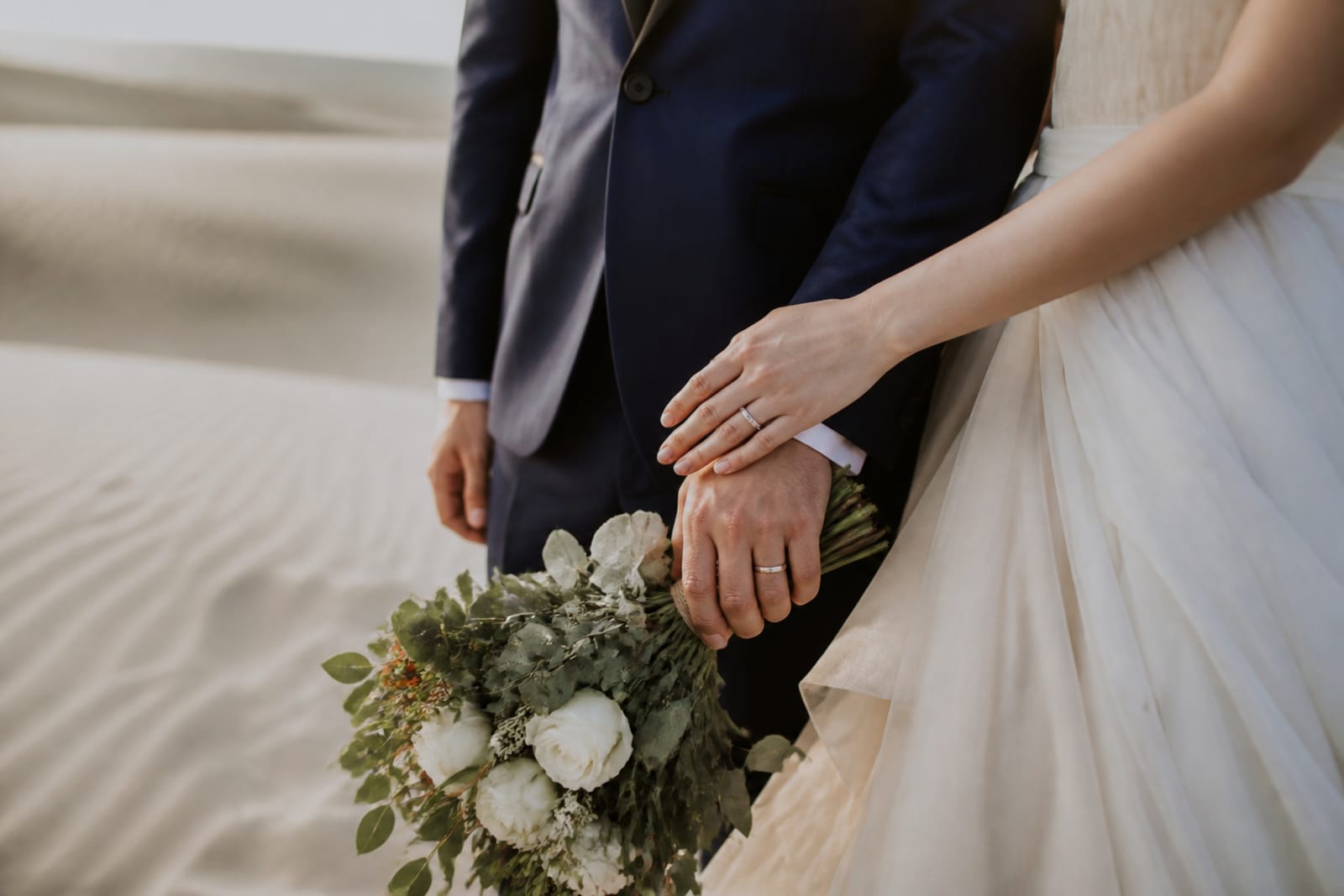
- 5:30–7:30 am: First outfit (ao dai or dress) on dunes. Photographer shoots wide frames (couple walking, silhouettes, landing), then medium (detail of fabric, facial expressions), then tight detail (hands, ring, lace). This takes 60–90 minutes.
- 7:45–8:30 am: Quick break, outfit change, makeup touch-up at a dunes shelter or truck.
- 8:30–9:30 am: Second outfit (lighter, casual) at the fishing village. Boat owners are now awake; negotiate 15-minute harbor access (no payment, but a thank-you photo works). Shoot returning boats, nets, you walking between them.
- 9:30 am–4 pm: Downtime. Rest at hotel, eat, nap. Hydrate—Mui Ne sun and wind dehydrate fast.
- 4 pm: Makeup refresh, outfit 3 (or repeat outfit 1 for different light).
- 4–6 pm: Ke Ga lighthouse or beach walk. Golden light lasts 90 minutes; shoot wide (silhouettes on water), walking toward camera, detail of sand on skin and fabric.
- 6:15 pm: Pack. Sunset ends by 6:45 pm in winter; don't chase it—light is flat and colors wash out.
This itinerary gives you three outfits and two distinct light qualities (morning relief, evening warmth) without running couples ragged. The gap between 9:30 am and 4 pm is non-negotiable: you can't shoot mid-day Mui Ne (light is flat, heat is severe, tourists are dense).
Should you hire a local Mui Ne photographer or book a team from the city?
Local photographer (based in Phuoc Hai or Phan Thiet): knows the dunes access, boat owners, and tide times. Usually cheaper (fewer travel costs). Drawbacks: may not have a dedicated makeup artist or stylist; you'll need to hire hair and makeup separately, or arrive already done. Communication is often through booking sites or WhatsApp, with limited English. Equipment varies—some locals rent lenses or backup gear last-minute, which slows setup. Best if you want a single-day frame count (300–500 images) and are flexible on styling.
Team from Ho Chi Minh City or Da Nang: arrives with a photographer, makeup artist, and hair stylist in one booking (no coordinator headaches). Shoots with better backup gear and consistent editing. Costs more (6+ hours of travel time). Best if you want ao dai styling, professional makeup that lasts through sweat and wind, and a single-message aesthetic across outfits. This is how Cáo Studio works in Hanoi and Ho Chi Minh City—one team, one message—though Cáo does not currently operate in Mui Ne; you'd hire a local rig.
Hybrid: book a Saigon or Da Nang photographer for 4 hours (dunes sunrise + village), hire a local makeup artist to prep at your hotel, and do a casual evening walk solo with a tripod or phone. Splits cost and gives you professional frames + flexibility.
| Option | Best for | Trade-offs | How to vet |
|---|---|---|---|
| Solo local photographer | Budget-conscious, flexible styling, frame count priority | No dedicated makeup/hair, communication delays, limited backup gear | Ask for recent pre-wedding work (check color grading consistency), confirm equipment list, agree on number of outfits and edits in writing |
| Makeup + local shooter (hybrid) | Want professional makeup but hire locally | Coordination across vendors, timing risk | Hire makeup artist first (ask hotel concierge), then brief photographer on the look and timing. Shoot in the window the artist recommends. |
| Full team from city | One aesthetic, professional execution, minimal coordination | High cost, less location knowledge, more travel time | Ask if they've shot in Mui Ne before, request a Mui Ne-specific shot list (dunes + village + timing), confirm backup outfits and contingency for rain |
What outfit and hair choices actually work on Mui Ne dunes and fishing village?
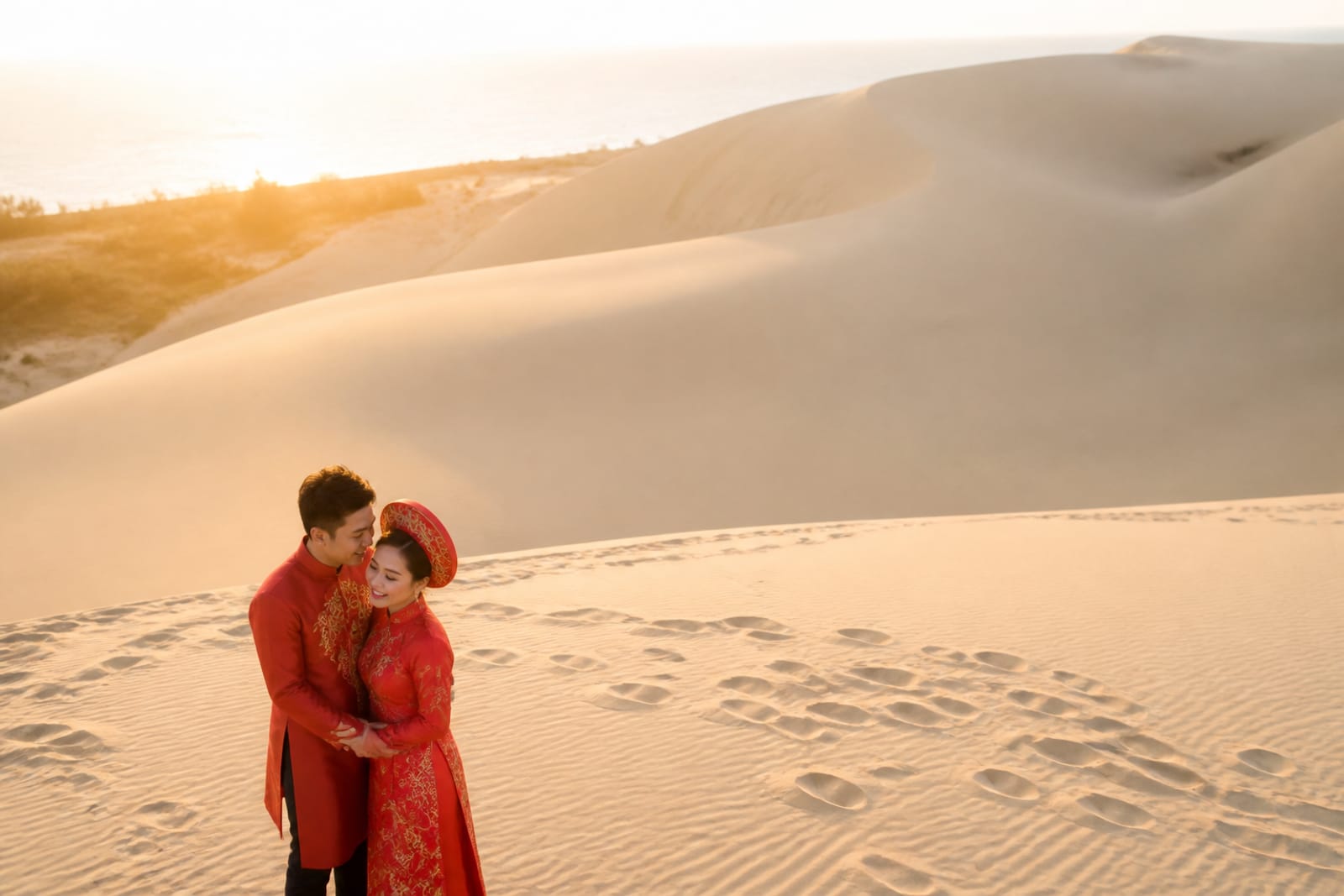
Ao dai on dunes: The most photogenic choice if the dress fits (ao dai that's too loose blows around and hides the body; too tight restricts movement on sand). Silk or premium cotton works; polyester looks cheap in detail shots. Train should be pinned or held by an assistant in wind (November–March mornings get gusts that flip it). Colors: jewel tones (emerald, sapphire, burgundy) pop against sand. White and pastels fade into overexposed sky. Weight matters—heavier fabrics stay in frame; lightweight silk flies.
Beach casual: Linen shirt + shorts, or a lightweight dress. Layers work because you'll move from cool morning to hot afternoon. Avoid anything with a long train (sand, sun, and your own feet tangle it). Neutral colors (cream, tan, grey) photograph better in golden hour than neons. Footwear: go barefoot on sand (easier to move, authentic look), wear water shoes or sandals on rocks near the village.
Hair and makeup in Mui Ne wind: Fine spray that locks makeup costs money and washes off in sweat. Ask your makeup artist to use long-wear formulas and skip heavy contour (wind and sand make it look cakey). Hair: low bun or braid works better than loose strands, which blow into faces and look chaotic in close-ups. Pins will loosen on sand—use a stylist who knows this and brings extras.
Jewelry: Silver and white gold read better than gold in cool morning light. Keep pieces minimal; sand gets into crevices and chains catch fabric.
What should you check before booking a one-day Mui Ne pre-wedding shoot?
Before you commit to a date or team, verify:
- Season: Is your date within November–April? If December–January, ask about cloud risk. If Feb–March, you're in the sweet spot. Never book May–October for outdoor all-day shoots.
- Photographer's Mui Ne portfolio: Ask for pre-wedding work shot in Mui Ne, not just general Vietnam landscape. Look for dune and harbor frames (not just beach). Check if editing is consistent across images (color grading matters).
- Backup plan for rain: What happens if morning forecast shows 40%+ chance? Can you reschedule, or do you forfeit payment? Get this in writing.
- Outfit and makeup clarity: Does the quote include makeup and hair, or do you hire separately? If separately, confirm timing (makeup artist arrives at hotel by 4:30 am for a 5:30 am dunes start). If the team brings makeup, ask what's included (trial, touch-ups, products used). For ao dai, confirm if the photographer brings suggestions or you rent/wear your own.
- Travel and timing: How long is the hotel pickup? If your hotel is 30+ km from the dunes, you'll start in darkness and miss the first light. Ask the photographer for the exact itinerary and hotel pickup time.
- Number of edited photos and delivery: How many images do you get edited? When? Local photographers often deliver 200–300 edited images in 1–2 weeks; city teams may edit 150–250 in 48 hours. Get the exact number before signing.
- Second outfit and location change cost: Is changing location (dunes to village) included, or is there an extra fee? Does the quote cover two outfits or three? Clarify.
For a pre-wedding shoot in Hanoi, Ho Chi Minh City, or Hoi An, book with Cáo Studio on WhatsApp. For Mui Ne, use the checklist above to hire a local team or a Da Nang photographer who travels. A good one-day Mui Ne pre-wedding itinerary is possible—it just requires the right season, honest light knowledge, and a photographer (or team) who knows the specific constraints of sand, wind, and golden hour on Vietnam's coast.
FAQ
Can I do a pre-wedding shoot in Mui Ne and another in Ho Chi Minh City on the same trip?
Yes. Book a one-day Mui Ne shoot with a local photographer (sunrise dunes, afternoon village), then a separate Ho Chi Minh City pre-wedding shoot with Cáo Studio on a different day. This splits the aesthetic and gives you two distinct locations. Confirm hotel and outfit coordination with both teams before the trip.
What if it rains during my one-day Mui Ne shoot?
Morning rain often clears by 6–7 am on the dunes; ask your photographer if you can start slightly later and still catch side light. Afternoon rain is harder to predict (May–October typhoon risk is high). Get a written contingency before booking—most local photographers offer a reschedule option if rain prevents good light, though you may forfeit a deposit. Avoid May–October for all-day outdoor shoots.
Do I need special footwear for Mui Ne dunes and fishing village?
Barefoot is best on sand (easier movement, more authentic frames). Wear water shoes or sandals to the harbor to avoid sharp shells and rocks, then remove them for photos. Pack flip-flops in the car for quick changes. Avoid heeled shoes—they sink and look awkward on sand.
How early do I need to wake up for a 5:30 am dunes shoot start?
Hotel pickup is usually 4:30–5 am, so wake by 3:30–4 am. Eat a light breakfast (banana, toast) before leaving; you'll be hungry by 8 am after shooting on sand. Bring water and electrolyte powder. Mui Ne heat and wind dehydrate fast, even at sunrise.
Can I hire Cáo Studio to shoot in Mui Ne?
Cáo Studio operates from Hanoi and Ho Chi Minh City. For Mui Ne, hire a local photographer or book a team from Da Nang who travels. If you want Cáo's one-team, one-message approach, book a pre-wedding photoshoot in Ho Chi Minh City and take a separate day trip to Mui Ne with a local rig, or plan your pre-wedding frames in the Mekong or Vung Tau near the city.
FAQ
Can I do a pre-wedding shoot in Mui Ne and another in Ho Chi Minh City on the same trip?
Yes. Book a one-day Mui Ne shoot with a local photographer (sunrise dunes, afternoon village), then a separate [Ho Chi Minh City pre-wedding shoot](/pre-wedding-photoshoot) with Cáo Studio on a different day. This splits the aesthetic and gives you two distinct locations. Confirm hotel and outfit coordination with both teams before the trip.
What if it rains during my one-day Mui Ne shoot?
Morning rain often clears by 6–7 am on the dunes; ask your photographer if you can start slightly later and still catch side light. Afternoon rain is harder to predict (May–October typhoon risk is high). Get a written contingency before booking—most local photographers offer a reschedule option if rain prevents good light, though you may forfeit a deposit. Avoid May–October for all-day outdoor shoots.
Do I need special footwear for Mui Ne dunes and fishing village?
Barefoot is best on sand (easier movement, more authentic frames). Wear water shoes or sandals to the harbor to avoid sharp shells and rocks, then remove them for photos. Pack flip-flops in the car for quick changes. Avoid heeled shoes—they sink and look awkward on sand.
How early do I need to wake up for a 5:30 am dunes shoot start?
Hotel pickup is usually 4:30–5 am, so wake by 3:30–4 am. Eat a light breakfast (banana, toast) before leaving; you'll be hungry by 8 am after shooting on sand. Bring water and electrolyte powder. Mui Ne heat and wind dehydrate fast, even at sunrise.
Can I hire Cáo Studio to shoot in Mui Ne?
Cáo Studio operates from Hanoi and Ho Chi Minh City. For Mui Ne, hire a local photographer or book a team from Da Nang who travels. If you want Cáo's one-team, one-message approach, book a [pre-wedding photoshoot in Ho Chi Minh City](/saigon) and take a separate day trip to Mui Ne with a local rig, or plan your pre-wedding frames in the Mekong or Vung Tau near the city.
Ao dai, makeup, hair and a local photographer in Hanoi or Saigon — one WhatsApp message.