hanoi
One Pillar Pagoda Photoshoot: Your Complete Hanoi Guide
One Pillar Pagoda photoshoots work best in early morning (6–7:30 a.m.) before crowds and harsh midday sun. The temple—a UNESCO site rising from a lotus pond—suits ao dai, traditional áo bà ba, or minimalist Western dress. Cáo Studio – Makeup & Photoshoot offers guided sessions in Hanoi with makeup, styling, and permission handling; independent photographers cost less but require self-coordination. Light peaks during golden hour; tourist rushes peak 9 a.m.–5 p.m.
Why shoot at One Pillar Pagoda instead of other Hanoi temples?
One Pillar Pagoda is the smallest, most recognizable UNESCO temple in Hanoi. Its geometric wooden pillar and symmetrical lotus pond create a single-focus composition—ideal for portraits and wide-angle architectural shots. Tran Quoc Pagoda offers larger grounds but is crowded; Quan Thanh Temple has more trees but less iconic geometry. One Pillar's fame means permits are streamlined, and locals are used to photographers. The trade-off: narrow shooting angles and morning-only light windows.
📸 Book on WhatsApp — ao dai photoshoot
What should I wear, and what goes underneath?
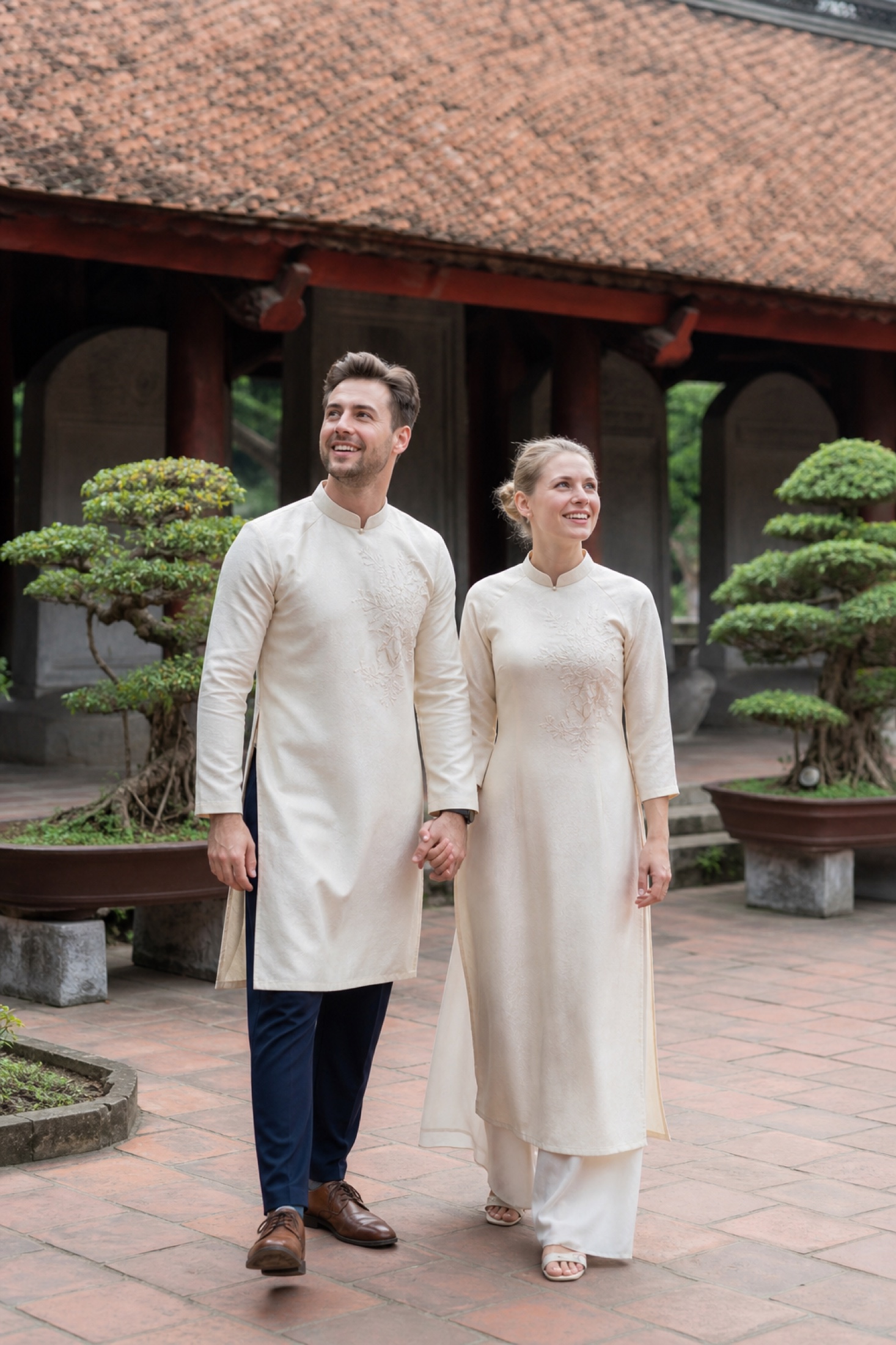
Ao dai (traditional tunic and pants) is the classic choice and reads best in photos; the fabric catches morning light softly. Wear a slip or fitted tank under the mesh bodice—the temple is sacred, and visible undergarments distract from composition. Loose cotton pants work; avoid jeans. If wearing Western dress, opt for muted, elegant pieces (linen shirts, flowing trousers) that won't compete with the pillar. Avoid bold logos, neon, or busy patterns. White, cream, or soft jewel tones photograph cleanly against stone and water.
Ao bà ba (peasant blouse and wide pants) is a second-tier option: less formal than ao dai, but still respectful and photogenic.
Bring a light shawl or scarf for shoulder coverage when entering the prayer hall—required even for photo-only visits.
When is the best time to shoot—season, time of day, weather?
| Season | Light quality | Crowds | Weather risk | Ideal time |
|---|---|---|---|---|
| Oct–Nov | Golden, crisp | Low | None | 6–8 a.m. |
| Dec–Feb | Soft, cool | Medium | Rare rain | 7–9 a.m. |
| Mar–May | Hazy, humid | High | Heat by 8 a.m. | 5:30–7 a.m. |
| Jun–Sep | Monsoon glare | Very low | Rain, mud | 6–6:45 a.m. only |
Optimal window: October–November (cool, dry, low humidity, golden light). Worst months: June–August (heat, humidity, rain closes the pagoda some mornings). Time-of-day rule: arrive by 7 a.m. or risk harsh shadows by 8:30 a.m. The sun clears the eastern treeline around 6:15 a.m.; shoots between 6:30–7:45 a.m. yield the clearest, warmest tones.
Bring a tripod or stability rig if shooting solo; the narrow bridge offers limited angles and no room for a camera bag.
How do you book with Cáo Studio versus independent photographers?
Cáo Studio – Makeup & Photoshoot (/hanoi):
- Includes hair, makeup, and styling consultation.
- Photographer handles temple permits and etiquette.
- Typical session: 45–90 minutes, ao dai + hair trial, 100–200 edited images.
- Quote via WhatsApp; packages start compact for couples/solos.
- Skill: Professional retouching, consistent light metering, backup lens.
Independent local photographers (Hanoi Instagram ads, Airbnb reviews):
- Cheaper upfront; zero styling support.
- You navigate permit requests; risk of fines or rushed ejection if done wrong.
- Highly variable image quality and editing.
- No contractual recourse if shots are underexposed or out of focus.
Self-shoot + tripod:
- Lowest cost; no creative vision beyond your own eye.
- Risk: blurry motion, overexposed water, no flattering angles of your face.
- Best for content creators who want raw material to edit themselves.
For first-time visitors or non-English-speaking photographers, Cáo Studio's ao dai photoshoot removes logistical friction and guarantees professional output.
What are the rules, etiquette, and permit requirements?
Dress code: Knees and shoulders covered inside the pagoda. Hat off during prayer hours (rare, but ask the caretaker). Shoes off on the bridge and altar areas.
Photography permits: One Pillar is state-protected. Commercial/professional shoots (tripod, flash, model) require written approval from Hanoi's Department of Culture. Solo tourists with hand-held cameras are rarely stopped. If a caretaker objects, politely ask "có thể chụp ảnh ở đây không?" (Can I take photos here?). Most allow 5–10 minutes for a few frames.
Timing etiquette: Avoid 11 a.m.–1 p.m. (lunch; caretakers may lock the gate). Early morning visits (before 7:30 a.m.) mean fewer pilgrims and zero conflict.
No drones or commercial equipment without pre-approval. No models posing on the altar or inside prayer chambers. Keep poses respectful: standing, walking, seated—not lying down or provocative stances.
Permit reality: Cáo Studio handles these conversations as part of professional sessions; independent shooters often skip this step and hope no one notices.
How do you preserve and display One Pillar Pagoda photos afterward?
After your shoot, order prints or products that honor both the temple's spiritual weight and your personal memory.
Printed photo books (wedding-style albums) let you tell the story: pagoda + ao dai + golden light in one cohesive narrative. Best for engagement sessions or anniversary commemorations.
Framed prints (16"×24" or A2) on linen or matte paper suit home galleries or offices. Avoid glossy finishes—they compete with the temple's spiritual mood.
Canvas wraps for modern interiors; works if the photo is sharp and the subject (your face or couple) is the focal point, not the architecture alone.
Digital copies + cloud backup should be your first order. A professional shoot yields 100–200 images; cull to 20–30 favorites, export in JPG and TIFF, store in Google Photos or a hard drive.
Avoid: Cheap poster prints (fade in sunlight), Instagram-style filters (the temple doesn't need them), or posting the full unedited gallery online (respects the site's sacred status).
Cáo Studio's lookbook shows how past clients have styled and displayed Hanoi temple sessions—a reference for your own editing and framing decisions.
What to check before you book: a practical checklist
- Shooting date confirmed in writing. WhatsApp avoids mismatches (no "I thought it was next Tuesday" scenarios).
- Sunrise time for your month (varies by ±40 minutes March–September). Confirm arrival time with your photographer the day before.
- Ao dai fit. If renting from Cáo Studio or a local shop, try it on 24 hours early; sleeves and hem length matter for posture and light reflection.
- Weather backup plan. Rain closes One Pillar most June–August mornings. Ask: do you reschedule free, or forfeit? (Cáo Studio allows reschedules.)
- Image delivery timeline. When do edited images arrive? 1 week? 4 weeks? Confirm before paying.
- Editing style alignment. View the photographer's lookbook. If images are oversaturated or underexposed, they won't improve your temple shots.
- Permit clarity. If you're hiring independently, explicitly ask: "Do you have permission from the temple to shoot here?" Listen for hesitation.
- Cancellation policy. If weather or illness strikes, can you move the date without penalty?
Want to pair your One Pillar session with other Hanoi photoshoot experiences? Couple & family photoshoots work well if you're bringing a partner or child. For pre-wedding shoots, explore full-day itineraries across Hanoi. And if you're timing this as part of a larger trip, Cáo Studio also offers sessions in Ho Chi Minh City and Hoi An by appointment.
FAQ
Can I shoot One Pillar Pagoda alone, or do I need a group?
Solo shoots are common and often more intimate. One Pillar's narrow bridge and small pond mean groups larger than 4–5 people create compositional clutter. Couples, individuals, and small families all work well; just book your photographer in advance so they can plan unique angles for your group size.
Will I be asked to leave if I'm photographing?
Rarely. Tourist hand-held photography is tolerated. Commercial shoots with tripods, flashes, or crew sometimes trigger caretaker questions. Cáo Studio's team navigates this; independent shooters sometimes get 10 minutes before being politely redirected. Arrive early (before 7 a.m.) to minimize contact.
What if it rains the morning of my shoot?
One Pillar closes or becomes slippery. Most rain in Hanoi (June–August) hits at dawn, clearing by 8 a.m.—but you'd miss the golden window. Confirm your photographer's rain policy: free reschedule, or credit toward a future date? Cáo Studio reschedules without penalty.
How much editing do the photos need?
Professional shoots arrive color-corrected, skin-softened, and straightened. The temple's stone is naturally warm; minimal filters are needed. Avoid heavy Instagram presets—they distort the sacred mood. Stick to simple export: JPG at 100% quality, no vignetting or split toning.
Can I wear Western clothes instead of ao dai?
Yes, if they're elegant and cover knees/shoulders. Linen trousers, silk blouses, and flowing dresses work. Ao dai reads stronger in portraits and feels more integrated into the temple's spiritual energy—most first-time visitors choose it. Consider ao dai rental if you don't own one; it's a one-time memory and costs less than a printed album afterward.
FAQ
Can I shoot One Pillar Pagoda alone, or do I need a group?
Solo shoots are common and often more intimate. One Pillar's narrow bridge and small pond mean groups larger than 4–5 people create compositional clutter. Couples, individuals, and small families all work well; just book your photographer in advance so they can plan unique angles for your group size.
Will I be asked to leave if I'm photographing?
Rarely. Tourist hand-held photography is tolerated. Commercial shoots with tripods, flashes, or crew sometimes trigger caretaker questions. Cáo Studio's team navigates this; independent shooters sometimes get 10 minutes before being politely redirected. Arrive early (before 7 a.m.) to minimize contact.
What if it rains the morning of my shoot?
One Pillar closes or becomes slippery. Most rain in Hanoi (June–August) hits at dawn, clearing by 8 a.m.—but you'd miss the golden window. Confirm your photographer's rain policy: free reschedule, or credit toward a future date? Cáo Studio reschedules without penalty.
How much editing do the photos need?
Professional shoots arrive color-corrected, skin-softened, and straightened. The temple's stone is naturally warm; minimal filters are needed. Avoid heavy Instagram presets—they distort the sacred mood. Stick to simple export: JPG at 100% quality, no vignetting or split toning.
Can I wear Western clothes instead of ao dai?
Yes, if they're elegant and cover knees/shoulders. Linen trousers, silk blouses, and flowing dresses work. Ao dai reads stronger in portraits and feels more integrated into the temple's spiritual energy—most first-time visitors choose it. Consider ao dai rental if you don't own one; it's a one-time memory and costs less than a printed album afterward.
Ao dai, makeup, hair and a local photographer in Hanoi or Saigon — one WhatsApp message.