/pre-wedding-photoshoot
Packing list for a pre-wedding photoshoot in Sapa
Pre-wedding photoshoots in Sapa require layered clothing, sturdy footwear, and weather backup because the region spans three climate zones and altitude shifts dramatically. Pack two outfits (an áo dài for temples or villages, a casual set for trekking), a waterproof layer, undergarments that don't show under silk, comfortable walking shoes, and a small kit (phone charger, bobby pins, blotting papers). Sapa's best light windows are March–May and September–November, when skies are clearer and paths are dry; winter (December–February) brings fog that blocks sunrise frames, and summer (June–August) brings afternoon rain that halts shoots. If Cáo Studio travels to Sapa for your dates (confirm on WhatsApp), they handle hair, makeup, and photography in one team; otherwise, research local photographers who understand the terrain and can move fast between spots. Avoid peak Tet (late January–mid February) when villages close and trails crowd. --- #
What should I actually pack for a Sapa pre-wedding shoot?
Pack two complete outfits: one formal (áo dài with coordinated underdress so silk doesn't cling), one casual (linen trousers or a simple dress that moves in wind). Add a waterproof rain jacket, thermal base layers, two pairs of socks, sturdy walking shoes broken in before arrival, and a small makeup kit (blotting papers, lipstick, bobby pins, mirror). Bring a phone charger and a portable battery—shoots often run 4–6 hours and guides need to stay connected. Wear undergarments that don't create lines under silk; nude, seamless briefs are standard. If your shoot includes a hotel makeup session through makeup & hair at your hotel, confirm whether the artist brings products or you supply them; either way, pack your own sunscreen and moisturizer for touch-ups between locations. Sapa's altitude (1,600 metres) and wind speed up sun exposure and dry skin fast.
📸 Book on WhatsApp — ao dai photoshoot
When is the actual best season to shoot in Sapa, and why does it matter?
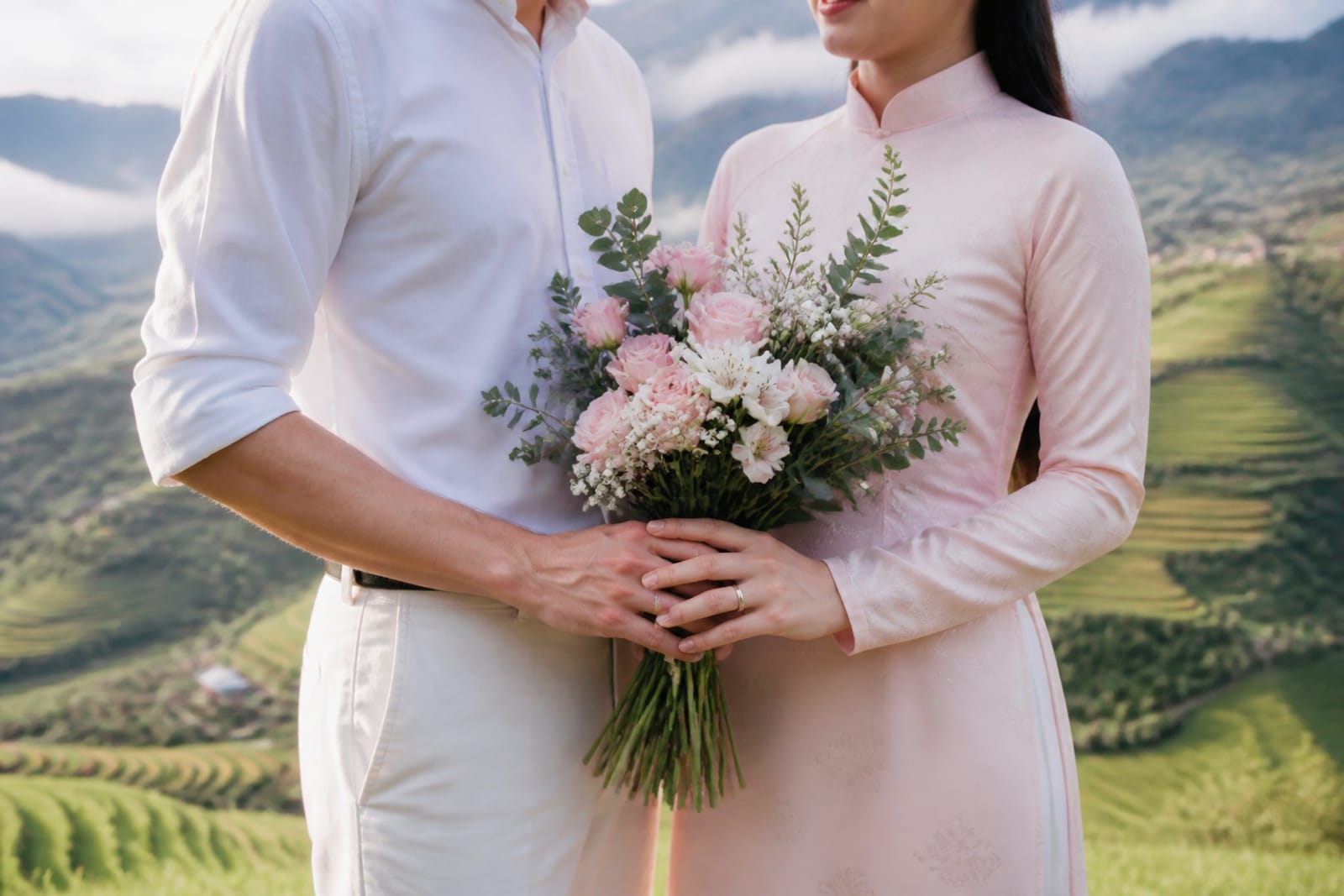
Sapa splits into four distinct seasons, each reshaping the look and logistics of your frames. March–May and September–November offer the clearest skies, driest paths, and softest side light for early-morning shoots on terraces—these windows are optimal for pre-wedding work. June–August is wet and humid; afternoon downpours halt shoots mid-session, and fog locks in until late morning, wasting prime light hours. December–February is cold (temperatures can near 0°C), foggy, and frost-slicked; sunrise frames disappear into cloud within minutes, and paths become treacherous. Tet (Lunar New Year, late January–mid February) closes many homestays and village spots for several days, so booking then is risky. Book a shoot in March, April, May, September, October, or November; confirm current weather forecasts with your photographer two weeks before arrival. Sapa's weather shifts fast—what's clear at 6 a.m. can cloud by 8 a.m., so your team must move between locations quickly.
How does choosing a photographer in Sapa affect what you can actually shoot?
Pre-wedding shoots in Sapa demand a photographer who knows the terrain, has permission to shoot at temples and homestays, and can move fast between light changes. Cáo Studio's Hanoi team occasionally travels to Sapa for sessions; ask on WhatsApp to confirm dates and availability. If Cáo Studio isn't available, hire a local Sapa photographer with a portfolio showing terraces, villages, and morning light—not posed couple shots in front of monuments. A good fit walks you through the route beforehand, knows which homestays permit shoots, understands when rice water creates mirror reflections (May, just after filling), and adjusts timing if cloud moves in. Check whether the photographer includes hair and makeup or books them separately; Cáo Studio's one-team model (photographer, makeup artist, stylist) means coordinated timing and cohesive framing, whereas hiring three vendors separately risks missed light windows when one person runs late. Ask to see full contact sheets (or a lookbook like Cáo Studio's) so you see how they frame couples at distance, in motion, and in detail—not just hero shots.
| Photoshoot option | best for | light & season | why it works |
|---|---|---|---|
| Cáo Studio (if available) | couples wanting one team, directed frames, edited video | Mar–May, Sep–Nov, early morning | hair, makeup, photo, direction all sync; no waiting |
| Local Sapa photographer + separate makeup artist | budget-conscious couples, flexible timing | any season with 2-week notice | cheaper, local knowledge; risk: team coordination lapses |
| Hotel photographer package | couples staying at a specific resort | mid-morning light | convenience; often generic framing, limited location access |
| DIY with a friend's camera | very flexible timeline, no direction | clear weather only (Apr, Oct) | full creative control; no professional editing, no guide for terrain |
What outfit and hair decisions should you make before you arrive?
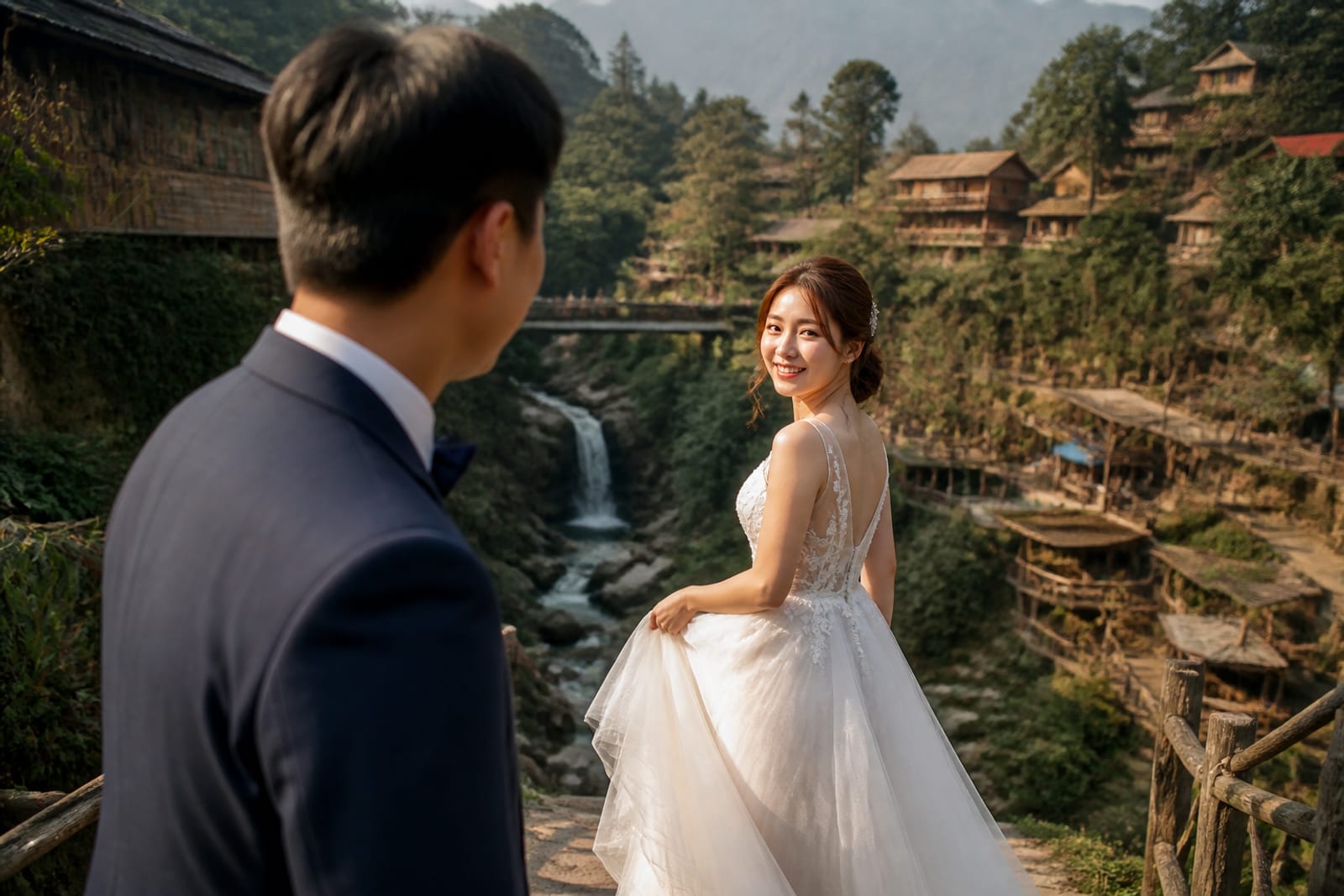
Choose one formal outfit (áo dài is traditional and frames well against terraces; a linen suit or wedding dress works if you prefer Western style) and one casual outfit (simple linen or cotton that photographs clean and moves in wind—avoid busy patterns that distract from the landscape). Coordinate colors with your partner and the season: earth tones and jewel colors stand out against February's grey mist and May's green water, while white and cream blend into morning fog. For hair, plan for wind and humidity: tight braids or a low bun survive the 4–6 hour shoot better than loose waves, which photograph messy in motion. If you're wearing an áo dài, ask whether your photographer or makeup artist has experience fitting and styling it—áo dài rental shops can advise, as can Cáo Studio's ao dai rental service if you're booking with them. Avoid heavy jewelry that catches light or swings awkwardly when you walk. Bring a hair tie and bobby pins; your makeup artist will use them, but having backups prevents delays. Plan two outfit changes maximum—moving between locations with three outfits eats into prime light time.
What are the real logistical hurdles, and how do you avoid them?
Sapa's terrain is steep, paths are uneven, and light changes fast—three challenges that derail unprepared shoots. Wear broken-in walking shoes (not new heels or sandals; photographers often ask you to walk between frames, and twisted ankles end sessions). Bring a small daypack with water, sunscreen, and blotting papers; dehydration at altitude hits hard, and reflective sun off terraces burns exposed skin within two hours. Confirm with your photographer whether they arrange permits for temple or homestay shoots—some locations require advance notice or small donation. If your shoot includes a proposal & anniversary package or formal pre-wedding session, discuss the route map two weeks before so you can gauge fitness and bring appropriate footwear. Schedule the shoot for early morning (sunrise to mid-morning) to capture side light and avoid the harsh midday sun that flattens faces and creates dark eye shadows. Afternoon shoots work only October–April when the sun sits lower; May–September afternoon light is punishing. Always have a rain backup plan—if your shoot is rained out, confirm rescheduling terms with your photographer in writing before the session.
What to check before you book your Sapa pre-wedding shoot
- Photographer experience: Ask to see 3–5 full shoots in Sapa (not just highlight reels). Do frames show couples walking, looking at each other, and interacting with the landscape—not stiff poses?
- Team coordination: If booking separately from a makeup artist, confirm both arrive at your hotel at the same time and know the shoot timeline.
- Outfit and rental: If wearing an áo dài, rent locally or book ao dai rental before arrival. Confirm fit 1–2 days early so alterations can be made.
- Permit and access: Does your photographer have permission to shoot at temples, homestays, or viewpoints? Some charge small fees or require advance notice.
- Weather backup: Confirm what happens if the day is foggy or rainy. Is rescheduling free? Do you pay a deposit that's refunded?
- Editing timeline: Ask when edited photos arrive. Cáo Studio's 48-hour turnaround is standard; others may take 2–4 weeks.
- Final files: Confirm you receive full-resolution, edited images (not watermarked previews). Ask about album or print options like photo prints & frames or wedding photo album if you want physical keepsakes.
For couples booking with Cáo Studio, confirm availability on WhatsApp; the team will walk through the route, outfit choices, and makeup timing so nothing clashes. For local photographers, book 3–4 weeks ahead, especially March–May and September–November when demand peaks.
---
#
FAQ
Can I wear a wedding dress instead of an áo dài in Sapa?
Yes. A wedding dress photographs well against terraces and sky; pack a second simpler outfit for walking between frames so the dress stays clean. Confirm with your photographer that they've lit and framed formal Western dresses before—positioning differs from áo dài styling.
What should I do if it's foggy the morning of my shoot?
Fog is common December–February and can occur any season above 1,500 metres. Contact your photographer immediately; some reschedule to afternoon (if weather clears by noon) or the next day. Confirm the rescheduling policy before you book.
Do I need a makeup artist if I'm comfortable doing my own makeup?
Not required, but professional makeup photographs better under natural light and lasts longer during a 4–6 hour session. If you're confident with makeup, bring waterproof products and blotting papers; if unsure, book a makeup artist—hotel concierges can recommend local artists, or ask Cáo Studio's makeup service if they're coordinating your shoot.
How long does a typical Sapa pre-wedding shoot take?
Most shoots run 4–6 hours and include 2–3 locations (e.g., a homestay, rice terraces, a village temple). Confirm the timeline with your photographer; longer shoots may require a guide or transportation between distant spots.
What if I'm not comfortable hiking or walking long distances?
Many Sapa shoots include walking on uneven paths. Choose locations near roads or homestays if mobility is limited. Discuss this with your photographer at booking so they suggest accessible frame spots and can reschedule if terrain is too challenging.
When will I get my edited photos, and in what format?
Cáo Studio delivers edited photos plus a short vertical film within 48 hours. Local photographers vary; ask about the timeline and whether you receive full-resolution files or preview-only images. Confirm delivery method (email, cloud link, USB) before you book.
FAQ
Can I wear a wedding dress instead of an áo dài in Sapa?
Yes. A wedding dress photographs well against terraces and sky; pack a second simpler outfit for walking between frames so the dress stays clean. Confirm with your photographer that they've lit and framed formal Western dresses before—positioning differs from áo dài styling.
What should I do if it's foggy the morning of my shoot?
Fog is common December–February and can occur any season above 1,500 metres. Contact your photographer immediately; some reschedule to afternoon (if weather clears by noon) or the next day. Confirm the rescheduling policy before you book.
Do I need a makeup artist if I'm comfortable doing my own makeup?
Not required, but professional makeup photographs better under natural light and lasts longer during a 4–6 hour session. If you're confident with makeup, bring waterproof products and blotting papers; if unsure, book a makeup artist—hotel concierges can recommend local artists, or ask Cáo Studio's makeup service if they're coordinating your shoot.
How long does a typical Sapa pre-wedding shoot take?
Most shoots run 4–6 hours and include 2–3 locations (e.g., a homestay, rice terraces, a village temple). Confirm the timeline with your photographer; longer shoots may require a guide or transportation between distant spots.
What if I'm not comfortable hiking or walking long distances?
Many Sapa shoots include walking on uneven paths. Choose locations near roads or homestays if mobility is limited. Discuss this with your photographer at booking so they suggest accessible frame spots and can reschedule if terrain is too challenging.
When will I get my edited photos, and in what format?
Cáo Studio delivers edited photos plus a short vertical film within 48 hours. Local photographers vary; ask about the timeline and whether you receive full-resolution files or preview-only images. Confirm delivery method (email, cloud link, USB) before you book.
Ao dai, makeup, hair and a local photographer in Hanoi or Saigon — one WhatsApp message.