/pre-wedding-photoshoot
Photographing Your Vietnamese Partner's Hometown Before the Wedding
Pre-wedding shoots in your partner's hometown work best as a dedicated half-day or full-day session with a local photographer who knows the light, access, and cultural boundaries. In Vietnam, the dry season (Feb–Aug in the central coast; Dec–Apr in the south; Oct–Nov in the north) offers the clearest skies and longest golden hours. You'll visit 2–4 locations—often a family home, a childhood temple or street, a river, or a local landmark—and change outfits between each to tell a story unique to that place. Wear layers under an áo dài if you're photographing in traditional dress; bring casual backup outfits for candid moments. Cáo Studio – Makeup & Photoshoot teams travel to Hanoi, Ho Chi Minh City, and Hoi An, and can coordinate shoots that honor your partner's roots while capturing the joy of your union. The key is booking 2–4 weeks ahead, scouting locations with a local guide, and confirming access to private or temple spaces with family first. ---
Why shoot in your partner's hometown instead of just a wedding day session?
A hometown session becomes your couple's origin story—the place where your partner grew up shapes how they see the world and each other. Wedding-day photos document the event; hometown photos document why you fell in love. You'll move freely without ceremony timelines, try outfit changes, laugh between takes, and include family in a relaxed setting. The photos feel intimate because the location already holds meaning. Many couples tell us that these shots become their favorites because they're unrushed and deeply personal.
📸 Book on WhatsApp — couple photoshoot
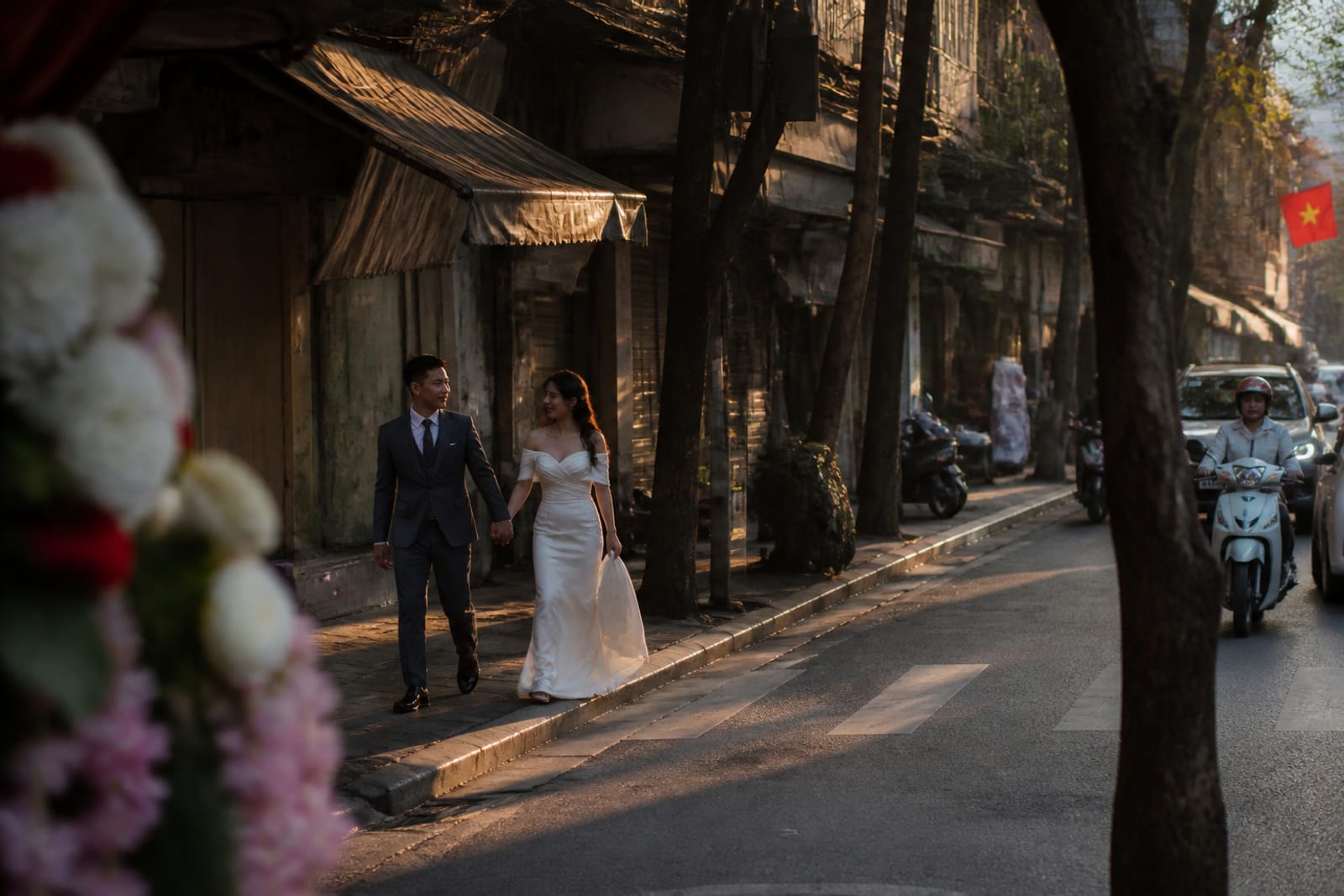
What locations work best for pre-wedding shoots in Vietnamese hometowns?
| Location Type | Best Light | Why It Works | Season to Visit |
|---|---|---|---|
| Family home or courtyard | Early morning (6–8 AM) or late afternoon (4–6 PM) | Backlit gardens, soft shadows on walls, authentic daily setting | Oct–Nov (north); Feb–Aug (central coast); Dec–Mar (south) |
| Temple or pagoda | Mid-morning (8–10 AM), avoid noon glare | Golden sandstone, ornate details, cultural significance—book permission ahead | Oct–Nov (north); Feb–Aug (central coast) |
| River, lake, or wetland | Sunrise (5:30–7 AM) or pre-sunset (3:30–5 PM) | Mirror reflections, soft water light, wide open space for movement | Dry season all year |
| Street or village market | Early morning before crowds (5:30–7 AM) | Local life authentic, warm side light, fewer tourists | Oct–Nov (north); Feb–Aug (central coast) |
| Rice fields or farmland | Late afternoon (3:30–5 PM) | Golden-hour glow on water and stalks, open sky, expansive backdrop | Harvest season varies by region |
The best locations are those your partner has a genuine connection to—not just scenic. A modest family alley where your fiancé played as a child often photographs better than a crowded postcard landmark because the emotion is real and the light is yours to control.
How do you plan the day's schedule to catch the best light?
Start your call time 30–45 minutes before your first planned light window to allow for travel, hair and makeup touch-ups, and outfit changes. Arrive at location 1 by 6 AM for a sunrise or early-morning shoot; the light is even, soft, and no other tourists are present yet. Spend 30–45 minutes at each location—long enough to try multiple poses and outfit changes, short enough to move before the light flattens (typically by 9 AM). Take a lunch or rest break mid-day if you're shooting full-day; use the harsh midday hours (11 AM–3 PM) to travel between locations or scout new spots. Resume shooting by 3:30 PM for the golden hour (last light before sunset). Finish by 6–6:30 PM before the sky goes grey and focus becomes tricky in low light. Build in 15-minute buffer zones between locations for unexpected traffic or family visits.
What should you wear under an áo dài to feel comfortable and photograph well?
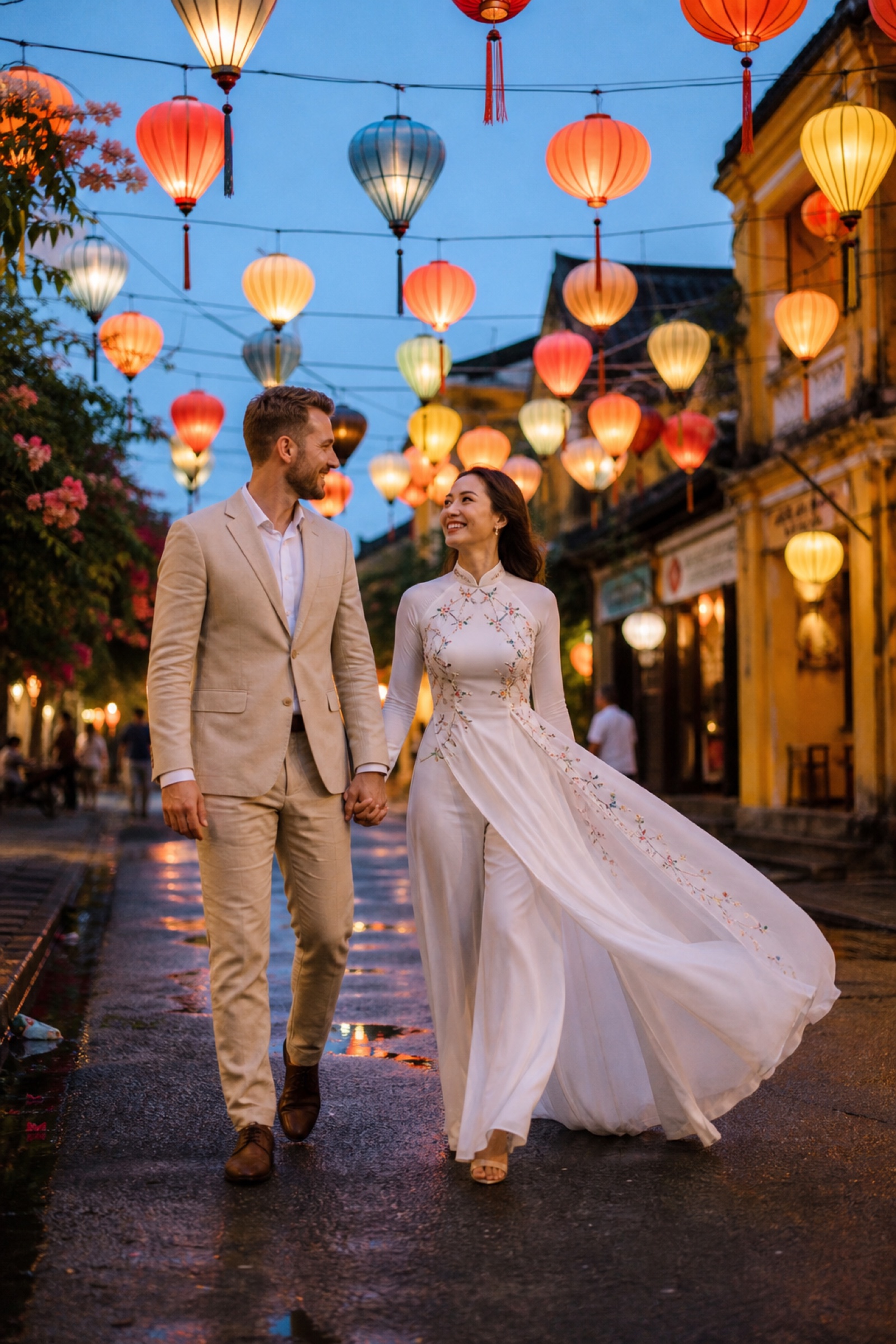
An áo dài is a fitted, long tunic over straight pants; the elegance comes from drape, not stretch. Wear a smooth, thin slip or bodysuit in black or the áo dài's main color underneath—it prevents the silk or cotton from clinging to your skin and keeps you cool. Choose flat, ankle-height underpants with no visible lines; avoid thick bras if possible, or use a strapless option (the áo dài neckline sits high enough to conceal). Slip-on flat shoes, embroidered sandals, or court shoes in neutral colors work best—you'll remove them for movement shots or temple visits. If you're shooting in casual Western outfits for a second location, bring lightweight layers (a linen shirt, a sheer overshirt, a light scarf) to protect from sun and adjust your look between shots. Bring a shawl or pashmina for temple visits; it's a practical and photogenic touch. Test your outfit comfort at home first—even a small tug or itch shows in close-ups.
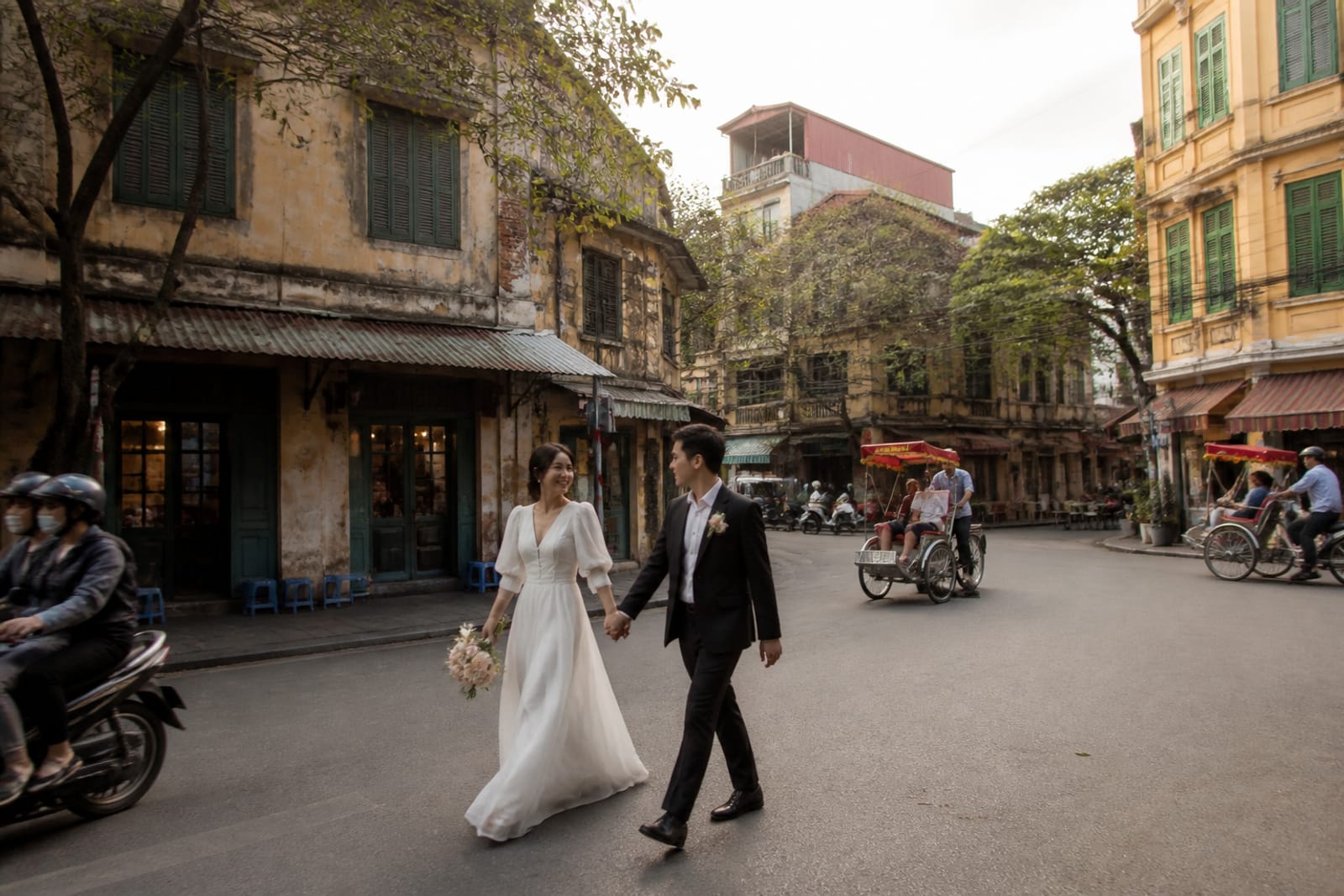
Which Vietnamese regions have the clearest light and fewest weather surprises?
The north (Hanoi, Ninh Binh, Ha Giang) offers crisp, clear autumn light Oct–Nov and cool, hazy winter light Dec–Feb (avoid grey drizzle Dec–Jan for outdoor shoots). Spring (Mar–Apr) warms up but can be humid. The central coast (Hue, Da Nang, Hoi An, Quy Nhon) has the most stable light Feb–Aug—dry, predictable, and sunny. Sep–Dec brings typhoons and sudden rain, especially Oct–Nov when clouds roll in fast; if your partner's hometown is here, book for Feb–Aug and expect to build in backup indoor locations (a family home's interior, a market hall, a temple courtyard with a roof). The south (Ho Chi Minh City, Mekong Delta, Phu Quoc) is dry and hot Dec–Apr with intense midday sun; shoot early mornings and late afternoons. The wet season May–Nov brings afternoon downpours that can last 30–60 minutes; book for Dec–Apr. Always check a local weather forecast 7 days before your shoot and have an indoor backup plan.
How do you navigate temple visits, family involvement, and cultural etiquette?
Vietnamese temples are active places of worship; visiting for a photoshoot requires respect and usually advance permission. Contact your partner's family 2–3 weeks ahead to confirm whether the temple allows photography and on which days. Dress modestly—cover shoulders, knees, and chest; remove shoes at the entrance unless told otherwise. Avoid posing in front of active altars or prayer areas; ask a family member or monk where photos are welcome. If your partner's parents or relatives are joining the shoot, build in time for casual family moments—many couples end up treasuring these unguarded shots more than formal couple poses. Explain to family that you'll take 5–10 minutes of posed photos, then 10–15 minutes of candid moments while they're just together; this balance feels less staged. If language is a barrier, bring a translator or use a simple gesture-based shot list. A small thank-you gift (tea, incense, or flowers) to the family is thoughtful if you're using their home.
---
What to check before you book a pre-wedding shoot in your partner's hometown
- Visa and travel dates: Confirm both partners can travel; check Vietnam's entry requirements and plan for visa processing time.
- Local weather by month: Cross-reference your chosen dates against the verified dry-season windows (central coast Feb–Aug; south Dec–Apr; north Oct–Nov).
- Photographer logistics: If hiring a local, confirm they speak English or that you have a translator. Ask to see their portfolio of pre-wedding or couple work in that specific region.
- Location access: Confirm via your partner's family whether temples, private homes, or farmland are accessible on your chosen date.
- Outfit readiness: Order or rent áo dài 4–6 weeks ahead if it needs tailoring; order backup Western outfits 2–3 weeks ahead.
- Makeup and hair: Book hotel makeup/hair services or arrive early enough for a visit to a local salon on shoot day.
---
Looking for a full pre-wedding shoot that includes your hometown session plus a studio or city backdrop? Cáo Studio – Makeup & Photoshoot coordinates couple shoots in Hanoi, Ho Chi Minh City, and Hoi An—ask on WhatsApp for rates and dates if your partner's hometown is elsewhere in Vietnam. We'll help you plan light, locations, and logistics so you can focus on the moment.
🌸 Book a pre-wedding session | 👰 See our lookbook
---
FAQ
Can we shoot in my partner's hometown if it's a small rural village?
Yes, small villages often have the most authentic light and personal meaning. Scout access with family first—rural temples and family homes need permission. Ask on WhatsApp about travel and logistics for your specific location.
What's the best time of year to shoot in my partner's hometown if I don't know the local climate?
Look up your hometown's region (north, central coast, or south Vietnam) and check verified dry-season windows: north Oct–Nov, central coast Feb–Aug, south Dec–Apr. Book 4–6 weeks ahead so we can confirm weather and location access.
Should we hire a local photographer or travel with someone we know?
A local photographer knows the light, cultural boundaries, and how to move around unseen. Traveling with someone familiar means they understand your vision. Cáo Studio can coordinate with local teams or discuss your specific needs on WhatsApp.
How do we include family in the shoot without it feeling awkward?
Plan 15–20 minutes of candid moments where family just sits or walks together while you're photographed, rather than posed group poses. Explain the rhythm beforehand; most families enjoy seeing genuine joy captured.
If weather is unpredictable, what's a good backup indoor location?
Family home interiors (kitchen, bedroom, stairwell with window light), market halls, temple courtyards with roofs, or even a modest indoor cafe work well. Scout these with family 1–2 weeks ahead and ask your photographer to bring reflectors and diffusers.
Do we need permits to photograph in temples or public markets?
Most temple photography requires the temple's permission or a family member's connection—ask your partner's family. Public markets rarely need permits but respect vendors' wishes not to be photographed. Confirm with your photographer beforehand.
FAQ
Can we shoot in my partner's hometown if it's a small rural village?
Yes, small villages often have the most authentic light and personal meaning. Scout access with family first—rural temples and family homes need permission. Ask on WhatsApp about travel and logistics for your specific location.
What's the best time of year to shoot in my partner's hometown if I don't know the local climate?
Look up your hometown's region (north, central coast, or south Vietnam) and check verified dry-season windows: north Oct–Nov, central coast Feb–Aug, south Dec–Apr. Book 4–6 weeks ahead so we can confirm weather and location access.
Should we hire a local photographer or travel with someone we know?
A local photographer knows the light, cultural boundaries, and how to move around unseen. Traveling with someone familiar means they understand your vision. Cáo Studio can coordinate with local teams or discuss your specific needs on WhatsApp.
How do we include family in the shoot without it feeling awkward?
Plan 15–20 minutes of candid moments where family just sits or walks together while you're photographed, rather than posed group poses. Explain the rhythm beforehand; most families enjoy seeing genuine joy captured.
If weather is unpredictable, what's a good backup indoor location?
Family home interiors (kitchen, bedroom, stairwell with window light), market halls, temple courtyards with roofs, or even a modest indoor cafe work well. Scout these with family 1–2 weeks ahead and ask your photographer to bring reflectors and diffusers.
Do we need permits to photograph in temples or public markets?
Most temple photography requires the temple's permission or a family member's connection—ask your partner's family. Public markets rarely need permits but respect vendors' wishes not to be photographed. Confirm with your photographer beforehand.
Ao dai, makeup, hair and a local photographer in Hanoi or Saigon — one WhatsApp message.