/pre-wedding-photoshoot
Photography rules at Bat Trang: permits, drones and shoot prep
Bat Trang ceramic village operates without formal photography permits for still cameras on public streets, but drone flights are prohibited by local authorities and must not be attempted. The village functions as a working ceramics hub: kilns fire continuously, potters occupy workshops, and narrow lanes carry foot and cart traffic. Best light arrives between 06:30–07:30 (sunrise, soft gold across clay yards) and 16:30–17:30 (late afternoon, warm kiln glow). Shoots run two to three hours; bring an assistant or book with a local photographer who knows current access rules—Cáo Studio – Makeup & Photoshoot coordinates Hanoi shoots including Bat Trang heritage sessions, handles transportation logistics, and confirms real-time local requirements via WhatsApp before your date.
Bat Trang ceramic village—a cluster of earth-toned workshops and communal kilns 15 km southeast of Hanoi's Old Quarter—has become a signature backdrop for Vietnamese pre-wedding and elopement shoots. Its appeal is genuine: centuries-old kiln architecture, hand-thrown pottery displays, and streets lined with clay dust create a textured, timeless mood impossible to replicate in urban studios. But shooting there requires advance planning, respect for working artisans, and awareness of rules that change seasonally or after local incidents.
This guide covers what photographers and couples actually face in Bat Trang, how to navigate restrictions without conflict, and when to book a professional team versus going solo.
What are the actual drone rules at Bat Trang?
Bat Trang village is a no-drone zone. Local authorities have restricted all unmanned aerial vehicle flights due to proximity to Hanoi's flight corridors and to protect privacy in residential and workshop areas. Do not attempt to fly a drone, even at low altitude or early morning—fines are steep and equipment may be confiscated. If aerial shots are essential to your vision, book with Cáo Studio's pre-wedding team—we scout alternative heritage locations (such as elevated temple grounds in nearby districts) where drone permits exist and legal flights are possible.
🌸 See the lookbook for our Bat Trang and heritage location shoots.
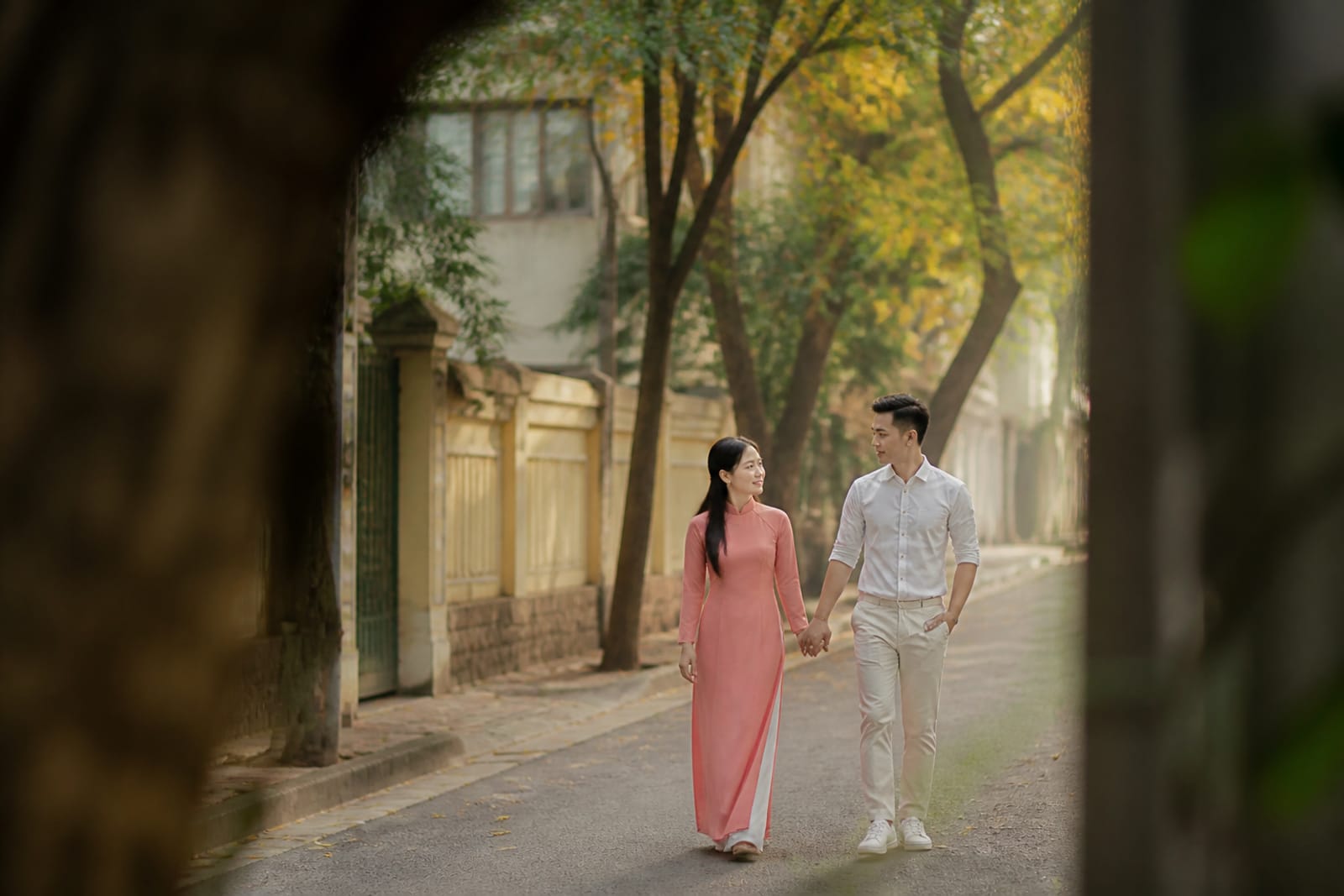
Do I need a photography permit to shoot in Bat Trang?
Still photography on public streets in Bat Trang does not require a formal permit from local authorities. However, "permit-free" does not mean "photograph-anywhere": respect workshop privacy, do not block kiln entrances or cart paths, and ask artisans directly before shooting inside active workspaces. Commercial shoots (weddings, pre-weddings, fashion advertising) can attract informal local charges—sometimes collectors will approach claiming a fee for "use of background." A professional photographer or guide familiar with the village reduces friction. Cáo Studio coordinates Hanoi shoots with pre-arranged access, local liaison support, and clear communication beforehand so no surprises interrupt your session.
What's the best time of day and season to shoot at Bat Trang?
| Timing | Best for | Light quality | Trade-offs |
|---|---|---|---|
| 06:30–07:30 (sunrise) | Moody, intimate shots; low foot traffic | Soft gold, long shadows across clay yards | Cold, misty, requires early start |
| 10:00–12:00 (mid-morning) | Bright couple portraits, kiln interiors | Direct, harsh—high contrast | Crowds building, heat rising by late morning |
| 16:30–17:45 (late afternoon) | Warm kiln glow, golden hour richness | Directional amber light on red clay | Worker shift changes, carts busier, time pressure before dark |
| Winter (Dec–Feb) | Cool, dry air; soft overcast light | Mild, diffused, flattering for skin | Haze, drizzle possible; water seeps into kilns (muddy paths) |
| Autumn (Oct–Nov) | Clearest air, stable weather, mild temps | Crisp, saturated colors; best overall | Peak season—crowds, higher rates, book 2–3 months ahead |
Sunrise sessions demand a 5:00 am vehicle pickup and full makeup done in your hotel; Cáo Studio offers makeup and hair at your hotel to handle this timing. Late afternoon suits couples who sleep in but risks running into kiln-shift changes and incomplete daylight for final shots. Winter light is softest but paths are muddy; autumn (especially October and early November) is the sweet spot but fills fastest.

How do I avoid blocking kilns, carts or angering local artisans?
Bat Trang is not a museum or photo set—it is a functioning ceramics production hub. Kilns operate daily on tight schedules; carts move clay and fired wares constantly. When scouting, identify kiln and cart routes, then frame shots perpendicular to these paths. Never stand in a kiln entrance, block a cart lane, or shoot into a workshop without greeting the owner first. "Xin phép được chụp ảnh?" (May I take a photo?) and a smile often lead to permission and better access—some artisans will even pose or invite you inside. If a collector or unofficial "guard" approaches asking for a fee, stay calm, politely decline, and move to a public area; your photographer should handle this, which is why booking a professional team reduces stress.
Sunrise shoots (fewer workers present) and late-afternoon sessions (after 16:30, as many close down) tend to be less intrusive. Avoid mid-morning when potters are deep in work and foot traffic peaks.
What should I check before booking a Bat Trang shoot?
Before confirming your session, ask your photographer or studio:
- Access confirmation: Have they shot Bat Trang in the past month? Local access rules shift after flooding, security incidents, or administrative crackdowns. Cáo Studio's Hanoi team scouts locations before each booking and confirms via WhatsApp that your chosen date and timing are clear.
- Transportation: How do you get there? Bat Trang is 45–60 minutes from central Hanoi by car; taxi or ride-app costs vary by traffic. Does the studio include transport, or do you meet them on-site? (Coordinate pickups to avoid arrival chaos.)
- Timing and backup plan: What happens if weather turns (drizzle, thick haze)? Is there a reshoot or alternative location? Autumn can bring surprise rain; winter offers overcast skies that are actually flattering but unpredictable.
- Outfit and logistics: Wearing an ao dai? Check that the fabric and hem will survive muddy clay paths. Bring a second pair of shoes or a helper to shield the train. Cáo Studio's ao dai photoshoot team advises on fabric choices and provides styling that accounts for the village's textures and terrain.
- Number of outfits and locations: A single Bat Trang session can span two to three micro-locations (kiln yards, pottery stalls, a quiet lane). Confirm how many outfit changes fit into your shoot window—more changes = longer time on-site or a shorter, focused session.
- Photo delivery timeline: When will edited files arrive? Cáo Studio's exact delivery schedule is confirmed on WhatsApp—never assume a timeline without asking your photographer directly.
---
📸 Book on WhatsApp — pre-wedding photoshoot
What to check before you book
- Confirm access 1–2 weeks ahead; do not rely on old guides or blog posts.
- Verify no-drone policy so you're not tempted and risk fines.
- Pick a time slot based on your energy, makeup durability, and light preference—not just "we like sunrise" (which requires a 05:00 hotel pickup).
- Arrange transport with your studio or separately; confirm pickup address and time to the minute.
- Brief your partner or family on the village's working etiquette so no one wanders into a kiln or blocks a cart.
- Pack a rain backup (umbrella, waterproof bag) and a second pair of shoes; clay dust settles on hems and shoes.
- Ask about the contract or booking terms (deposit, cancellation, rescheduling policy) before sending money.
If you are organizing a pre-wedding or elopement and want professional guidance, local liaisons, and weather contingency, contact Cáo Studio's team on WhatsApp for a Hanoi heritage shoot consultation.
💄 Makeup & hair at your hotel if you're doing an early-morning Bat Trang session.
---
FAQ
Can I legally photograph inside active kilns at Bat Trang?
Kilns are private or community property. Always ask the owner directly; many will let you shoot for a minute or two if you're respectful. Never enter a kiln workspace during firing—risk of heat injury and disruption. Your photographer should handle these negotiations.
What happens if a local asks me for a photography fee?
Bat Trang has no official photography tax, but informal "collectors" may approach commercial groups. Politely decline, step away, and let your photographer handle it. Hiring a local guide or booking with Cáo Studio eliminates this friction because we have established relationships.
Is Bat Trang safe for a solo photoshoot or should I hire a photographer?
Solo shoots work if you're familiar with Hanoi and comfortable navigating narrow lanes and negotiating with artisans. For a pre-wedding or professional result, hiring a photographer (or a team like Cáo Studio) ensures better light timing, logistics, and permission-handling. It also frees you to relax and be present with your partner.
What weather patterns affect Bat Trang shoots by season?
Autumn (Oct–Nov): dry, stable, best light. Winter (Dec–Feb): cool, often drizzly, paths muddy. Spring (Mar–Apr): haze and humidity rising. Summer (May–Sep): hot, sticky, afternoon downpours. Check the Hanoi forecast and plan a reshoot clause for monsoon season.
Can I do a half-day Hanoi itinerary including Bat Trang and another heritage site?
Yes, if you allocate two to three hours for Bat Trang and build in 45 minutes' travel time. Cáo Studio's pre-wedding team can chain heritage locations (Bat Trang + Tran Quoc Temple, or Bat Trang + a French colonial villa) into one full-day shoot. Confirm the itinerary and travel logistics on WhatsApp before booking.
FAQ
Can I legally photograph inside active kilns at Bat Trang?
Kilns are private or community property. Always ask the owner directly; many will let you shoot for a minute or two if you're respectful. Never enter a kiln workspace during firing—risk of heat injury and disruption. Your photographer should handle these negotiations.
What happens if a local asks me for a photography fee?
Bat Trang has no official photography tax, but informal "collectors" may approach commercial groups. Politely decline, step away, and let your photographer handle it. Hiring a local guide or booking with Cáo Studio eliminates this friction because we have established relationships.
Is Bat Trang safe for a solo photoshoot or should I hire a photographer?
Solo shoots work if you're familiar with Hanoi and comfortable navigating narrow lanes and negotiating with artisans. For a pre-wedding or professional result, hiring a photographer (or a team like Cáo Studio) ensures better light timing, logistics, and permission-handling. It also frees you to relax and be present with your partner.
What weather patterns affect Bat Trang shoots by season?
Autumn (Oct–Nov): dry, stable, best light. Winter (Dec–Feb): cool, often drizzly, paths muddy. Spring (Mar–Apr): haze and humidity rising. Summer (May–Sep): hot, sticky, afternoon downpours. Check the Hanoi forecast and plan a reshoot clause for monsoon season.
Can I do a half-day Hanoi itinerary including Bat Trang and another heritage site?
Yes, if you allocate two to three hours for Bat Trang and build in 45 minutes' travel time. [Cáo Studio's pre-wedding team](/pre-wedding-photoshoot) can chain heritage locations (Bat Trang + Tran Quoc Temple, or Bat Trang + a French colonial villa) into one full-day shoot. Confirm the itinerary and travel logistics on WhatsApp before booking.
Ao dai, makeup, hair and a local photographer in Hanoi or Saigon — one WhatsApp message.